
Review · GERMANY
Cologne: Chocolate Museum Entrance Ticket
Cologne’s Chocolate Museum turns a sweet treat into a full cultural story, from cocoa trees and pre-Columbian Central America to modern factory production. The highlight is the glass chocolate factory, where you can watch chocolate move from bean to finished product, then sample it at a 3-meter-high fountain.
I like the mix of serious history and hands-on fun, especially the tropical house with a real cocoa tree and the chance to watch chocolate being made fresh. I also like that you can set your own pace and stop at the cafe afterward. The main drawback is that the museum can feel hot on warm days, and the production areas close before the building itself.
Key things to know before you go
- The museum covers 5,000 years of chocolate culture, including cocoa’s role in Central American societies and its later development in Europe.
- The glass factory shows real production, with machines making chocolate products in front of you.
- Tasting is part of the visit, including samples along the route and chocolate from the large fountain.
- The visit is self-guided, so you can move quickly or spend several hours reading every display.
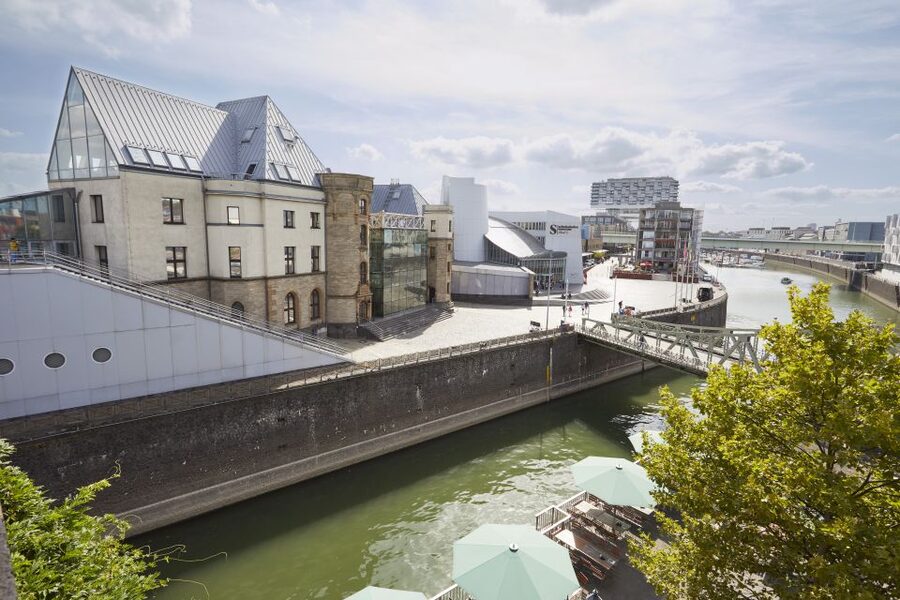
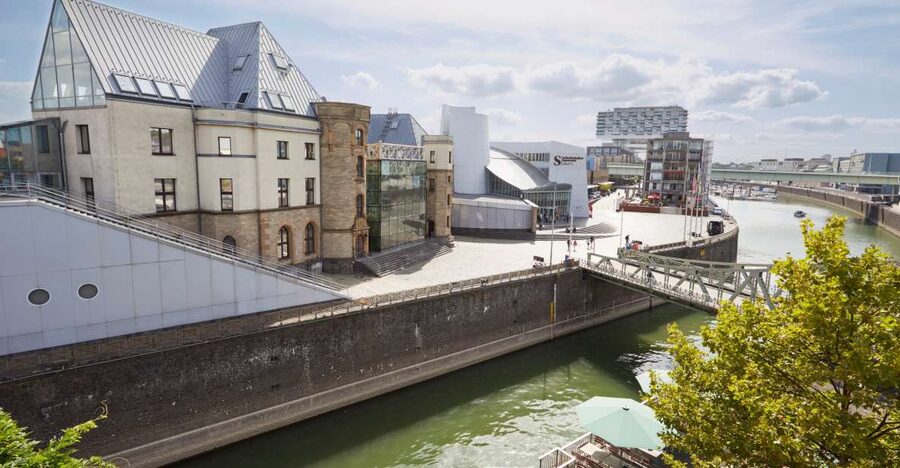
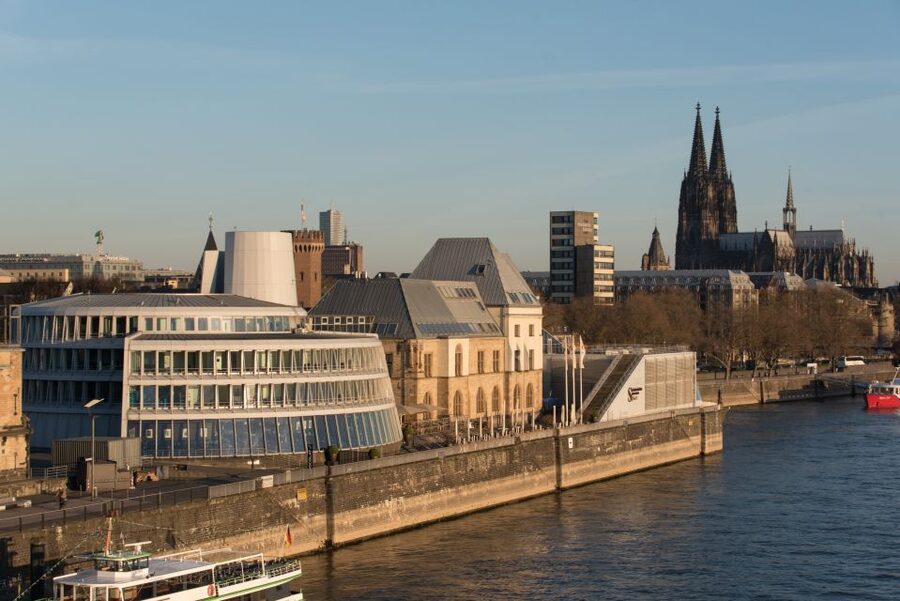
- The riverside setting adds appeal, with the museum located beside the Rhine in Cologne.
- A cafe and shop extend the experience, with cakes, drinks, chocolate desserts, gifts, and custom chocolate options available for an extra cost.
A chocolate museum that goes far beyond candy
At about $19 per person, this is not simply a quick stop for a free sample. The museum presents chocolate as food, trade, technology, art, and industry. You begin with cocoa itself, then follow its route through cultivation, processing, manufacturing, and retail.
That broad approach is what makes the museum work for mixed groups. Children have machines, samples, and chocolate-making activities to hold their attention. Adults get the history, trade information, old equipment, and changing role of chocolate in European culture.
You should allow at least one to one and a half hours for a fairly quick visit. If you read the displays carefully, stop for tastings, use the cafe, or create a custom chocolate bar, two to two and a half hours is easy to fill.
The museum is located on the Rhine, so it also works well as part of a walk along the river. The setting gives you a pleasant change from indoor displays and makes the visit easier to fit into a day of sightseeing in Cologne.
More chocolate museums in Germany:
- Dresden: Guided Walking Tour and Chocolate Museum Ticket
★ 4.5 · 479 reviews - Lindt Home of Chocolate Museum Entry Ticket
★ 4.7 · 9,329 reviews - Choco-Story Brussels: Chocolate Museum Entrance with Tasting
★ 4.3 · 4,883 reviews
Start with cocoa trees and a tropical house
The first section takes you back to the source: the cocoa plant. A walk-in tropical house gives you a close look at the warm, humid conditions cocoa trees need, along with natural-history information about the plant and its fruit.
This part matters because chocolate usually arrives in shops as a neat bar or boxed praline. Here, you see the less glamorous beginning. The museum connects the finished food with the plant, the growing environment, and the work needed before the beans ever reach a factory.
The tropical house is also one of the best parts for children. A real cocoa tree makes the subject less abstract, and the warm indoor setting gives the opening section a distinct feel. On a hot day, though, the heat may be noticeable, especially when combined with the warmer production areas later in the visit.
Follow chocolate through 5,000 years of culture
The historical displays trace chocolate back through 5,000 years of use. One important section focuses on pre-Columbian cultures in Central America, where cocoa had social, cultural, and economic meaning long before modern chocolate bars appeared.
This gives you useful context. Chocolate did not begin as a mass-produced sweet sold in supermarkets. Its early use and later spread tell a larger story about agriculture, trade, changing tastes, and the movement of ingredients between continents.
The museum also displays porcelain and silver pieces from the Baroque period. These objects show how chocolate became part of European dining and elite social life. The collection adds visual interest and breaks up the display panels, giving you something more tangible to study.
You will find plenty to read, so do not feel obliged to absorb every label. I suggest choosing the subjects that interest you most, then saving more time for the factory. The displays are informative, but the visit becomes more lively once you reach the working machinery.
Watch the machines in the glass chocolate factory
The glass chocolate factory is the museum’s main event. It covers about 43,055 square feet and lets you watch modern chocolate production rather than simply read about it.
The route explains the steps from cocoa bean to finished product. You can see the industrial process, the machinery, and the way chocolate is shaped and prepared. The working line gives the museum a sense of movement that many traditional displays lack.
For me, this is where the ticket earns its keep. You are not looking at a silent collection of old objects. You can follow production as it happens and connect the historical displays with the technology used today.
The old machines from the industrialization period are also worth attention. Together with the modern line, they show how chocolate production changed from small-scale work into a mechanized industry.
Production areas close around 30 minutes before the museum itself, so do not arrive late and expect to see everything in operation. If the factory is your priority, plan your visit with the working hours in mind rather than treating the museum closing time as your real deadline.
A few more museum visits around Germany worth comparing
- NYC: Museum of Ice Cream Entry Ticket
★ 4.3 · 2,619 reviews - Vienna: Chocolate Workshop in Chocolate Museum w/ Tasting
★ 4.5 · 1,802 reviews - Brussels: Chocolate Museum Visit with Workshop
★ 4.6 · 1,474 reviews - Museum of Ice Cream New York City Admission Ticket
★ 4.0 · 1,154 reviews
See chocolate made by hand in the atelier
The chocolate atelier adds a more personal side to the factory. Here, chocolate products are made by hand rather than only by machine.
This is a useful contrast. The factory explains speed, scale, and repeatable production. The atelier shows the skill and flexibility involved in making individual pieces. It helps you understand why a hand-made praline or custom bar can cost more than an ordinary shop bar.
You may also have the option to create your own recipe bar for an extra charge. This is especially appealing for families and teenagers, since you can choose the idea for the bar and watch it being produced. It is not included in the entrance ticket, so treat it as an optional add-on rather than part of the basic price.
The custom bar can also make a practical souvenir. It is more personal than buying a standard box in the shop, though you should budget separately if you want to add this activity.
Save room for the 200-kilogram chocolate fountain
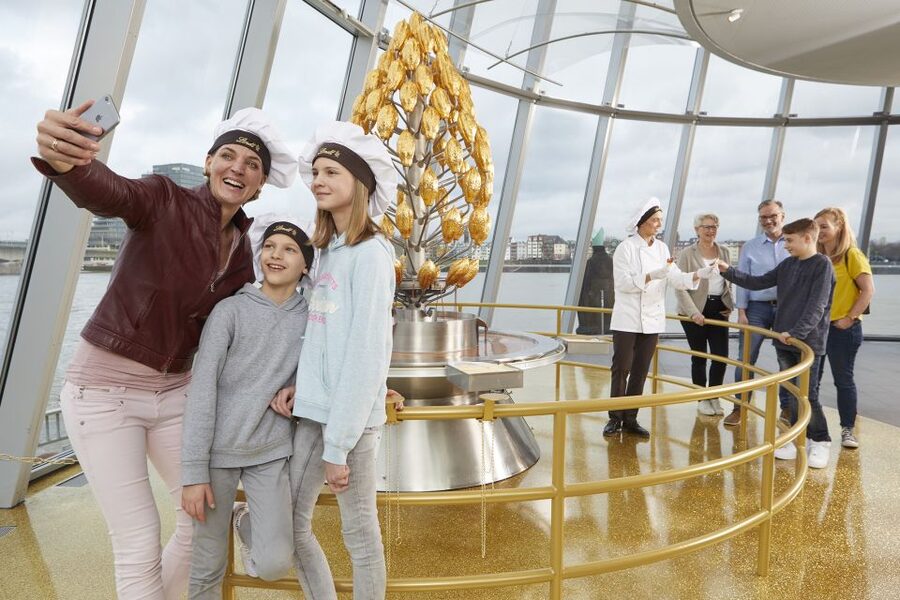
The chocolate fountain is the museum’s most obvious crowd-pleaser. About 200 kilograms of chocolate bubble continuously through a 3-meter-high structure, and tasting is encouraged.
A staff member provides a wafer for dipping or tasting, giving you a direct connection between the machinery and the food. The samples are small, but they appear at several points along the route, so you are likely to taste more than once during the visit.
The fountain is fun, but it is not the only tasting opportunity. Small chocolate samples are handed out as you move through the museum, and the exact number can vary. Some people receive several pieces, while others may hope for more.
This is one reason the ticket feels reasonably priced at $19. You get a museum, a working factory, historical displays, and samples rather than paying only for admission to a static exhibition.
If you have a very sweet tooth, pace yourself. The cafe comes later, and its chocolate cake, waffles, fondue, and hot drinks can turn a modest tasting into a full chocolate meal.
Make time for the cafe beside the Rhine
The cafe is worth treating as part of the visit rather than a place to grab a quick drink. It offers food, coffee, hot chocolate, cakes, waffles, and chocolate desserts.
Large portions are possible. A waffle can be surprisingly substantial, especially if you also order fondue. Chocolate cake and other desserts are popular choices, but the cafe is not limited to sweets, so it can also serve as a proper break during a longer museum visit.
Prices are described as reasonable, which helps the overall value. You can spend more in the cafe, of course, but you do not have to. A coffee or small dessert gives you a chance to sit down and enjoy the Rhine-side setting without turning the stop into a major expense.
The cafe also solves a practical problem for families. Instead of trying to hurry children through the museum, you can let them enjoy the exhibits, then finish with food and a pause.
The shop is tempting, but compare prices
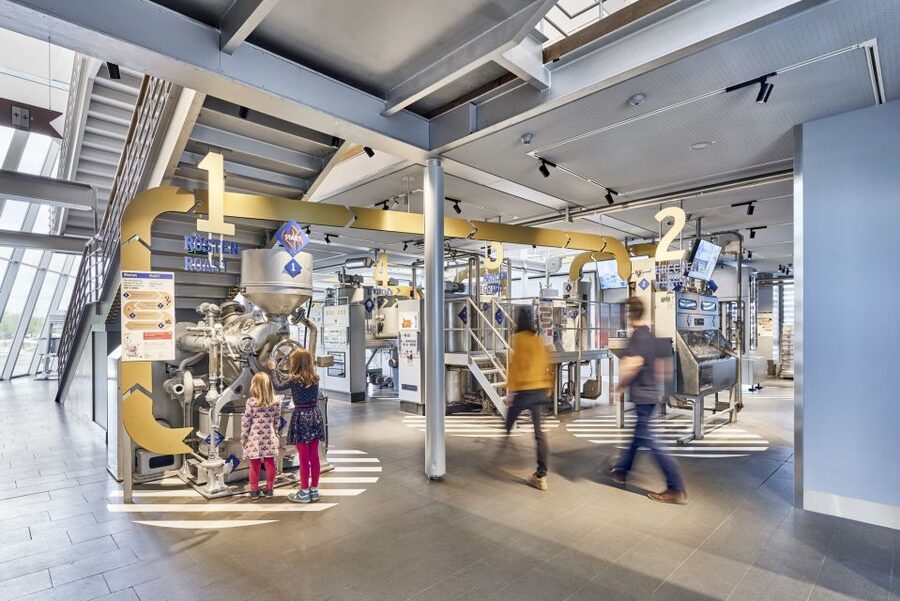
The museum shop has a wide range of chocolate and gift items. It is a convenient place to buy something for friends and family, especially if you want a souvenir tied directly to the museum.
You might find the selection more interesting than the prices. Some branded products can cost more than similar items at home, so I would browse before buying a large haul. The shop is still useful for unusual shapes, museum-related gifts, and products you may not see elsewhere.
If you create a custom bar, the shop becomes less important. If you want several gifts, compare the cost of standard products with the specialty items before filling your basket.
How long should you plan?
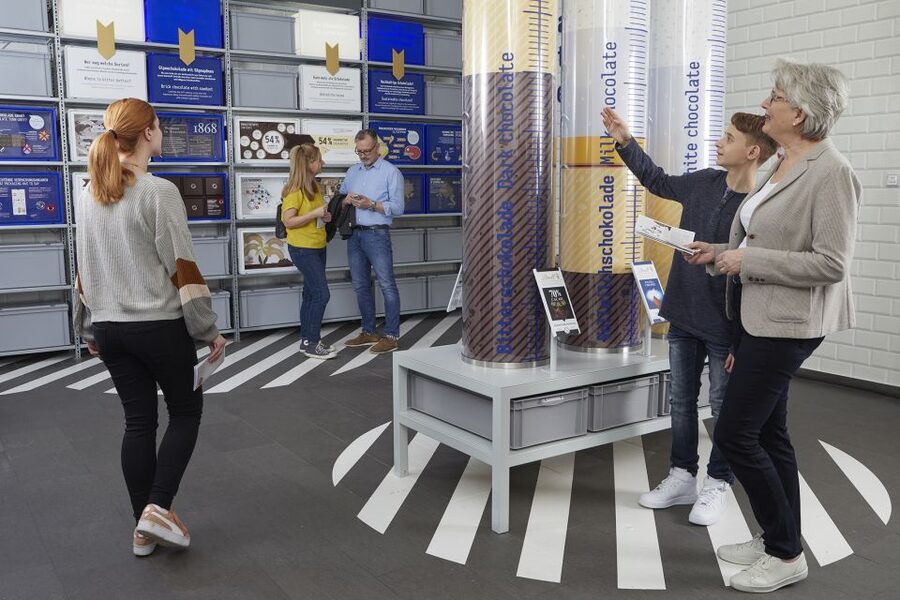
A quick route takes about one to one and a half hours. That gives you time to follow the main exhibits, watch the factory, and collect some samples.
Plan for two hours if you want to read carefully and stop at the fountain. Allow two and a half hours or more if you add the cafe, shop, and custom chocolate activity.
The museum is open for a full day of validity, but the ticket is not a guided tour with a set schedule. You enter during the available opening period and explore independently. That flexibility is useful if you are combining the museum with Cologne’s cathedral, riverfront, or other city sights.
Going near opening time can help you enjoy the factory with fewer people around. Online tickets let you scan your mobile code at the entrance and avoid the ticket counter. On busy weekends, though, an online ticket does not always mean you walk straight into an empty building. There may still be a queue at the entrance.
Who will enjoy this most?
Families are a natural fit. Children can see live machinery, sample chocolate, explore the tropical house, and make a custom bar. Teenagers also have enough interactive material and food-related stops to keep the visit from feeling like a long reading assignment.
Couples and solo visitors can enjoy it too, especially if they like food production, design, social history, or industrial technology. The self-guided format means you do not have to match another group’s pace.
It is also a good rainy-day choice in Cologne. The museum is mainly indoors, although the tropical house and factory can become warm. Anyone sensitive to heat may want to keep the visit moving and use the cafe as a cooler break if needed.
Wheelchair users and people with pushchairs can access the museum. Toilet capacity may feel limited when the museum is busy, so plan your break before settling in for a long visit.
What the $19 ticket includes
The basic ticket includes museum admission and an information booklet. It does not include a guided tour.
That distinction matters. If you want a guide explaining each section, this ticket is not the right product on its own. You will follow the displays independently, with the machines and production areas providing much of the live action.
At $19, I consider the admission good value for a museum visit lasting one to two and a half hours, especially because tastings are part of the experience. The value improves if you enjoy the historical displays and factory rather than visiting only for the fountain.
You can also reserve now and pay later, and cancellation is available up to 24 hours in advance for a full refund. These terms are useful if your Cologne schedule may change.
Should you book the Cologne Chocolate Museum?
I would book this ticket if you want a relaxed, family-friendly stop that combines food, history, machinery, and tasting. The working factory and chocolate fountain give it more substance than a standard confectionery shop, while the tropical house and old equipment keep the story varied.
I would skip it only if you dislike indoor museums, have little time, or expect a formal guided tour. For everyone else, the $19 price is fair, particularly when you use the cafe, watch the factory before it closes, and take your time with the cocoa story.
Go early if you want a calmer start, save room for dessert, and remember that the last hour is not the best time to arrive. This is an easy Cologne activity to enjoy at your own pace, with enough chocolate to make even the serious historical sections feel pleasantly indulgent.
FAQ
Where is the Chocolate Museum located?
The museum is in Cologne beside the Rhine in Germany. Its riverside location makes it easy to combine with a walk along the river and other Cologne sightseeing.
How much does the entrance ticket cost?
The listed price is $19 per person.
How long is the ticket valid?
The ticket is valid for one day. You should check availability for the applicable starting times.
Is a guided tour included?
No. The ticket includes museum entry and an information booklet, but not a guided tour. You explore the museum independently.
Can I use a mobile ticket?
Yes. Go directly to the museum entrance and scan your mobile ticket.
Is the museum wheelchair accessible?
Yes. The museum is wheelchair accessible, and it is also suitable for pushchairs.
Are children allowed to visit alone?
Children under 12 must be accompanied by a paying adult.
When do the production facilities close?
The production facilities close about 30 minutes before the museum closes. Last entry to the museum is one hour before closing.
Can I cancel the booking?
Yes. You can cancel up to 24 hours in advance for a full refund. You can also reserve now and pay later.
Just added around Germany
- Stuttgart: Stuttgart Wine Museum Wine Tasting★ 4.7 · 55 reviews
- Stuttgart: Museum of Illusions Entry Ticket★ 4.2 · 507 reviews
- Stein: Public guided tour of the “Old Mine” museum★ 4.5 · 18 reviews
- Speyer: Technik Museum Speyer Ticket with an IMAX Dome Film★ 4.7 · 360 reviews
- Berlin: Bode Museum Ticket★ 4.5 · 214 reviews
- Munich Private Walking Tour with BMW Museum & Welt Entry★ 4.2 · 19 reviews
- Munich: Residenz Palace, Museum and Treasury Private Tour★ 4.9 · 15 reviews
- Munich: WOW Museum – Room for Illusions Ticket★ 3.5 · 14 reviews
Museum Tours in Germany, compared.
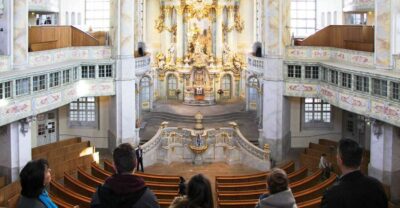
Dresden: Church of Our Lady Guided Tour of Gallery
Read our review →
Skip-the-Line: Berlin Wall Museum at Checkpoint Charlie
Read our review →
Browse the lists this tour appears in