

Review · GERMANY
Stuttgart: Museum of Illusions Entry Ticket
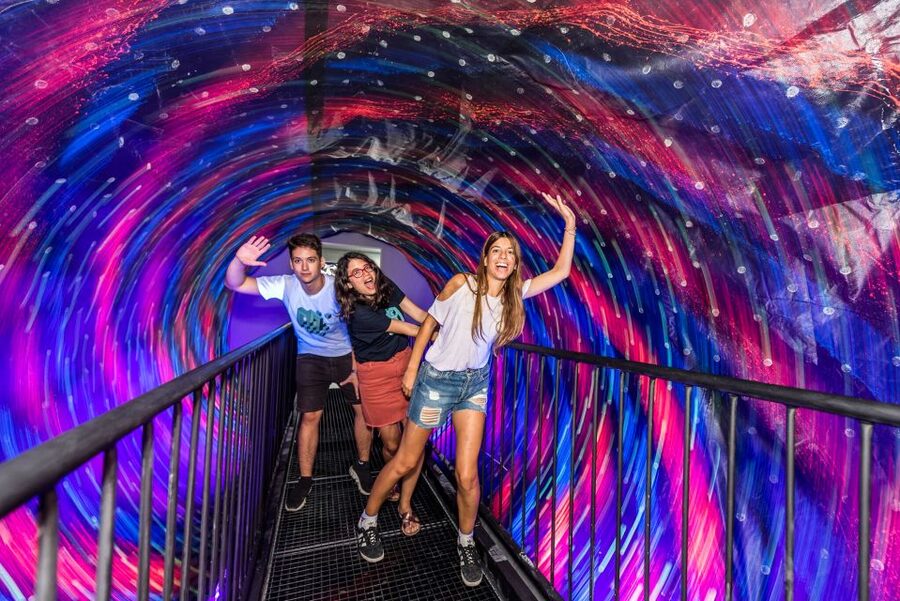
The most striking part of Stuttgart’s Museum of Illusions is how quickly a flat floor can feel unstable. In the Vortex Tunnel, a rotating cylinder makes you question your balance, while the Mirror Room bends your reflection and the Infinity Room seems to stretch far beyond its walls. Your senses are the exhibit.
I like the mix of playful photo stops and real explanations about vision. The holograms and distorted mirrors are easy to enjoy with friends, while the notes on perception give the fun some substance. At $16 per person, it is a reasonable indoor outing, especially for families who want something more active than a standard museum visit.
The main consideration is that this is not a guided tour with a set story or a long historical collection. You move through the attractions at your own pace, and the Vortex Tunnel, Zoetrope, and Tilted Room are not suitable for people with epilepsy.
Key points at a glance

- The Vortex Tunnel challenges your balance: A rotating cylinder makes a stable, flat walkway feel confusing.
- The Mirror Room and Infinity Room make strong photo stops: Reflections multiply, stretch, and distort around you.
- The museum mixes play with science: You can learn how the eye and brain interpret misleading images.
- The exhibits work well for families and groups: Many displays invite funny poses, shared experiments, and photos.
- Your ticket is valid for one day: Check availability for the available starting times before booking.
- A charged smartphone is worth bringing: Several exhibits are designed for creative photos and visual effects.
What the Stuttgart Museum of Illusions actually offers

This is an interactive museum built around a simple idea: your eyes can receive accurate information, yet your brain can still draw the wrong conclusion. Instead of viewing objects behind glass, you test the tricks with your own body, face, and sense of balance.
The visit is self-guided. You do not need to follow a guide or keep pace with a group, so you can pause at an exhibit, try a pose again, or read the explanation before moving on. That makes the experience easy to fit into a day in Stuttgart, though the exact starting time depends on availability.
The attraction suits people who like to take part rather than simply look. Children can treat it as a game, adults can experiment with the visual effects, and groups can use the exhibits as ready-made photo settings. The science panels help explain why the tricks work, so the museum is not only about taking pictures.
Still, keep your expectations in check. This is a compact entertainment and learning experience, not a major art museum or a full presentation on neuroscience. Its success depends on your willingness to try the displays and laugh at the way your senses misbehave.
More Museum of Illusions tickets:
- Hamburg: Museum of Illusions Ticket
★ 4.3 · 366 reviews - Munich: Magic Bavaria – Museum of Fun, Selfies and Illusions
★ 4.1 · 251 reviews - Munich: WOW Museum – Room for Illusions Ticket
★ 3.5 · 14 reviews
Starting with the Anti-Gravity Room and Clone Table
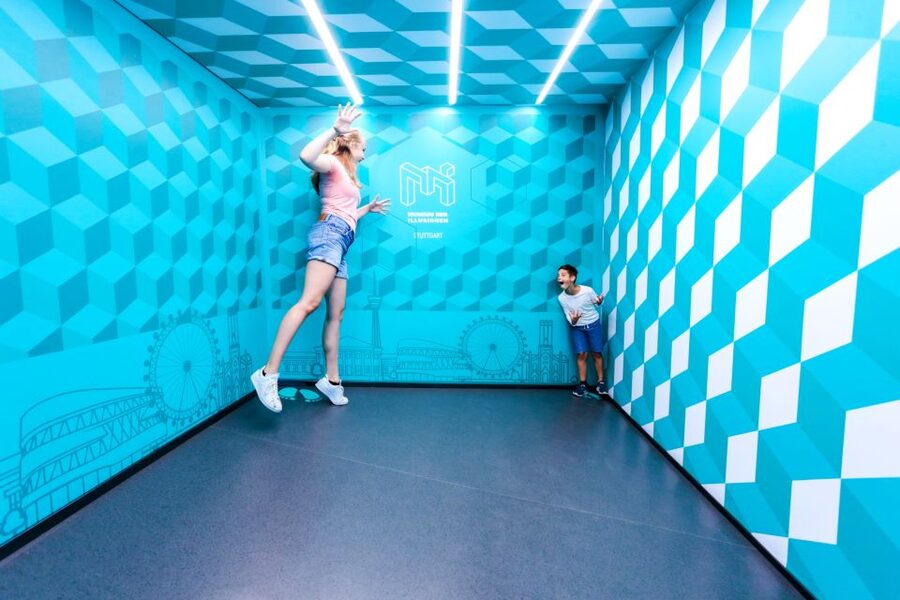
The Anti-Gravity Room introduces the museum’s central theme: the room around you can be ordinary, while your brain insists that something is wrong. The effect is designed to make familiar rules feel unreliable. You may find yourself adjusting your stance or posing in ways that look unusual in photographs.
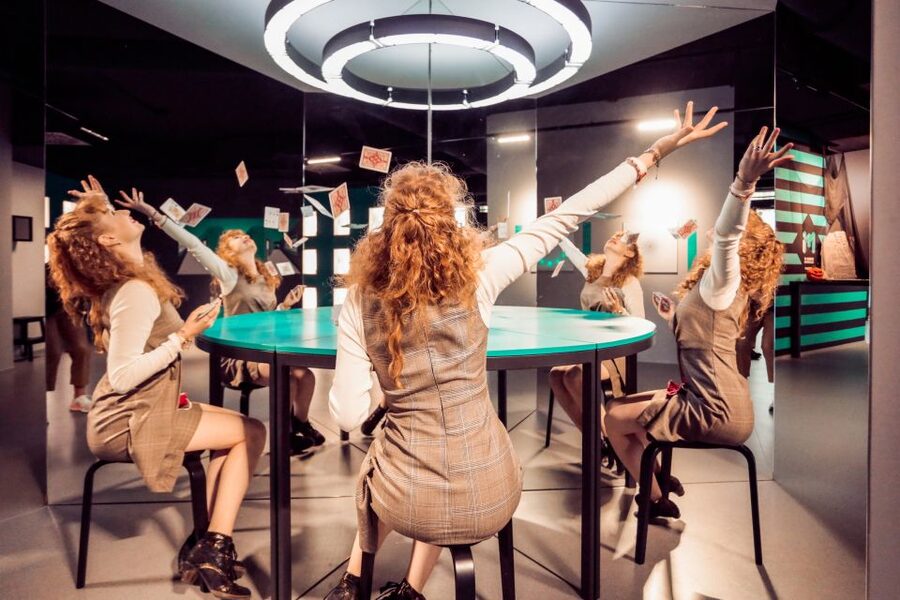
The Clone Table offers a different kind of visual trick. It creates the appearance of repeated versions of a person, turning one participant into a small group of lookalikes. This is a good stop for friends or families because the effect works best when you take turns and compare the results.
These early exhibits are useful because they establish how the museum works. You are not simply told that perception can be fooled. You see it, test it, and then read about the reason. If you rush from one display to the next, you may get the pictures but miss the point.
The Vortex Tunnel tests your balance
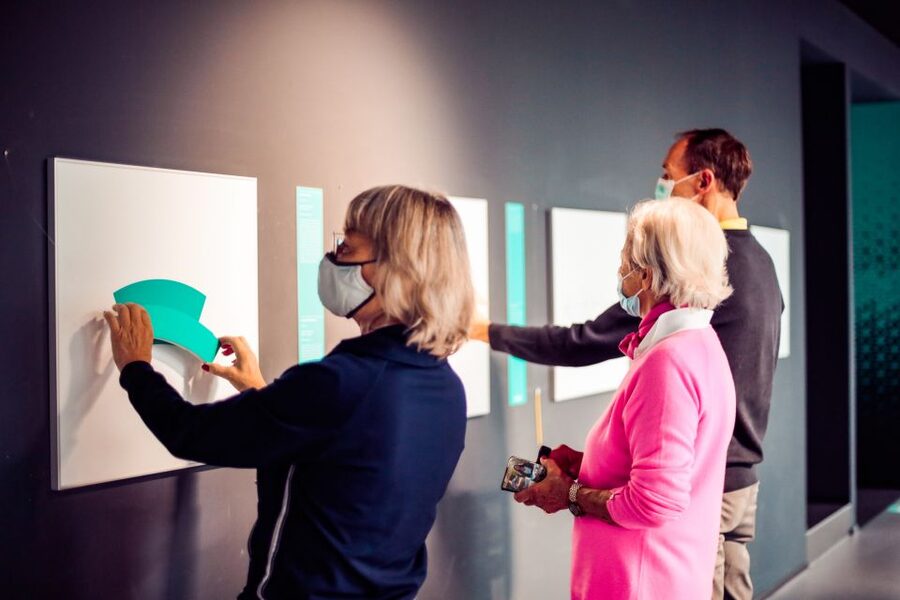
The Vortex Tunnel is likely to be the most physically disorienting part of the visit. You walk through a rotating cylinder, yet the floor itself remains stable and flat. The moving pattern around you sends conflicting signals to your senses, which can make a short crossing feel much less certain than it should.
This is a clever example of the difference between what your body knows and what your eyes report. Your feet tell you that the surface is steady, but the visual movement suggests that the room is shifting. That conflict is why the attraction can feel so convincing.
Take it slowly and use care. The tunnel is not suitable for people with epilepsy, and the same warning applies to the Zoetrope and Tilted Room. If you know that rotating patterns or strong visual effects cause problems for you, these exhibits deserve special caution.
The Vortex Tunnel is also one of the places where a charged smartphone can help. Someone outside the effect can take a picture or video that captures your uncertain walk better than a quick snapshot from inside.
Mirror Room reflections and the Infinity Room
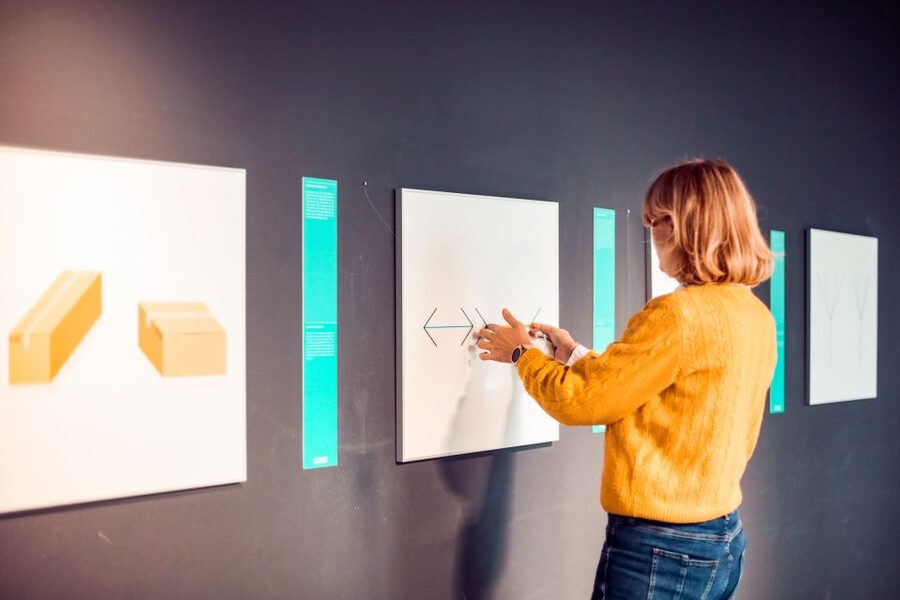
The Mirror Room is made for distorted portraits. Instead of giving you one ordinary reflection, the mirrors alter the way your body appears and multiply the visual information around you. It is a natural place for funny poses, group photos, and comparisons between what you see in the room and what appears on your phone.
I like this exhibit because the result is immediate. You do not need a long explanation to understand that the image in front of you is not behaving normally. The room also works for people who may not want to tackle the more disorienting attractions.
The Infinity Room uses mirrors to create the impression of endless space. Repeated reflections make the room seem much larger than its actual boundaries. It is less about movement and more about scale, repetition, and the strange feeling of being surrounded by many versions of the same space.
Photo quality will depend on your phone and how you frame the shot. A charged smartphone is specifically recommended, and you will get more from these rooms if you allow time to try different positions instead of taking one quick picture.
A few more museum visits around Germany worth comparing
- Berlin: Jewish Museum Berlin Entrance Ticket
★ 4.5 · 8,393 reviews - Berlin: DDR Museum Tickets
★ 4.3 · 3,443 reviews - Berlin: Natural History Museum Entrance Ticket
★ 4.6 · 3,382 reviews - Berlin: Neues Museum Entry Ticket
★ 4.6 · 3,261 reviews
Holograms and the science behind the tricks
The hologram collection adds motion and change to the museum’s visual effects. Images appear to transform, show themselves, and disappear as you look at them. These displays are less physical than the rooms and tunnels, but they give you a chance to watch perception shift without stepping into a moving environment.
The useful part is learning that an illusion is not magic. The museum explains the reasons behind the effects as you move through the exhibits, including information about human vision, perception, and the way the intellect processes what the eyes receive.
That educational layer matters if you are visiting with children. You can ask them what they think is happening, let them test the display, and then compare their first impression with the explanation. Adults may also find the short science notes worthwhile because they turn a quick photo stop into a lesson about how the brain handles visual information.
Do not expect a detailed academic lecture. The explanations are there to support the hands-on exhibits, not replace them. I would treat them as clear context that helps you understand why the visual tricks work.
Turntables and the Head on the Platter
The Turntables create a hypnotic effect through changing circular patterns. The repeated motion can make the display feel as if it is shifting in ways it is not. This is another exhibit where the eyes receive a strong signal and the brain tries to interpret it as movement or change.
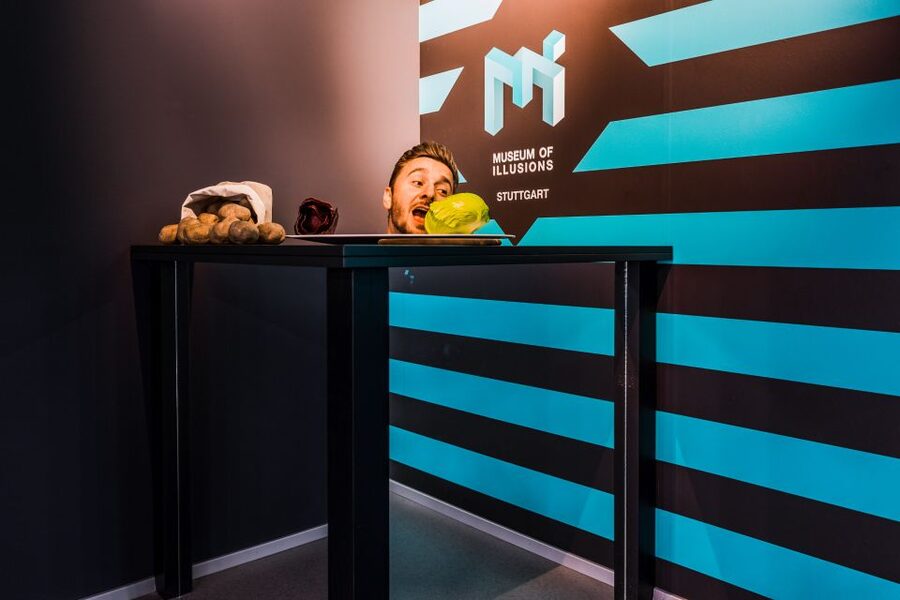
The Head on the Platter is more theatrical and social. It gives you the chance to create a playful image that makes it appear as if a person’s head is resting on a platter. It is the sort of attraction that works best when you are willing to pose rather than stand back.
These two stops show the range of the museum. Some displays ask you to think about visual processing, while others are mainly designed for a laugh and a photograph. That balance helps keep the visit from feeling like a series of identical mirror tricks.
If you are visiting with a group, take turns photographing one another. The exhibits are more entertaining when everyone gets a chance to be part of the illusion, not just the person holding the phone.
How long you should plan for the visit
The ticket is valid for one day, with starting times shown when you check availability. The supplied information does not give a fixed visit length, so plan around your chosen entry time rather than building your whole Stuttgart day around an exact end time.
Because the experience is self-guided, your pace will shape the visit. A group taking plenty of photos and reading the explanations will need longer than someone who moves through the rooms quickly. Families may also spend extra time repeating the exhibits, particularly the mirror effects and balance challenges.
The flexible format is useful on a day with changing plans. You can move through the museum without waiting for a guide or matching a fixed tour route. The tradeoff is that you must create your own rhythm and decide how much attention to give each display.
I would avoid booking it as a rushed gap between two fixed appointments. The exhibits are simple to enter but often invite a second attempt, a better photograph, or a quick discussion about why the effect works.
Is $16 a fair price?

At $16 per person, this is a moderate-cost attraction rather than a major splurge. The value comes from the combination of access to the full collection, photo opportunities, and short explanations about perception. It is particularly fair for a family or group that will actively try the exhibits instead of treating the museum as a quick walk-through.
The price is less attractive if you only want a traditional museum visit or prefer quiet displays with little participation. Much of the appeal comes from posing, repeating effects, and sharing the experience with someone else. Solo visitors can still enjoy the visual tricks, but the social exhibits may feel less rewarding.
The ticket includes entry only. Transportation, food, and drinks are not included, so you should account for those separately. Since the museum is indoors, it can also provide a useful change of pace when you want an activity that does not depend on outdoor conditions, though no weather-specific claim is made about your visit.
Reserve and pay later is available, which can help if your Stuttgart schedule is still moving around. You can also cancel up to 24 hours in advance for a full refund under the stated cancellation terms.
Who will enjoy this museum most?
I would recommend it first to families with children old enough to follow basic safety instructions and enjoy visual games. The exhibits give children something to do with their bodies and imagination, while the science explanations add a learning angle without turning the outing into a classroom.
It also suits friends, couples, and groups who want unusual pictures. The Mirror Room, Infinity Room, Clone Table, and Head on the Platter all reward cooperation and a willingness to pose.
People who enjoy perception puzzles should give it a try as well. The strongest part is not simply the surprise of seeing a strange reflection. It is noticing how quickly your eyes can persuade your brain that a stable room is moving or that a repeated image is a real extension of space.
I would be more cautious if you have epilepsy or are sensitive to rotating patterns. The Vortex Tunnel, Zoetrope, and Tilted Room are specifically marked as unsuitable for those with epilepsy. Wheelchair access is available, but the provided details do not explain how every individual exhibit is arranged, so you may want to confirm any specific access needs before booking.
Practical tips for a smoother visit
Bring a charged smartphone. Several exhibits are built around photos, and a low battery would cut short one of the main pleasures of the museum.
Wear your most willing-to-pose attitude. The displays are not at their best when you stand back and watch someone else. Take turns, try more than one position, and read the explanation after you have made your first guess.
If you are sensitive to motion, start with the mirror and hologram displays before deciding how to approach the Vortex Tunnel, Turntables, Zoetrope, or Tilted Room. The museum identifies the three latter attractions as unsuitable for those with epilepsy, so take that warning seriously.
Check the available starting time before you book. The ticket is valid for one day, but the activity is not presented as an open-ended visit at any hour. Also remember that entry is the only included service, so plan your transport and refreshments separately.
Should you book the Museum of Illusions Stuttgart?
Book it if you want an interactive indoor activity where you can take unusual photos, test your balance, and learn why your eyes sometimes mislead you. The $16 price makes sense for families and groups who will spend time at the exhibits rather than rush through them.
Skip it if you are looking for a traditional museum collection, a guided historical tour, or a quiet cultural visit. For most suitable visitors, though, the combination of mirror rooms, holograms, science explanations, and playful group displays makes this a practical choice for a lighter stop in Stuttgart.
FAQ
Where is the Museum of Illusions experience located?
It is located in Stuttgart, in the German state of Baden-Württemberg.
How much does entry cost?
The listed price is $16 per person.
How long is the ticket valid?
The ticket is valid for one day. You should check availability for the available starting times.
Is transportation included?
No. Transportation is not included with the entry ticket.
Are food and drinks included?
No. Food and drinks are not included.
Is the museum wheelchair accessible?
Yes, the activity is listed as wheelchair accessible.
Are any exhibits unsuitable for people with epilepsy?
Yes. The Vortex Tunnel, Zoetrope, and Tilted Room are not suitable for people with epilepsy.
Just added around Germany
- Stuttgart: Stuttgart Wine Museum Wine Tasting★ 4.7 · 55 reviews
- Stein: Public guided tour of the “Old Mine” museum★ 4.5 · 18 reviews
- Speyer: Technik Museum Speyer Ticket with an IMAX Dome Film★ 4.7 · 360 reviews
- Berlin: Bode Museum Ticket★ 4.5 · 214 reviews
- Munich Private Walking Tour with BMW Museum & Welt Entry★ 4.2 · 19 reviews
- Munich: Residenz Palace, Museum and Treasury Private Tour★ 4.9 · 15 reviews
- Munich: WOW Museum – Room for Illusions Ticket★ 3.5 · 14 reviews
- Munich Nymphenburg Palace & Carriage Museum Fast-Track Tour★ 4.9 · 57 reviews
Museum Tours in Germany, compared.




Dresden: Church of Our Lady Guided Tour of Gallery
Read our review →
Skip-the-Line: Berlin Wall Museum at Checkpoint Charlie
Read our review →Browse the lists this tour appears in