

Review · GERMANY
Stuttgart: Mercedes-Benz Museum Entry Ticket
The Mercedes-Benz Museum does more than line up shiny cars. It follows the automobile from Carl Benz’s 1886 invention through changing technology, daily life, industry, war, design, racing, and popular culture. The 160-plus vehicles give the story its star power, but the timeline is what makes the visit useful even if you are not a lifelong car fan.
I like the two-route layout, which lets you follow the Legend and Collection stories, and I like the free audio guide in eight languages. The building and exhibition stretch across 16,500 square meters, so you get a serious museum visit for $18, not a quick showroom stop. The main catch is time: one hour is far too short, and even three hours can feel tight if you listen to the commentary.
Key points to know before you go
- Carl Benz’s 1886 invention begins the story, linking the first motorcar to the modern automobile.
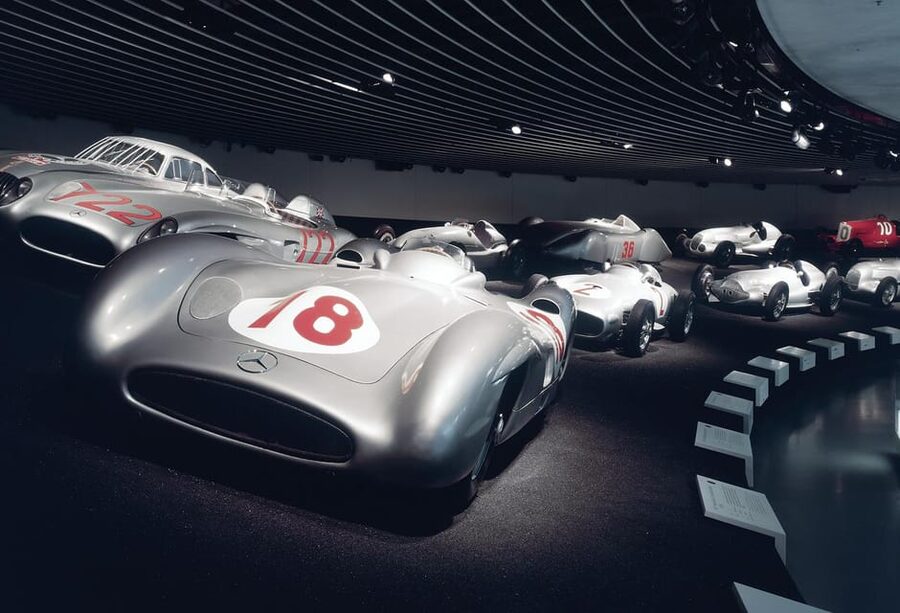
- More than 160 vehicles fill 12 exhibition rooms, including early cars, racing machines, commercial vehicles, and research designs.
- The two narrative routes are called Legend and Collection, giving you a choice between a time-based story and a look at vehicle types and themes.
- Plan at least two to three hours, with four to five hours better if you want to read, listen, and stop often.
- The audio guide is free in German, English, Italian, Spanish, French, Chinese, Japanese, and Russian.
- Prebooked tickets can save time, though signs and staff direction for prepaid entry may not always be obvious.
The first motorcar sets the tone
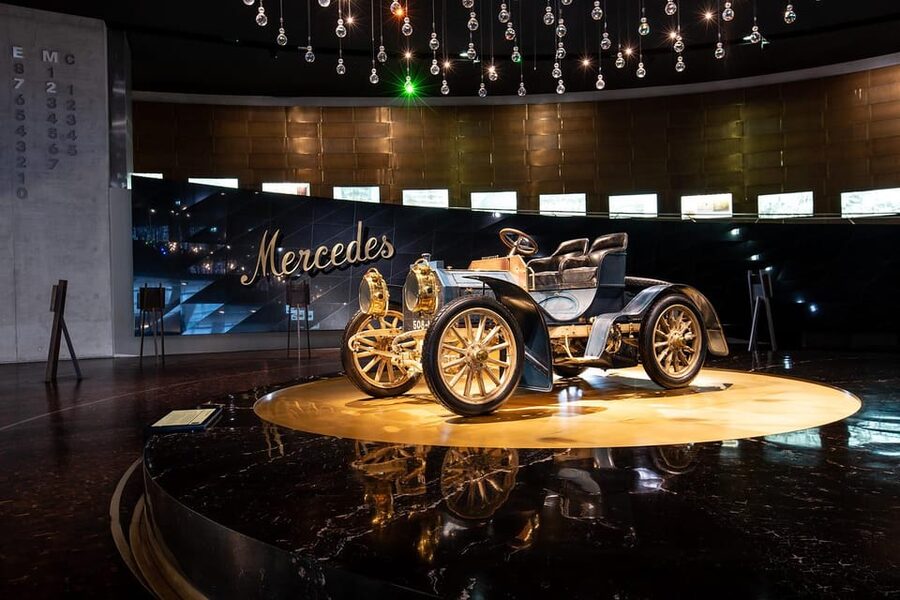
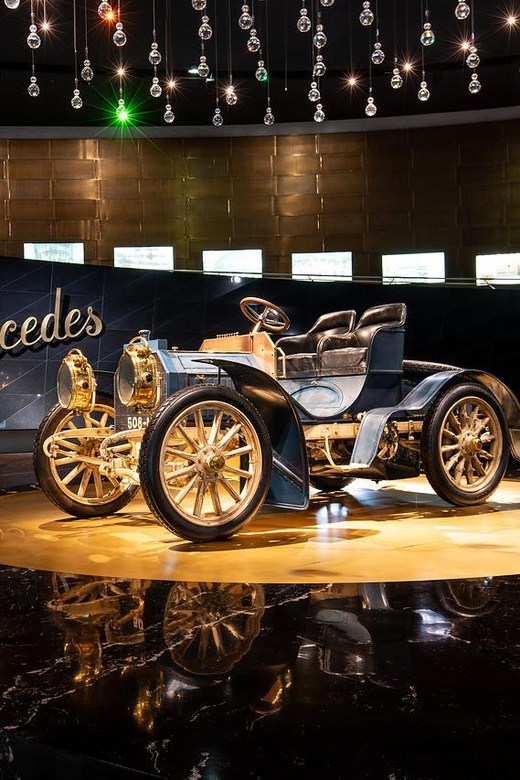
The museum begins with the automobile’s origin, placing Carl Benz’s 1886 invention at the center of the story. That starting point matters because you are not simply looking at old Mercedes cars. You are watching a new machine change transport, industry, work, design, and ordinary life.
The display then moves through the company’s development in chronological order. This is one of the museum’s strongest choices. You can see how engines and vehicles changed over time, but you also see the wider events that shaped Germany and the world around them.
I would not rush through the early rooms. The first cars may look modest beside the later racing machines, yet they explain the basic problem the engineers were solving. The museum makes the automobile feel like a piece of social history rather than just a luxury product.
The audio guide adds useful context as you walk. You can select from eight languages, and the commentary helps turn technical displays into a story. English is available, along with German, Italian, Spanish, French, Chinese, Japanese, and Russian.
A few more museum visits around Germany worth comparing
- Berlin: Jewish Museum Berlin Entrance Ticket
★ 4.5 · 8,393 reviews - Berlin: DDR Museum Tickets
★ 4.3 · 3,443 reviews - Berlin: Natural History Museum Entrance Ticket
★ 4.6 · 3,382 reviews
Two routes, one large museum
The permanent exhibition uses two connected narratives: Legend and Collection. The Legend route gives you the broad historical line, while the Collection route groups vehicles and themes in a different way. Together, they let you see both the company’s timeline and the range of machines it produced.
The exhibition covers 12 rooms over 16,500 square meters. The route also spans seven floors, so this is not a compact gallery where you can see everything in 45 minutes. The building itself is part of the experience, with a large, modern interior that gives the cars room to breathe.
I like the way the layout creates a sense of progress. Early vehicles lead toward later models, racing cars, and experimental designs. You are able to connect each leap in engineering with the machines that made it visible.
The size has a downside. If you stop at every vehicle, listen to every audio point, and read the historical panels, the museum can take four or five hours. If you have only 90 minutes before a flight or train, you will need to make choices.
For a shorter visit, I would focus on the beginning of the automobile story, one section of standard production cars, and the racing collection. The museum does not provide a clearly marked express route in the information supplied, so you should decide your priorities before entering.
More than cars on polished platforms
The vehicles are the main attraction, but the museum’s value comes from the setting around them. It connects the engine and automobile with aircraft, trams, racing, industrial development, and daily transportation. That wider approach gives non-car enthusiasts a reason to stay interested.
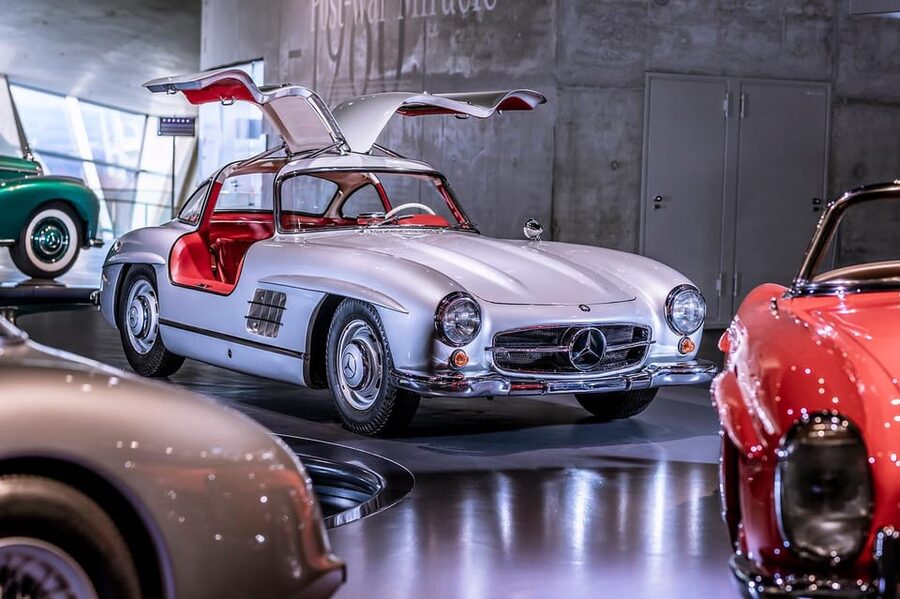
You can expect some of the oldest automobiles ever built, along with legendary racing cars and futuristic research vehicles. The range is broad enough to show how the same ideas were used in family transport, commercial work, competition, and future design.
The racing section has a natural sense of drama. After following the slower development of engines and road cars, you reach machines built for speed and competition. Formula 1 cars and other racing vehicles give the final part of the visit a strong finish.
The research vehicles are valuable for a different reason. They show that the company’s story is not frozen in the past. The museum uses them to point toward experiments in design and technology, even when the finished products are not yet part of everyday life.
I also like the social and cultural framing. The exhibition connects the company’s development with major historical events, so you see more than a sequence of model names. This helps explain why a vehicle mattered in its own period and how the automobile affected the wider world.
A good museum for people who do not collect car facts
You do not need to know the difference between every Mercedes model to enjoy this visit. The chronological structure gives you a simple way in. Start with the first motorcar, watch the technology change, and notice how vehicle design responds to new needs.
A partner who is less interested in cars can still find plenty to examine. Classic vehicles, industrial history, aircraft, trams, racing, and the building itself create different points of interest. The museum also places the cars in the context of popular culture and everyday life, which keeps the experience from becoming a long technical catalog.
Children have useful reasons to pay attention, too. The museum offers special activities such as coloring, and a children’s audio guide and puzzles are available. Videos on the floors can help older children and teenagers follow the story without reading every panel.
The scale may test younger children, especially if you try to complete every room in one go. I would plan pauses and avoid promising a quick visit. The museum is family-friendly, but its size still requires patience.
Same city, a completely different collection:
- Berlin: Neues Museum Entry Ticket
★ 4.6 · 3,261 reviews - Berlin: Museum Island Multiple Museum Entry Ticket
★ 4.4 · 2,861 reviews - Cologne: Chocolate Museum Entrance Ticket
★ 4.4 · 2,790 reviews - Dresden: Church of Our Lady Guided Tour of Gallery
★ 4.7 · 2,421 reviews
How much time should you allow?
Two to three hours is the practical minimum for a worthwhile visit. That gives you time to see the major periods and several important vehicles without stopping for every detail.
Four to five hours works better if you are a serious car enthusiast or want to use the audio guide fully. One visitor with only three hours still did not reach every car, which tells you how much material is here.
Ninety minutes can work only as a highlights visit. You might see the broad sequence and a few major displays, but you will leave large parts unexplored. One hour is especially poor value unless your only goal is to glimpse the building and a few famous cars.
The museum is open Tuesday through Sunday from 9 a.m. to 6 p.m., with last admission at 5 p.m. Be careful with a late entry. A 4:30 p.m. arrival gives you only 90 minutes before closing, which is not enough for a full historical visit.
I would choose a morning or early afternoon entry and keep the rest of the day flexible. That way, you can stay with a display that catches your attention instead of watching the clock.
Is the $18 ticket good value?
At $18 per person, I consider this strong value for anyone with at least two hours available. The ticket includes admission to the permanent exhibition and the audio guide, with no separate charge for the eight language options.
The price becomes even more reasonable when you consider the size: 16,500 square meters, 12 rooms, more than 160 vehicles, and material covering the automobile from 1886 to modern and experimental designs. This is closer to a half-day cultural attraction than a small brand museum.
The value is lower if you can spare only 60 to 90 minutes. You will still see impressive vehicles, but you will pay for a full museum and experience only a slice of it. If your schedule is tight, check the closing time before booking and avoid a late afternoon entry.
Prebooking can also make the visit easier. A prepaid ticket can be scanned at the entrance, helping you avoid the standard ticket line. The practical wrinkle is that directions for prepaid visitors may not always be clear, so look for the main entrance and ask staff if the queue is not obvious.
The booking terms are flexible: cancellation is allowed up to 24 hours in advance for a full refund, and you can reserve now and pay later. Those options are useful when your Stuttgart plans depend on weather, rail connections, or a changing road itinerary.
Audio guide advice and small practical flaws
The audio guide is one of the best inclusions because the museum contains too much information to absorb from the cars alone. It gives you the background behind the vehicles and helps explain the links between engineering, society, and historical events.
There is one practical issue to watch for. Some handheld units may fail to activate at particular displays, and staff assistance may not always solve the problem immediately. If an audio point does not work, move on and return later rather than losing ten minutes trying to force it.
Volume can also be a concern. In busy areas, the commentary may be hard to hear if the device is set too low. I would test the volume near the entrance and make sure you understand how the unit works before beginning the main route.
The audio guide is not a substitute for planning. It can add an hour or two to your visit, especially if you listen to every stop. Choose the displays you care about most and use the guide selectively if your schedule is limited.
Comfort, access, and the museum visit
The museum is wheelchair accessible, which makes the large multilevel exhibition easier to approach for visitors with mobility needs. The building has substantial interior space, but the visit still involves moving through many rooms and floors.
Resting points may feel limited during a long visit. If you plan to stay four or five hours, take breaks when you find a suitable place rather than waiting until you are worn out. This is especially useful for families and anyone using the audio guide at every stop.
The main entrance is the meeting point, and you enter the museum directly there. The attraction is open Tuesday to Sunday, so Monday is not an option under the stated schedule.
The gift shop is another pleasant final stop, particularly for families and car enthusiasts. It adds a little browsing time after the exhibition, so allow for it if you enjoy museum souvenirs.
Who will enjoy the Mercedes-Benz Museum most?
I would recommend this museum first to car enthusiasts, design fans, engineering-minded visitors, and anyone interested in German industrial history. You can spend hours comparing early models, racing cars, and concept vehicles without running out of material.
It also suits families with children from school age upward. Coloring activities, puzzles, and a children’s audio guide give younger visitors something to do, while floor videos can help teenagers connect the cars with larger historical events.
It is a good choice for couples or friends with different interests because the museum includes transportation, culture, architecture, and social history. A non-car enthusiast may not want to study every engine, but the overall story remains accessible.
I would be cautious about booking it for a rushed stop between trains. The museum rewards attention, and the size is its main strength only when you have time to use it.
Should you book it?
Yes, if you can give the Mercedes-Benz Museum at least two to three hours. For $18, you get a large, well-organized exhibition, more than 160 vehicles, a free audio guide, and a clear story that reaches beyond the Mercedes brand.
Book it with a morning or early afternoon arrival, especially if you want to hear the audio commentary. If you have four or five hours, take your time with the early automobile displays, historical sections, racing cars, and research vehicles.
Skip it only if your Stuttgart schedule allows less than 90 minutes or if you are visiting on Monday. In that case, the limited time will make the ticket poor value. For almost everyone else, this is one of the city’s most worthwhile indoor attractions, and you do not need to be a dedicated car fan to appreciate it.
FAQ
How much does admission to the Mercedes-Benz Museum cost?
The listed price is $18 per person. The ticket includes admission to the Mercedes-Benz Museum exhibition and the audio guide.
How long is the ticket valid?
The ticket is valid for one day. Check availability for the starting time when booking.
When is the Mercedes-Benz Museum open?
The museum is open Tuesday through Sunday from 9 a.m. to 6 p.m. Last admission is at 5 p.m.
Which languages are available for the audio guide?
The audio guide is available in German, English, Italian, Spanish, French, Chinese, Japanese, and Russian.
Is the museum wheelchair accessible?
Yes. The Mercedes-Benz Museum is wheelchair accessible.
Can I cancel the booking?
Yes. You can cancel up to 24 hours in advance for a full refund. A reserve now and pay later option is also available.
Just added around Germany
- Stuttgart: Stuttgart Wine Museum Wine Tasting★ 4.7 · 55 reviews
- Stuttgart: Museum of Illusions Entry Ticket★ 4.2 · 507 reviews
- Stein: Public guided tour of the “Old Mine” museum★ 4.5 · 18 reviews
- Speyer: Technik Museum Speyer Ticket with an IMAX Dome Film★ 4.7 · 360 reviews
- Berlin: Bode Museum Ticket★ 4.5 · 214 reviews
- Munich Private Walking Tour with BMW Museum & Welt Entry★ 4.2 · 19 reviews
- Munich: Residenz Palace, Museum and Treasury Private Tour★ 4.9 · 15 reviews
- Munich: WOW Museum – Room for Illusions Ticket★ 3.5 · 14 reviews
Museum Tours in Germany, compared.




Dresden: Church of Our Lady Guided Tour of Gallery
Read our review →
Skip-the-Line: Berlin Wall Museum at Checkpoint Charlie
Read our review →Browse the lists this tour appears in