
Review · BRUSSELS
Choco-Story Brussels: Chocolate Museum Entrance with Tasting
The best part of Choco-Story Brussels comes near the end, when a chocolatier turns smooth chocolate into pralines right in front of you, then lets you taste the result. I like the self-paced audioguide, which lets you linger over the displays or move along quickly, and the generous chance to sample chocolate along the way.
I also like how the museum makes a complicated subject approachable for children, with games, short films, and hands-on displays. The main drawback is space: the demonstration room can fill up, and a poor position may leave you hearing the presenter better than seeing the work.
Key points at a glance
- Watch pralines made by hand: The live demonstration is the visit’s main event, with a sample of the finished praline afterward.
- Follow cocoa across centuries: The exhibits trace cocoa from its sacred role in Aztec culture to Belgian chocolate’s international fame.
- Use a multilingual audioguide: Choose from a wide range of languages and move through the museum at your own speed.
- Expect plenty of tasting: You receive a welcome sample, additional chocolates during the visit, and the praline made during the demonstration.
- Allow about 1 to 2 hours: The booking window is listed as a day, but the museum experience itself is commonly completed in roughly an hour and a half.
- Arrive early for the clearest view: The museum is compact, and the demonstration area gets crowded later in the day.
Chocolate begins with a story, not a bonbon
Choco-Story Brussels is more than a room full of sweets. It explains how a bitter tropical seed became one of Europe’s favorite treats, then shows you the techniques behind the polished pralines sold all over Belgium.
Your visit starts at Rue de l’étuve 41, in central Brussels, with an audioguide and a welcome tasting. The guide is handheld, easy to operate, and available in many languages. English, Dutch, French, German, Spanish, Italian, Russian, and Chinese are listed, while the full experience is advertised in 11 languages. One useful detail is that the visit is self-guided, not a traditional walking tour with a person leading the group.
I find that format a good match for a museum like this. You are not tied to a guide’s pace, and you can pause the narration while looking at an object or playing a game. The tradeoff is simple: you cannot stop a guide to ask a follow-up question.
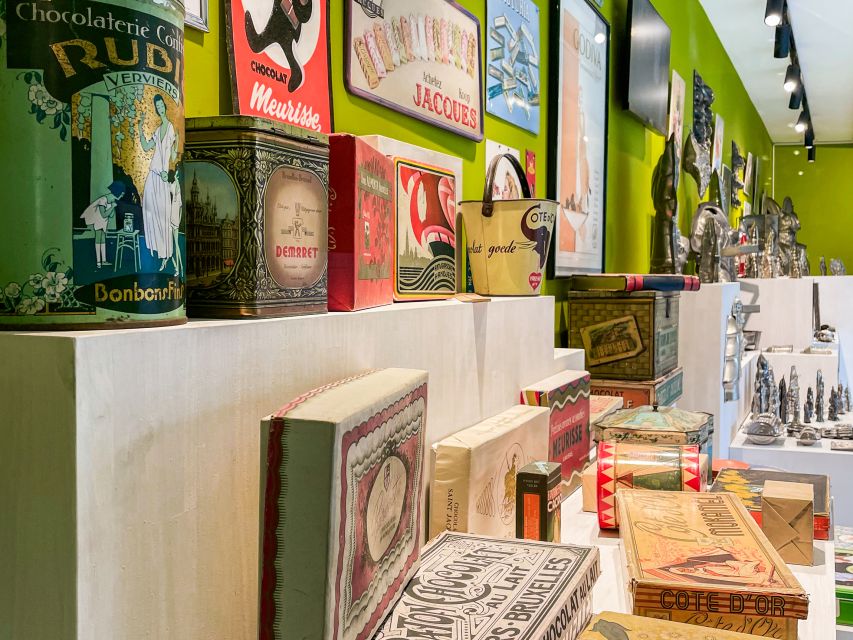
The opening rooms set up the basic history. Cocoa was valued by the Aztecs as a sacred gift from the gods, long before Europeans turned it into a sweet. The museum follows cocoa’s journey across the Atlantic and explains how changing methods, tastes, and technology helped create the chocolate people know today.
More Museum Tours in Brussels
- Brussels: Atomium Entry Ticket with Design Museum Ticket
★ 4.4 · 9,254 reviews - Brussels: Autoworld Museum Ticket
★ 4.7 · 1,301 reviews - Brussels: The World of Banksy Museum Permanent Exhibition
★ 4.7 · 636 reviews
From cocoa bean to Belgian praline
The central idea is transformation. A cocoa bean does not taste like a chocolate bar, and the museum takes time to show how cultivation, harvesting, and processing shape the final product.
Displays cover the culture of cocoa growing and the steps that carry the bean toward finished chocolate. Historical objects, films, interactive displays, and short explanations break up the information, so you are not simply reading wall panels from one room to the next.
I especially like the balance between visual material and audio. The narration gives you the wider story, while the exhibits provide something to look at and handle. Several interactive games make the visit easier for children, and adults get enough detail to understand why chocolate production is more technical than it appears from a shop window.
The museum also explains how Belgian chocolate developed its worldwide reputation. The focus is not only on eating chocolate, but on the craft behind the country’s famous pralines. That context makes the final demonstration more useful because you already understand why ingredients, texture, and technique matter.
There is a lot of information here. If you listen to every section carefully, you will want more than a quick half hour. I would plan on about 90 minutes, with extra time if your group includes children who want to try every interactive feature.
Tastings that make the history easier to understand
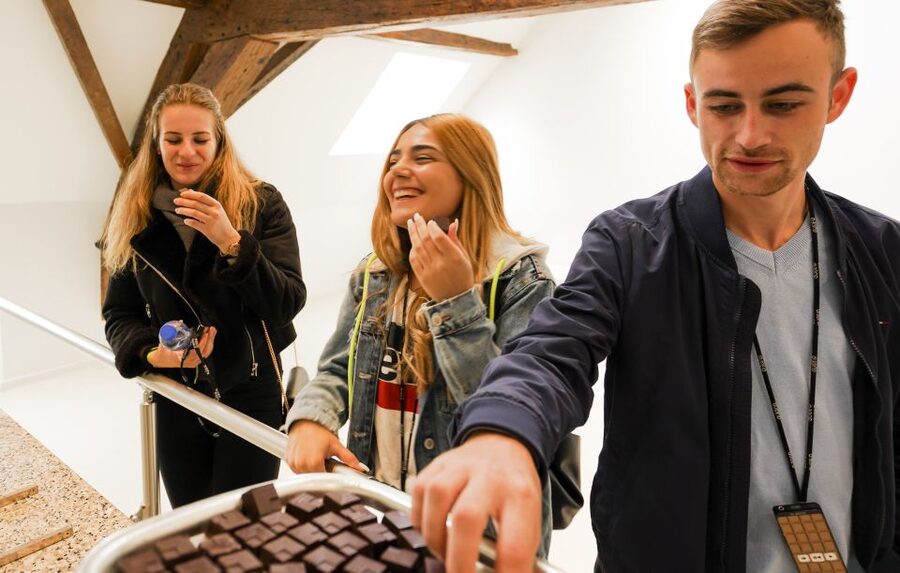
Chocolate tasting is built into the experience rather than added as a single sample at the exit. You receive a welcome taste when you arrive, then encounter more samples during the visit, followed by the praline made during the live demonstration.
That changes the museum from a purely visual display into a practical lesson. You can compare textures and flavors as the audioguide explains the product. The tasting is not presented as a formal, expert-led tasting class, so you should not expect a detailed lesson on flavor notes or a large sit-down flight. Still, at $18 per person, the amount of chocolate included adds real value.
Some people may want more tasting stations. The museum’s strength is its mix of history and samples, not an endless succession of chocolates. If your main goal is to eat as many pralines as possible, a specialist chocolate tasting may suit you better. If you want to understand what you are eating, this is the more rounded choice.
The welcome tasting also gives children an immediate reason to pay attention. The chocolate arrives before the longer historical material, which is a smart move for younger visitors with limited patience.
The chocolatier demonstration is the main event
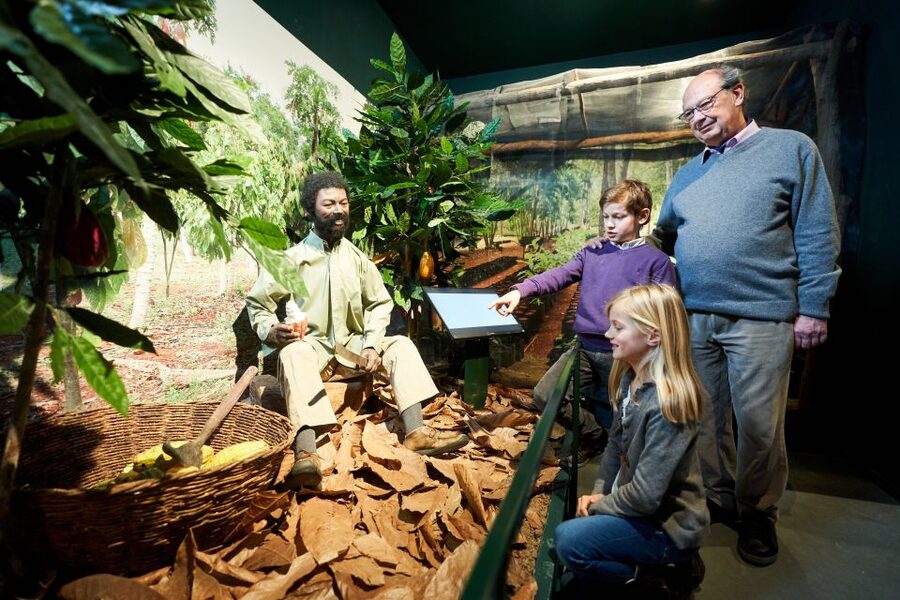
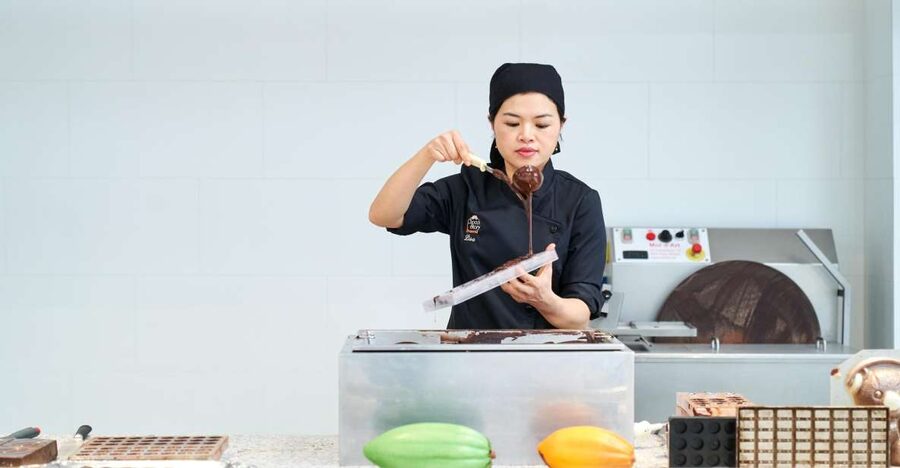
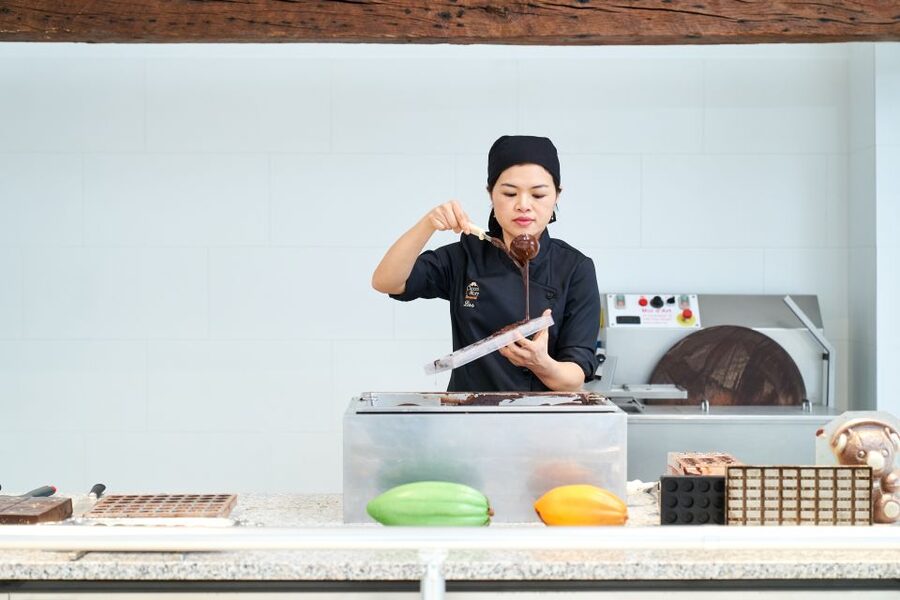
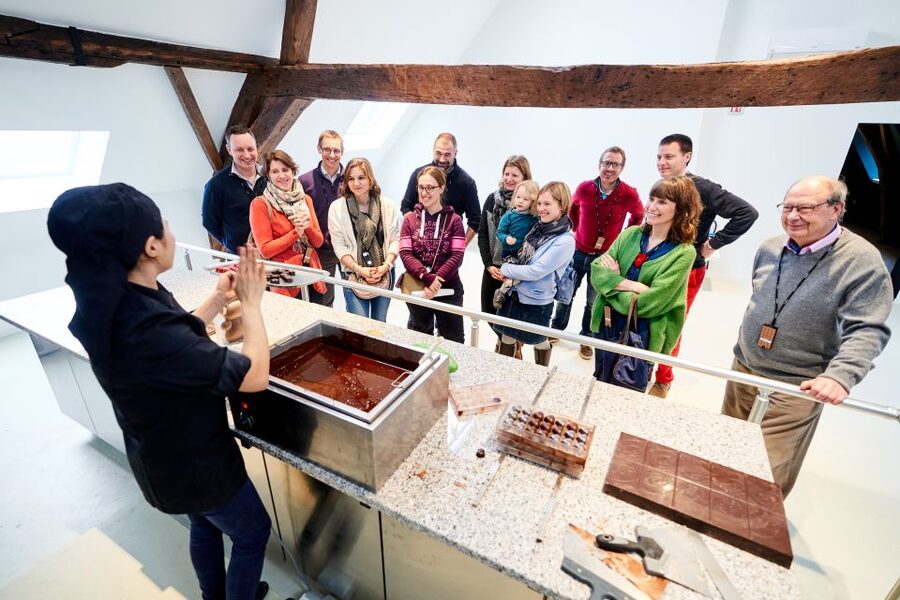
The live demonstration brings the subject to life. A master chocolatier works with melted chocolate and shows how it becomes an artisanal praline using traditional methods. At the end, you taste the same kind of praline you just watched being made.
This is the point where the museum feels most like a working chocolate experience rather than a conventional exhibit. The demonstrators use humor and clear explanations, and named presenters such as Gregory and Luisa have been specifically praised for keeping the session lively. The quality can depend on who is presenting, but the format gives the visit a strong finish.
You should plan your position carefully. The demonstration area is small, and it can become crowded, especially when several groups arrive together. Taller people may have an easier view, while shorter visitors can find that other people block the work surface or even the screen.
Noise is another practical issue. If people talk during the presentation, it can be difficult to hear every explanation. Arriving early for the demonstration gives you a better chance of standing near the front. The small-group description, limited to 10 participants, may apply to the booking arrangement, but the demonstration itself can feel more crowded because several museum visitors may gather in the room.
The presentation is informative, but do not expect a long professional workshop in tempering, filling, and molding. You watch the craft, hear the explanation, and taste the result. That is enough to make the process memorable, but anyone seeking hands-on chocolate making should choose a separate workshop.
More chocolate museums in Belgium:
- Brussels: Chocolate Museum Visit with Workshop
★ 4.6 · 1,474 reviews - Bruges: Chocolate Making Workshop and Chocolate Museum Entry
★ 4.6 · 395 reviews - Lindt Home of Chocolate Museum Entry Ticket
★ 4.7 · 9,329 reviews - Cologne: Chocolate Museum Entrance Ticket
★ 4.4 · 2,790 reviews
Why the self-guided format works
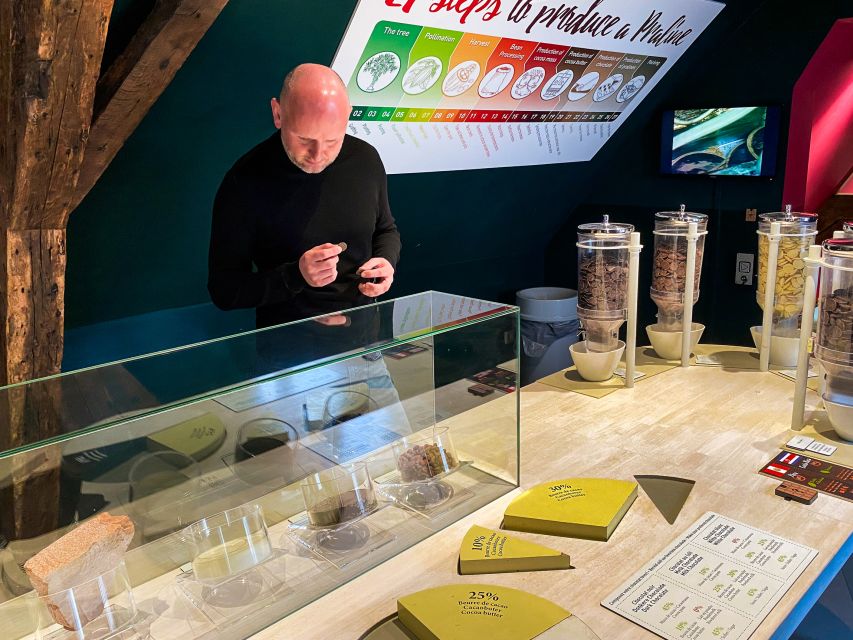
The audioguide is shaped like a chocolate bar, a small detail that adds charm without changing the substance of the visit. You move through the rooms in your own order and control the pace.
I would use the guide selectively if time is short. Listen closely to the sections on cocoa’s early history, Belgian pralines, and the production process. The short films and games can fill in the story when you need a break from audio.
Families benefit from this freedom. A child can spend longer at an interactive station while the adults continue listening, then the group can meet up again. Couples and solo visitors also get a relaxed experience without having to keep pace with a large guided group.
The downside is the lack of conversation. If you are curious about ethical cocoa production, specific recipes, or the chocolatier’s technique, the audio device cannot respond. Some visitors also prefer headphones or earphones to reduce room noise, while the supplied device may not give everyone the same quiet listening experience.
The museum’s own staff provide help at the entrance, and the guide is designed to be straightforward. That matters because a clumsy audio system can turn a short museum visit into a technical chore. Here, the main task is simply choosing your language and following the displays.
A good indoor stop in central Brussels

The museum is at Rue de l’étuve 41, 1000 Brussels, in the heart of the city. That makes it easy to pair with other central sights, shops, and food stops. You do not need to build a full day around the museum, and it works well when rain, cold, or heat makes outdoor sightseeing less appealing.
The booking information lists the duration as one day, with starting times checked through availability. In practical terms, I would treat that as a flexible entry period rather than a full-day attraction. Most people should allow an hour to an hour and a half, or closer to two hours if they listen to everything and take their time with the tastings.
The $18 price is fair for the combination of admission, multilingual audio, interactive displays, several tastings, and a live chocolatier demonstration. It is especially good value for families because the museum gives children something to do beyond reading labels. Adults who already know a great deal about Belgian chocolate may find the historical sections familiar, but the tasting and demonstration still give the visit a pleasant payoff.
The museum is wheelchair accessible, which removes one common planning concern. Free cancellation up to 24 hours in advance and reserve-now, pay-later booking also make it easier to fit into a changing Brussels schedule.
The shop is part of the experience
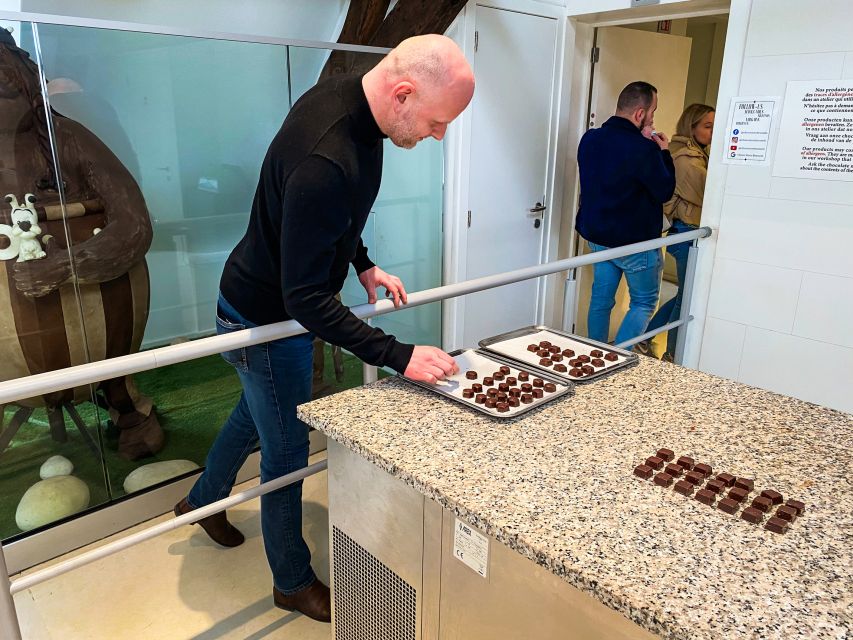
Save a few minutes for the museum shop. It offers Belgian chocolate creations that you can take home, and the selection gives you a chance to continue the tasting after the visit.
This is not just a souvenir stop for children. If you want gifts for family or friends, chocolate travels more easily than many Brussels purchases, though you should still consider weather and storage during your trip. The shop also lets you buy the styles you have just learned about, which gives the museum story a practical ending.
I would avoid treating the shop as the main reason to visit. Brussels has many chocolate shops, and the museum’s best value comes from combining education, samples, and the demonstration. The shop works well as the final extra, not as a substitute for the museum itself.
Who will enjoy Choco-Story Brussels most
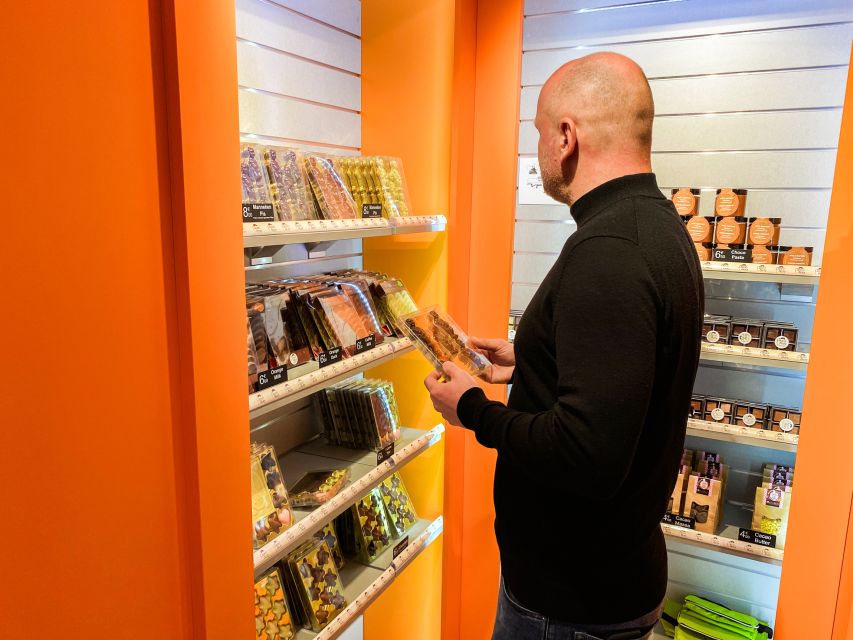
I would recommend this experience to families, first-time Brussels visitors, chocolate fans, and anyone wanting a short indoor activity in the city center. The audioguide gives adults useful historical context, while games and tasting keep younger children involved.
It also suits solo visitors. You can move at your own pace, and there is no need to join a formal group or keep up with a guide. Couples can make it a relaxed stop between central attractions.
You may want to choose another activity if you dislike audio-guided museums, need a very quiet setting, or want extensive hands-on instruction. The demonstration is watched rather than performed by you, and the compact rooms can feel crowded at busy times.
For the best experience, I would go early in the day. A 10:30 visit has been specifically noted as quiet, with the museum becoming busier later. Stand near the front before the praline demonstration begins, and give yourself enough time to listen instead of rushing from sample to sample.
Should you book Choco-Story Brussels?
I would book it if you want an accessible introduction to Belgian chocolate rather than a pure tasting session. The strongest combination is the clear audioguide, the historical journey from cocoa bean to praline, and the live demonstration with a sample of the finished chocolate.
At $18, the experience earns its price through variety. You get a museum, interactive elements, tastings, and a chocolatier presentation in one central Brussels stop. Just keep your expectations realistic: it is self-guided, the demonstration room may be crowded, and the visit is educational as well as edible.
Book it for a flexible hour or two, arrive early for a good demonstration view, and leave room in your bag for something from the shop.
FAQ
How much does Choco-Story Brussels cost?
The listed price is $18 per person.
How long does the chocolate museum visit take?
The booking duration is listed as one day, but the museum visit is commonly completed in about one to two hours. One detailed experience lasted approximately an hour and a half.
Is Choco-Story Brussels guided by a person?
The visit is self-guided with a handheld audioguide. A live chocolatier presents the praline demonstration, but there is no guide accompanying you through every room.
What languages are available on the audioguide?
The audioguide is available in many languages, including English, Dutch, French, German, Spanish, Italian, Russian, and Chinese. The experience information states that 11 languages are available.
Are chocolate tastings included?
Yes. The experience includes a welcome tasting, additional samples during the museum visit, and a taste of the praline made during the demonstration.
Is the museum wheelchair accessible?
Yes, Choco-Story Brussels is listed as wheelchair accessible.
Can I cancel my booking?
Yes. You can cancel up to 24 hours in advance for a full refund. Reserve-now, pay-later booking is also available.
More Food & Drink in Belgium
- Bruges: The Beer Experience Museum Entry with Audio Guide
★ 4.4 · 201 reviews - Brussels: Hop-On Hop-Off Bus Tour& Belgian Beer World Museum
★ 4.2 · 24 reviews - Dubai: Old Town, Creek, Museums, Souks, & Street Food Tour
★ 4.8 · 10,816 reviews - Porto: Cálem Cellar Tour, Interactive Museum & Wine Tasting
★ 4.5 · 4,113 reviews
More Dessert Tours in Belgium
- NYC: Museum of Ice Cream Entry Ticket
★ 4.3 · 2,619 reviews - Vienna: Chocolate Workshop in Chocolate Museum w/ Tasting
★ 4.5 · 1,802 reviews - Museum of Ice Cream New York City Admission Ticket
★ 4.0 · 1,154 reviews - Paris: Entrance Ticket to the Chocolate Museum
★ 4.1 · 1,105 reviews
Just added around Belgium
- Ghent: Museum of Fine Arts Entry Ticket★ 4.2 · 75 reviews
- Frietmuseum Brussels: Entry to the fries museum with a tasty treat★ 4.7 · 66 reviews
- Brussels: Musical Instruments Museum Entry Ticket★ 4.6 · 65 reviews
- Brussels: Comic Art Museum Entrance Ticket★ 4.0 · 56 reviews
- Brussels: Museum Art & History Entry Ticket★ 4.5 · 58 reviews
- Brussels: BELvue Belgium History Museum Entry Ticket★ 4.6 · 27 reviews
- Brussels: Hop-On Hop-Off Bus Tour& Belgian Beer World Museum★ 4.2 · 24 reviews
- Brussels: 48 Museums, Atomium, and Discounts Card★ 4.2 · 102 reviews
Museum Tours in Brussels, compared.
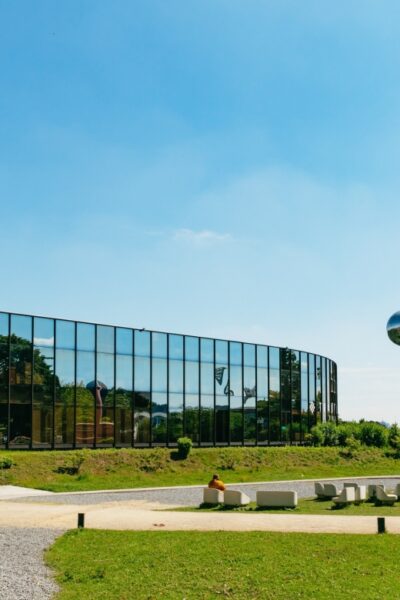
Atomium Entry Ticket with Design Museum Ticket
Read our review →
The World of Banksy Museum Permanent Exhibition
Read our review →
Frietmuseum Brussels: Entry to the fries museum with a tasty treat
Read our review →

Hop-On Hop-Off Bus Tour& Belgian Beer World Museum
Read our review →Browse the lists this tour appears in