
Review · BERLIN
Berlin: Natural History Museum Entrance Ticket
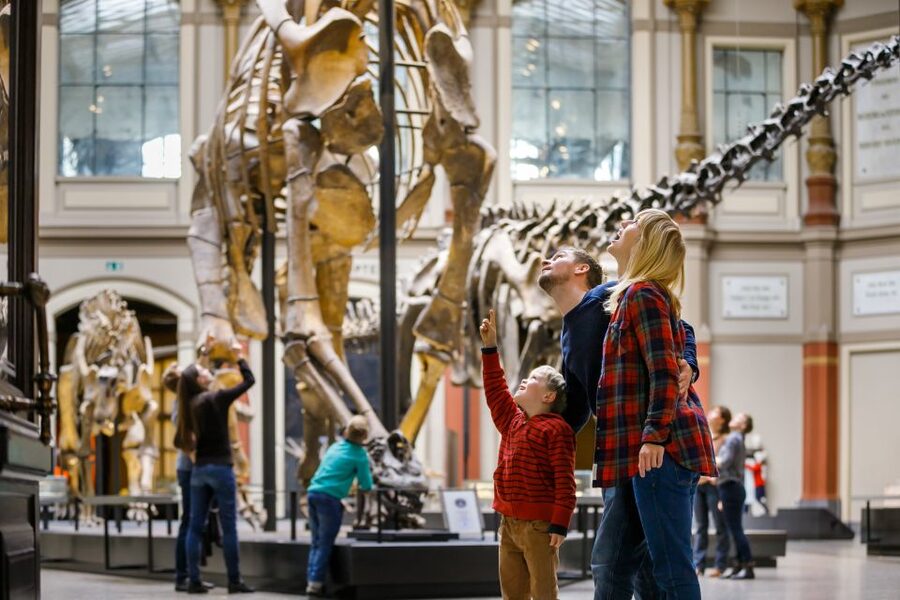
Berlin’s Museum für Naturkunde puts its biggest crowd-pleaser right in front of you: Giraffatitan brancai, the world’s tallest mounted dinosaur skeleton. The Dinosaur Hall then leads you toward Archaeopteryx, Tristan Otto the T. rex, minerals, taxidermy, and a striking wall showing 3,000 species.
I like the museum for two clear reasons: the dinosaur displays give children and adults an instant reason to look up, while the wet collection and Biodiversity Wall show how serious modern science can be. The main drawback is that some displays have limited English text, and the museum can feel smaller than its name suggests.
Key points
- Giraffatitan brancai: See the world’s tallest mounted dinosaur skeleton dominating the Dinosaur Hall.
- Tristan Otto: Meet one of the few original T. rex skeletons on display in Europe.
- Archaeopteryx lithographica: View the rare fossil often called the Mona Lisa of natural history.
- One million preserved animals: Enter a genuine research collection where specimens rest in 80 tonnes of alcohol.
- Biodiversity Wall: Scan 3,000 species in one thought-provoking display about life and extinction.
- Useful mobile ticket: Skip the ticket line, then use your phone for downloadable audio content in 10 languages.
Why the Dinosaur Hall earns the first look
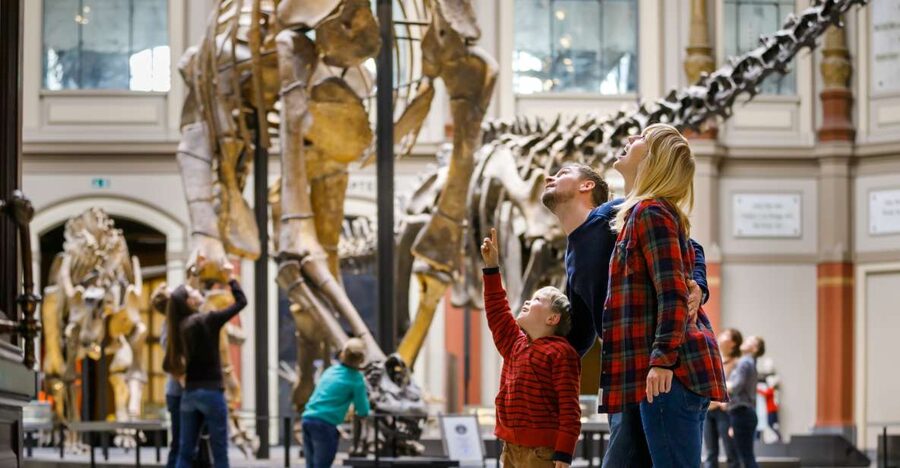
I would begin with the Dinosaur Hall, even if your main interest is minerals, mammals, or biology. The room presents life as it might have appeared in the Upper Jurassic period, around 150 million years ago, and the scale of the skeletons gives the visit its first great jolt.
Giraffatitan brancai is the star of the room. Its long neck reaches high above the displays, making the proportions of a plant-eating dinosaur easy to grasp in a way that a book or film cannot match. You do not need specialist knowledge here. The bones tell the basic story on their own.
The hall also has fossil objects and dinosaur material that remain part of active scientific study. That matters because these are not simply old props arranged for decoration. Fossils can still raise questions about movement, anatomy, age, and the world these animals occupied.
Families should allow time for children to look up, circle back, and compare the skeletons. Several comments about the museum point to its usefulness for young children, though the displays are not built around constant games or hands-on activities. If your child expects a large number of touchscreens, puzzles, or play stations, this may feel more like a traditional museum.
More Museum Tours in Berlin
- Berlin: Museum Island Multiple Museum Entry Ticket
★ 4.4 · 2,861 reviews - Skip-the-Line: Berlin Wall Museum at Checkpoint Charlie
★ 4.1 · 2,041 reviews - Berlin: Interactive DeJa Vu Museum Entrance Ticket
★ 4.1 · 1,338 reviews
Archaeopteryx and the rare value of an original fossil
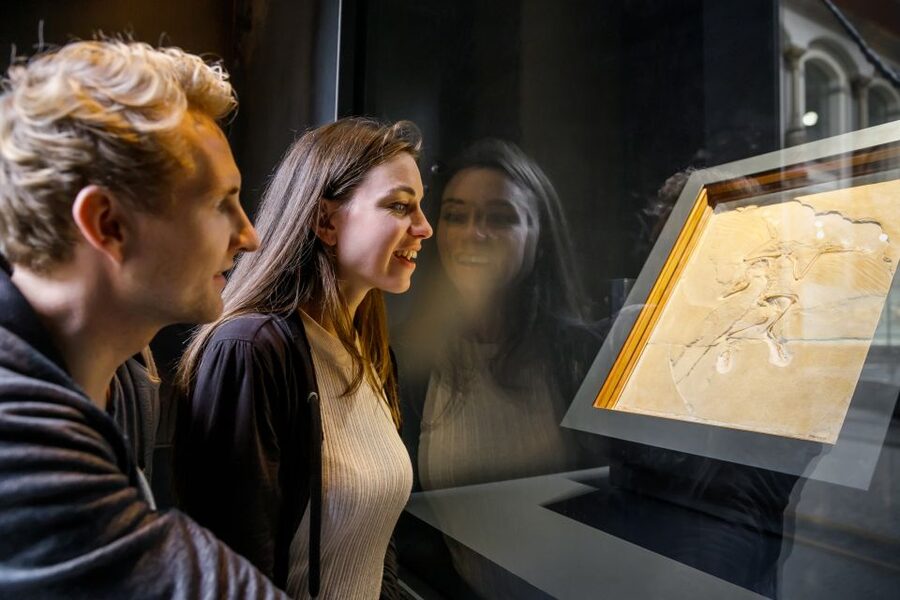
At the back of the Dinosaur Hall, look for Archaeopteryx lithographica in its protective case. This is one of the museum’s most important objects, and its nickname, the Mona Lisa of natural history, signals why it receives such careful treatment.
The fossil is valuable not only because it is old. Archaeopteryx helps scientists think about the connection between dinosaurs and birds, making it an important piece of the larger story of evolution. The museum’s presentation gives you a chance to see the actual fossil rather than a reproduction.
This is a quiet stop in a room full of giant bones. I like that contrast. Giraffatitan grabs your attention through sheer size, while Archaeopteryx rewards patience and close looking.
You may want to use the audio content here. It is available through a website rather than as a traditional physical audio guide, so bring your phone and headphones. Free Wi-Fi is available, but relying on a phone means you should be ready to scan pages and manage your own listening.
Tristan Otto gives the T. rex its moment
Tristan Otto is one of the few original T. rex skeletons in Europe, and it is one of the easiest exhibits to remember after leaving. The display uses lighting to emphasize the animal’s scale and shape, giving the skeleton a strong presence without needing much explanation.
If your reason for visiting is simply to see a real Tyrannosaurus rex, this ticket makes good sense. The skeleton is not just a cast made for a general dinosaur display. Its original material gives the exhibit added importance.
The T. rex also helps balance the Dinosaur Hall. Giraffatitan is vast and graceful, while Tristan Otto is compact, powerful, and instantly familiar. Children often need no introduction, and adults can appreciate the science behind the famous name.
The museum does not turn every display into a high-tech attraction. That is good news if you prefer specimens and clear visual presentation, but less ideal if you want an activity-packed children’s center. One parent found there were very few interactive areas, so plan to keep younger children engaged with questions and close observation.
The wet collection reveals the museum’s working side
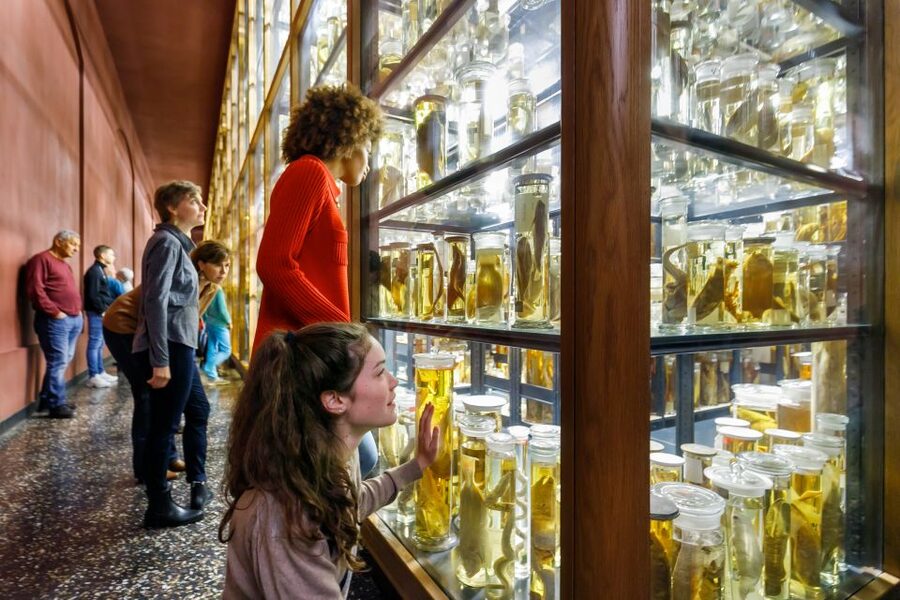
The East Wing offers a very different kind of visit. Here you can see about one million animals preserved in 80 tonnes of alcohol. This is the museum’s wet collection, and it gives you a look at the kind of material used for scientific research.
The phrase wet collection sounds plain, but the scale is remarkable. Instead of seeing only a few polished specimens in glass cases, you get a sense of how scientists build a record of life across many species. The collection connects the public galleries with the work carried out behind them.
This section may appeal most to adults, older children, and anyone curious about how natural history museums actually function. It is not as immediately theatrical as a T. rex, and some people may find preserved animals unsettling. That reaction is understandable. The displays ask you to think about animals as scientific records, not only as attractive objects.
The museum has around 200 scientists working with collections that contain more than 30 million items. You will not see all of those objects during a short visit, of course, but the number helps explain why this is more than a room of curiosities. The public displays are windows into a much larger research institution.
More natural history museums in Berlin:
- New York City: American Museum of Natural History Ticket
★ 4.5 · 15,447 reviews - American Museum of Natural History Admission Ticket
★ 4.0 · 1,931 reviews - Chicago: Field Museum of Natural History Ticket or VIP Tour
★ 4.7 · 717 reviews - Field Museum of Natural History Admission Tickets
★ 4.5 · 489 reviews
The Biodiversity Wall makes a large idea visible
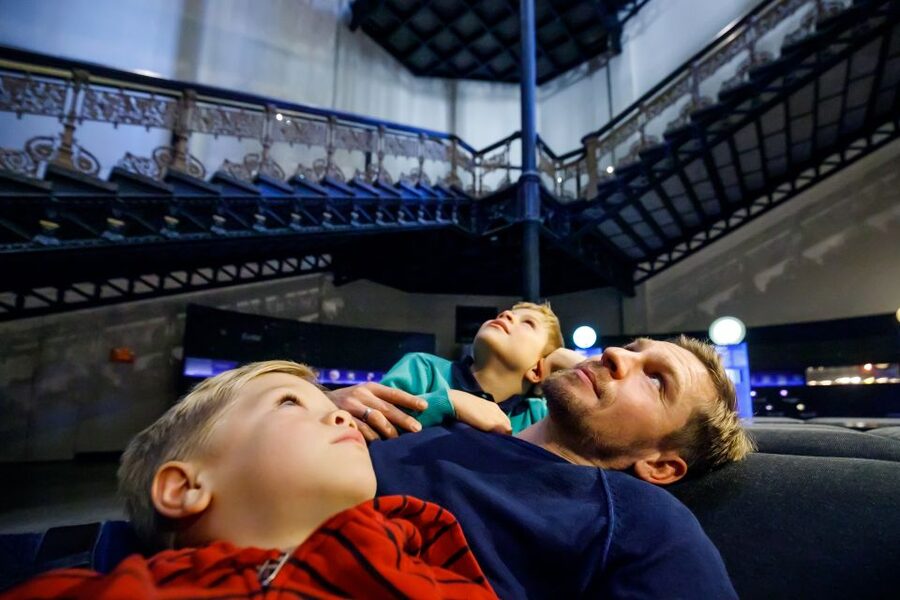
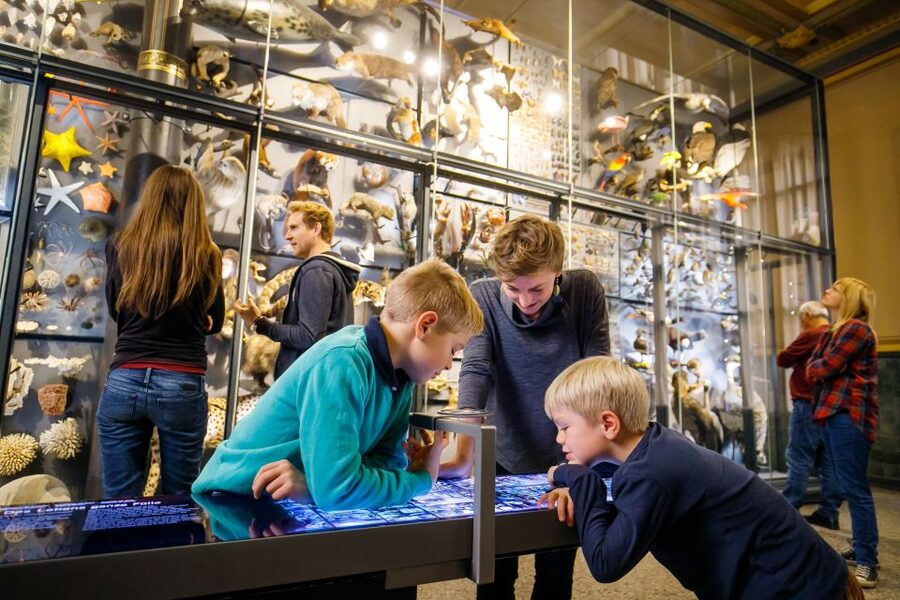
The Biodiversity Wall presents more than 3,000 species at a glance. It is one of the museum’s best ways to turn an abstract subject into something you can see.
Biodiversity is easy to treat as a slogan. Here, the sheer number of specimens shows the variety of life in a single view, while the missing or threatened parts of that variety raise the harder question of what happens when species disappear.
I like this section because it changes the pace. After the drama of fossil skeletons, you are asked to compare forms, sizes, and types of life. The display is also useful for families because you can turn it into a simple search game: find the strangest shape, the smallest creature, or the specimen you recognize least.
The wall is not merely a decorative collection. It reflects one of the museum’s main research concerns, biodiversity and its loss. That gives the visit a present-day purpose without taking away from the pleasure of looking.
Minerals, taxidermy, and the sections between the dinosaurs
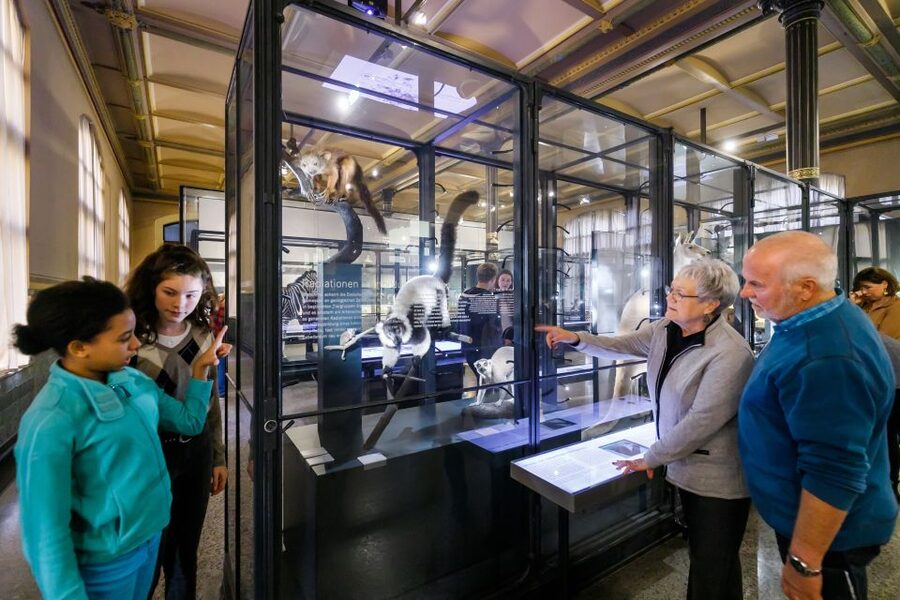
The museum offers more than prehistoric animals. You can also find minerals, taxidermy specimens, extinct species, and displays connected with Earth, biology, geology, and the solar system.
The minerals section is worth adding to your route, especially if you have already seen dinosaur skeletons in other museums. Several visitors have singled it out as a strong part of the visit, and it provides a different kind of visual appeal through color, shape, and structure.
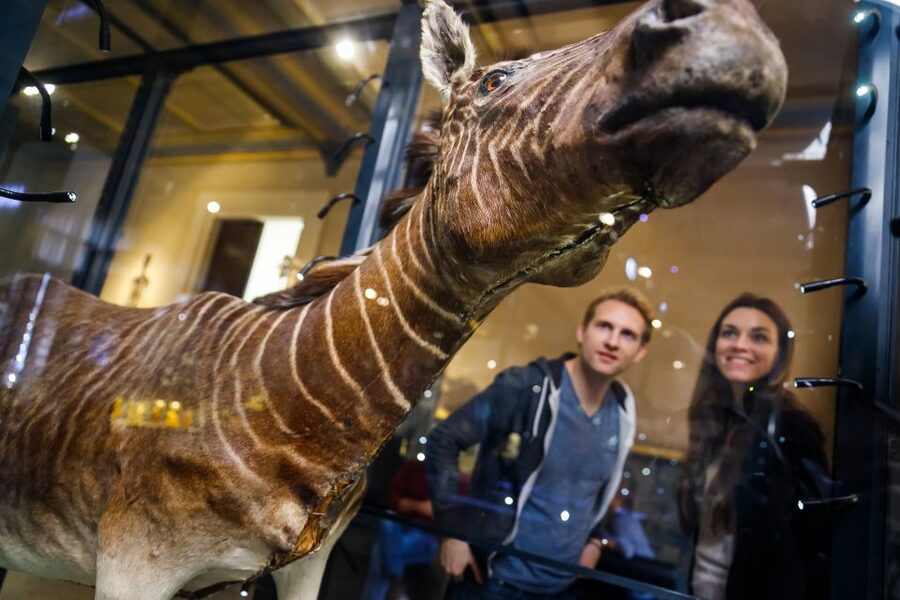
Taxidermy adds another layer. You may see animals that look familiar from parks or books, alongside species that no longer exist. Some people appreciate the chance to study real specimens closely. Others are uncomfortable with animals preserved in this way. The museum does not hide the scientific purpose, but you should know the subject matter can feel less playful than the dinosaur displays.
The galleries are organized by topic, with individual rooms often devoted to particular themes. That makes each section easy to understand on its own, though finding a perfect route through the whole museum can be less simple. Even with maps, some visitors have found the layout confusing. I would accept that the museum is better approached as a set of strong rooms than as a perfectly smooth, one-way journey.
How much time should you allow?
The advertised activity duration is 30 minutes to one hour, but that is best treated as the minimum useful visit. A quick visit can cover the major dinosaur displays, Tristan Otto, and Archaeopteryx. You can make that work if you are fitting the museum into a busy Berlin day.
I would allow more time if you want to read labels, use the audio content, examine the wet collection, and visit the minerals and biodiversity displays. Some people move through the museum in about 30 minutes, while others spend several hours. Both approaches are reasonable because the museum works as either a short stop or a longer indoor outing.
A short visit suits children with limited patience. The dinosaurs provide an immediate focus, and you can leave after the strongest rooms without feeling that you missed the entire point. A longer visit suits adults who enjoy specimens, scientific collections, and displays that reward close attention.
School groups and families can make the museum noisy, especially at busy times. If you prefer a quieter visit, an early or less crowded time may help, though the available entry times should be checked before booking.
Tickets, audio, and the practical details
The price is about $12 per person. For Berlin, that is a fair cost if you care about dinosaurs, fossils, or natural history. It is particularly good value for a family looking for an indoor activity that can suit both a four-year-old and an adult.
The ticket includes entrance, cloakroom use, and downloadable audio content. It does not include a guided tour, special programs, special events, or a physical audio guide. The audio content is available in English, French, German, Italian, Japanese, Polish, Portuguese, Russian, Spanish, Turkish, and Ukrainian content has also been available.
Bring your phone and headphones. The audio is accessed through a website, and you may need to log in or scan material as you go. Some sections have English information, but English is not guaranteed on every display, so the audio can be useful. Past technical problems with QR codes and ticket display make it sensible to have your booking ready on your phone before reaching the entrance.
The main entrance is at Invalidenstraße 43, 10115 Berlin. The ticket is described as allowing you to skip the ticket line, which can matter when the museum reaches capacity. One visit involved a wait because the building was full, so a reserved entry remains the safer choice during busy periods.
Bring a passport or identity card. If you use a reduced ticket, bring proof of age or status. The museum is wheelchair accessible, and cancellation is available up to 24 hours in advance for a full refund. You can also reserve now and pay later if you want to keep your plans flexible.
Who will enjoy this museum most?
I would recommend it first to families with children, dinosaur fans, science-minded adults, and anyone who wants a reliable rainy-day stop in Berlin. The major skeletons offer instant appeal, while the wet collection and Biodiversity Wall give adults reasons to stay after the first dinosaur photographs.
It also suits visitors who prefer to explore at their own pace. You are not tied to a guided group, and the downloadable audio lets you add explanation when you want it. The tradeoff is that you need to manage the audio yourself, and the museum’s route may not always feel obvious.
You may want to choose another activity if you expect a huge, London-style natural history museum with multiple floors of constant spectacle. Several areas can feel dated, and some people find the museum smaller than expected. The tradeoff works in its favor for families with short attention spans, since you can see the strongest exhibits without spending an entire day.
My recommendation for booking
I would book this ticket if you want to see Tristan Otto, Archaeopteryx, and Giraffatitan in one visit, especially at a price near $12. The dinosaur displays alone make the admission worthwhile for many people, and the wet collection and Biodiversity Wall give the museum more substance than a simple fossil show.
Bring headphones, prepare to use your phone, and give yourself more than 30 minutes if you want the scientific sections to register. If English labeling is essential, check the audio access before you arrive. For a quick family outing, a serious look at fossils, or an indoor Berlin plan with real scientific value, this is an easy ticket to justify.
FAQ
Where is the Museum für Naturkunde Berlin?
The main entrance is at Invalidenstraße 43, 10115 Berlin, Germany.
How much does the entrance ticket cost?
The listed price is $12 per person.
How long does the visit take?
The activity is listed as lasting 30 minutes to one hour. You can move through the main highlights in that time, but additional time is useful for the wet collection, minerals, taxidermy, and biodiversity displays.
Is Tristan Otto a real T. rex skeleton?
Yes. Tristan Otto is described as one of the few original T. rex skeletons in Europe.
Can I see Archaeopteryx?
Yes. Archaeopteryx lithographica is displayed in a safety case at the back of the Dinosaur Hall.
Is an audio guide included?
Downloadable audio content is included, but there is no physical audio guide. You need to access the content through a website and should bring your phone and headphones.
Which audio languages are available?
The listed languages are English, French, German, Italian, Japanese, Polish, Portuguese, Russian, Spanish, and Turkish.
Is the museum wheelchair accessible?
Yes, the museum is wheelchair accessible.
Do I need identification?
Bring a passport or identity card. Reduced-ticket holders must show proof of age or status at entry.
Can I cancel the booking?
Yes. You can cancel up to 24 hours in advance for a full refund. A reserve-now, pay-later option is also available.
More Historical Tours in Berlin
- Venice: St. Mark Basilica Ticket, Audioguide+History Gallery
★ 3.9 · 4,780 reviews - Paris: Louvre Museum Entry with History of Mona Lisa
★ 3.9 · 2,823 reviews - Venice’s Best: Basilica, Doge’s Palace, Gondola & History Gallery
★ 4.5 · 2,478 reviews - Guided African American History Tour with Reserved Museum Entry
★ 4.5 · 1,180 reviews
Just added around Berlin
- From Berlin: Sachsenhausen Concentration Camp Museum Tour★ 4.8 · 514 reviews
- Cold War, Berlin Wall, Spies and the East Side Gallery★ 4.8 · 254 reviews
- Bubble Planet Berlin: An Experience Museum for All Your Senses★ 4.1 · 38 reviews
- Berlin: The Wall Museum East Side Gallery Ticket★ 4.1 · 292 reviews
- Berlin: Tickets to the Computer Games Museum★ 4.5 · 363 reviews
- Berlin Trabi Museum: Day Ticket★ 4.1 · 63 reviews
- Berlin: Stasi Museum Private Guided Tour with Entry Ticket★ 4.8 · 13 reviews
- Berlin: Ticket for Photography Exhibitions at C/O Berlin★ 4.5 · 39 reviews
Museum Tours in Berlin, compared.
Skip-the-Line: Berlin Wall Museum at Checkpoint Charlie
Read our review →
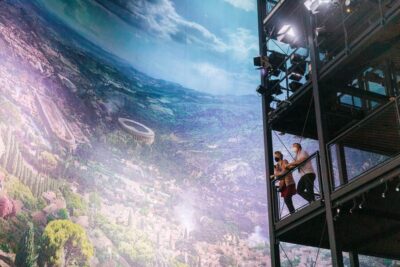
“Pergamonmuseum. The Panorama” Exhibition Tickets
Read our review →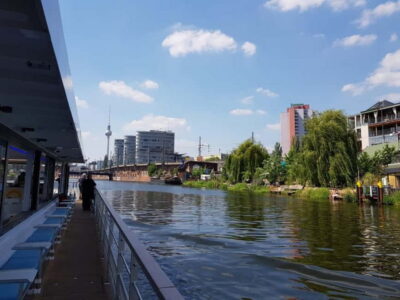
East Side Gallery Spree Cruise in a Solar Catamaran
Read our review →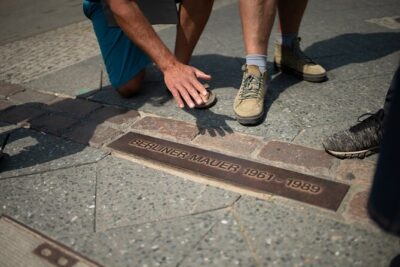
Cold War, Berlin Wall, Spies and the East Side Gallery
Read our review →
Berlin WelcomeCard: Museum Island & Public Transport
Read our review →
Browse the lists this tour appears in