
Review · WAR AND MEMORIAL MUSEUMS
Hiroshima: Tour of Atomic Bomb Dome & Peace Memorial Museum
The most important part of this Hiroshima tour is that it puts a human face on August 6, 1945. At 8:15 that morning, an atomic bomb exploded over the city, killing more than 100,000 people in an area of about 10 square kilometers. You’ll see the Atomic Bomb Dome and spend about two and a half hours inside the Peace Memorial Museum, where the damage is shown through objects, photographs, and personal stories.
I like two things here. First, a local guide gives the museum context instead of leaving you to sort through its difficult exhibits alone. Second, the private-group format gives you room to ask questions and move at a thoughtful pace. The main drawback is also clear: this is painful material, and the museum can be emotionally heavy. You should not book it expecting a light sightseeing stop.
Key points to know before booking
- The tour begins with the Atomic Bomb Dome: You’ll have about 20 minutes for a guided visit and photographs at Hiroshima’s most recognizable memorial.
- The museum receives most of your time: About two and a half hours lets you take in the exhibits without rushing through them.
- Local guides add personal context: Guides named Gordon, Emiko, and Rom have led this experience, with one guide sharing family history connected to the bombing.
- You book a private group: This is useful if you want to ask direct questions about the bombing, Hiroshima, or the museum exhibits.
- English and Japanese are available: Check the selected option carefully, since the meeting and drop-off points can vary.
- The price is $105 per person: Admission and the guide fee are included, but food and drinks are not.
Why this Hiroshima tour matters
Hiroshima is not simply another Japanese city with a famous memorial. The Peace Memorial Museum asks you to consider what happened to ordinary people when a single weapon destroyed much of a city in seconds.
The bomb produced radiation, heat rays, and shock waves. Buildings collapsed or burned, and people who survived often suffered severe burns, radiation-related illness, and discrimination long afterward. The museum does not let the story remain a matter of military dates and political decisions. It brings the cost down to the level of families, schoolchildren, workers, and homes.
That is why I see this as a serious cultural visit, not just a stop for a photograph. You may leave with questions that do not have easy answers. Why was the bomb dropped on Hiroshima? What did officials know? What happened to those who survived? The Dome and museum work together to keep those questions in front of you.
A guide helps because the subject is broad and the museum can feel dense. You can learn the basic sequence of events, then ask about details that catch your attention. A private tour also gives you more freedom to pause when an exhibit needs time to sink in.
More war and memorial museums in Japan:
- Hiroshima; Hiroshima Peace Memorial Museum and Castle Tour
★ 5.0 · 89 reviews - 9/11 Memorial Museum Admission Ticket
★ 4.5 · 6,376 reviews - Caen: Guided D-Day Sites Tour & Caen Memorial Museum Ticket
★ 4.8 · 498 reviews
Starting from Hiroshima Port or central Otemachi
You have two listed starting options: Hiroshima Port and the 7-Eleven Hiroshima Otemachi 1-chome location. The exact meeting point depends on the option you book, so check it before setting out.
The two choices suit different plans. Hiroshima Port may be useful if you are arriving or staying near the waterfront. The Otemachi meeting point places you closer to the central memorial area. Since the tour includes walking, leave enough time to reach the correct meeting point and confirm the start time when you check availability.
This is not a bus tour with a long list of stops. The experience concentrates on two major sites. That focus is a strength. You will not spend your limited time crossing the city or trying to absorb several unrelated attractions.
The total length is listed as three to four hours. The schedule includes a short visit to the Dome and a much longer museum visit, with time for the guide to explain what you are seeing. Food and drinks are not included, so plan those separately around the tour.
The Atomic Bomb Dome in 20 minutes
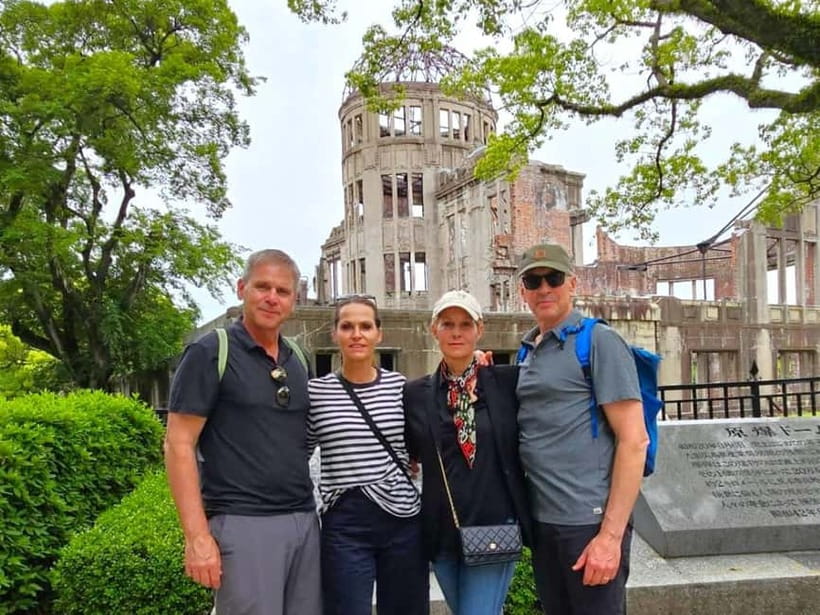
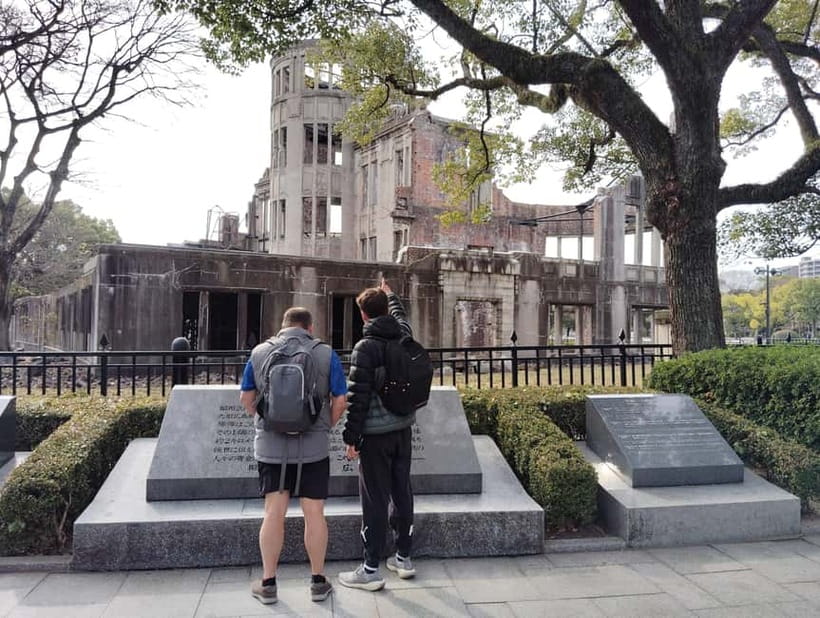
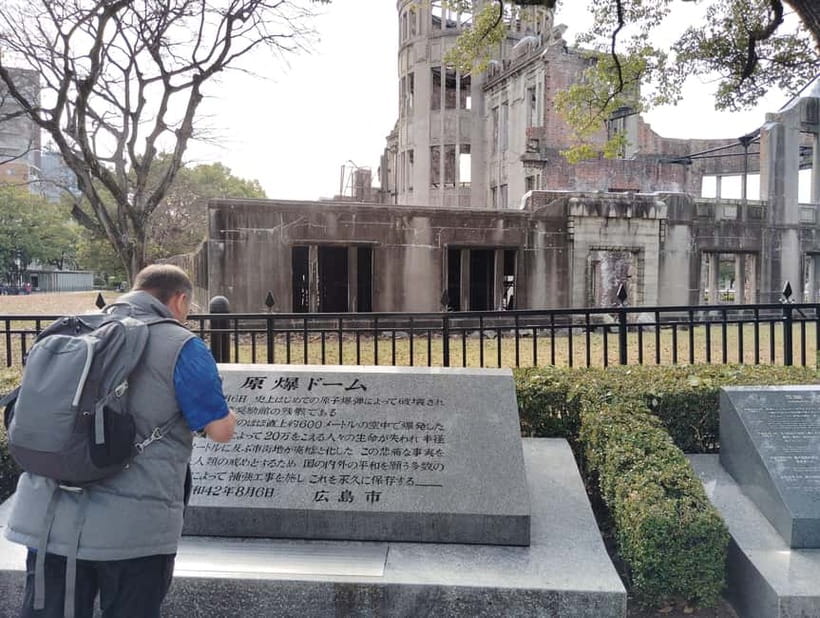
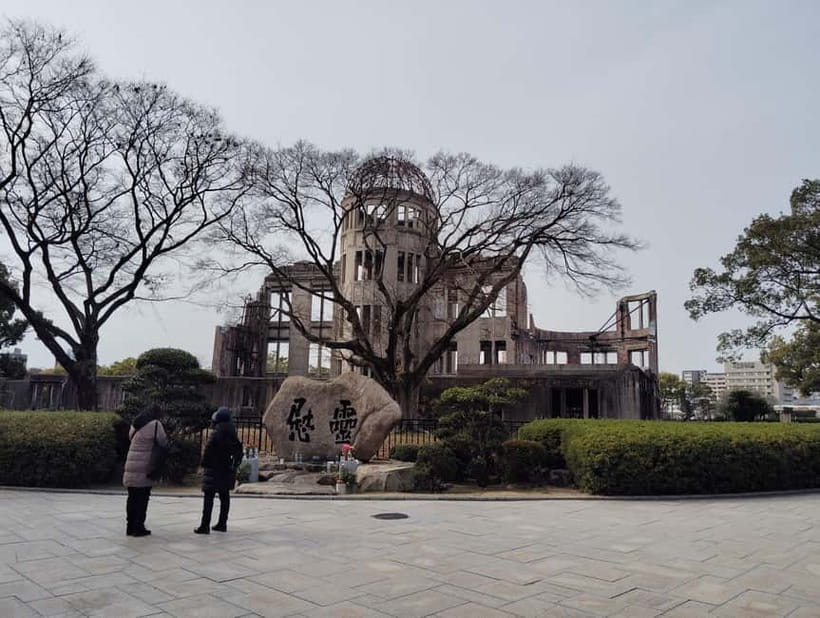
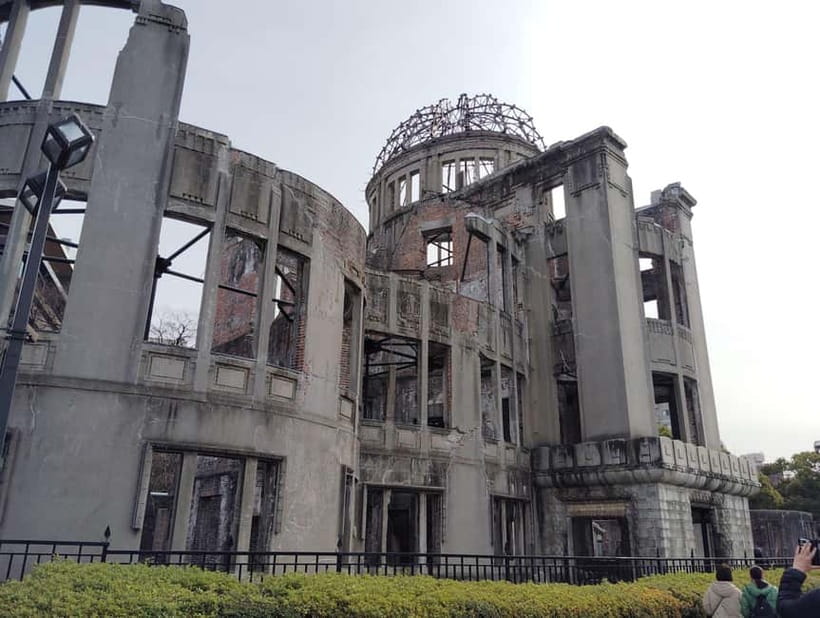
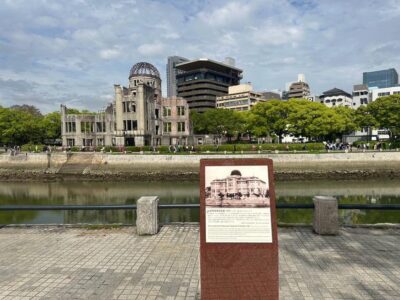
The Atomic Bomb Dome is the first major stop. You’ll spend about 20 minutes on a guided visit, sightseeing, and walking around the structure.
Its exposed steel frame and damaged shell make the destruction visible in a way that words cannot. This is not a restored building designed to look attractive. Its unfinished, broken form is the point. It remains close to the hypocenter and gives you a physical reference for the scale of the blast.
Twenty minutes is enough for an introduction and a close look, but it is not a long historical walk. I would use this part to get your bearings, listen closely to the guide’s explanation, and consider the structure before entering the museum.
The Dome is also a UNESCO World Cultural Heritage Site. That status recognizes its importance as a memorial to the atomic bombing and as a warning about the destructive power of nuclear weapons. The designation does not make the visit easier emotionally. It reinforces the idea that this site belongs to world history, not only Hiroshima’s local story.
You will probably want photographs, but treat the place with care. The building is a memorial to people who died and suffered, not merely an unusual ruin. The best approach is to take a few respectful photographs, then give your attention to the explanation.
Two and a half hours inside the Peace Memorial Museum
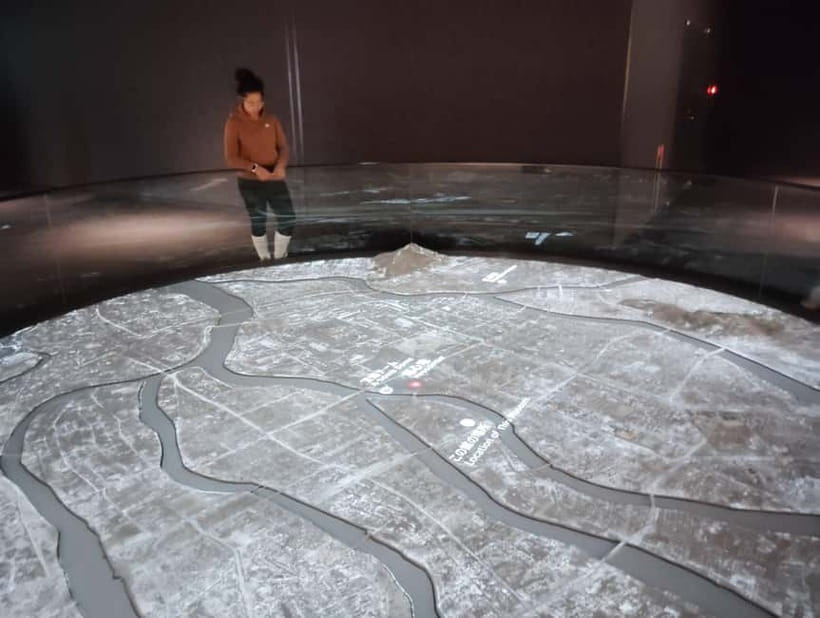
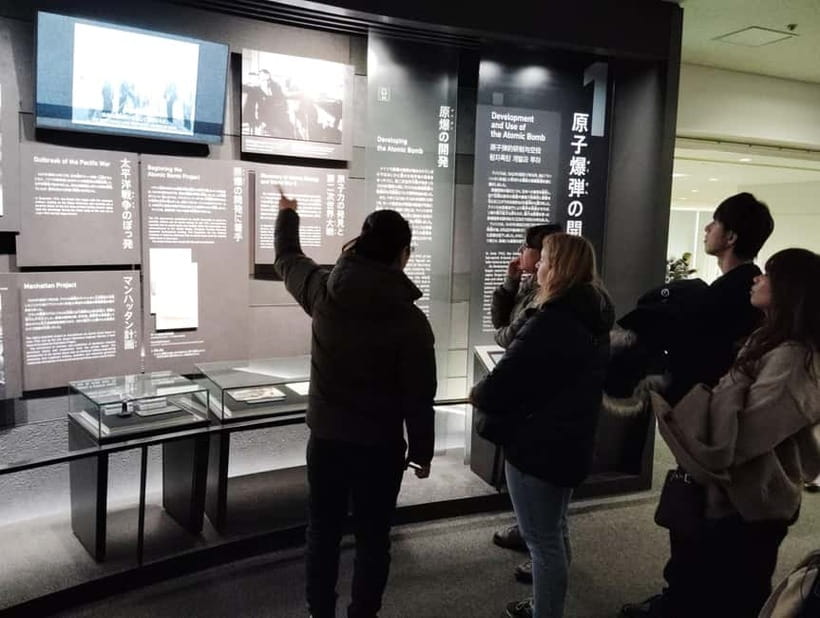
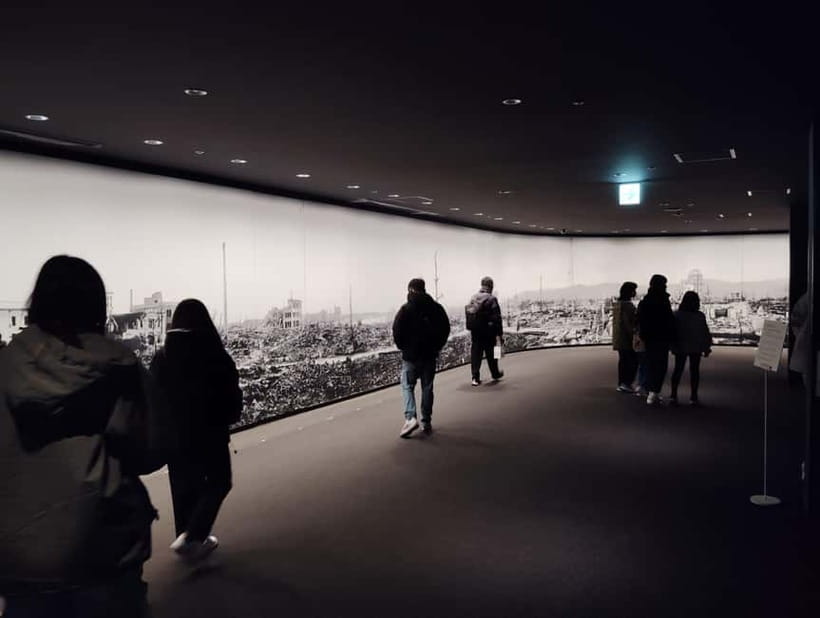
The museum is the heart of the tour, with about two and a half hours set aside for the visit. That is a useful amount of time. You can move through the exhibits without treating every room as a quick photo stop.
The museum explains the bombing and its effects on Hiroshima’s people. You will encounter evidence of the heat, radiation, and shock waves, along with the destruction of buildings and the long suffering of survivors. The subject includes burns, radiation damage, and discrimination faced by people who lived through the attack.
I appreciate the length of this stop because a shorter visit could leave you with only a surface understanding. The museum needs time. Some objects may look small or ordinary, but their meaning comes from the person and event connected to them. A guide can help you understand why an item matters and how it fits into the wider story.
One especially memorable part of this experience can involve making paper birds connected to Sadako, a 12-year-old girl associated with Hiroshima’s postwar story. A guide used this activity to help the group think about what the paper birds meant to her. It is a simple act, but that simplicity can make the lesson personal rather than abstract.
The museum may not suit everyone. If you are sensitive to photographs or accounts of injury and death, prepare yourself before entering. You can take a moment when needed. A thoughtful guide should help you handle the visit without turning it into a rushed march through difficult exhibits.
A few more museum visits around Japan worth comparing
- Tokyo: teamLab Planets TOKYO Digital Art Museum Entry Ticket
★ 4.6 · 9,779 reviews - Osaka Castle: Museum and Tower Entry Ticket
★ 4.5 · 2,380 reviews - Tokyo: Samurai Ninja Museum Guided tour and Experience
★ 4.6 · 1,010 reviews - Kyoto: Tea Museum Tickets and Matcha Grinding Experience
★ 4.9 · 739 reviews
What a private local guide adds
The private format is one of the tour’s strongest practical features. You are not limited to listening to a fixed speech while a large group moves ahead. You can ask for clarification, return to a point that interests you, or discuss how Hiroshima changed after the bombing.
The guides listed for this experience include Gordon, Emiko, and Rom. Gordon has been praised for explaining both the bombing and the wider history of the area. He has also met a group arriving from Osaka at the Shinkansen station and walked back with them afterward, offering local food tips along the way. That extra time is not guaranteed as part of every booking, but it shows the kind of personal help a local guide may provide.
Emiko has given a personal touch to the experience as well. For one couple, she prepared a small birthday gift. That is a minor detail beside the museum’s subject, but it points to a warm, attentive style rather than a purely scripted presentation.
Another guide shared personal family history connected to the bombing. That sort of account can help you understand Hiroshima as a lived place, not only a memorial site. You should remember that the guide you receive may differ, but the tour is designed around English or Japanese live guiding.
The strongest praise for this experience has centered on the guides’ explanations, personal attention, and ability to make a difficult subject understandable. I would book it if you want more than a self-guided museum visit.
How the timing shapes the experience
The listed sequence is simple:
- Start at Hiroshima Port or the Otemachi meeting point.
- Visit the Atomic Bomb Dome for about 20 minutes.
- Spend roughly two and a half hours at the Peace Memorial Museum.
- Finish at the museum or Hiroshima Port, depending on the option booked.
The Dome comes first, which works well. You see the physical remains before entering the museum’s detailed account. The museum then gives meaning and human context to what the damaged structure represents.
The drop-off choice is either Hiroshima Peace Memorial Museum or Hiroshima Port. This matters when you plan the rest of your day. If you finish at the museum, you remain near the memorial area. If your option returns you to Hiroshima Port, allow time for that transfer before making a tight onward plan.
The duration is long enough for a serious visit but short enough to fit into a day in Hiroshima. If you are coming from Osaka for the day, as one booking party did, pay close attention to the meeting time and return arrangements. The guide may provide useful help, but your train schedule remains your responsibility.
Is $105 per person a fair price?
At $105 per person, this is not the cheapest way to visit the Dome and museum. You can visit the area independently for less, especially since food and drinks are not included.
The price makes more sense if you place value on explanation and private attention. Admission to the Peace Memorial Museum is included, along with the guide fee. You are paying for a focused three to four-hour experience led in English or Japanese, not simply a ticket and a meeting point.
I would compare it this way:
- Choose independent sightseeing if you are comfortable reading the museum displays on your own and want maximum flexibility.
- Choose this tour if you want a guide to explain the history, answer questions, and help you process the exhibits.
- Choose it for a private group if the people with you have different levels of background knowledge or want to discuss the subject as you go.
A personal story from a guide, careful explanations of the museum, and time to ask questions can justify the added cost. Still, the value depends on your priorities. If you mainly want a quick photograph of the Dome, $105 is too much. If you want a structured and thoughtful visit to both major sites, the fee is easier to defend.
Who should book this experience?
I recommend this tour for first-time visitors to Hiroshima who want context rather than a quick stop. It also suits people who have limited time and want to concentrate on the city’s central memorial sites.
Families and small private groups may appreciate the chance to ask questions without worrying about holding up a large party. The paper-bird activity connected to Sadako may also give younger visitors a way to engage with the story, though parents should decide if the museum’s difficult material is suitable for their children.
History students, educators, and anyone interested in the human cost of war will find plenty to consider. The tour is also a good fit if you are unsure how to approach the museum alone.
I would not choose it for a carefree afternoon. The subject is not light, and the museum may leave you quiet for a while. That is not a flaw, but it is part of the experience. Plan something gentler afterward rather than rushing straight into another demanding attraction.
Small details that can improve your visit
Check the meeting point carefully because it may vary by booking option. English and Japanese are available, but confirm the language you need when selecting the tour.
Wear shoes suitable for walking. The itinerary includes walking at the Dome and through the museum, and the experience lasts up to four hours. Keep your schedule open enough to listen rather than watching the clock.
Bring your questions. You may want to ask about the bomb’s effects, the city’s recovery, the lives of survivors, or the reason particular objects are displayed. The private-group setup gives you a better chance to raise those points.
Do not count on refreshments during the tour. Food and drinks are not included, so eat beforehand or plan a meal after the museum. If your guide offers local food suggestions, as Gordon did for one group, treat that as a useful extra rather than a promised part of every booking.
The activity allows cancellation up to 24 hours before the start for a full refund, and you can reserve now and pay later. Those policies are helpful if your Hiroshima plans are still shifting.
Should you book the Hiroshima Atomic Bomb Dome and museum tour?
Book it if you want Hiroshima explained with care, especially if you prefer a private guide to a self-guided museum visit. The combination of the damaged Dome, the long museum session, and local interpretation gives you a clear path through a difficult subject.
The best reason to choose it is the guide. Gordon, Emiko, Rom, and other local guides have brought personal stories, patient explanations, and small human touches to the visit. The strongest benefit is not simply seeing two UNESCO-related memorial sites. It is understanding what happened to the people of Hiroshima and why their story still matters.
Skip it if you only want a quick landmark visit, need a very flexible schedule, or would rather explore the museum alone. For everyone else, the $105 fee buys a focused and serious half-day experience that can make Hiroshima far more meaningful.
FAQ
How long does the Hiroshima tour last?
The tour lasts about three to four hours. The listed schedule includes around 20 minutes at the Atomic Bomb Dome and about two and a half hours at the Peace Memorial Museum.
What sites are included?
The tour includes the Atomic Bomb Dome and Hiroshima Peace Memorial Museum. Both are UNESCO World Cultural Heritage Sites or part of Hiroshima’s UNESCO-recognized memorial heritage.
Is museum admission included?
Yes. Admission to the Peace Memorial Museum and the guide fee are included. Food and drinks are not included.
What languages are available?
Live guiding is available in English and Japanese. Check the language option when booking.
Where does the tour start and finish?
Starting points include Hiroshima Port and the 7-Eleven Hiroshima Otemachi 1-chome location. Drop-off options include Hiroshima Peace Memorial Museum and Hiroshima Port. The exact meeting and drop-off points depend on the option booked.
Can I cancel the booking?
Yes. You can cancel up to 24 hours in advance for a full refund. The activity also offers a reserve-now-and-pay-later option.
Just added around Japan
- Skip the lines Basic Ticket at SAMURAI NINJA MUSEUM TOKYO★ 5.0 · 470 reviews
- Tokyo: Mt. Fuji, Owakudani, Hakone Shrine, & Open-Air Museum★ 4.7 · 25 reviews
- Private Tour Through the Tokyo National Museum & Ukiyo-e★ 4.7 · 17 reviews
- Samurai Ninja Museum Asakusa: Kid-Friendly Ninja Training★ 4.7 · 67 reviews
- Tokyo National Museum Private Tour★ 4.9 · 28 reviews
- Tokyo: Art Aquarium Museum GINZA Entry Ticket★ 4.5 · 278 reviews
- Tokyo: Kichijoji Gourmet Tour with Lunch★ 4.5 · 40 reviews
- Samurai Ninja Museum Asakusa: Samurai Sword Lesson & Tour★ 4.8 · 306 reviews
War and Memorial Museums, compared.

Caen: Guided D-Day Sites Tour & Caen Memorial Museum Ticket
Read our review →

Caen: Memorial Museum Entry Ticket & Optional Audio App
Read our review →
Hiroshima; Hiroshima Peace Memorial Museum and Castle Tour
Read our review →Browse the lists this tour appears in