
Review · TOKYO
Tokyo: Samurai Ninja Museum Guided tour and Experience
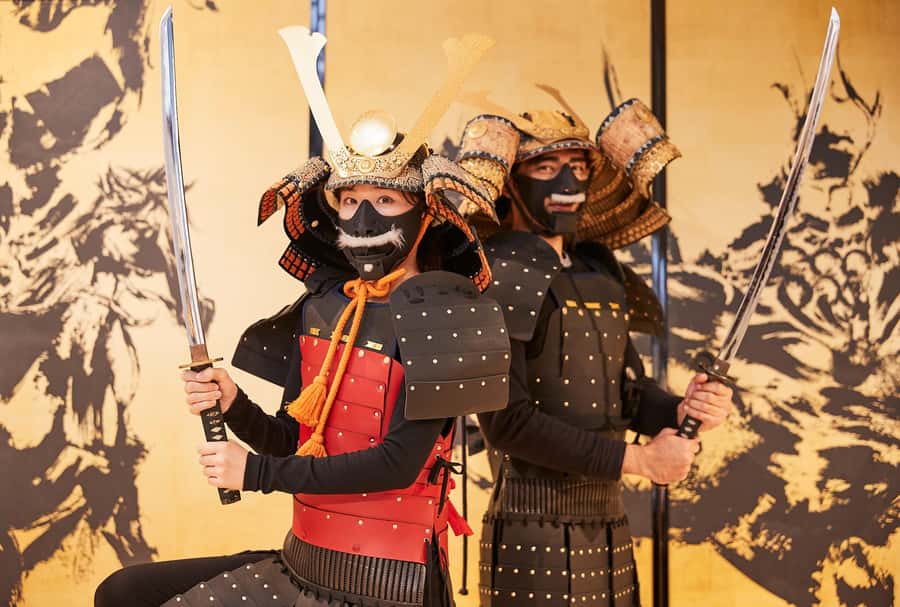
Tokyo’s Samurai Ninja Museum turns a history lesson into a hands-on hour. You’ll examine samurai armor, helmets, and swords, hear how samurai and ninja fit into Japanese history, then try shuriken throwing and pose in samurai gear with a real helmet and metal sword.
I like the clear English guidance and the way guides such as Nami, Kenny, Shin, Megan, and Nao bring humor into the presentation. I also like the family-friendly mix of learning and play, especially the quick change from museum displays to throwing stars and dressing up.
The main consideration is group size. A GetYourGuide booking can hold up to 15 people, but the museum accepts bookings from other sites too, so your full session may be larger. That can make the hands-on turns feel less private.
Key points at a glance
- About one hour of focused history: The tour covers samurai weapons, armor, major events, ninja roles, and common myths without wearing out younger visitors.
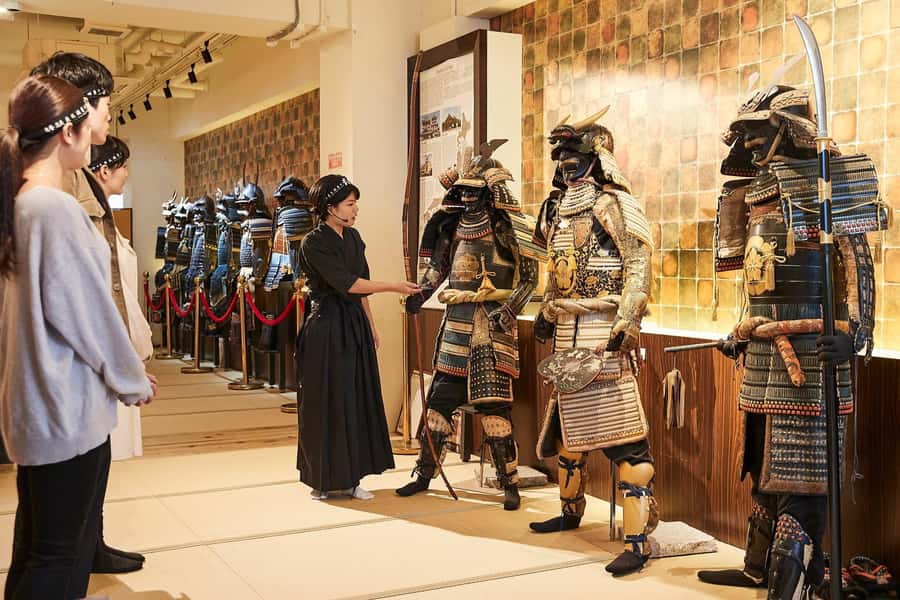
- Real armor, helmets, and swords: The displays give the talk something solid to explain, rather than leaving you with costumes alone.
- Two hands-on activities: You throw ninja stars and take part in a samurai dress-up session.
- A real metal sword and helmet: The photo session uses substantial samurai equipment, not just a paper prop.
- Strong English-speaking guides: Guides including Kenny, Nami, Shin, Megan, and Nao are praised for clear English, humor, and lively explanations.
- Good fit for families and teens: Children get an activity, while adults get useful context about Japanese history and culture.
What the hour is really about
This is not a quiet museum visit where you wander from case to case at your own speed. It is a guided presentation with displays and short activities built into the hour.
That format matters. Samurai and ninja are easy to reduce to movie images: armored warriors, secret agents, dramatic sword fights. A guide can separate those familiar pictures from the historical roles these figures played in Japan. You get a basic timeline, explanations of equipment, and a clearer idea of how samurai culture continued after the period many films portray.
The museum works best as an introduction. If you already spend your evenings reading specialist books on medieval Japan, the material may feel familiar. For most people, though, the combination of objects, stories, and practical activities gives the subject a useful shape.
The pace is one of the strongest features. The history portion is long enough to teach you something, but not so long that children lose interest. The interactive parts arrive at the right time, giving the group a reason to stay alert.
More Museum Tours in Tokyo
- Tokyo: teamLab Planets TOKYO Digital Art Museum Entry Ticket
★ 4.6 · 9,779 reviews - Ninja Experience (Family Friendly) at Samurai Ninja Museum TOKYO
★ 5.0 · 441 reviews - Tokyo Studio Ghibli Museum and Ghibli Film Appreciation Tour
★ 4.5 · 421 reviews
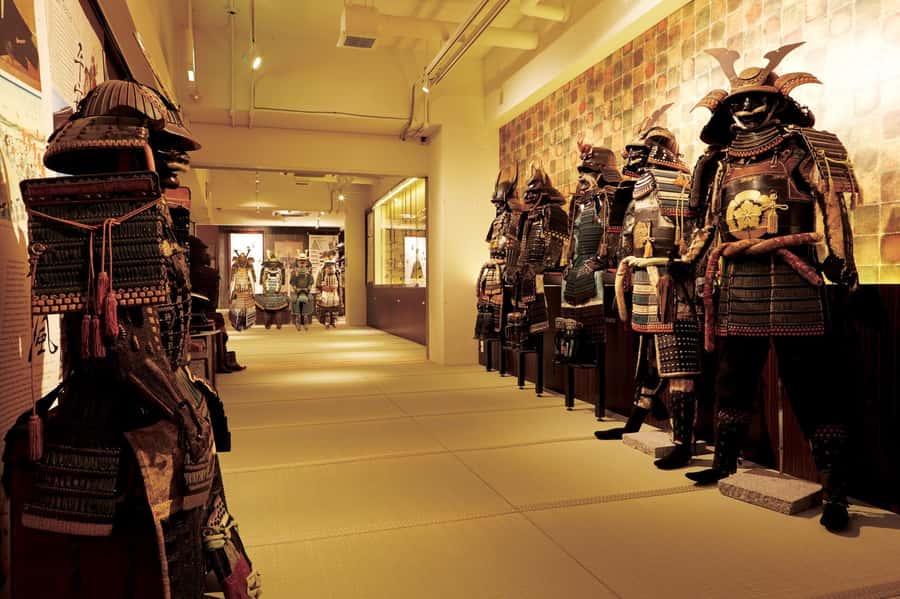
Samurai armor, helmets, and swords
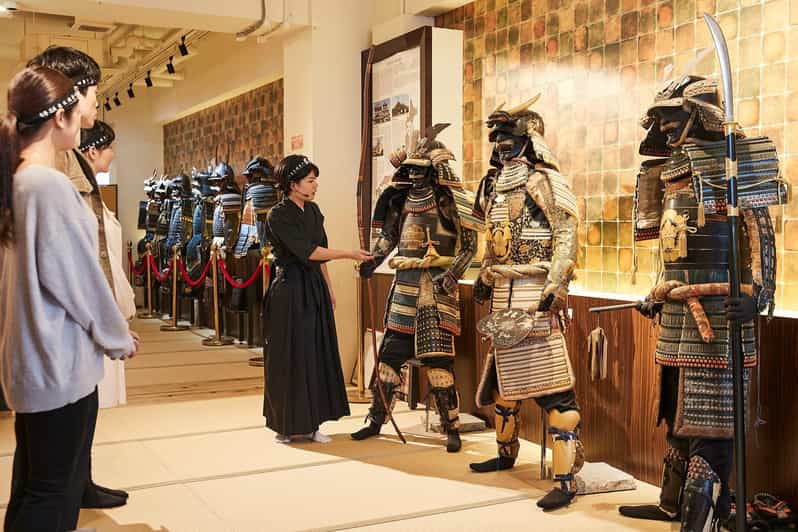
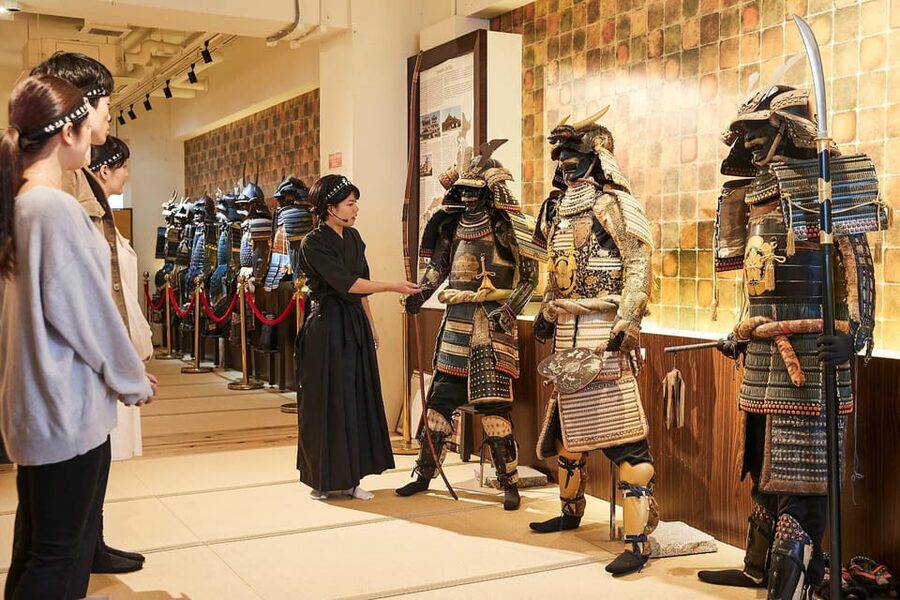
The displays focus on the objects that make samurai history easy to picture. You’ll see armor, helmets, and swords, with your guide explaining their place in samurai life and warfare.
The armor is not just decoration for the final photo. It gives the guide a chance to explain how samurai presented themselves and why the equipment mattered. Helmets also provide some of the most memorable visual details, and the session gives you time to look closely while listening to the explanation.
The swords naturally attract attention, but the value here is the context around them. A sword on its own is a powerful symbol. A sword discussed alongside armor, social roles, and historical events becomes more than a familiar Japanese image.
You should expect an accessible overview rather than a museum catalogue. The goal is to help you understand the main ideas, not to identify every object by period or maker. That is a fair trade for a short visit, especially if this is your first introduction to samurai culture.
The ninja story beyond movie myths
The ninja section adds a different flavor. You’ll learn about the role of ninjas in the past and hear explanations that help separate historical ideas from popular film versions.
This part is especially useful for families. Children often arrive with a strong image of ninjas as invisible fighters with endless tricks. The guide can turn that excitement into a short history lesson without making the subject dry.
The museum also deals with myths, according to the experience format described by visitors. That gives the talk a welcome edge. You are not simply told that every famous ninja image is accurate. Instead, you get a chance to see how later stories and entertainment shaped the way people picture ninjas today.
The distinction between samurai and ninja is another useful part of the session. They are often placed together in popular culture, but the tour treats them as separate subjects with different roles. The explanations are designed for a general audience, so you do not need prior knowledge to follow along.
Throwing shuriken, with safety and fun in mind
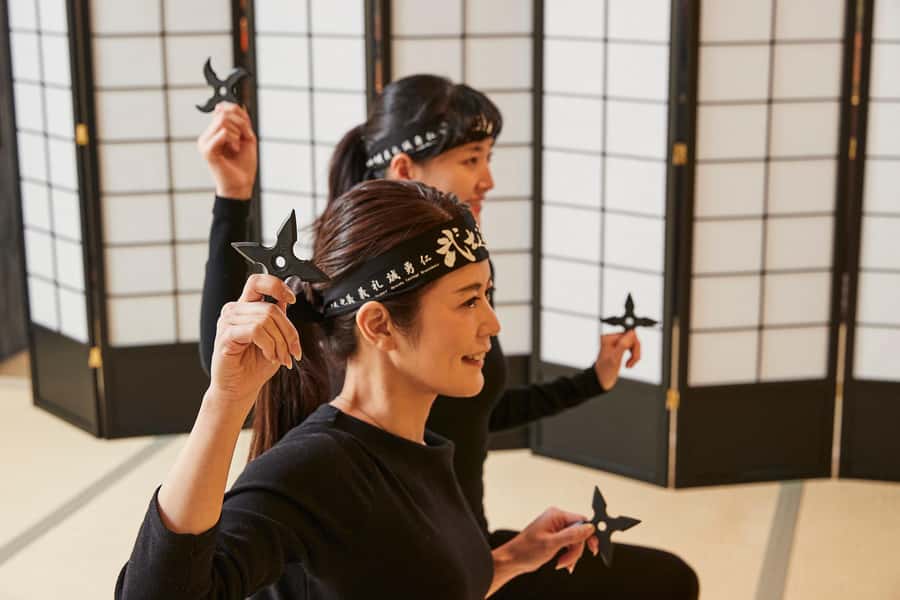
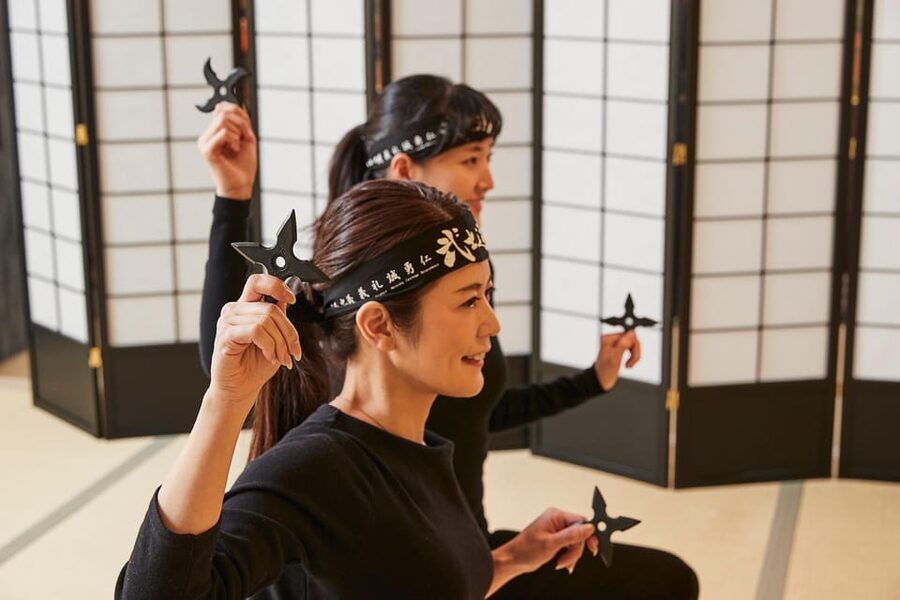
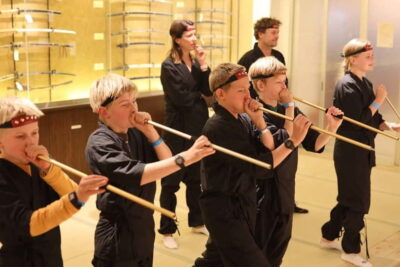
The shuriken activity is the most popular practical moment. You get the chance to throw ninja stars at a target and practice accuracy under the guide’s direction.
This is a short activity, not a martial arts class. You will not leave with ninja skills, but you will understand why the physical activity works so well after the history talk. It gives children a clear highlight, and adults usually find it entertaining too.
Some sessions turn the activity into a small contest. One account describes a winning participant being allowed to keep a star, but you should not treat that as a guaranteed part of every booking. The dependable point is that shuriken throwing is included.
The activity also helps the tour avoid becoming a lecture. After listening to explanations about equipment and historical roles, you get to handle a themed activity yourself. That change of pace is particularly helpful for younger children and teens.
A few more museum visits around Japan worth comparing
- Kyoto: Samurai Ninja Museum guided tour
★ 4.8 · 145 reviews - Osaka: Cup Noodles Museum Guided Tour (90 Minutes)
★ 4.8 · 38 reviews - Osaka: Osaka Castle & Historical Museum Guided Tour
★ 4.8 · 28 reviews - Yokohama: Guided Cup Noodles Museum Tour & Make Your Own Cup
★ 4.9 · 27 reviews
Dressing as a samurai
The samurai experience lets you dress in samurai gear, wear a real samurai helmet, and hold a metal samurai sword. This is the main photo opportunity, and it tends to be the part children remember most.
There is a difference between putting on a simple costume and handling equipment that feels substantial. The helmet and metal sword give the session more weight, while the armor creates a strong visual link to the displays you have just seen.
You should allow a little patience during this portion if the group is full. Everyone needs a turn, and a larger group can make the photo sequence take longer. The upside is that the activity is easy to understand and does not demand special skill.
The dress-up session also gives adults a reason to join in rather than standing behind the camera. Several named guides are described as good at encouraging participation, so the activity does not need to be treated as something only for children.
Guides make or break this format
The guide is central to the experience. Without a lively explanation, the museum could feel like a small collection of objects followed by a costume photo. With a good guide, the displays become the backbone of a compact history lesson.
The English-speaking guides named in the feedback include Nami, Kenny, Shin, Megan, Nao, and Leon. Their styles vary, but the strongest pattern is clear English, humor, and enthusiasm for the subject. Kenny is repeatedly singled out for his comedy and energy, while Nami and Shin are praised for detailed explanations and a welcoming manner.
That human element is important in Tokyo, where a short guided activity can help you make sense of a subject that may be unfamiliar. Guides also appear to adjust their presentation for children, sometimes using games or inviting younger participants into the discussion.
You should not expect every guide to deliver the same jokes or the same emphasis. That is normal in a live presentation. The reliable feature is the English-language format and the guided structure.
Timing, group size, and the feel of the visit
The experience takes about an hour, based on the descriptions provided by participants. That makes it easy to place between other Tokyo plans, especially in a day when you want one indoor activity without giving up half your schedule.
The short length is also useful after a full day of sightseeing. You get a focused look at samurai and ninja culture, a few practical activities, and photos without committing to a long formal tour.
Group size needs a closer look. You can reserve a maximum of 15 people through GetYourGuide, but the museum accepts reservations through other booking sites. That means your actual group can be larger than 15.
A larger session may affect how long you wait for the costume and shuriken turns. On the other hand, the group setting can add energy, especially during the throwing activity. If you want the most personal interaction possible, ask about the expected group size before booking.
Who gets the most from this experience
Families with children, especially school-age children and teens, are the natural audience. The subject has instant visual appeal, and the shuriken and costume activities give younger visitors something active to anticipate.
It also works well for adults who enjoy Japanese culture but do not have much background in the period. The guide explains the basic story in plain English, and the objects help turn abstract dates and names into something easier to remember.
History fans can enjoy it too, particularly if they want a compact introduction or are visiting with people who would not sit through a longer lecture. The museum provides enough detail to correct common assumptions, though it is not designed as an advanced academic tour.
Film fans may find the comparison between screen images and historical roles useful. Just keep your expectations in check: this is a guided museum activity with demonstrations, not a full combat lesson or stage show.
Is $27 a fair price?
At $27 per person, the value depends on how much you value structure and participation. You are paying for museum entry, an English-speaking guided tour, shuriken throwing, and the samurai dress-up session.
A basic museum visit might cost less, but it would not necessarily give you the same explanation or the same chance to handle the themed activities. Here, the guide fills in the context and keeps the hour moving.
For a family, the value is strongest when both adults and children take part. A child gets a memorable activity, while parents get a manageable history lesson and photographs. For a solo adult who only wants to look at armor, the price may feel less attractive because the hands-on sections are a large part of what you are buying.
The included equipment also matters. Wearing a real helmet and holding a metal sword make the photo session more substantial than a quick snapshot beside a cardboard display. I would see the price as reasonable for a short, guided activity, especially if you want something that works for several age groups at once.
You can reserve now and pay later, and cancellation is allowed up to 24 hours before the experience for a full refund. Those terms are useful when your Tokyo plans are still changing, but the main value remains the combination of explanation and participation.
Practical advice before you book
Set aside about an hour, and do not schedule a major timed attraction immediately afterward. The tour itself is short, but a larger group may make the activity turns less predictable.
If you are visiting with children, explain that the shuriken throwing and samurai dress-up are part of a guided museum visit. This helps set the right expectation. It is educational first, with playful sections built into the presentation.
Bring a little patience for photographs. The costume turn is popular, and the group may need to share the available equipment. You will get more from the experience if you listen during the history section rather than treating the museum as a quick photo stop.
The location is in Tokyo, on Honshu, and the activity is offered in English. The supplied information does not give a precise address, so check the meeting details carefully when you book.
Should you book it?
Book this if you want a short, easy-to-follow introduction to samurai and ninja history with hands-on moments at the end. It is especially strong for families, teens, first-time visitors to Tokyo, and anyone who likes a guide with a sense of humor.
I would skip it if you want a large, specialist museum with hours of independent viewing or a serious martial arts lesson. The experience is compact and accessible, not exhaustive.
For $27, the package makes sense because it joins useful historical context with two activities you cannot get from a display case alone. If you have a free hour and want an outing that keeps different ages interested, this is a sensible Tokyo choice.
FAQ
How much does the Samurai Ninja Museum experience cost?
The listed price is $27 per person.
How long does the experience last?
The experience is described by participants as lasting about one hour.
Is an English-speaking guide included?
Yes. Entry and a guided tour with an English-speaking guide are included.
What will I see in the museum?
You can see samurai armor, helmets, swords, and equipment connected with samurai and ninja history.
Can I throw ninja stars?
Yes. A ninja star, or shuriken, throwing activity is included.
Can I dress as a samurai?
Yes. The samurai experience includes dressing in samurai gear, wearing a real samurai helmet, and holding a metal samurai sword.
Is the activity suitable for children?
The experience is described as family-friendly, and children are specifically included in the activities and presentation.
How many people can I reserve through GetYourGuide?
You can reserve a maximum of 15 people through GetYourGuide. The museum also accepts bookings from other sites, so more participants may be present in the experience.
Can I reserve now and pay later?
Yes. The booking terms allow you to reserve your spot and pay nothing today.
What is the cancellation policy?
You can cancel up to 24 hours in advance for a full refund.
Just added around Japan
- Skip the lines Basic Ticket at SAMURAI NINJA MUSEUM TOKYO★ 5.0 · 470 reviews
- Tokyo: Mt. Fuji, Owakudani, Hakone Shrine, & Open-Air Museum★ 4.7 · 25 reviews
- Private Tour Through the Tokyo National Museum & Ukiyo-e★ 4.7 · 17 reviews
- Samurai Ninja Museum Asakusa: Kid-Friendly Ninja Training★ 4.7 · 67 reviews
- Tokyo National Museum Private Tour★ 4.9 · 28 reviews
- Tokyo: Art Aquarium Museum GINZA Entry Ticket★ 4.5 · 278 reviews
- Tokyo: Kichijoji Gourmet Tour with Lunch★ 4.5 · 40 reviews
- Samurai Ninja Museum Asakusa: Samurai Sword Lesson & Tour★ 4.8 · 306 reviews
Museum Tours in Tokyo, compared.

teamLab Planets TOKYO Digital Art Museum Entry Ticket
Read our review →
Ninja Experience (Family Friendly) at Samurai Ninja Museum TOKYO
Read our review →
Tokyo Studio Ghibli Museum and Ghibli Film Appreciation Tour
Read our review →
Samurai Ninja Museum Asakusa: Samurai Sword Lesson & Tour
Read our review →
Samurai Ninja Museum Asakusa: Kid-Friendly Ninja Training
Read our review →
Browse the lists this tour appears in