
Review · TOKYO
Tokyo National Museum Private Tour
The Tokyo National Museum gives you a fast, useful introduction to Japan through objects rather than broad generalizations. In two hours, a private English-speaking guide takes you from Buddhist sculpture and Silk Road treasures to ukiyo-e prints, netsuke, and, if time allows, ancient haniwa and dogu figures.
I like the private format, which lets you ask questions and set the pace. I also like the clear route through Japanese art, especially the jump from ancient religious objects to the small Edo-period decorations called netsuke. The main consideration is time: two hours can provide a strong overview, but not a slow look at every gallery.
Key points at a glance
- Horyuji treasures: See Buddhist statues and objects linked to Silk Road trade in one of the museum’s most focused collections.
- Japanese Gallery: Follow a compact account of Japanese art, including ukiyo-e woodblock prints and netsuke.
- Optional archaeology room: Use remaining time for ancient haniwa and dogu objects.
- Private English tour: Guides such as Yoko, Aki, Naomi, and Mami can shape the visit around your interests.
- Convenient Ueno meeting point: Meet at the information office near the entrance at 13-13 Uenokoen.
- Good first museum stop: The collection gives you useful context before you visit temples, shrines, gardens, and historic towns elsewhere in Japan.
Why the Tokyo National Museum works as a first stop
Japan can seem hard to read at first. Buddhist images, court objects, theater costumes, woodblock prints, and archaeological finds all carry meanings that are easy to miss if you simply walk past the cases.
This tour gives you a basic framework. Instead of treating the museum as a long list of objects, the guide can connect broad periods and themes. That helps you recognize ideas later in temples, markets, historic houses, and other museums.
The Tokyo National Museum was founded in 1872 and holds about 120,000 works. Nearly 100 are national treasures, though only a portion of the collection is on display at one time. More than 3,000 objects may be shown across the museum, with displays changing regularly.
That changing display is useful if you return to Tokyo. You will not necessarily see the same selection on every visit. It also means the exact objects you see can vary, so think of this as a guided introduction rather than a guaranteed checklist of individual pieces.
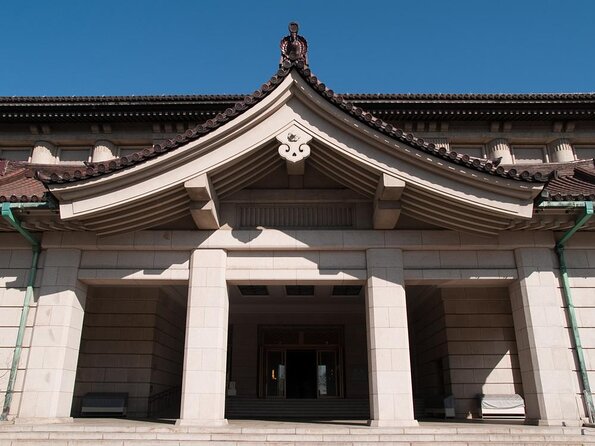
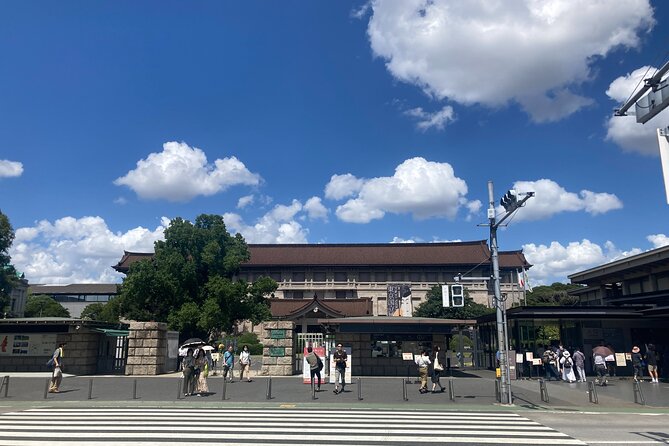
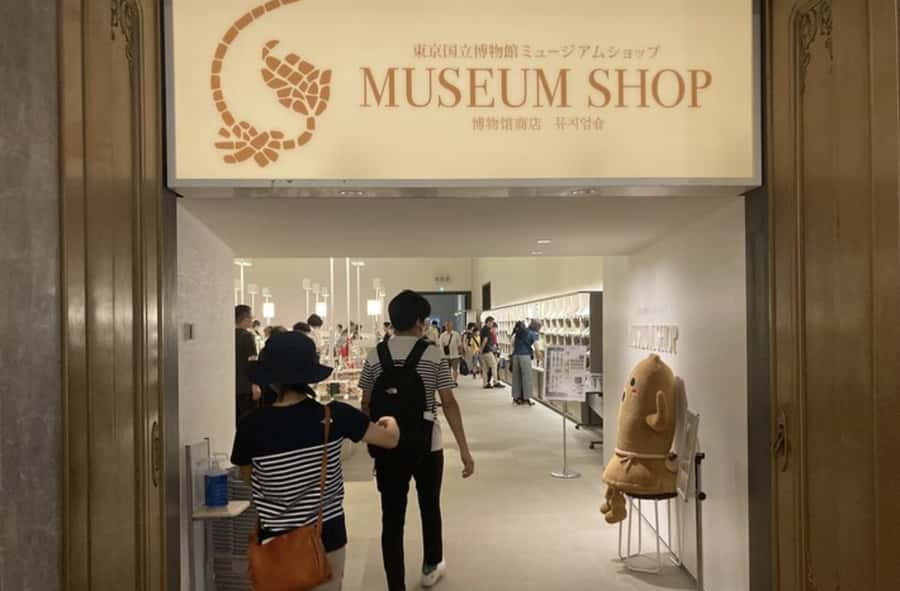
The museum sits in Ueno Park, a practical place to spend more of your day. The tour itself begins and ends at 13-13 Uenokoen, with the meeting point at the information office near the entrance gate.
More Museum Tours in Tokyo
- Tokyo: teamLab Planets TOKYO Digital Art Museum Entry Ticket
★ 4.6 · 9,779 reviews - Tokyo: Samurai Ninja Museum Guided tour and Experience
★ 4.6 · 1,010 reviews - Ninja Experience (Family Friendly) at Samurai Ninja Museum TOKYO
★ 5.0 · 441 reviews
The two-hour route through Japan’s art story
The schedule centers on three areas: the Gallery of Horyuji Treasure, the Japanese Gallery, and an optional Japanese archaeology room. Your guide controls the pace, and the private setup makes it easier to spend more time on the subjects you care about.
You will not see the entire museum in two hours. That is not a flaw, but it is important to understand before booking. The value comes from choosing a sensible route and getting explanations that help you decide what deserves a longer look.
Horyuji Treasure: Buddhist art and Silk Road connections
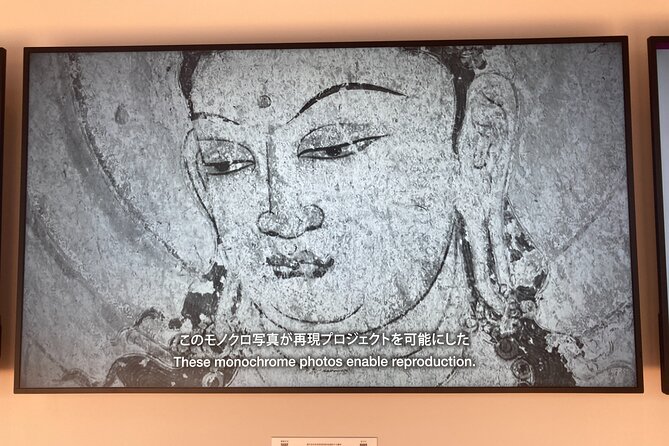
The Gallery of Horyuji Treasure is the most distinctive first stop. It presents Buddhist statues and treasures connected with the Silk Road, giving you a window into the movement of religious ideas, artistic styles, and valuable objects across Asia.
Buddhist art can be confusing without a guide. Similar-looking figures may represent different beings, and posture, hand position, clothing, and facial expression can carry meaning. The guide can point out what to watch for instead of leaving you to guess.
This gallery also places Japan in a wider Asian setting. Japanese culture did not develop in isolation. Religious ideas and artistic methods traveled across borders before taking on local forms. The Silk Road connection makes that point concrete.
The gallery is especially useful if you plan to visit Buddhist temples elsewhere in Japan. After this stop, you may have a better sense of how to look at a statue, even if you are not yet able to identify every figure.
Japanese Gallery: ukiyo-e and the everyday world of netsuke
The Japanese Gallery offers the broadest section of the tour. It works like a condensed timeline of Japanese art, taking you from older traditions toward the Edo period and later forms.
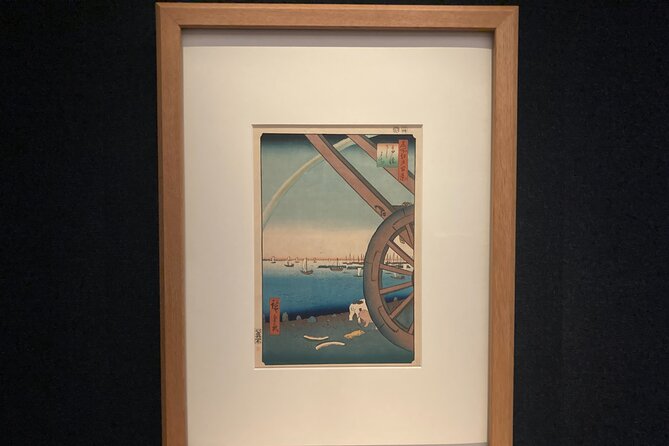
One major focus is ukiyo-e, the woodblock print tradition often associated with actors, landscapes, popular entertainment, and daily life. These prints were made in multiples, not as one-of-a-kind paintings for a single palace or temple. That gives them a different place in Japanese culture and makes them useful for understanding the tastes of Edo-period urban society.
Your guide can help you look beyond the famous names and familiar images. Pay attention to line, color, cropping, and the way a scene tells a story without the kind of perspective you may expect from Western painting.
The tour also introduces netsuke. These are small carved decorations that people used during the Edo period, from 1603 to 1868. Their size makes them easy to rush past, but they reward a close look. A netsuke could be practical, decorative, humorous, or finely detailed, and the object makes daily life feel more personal than a grand ceremonial piece.
I like this part of the route because it shifts the focus from famous art to objects people handled and carried. If you enjoy details, ask your guide to slow down here. The small scale can be a welcome change after larger statues and formal displays.
More private museum tours in Japan:
- Private Tour Through the Tokyo National Museum & Ukiyo-e
★ 4.7 · 17 reviews - Private Edo-Tokyo Open Air Architectural Museum Tour
★ 4.8 · 15 reviews - PRIVATE EPHESUS TOUR FOR CRUISERS: On-time Return and Skip-Line
★ 5.0 · 5,807 reviews - Louvre Museum Paris Essential Guided Tour Semi-Private 6ppl Max
★ 5.0 · 3,807 reviews
Archaeology room: haniwa, dogu, and Japan before written records
If time remains, the guide may take you to the Japanese archaeology room. This section includes haniwa and dogu, ancient objects that offer clues about life and belief before later artistic traditions took shape.
Haniwa are ancient clay figures, while dogu are prehistoric clay objects. The tour information does not promise a fixed amount of time in this room, so treat it as an optional addition rather than the central part of the visit.
For many people, this is a worthwhile choice. It adds an earlier chapter to the art story and prevents the tour from feeling focused only on Buddhist and Edo-period material. For others, the extra time may be better spent asking questions in the Japanese Gallery.
Tell your guide early if archaeology matters to you. A private tour gives you a better chance of making that preference clear than a large group visit.
What a private guide changes
A private tour matters most in a museum with a large collection. You can ask why a figure looks a certain way, how a print was produced, or what a small object was used for without worrying about holding up a group.
The guides who have led this experience include Yoko, Aki, Naomi, and Mami. Their approaches may differ, so you should use the first few minutes to explain what interests you. You might care most about religion, design, ancient Japan, daily life, or the story behind particular objects.
One recent account describes Yoko as clear and patient, which is exactly what a short museum visit needs. Aki has guided visitors through Japanese art, while Naomi has been praised for focusing on what mattered to the group and bringing a warm, personable approach. Mami has also led the visit.
Those details suggest a human, flexible experience rather than a memorized sprint through the galleries. Still, a guide cannot cover everything in two hours. Ask questions, but also accept that the tour works best when you choose a few themes instead of trying to master all of Japanese art in one morning or afternoon.
The tour is offered in English. It is also a private group experience, so you are not sharing the guide with strangers. The recommended minimum age is 10, making it a reasonable choice for older children and teenagers who can handle a museum-focused visit.
Is $96 per person good value?
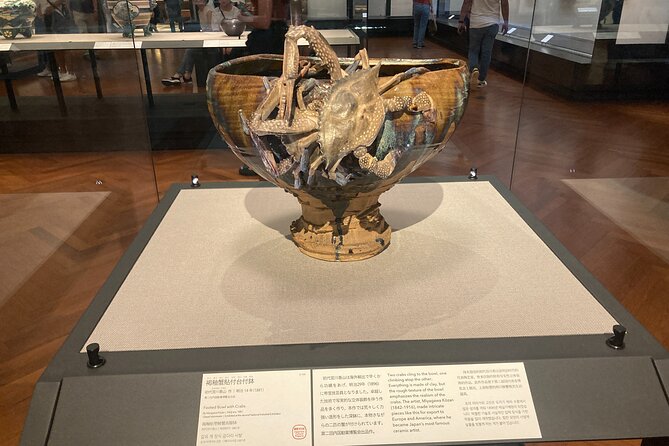
At $96 per person, this is not the cheapest way to enter the museum. Admission tickets are included, but the main expense pays for the private English-speaking guide and the planning that comes with a focused route.
I think the price can make sense for a first visit, especially if you have limited time in Tokyo or feel unsure how to approach Japanese art. A guide can save you from wandering through a large collection without a clear sense of what you are seeing.
The value is weaker if you enjoy reading labels at your own pace and already know the museum well. It is also less attractive if you want a full-day art visit. Two hours is an introduction, not an exhaustive museum session.
For families, couples, and small groups, compare the cost with the price of several separate guided activities. The private arrangement may be easier for a group with mixed interests because you can ask to emphasize the areas that matter most.
There is also a practical benefit to the reserve-now-and-pay-later option. It lets you hold a place without paying at once. Free cancellation is available up to 24 hours before the activity for a full refund, according to the booking terms.
Timing, meeting point, and small details that matter
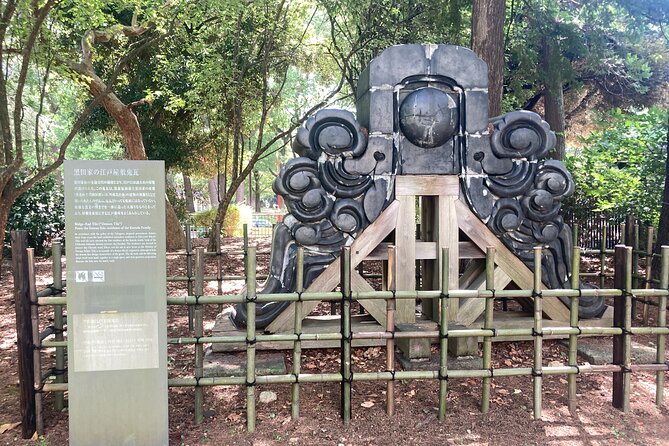
Meet at the ticket office, also called the information office, at the entrance gate. The tour returns to the same location after about two hours, so it is easy to continue around Ueno Park or make your next Tokyo appointment.
Use an accurate phone number when booking. The guide contacts you through WhatsApp, so download the app and allow notifications from Japanese phone numbers. This is one of the most important practical steps, since a missed message could make meeting up harder.
The tour is wheelchair accessible. Drinks are not included, so bring your own if you want something during or after the visit. Hotel pickup may be possible if you request it, but you should arrange that in advance rather than assume it is part of the standard meeting plan.
Tips are appreciated. They are not listed as part of the price, so consider this an optional thank-you for the guide’s work.
Who will get the most from this museum visit?
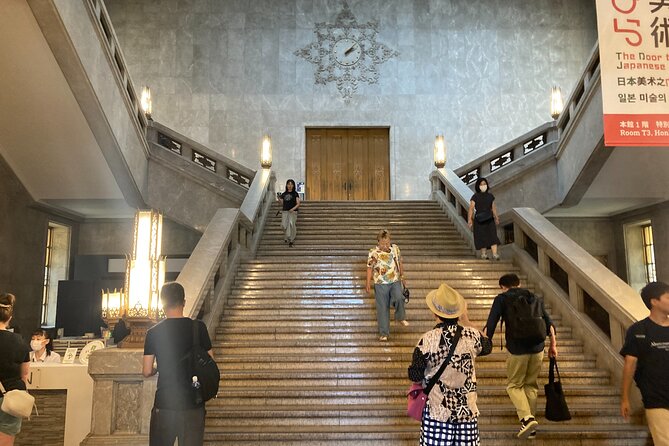
I would choose this tour for a first-time visitor who wants an organized introduction to Japanese art without spending half a day in the museum. It also suits anyone who likes asking questions and prefers a personal conversation to a recorded guide.
Families with children aged 10 and up may find the private format helpful. The guide can adjust the pace and spend more time on objects that catch a young person’s attention, though the experience remains an art and history tour rather than a hands-on activity.
It is a good match for visitors planning to see temples and historic sites elsewhere in Japan. The Buddhist gallery and archaeology section provide useful background, while the ukiyo-e and netsuke displays show how art connected with daily life.
You may want to skip it if you strongly prefer independent museum visits or want to see every gallery in detail. In that case, buy admission and set your own route. The guided experience is about selection and explanation, not complete coverage.
Should you book the Tokyo National Museum private tour?
Book it if you want a clear starting point for Japanese art, value an English-speaking guide, and can accept a focused two-hour visit. The Horyuji treasures, ukiyo-e, and netsuke give you three very different ways into Japan’s past, while the optional archaeology room adds ancient objects if your interests point that way.
The strongest reason to choose it is the private attention. Guides such as Yoko, Aki, Naomi, and Mami have led visits praised for clarity, patience, warmth, and attention to personal interests. At $96 per person, it asks more than a simple museum ticket, but it can be worthwhile when your time is short and you want help knowing what deserves your attention.
FAQ
How long does the Tokyo National Museum private tour last?
The guided museum visit lasts two hours.
Where does the tour begin?
Meet at the ticket office, or information office, at the entrance gate of the Tokyo National Museum at 13-13 Uenokoen.
Where does the tour finish?
The tour returns to 13-13 Uenokoen after the museum visit.
Is admission included?
Yes. Museum admission tickets and an English-speaking guide are included.
What language is the tour offered in?
The tour is offered in English.
Is the tour private?
Yes. It is offered as a private group experience.
Is the tour wheelchair accessible?
Yes. The activity is listed as wheelchair accessible.
What should I know about contacting the guide?
Download WhatsApp and provide an accurate phone number when booking. The guide will contact you through WhatsApp, and you should allow notifications from Japanese phone numbers.
Just added around Japan
- Skip the lines Basic Ticket at SAMURAI NINJA MUSEUM TOKYO★ 5.0 · 470 reviews
- Tokyo: Mt. Fuji, Owakudani, Hakone Shrine, & Open-Air Museum★ 4.7 · 25 reviews
- Private Tour Through the Tokyo National Museum & Ukiyo-e★ 4.7 · 17 reviews
- Samurai Ninja Museum Asakusa: Kid-Friendly Ninja Training★ 4.7 · 67 reviews
- Tokyo: Art Aquarium Museum GINZA Entry Ticket★ 4.5 · 278 reviews
- Tokyo: Kichijoji Gourmet Tour with Lunch★ 4.5 · 40 reviews
- Samurai Ninja Museum Asakusa: Samurai Sword Lesson & Tour★ 4.8 · 306 reviews
- (Ticket Included) Explore Osaka Castle & Museum of History★ 4.8 · 21 reviews
Museum Tours in Tokyo, compared.
teamLab Planets TOKYO Digital Art Museum Entry Ticket
Read our review →
Samurai Ninja Museum Guided tour and Experience
Read our review →
Ninja Experience (Family Friendly) at Samurai Ninja Museum TOKYO
Read our review →
Tokyo Studio Ghibli Museum and Ghibli Film Appreciation Tour
Read our review →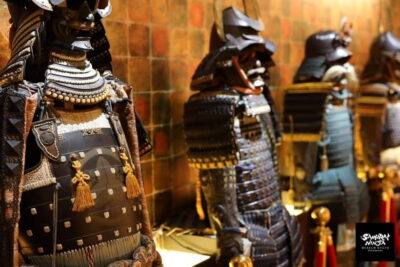
Samurai Ninja Museum Asakusa: Samurai Sword Lesson & Tour
Read our review →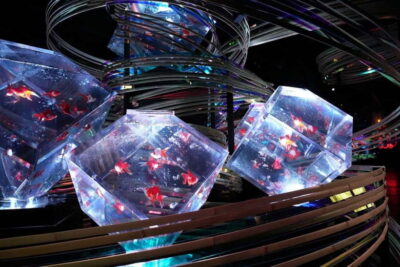
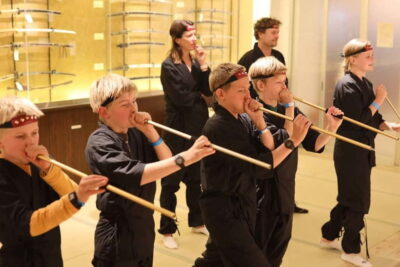
Samurai Ninja Museum Asakusa: Kid-Friendly Ninja Training
Read our review →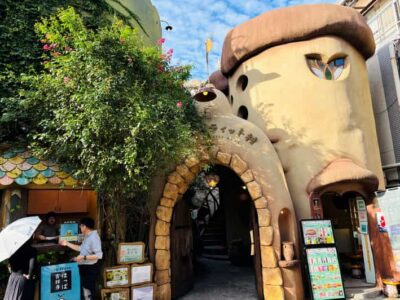
Browse the lists this tour appears in