
Review · THE UK
Shrewsbury Prison Guided Tour and Museum Access
Shrewsbury Prison puts you behind thick stone walls where prisoners lived, worked, received visitors, and faced execution. I like the former prison officer guides, who bring practical knowledge of prison life, and the chance to continue exploring on your own after the 90-minute tour. The main drawback is that the schedule is tight, so some stories and rooms may receive only a quick look.
I also like the mix of grim fact and light humor. Guides such as Alex, Dan, Graham, Malcolm, Michelle, Sarah, and Charlotte have been praised for making difficult subjects easier to follow without turning the prison’s past into a cheap sideshow. Bring a warm layer, though. Those walls stay cold even on a sunny day.
Key points to know before you go
- Walk through A Wing’s 172 cells, built for up to 350 men, and see the narrow landings officers used for two centuries.
- Visit C Wing, where 22 cells held female prisoners until 1921.
- See the B.O.S.S. chair in Reception, where prisoners were processed when entering or leaving.
- Stand in the former execution room, where eight men were put to death, including the last condemned prisoner in 1961.
- Use the self-guided access, included in the ticket, to spend more time with the prison museum and remaining areas.
- Allow for cold interiors and lots of standing, especially during the guided portion.
Entering Shrewsbury Prison through the main gates
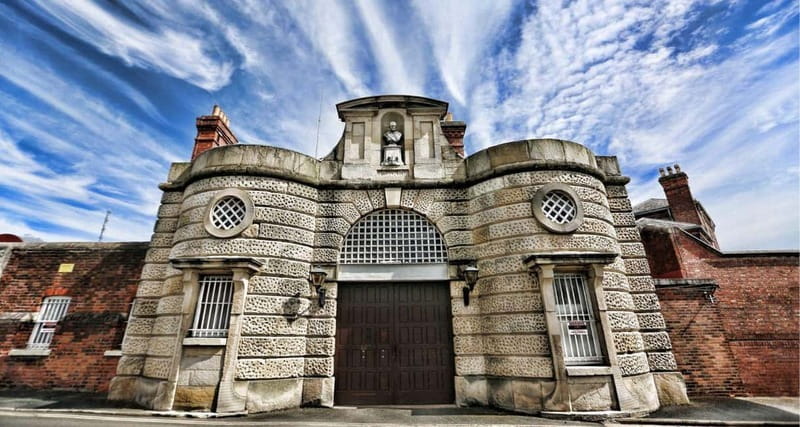
Your visit begins at Shrewsbury Prison in Shropshire. After you pass through the large metal gates, look for the Welcome to Shrewsbury Prison sign to the left of the main entrance. Follow the signs to the visitor centre, where staff will direct you to the start of the guided tour.
That arrival sets the tone. This is not a recreated attraction built from a few old props. You are entering a former working prison, with high walls, steel doors, narrow landings, and rooms designed for control rather than comfort.
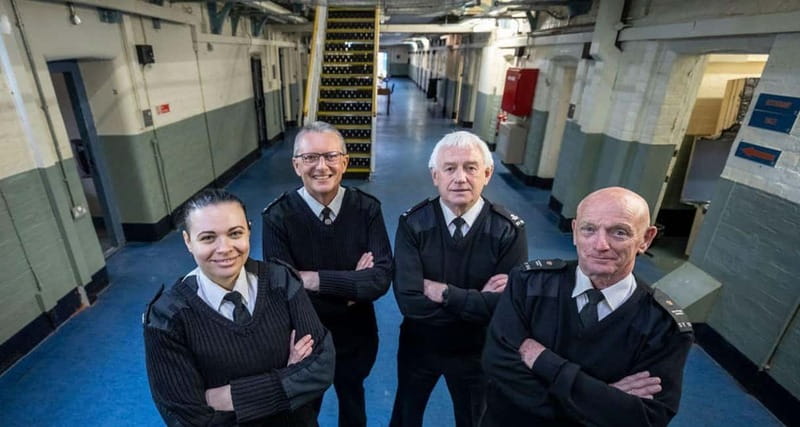
The guided tour lasts about 90 minutes and is conducted in English. The prison officer guide is the main reason to choose this option instead of simply walking around alone. Guides including Alex, Dan, Graham, Malcolm, Michelle, Sarah, and Charlotte have each been praised for combining prison knowledge with storytelling and humor.
That style matters here. The subject includes addiction, harsh Victorian treatment, condemned prisoners, and executions. A guide who can explain the facts clearly, answer questions, and add a little levity helps keep the experience engaging without losing its seriousness.
You should expect to stand for much of the tour. One visitor found a guide’s pacing slightly distracting, while another felt the 90 minutes passed quickly and could have used more time. The practical lesson is simple: wear comfortable shoes, and listen closely when the group stops because the tour has plenty to cover.
A few more museum visits around the UK worth comparing
- London: British Museum Guided Tour
★ 4.3 · 1,182 reviews - British Museum London Guided Tour Semi-Private 8ppl Max
★ 5.0 · 984 reviews - London: British Museum Guided Tour with Entrance Tickets
★ 4.9 · 748 reviews
A Wing and the reality of crowded Victorian cells
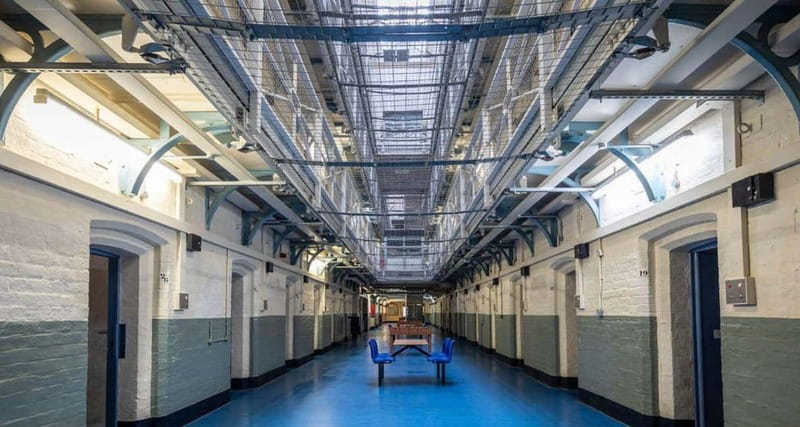
A Wing is one of the most revealing parts of the visit. Its 172 cells were built to house 350 men. That number tells you more than a display panel can. The wing was designed around crowding, surveillance, and routine, not privacy or personal comfort.
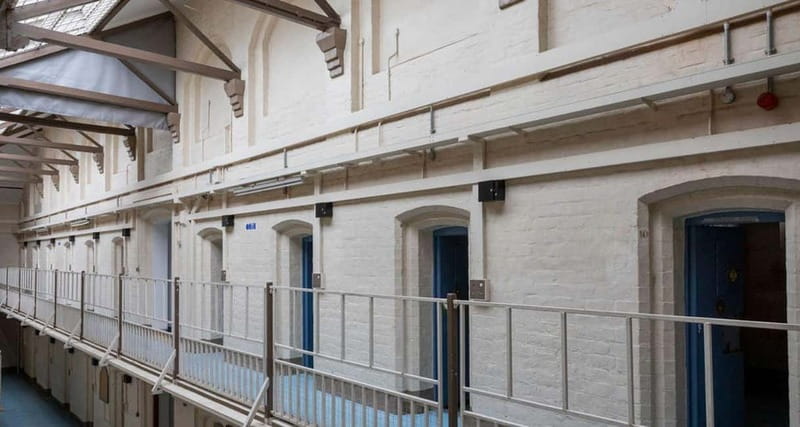
You walk along the landing much as prison officers did for roughly 200 years. Steel doors line the passage, and the physical arrangement makes the prison’s system easy to understand. Officers could monitor a large number of cells from the landing, while prisoners had little control over movement or contact.
The guide explains how prison life changed from the Georgian period through the Victorian era and into more recent times. That long view is useful because it prevents the visit from becoming only a story about old punishments. You see how ideas about discipline, healthcare, visits, addiction treatment, and security shifted over time.
The cells themselves may affect you more than any single fact. The high walls and repeated doors create a feeling of sameness. You can picture how exhausting it would be to spend day after day inside a strict routine, especially when hundreds of men were housed in the same wing.
The tour also uses participation. Children and teenagers may be asked to help demonstrate parts of prison life or take on small roles. That approach helped keep younger visitors interested, though the subject matter remains serious and sometimes bleak.
C Wing and the forgotten female prisoners

C Wing contains 22 cells that were originally used for female prisoners until 1921. It is smaller than A Wing, but that does not make it less important. The wing helps you see that the prison served different groups under changing rules, and that women’s experiences can otherwise disappear from a broad account of prison history.
The smaller scale may make this section feel more personal. You are not simply looking at a large block of cells. You are considering how women were held, supervised, and separated within the prison system during a period when expectations and punishments differed sharply from modern practice.
Your guide provides the context, so this is a good place to ask questions. The tour moves at a set pace, and you may not have long to linger, but the self-guided portion lets you return to areas that caught your attention.
Reception and the B.O.S.S. chair

Reception was the processing point for every prisoner entering or leaving the prison. This is where identity, security, and control began or ended. The room gives you a clear sense of how much attention was placed on checking people before they moved further inside.
You will see the B.O.S.S. chair, short for Body Orifice Security Scanner. It is an unusually memorable object because it shows the practical, invasive side of prison security. The name alone may raise a smile, but its purpose was serious.
This stop works well because it connects older prison practices with more modern security concerns. The prison’s story is not frozen in the Victorian period. It continues into recent decades, when technology and procedures changed while the central goal of controlling movement remained.
Same city, a completely different collection:
- London: Tower of London and Crown Jewels Exhibition Ticket
★ 4.6 · 28,769 reviews - Liverpool: Liverpool Football Club Museum and Stadium Tour
★ 4.8 · 10,764 reviews - Tower of London and Crown Jewels Exhibition Ticket
★ 4.5 · 6,677 reviews - London: Chelsea Football Club Stadium and Museum Tour
★ 4.8 · 4,576 reviews
Exercise yards beneath high prison walls

The two exercise yards are enclosed by high, forbidding walls. They were places where prisoners could leave their cells, but they were never open spaces in the ordinary sense. The walls keep the focus on restriction, even when the prisoner was technically outside.
The guide explains why netting was placed over the main exercise yard. You will also hear whether prisoners really did walk in a clockwise direction, a detail that sounds like a small curiosity but reveals how tightly movement could be regulated.
These yards are among the easiest places to picture as working prison spaces. There is little decoration to soften the setting. You see the walls, the boundaries, and the limited room available for exercise.
This section also gives the group a change of pace after the interior wings. Still, it is exposed to the weather, so a coat can help. Inside, the thick stone walls can be cold, and outside, the high walls may make the yard feel shaded or enclosed.
Healthcare and prison treatment
The healthcare area shows how prisoners queued for medication and where drug and alcohol addiction programs were administered. This is an important part of the tour because it brings the discussion closer to modern prison life.
Prison history is often presented through cells and punishment, but healthcare reveals another side of daily routine. Medication, addiction, and treatment affect how a prison functions, how officers manage people in their care, and how society’s approach to imprisonment changes over time.
The setting also gives you a chance to consider the difference between punishment and rehabilitation. The tour does not treat prison life as a simple story of good and bad people. Instead, it shows systems, rules, and changing ideas about what should happen to people in custody.
Visits, the most controlled contact with the outside world

The visits area was the only place inside the prison where prisoners could meet people from outside. That made it important to prisoners and highly sensitive to prison staff.
Your guide explains how many visits a prisoner was entitled to, how long they lasted, and why this area had such a high level of security and scrutiny. The restrictions make sense once you understand that visits connected the prison to the outside world. Messages, contraband, family contact, and emotional support all passed through this controlled space.
This is one of the strongest stops for showing how prison rules affected families as well as prisoners. A short visit could carry enormous weight, yet it took place under supervision and within strict limits.
If you are visiting with children, this part can lead to thoughtful questions. The tour uses clear explanations and occasional humor, but the emotional side of separation is difficult to miss.
The executioner’s bedroom and the final cell

The executioner’s bedroom is one of the most unusual rooms on the tour. Executioners could spend the night here before carrying out their work. Albert Pierrepoint, the best-known executioner associated with Britain, would have stayed in this very room.
The room’s ordinary purpose makes it unsettling. It was a place to sleep before an execution, not a theatrical chamber designed to frighten visitors. That contrast gives the subject much of its force.
You also see the cell used by the condemned man during his final days. The tour explains what happened before an execution and how the prisoner was kept separate from the rest of the prison population.
The guide’s storytelling is especially useful here. Several guides have been praised for making the prison’s darker subjects understandable without rushing past them. Still, this section may feel intense for young children or anyone uncomfortable with discussions of capital punishment.
The execution room and George Riley’s story
The execution room is among the darkest places in Shrewsbury Prison. Eight men lost their lives there after being convicted of serious crimes. The tour explains how executions were carried out, why public executions ended, and why Britain removed the death penalty in 1965.
George Riley was the last man executed at Shrewsbury Prison, in 1961. His story gives the room a clear point in time. This was not only a Victorian practice preserved in a museum. Executions continued into the 20th century.
The guide also explains why Albert Pierrepoint became the world’s most well-known executioner. That story helps place Shrewsbury within the wider history of British punishment and the changing public attitude toward executions.
The room is likely to stay with you, but the presentation is educational rather than sensational. Expect facts, questions, and historical context rather than a theatrical scare sequence. If you are seeking a ghost tour, that is a separate experience and may sell out, so you would need to book it independently.
The museum and self-guided exploration
Your ticket includes access to the Shrewsbury Prison Museum and a self-guided tour. You can explore before or after the guided portion, which gives you useful flexibility.
The museum displays artifacts hidden within the prison walls from former inmates. These objects add small human details to the larger institutional story. A cell tells you about space, but a personal object can suggest how someone tried to maintain identity or routine inside that space.
I would take the guided tour first if you want the building’s main story explained before you explore. The guide can point out the key areas, and you can then return to displays or sections that deserve more time. If you arrive early, starting with the self-guided route may help you get your bearings before the group begins.
Do not treat the self-guided access as an extra few minutes at the exit. It is part of the value of the ticket. The guided tour provides structure and context, while the museum and independent walk give you control over your pace.
Is the $33 price fair?
At about $33 per person, the experience is not the cheapest stop in Shrewsbury, particularly for a family. One parent specifically felt that paying $25 per child made the visit expensive, even though the family enjoyed it.
The value improves if you use the full ticket. You receive the 90-minute guided tour, a prison officer guide, self-guided access, museum entry, and access to the onsite restaurant. You are paying for the building, the guide’s experience, and the chance to continue exploring rather than for a short walk through a few rooms.
The strongest value comes from the guided storytelling. Without it, A Wing, the exercise yards, and the execution room would still be striking, but you would miss much of the context about prison rules, visits, healthcare, executions, and daily routine.
The restaurant also helps make the visit easier to plan. It serves hot and cold food, drinks, homemade cakes, and baked goods. That is useful if you want to pause before the tour or stay for something to eat afterward.
Who will enjoy this prison tour?
I would recommend it to adults interested in crime, social history, law, punishment, or the development of the prison system. It also suits families with teenagers who can handle serious subjects and enjoy interactive storytelling.
A law student or anyone interested in how prisoners were treated across different periods will find plenty to think about. The tour moves from Georgian and Victorian practices to modern prison systems, so it gives you more than a single snapshot.
You should think twice if you dislike confined spaces, grim historical subjects, or long periods of standing. The prison is authentic in its layout, and that means the setting can feel stark rather than comfortable.
The tour is wheelchair accessible, but the information provided does not describe every surface or route in detail. If you need specific access arrangements, ask the prison team before booking.
Booking is flexible: you can cancel up to 24 hours in advance for a full refund, and a reserve-now, pay-later option is available. Check the available starting times when choosing your date.
Should you book Shrewsbury Prison?
Book it if you want a serious, well-explained look at prison life, not just a collection of old cells. The prison officer guides are the key reason to choose the guided option, and names such as Alex, Dan, Graham, Malcolm, and Sarah have been associated with lively storytelling, clear explanations, and good audience involvement.
The main caution is time. Ninety minutes can feel short when the tour covers two wings, reception, yards, healthcare, visits, execution spaces, and a long stretch of prison history. Wear warm clothing, arrive ready to stand, and use the self-guided access afterward.
For most people interested in Shropshire’s darker past, the $33 cost is fair when you make use of the museum, self-guided areas, and restaurant. I would book the tour, especially if you prefer real historical context over a silent walk through an old building.
FAQ
How long does the Shrewsbury Prison guided tour last?
The guided tour lasts 1.5 hours, or 90 minutes. You can also spend additional time on the self-guided tour before or after it.
What does the ticket include?
The ticket includes the guided tour, a prison officer guide, self-guided access to the prison, entry to the Shrewsbury Prison Museum, and access to the onsite restaurant.
What language is the tour conducted in?
The live guided tour is conducted in English.
Is Shrewsbury Prison wheelchair accessible?
Yes, the experience is listed as wheelchair accessible.
What can I see in A Wing?
A Wing contains 172 cells built to house 350 men. You can walk along the landing and learn how officers and prisoners used the wing over roughly 200 years.
What was C Wing used for?
C Wing has 22 cells that were originally designed for female prisoners. Women were held there until 1921.
Can I explore the prison without the guide?
Yes. Self-guided access is included in the ticket, and you can explore before or after the guided tour.
Can I cancel my booking?
You can cancel up to 24 hours before the experience for a full refund. A reserve-now, pay-later option is also available.
Just added around the UK
- Westminster and National Gallery 3.5-Hour Tour in Italian★ 4.9 · 28 reviews
- British Museum & Camden Town – Private Tour in Italian★ 4.8 · 26 reviews
- Glasgow: Rangers Football Club Museum★ 4.6 · 103 reviews
- Edinburgh The King’s Gallery Entrance Ticket★ 4.3 · 54 reviews
- The Royal Mint Experience: Ticket, Guided Tour & Exhibition★ 4.6 · 57 reviews
- London: National Gallery of London Masterpieces Guided Tour★ 4.9 · 78 reviews
- London: British Museum Highlights Guided Small Group Tour★ 4.9 · 113 reviews
- Stratford-upon-Avon: Tudor World Museum Entrance Ticket★ 4.4 · 34 reviews
Museum Tours in the UK, compared.
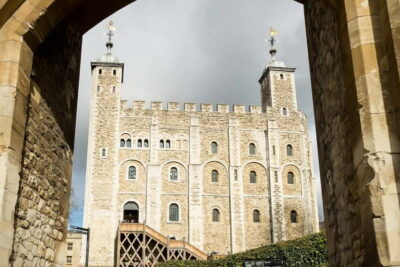
Tower of London and Crown Jewels Exhibition Ticket
Read our review →
Liverpool Football Club Museum and Stadium Tour
Read our review →
Tower of London and Crown Jewels Exhibition Ticket
Read our review →
Chelsea Football Club Stadium and Museum Tour
Read our review →


Browse the lists this tour appears in