
Review · THE UK
London Transport Museum Entrance Ticket
London Transport Museum tells London’s story through the machines that helped build it. You can see the world’s first underground steam train, early electric Tube railway equipment, old buses, famous maps, and the bold graphics that made London’s transport system recognisable around the world.
I like the hands-on exhibits, especially the train-driving simulator and engineering activities, and I like the way the museum links transport with everyday London life. The main drawback is noise and crowding, particularly on weekends and during school holidays, when the family play areas can make the museum feel less peaceful.
The museum earns a 4.5 out of 5 rating from 1,323 bookings. It is a compact but full visit, taking about 1 to 1.5 hours if you move briskly, or three to four hours if you stop for the displays and activities.
Key points at a glance
- See the first Underground railway: View the world’s first underground steam train and learn how London began moving below street level.
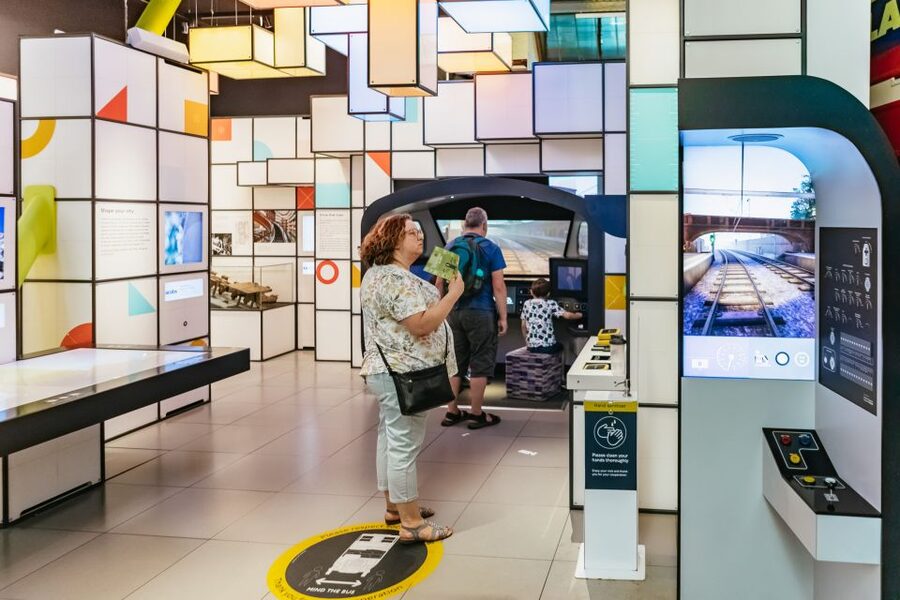
- Try the Elizabeth line simulator: Take the controls in a modern train-driving experience aimed at showing how today’s railway works.
- Follow London’s transport timeline: Move from horse-drawn buses to trams, steam trains, electric Tube railways, and modern rail.
- Explore more than 100 posters: The Global Poster Gallery covers commercial poster art and design from 1900 onward.
- Plan around family crowds: Children have plenty of play and interactive areas, but weekends can be noisy.
- Make the admission work harder: A normal visit is suitable for an afternoon, while transport enthusiasts can stay three or four hours.
Starting in Covent Garden with London’s transport story
The museum sits in the heart of Covent Garden, so it fits neatly into a central London day. You can combine it with the market, nearby theatres, restaurants, and the surrounding streets without setting aside a full day just for transport.
Inside, the story begins with a basic question: how did London grow into a modern city? The answer is tied closely to movement. Horse-drawn buses, trams, trains, and the Underground allowed people to live farther from work, opened new parts of the city, and changed how Londoners spent their days.
I like this approach because the museum is not simply a garage full of old vehicles. The displays show how transport affected work, housing, design, and daily routines. You see the vehicles, but you also get the reasons they mattered.
The route is self-guided, so you can set your own pace. Families may move quickly between the activities, while adults interested in design or engineering can stop at the photographs, diagrams, and explanatory panels.
A few more museum visits around the UK worth comparing
- London: Tower of London and Crown Jewels Exhibition Ticket
★ 4.6 · 28,769 reviews - Tower of London and Crown Jewels Exhibition Ticket
★ 4.5 · 6,677 reviews - Manchester: National Football Museum Admission Ticket
★ 4.4 · 1,243 reviews
From horse-drawn buses to the first Underground railway
One of the strongest parts of the visit is the early transport section. It traces London’s shift from horse-drawn buses and surface travel toward the underground railway that became one of the city’s defining features.
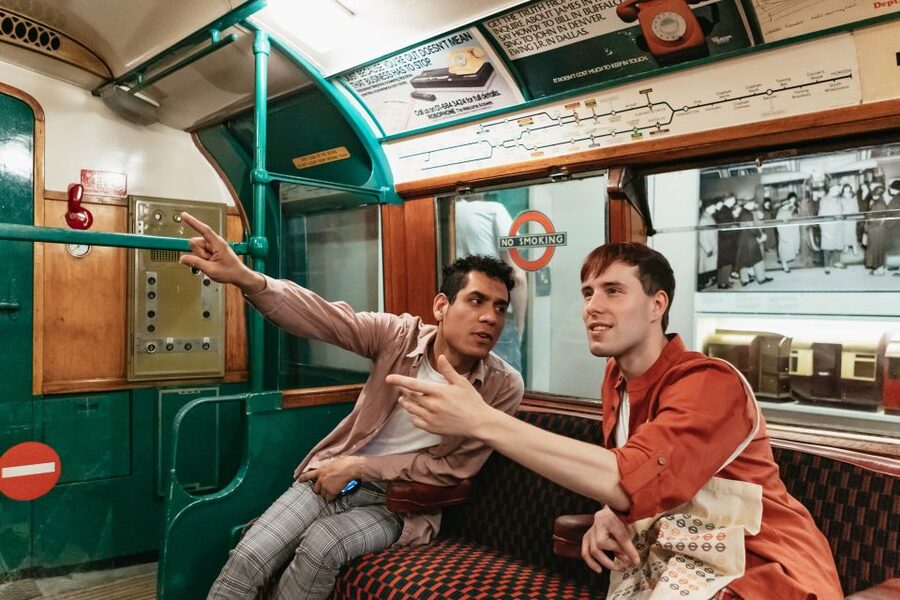
The world’s first underground steam train is a major highlight. It gives you a clear sense of how unusual the first Underground railway must have been. London was experimenting with a new way to move people beneath crowded streets, using technology that looks very different from today’s quiet electric trains.
The museum also presents the electric Tube railway. This helps explain the next stage of the story, when underground travel became faster, cleaner, and more practical for a growing city.
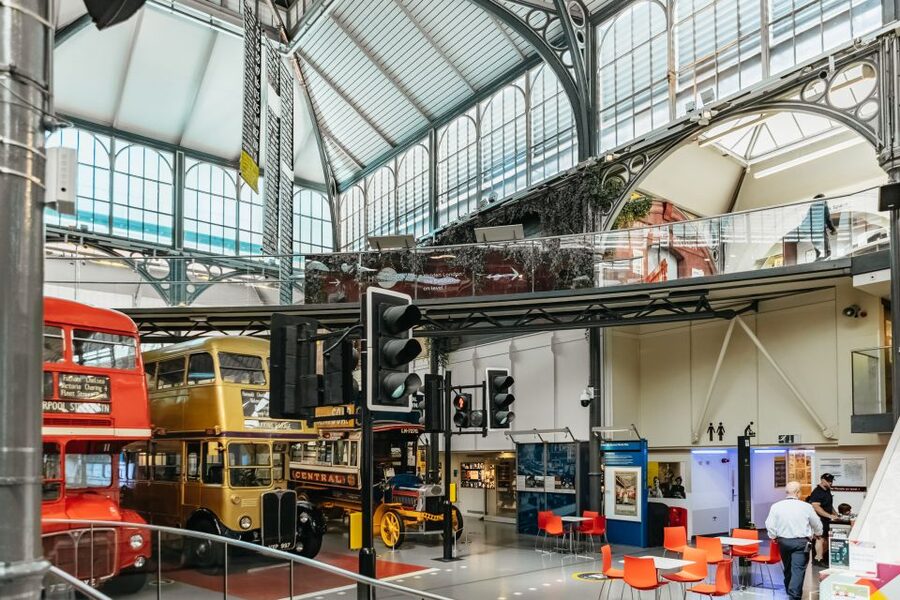
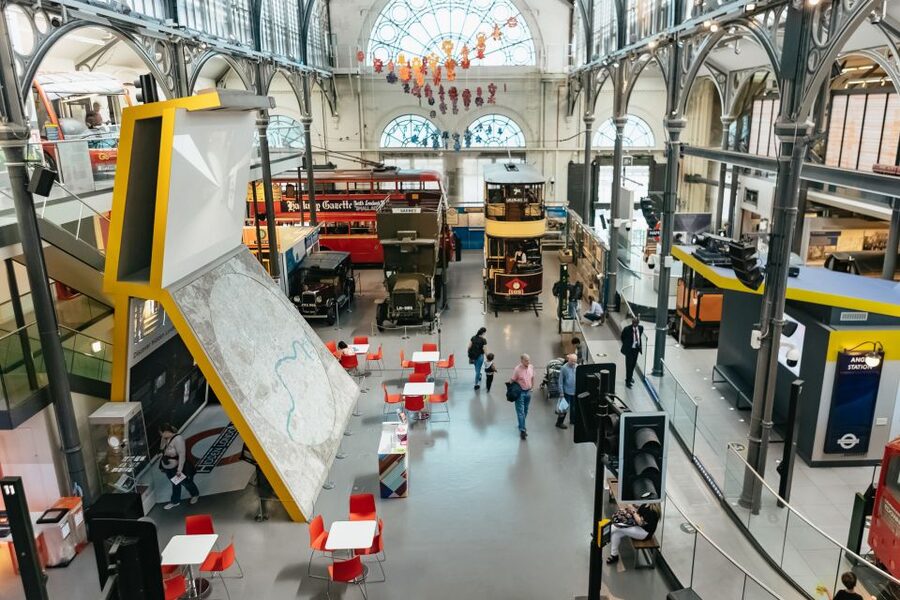
You will see historic vehicles and transport objects rather than only photographs. That matters because scale is hard to understand on a screen. A bus, carriage, or train component lets you see how cramped, solid, practical, or inventive the original equipment was.
The displays also cover trams and older buses. For older visitors, these sections can bring back memories of London in the 1940s, 1950s, and 1960s. For children, they offer a simple way to compare old transport with the trains and buses they use now.
The Underground map and London’s visual identity
London transport is famous not only for its trains but also for its design. The museum explains the origins of the transport system’s internationally recognised brand, including the familiar bullseye logo and the diagrammatic Tube map.
The Tube map is especially useful to see in context. It is more than a route guide. Its simplified lines and clear colours changed how people understood a large, confusing city. The museum shows how graphic design turned a complicated network into something ordinary passengers could read at a glance.
I like this part because it gives proper attention to the small details people usually take for granted. The roundel, typefaces, colours, signs, maps, and posters all work together. London transport became a visual system as well as a physical one.
You can also see how the museum connects design with public information. A good map tells you where to go. A good poster encourages you to take a trip, visit an attraction, or use a new line. The displays help you see why London’s transport graphics have had such a lasting effect.
The Global Poster Gallery and how posters were made
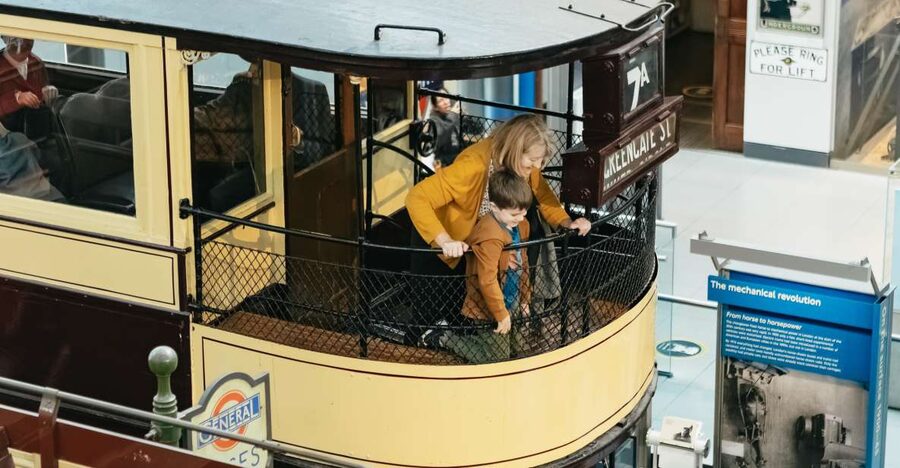
Entry to the Global Poster Gallery is included with museum admission. Opened in October 2023, it is dedicated to commercial poster art and design, with more than 100 poster artworks and posters on display.
The gallery focuses on work from 1900 onward and looks at how posters were commissioned and created before the digital age. That makes it more than a collection of attractive images. You get a look at the working process behind public advertising.
The exhibition How to Make a Poster explores the stages of poster-making, from the original commission through to the finished design. I find this useful because it shows how much planning went into images that had to catch someone’s eye in only a few seconds.
For design fans, this may be the most rewarding section. You can study colour, lettering, composition, and the way a poster presents a place or idea. For children, the bold shapes and strong colours are easy to enjoy even without reading every panel.
The gallery also gives the museum a welcome change of pace. After the large vehicles and engineering displays, you move into a more visual section focused on creativity and communication.
Same city, a completely different collection:
- Liverpool: Liverpool Football Club Museum and Stadium Tour
★ 4.8 · 10,764 reviews - London: Chelsea Football Club Stadium and Museum Tour
★ 4.8 · 4,576 reviews - Chelsea FC Stadium Tours and Museum
★ 5.0 · 1,908 reviews - Liverpool Beatles Museum Entry Ticket
★ 4.6 · 1,192 reviews
Driving the Elizabeth line and trying the interactive exhibits

The museum works well for families because it gives children things to do, not just things to look at. The Future Engineer’s simulation lets you drive a modern Elizabeth line train, giving you a taste of the controls and decisions involved in operating a railway.
The train simulator is one of the clearest links between the old and new parts of the museum. You begin with steam trains and early Tube railways, then see how the same basic need, moving people across London, has produced very different machines over time.
Other interactive activities include train-related controls, rail track switches, and a brake pad change. The museum has also offered hands-on activities such as drawing and working a train. These are useful for children who need movement and tasks to keep their attention.
There is a play area for toddlers and younger children, along with activities suited to older children. A family group with children aged two through teenagers can usually find something at the right level, while adults can read the background information nearby.
The tradeoff is noise. On a quiet morning, you can take your time. On a Saturday, school holiday, or busy afternoon, the play areas and simulators can make the museum loud. If you are visiting without children and prefer a calm museum, choose an early visit if possible.
How long to allow and how to pace your visit
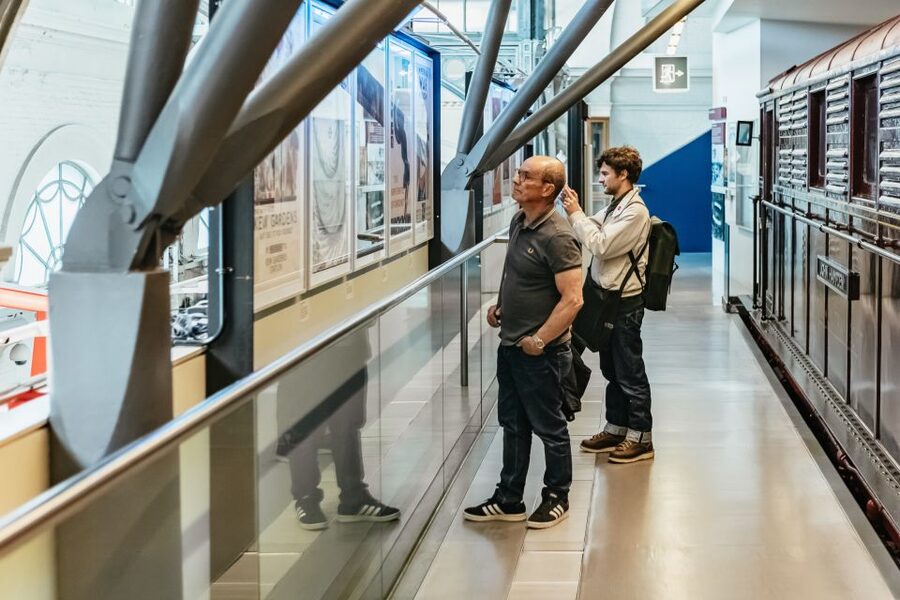
You can see the main displays in about 1 to 1.5 hours. That works well if you have a packed London schedule or want a focused look at the Underground, buses, and design exhibits.
I would allow two to three hours for a family visit. Children tend to spend longer at the driving and engineering activities, and you may need time to wait for a turn at popular interactive displays.
Transport enthusiasts or design fans can spend three to four hours here. Take your time with the posters, historic vehicles, videos, maps, and social history displays rather than treating the museum as a quick indoor stop.
The museum closes at 6:00 PM, with last entry at 5:00 PM. Keep that cutoff in mind when planning a late afternoon visit. The one-day ticket allows you to treat the museum as a flexible part of your day, but it does not mean you should arrive just before closing if you want to use the interactive areas.
Stroller and buggy parking is available. Large bags and luggage are not allowed, so this is not a good place to arrive with airport cases or bulky shopping.
Is the $33 admission good value?
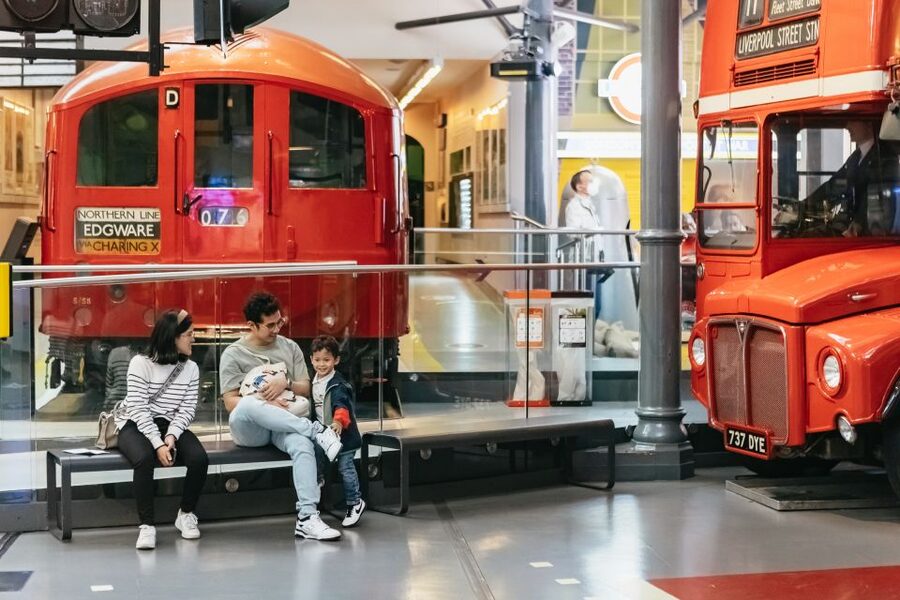
At $33 per person, the ticket is not a cheap quick attraction. The value depends on how you use it.
For a short one-hour visit, the price may feel high, especially if you are mainly interested in seeing a few old trains. For a family that stays several hours, uses the interactive areas, and spends time in the poster gallery, the calculation looks better.
The ticket includes the museum entrance, temporary exhibitions, and the Global Poster Gallery. It also gives you access to the family activities and modern simulator, which makes the experience broader than a standard transport collection.
I would compare it with the cost of other central London indoor attractions and with the weather. On a rainy afternoon, the museum offers several hours indoors without requiring a guided schedule. It also gives adults plenty to read while children play.
There is one practical value point worth noting: the museum can convert a day visit into an annual pass for an additional charge at the museum. The exact arrangement can change, so ask at the entrance if you think you might return. That option is particularly useful for local families or anyone planning to visit the Acton depot in the future.
Who will enjoy London Transport Museum most?

This is an easy choice for families with children. The combination of buses, trains, play areas, simulators, and engineering tasks gives children reasons to keep moving through the building. Several families return as children grow because different activities become interesting at different ages.
It also suits adults who care about London, railways, buses, graphic design, or city planning. You do not need to be a transport expert. The displays explain how the network developed and why it changed the city.
The museum is a good rainy-day option and a useful break from outdoor sightseeing. Its Covent Garden setting makes it easy to add to a central London itinerary.
It may be less suitable if you want a quiet, small collection with few interactive elements. The museum can be noisy, and some areas are clearly designed around families. Couples and solo visitors should aim for a quieter time if they want to read everything.
Practical details before you go
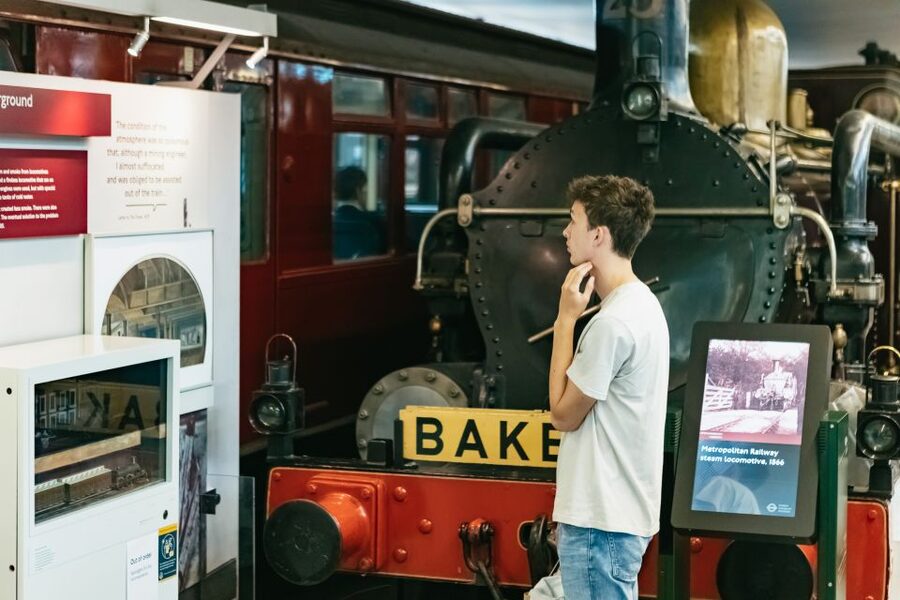
Your meeting point is the London Transport Museum itself in Covent Garden. There is no guide-led route, so you can explore independently and choose how much time to spend at each display.
The museum is wheelchair accessible. Large luggage is not allowed, while stroller and buggy parking is available.
You can cancel up to 24 hours in advance for a full refund. A reserve-and-pay-later option is also available, which helps if your London plans are still changing.
Staff are available to help with questions and directions inside the museum. A museum guidebook is another useful purchase if you want more background on the exhibits.
The overall rating is 4.5 out of 5 from 1,323 bookings, and the strongest pattern is clear: the museum works because it combines useful information with things you can actually operate and try. The main caution is equally clear: expect children, noise, and occasional queues during busy periods.
Should you book it?
Book London Transport Museum if you want an indoor London attraction that combines transport, social history, design, and family activities. It is especially good for children aged around three to twelve, but grandparents, transport fans, and adults interested in London’s visual identity will find plenty to enjoy.
I would choose it for a rainy day, a family afternoon in Covent Garden, or a first introduction to the Underground’s story. Arrive early if you want less noise and easier access to the interactive exhibits.
Skip it if your schedule is extremely tight, you dislike family museums, or you only want to ride the Tube rather than learn how it developed. For everyone else, the $33 ticket is most worthwhile when you allow at least two hours and take time to look beyond the vehicles.
FAQ
Where is London Transport Museum located?
The museum is in Covent Garden, in the heart of London.
How long does a visit take?
A quick visit can take about 1 to 1.5 hours. If you examine the displays closely and use the interactive exhibits, you might spend three to four hours.
What are the museum’s opening limits?
Last entry is at 5:00 PM, and the museum closes at 6:00 PM daily.
Is the museum suitable for children?
Yes. It includes play areas, interactive exhibits, train-related activities, a driving simulator, and displays for a wide range of ages.
Can I drive a train at the museum?
You can use the Future Engineer’s simulation to drive a modern Elizabeth line train.
Is the museum wheelchair accessible?
Yes, the museum is wheelchair accessible.
Can I bring luggage or a large bag?
Large bags and luggage are not allowed. Stroller and buggy parking is available.
Is the Global Poster Gallery included?
Yes. Entry to the Global Poster Gallery is included with museum admission, along with access to temporary exhibitions.
Just added around the UK
- Westminster and National Gallery 3.5-Hour Tour in Italian★ 4.9 · 28 reviews
- British Museum & Camden Town – Private Tour in Italian★ 4.8 · 26 reviews
- Glasgow: Rangers Football Club Museum★ 4.6 · 103 reviews
- Edinburgh The King’s Gallery Entrance Ticket★ 4.3 · 54 reviews
- The Royal Mint Experience: Ticket, Guided Tour & Exhibition★ 4.6 · 57 reviews
- London: National Gallery of London Masterpieces Guided Tour★ 4.9 · 78 reviews
- London: British Museum Highlights Guided Small Group Tour★ 4.9 · 113 reviews
- Stratford-upon-Avon: Tudor World Museum Entrance Ticket★ 4.4 · 34 reviews
Museum Tours in the UK, compared.

Tower of London and Crown Jewels Exhibition Ticket
Read our review →
Liverpool Football Club Museum and Stadium Tour
Read our review →
Tower of London and Crown Jewels Exhibition Ticket
Read our review →
Chelsea Football Club Stadium and Museum Tour
Read our review →


Browse the lists this tour appears in