
Review · LONDON
British Museum London Guided Tour Semi-Private 8ppl Max
The best reason to book this British Museum tour is simple: it turns an enormous collection into a manageable story. In two and a half hours, your guide leads you from the Rosetta Stone to Egyptian mummies, medieval chess pieces, Parthenon sculptures, and Assyrian reliefs without leaving you to wander through 8 million objects on your own.
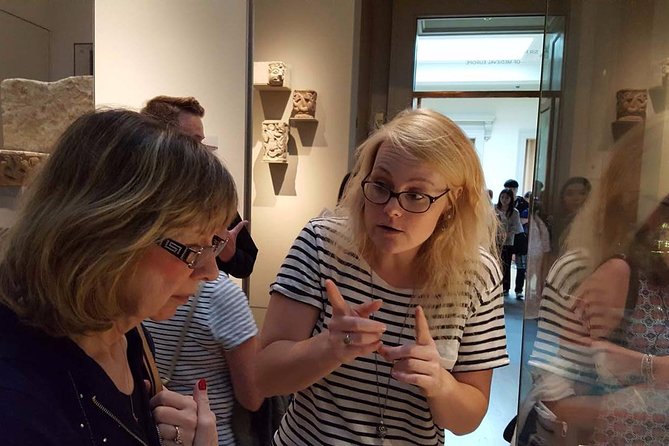
I like the maximum group size of eight, which keeps questions possible and makes it easier to stay with the guide in crowded galleries. I also like the range of guides, including Ivo, James, Jake, Steph, Laurence, and Guy, whose tours are praised for humor, clear explanations, and frank discussion of how contested objects entered the museum.
The main drawback is the fixed pace. You will see a sharp selection of highlights rather than explore every room, and temporary exhibitions are not included. The tour also requires a moderate level of walking, does not suit wheelchair users, and asks you to arrive without large bags.
Key Points at a Glance
- Eight people maximum: A small group makes it easier to hear the guide, ask questions, and move through busy rooms.
- Major objects in 2.5 hours: The route includes the Rosetta Stone, the Mummy of Katebet, the Lewis Chessmen, Parthenon sculptures, and Assyrian lion-hunt reliefs.
- Guides who add context: Ivo, James, Jake, Steph, Laurence, Guy, Darcy, Matilda, and others are praised for lively storytelling and thoughtful answers.
- A useful first visit: The route helps you get your bearings before deciding which galleries deserve a longer return visit.
- Central London meeting point: You meet at the British Museum on Great Russell Street and finish there.
- Value at $108.44: The price is high for a free-entry museum, but reasonable if personal guidance and efficient sightseeing matter to you.
Why a Small British Museum Tour Helps
The British Museum is free to enter, which makes the $108.44 price seem steep at first. You are not paying for admission. You are paying for a guide, a planned route, a small group, and help making sense of a collection that covers about 6,000 years of human history.
That difference matters here. You can walk into the museum alone and find famous objects, but the building contains far more than the Rosetta Stone and Egyptian mummies. A good guide explains why an item matters, how it was used, and what its place in a larger culture tells you about people who lived long ago.
The eight-person limit is the strongest practical feature. A guide can point out small details without shouting across a large group, and you can ask a question without holding up a busload of people. The small format also helps when crowds gather around the best-known objects.
This is not a private experience unless you choose the private upgrade. The standard option is semi-private, with no more than eight people total. That gives you much of the benefit of a private guide at a lower price, though you will not control every stop or set the pace entirely around your own interests.
More Museum Tours in London
- Tower of London and Crown Jewels Exhibition Ticket
★ 4.5 · 6,677 reviews - London: Chelsea Football Club Stadium and Museum Tour
★ 4.8 · 4,576 reviews - Chelsea FC Stadium Tours and Museum
★ 5.0 · 1,908 reviews
Meeting on Great Russell Street
You meet your guide at the British Museum, Great Russell Street, in central London. The museum is near public transportation, and the tour begins at the chosen departure time. You should build in enough time to reach the meeting point, since arriving late can be especially awkward when the group has already entered the galleries.
The tour ends back at the museum meeting point. There is no hotel pickup or drop-off, so arrange your own transport. A taxi or Uber is suggested for the transfer, though the central location also makes public transportation practical.
Bring a mobile phone with the country code attached to your number when you book. That contact information is required, and it gives the operator a way to reach you about meeting details or changes.
Security rules matter. Large bags and suitcases are not allowed inside. Only a handbag or small, thin backpack can pass through security, and lines can still form even when a tour is marketed as having fast access. An umbrella may be useful in London, but you should check how you carry it into the museum.
Wear comfortable shoes. Two and a half hours on foot, with stops in several galleries, is not a good match for stiff footwear. The tour requires moderate physical fitness and is not available to people using wheelchairs or with walking disabilities.
The Opening: An 8 Million Object Collection
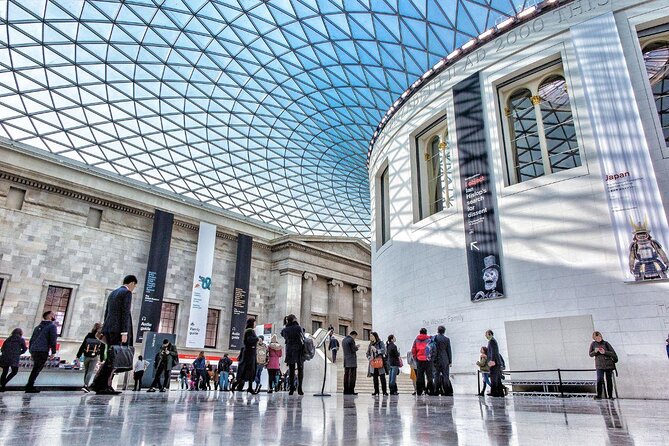
Your guide begins with an introduction to the museum and its enormous holdings. The collection contains about 8 million items, covering art and artifacts from across the world and spanning 6,000 years.
That scale is both the museum’s glory and its problem. It is impossible to see everything in one visit, even if you spend the entire day inside. The guide’s job is to select objects that tell useful stories rather than simply march you past famous names.
The tone is intended to be serious but enjoyable. The route can move from ancient societies and fallen empires to daily life, technology, belief, warfare, and artistic skill. The selection includes objects that are visually striking, but the guide also gives you the background needed to see more than a surface of stone, wood, metal, or painted plaster.
This opening is especially useful if you have limited time in London. You get a clear introduction without spending the first hour studying a map and debating which gallery to enter next.
Egyptian Objects and the Mummy of Katebet
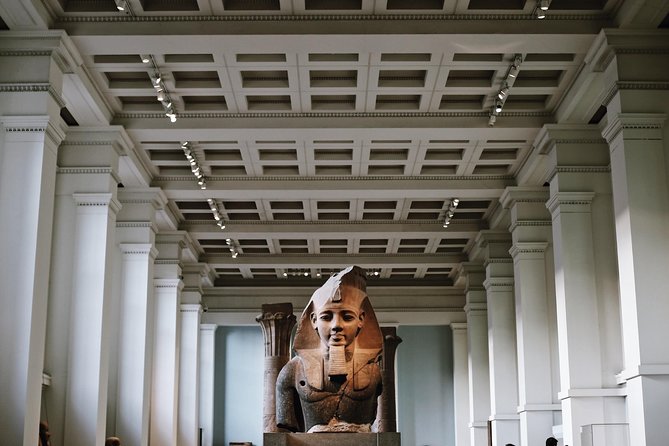
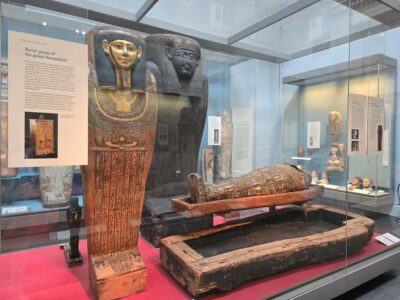
Egyptian material is one of the expected high points. The Mummy of Katebet gives the guide a chance to discuss burial practices, religious beliefs, and the way the ancient Egyptians prepared the dead for the afterlife.
You should not expect an exhaustive tour of Egyptian collections in this time. Instead, the guide uses selected pieces to show how objects connect to beliefs and social life. That approach keeps the visit moving and prevents the subject from becoming a long list of dates and royal names.
The Mummy of Katebet is also a reminder that the museum’s most interesting objects are not always the largest. A guide can draw your eye to details you might pass without noticing, then explain what they reveal about the person and the culture behind the case.
If ancient Egypt is your main reason for visiting, tell the guide at the start. The route is selected rather than fully customizable, but several guides have shown flexibility when a group has particular interests.
More British Museum tours:
- London: British Museum Guided Tour
★ 4.3 · 1,182 reviews - London: British Museum Guided Tour with Entrance Tickets
★ 4.9 · 748 reviews - London: Tour of the British Museum
★ 4.1 · 678 reviews - London: British Museum Audio Tour & Priority Entrance Ticket
★ 4.5 · 631 reviews
The Rosetta Stone and the Problem of Famous Objects
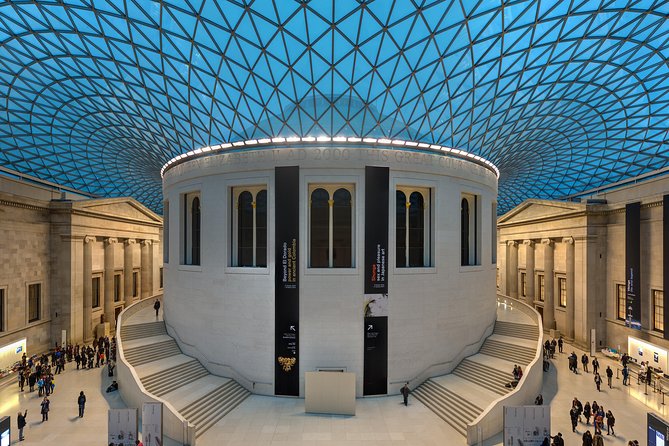
The Rosetta Stone is the obvious star of the visit. It is the actual ancient stone, not the language-learning program, and it helped scholars read Egyptian hieroglyphs by presenting the same text in different scripts.
A self-guided visit can show you the stone. A guide can explain why its inscriptions mattered and why this particular object changed the study of ancient Egypt. That added context is where the tour earns much of its value.
The Rosetta Stone can also draw a crowd. Your guide may need to position the group carefully and keep the stop moving so everyone gets a clear look. The small group helps, but it cannot remove the museum’s general crowds or guarantee an empty viewing area.
You should expect some rooms to have quiet or restricted speaking rules. In those areas, your guide explains what is needed before you enter and may pause the main commentary until you are back in a suitable space.
Lewis Chessmen and Medieval Life
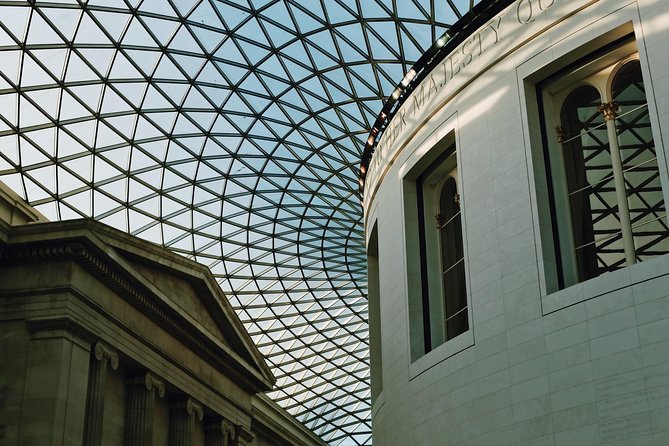
The 12th-century Lewis Chessmen provide a change of mood after the ancient Egyptian galleries. These small carved figures are easy to appreciate at a glance, yet they raise useful questions about medieval games, craftsmanship, trade, status, and daily life.
They are also a good example of why a guided route can be more satisfying than a checklist of major monuments. The chess pieces are not as immediately imposing as a monumental relief, but their faces and details invite a closer look.
Your guide can connect the objects to the wider medieval world and show how a set of game pieces can tell you about the people who made, owned, and used them. This part of the route gives the visit variety and keeps the experience from becoming an unbroken parade of royal tombs and imperial power.
Assyrian Lion Hunts and the Parthenon Sculptures
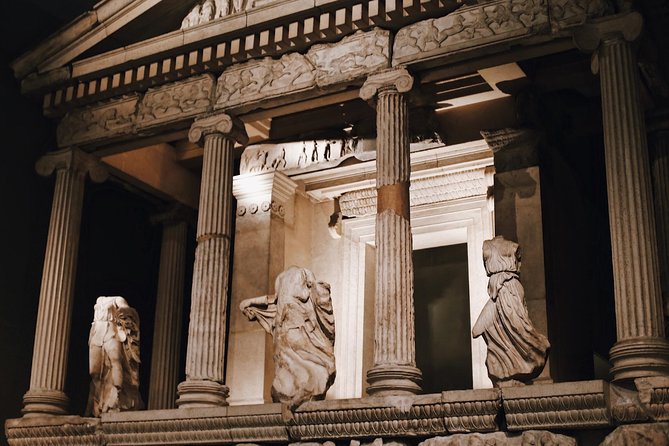
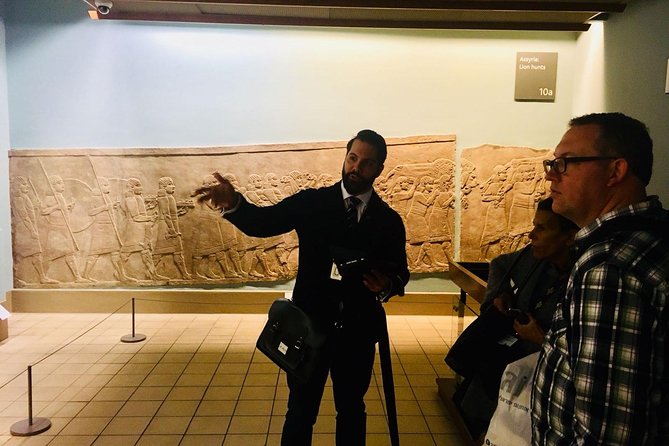
The Assyrian galleries bring some of the most dramatic art on the route. The lion-hunt reliefs date from the 7th century BC and show the skill and power of the Assyrian court through scenes of hunting, animals, weapons, and royal control.
The lion hunt is especially effective in a small group because the guide can point out action and expression within the carved stone. It is not simply a picture of an ancient event. It also presents a ruler’s public image and the political message attached to the hunt.
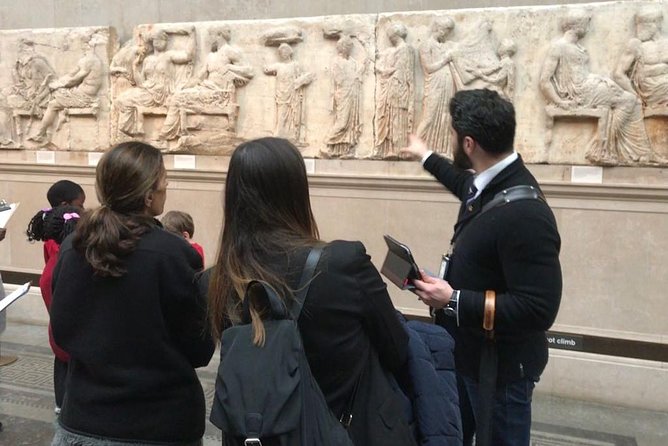
The route may also include Parthenon sculptures. These objects are beautiful, famous, and controversial. Several guides are praised for addressing the difficult question of how major pieces came into the British Museum rather than avoiding it.
That frank approach improves the visit. You can admire the skill of the sculptures while also thinking about ownership, removal, empire, and the claims made by modern nations. The tour is not just a parade of British trophies. At its best, it gives you enough context to form your own view.
How the Guides Shape the Experience
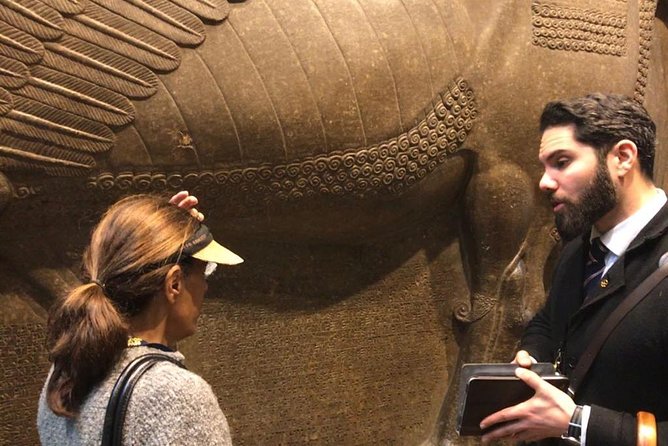
The guide will make a large difference. Names associated with especially strong tours include Ivo, James, Jake, Andy, Eleisha, Stephanie, Sacha, Lawrence, Darcy, Napoleone, Guy, Steph, Becky, and Matilda.
Ivo is praised for bringing historical details to life and keeping the group engaged. James is described as friendly, witty, and able to include both major sights and less familiar Assyrian material. Jake is valued for answering questions and discussing controversial subjects directly.
Steph and Laurence are noted for combining humor with a strong command of the museum’s collection. Guy is praised for making the material work for teenagers, while Darcy is remembered for mixing entertainment with practical suggestions for the rest of a London visit.
These descriptions point to a consistent strength: the experience depends on storytelling, not merely escorting you from case to case. Still, guide style varies. Some guides may focus more on art, some on history, and some on the museum’s modern controversies. If you have a particular interest, mention it early.
What You Will Not See
Two and a half hours is enough for an intelligent introduction, not a complete museum visit. The British Museum holds objects from many regions and periods, and the route must leave plenty of rooms untouched.
Temporary exhibitions are not included. If a special exhibition is a major reason for your visit, you will need a separate ticket or plan. Collections can also change during the year, and specific galleries may occasionally close.
Museum management can sometimes delay opening or close areas without much warning. If the museum opens more than an hour late, an alternative may be offered, but refunds or discounts are not promised in that situation. This is a point to keep in mind when planning a tightly packed London day.
The tour also finishes at the meeting point rather than continuing to another attraction. That is useful if you want to choose your next stop, but it means you must arrange the rest of your day yourself.
Price and Value at $108.44
At $108.44 per person, this is not the budget way to enter the British Museum. Entry to the museum itself is free, so a solo visitor who enjoys reading labels and wandering at a slow pace may prefer to save the money.
I see better value for a first visit, a short London stay, or a family group that needs structure. The guide prevents you from spending precious time lost among galleries, and the small group makes the explanations more personal than a large coach tour.
The price also makes more sense if you would otherwise book a private guide. The standard option keeps the group at eight or fewer, while a private upgrade gives your party the full tour. A group discount may be available, which can help if you are booking for several people.
You should not book this for a quiet, self-directed museum day. You will follow someone else’s route and spend much of the time listening. Book it when you want the museum’s major stories explained clearly and efficiently.
Who Should Book This Tour
I would recommend it to first-time British Museum visitors who want a strong overview without spending all day inside. It also suits families and mixed-interest groups, since a lively guide can keep the pace moving and explain why the objects matter.
It is a good choice for anyone who finds large museums tiring or confusing. The route gives you a framework, and you can return on your own afterward to galleries that caught your attention.
History and art fans will appreciate the chance to ask questions and discuss contested collections. Teenagers may respond well to the combination of mummies, warfare, ancient games, and dramatic animal reliefs, especially with a guide who uses humor.
I would skip it if you use a wheelchair, have a walking disability, want to focus on a temporary exhibition, or prefer complete control over your route. You should also skip it if the cost feels hard to justify for a free museum and you are comfortable doing your own research.
Booking, Cancellation, and Practical Rules
Several departure times are available, which helps fit the tour around other London plans. The experience is offered in English, and confirmation is provided at booking.
You can cancel for a full refund up to 24 hours before the start time. Cancellations or changes made inside that window are not refunded or accepted. The tour needs at least two people to run, so if the minimum is not met, you will be offered another option or a full refund.
Tips are not included and are optional. Appropriate dress may be required for entry to some sites, though the main practical concerns here are comfortable shoes, a small bag, and arriving on time.
Should You Book the British Museum Tour?
Book it if you want the Rosetta Stone, Katebet, Lewis Chessmen, Assyrian reliefs, and Parthenon sculptures placed in a clear human story rather than viewed as disconnected objects. The small group, strong guide feedback, and two-and-a-half-hour route make it a sensible choice for a first visit or a packed London schedule.
Think twice if you want to wander slowly, concentrate on a temporary exhibition, or avoid paying for guidance at a free museum. For most visitors who value context and efficient sightseeing, the price buys a much better start than walking in without a plan.
FAQ
How long does the British Museum guided tour last?
The tour lasts approximately 2 hours and 30 minutes.
How many people can join the semi-private tour?
The group is limited to a maximum of eight people. A private option is also available.
What objects are included on the tour?
The route includes the Mummy of Katebet, the 12th-century Lewis Chessmen, the Rosetta Stone, Assyrian lion-hunt reliefs, and Parthenon sculptures. Collections can vary during the year.
Is museum admission included?
The tour takes place inside the British Museum, and the tour information lists the admission ticket as free. Temporary exhibitions are not included.
Where does the tour begin and end?
You meet at the British Museum on Great Russell Street, London WC1B 3DG. The activity ends back at the meeting point.
Is hotel pickup included?
No. Hotel pickup and drop-off are not included. You must arrange your own transport to and from the museum.
Is the tour suitable for wheelchair users?
No. The tour is not available for people with walking disabilities or those using a wheelchair. A moderate level of physical fitness is required.
Can I cancel for a full refund?
Yes. You can cancel at least 24 hours before the experience start time for a full refund. Cancellations or changes made less than 24 hours before the start time are not refunded or accepted.
Just added around London
- Westminster and National Gallery 3.5-Hour Tour in Italian★ 4.9 · 28 reviews
- British Museum & Camden Town – Private Tour in Italian★ 4.8 · 26 reviews
- London: British Museum Highlights Guided Small Group Tour★ 4.9 · 113 reviews
- London: Westminster Abbey & Jubilee Galleries Guided Tour★ 4.9 · 56 reviews
- London: Sherlock Holmes Museum & Westminster Walking Tour★ 4.4 · 13 reviews
- London: Royal Museums Greenwich Day Pass★ 4.5 · 309 reviews
- London: Tickets for Moco Modern & Contemporary Art Museum★ 4.7 · 391 reviews
- London: The Courtauld Gallery at Somerset House Entry Ticket★ 4.6 · 126 reviews
Museum Tours in London, compared.
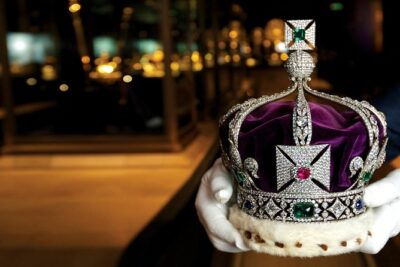
Tower of London and Crown Jewels Exhibition Ticket
Read our review →
Chelsea Football Club Stadium and Museum Tour
Read our review →


Official tickets: Moco Modern & Contemporary Art Museum
Read our review →
British Museum Guided Tour with Entrance Tickets
Read our review →
Browse the lists this tour appears in