
Review · THE UK
Glasgow: Rangers Football Club Museum
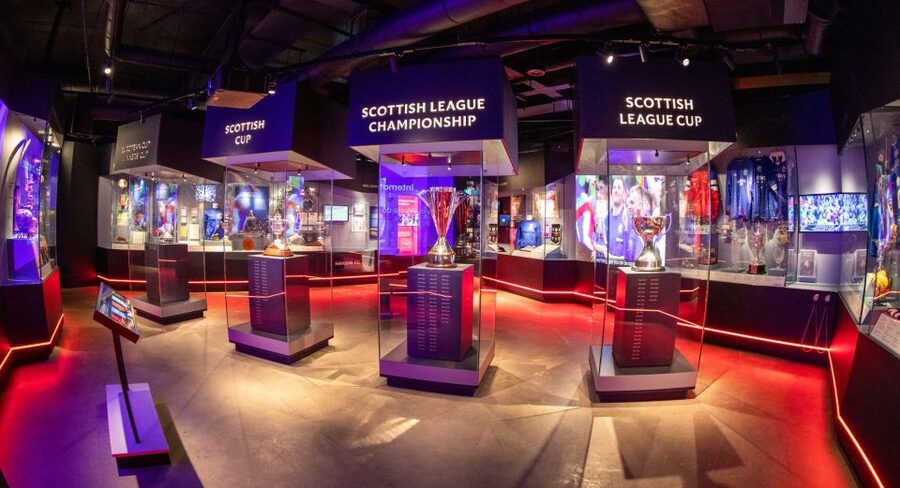
Glasgow’s Rangers Museum puts more than 150 years of football history into a compact, self-guided visit. The big draw is the trophy room, where silverware gives the club’s long story a solid, physical presence rather than leaving you with only photos and dates.
I like the interactive screens, which let you build a Rangers dream team and experiment with formations. I also like the broad welcome: families, teenage fans, older supporters, and visitors who know little about the club can all find something to follow.
The main thing to understand is that this is a museum visit, not a stadium tour. Your ticket does not include access to Ibrox Stadium, and the free-flow layout means you will not have a guide beside you to answer every question.
Key points to know before you go
- The trophy room is the emotional center: See Rangers silverware and artifacts covering the club’s story from its beginnings to recent victories.
- Interactive displays add some play: Build a dream team and test different formations on touchscreens.
- Allow about 90 minutes: The timed entry gives you room to explore at your own speed without committing to a long tour.
- Edmiston House is the entry point: Go inside and head upstairs to reach the museum.
- The cafe and shop extend the visit: Stop for hot or cold snacks, drinks, and Rangers supporter items.
- The stadium tour is separate: Your museum admission does not include Ibrox Stadium access.
Starting at Edmiston House and heading upstairs
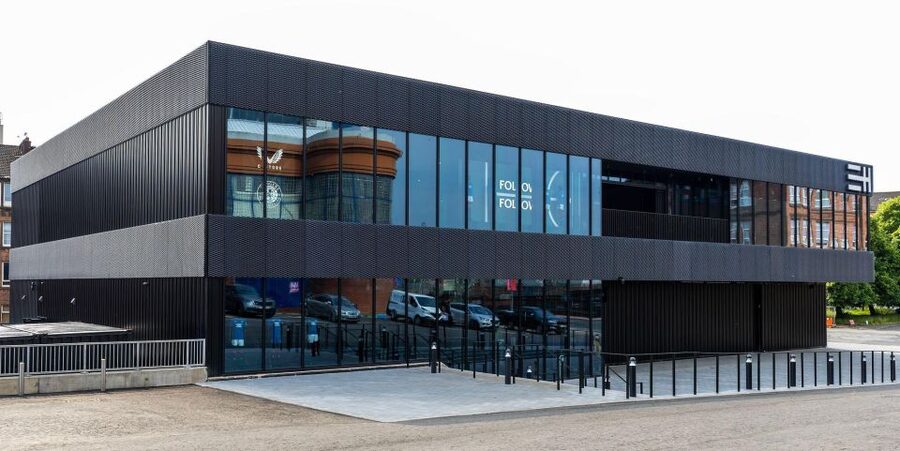
Your visit begins at Edmiston House, where you enter and head upstairs to the Rangers Museum. The museum uses timed entry, but once inside, the format is free flowing. You are not pushed from room to room behind a large group or tied to a fixed spoken presentation.
That matters if you are visiting with family or friends who do not all move at the same pace. A committed supporter can stop to read names and dates, while someone less familiar with Rangers can spend more time with photographs, videos, and interactive sections.
The venue is cashless, so take a bank card or another accepted card payment method for the cafe and shop. Food is not allowed inside the museum, and large bags or luggage are not permitted. Plan to leave bulky items elsewhere before you arrive.
The museum is wheelchair accessible. Audio and visual assistance are available, which is useful for visitors who need more than printed captions and photographs. One review also praised the clear descriptions and visual material for people with visual impairments, so it is worth asking staff what support is available when you enter.
A few more museum visits around the UK worth comparing
- London: Tower of London and Crown Jewels Exhibition Ticket
★ 4.6 · 28,769 reviews - Liverpool: Liverpool Football Club Museum and Stadium Tour
★ 4.8 · 10,764 reviews - Tower of London and Crown Jewels Exhibition Ticket
★ 4.5 · 6,677 reviews
Following 151 years of Rangers
The museum presents the club’s story from its founding years through its latest victories. You will see how the collection moves between dates, players, managers, matches, photographs, video material, and objects connected to the club.
For a lifelong Rangers supporter, this timeline can work as a memory guide. It may bring back old players, big games, and periods that have personal meaning. One older couple in their seventies found the displays especially useful for recalling players, managers, matches, and events, even while one of them was living with dementia.
That points to one of the museum’s best qualities: you do not need to study every panel to enjoy it. Familiar names and images can trigger memories, while the basic descriptions give newer fans a way into the story. If you are visiting with a parent or grandparent who followed Rangers for decades, leave space for pauses and conversation. The museum may prompt stories that are not written on the walls.
For younger fans, the same material creates a link between the current club and earlier generations. A parent can turn the visit into a small family quiz, asking children to find old players or match details. One father and son made a game of tracking down names from the past, which is a good way to keep the visit active rather than simply reading labels.
The trophy room and the weight of silverware
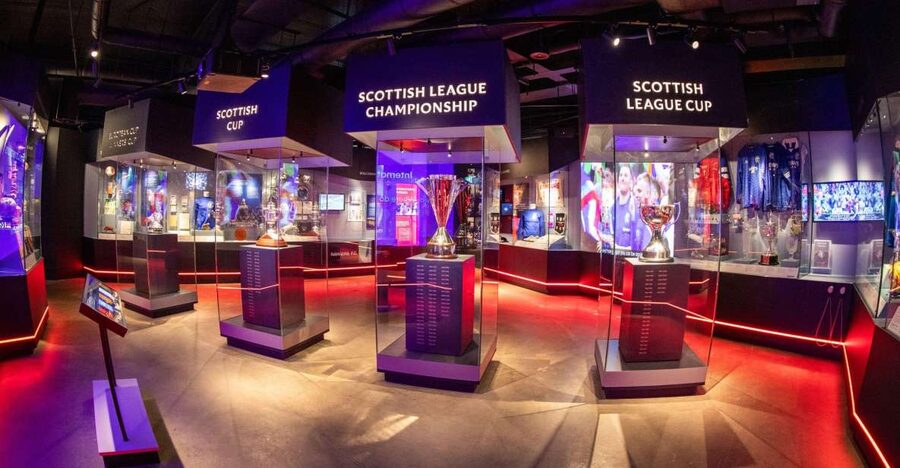
The trophy room is the clearest reason to book this museum rather than simply reading about Rangers online. Silverware gives the club’s achievements a sense of scale. You can see the physical rewards of successful seasons together, alongside objects and images that explain where they fit.
This is likely to be the most powerful section for committed supporters. Even if you know the club’s honors already, seeing the trophies in one place makes the record easier to grasp. It also gives casual football fans a quick understanding of why Rangers matter in Glasgow and Scottish football.
The displays do not rely only on cups. Historic artifacts, photographs, videos, and written descriptions fill out the story. That mix helps prevent the trophy room from becoming a simple line-up of polished metal. You get some context around the people and moments connected to the silverware.
The exact amount of time you spend here will depend on your interest. I would allow at least 20 to 30 minutes if you want to read carefully, take in the photographs, and discuss the standout items. If you are visiting with children, the trophy room may be shorter, while the interactive displays will probably hold attention longer.
Building a Rangers dream team
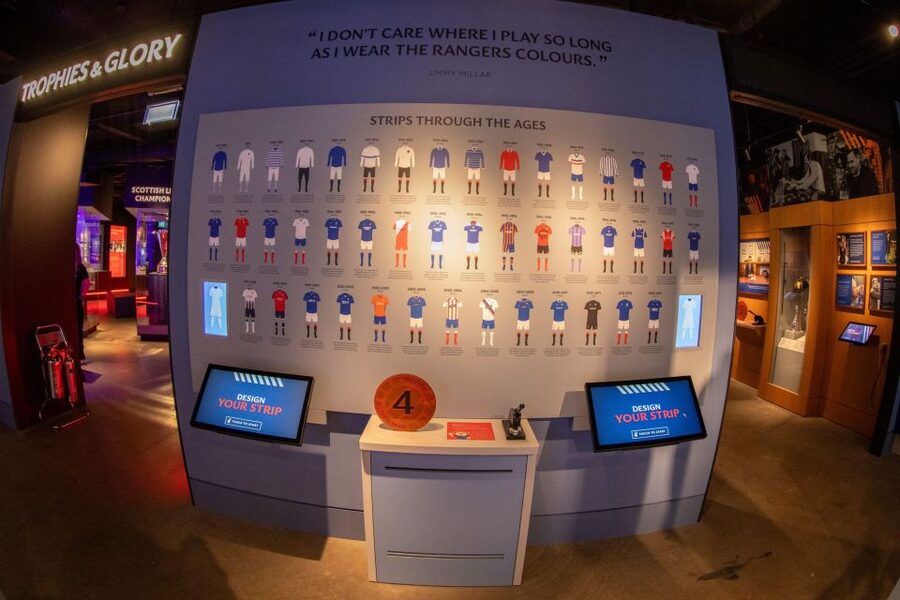
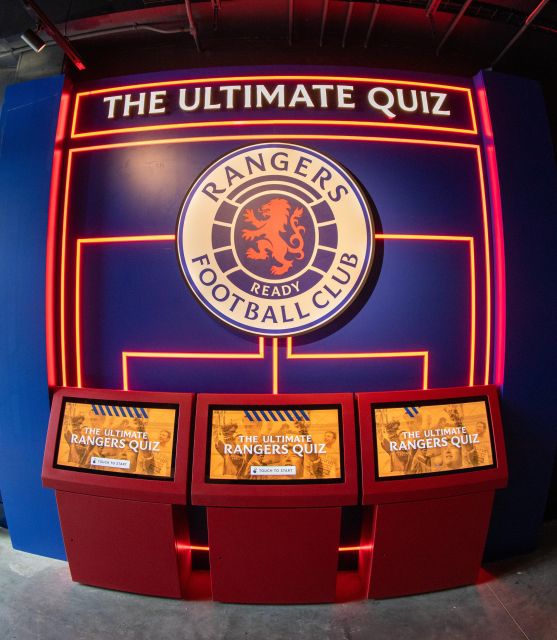
The interactive screens give the museum a more hands-on feel. You can build your own Rangers dream team and think about formations, positions, and player choices. This is a simple idea, but it works because it asks you to make decisions instead of only absorbing information.
It also suits mixed groups. A serious fan can debate the best line-up, while a new supporter can make choices based on names or periods they have just learned about. If you are visiting with a teenage child, this section can provide a natural point of comparison between different eras.
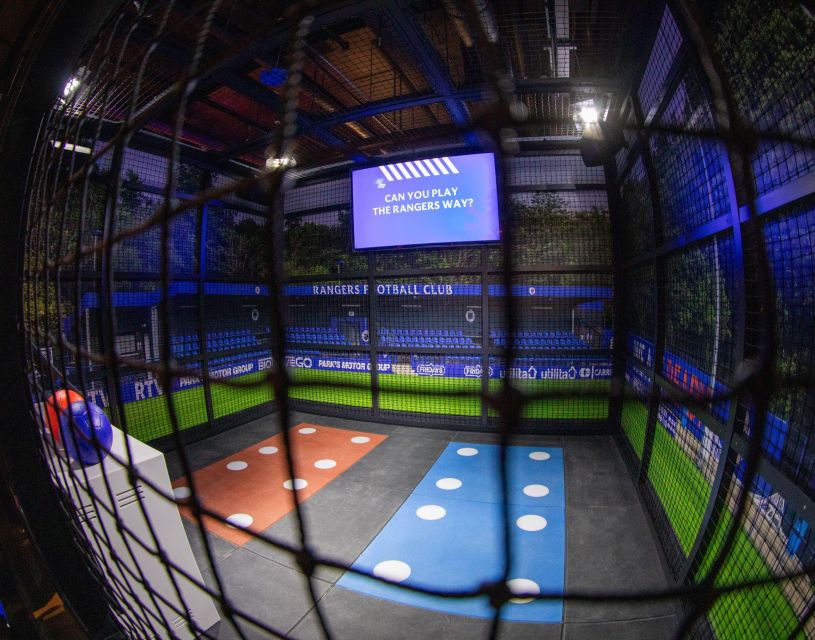
Do not expect a full football simulator or a long arcade session. The information provided describes interactive screens focused on team building and formations. Their value is in adding a personal choice to the museum visit, not in replacing the historical exhibits.
One useful tip is to save this section for a point when you need a change from reading. Move through the historic material first, then spend time testing your own selections. It gives the 90-minute visit a good rhythm.
Same city, a completely different collection:
- London: Chelsea Football Club Stadium and Museum Tour
★ 4.8 · 4,576 reviews - Chelsea FC Stadium Tours and Museum
★ 5.0 · 1,908 reviews - London Transport Museum Entrance Ticket
★ 4.5 · 1,323 reviews - Manchester: National Football Museum Admission Ticket
★ 4.4 · 1,243 reviews
Videos, photographs, and readable displays
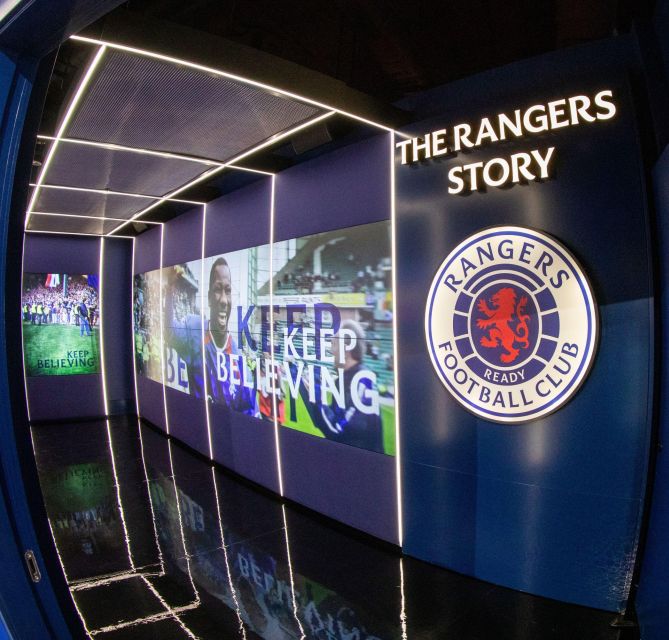
The museum also uses video material, photographs, and clear descriptions. Videos add movement and atmosphere to a collection that could otherwise feel static. The visual material helps show players, events, and different periods of the club in a way that a text panel cannot.
Descriptions are important for anyone who does not already know Rangers’ story. You can follow the basic timeline without needing a detailed football background. If you already know the names, the labels still help place them in the right era.
The museum is self-guided, so you decide how much context you want. This is both a strength and a limitation. I like the freedom to stop when something matters to me, but visitors who prefer a polished spoken tour may miss having a guide explain the connections between exhibits.
One visitor suggested having someone available for questions. That is a fair point. Staff are described as friendly and helpful, but the museum format does not promise a guide stationed beside each section. If you have a particular question, ask staff at the start rather than assuming someone will appear in the galleries.
A visit that works for different generations
Rangers is not just a football club within Glasgow. It is part of the city’s social and sporting identity, and the museum reflects that connection through memories of players, matches, managers, and important events.
The experience can be especially meaningful for families. A parent may recognize names that a teenager has never heard, while the younger visitor may know current players and recent victories. The museum gives both generations something to explain to the other.
It also has value for visitors with a personal connection to Ibrox. One couple found the visit brought back memories of an early visit to the ground and players from that period. Another visitor had worked as a police officer in Govan and had been on duty at Ibrox during the stadium disaster. For that person, the displays reached beyond sport into local memory and personal experience.
You should not assume every section will feel equally significant to you. Some artifacts will mean far more to a lifelong supporter than to a first-time football visitor. Still, the clear structure and visual displays make it possible to appreciate the club’s place in Glasgow without knowing every result.
The cafe and Rangers shop
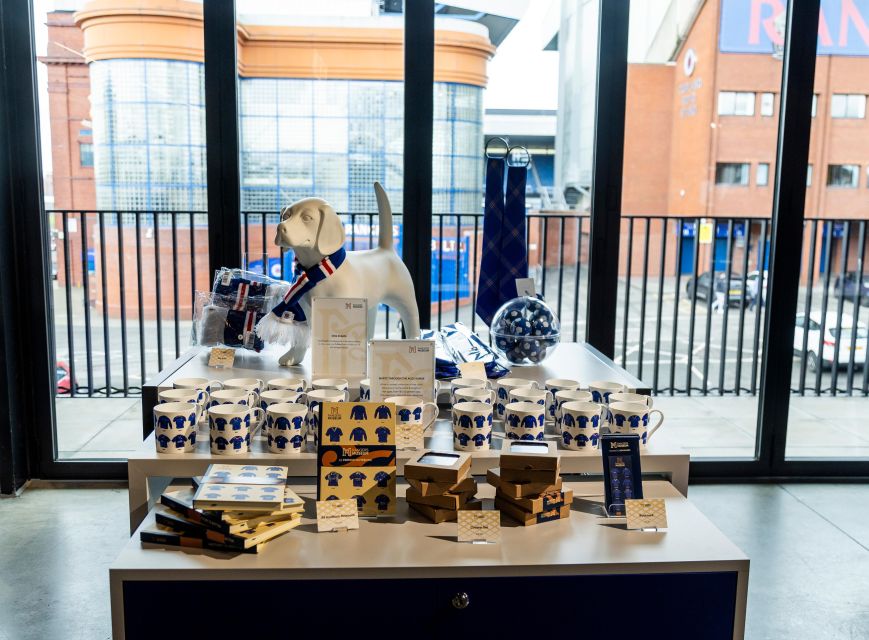
After the museum, you can stop at the cafe for drinks and hot or cold snacks. This gives you a practical place to pause before leaving, especially if you are visiting with children or combining the museum with other activities around Ibrox.
The cafe is a useful extra rather than the main reason to book. Some visitors praised the food and drink options, while one suggested that more seating would improve the area. If you want a long, relaxed cafe break, seating may be the point to keep in mind.
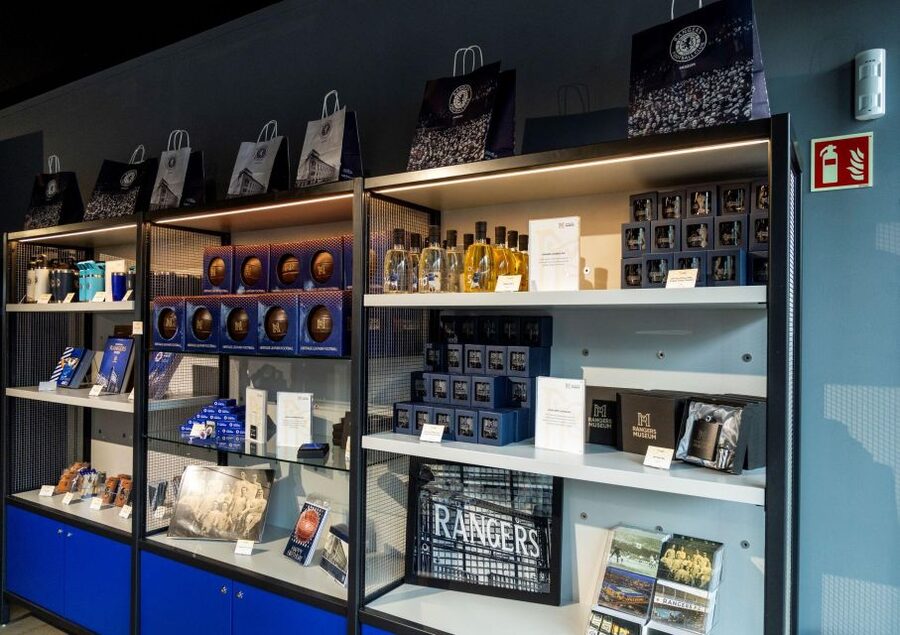
The shop sells Rangers supporter items and souvenirs. That makes it an easy final stop if you want a small reminder of the visit or need a gift for a football fan. Since Edmiston House is cashless, use a card for purchases.
The cafe and shop also help round out the visit for someone who is not planning to spend a full afternoon in the museum. You can see the main displays, take a drink, and browse merchandise without turning the experience into an all-day commitment.
How long the visit takes and what the price means
The visit lasts about 1.5 hours, and admission costs about $20 per person. For a major football club museum with a trophy room, historic objects, video displays, interactive activities, a cafe, and a shop, that is a reasonable price if you have a genuine interest in Rangers or football history.
The value depends on how you use the time. A quick walk through the galleries may make the ticket feel less worthwhile. If you read the displays, study the trophies, watch the video material, try the interactive screens, and allow time for family conversation, the 90-minute slot gives you a solid visit.
I would not book this expecting a full stadium experience. Since Ibrox Stadium access is not included, fans who mainly want to see the stands, pitch, or behind-the-scenes areas will need to arrange a separate stadium tour. The museum ticket should be judged on its own.
Timed entry is helpful because it gives you a planned arrival while preserving freedom inside. Check the available starting times when booking. The visit can fit neatly into a Glasgow day, especially if you want a focused activity rather than a long guided excursion.
Cancellation is flexible up to 24 hours before the visit for a full refund, and you can reserve now and pay later. Those terms are useful if your Glasgow schedule is still changing.
Who should book the Rangers Museum?
I would recommend this to:
- Rangers supporters of any age
- Families sharing football memories across generations
- Visitors interested in Glasgow’s sporting identity
- Football fans who enjoy trophies, photographs, and club artifacts
- Parents looking for an activity with interactive elements for teenagers
- Visitors who prefer to explore at their own pace
I would be more cautious if you want a traditional guided tour with a named expert explaining every room. This is primarily a self-guided museum, and the supplied information does not name a regular guide. It is also not the right ticket if your main goal is to tour Ibrox Stadium.
Staff friendliness is a strong part of the practical experience. You can expect a welcoming setting, and staff can help with basic questions and assistance. Just keep in mind that the museum’s free-flow design means you take responsibility for setting your own pace and finding the information that interests you.
Should you book this Glasgow football experience?
Book it if Rangers, Scottish football, or Glasgow sporting culture means something to you. The trophy room gives the visit real substance, and the interactive dream-team screens keep it from feeling like a wall of old photographs.
The museum is also a good choice for a parent and child, a group of friends, or an older supporter revisiting familiar names and moments. At $20 for around 90 minutes, it offers fair value when you take time with the displays and add the cafe or shop.
Skip it if you want access to Ibrox Stadium itself or a fully guided ground tour. For everyone else, the Rangers Museum provides a focused, accessible look at the club’s story, with enough hands-on material to make the visit more than a simple display of trophies.
FAQ
Where is the Rangers Museum?
The museum is located at Edmiston House in Glasgow. Enter Edmiston House and head upstairs.
How long does the Rangers Museum visit last?
The stated duration is 1.5 hours. Entry is timed, but the museum itself is self-guided and free flowing.
Does the museum ticket include an Ibrox Stadium tour?
No. Access to Ibrox Stadium is not included with the Rangers Museum entry ticket.
What can I see inside the museum?
You can see Rangers trophies, historic artifacts, photographs, videos, and displays covering more than 150 years, or 151 years, of club history. Interactive screens let you build a Rangers dream team and plan formations.
Is the Rangers Museum wheelchair accessible?
Yes. The museum is wheelchair accessible, and audio and visual assistance are available.
Can I bring luggage or food into the museum?
No. Luggage and large bags are not allowed, and food cannot be brought into the museum.
Can I pay with cash at Edmiston House?
No. Edmiston House is cashless and accepts card payments only.
Just added around the UK
- Westminster and National Gallery 3.5-Hour Tour in Italian★ 4.9 · 28 reviews
- British Museum & Camden Town – Private Tour in Italian★ 4.8 · 26 reviews
- Edinburgh The King’s Gallery Entrance Ticket★ 4.3 · 54 reviews
- The Royal Mint Experience: Ticket, Guided Tour & Exhibition★ 4.6 · 57 reviews
- London: National Gallery of London Masterpieces Guided Tour★ 4.9 · 78 reviews
- London: British Museum Highlights Guided Small Group Tour★ 4.9 · 113 reviews
- Stratford-upon-Avon: Tudor World Museum Entrance Ticket★ 4.4 · 34 reviews
- London: Westminster Abbey & Jubilee Galleries Guided Tour★ 4.9 · 56 reviews
Museum Tours in the UK, compared.
Tower of London and Crown Jewels Exhibition Ticket
Read our review →
Liverpool Football Club Museum and Stadium Tour
Read our review →
Tower of London and Crown Jewels Exhibition Ticket
Read our review →
Chelsea Football Club Stadium and Museum Tour
Read our review →


Browse the lists this tour appears in