
Review · JAPAN
Nagoya: Toyota Commemorative Museum Guided Tour
Toyota’s story begins not with a car, but with a working loom. At Nagoya’s Toyota Commemorative Museum of Industry and Technology, you watch Sakichi Toyoda’s G-type automatic loom and later car-making machinery operate in a preserved red-brick factory. That simple shift in focus makes Toyota’s rise much easier to understand.
I like the live demonstrations, which turn gears, belts, presses, and assembly systems into something you can follow. I also like the guide-led format, especially if Kono leads your visit. The tour can connect Toyota’s inventions to Nagoya and Aichi, rather than treating the museum as a room full of old machines.
The main consideration is the pace. The short course lasts 90 minutes, while the in-depth option takes about three hours. The museum is not suited to wheelchair users or people with mobility impairments, and you must arrange your own transportation to the building.
Key points to know before you go
- Toyota starts with textiles: The G-type automatic loom explains the company’s earliest breakthrough better than a simple company timeline could.
- Machines actually operate: Demonstrations of looms, pressing, welding, and assembly give the museum a working, noisy sense of industry.
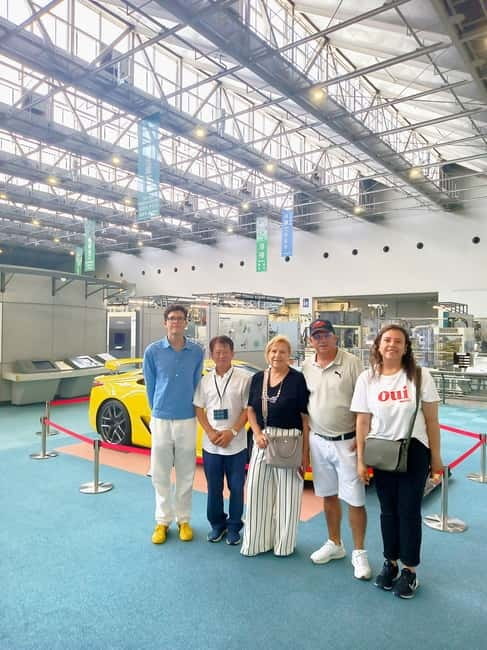
- The Toyoda Model AA is a highlight: Toyota’s first passenger car helps mark the jump from textile machinery to automobiles.
- Two tour lengths suit different plans: Choose the 90-minute route for a focused introduction or allow three hours for a fuller look.
- Kono has received special praise: If Kono is your guide, expect added context about Toyota’s role in Nagoya and Aichi.
- This is the Nagoya museum: It is not the Toyota Kaikan Museum in Toyota City or the Toyota Automobile Museum in Nagakute City.
A factory setting that explains Toyota’s beginning
The museum is housed in a preserved red-brick factory building. That setting matters. You are not entering a glossy corporate showroom with the company’s past reduced to a few display panels. The building helps you picture Toyota’s early industrial world before the brand became known around the globe.
Inside, the visit follows Toyota’s movement from textile machinery to automobile production. That sequence gives the museum a clear story. You first see the problem Sakichi Toyoda set out to solve, then the machinery and business skills that helped the Toyoda family move into car manufacturing.
I find this order far more useful than starting with a row of famous vehicles. It shows that Toyota’s automotive success did not appear from nowhere. It grew from engineering, production methods, and a long effort to make machines work better and more reliably.
The meeting point is next to the ticket counter inside the museum. Look for a guide holding a yellow DeepExperience sign. This is worth noting because the museum has a specific location in Nagoya, and the tour does not take you to either of the other Toyota-related museums in the region.
A few more museum visits around Japan worth comparing
- Tokyo: Samurai Ninja Museum Guided tour and Experience
★ 4.6 · 1,010 reviews - Kyoto: Samurai Ninja Museum guided tour
★ 4.8 · 145 reviews - Osaka: Cup Noodles Museum Guided Tour (90 Minutes)
★ 4.8 · 38 reviews
The Textile Machinery Pavilion and the G-type loom
The Textile Machinery Pavilion is the intellectual starting point of the visit. Here you learn about Sakichi Toyoda and the G-type automatic loom, one of the key machines in Toyota’s early story.
The important point is not just that the loom is old. It is that the machine represented a major industrial improvement. You see how an automatic loom could change textile production, reduce interruptions, and help a small Japanese company compete through invention rather than size.
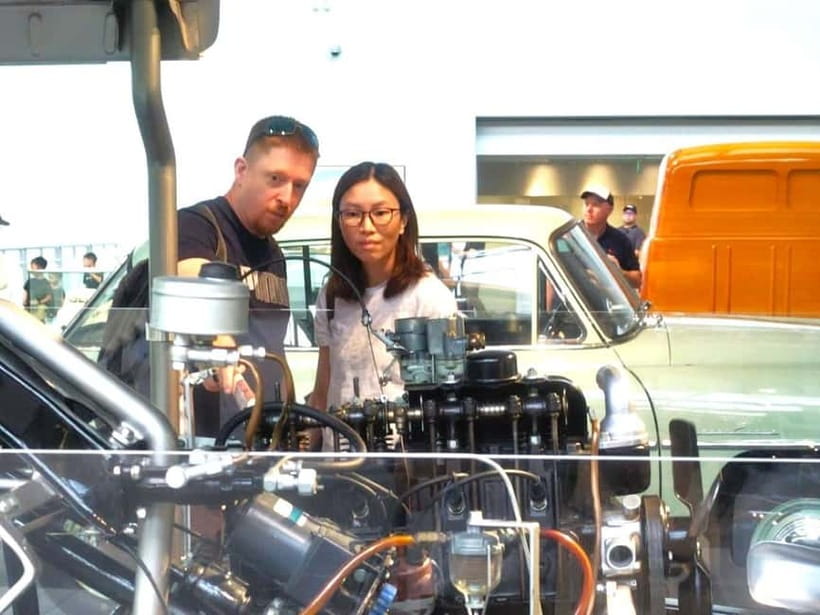
The best part is watching historic looms operate. A static machine can be hard to understand, even if the label is clear. Once the parts move, the machine’s purpose becomes much easier to grasp. You can follow the rhythm of the mechanism and see why automation mattered to the people who built and used it.
Your guide can add the human and local context that labels often leave out. Rebecca from Sweden singled out Kono for explaining Toyota’s importance to Japan, Nagoya, and Aichi. That regional angle is useful. Toyota is not only a multinational car company. It is also one of the forces that shaped the identity and industry of central Japan.
The textile section may be less instantly exciting than the automobiles for some people. If you came mainly to see cars, the loom demonstrations still deserve your attention. They explain the engineering mindset that later appears in Toyota’s automotive work.
From thread to steel in the Automotive Pavilion
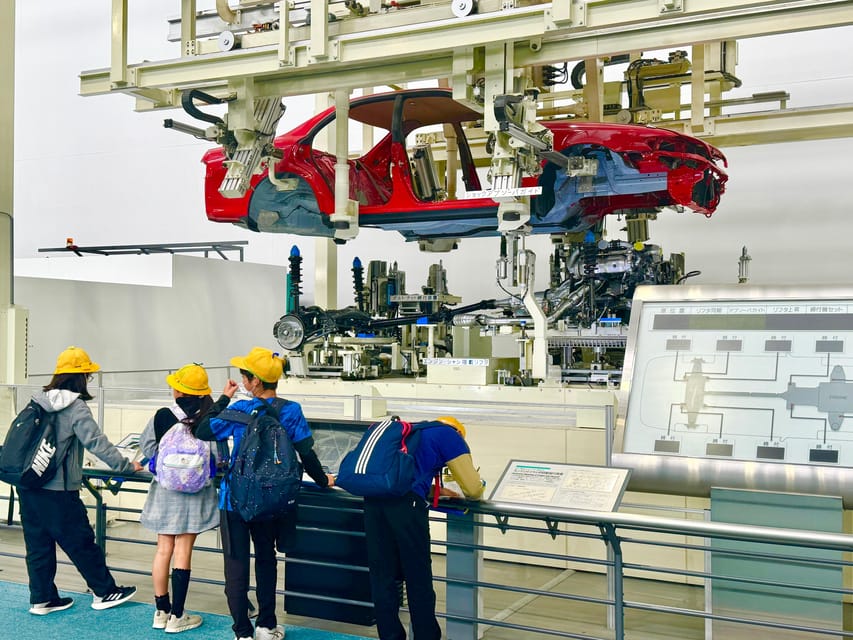
The Automotive Pavilion changes the scale and material of the story. The soft motion of textile production gives way to steel, body panels, welding, engines, and vehicle assembly.
You will see displays showing how cars are made, including pressing, welding, and assembly. These are not presented only as diagrams. Operational machinery and demonstrations help you see how separate parts become a finished vehicle.
The pressing section shows how flat sheets of metal are shaped into body panels. Welding explains how those pieces are joined. Assembly brings the process closer to the finished car. Taken together, these stations help you understand that automobile production is a chain of precise steps, not one magical act performed by a factory.
Operators bring much of the equipment to life while explaining how important components were developed and manufactured. That human demonstration is a strong reason to book the guided option instead of simply walking through on your own.
The machinery can also make the visit more memorable for children and adults who do not normally spend time in industrial museums. You do not need to be a car expert to understand a machine pressing metal or a production system joining parts. The movement carries much of the explanation.
Still, this is a technology museum, not a test-drive experience. You are studying production and invention rather than getting behind the wheel. If you want a collection focused mainly on car design, model variety, or racing, another museum may fit better.
Seeing the Toyoda Model AA in context
The Toyoda Model AA is one of the museum’s key vehicles. It was Toyota’s first passenger car, and it gives the company’s transition into the automobile business a clear physical marker.
A famous vehicle can sometimes become a photo stop with little meaning. Here, the Model AA works better because you have already seen the textile machinery. You can connect the car to the earlier story of production, experimentation, and industrial growth.
The car also helps mark the difference between Toyota’s origins and its later identity. The name Toyoda is tied to the founding family and early company story, while Toyota became the better-known automobile brand. The museum’s displays let you follow that change through technology and manufacturing.
Other milestones in automotive history appear alongside the Model AA. The collection is not limited to one first car. You can see how Toyota’s methods and products developed over time, with machines and vehicles supporting the same larger story.
Take your camera, but remember that flash photography is prohibited in certain areas. Photography is allowed, so you can record the building, vehicles, and machinery without treating the museum as a no-photo exhibit.
Same city, a completely different collection:
- Tokyo: teamLab Planets TOKYO Digital Art Museum Entry Ticket
★ 4.6 · 9,779 reviews - Osaka Castle: Museum and Tower Entry Ticket
★ 4.5 · 2,380 reviews - Kyoto: Tea Museum Tickets and Matcha Grinding Experience
★ 4.9 · 739 reviews - Skip the lines Basic Ticket at SAMURAI NINJA MUSEUM KYOTO
★ 4.5 · 632 reviews
Why the live guide changes the visit
The English-speaking guide is the main advantage of this experience. A self-guided visit can show you the objects, but a guide can explain why each stage matters and keep the story moving.
That makes a difference in a museum with many machines. Without context, a loom, press, or welding display can blur into a collection of industrial hardware. With explanations, you can see how one invention led to another and why the process mattered to Toyota’s growth.
Kono is specifically associated with a warm, informative experience that links Toyota to Nagoya and Aichi. If Kono is assigned to your group, ask about the company’s local importance and its move from textiles into automobiles. Those questions should help you get more from the regional story.
The tour is offered privately or in small groups. That can make it easier to follow the guide’s explanations and ask questions, though the supplied details do not specify the exact maximum group size. English is the listed tour language.
The guided format is especially useful for first-time visitors to Japan who recognize Toyota but do not know the company’s origins. It is also a good fit for engineers, manufacturing enthusiasts, and anyone curious about how a large Japanese company developed its working methods.
Choosing 90 minutes or three hours
The 90-minute course is the practical choice if you are fitting the museum into a busy Nagoya day. It gives you enough time to see both the Textile Machinery Pavilion and Automotive Pavilion, follow the main story, and watch important demonstrations.
Do not schedule it as a rushed stop between two fixed appointments. The recommended allocation is at least 90 minutes for the 90-minute course. You need that time for the guided explanation and movement between the two sections.
The three-hour in-depth course suits you if Toyota’s technology is a major reason for visiting. It allows more time for machinery, manufacturing details, vehicles, and questions. The longer option should feel less like a quick introduction and more like a full study of the company’s industrial development.
I would choose the shorter route for a general Nagoya itinerary and the longer one for a specialist interest in manufacturing or Toyota. Families and mixed-interest groups may prefer 90 minutes, since the amount of machinery and technical explanation can become tiring.
Comfortable shoes are a sensible choice for either option. Bring water, especially for the longer course, and a camera if you want photographs of the exhibits.
The value of $77
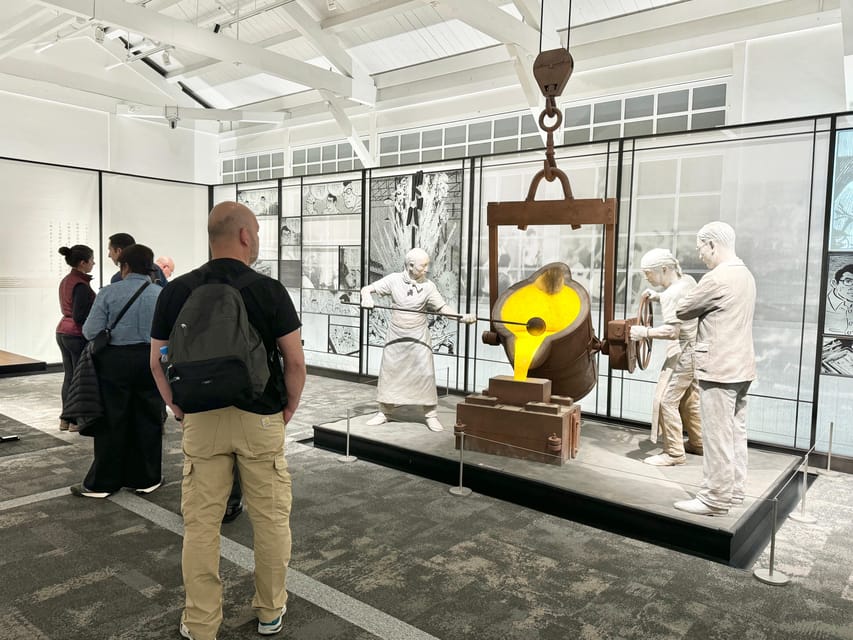
At $77 per person, this is not the cheapest museum visit in Japan. The price includes admission and access to both pavilions, plus an English-speaking guide. The value depends on how much context you want.
If you already know Toyota’s company history and prefer reading labels at your own pace, a regular museum visit may be enough. The guided option earns its price when you want the machines explained, the production stages connected, and the Nagoya setting put into perspective.
The live demonstrations are important to that calculation. You are paying for more than entry into a building full of exhibits. You are paying for access to a structured explanation of how looms, presses, welding systems, and assembly processes fit together.
The price also makes more sense for private or small-group bookings, where you can ask questions and keep the pace suited to your interests. The exact group arrangement depends on availability, so check the option shown when you reserve.
Free cancellation up to 24 hours before the start and reserve-now, pay-later booking make it easier to fit the tour into a changing schedule. The museum itself is closed on Mondays, or on the following day when Monday is a national holiday, so check the date carefully.
Who should book this Nagoya experience?
I would recommend this tour to you if you like machines, Japanese industry, transportation, or the story behind major companies. It also works well for anyone who wants a break from temples, shopping streets, and city viewpoints.
The tour is a particularly good choice if you want more than a collection of attractive cars. Its strongest subject is the relationship between invention and production. You see how Toyota’s textile roots helped prepare the company for the automobile industry.
Families with older children may enjoy the moving machinery and vehicles. The supplied information does not give a minimum age or a special children’s program, so do not assume the tour is designed specifically for young children.
You should think twice if you have limited mobility. The experience is not suitable for people with mobility impairments or wheelchair users. You also need to arrange transportation to and from the museum because it is not included.
At the end, the museum shop offers Toyota-related souvenirs connected to the company’s history and technology. These can be a better memento than a generic car-themed gift, particularly if you collect industrial or automotive items.
Should you book it?
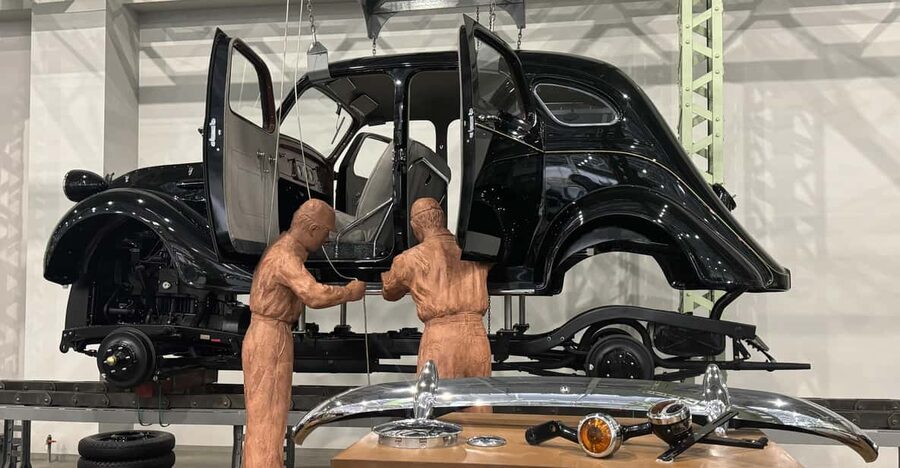
Book this tour if you want Toyota’s story explained from the first loom to the modern automobile, and if live machinery matters to you. The Toyoda Model AA is a fine highlight, but the real value lies in seeing the connection between textiles, engineering, and mass production.
Choose the 90-minute option for a focused introduction and the three-hour course for a serious look at Toyota’s methods. If you prefer a relaxed, self-guided museum visit, save the $77 and explore independently. For most first-time visitors who want clear English explanations and a stronger sense of Toyota’s place in Nagoya, the guided format is the better choice.
FAQ
Where does the tour take place?
It takes place at the Toyota Commemorative Museum of Industry and Technology in Nagoya city, on Honshu.
Is this the Toyota Kaikan Museum?
No. This tour is not for the Toyota Kaikan Museum in Toyota City.
Is this the Toyota Automobile Museum?
No. It is not for the Toyota Automobile Museum in Nagakute City.
What is included in the price?
Admission to the Toyota Commemorative Museum of Industry and Technology is included, along with access to the Textile Machinery Pavilion and Automotive Pavilion.
How long does the tour last?
You can choose a 90-minute course or an in-depth course lasting about three hours. Check availability for starting times.
Is the tour offered in English?
Yes. The tour has a live English-speaking guide.
Where is the meeting point?
Meet next to the ticket counter inside the museum. The guide will hold a yellow sign with the DeepExperience logo.
Is photography allowed?
Yes, photography is allowed, but flash photography is prohibited in certain areas.
Is the museum open every day?
The museum is closed on Mondays, or on the following day when Monday is a national holiday.
Is the tour suitable for wheelchair users?
No. The activity is not suitable for wheelchair users or people with mobility impairments.
Just added around Japan
- Skip the lines Basic Ticket at SAMURAI NINJA MUSEUM TOKYO★ 5.0 · 470 reviews
- Tokyo: Mt. Fuji, Owakudani, Hakone Shrine, & Open-Air Museum★ 4.7 · 25 reviews
- Private Tour Through the Tokyo National Museum & Ukiyo-e★ 4.7 · 17 reviews
- Samurai Ninja Museum Asakusa: Kid-Friendly Ninja Training★ 4.7 · 67 reviews
- Tokyo National Museum Private Tour★ 4.9 · 28 reviews
- Tokyo: Art Aquarium Museum GINZA Entry Ticket★ 4.5 · 278 reviews
- Tokyo: Kichijoji Gourmet Tour with Lunch★ 4.5 · 40 reviews
- Samurai Ninja Museum Asakusa: Samurai Sword Lesson & Tour★ 4.8 · 306 reviews
Museum Tours in Japan, compared.

teamLab Planets TOKYO Digital Art Museum Entry Ticket
Read our review →
Samurai Ninja Museum Guided tour and Experience
Read our review →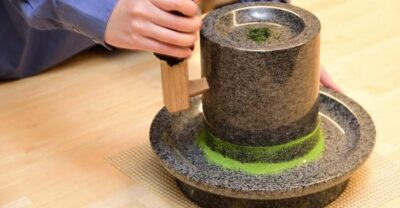
Tea Museum Tickets and Matcha Grinding Experience
Read our review →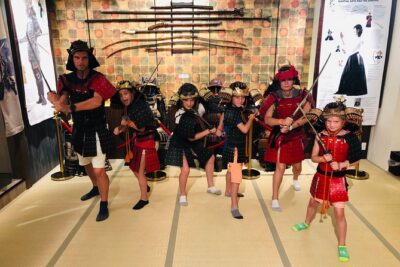
Skip the lines Basic Ticket at SAMURAI NINJA MUSEUM KYOTO
Read our review →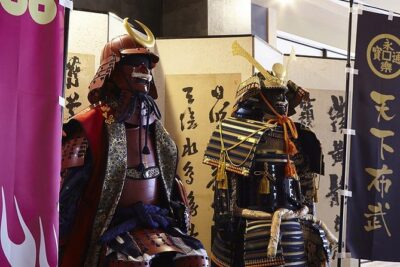
Skip the lines Basic Ticket at SAMURAI NINJA MUSEUM TOKYO
Read our review →
Ninja Experience (Family Friendly) at Samurai Ninja Museum TOKYO
Read our review →
Tokyo Studio Ghibli Museum and Ghibli Film Appreciation Tour
Read our review →Browse the lists this tour appears in