
Review · JAPAN
Shibori Furoshiki Course at Kyoto Shibori Museum
The most appealing part of this Kyoto activity is the moment a plain cotton cloth becomes a snowflake-like Sekka-shibori pattern. You fold, bind, and dye the fabric yourself, then leave with a useful furoshiki rather than a trinket that will gather dust.
I like the small group size of eight and the free museum admission included in the $42 price. I also like the calm rhythm: make the cloth, let it dry, and spend that waiting time looking at serious examples of Japanese textile art. The main drawback is simple: the class lasts only about an hour, so anyone hoping for a long lesson in several shibori methods may find it brief.
Key points
- Make a large 100 percent cotton furoshiki: Your finished cloth measures about 86 by 89 centimeters.
- Use Sekka-shibori folding: The method creates a crisp, snowflake-like dyed design.
- Keep the museum visit in your schedule: Workshop participants receive admission normally priced at 1,000 yen.
- Expect a small class: The group is limited to eight people, with instruction in English or Japanese.
- Use drying time well: Explore displayed fabrics, art pieces, and samples while your cloth sets.
- Buy more than fabric: The shop carries original shibori items, souvenirs, and textiles.
Making a Sekka-Shibori Furoshiki Near Nijo Castle
The Kyoto Shibori Museum is a five-minute walk from Nijo Castle, which makes this a sensible short activity to pair with a castle visit. You can spend the morning among Nijo Castle’s grand rooms and gardens, then shift gears to a hands-on craft in a much smaller setting.
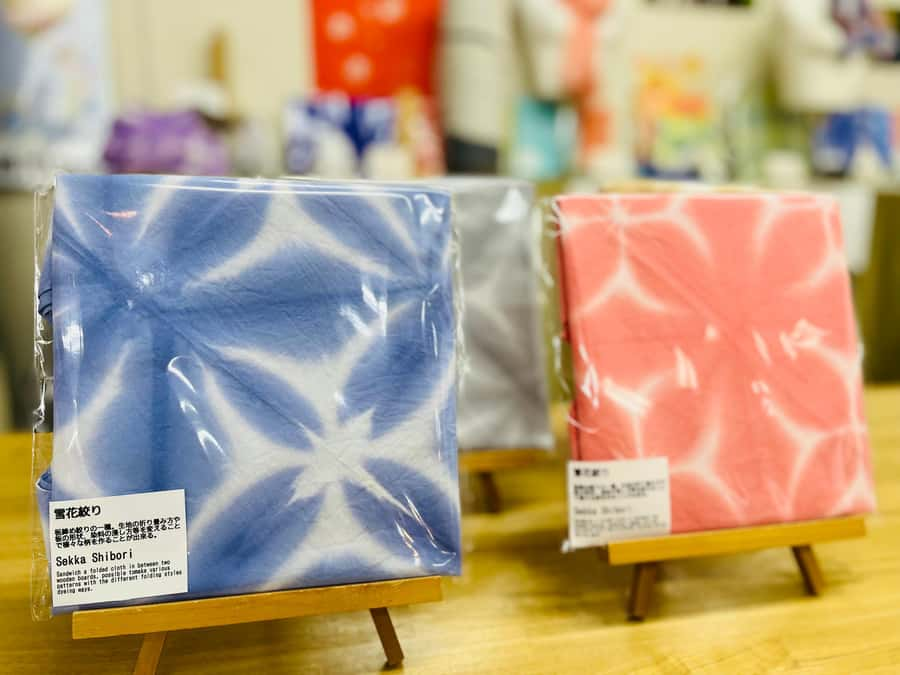
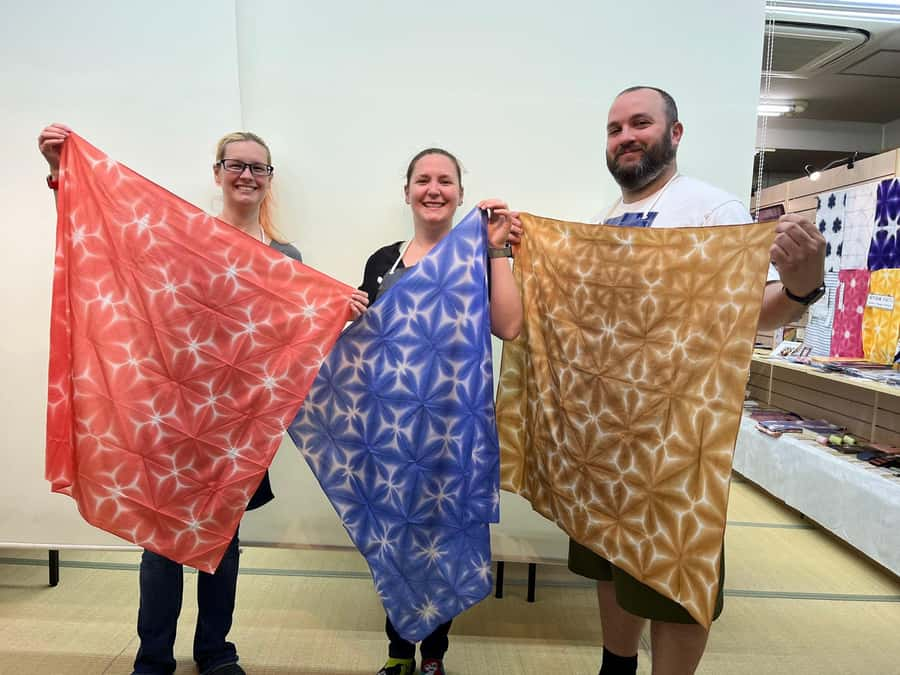
The workshop centers on one large furoshiki, a traditional Japanese wrapping cloth. The material is 100 percent cotton, and the finished piece measures about 86 by 89 centimeters. That is large enough to wrap gifts, carry belongings, or use as a decorative cloth at home.
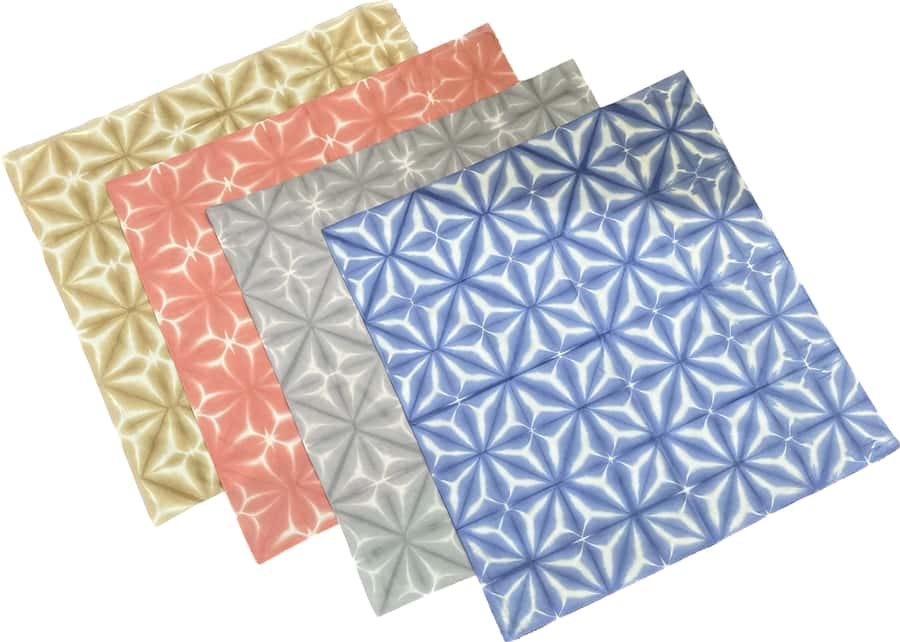
The technique is called Sekka-shibori. The name refers to the snowflake-like pattern produced by the folding and dyeing process. You do not simply paint a design onto the cloth. The pattern comes from how the fabric is folded and treated before the dye reaches it, so the final reveal has a pleasing element of surprise.
You may also hear the activity described as a scarf-making class, since the finished fabric can be worn or used in several ways. The information for the workshop focuses on the furoshiki size, so think of it as a generous wrapping cloth that can also function as a scarf, not as a narrow fashion scarf.
A few more museum visits around Japan worth comparing
- Tokyo: teamLab Planets TOKYO Digital Art Museum Entry Ticket
★ 4.6 · 9,779 reviews - Osaka Castle: Museum and Tower Entry Ticket
★ 4.5 · 2,380 reviews - Tokyo: Samurai Ninja Museum Guided tour and Experience
★ 4.6 · 1,010 reviews
A Short Lesson With Clear, Practical Steps
The class runs for roughly 30 to 60 minutes, with the full activity listed as one hour. That compact schedule works well if you want to add a craft without giving up half a day of sightseeing.
Your instructor shows you how to fold the fabric and prepare it for dyeing. The folding is the key stage. Small changes in the way you handle the cloth affect the pattern, so you need to follow the instructions rather than rush through the setup.
English and Japanese instruction are available. Guide June has been singled out for clearly explaining the folding and dyeing techniques, including for someone interested in traditional shibori printing. Staff are also described as helpful and enthusiastic, which matters in a workshop where the instructions need to be easy to follow.
The process has some of the friendly simplicity of tie-dye. If you have tried tie-dye before, the basic idea will feel familiar, but the Japanese folding method gives the result a more structured look. You are not expected to arrive with textile skills. The appeal is learning enough to make one attractive piece in a short sitting.
The class is also suitable for teenagers and older children, according to the supplied activity information. Since the work involves folding and dyeing rather than a long lecture, it can hold the attention of younger participants who enjoy making something with their hands.
The Best Moment Is the Fabric Reveal
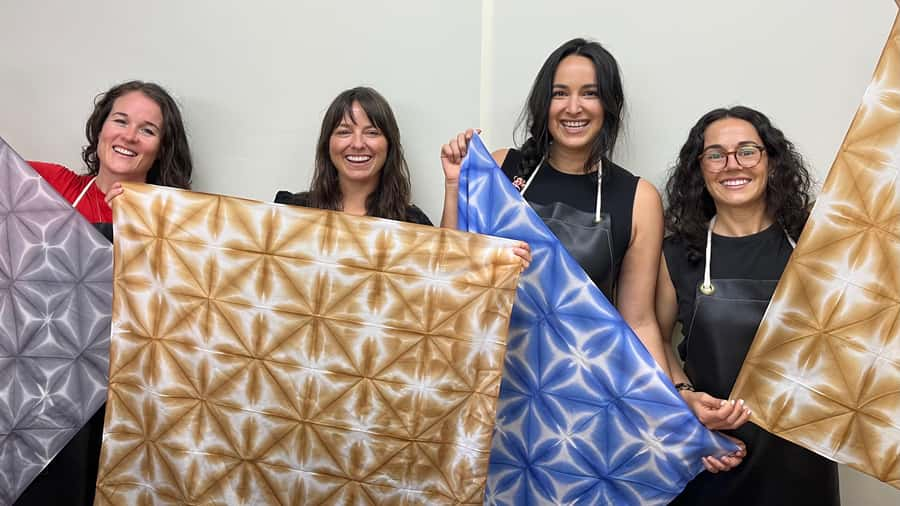
The most satisfying point comes when the folded cloth is opened and the pattern appears. Before that, the fabric is mostly a bundle shaped by your hands. Afterward, it becomes a finished design with repeated, snowflake-like forms.
You should keep your expectations realistic. A handmade cloth will not look exactly like a professionally produced museum-shop piece, and the result depends on how you fold and dye it. That is part of the value. You are taking home evidence of your own decisions, not simply purchasing an object made by someone else.
The workshop is also a pleasant gift-making option. The finished furoshiki can be taken home for someone who appreciates Japanese design, practical textiles, or handmade souvenirs. It is easier to pack than a fragile craft object, and its useful size gives it a life beyond the holiday.
One participant who made two cloths particularly enjoyed the opening ceremony before the activity. The supplied details do not explain the ceremony in full, so I would not book this class solely for that feature, but it suggests that the session may include a small presentation before the hands-on work begins.
Museum Art While Your Cloth Dries
Your furoshiki needs time to dry. Instead of sitting at the worktable watching paint dry, you can use that pause to explore the Kyoto Shibori Museum.
Workshop admission is included, normally a 1,000-yen value. The museum opened in 2001 and focuses on shibori, with works, samples, and displayed fabrics that help place your own small project in a broader setting.
This is an important part of the visit. Without the museum, the class would be a pleasant craft lesson. With the museum, you can see how many patterns, methods, and levels of finish are possible in shibori. Your own cloth becomes a starting point for understanding the care behind the larger works.
The museum is not described as a huge institution, so you should treat it as a focused stop rather than a full-day museum. That is good news if your Kyoto schedule is tight. You can look closely at the displays while your piece dries, then continue to the shop or your next sightseeing stop.
The exhibited fabrics are one of the strongest reasons to allow enough time after the lesson. They show the art beyond the simple tie-dye comparison and help explain why shibori remains worth preserving. One participant who works as a textiles teacher found the traditional printing methods especially useful, while another praised the impressive displayed fabrics and the museum’s attention to this old craft.
Same city, a completely different collection:
- Kyoto: Tea Museum Tickets and Matcha Grinding Experience
★ 4.9 · 739 reviews - Skip the lines Basic Ticket at SAMURAI NINJA MUSEUM KYOTO
★ 4.5 · 632 reviews - Skip the lines Basic Ticket at SAMURAI NINJA MUSEUM TOKYO
★ 5.0 · 470 reviews - Ninja Experience (Family Friendly) at Samurai Ninja Museum TOKYO
★ 5.0 · 441 reviews
A Shop With Practical Souvenirs
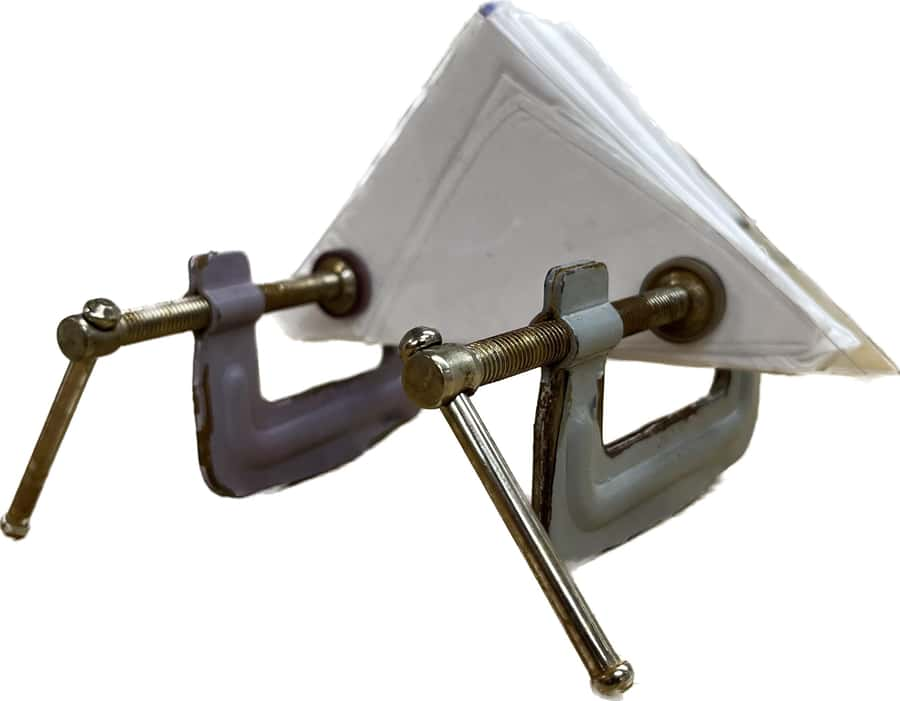
The museum shop carries original shibori items, souvenirs, and fabrics. This gives you a chance to compare your finished cloth with professionally made pieces, and to look for another textile if your own creation is intended as a gift.
I like the shop because it adds choice without changing the main purpose of the visit. You can take home only the cloth you made, browse for something more refined, or simply look at the range of colors and patterns.
The shop also helps make the activity useful for different budgets. The workshop costs $42 per person, so some people will prefer to stop with the included furoshiki. Others may see the class as a way to learn what they like before buying another piece.
The price can feel a little high for an activity lasting about an hour. That is the fair criticism. You are paying for the instruction, the materials, the handmade result, the museum admission, and the small-group setting, not just for access to dye and cotton.
The value improves if you already planned to visit Nijo Castle and want an activity close by. It also improves if you care about Japanese textile arts and would otherwise pay separately to enter the museum. If you want a long, technical course with several finished pieces, this is not the right format.
Why the Small Group Matters
Eight people is the maximum group size. That is small enough for the instructor to keep an eye on the folding and dyeing steps, which is useful when one misplaced fold can change the final pattern.
A small group also suits the tone of the activity. Shibori is a quiet craft. You need room to concentrate, and the class is better suited to careful work than to a loud, fast-moving group outing.
The available instruction is in English or Japanese. That removes one major concern for English-speaking visitors, though the class still depends on watching the demonstrations and following each step with care.
You should allow for a relaxed rather than rushed pace. The activity is short, but it is not simply a quick demonstration followed by a souvenir handout. You make the cloth yourself, and that requires enough attention to fold it correctly.
Understanding the Craft, Not Just Making a Souvenir
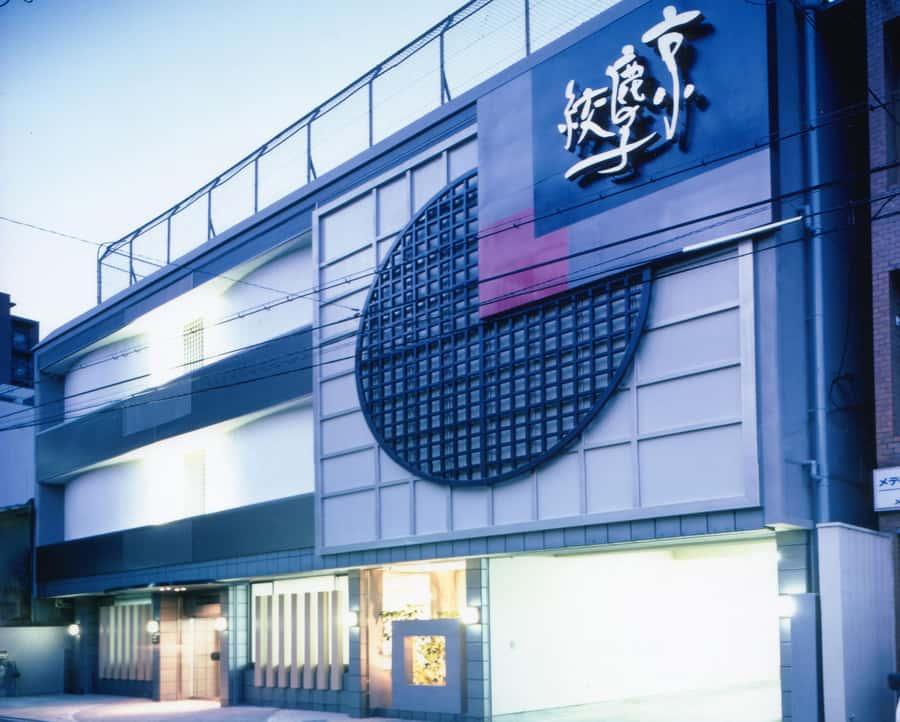
The Kyoto Shibori Museum’s stated aim is to spread knowledge of shibori around the world and help more people understand the craft. That mission gives the class a little more weight than a generic craft session.
Shibori is not just a surface decoration. The pattern comes from manipulating the fabric before dyeing, using folds and other forms of resistance to control where color reaches the cloth. Even a short class gives you a direct sense of that relationship between handwork and pattern.
You will not become a shibori specialist in one hour. You will, however, learn why the folding stage matters and why small differences produce different results. The museum displays then give you a chance to see the same basic idea developed with much greater skill and variety.
That combination is useful for anyone interested in Japanese craft traditions. It is also a good introduction for families, couples, and friends who want to do something more active than simply viewing another historic building.
The Opening Ceremony and the Human Side of the Museum
One detail worth noting is the positive attention given to the museum staff. The staff are described as friendly, helpful, and clearly invested in keeping this centuries-old craft alive.
One participant particularly enjoyed the opening ceremony. Another felt the museum’s work showed real care for the preservation of shibori. These details suggest that the visit is not only about producing a patterned cloth. It also connects you with the people maintaining a specialized art form.
That human side can make a difference in a small museum. You are more likely to remember the explanation, the folding, and the final reveal when the people leading the activity care about what they are teaching.
Still, keep the scale in mind. This is a focused museum and workshop near Nijo Castle, not a large cultural complex with hours of galleries. Its strength is concentration: one craft, one cloth, and a compact lesson supported by examples.
Who Will Get the Most From This Activity
I would recommend the workshop to you if you want a hands-on Kyoto souvenir and enjoy learning by doing. It is especially well suited to people who like textiles, fabric arts, Japanese design, or practical gifts.
Families with teenagers and older children can also make good use of the hour. The class has a clear result, and the museum gives younger participants something to look at while the fabric dries.
It suits a short Kyoto itinerary better than a long formal course. The five-minute walk from Nijo Castle makes it easy to fit between major sights, though you should still check the available start times before planning the rest of your day.
Textile teachers and experienced craft makers may enjoy the traditional methods and examples, but they could find the class too basic if they want advanced instruction. The activity teaches one technique and produces one main piece. It is an introduction, not a professional training session.
The workshop is less suitable if you dislike making things by hand, need a highly predictable finished pattern, or are counting every dollar and want several hours of instruction. At $42, the cost is reasonable for a small class with materials and museum entry, but it is not the cheapest souvenir stop in Kyoto.
Price, Timing, and Cancellation in Plain Terms
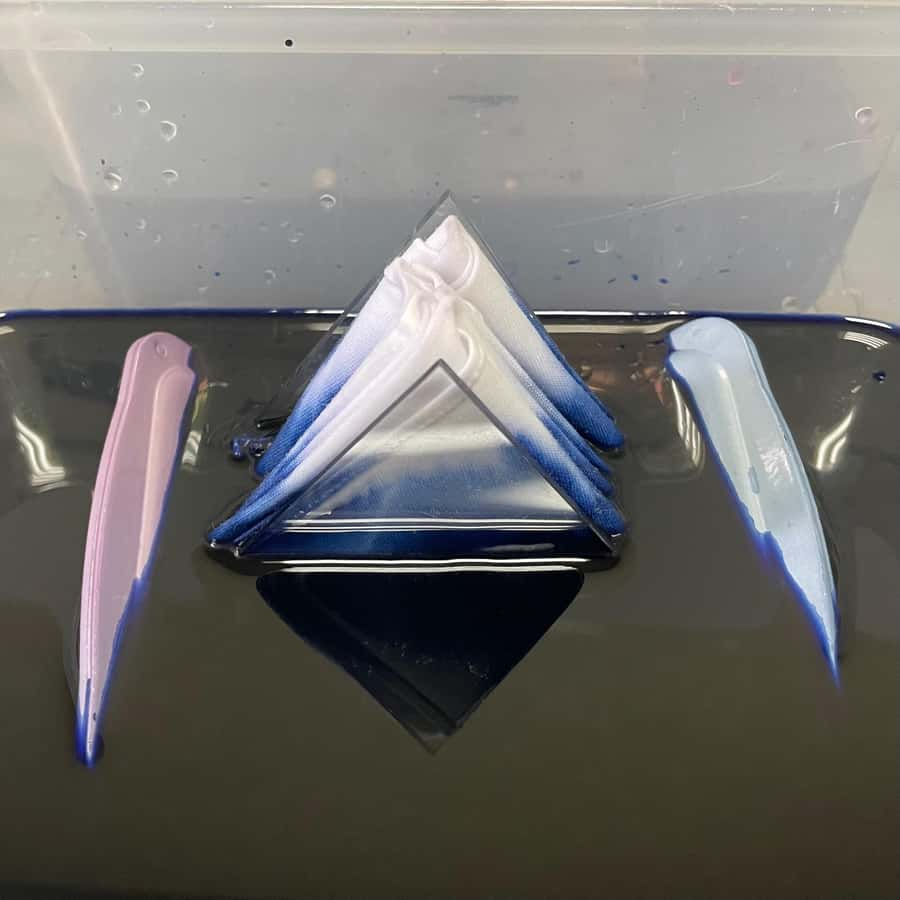
The listed price is $42 per person. The one-hour format includes the workshop and free admission to the Kyoto Shibori Museum, normally 1,000 yen.
You can reserve now and pay later, which helps if your Kyoto plans are still shifting. Free cancellation is available up to 24 hours in advance for a full refund.
The class is limited to eight participants, so checking availability matters if you are visiting during a busy period. Starting times vary, and the activity listing advises checking the schedule when booking.
Because the workshop is short, I would place it next to Nijo Castle rather than travel across Kyoto only for this one-hour session. That keeps the outing efficient and lets the museum and craft activity add variety to a sightseeing day.
Should You Book the Kyoto Shibori Workshop?
Book it if you want to make a useful, personal souvenir, prefer a small class, and have an interest in Japanese textile arts. The Sekka-shibori pattern, included museum admission, museum displays, and nearby location make the $42 price easier to justify.
Skip it if you want an extended technical course or several different projects. The lesson is short, and the main reward is one large cotton furoshiki plus a focused look at shibori.
For most people, the best reason to book is the balance of making and seeing. You create one cloth, watch its pattern appear, study finished works while it dries, and leave with something connected to Kyoto rather than a generic keepsake.
FAQ
Where is the Kyoto Shibori Museum?
The Kyoto Shibori Museum is in Kyoto, on Honshu, Japan. It is a five-minute walk from Nijo Castle.
How long does the shibori workshop last?
The activity lasts one hour. The hands-on class itself is described as taking about 30 to 60 minutes.
What do you make during the workshop?
You make a large 100 percent cotton furoshiki using the Sekka-shibori technique. The finished cloth measures about 86 by 89 centimeters.
What kind of pattern does Sekka-shibori create?
Sekka-shibori creates a beautiful snowflake-like pattern on the fabric.
Is museum admission included?
Yes. Workshop participants receive free admission to the Kyoto Shibori Museum. Regular museum admission is normally 1,000 yen.
What languages are available?
Instruction is available in English and Japanese.
How many people are in each group?
The workshop is a small-group activity limited to eight participants.
Is the workshop suitable for children?
The activity is described as suitable for teenagers and older children.
Can I cancel the booking for a refund?
Yes. You can cancel up to 24 hours in advance for a full refund.
Just added around Japan
- Skip the lines Basic Ticket at SAMURAI NINJA MUSEUM TOKYO★ 5.0 · 470 reviews
- Tokyo: Mt. Fuji, Owakudani, Hakone Shrine, & Open-Air Museum★ 4.7 · 25 reviews
- Private Tour Through the Tokyo National Museum & Ukiyo-e★ 4.7 · 17 reviews
- Samurai Ninja Museum Asakusa: Kid-Friendly Ninja Training★ 4.7 · 67 reviews
- Tokyo National Museum Private Tour★ 4.9 · 28 reviews
- Tokyo: Art Aquarium Museum GINZA Entry Ticket★ 4.5 · 278 reviews
- Tokyo: Kichijoji Gourmet Tour with Lunch★ 4.5 · 40 reviews
- Samurai Ninja Museum Asakusa: Samurai Sword Lesson & Tour★ 4.8 · 306 reviews
Museum Tours in Japan, compared.
teamLab Planets TOKYO Digital Art Museum Entry Ticket
Read our review →
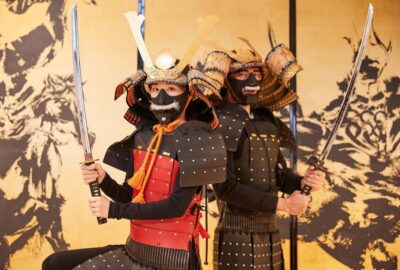
Samurai Ninja Museum Guided tour and Experience
Read our review →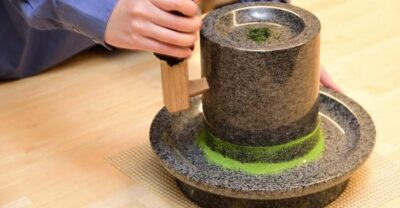
Tea Museum Tickets and Matcha Grinding Experience
Read our review →
Skip the lines Basic Ticket at SAMURAI NINJA MUSEUM KYOTO
Read our review →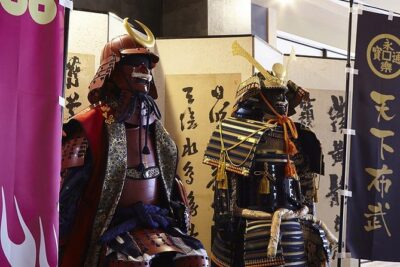
Skip the lines Basic Ticket at SAMURAI NINJA MUSEUM TOKYO
Read our review →
Ninja Experience (Family Friendly) at Samurai Ninja Museum TOKYO
Read our review →
Tokyo Studio Ghibli Museum and Ghibli Film Appreciation Tour
Read our review →Browse the lists this tour appears in