
Review · JAPAN
Seki: Samurai Knife Making Experience at the Knife Museum
Seki’s best souvenir is not something you pick from a shop shelf. It is a knife you finish yourself, with your name etched into the blade and the edge sharpened by your own hands. At G. Sakai’s Knife Museum, Sumi and Yoshi guide you through polishing, engraving, assembly, and sharpening, while English-speaking guide Hiro keeps the day moving.
I like the way this experience connects practical craft with local history. I also like the generous day plan: lunch, museum visits, transport, and a quality knife are all part of the $322 price. The main caution is time. The workshop can run longer than the planned schedule, and Seki is a long day trip from Tokyo.
Key points to know before booking
- You finish a real kitchen knife: Choose from available blade and handle styles, then polish, engrave, assemble, and sharpen it.
- Your name becomes part of the blade: The team helps translate your name into Japanese writing and shows you how to mark it.
- Sumi and Yoshi teach the hands-on work: Both are patient instructors, with Sumi bringing more than 50 years of knife-making experience.
- Hiro handles the day’s practical side: He meets you at Sekitomioka Station, provides English guidance and translation, and drives between the stops.
- Lunch is more than a quick meal: The restaurant stop may include sushi, eel, or another Japanese meal, depending on the arrangement.
- The museums put the knife in context: You see unusual cutlery at the Knife Museum and learn about swords and blacksmithing at the Seki Swordsmith Museum.
Why Seki is the right place for a knife workshop
Seki City, in Gifu Prefecture, has made blades since the Kamakura period, from 1185 to 1333. Local iron sand, charcoal, and clean water gave smiths the basic materials needed for traditional forging. The city later became a major center for swords and cutlery, and that working tradition still shapes its identity.
You will not spend the day watching a craftsman do all the work while you take photographs. The knife begins as a prepared blank, but you handle several important finishing stages yourself. That distinction matters. This is not a full blacksmithing course with hot steel and a hammer. It is a guided finishing and assembly workshop that lets you understand how a sharp, useful knife comes together.
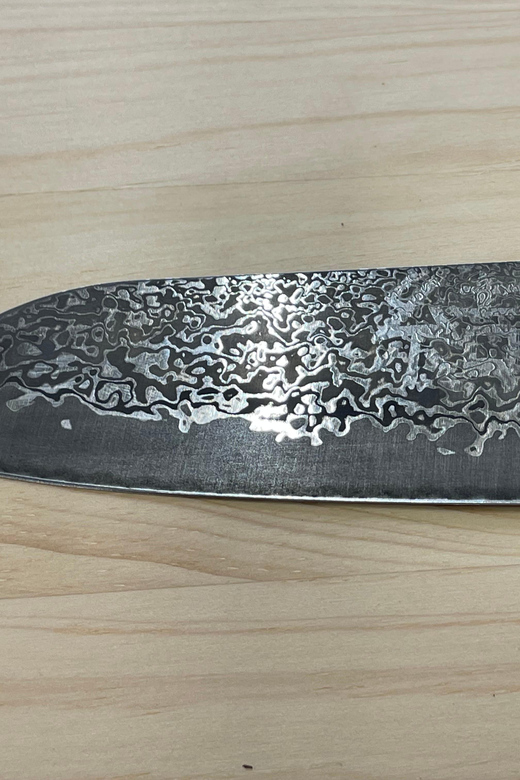
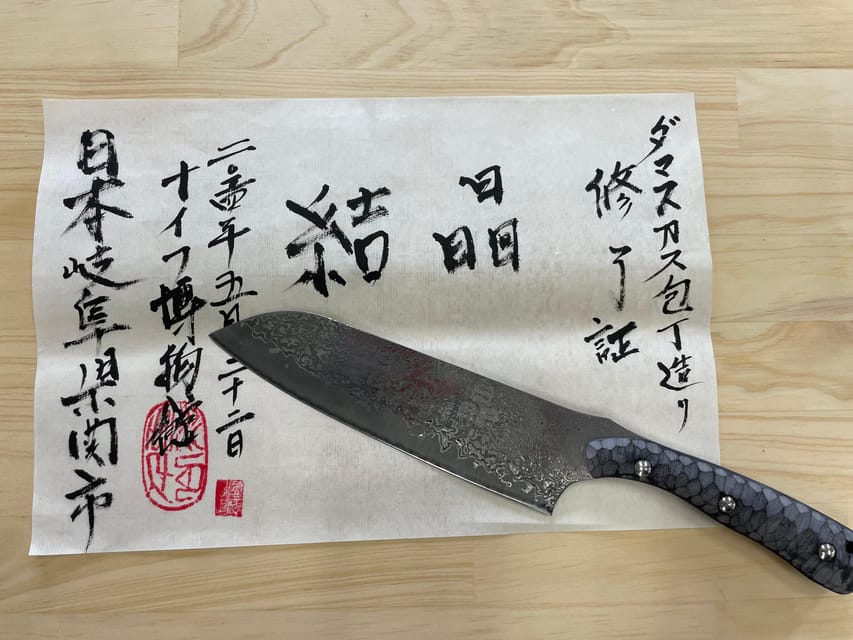
The result is a personal kitchen tool rather than a fragile display piece. The knives described during the experience include Damascus-style blades, and one detailed account identifies the steel as V10. Available styles can vary, so you should choose your design early if several options are offered.
A few more museum visits around Japan worth comparing
- Tokyo: teamLab Planets TOKYO Digital Art Museum Entry Ticket
★ 4.6 · 9,779 reviews - Osaka Castle: Museum and Tower Entry Ticket
★ 4.5 · 2,380 reviews - Tokyo: Samurai Ninja Museum Guided tour and Experience
★ 4.6 · 1,010 reviews
Meeting Hiro at Sekitomioka Station
The meeting point is Sekitomioka Station on the Nagara River Train, at 10:06 AM, when the scheduled train arrives. Hiro picks you up by car and handles the transfers throughout the day. That car service is especially useful because the museum, workshop, restaurant, and sword-related stops are not presented as a simple walk from one central station.
The group is limited to five people. That small size suits this kind of practical class, since you need room at the workbench and direct help with the blade. It also gives the day a more personal feel than a standard bus excursion.
The tour information describes the full experience as one day, with a planned workshop of about two and a half hours, lunch for one hour, and a one-hour museum visit. In practice, allow extra time. The knife work has several stages, and you should not book a tight onward connection. Some participants have been dropped at Gifu Station rather than returning only to the original rail point, but you should confirm your own end point before booking.
From Kyoto, Seki is described as roughly 1.5 to 2 hours by train, making this possible as a day trip. From Tokyo, the journey is much longer, and one account specifically calls the trip lengthy but worthwhile. I would build this into a wider Gifu or central Japan plan if you can, rather than forcing it into an already packed Tokyo itinerary.
At G. Sakai, the knife takes shape
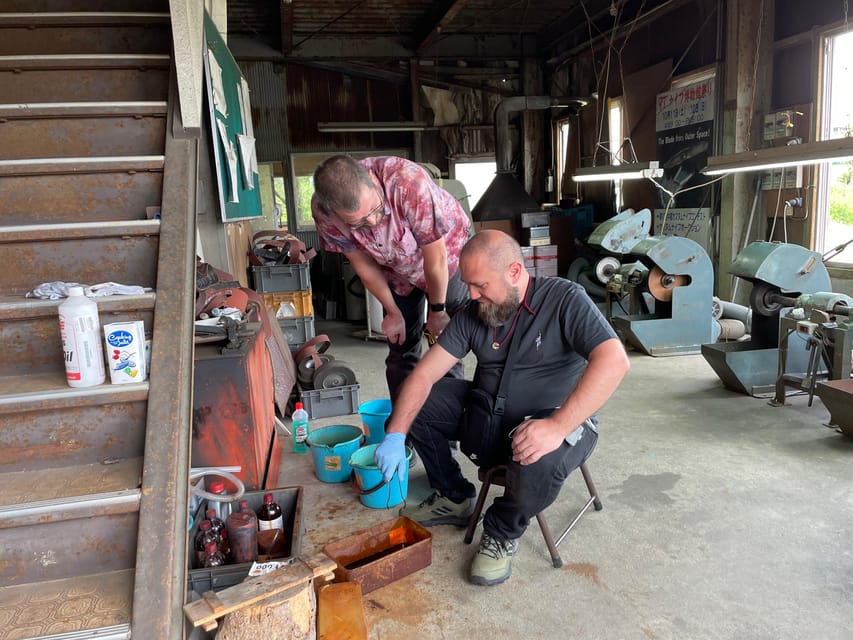
The main workshop takes place beside the Knife Museum, in part of the G. Sakai factory. G. Sakai is one of Japan’s best-known knife makers, so you are working in a genuine production setting rather than a craft-themed attraction built only for visitors.
Sumi brings more than 50 years of knife-making experience. Yoshi also works closely with the group, and both instructors guide you step by step. Hiro translates and explains the process in English. Japanese is also available, and the small group means you can ask questions without holding up a large class.
The process usually includes:
- Choosing an available blade shape and handle style
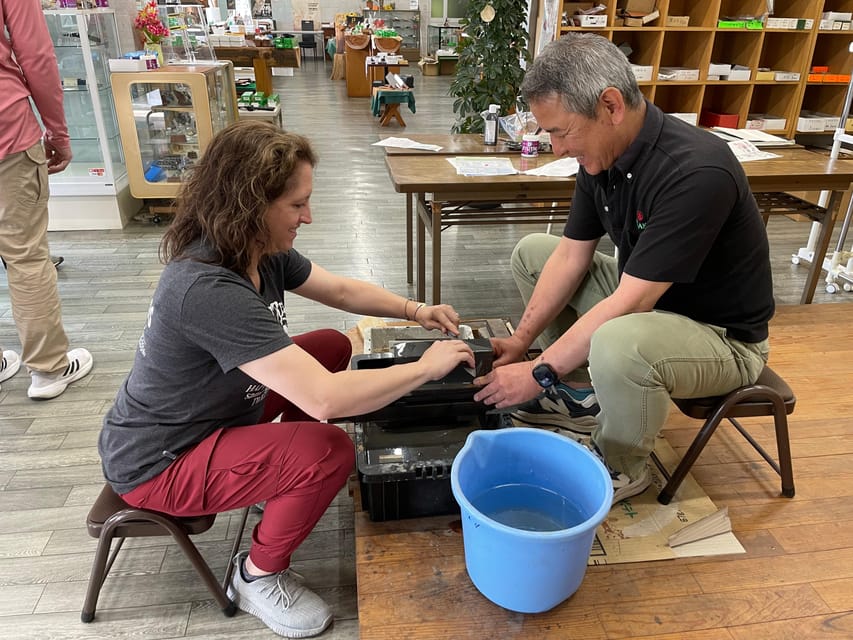
- Polishing the blade
- Writing or engraving your name in Japanese characters
- Assembling the knife
- Learning how to sharpen the edge
- Testing the finished knife on fresh vegetables
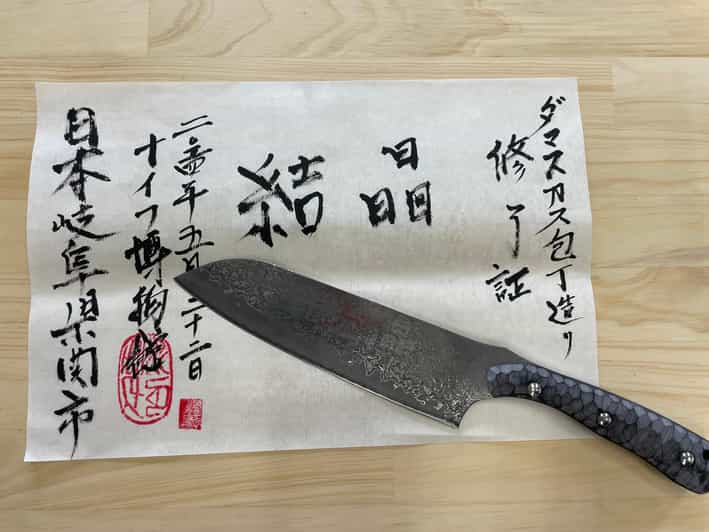
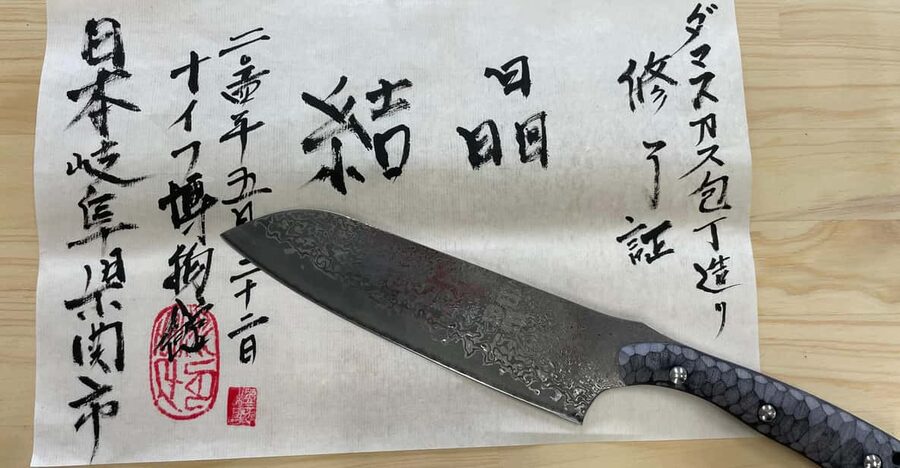
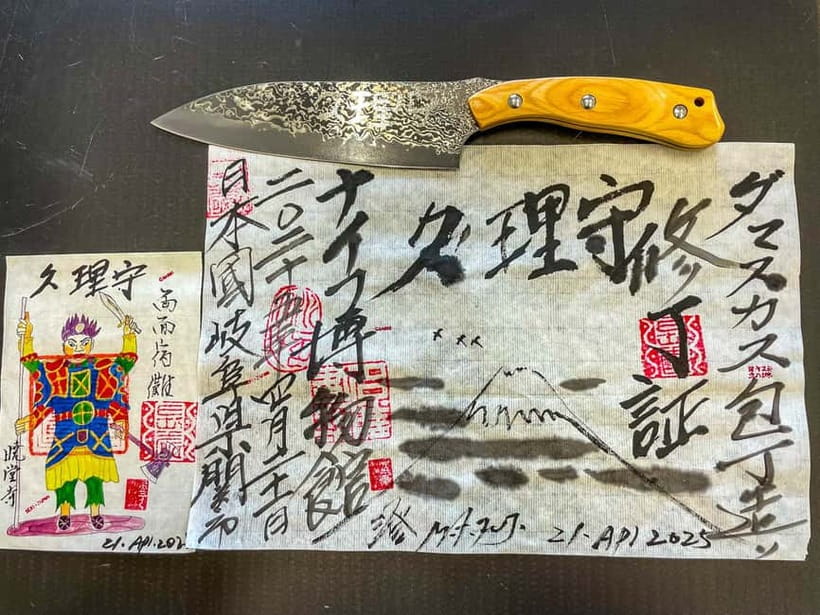
The name-marking step gives the knife its strongest personal touch. Hiro and the workshop team can help turn your name into kana or kanji, then show you how to place it on the blade. You are not simply buying a knife with a souvenir inscription added later. You take part in the marking process and leave with a blade tied to your own trip.
The sharpening lesson may prove just as useful as the knife itself. You learn a technique that can be used later on your new knife and, with practice, on knives already in your kitchen. The instructors emphasize patience and control rather than speed, which is exactly what a first lesson needs.
Expect a calm, hands-on pace. This is not a quick activity squeezed between two sightseeing stops. The work can take several hours, particularly if you ask questions, take photographs, or need extra help with polishing and sharpening. One family account describes arriving around 11 AM and leaving the shop near 4 PM. That may not be the standard schedule, but it shows why a flexible afternoon matters.
Testing the edge on fresh vegetables
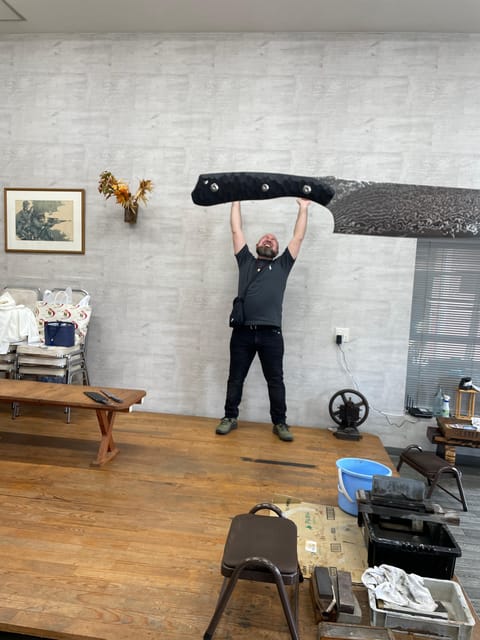
After the work is finished, you get to use the knife. Fresh local vegetables provide a simple test of sharpness and handling. Cutting food tells you more than looking at a polished blade behind glass. You feel the balance, the grip, and the way the edge moves through the ingredient.
Some versions of the activity have also included cutting a water bottle, but the stated highlight is testing the knife on fresh vegetables. Do not expect a dramatic forging demonstration at this stage. The appeal is quieter and more useful: you made the finishing choices, sharpened the blade, and now see the result in an ordinary kitchen task.
That practical test also helps put Japanese cutlery in context. The point is not only appearance. A well-made kitchen knife should feel controlled and precise in the hand, and the workshop gives you a chance to notice that for yourself.
You receive a knife set, and several accounts also describe a chopping board, key ring, certificate, or small gift. The exact extras may vary, so treat the knife set and certificate as the reliable core of what you take home.
Same city, a completely different collection:
- Kyoto: Tea Museum Tickets and Matcha Grinding Experience
★ 4.9 · 739 reviews - Skip the lines Basic Ticket at SAMURAI NINJA MUSEUM KYOTO
★ 4.5 · 632 reviews - Skip the lines Basic Ticket at SAMURAI NINJA MUSEUM TOKYO
★ 5.0 · 470 reviews - Ninja Experience (Family Friendly) at Samurai Ninja Museum TOKYO
★ 5.0 · 441 reviews
Lunch with Japanese flavor
Lunch follows the workshop at a local restaurant and is included in the price. The meal can vary, with sushi and eel both appearing among the possible choices. The sushi option may be prepared by a master with decades of experience, and the guide can help explain how to eat it.
This is a useful part of the day, not just a break between attractions. After several hours of close work, you have time to talk with the guides and compare the knives you made. It also gives you a taste of local food without having to search for a restaurant in an unfamiliar part of Gifu.
If you have dietary restrictions, ask before booking or as early as possible. The supplied details do not specify vegetarian, allergy, or other menu arrangements. Likewise, the meal is described as authentic Japanese cuisine, but the exact restaurant and menu can change.
The Knife Museum and its unusual collection
The Knife Museum is located with the G. Sakai factory, so the museum visit connects directly to the workshop. You see rare and unusual knives, as well as examples that show how broad Japanese cutlery can be.
The museum is not best understood as a grand national museum with endless galleries. One useful way to think of it is as a specialist collection inside a working knife-maker’s setting. The factory and shop are part of the attraction. You can see products ranging from small pocket-style souvenirs to kitchen and hunting knives, giving you a clearer sense of Seki’s modern cutlery trade.
This stop is also useful if you want to buy another knife. The workshop offers a limited choice of designs, while the larger shop may have more options. Take care with airline and customs rules before buying additional blades, especially if your itinerary includes more flights.
The museum visit may feel brief if your main interest is sword forging rather than kitchen knives. Still, it gives the hands-on activity a wider frame. You see that the knife in your hand is part of a local industry, not an isolated souvenir made only for this tour.
Seki Swordsmith Museum and the samurai connection
The final cultural stop focuses on Japanese swords, samurai history, and Seki’s blacksmith tradition. You may visit a sword-making workshop or showroom and speak with a katana specialist. The setting can include swords sent from around the world for repair and adjustment, which gives you a look at the continuing care required by traditional blades.
The connection between a kitchen knife and a samurai sword is cultural and technical, not literal. You are not making a katana, and the knife workshop does not turn you into a swordsmith. But both belong to Seki’s long blade-making tradition, and the second visit helps explain why the city remains associated with Japanese metalwork.
Some participants have been allowed to hold an actual sword under supervision. That is a memorable extra, but it should not be treated as guaranteed unless the provider confirms it for your date. The reliable promise is a visit focused on Japanese swords and Seki’s blacksmith history.
I like this pairing because it prevents the day from becoming a single-topic craft class. You make a modern kitchen knife, then see how older sword traditions shaped the city’s reputation. For anyone interested in Japanese culture, the contrast is more useful than a simple shopping stop.
Is $322 a fair price?
At $322 per person, this is expensive compared with a museum ticket or an ordinary cooking class. The value depends on how much of the day you would otherwise have to arrange yourself.
The price includes the knife set, lunch, museum entry, transportation, an English guide, and an instructor. You also receive a multi-hour workshop rather than a short demonstration. Add the difficulty of reaching outlying Seki locations by public transport, and the cost becomes easier to understand.
I would consider it good value for three types of people:
- You want a useful, handmade souvenir rather than mass-produced merchandise.
- You care about the process and are happy to spend much of a day on one craft.
- You would struggle to manage the station transfers and specialist visits alone.
It is less appealing if you want a cheap introduction to Japanese swords, a fast activity, or a full traditional forging session. The knife starts from a prepared blank, and the available shapes may be limited. You are paying for guided finishing, personal instruction, transport, meals, and access to working specialists.
The perfect transport score and overall rating of 5 from 61 recorded ratings suggest strong satisfaction, especially with the staff and organization. I would still judge the purchase on your interests rather than the rating alone. A knife enthusiast may find the price easy to justify, while someone only mildly curious about cutlery may prefer a less costly museum visit.
Who should book this Seki experience?
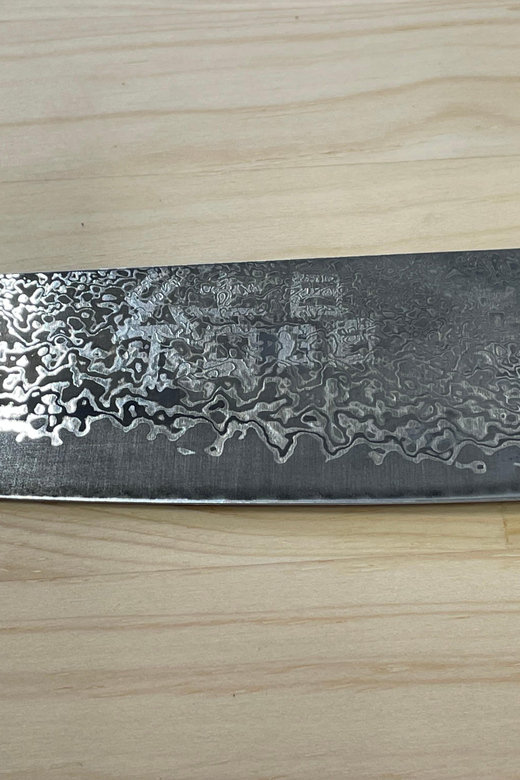
This suits adults who enjoy making things with their hands. It is also a strong choice for food lovers, cooks, collectors, and anyone who wants a souvenir with daily use.
The tour does not accept children under 18. That age limit makes sense because the workshop involves sharp blades and careful polishing and sharpening. Couples, solo visitors, and small groups can all fit the five-person format, though the exact group composition will depend on the date.
You should also be comfortable with a full schedule. The experience combines travel, detailed workshop work, lunch, museum time, and a sword-related visit. It is rewarding because of that range, but it is not a relaxed afternoon stroll.
English and Japanese are offered. Hiro’s role is particularly helpful when the instructors explain technical steps or Japanese writing. If you want to ask detailed questions, tell the guide early so there is time to translate them.
Free cancellation is available up to 24 hours before the experience for a full refund, and you can reserve while paying later. Check the available start time and your train connections carefully, since the workshop may run over its planned length.
My verdict on the knife-making day
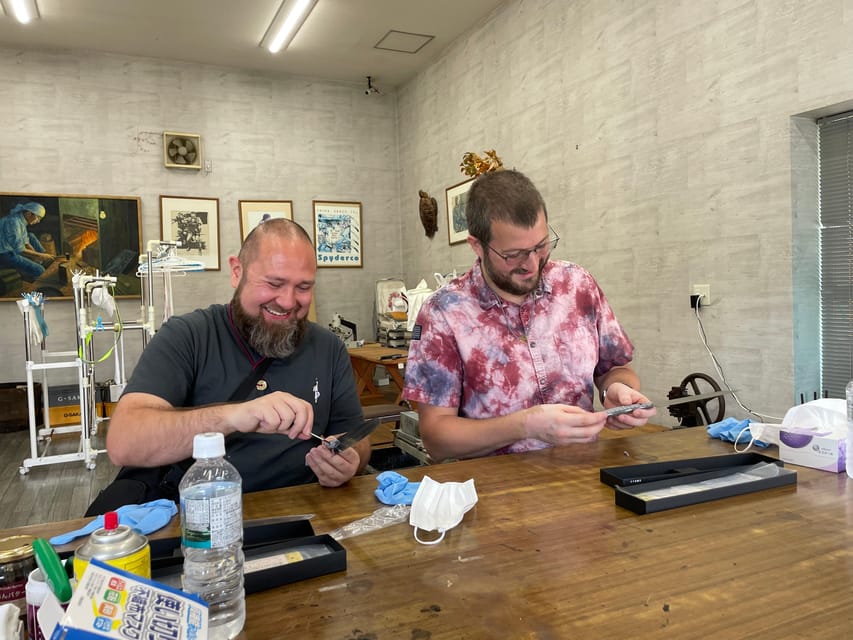
Book this if you want to understand Seki through a real object you can use at home. The strongest parts are the patient instruction from Sumi and Yoshi, Hiro’s translation and transport support, the name engraving, the sharpening lesson, and the chance to test the finished blade.
Skip it if you want hot-metal forging, a short sightseeing stop, or a broad museum tour with little hands-on work. This is a focused, full-day experience, and its success depends on your willingness to spend time at the workbench.
For the right person, the $322 cost buys more than a Damascus kitchen knife. You leave with a practical reminder of Gifu, a better understanding of Japanese blade work, a good meal, and the memory of having shaped part of your own souvenir.
FAQ
Where does the Seki knife-making experience begin?
You meet at Sekitomioka Station on the Nagara River Train at 10:06 AM, when the scheduled train arrives. Hiro picks you up by car.
How long does the experience last?
It is a one-day experience. The planned schedule includes about 2.5 hours at G. Sakai’s Knife Museum and workshop, one hour for lunch, and one hour at the Seki Swordsmith Museum. The workshop may run longer.
What do I make during the workshop?
You make a personalized kitchen knife from a prepared blade blank. The process includes polishing, writing or engraving your name, assembly, and sharpening.
Is lunch included?
Yes. Lunch at a local restaurant is included. The meal may include sushi, eel, or another Japanese option depending on the arrangements for the day.
What languages are available?
The experience offers English and Japanese. Hiro provides English guidance and translation, while Sumi and Yoshi lead the knife-making instruction.
Can children join the experience?
No. The activity is not suitable for children under 18.
Just added around Japan
- Skip the lines Basic Ticket at SAMURAI NINJA MUSEUM TOKYO★ 5.0 · 470 reviews
- Private Tour Through the Tokyo National Museum & Ukiyo-e★ 4.7 · 17 reviews
- Tokyo: Mt. Fuji, Owakudani, Hakone Shrine, & Open-Air Museum★ 4.7 · 25 reviews
- Samurai Ninja Museum Asakusa: Kid-Friendly Ninja Training★ 4.7 · 67 reviews
- Tokyo National Museum Private Tour★ 4.9 · 28 reviews
- Tokyo: Art Aquarium Museum GINZA Entry Ticket★ 4.5 · 278 reviews
- Tokyo: Kichijoji Gourmet Tour with Lunch★ 4.5 · 40 reviews
- Samurai Ninja Museum Asakusa: Samurai Sword Lesson & Tour★ 4.8 · 306 reviews
Museum Tours in Japan, compared.

teamLab Planets TOKYO Digital Art Museum Entry Ticket
Read our review →
Samurai Ninja Museum Guided tour and Experience
Read our review →
Tea Museum Tickets and Matcha Grinding Experience
Read our review →
Skip the lines Basic Ticket at SAMURAI NINJA MUSEUM KYOTO
Read our review →
Skip the lines Basic Ticket at SAMURAI NINJA MUSEUM TOKYO
Read our review →
Ninja Experience (Family Friendly) at Samurai Ninja Museum TOKYO
Read our review →
Tokyo Studio Ghibli Museum and Ghibli Film Appreciation Tour
Read our review →Browse the lists this tour appears in