
Review · JAPAN
Kyoto: Samurai Ninja Museum guided tour
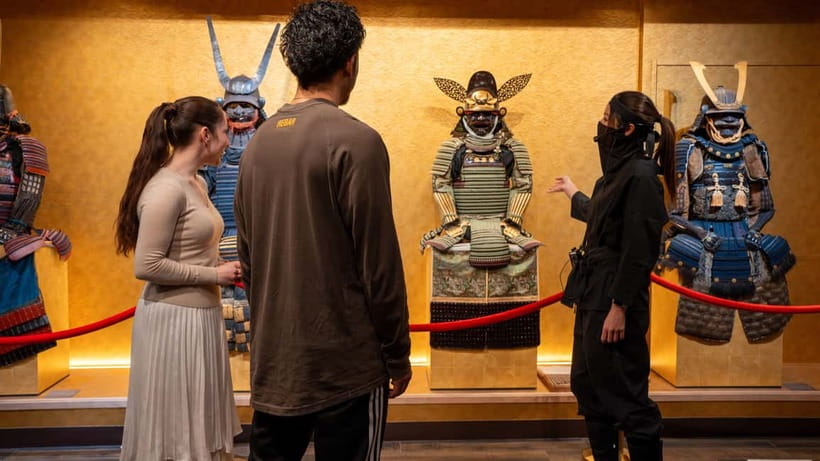
Kyoto’s Samurai Ninja Museum turns a history lesson into a hands-on hour. You’ll see armor and weapons, hear how samurai and ninja fit into Japan’s past, then put on samurai clothing, hold a replica sword, and try throwing ninja stars. It is aimed at curious first-time visitors, not weapons experts.
I especially like the English-speaking guides, who keep the history moving with questions and clear explanations. I also like the mix of learning and play: wearing a real samurai helmet and trying shuriken gives children and adults something to do, not just something to look at.
The main caution is the short running time. One hour goes quickly, and the experience is more of an entertaining introduction than a detailed study of Japanese military history. The advertised group size is small, though the booking information also lists a maximum of 30 people, so check the group conditions when you reserve.
Key points to know before you book
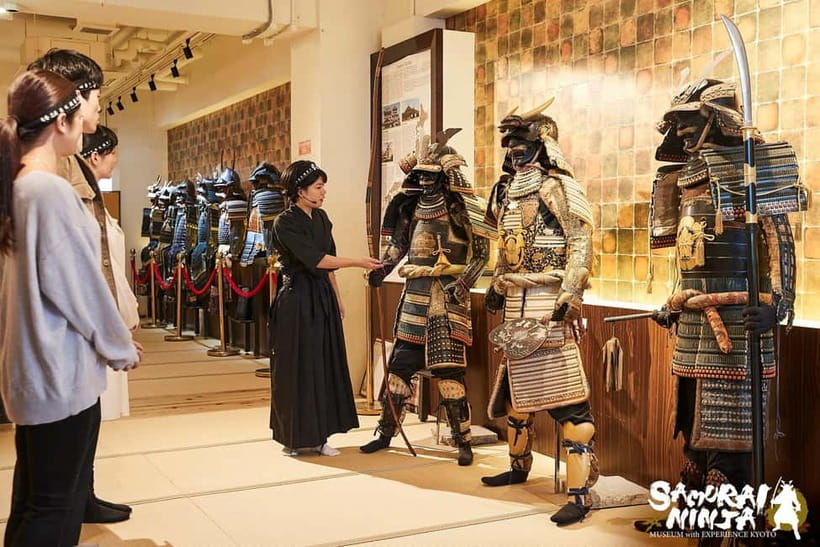
- You get hands-on samurai time: Dress in samurai clothing, wear a real helmet, and hold a replica sword for photographs.
- The ninja star activity is the finale: Shuriken throwing gives the tour a playful finish and is especially appealing to families and teenagers.
- English explanations are central: Guides including Miu, Akiko, Sayo, Aya, and Ko have been praised for clear historical explanations and audience engagement.
- It fits neatly into a Kyoto day: The visit lasts one hour, with no transportation included, so you can place it between other central Kyoto plans.
- The price is moderate: At $28 per person, you are paying for admission, guiding, costume use, and activities rather than museum entry alone.
- It is an introduction, not a full museum study: Expect a lively overview of samurai and ninja culture, with props, displays, and participation.
A quick history lesson with something to do
Samurai and Kyoto are closely linked in the popular image of Japan. The city was tied to the imperial court from the early Heian period through the era of the Tokugawa shogunate, and the samurai shaped Japanese government, warfare, and social life for centuries. Ninja stories occupy a more secretive corner of that past, with scouting, disguise, and specialized tools forming part of the familiar picture.
The museum’s job is to make that subject approachable. I like this format for a first visit because you do not need to arrive with a stack of books or a firm grasp of Japanese history. The guide supplies the basic setting, points out the weapons and armor, and gives you a chance to connect the objects with physical activities.
That approach also explains the tour’s limits. In one hour, you cannot get a full account of samurai politics, regional warfare, or the changing role of warriors under the Tokugawa shogunate. You get a lively introduction, useful context, and memorable photographs. If you want a scholarly museum visit, this may feel light. If you want an accessible way to meet the subject, it works well.
A few more museum visits around Japan worth comparing
- Tokyo: Samurai Ninja Museum Guided tour and Experience
★ 4.6 · 1,010 reviews - Osaka: Cup Noodles Museum Guided Tour (90 Minutes)
★ 4.8 · 38 reviews - Osaka: Osaka Castle & Historical Museum Guided Tour
★ 4.8 · 28 reviews
Entering the museum and meeting your guide
Your visit begins with museum admission and an English-language guided tour. Transportation is not included, so you need to make your own way to the attraction. The skip-the-ticket-line feature can save a little time, which matters when you are fitting the activity around temples, shopping, or a meal.
The guide is an important part of the experience. Names listed in past sessions include Miu, Akiko, Sayo, Aya, Ko, Mami, Miku, Taka, Aoi, and Jukia. The strongest pattern in the feedback is not one particular guide, but the way guides make the material easy to follow. Several have been praised for asking questions, welcoming questions from the group, and keeping children involved.
I would pay attention to the guide’s pacing. The best version of this tour is not a speech delivered beside display cases. It is a conversation that helps you understand what you are seeing before moving on to the activities. Guides such as Miu, Akiko, Sayo, and Ko have been singled out for clear English and strong audience contact, but the exact guide depends on the session.
The group is described as small, limited to 10 participants, although the booking information also says the activity can have a maximum of 30 people. That inconsistency is worth checking before payment. A group of 10 should feel personal and make costume photographs easier. A larger group could mean more waiting during the interactive parts.
Seeing armor, weapons, and craftsmanship
The museum displays samurai equipment, ninja tools, armor, and weapons. This is where the guide adds real value. A display of armor can be impressive, but without explanation it is easy to notice only the shape and decoration. Your guide helps connect the objects with the people who used them and with the period of Japanese history being discussed.
The material also includes attention to craftsmanship. One session was praised for showing the history and workmanship connected with ninja-era objects. That is useful because the subject can otherwise become a parade of movie images and costume clichés. Look closely at the construction, surfaces, and details rather than treating every object as a simple prop.
The museum does not appear to be presenting an enormous collection. That is not necessarily a weakness. A compact collection can work well when you have only an hour and a guide is explaining the important points. The tradeoff is that you should not expect the scale of a major national museum or a long, self-guided exhibition.
I find this portion most useful when you listen for distinctions. Samurai and ninja are often bundled together in popular culture, but the tour is meant to help you understand their different place in Japanese history and culture. The guide’s explanations are the part that turns a collection of equipment into a readable story.
Putting on samurai clothing and a real helmet
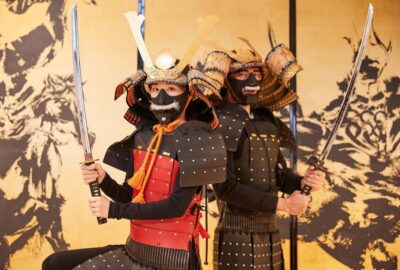
The costume segment gives the tour its strongest visual appeal. You can dress like a samurai, wear a real samurai helmet, and hold a replica sword. For many people, especially families, this is the moment when the past feels less abstract.
The helmet matters because it is not simply a plastic accessory. Wearing a real piece of samurai equipment gives you a physical sense of its weight and presence, even if only briefly. You should still treat the items carefully and follow the guide’s instructions. The sword is a replica, so you get the photograph and handling experience without being handed a functioning weapon.
This is also the best part of the tour for photographs. Several people have pointed to the costume, equipment, and picture opportunities as highlights. If you are traveling with children or teenagers, the dress-up activity gives them a reason to stay engaged while the guide explains the history.
There is a small tradeoff: dressing up takes time away from the display portion. In a one-hour session, the guide has to balance photographs, explanations, and the group’s turn with the equipment. I would see the costume not as an extra beside the museum tour, but as one of the main reasons to choose this particular activity.
Same city, a completely different collection:
- Tokyo: teamLab Planets TOKYO Digital Art Museum Entry Ticket
★ 4.6 · 9,779 reviews - Osaka Castle: Museum and Tower Entry Ticket
★ 4.5 · 2,380 reviews - Kyoto: Tea Museum Tickets and Matcha Grinding Experience
★ 4.9 · 739 reviews - Skip the lines Basic Ticket at SAMURAI NINJA MUSEUM KYOTO
★ 4.5 · 632 reviews
Trying the ninja star throw
The shuriken, or ninja star, throwing activity usually provides the tour’s most memorable finish. You get to try aiming and throwing the stars at a target under the guide’s direction. It is simple, physical, and competitive enough to keep a mixed-age group interested.
Past sessions have praised the activity as a fun ending, and that makes sense. After listening to historical explanations and looking at equipment, you get an immediate way to test your concentration. You do not need prior skill, and the point is participation rather than mastery.
Families should find this especially useful. Children and teenagers can lose focus during a museum explanation, but a clear activity at the end gives the hour a strong rhythm. Adults often enjoy it too, particularly when the group turns it into a friendly contest.
The activity is not a realistic ninja training course. You should expect a supervised introduction to throwing stars, not a long lesson in martial arts. The supplied information also refers to a ninja fukiya and a katana lesson as part of the hands-on experience, but the specific inclusion list names the museum tour, samurai costume, and ninja star throwing. If those extra activities matter to you, confirm what your booked session includes.
How much value do you get for $28?
At $28 per person, the cost is reasonable if you want more than basic museum admission. The price includes entry, an English-speaking professional guide, the costume experience, and ninja star throwing. You are paying for the guide’s interpretation and the interactive setup, not just access to objects behind glass.
The value is strongest for first-time visitors to Japan, families, and anyone who wants a short cultural activity with clear structure. The tour gives you history, photographs, and participation in a single hour. That makes it easy to add to a day already built around Kyoto’s temples and neighborhoods.
The value is weaker if you are mainly interested in a large collection or detailed academic coverage. The tour is brief, and the fun activities take part of the hour. Someone who has already studied samurai history may find the explanations familiar.
I would also compare the price with your group’s interests. If everyone enjoys dressing up and trying the shuriken activity, $28 buys a complete shared experience. If one member of your party dislikes costume activities or wants only a quiet museum, that person may see the price differently. One four-star assessment specifically questioned paying an added amount for a museum ticket and standard guiding, so make sure you understand whether your booking is for the guided experience rather than entry alone.
Timing, access, and practical planning
The stated duration is one hour, with different starting times available depending on the date. That short format is useful when planning Kyoto, but it leaves little room for lateness. I would allow enough time to reach the museum, since transport to and from the attraction is not included.
You can cancel up to 24 hours in advance for a full refund, and the reserve-now, pay-later option allows you to hold a place without paying immediately. Those policies help if your Kyoto schedule is still changing. Always check the final booking conditions for your selected date.
The activity is wheelchair accessible. That is important for anyone planning a mixed-mobility day, though the supplied information does not give further details about the exact costume process or activity setup. If you need specific assistance with the helmet, costume, or throwing activity, ask the provider before booking.
The tour is offered in English. The guide’s ability to explain the subject clearly is especially important because the museum’s value depends on interpretation. Sessions with guides such as Ko, Mami, Akiko, and Miu have been praised for easy-to-follow English and useful detail.
Who will enjoy this tour most?
I would recommend it most strongly to:
- Families looking for a cultural activity that children can physically join
- First-time visitors who want a basic introduction to samurai and ninja history
- Teenagers who may prefer costumes and target throwing to a quiet museum
- Adults who enjoy photographs and short, themed experiences
- Visitors with a tight schedule who can spare one hour
I would be more cautious if you want a long, object-focused museum visit. The tour is designed around movement, guiding, and participation. It is also not the best choice if you want to study Japanese history in depth or spend hours examining armor at your own pace.
The activity suits couples and solo visitors too, especially if you enjoy trying something unusual together with a small group. You do not need specialist knowledge before arriving. One useful tip from the feedback is to read a little about ninjas in advance. Even a basic overview will help you get more from the guide’s explanations.
Should you book the Samurai Ninja Museum tour?
Book it if you want a friendly, compact introduction to samurai and ninja culture with real participation. The combination of a guide, armor, a real helmet, replica sword, photographs, and shuriken throwing gives you more to remember than a standard museum walk-through.
Think twice if your main goal is a large collection or a detailed historical lecture. The one-hour format favors energy and accessibility over depth, and the advertised group-size information is not perfectly consistent.
For most families and first-time Kyoto visitors, I see this as a good-value cultural stop at $28. Place it between larger sights, arrive ready to listen and participate, and confirm the group size and included activities when booking.
FAQ
How long does the Samurai Ninja Museum tour last?
The guided tour lasts one hour.
What is included in the price?
The price includes museum entry, a professional English-speaking guide, a samurai costume, and ninja star throwing.
Is the tour conducted in English?
Yes. The tour includes a live English-speaking guide.
Can I dress like a samurai?
Yes. You can wear a samurai costume, try on a real samurai helmet, and hold a replica sword.
Is ninja star throwing included?
Yes. Ninja star throwing is included in the tour.
Is transportation included?
No. Transportation to and from the attraction is not included.
Can I cancel the booking?
You can cancel up to 24 hours in advance for a full refund. The reserve-now, pay-later option is also available.
Just added around Japan
- Skip the lines Basic Ticket at SAMURAI NINJA MUSEUM TOKYO★ 5.0 · 470 reviews
- Tokyo: Mt. Fuji, Owakudani, Hakone Shrine, & Open-Air Museum★ 4.7 · 25 reviews
- Private Tour Through the Tokyo National Museum & Ukiyo-e★ 4.7 · 17 reviews
- Samurai Ninja Museum Asakusa: Kid-Friendly Ninja Training★ 4.7 · 67 reviews
- Tokyo National Museum Private Tour★ 4.9 · 28 reviews
- Samurai Ninja Museum Asakusa: Samurai Sword Lesson & Tour★ 4.8 · 306 reviews
- Tokyo: Art Aquarium Museum GINZA Entry Ticket★ 4.5 · 278 reviews
- Tokyo: Kichijoji Gourmet Tour with Lunch★ 4.5 · 40 reviews
Museum Tours in Japan, compared.

teamLab Planets TOKYO Digital Art Museum Entry Ticket
Read our review →
Samurai Ninja Museum Guided tour and Experience
Read our review →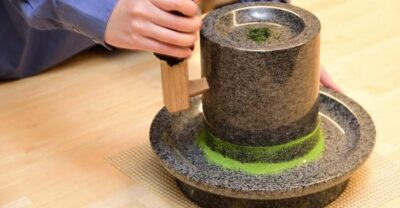
Tea Museum Tickets and Matcha Grinding Experience
Read our review →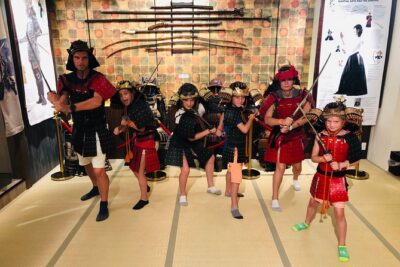
Skip the lines Basic Ticket at SAMURAI NINJA MUSEUM KYOTO
Read our review →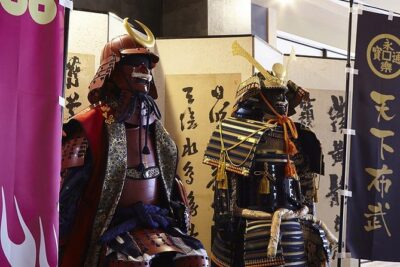
Skip the lines Basic Ticket at SAMURAI NINJA MUSEUM TOKYO
Read our review →
Ninja Experience (Family Friendly) at Samurai Ninja Museum TOKYO
Read our review →
Tokyo Studio Ghibli Museum and Ghibli Film Appreciation Tour
Read our review →Browse the lists this tour appears in