
Review · NEW YORK CITY
“The Met” Metropolitan Museum of Art Exclusive Guided Tour
The best thing about this 2.5-hour Met tour is that it gives shape to a museum too large for casual wandering. You move from Egyptian objects and medieval armor to Washington Crossing the Delaware, Vermeer, Picasso, and Van Gogh, with a guide explaining why each piece matters.
I like the small group limit of eight and the choice of a private booking. I also like that the tour is broad rather than tied to one art period. Guides such as Rob, Charlie, Mark, Michael, and Kathryn have been praised for making the museum understandable, entertaining, and easier to navigate.
The catch is simple: the Met is enormous, and two and a half hours can only introduce it. The tour may feel more like a guide’s selected route than a complete survey, so visitors wanting every major room, or very detailed art analysis, should plan extra time afterward.
Key points to know before booking
- You cover several major wings: Egyptian art, medieval Europe, arms and armor, American art, European painting, and modern works may all appear.
- The guide makes the difference: Rob, Charlie, Mark, Michael, Jeff, Kat, and others are praised for clear explanations, humor, and family-friendly presentation.
- Skip-the-line admission is included: You still pass through the museum’s required security check, and a line can form during busy periods.
- The group is kept small: Bookings are capped at eight people, while private tours are limited to your own party.
- The tour works as an orientation: Many people use it first, then stay to revisit favorite rooms at their own pace.
- Allow more time if you love museums: The guided visit ends at the meeting point, but the Met needs far longer for a fuller look.
Why a guide helps inside The Met
The Metropolitan Museum of Art is not simply a large museum. It is a city block of art, with more than two million objects spanning ancient Egypt to modern work. You can walk in with a short list and still spend half your time finding the right stairway.
That is where this tour earns its keep. Instead of asking you to choose between hundreds of rooms, the guide creates a route through major periods and famous works. You get a working map of the building, along with enough background to understand what you are seeing.
I especially like this approach for a first visit. The Met can overwhelm you before you reach the galleries that brought you there. A guide gets you moving quickly and gives you a few anchor points: the Great Hall, the medieval rooms, the American wing, the European painting galleries, and the museum’s unusual mix of fine art and popular culture.
The tour is also useful for repeat visitors. A well-run visit can connect familiar works in new ways, explain how the museum grew, or point out rooms you missed before. Mark, for example, has been praised for explaining both the art and the building’s growth, while Charlie has helped visitors understand art movements and ways to look at a work beyond its subject.
More Museum Tours in New York City
- NYC: Empire State Building Tickets – Observatory & Museum
★ 4.7 · 25,757 reviews - New York City: American Museum of Natural History Ticket
★ 4.5 · 15,447 reviews - NYC: Museum of Modern Art (MoMA) Entry Ticket
★ 4.6 · 12,540 reviews
Starting in the Great Hall and ancient collections
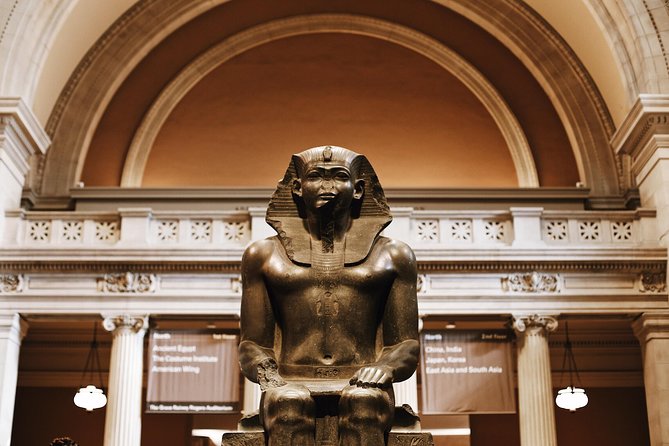
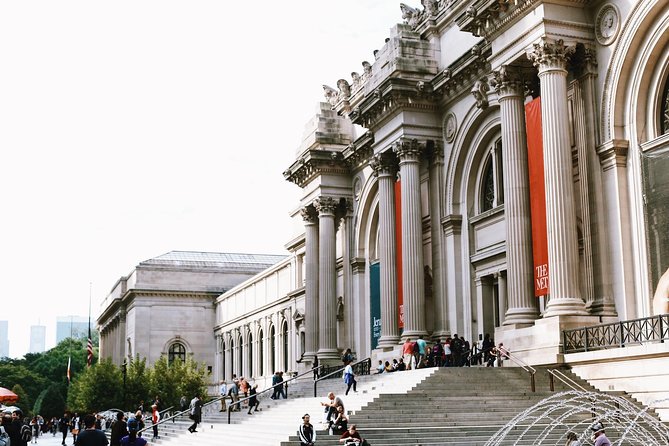
The tour begins at The Met, 1000 Fifth Avenue, and generally starts with the museum’s most recognizable entrance space, the Great Hall. This is more than a meeting place. It gives you an immediate sense of the institution’s scale, and it helps you understand why a plan matters.
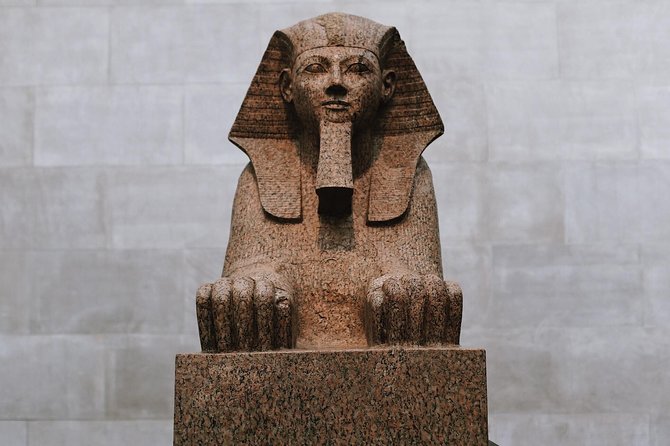
From there, the route may move through the Egyptian collection. The material here reaches far back in time, and a guide can turn a room full of statues, fragments, and objects into a story about belief, power, daily life, and burial customs.
The exact works shown can change, since rooms may close and objects can be on loan or under restoration. The tour description identifies the main works as typical highlights, not guarantees. Keep that in mind if one particular painting or object is the sole reason for booking.
This part of the visit can move quickly. That is useful if you want a broad introduction, but less satisfying if ancient art is your main interest. If Egypt is your priority, tell the guide at the start. The tour is designed to focus on the areas that interest you, particularly when you book a private visit.
Medieval Europe, the Studiolo, and Henry VIII’s armor
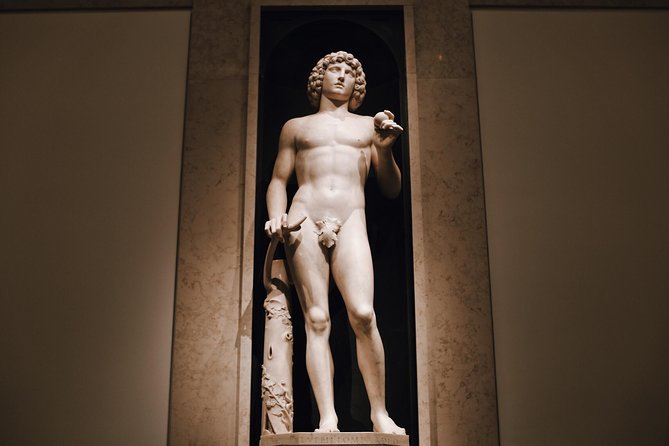
The medieval galleries add a different mood. You may pass through rooms devoted to European art of the Middle Ages and visit the Studiolo from the Ducal Palace. The Studiolo is a striking example of how the museum brings an important architectural interior into New York and presents it as part of a wider story about power, taste, and collecting.
The arms and armor section is one of the most accessible stops, even for people who do not usually seek out decorative arts. Pieces associated with Henry VIII are among the listed highlights. Armor gives you an immediate sense of ceremony and warfare, but it also raises practical questions about craftsmanship, status, and how such objects were displayed.
This is where a guide’s storytelling matters. You do not just look at metal suits and weapons. You get reasons to notice construction, decoration, and the people who used or commissioned them.
The medieval and armor sections are also good for families. Children can connect with armor faster than with a long row of portraits, and guides such as Mark and Kat have been praised for keeping younger visitors involved. Still, the pace depends on the group. A private tour lets you ask more questions and linger when a room catches your attention.
American art, Tiffany, and Washington crossing the Delaware
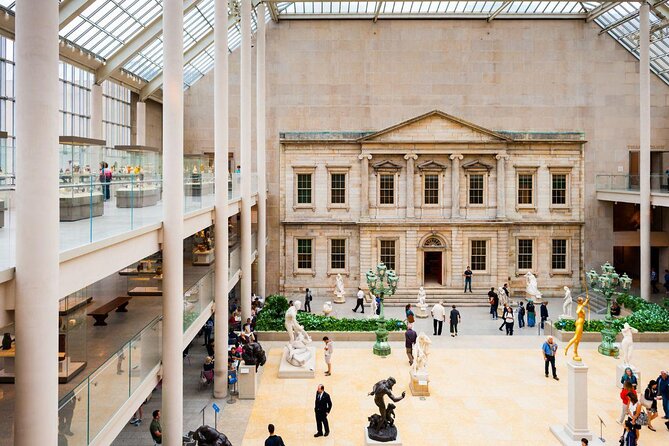
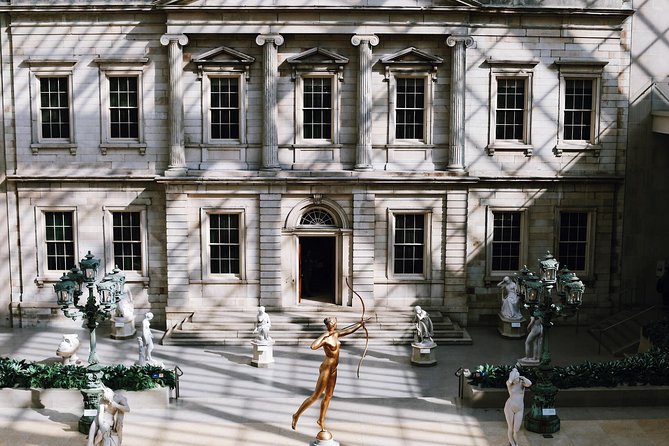
The American wing brings the museum closer to home. It includes the staircase from the Chicago Stock Exchange, a large architectural feature that shows how The Met treats interiors and design as works worth preserving. It is an easy detail to miss when you are hurrying toward paintings, so having a guide point it out adds real value.
You may also see Tiffany’s Autumn work and Washington Crossing the Delaware. These are useful stops because they show two different sides of American art: decorative design and national imagery. The Hudson River School is another listed focus, offering a look at how American artists presented the country through dramatic natural scenes.
The Washington painting is familiar, but familiarity can work against you. You may recognize the image without really seeing the composition, scale, or political message. A guide can slow down the viewing process and give you a way to read the painting rather than simply check it off a list.
This wing is also a good test of what you want from the tour. If you prefer a tightly focused visit to American art, two and a half hours across the whole museum may not be enough. If you want a sampler that gives you a reason to return, the route makes sense.
A few more museum visits around New York City worth comparing
- Metropolitan Museum Guided Group Tour
★ 5.0 · 1,013 reviews - The Met Museum Guided Tour with Skip-the-Line Entry
★ 4.4 · 149 reviews - “The Met” Metropolitan Museum of Art Exclusive Guided Tour
★ 4.9 · 116 reviews - Self-Guided Tour of the Museum at Eldridge Street
★ 4.3 · 13 reviews
European paintings from Vermeer to Van Gogh
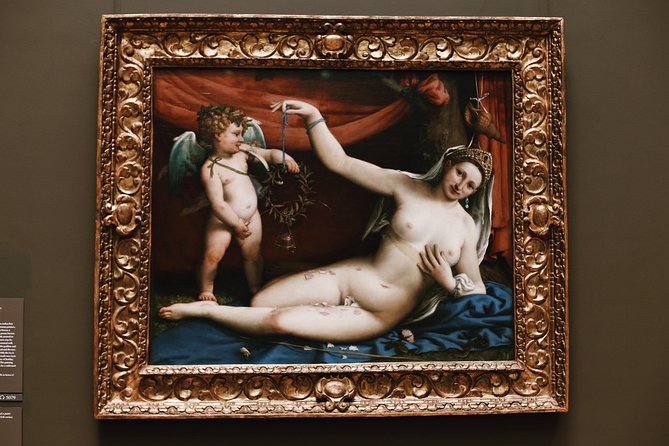
The European painting galleries contain some of the names most people hope to see: Vermeer, Picasso, Seurat, Van Gogh, and others. The appeal is obvious, but famous works are not always easy to appreciate in a crowded room. A guide can offer context, point out choices in color or composition, and explain how one artist differs from another.
Vermeer rewards patience. So does Seurat. Van Gogh often brings visitors in through emotion, but the guide can help connect that first reaction to technique, period, and the artist’s life. Picasso offers a chance to discuss how art changed when artists stopped treating the painted image as a straightforward window onto the world.
The strongest part of this route is not simply seeing big names. It is learning a few practical ways to look. Several guides, including Charlie and Michael, have been praised for explaining art movements and offering useful strategies for understanding a work.
The level of detail can vary. One visitor found the range impressive but wanted more depth about individual artists and sculptures. That is a fair limitation. A guide trying to move from Egypt to modern art cannot give a full lecture on every painter. You should expect clear interpretation and selected stories, not a university course.
Pop culture and the museum’s American identity

The tour may also include pop culture material, a useful change after rooms of old masters. The Met is not only a place for European paintings and ancient objects. Its collections show how museums decide what belongs in a national cultural record, from formal art to objects tied to everyday life and popular taste.
That broader view helps explain how The Met differs from older European museums. It began before the United States was 100 years old and developed as an American institution, even while collecting art from around the world. A guide can use the building and its collections to explain that difference.
This museum story is one of the tour’s more unusual benefits. You are not just walking through a list of masterpieces. You are learning how a young nation built a major art museum, how collections expanded, and why the result feels different from museums founded around royal collections or older civic institutions.
If you have visited The Met before, this context may be more useful than another quick march to the most famous painting. It gives the building a point of view.
What the 2.5-hour pace feels like
Two and a half hours is a sensible length for a guided introduction. It is long enough to cross several wings without turning the visit into a tiring lecture, but short enough to leave you energy for independent exploring.
The pace is purposeful. You should expect regular movement through crowded galleries, stops at selected works, and time for questions. Some guides are especially good at balancing explanation with forward motion. Charles has been described as funny and friendly, while Rob has been praised for keeping the route well paced and covering a wide span of art.
You may not see every major room. In fact, you should not expect to. The Met is a full-day commitment if you want to take in a large share of its collections, and even that may not cover everything. The tour gives you a route and a set of priorities, not a complete inventory.
My practical advice is to book the tour early in your museum day if possible. Afterward, you can return to the rooms that interested you most. This works particularly well because the tour ends back at the meeting point, leaving you free to continue at your own pace, subject to museum opening hours and access rules.
Private booking or small group?
The experience is described as a private museum tour, with a maximum of eight people per booking. Private activity means only your group participates, while the booking options also refer to small-group or private formats. Check the exact option you select so you know what kind of arrangement you are buying.
A small group is a strong compromise. You can hear the guide more easily than in a large crowd, ask questions without stopping an entire busload of people, and stay close enough to follow the route. One group of five found this especially comfortable compared with larger tours nearby.
A private tour costs more in many cases, but the supplied price of $132.50 per person should be judged against the time saved and the quality of the guide. It is reasonable value if you are visiting The Met once, have limited time, or want help choosing what matters. It is less compelling if you already know the museum well and prefer to wander alone.
For families, private touring has another benefit: the guide can adjust explanations for children and adults. Mark has been praised for engaging children aged nine and eleven, while Kat has been credited with keeping kids interested while covering major works.
Price, admission, and practical limits
At $132.50 per person, this is not a casual add-on. The price includes museum admission, the professional guide, and the guided visit, but not hotel pickup, drop-off, or gratuities. You need to make your own way to 1000 Fifth Avenue, with taxi or Uber suggested as practical options.
The included skip-the-line admission can save time, but the phrase has limits. Everyone still passes through the museum’s security line, and extra security measures can create delays. Do not schedule a tight appointment immediately after the tour.
The museum does not allow large bags or suitcases. Only handbags or small, thin backpacks can pass through security. Dress appropriately for entry, and remember that some rooms require quiet or restrict speaking. The guide will explain those rules before entering.
The tour is wheelchair friendly, though participants are expected to have a moderate level of physical fitness. The building is large, and the visit involves moving between galleries. If mobility is a concern, raise it when booking so the route can be handled properly.
The museum can also close unexpectedly or delay opening. If opening is delayed by more than an hour, an alternative is provided, but the stated terms do not promise a refund or discount in that situation. That is worth knowing before you build an important day around this booking.
Free cancellation is available up to 24 hours before the local start time. Cancel later than that, or make changes inside the 24-hour window, and the amount paid is not refunded.
Who should book this Met tour?
I would recommend it most strongly to first-time visitors who want structure. The museum is too large for a casual first walk, and a guide helps you reach major sections without spending your best hours searching for them.
It also suits families, couples, and people who enjoy art but do not always know how to approach it. The guides do more than identify paintings. They explain how to look, connect works to their period, and add the museum’s own story.
Repeat visitors can benefit too, especially if they want a new route or a better understanding of the building. Tell the guide what you have already seen and what interests you. The private format gives you the best chance of shaping the visit around those priorities.
I would hesitate if your goal is to study one collection in great depth. You may get more from visiting independently and spending several hours in a single wing. I would also hesitate if the price feels high for a quick orientation, since the tour does not replace a full day at The Met.
Should you book it?
Book this tour if you want to get your bearings fast, see major works across several periods, and have a human guide turn a huge museum into a manageable route. The strongest value comes from the time saved and the explanations, not from the admission ticket alone.
Choose a private or small group option, arrive ready to pass security, and plan to stay afterward if you have the time. A guide such as Rob, Charlie, Mark, Michael, Jeff, Kat, or Kathryn may give the visit its personality, but the exact guide is not guaranteed.
Skip it if you prefer complete freedom, already know The Met well, or want deep study of one collection. For most first visits, though, the guided introduction is a practical way to make the museum feel less like a maze and more like a place you can return to with a plan.
FAQ
How long does The Met guided tour last?
The tour lasts approximately 2 hours and 30 minutes.
Where does the tour begin and end?
It begins at The Metropolitan Museum of Art, 1000 Fifth Avenue, New York, NY 10028. The activity ends back at the same meeting point.
Is admission to The Met included?
Yes. Entrance fees and skip-the-line museum admission are included, although every person must still pass through the required security line.
How many people can join the tour?
The maximum is eight people per booking. The activity is private, so only your group participates.
Is the tour wheelchair friendly?
Yes, the tour is listed as wheelchair friendly. Participants should still have a moderate level of physical fitness.
Can I cancel for a full refund?
Yes. You can cancel at least 24 hours before the local start time for a full refund. Cancellations or changes made less than 24 hours before the start time are not refunded.
Just added around New York City
- The Met Museum Guided Tour with Skip-the-Line Entry★ 4.4 · 149 reviews
- New York City: The Banksy Museum Entry Ticket★ 4.6 · 51 reviews
- NYC: Entry Ticket To The Banksy Museum★ 4.5 · 89 reviews
- Self-Guided Tour of the Museum at Eldridge Street★ 4.3 · 13 reviews
- New York: Private Tour of The Metropolitan Museum of Art★ 4.9 · 39 reviews
- NYC: Whitney Museum Ticket★ 4.2 · 315 reviews
- NYC: Museum of Sex Entry Ticket★ 4.2 · 179 reviews
- NYC: Museum of the Moving Image Flexible Ticket★ 4.6 · 95 reviews
Museum Tours in New York City, compared.


9/11 Memorial, Ground Zero Tour with Optional 9/11 Museum Ticket
Read our review →

All-Access 9/11: Ground Zero Tour, Memorial and Museum, One World Observatory
Read our review →


Browse the lists this tour appears in