
Review · NEW YORK CITY
Self-Guided Tour of the Museum at Eldridge Street
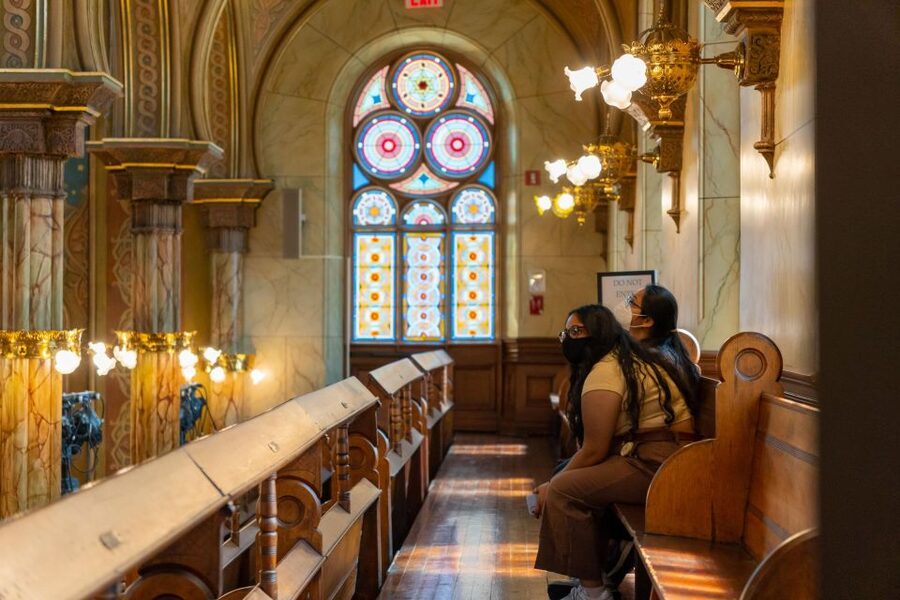
The Museum at Eldridge Street gives you something rare in New York: a chance to enter an 1887 synagogue built by Eastern European Jewish immigrants and still see the building’s original ambition. The Moorish Revival architecture and 60 stained glass windows make an immediate impression, but the stories of crowded Lower East Side life give the visit its real weight.
I especially like the $7 price, which makes this an easy addition to a day downtown, and the freedom to move at your own pace rather than follow a fixed group. The drawback is simple: this is self-guided, so anyone hoping for a lively explanation from a guide may find the visit too quiet or brief.
Key points to know
- A synagogue built in 1887: This was the first grand synagogue purpose-built in the United States by Eastern European Jewish immigrants.
- Moorish Revival design: Look up at the arches, ornamental details, and 60 historic stained glass windows.
- A powerful immigration story: The building reflects Jewish families putting down permanent roots on New York’s Lower East Side.
- Modern art within an old setting: A contemporary window by Kiki Smith and Deborah Gans adds a thoughtful present-day note.
- One hour, at your own pace: The format works well for a short cultural stop, especially between other Lower East Side sights.
- Accessible and practical: An elevator reaches all four floors, and personal, noncommercial photography is welcome without flash.
Entering an 1887 synagogue on the Lower East Side
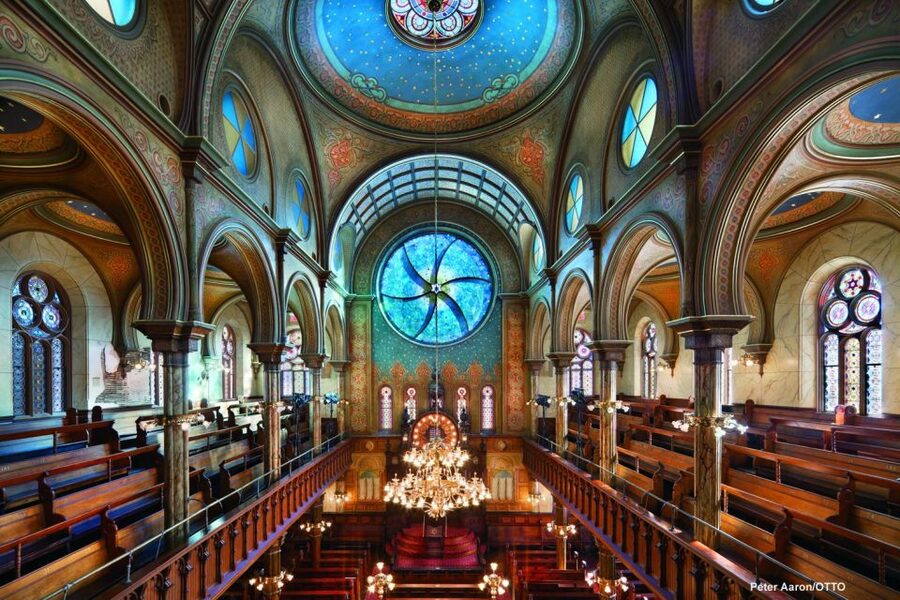
The Museum at Eldridge Street is housed inside the Eldridge Street Synagogue, a National Historic Landmark with an unusual place in New York’s story. Built in 1887, it was created by Jewish immigrants from Eastern Europe during the great wave of immigration that brought one third of Europe’s Jewish population across the Atlantic around the turn of the 20th century.
You are not simply looking at an old religious building. You are seeing a public statement made by people who had arrived in a crowded, difficult city and wanted a permanent home for worship and community life. The synagogue was meant to serve practical needs, but its scale also expressed confidence. Its builders were saying that their families belonged here.
That setting matters. The synagogue rose among packed streets and overcrowded tenements on the Lower East Side. Inside, the grand design offered a very different sense of space. The contrast between the dense neighborhood outside and the lofty interior helps you understand why the building mattered to its original congregation.
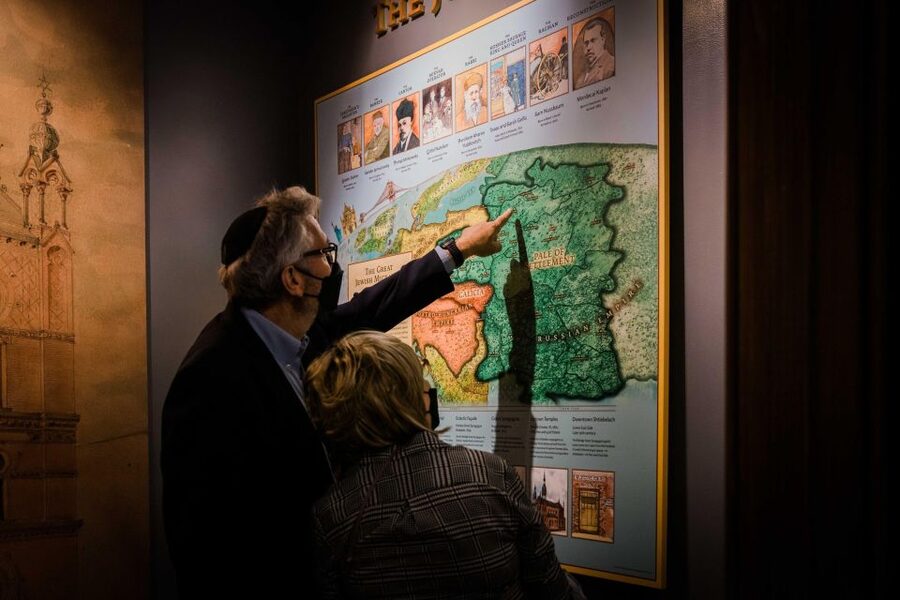
You begin at the main entrance, located at the bottom of the left-hand downward staircase. From there, the self-guided visit lets you set your own pace. You can spend a few minutes taking in the architecture or slow down with the museum material about immigration, Jewish customs, preservation, and the building’s changing fortunes.
More Museum Tours in New York City
- NYC: Empire State Building Tickets – Observatory & Museum
★ 4.7 · 25,757 reviews - New York City: American Museum of Natural History Ticket
★ 4.5 · 15,447 reviews - NYC: Museum of Modern Art (MoMA) Entry Ticket
★ 4.6 · 12,540 reviews
Moorish Revival details that reward looking up
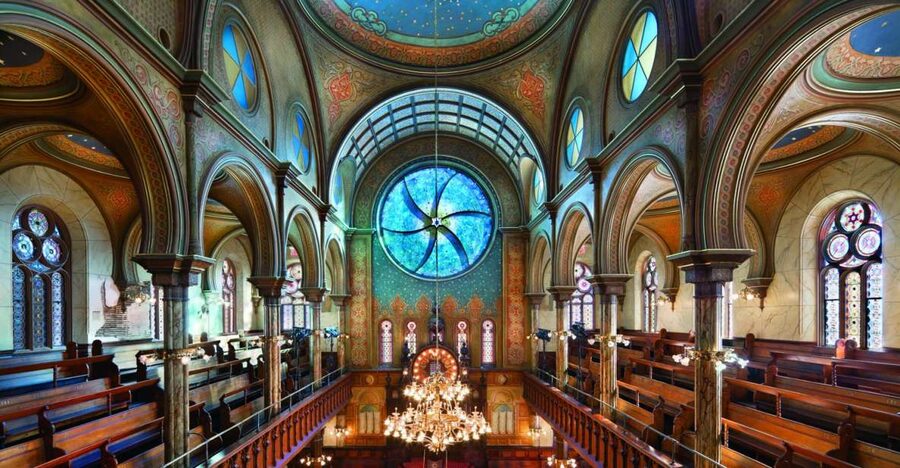
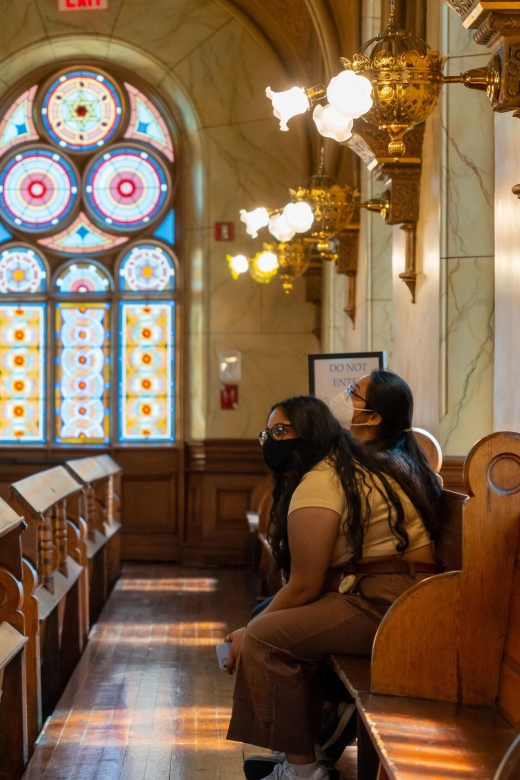
The synagogue’s design is one of the main reasons to visit. Its Moorish Revival style gives the interior an appearance different from the more familiar European Gothic churches and classical synagogues found elsewhere in the city.
Take your time with the shapes and ornament. The building was designed to be impressive, and it still delivers that first visual hit when you enter. The architecture is not a side feature added around the museum displays. It is the central object.
The 60 historic stained glass windows add color and detail. They are worth viewing from different parts of the interior, since the effect changes as you move around the room. The windows also help you appreciate the scale of the restoration. Saving a building like this requires attention to many small elements, not just a repaired facade.
You may find that the self-guided format works well here. A fixed tour can rush you past architectural details while the guide keeps to a schedule. At Eldridge Street, you can pause, look upward, and return to a feature that caught your eye. The tradeoff is that you need to supply your own rhythm and attention.
The Lower East Side through Jewish immigrant life
The museum uses the synagogue to explain more than construction and decoration. You learn about Jewish immigrant life at the turn of the 20th century, including the traditions and customs that shaped the community.
This is useful context because the building can otherwise seem like an isolated work of architecture. The exhibits connect it to the people who worshipped there and to the neighborhood around it. The synagogue was a house of worship, but it also offered a place to build community in a new country.
The experience also presents immigration as a long process rather than a single arrival story. Families crossed the Atlantic, made homes in crowded surroundings, and tried to preserve familiar customs while adjusting to American life. The synagogue’s size and care suggest that these residents were not simply passing through. They were laying down roots.
I would give the exhibits enough time to read rather than treating the building as a quick photo stop. The entire visit is designed to take about an hour, and that is enough time for a focused look. If you read every panel slowly, you may want to stay longer or accept that you will not study every detail.
From neglect to a careful restoration
The synagogue’s later story gives the visit a second act. Strict immigration quotas in the 1920s changed the neighborhood and reduced the flow of new arrivals. Over time, the building was nearly lost to neglect.
The museum’s restoration took 20 years and cost $20 million. That scale of work tells you how close the building came to disappearing and how much effort went into returning it to public use.
This part of the visit is especially valuable for anyone interested in preservation. You can see the building not only as a surviving historic place, but also as a rescued one. Its current condition was not automatic. It required long-term planning, money, skilled work, and a decision that this piece of Lower East Side history deserved another life.
The restoration story also keeps the experience from becoming too sentimental. The synagogue was not frozen in its original period. It went through decline, changed use, and renewal. The museum shows how historic places can be protected without pretending that time has not passed.
A few more museum visits around New York City worth comparing
- Istanbul: Topkapi Palace & Harem Museum Ticket & Audio Guide
★ 4.1 · 3,977 reviews - Paris: Orsay Museum Entry Ticket and Digital Audio Guide App
★ 4.4 · 3,170 reviews - Florence: Uffizi Gallery Timed Entry Ticket & Audio Guide
★ 4.2 · 2,794 reviews - Athens: Acropolis Museum Ticket with optional Audio Guide
★ 4.4 · 2,652 reviews
Historic windows meet modern art
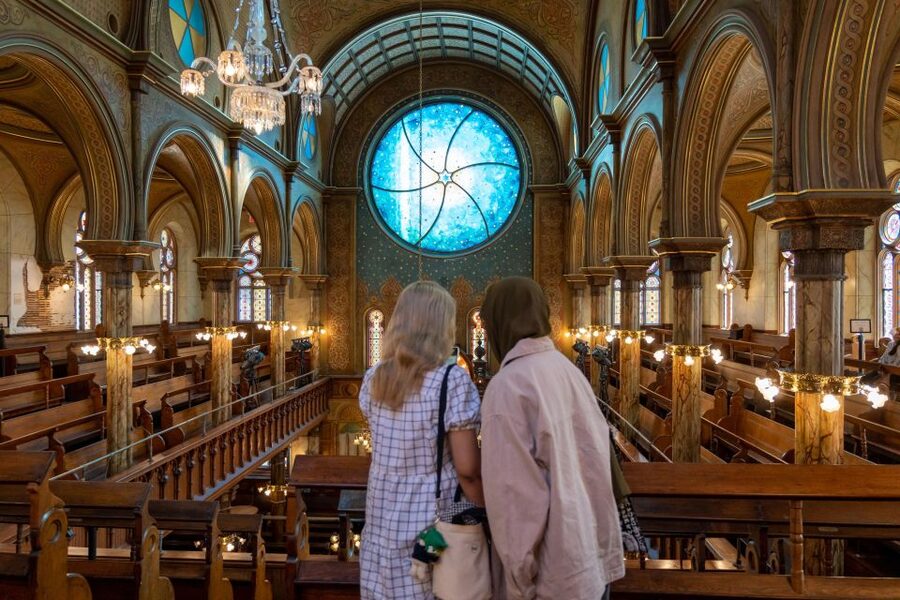
One of the more interesting features is the modern window created by artists Kiki Smith and Deborah Gans. It gives the museum a contemporary voice within a building associated with the late 19th century.
That contrast is worth considering. A museum devoted only to the past can feel sealed off from present life. The modern window suggests that the building remains a place where artists and the public can think about faith, community, memory, and identity now.
The newer work also gives you a useful visual pause. After looking at 60 historic stained glass windows and absorbing the synagogue’s original design, the contemporary installation asks you to compare old and new approaches to light, color, and meaning.
You do not need an art background to appreciate the addition. Simply notice how it changes the conversation between the restored interior and present-day creative work. For some visitors, this will be a highlight. If you came mainly for the 1887 architecture, it is still an important reminder that the museum is not only preserving the past.
What the one-hour self-guided format feels like
Plan on roughly one hour, though the flexible format lets you shorten or extend the visit. There is no need to keep up with a group, and you can focus on the displays that matter most to you.
The host or greeter is English-speaking, while the self-guided tour is listed as available in English, Spanish, and Chinese. That makes the experience more approachable for visitors who prefer to read or follow material in one of those languages.
The main limitation is the absence of a scheduled guide leading the interpretation. If you like asking questions as you go, or if you want someone to point out details you might miss, this may feel a little thin. One visitor specifically found the building attractive but wanted more guidance. That is a fair criticism of any self-guided museum visit.
On the other hand, independent visitors may prefer the quiet. You can linger with the stained glass, move through the permanent collection, and spend less time on material you already understand. The format is also easy to fit into a full Lower East Side day.
Why $7 is a strong value
At $7 per person, this is one of the easier cultural choices to justify in New York. Admission includes the museum, the historic synagogue, the temporary exhibit, and the permanent collection.
The value comes from the combination. You are not paying only to enter an old building, and you are not visiting a standard gallery with the architecture as a backdrop. The admission gives you a restored National Historic Landmark, a substantial immigration story, historic windows, current artwork, and preservation material.
The modest price also reduces the pressure to make the visit fill half a day. You can spend an hour here and continue exploring the Lower East Side. If you are already nearby, this is a particularly sensible stop.
I would not book it expecting a large-scale attraction with a packed program of activities. The experience is focused, quiet, and reflective. Its value is best measured by the quality of the setting and the story it tells, not by the number of rooms or exhibits.
Practical details before you arrive
The museum is wheelchair accessible, with an elevator reaching all four floors. That is important in a historic building, where stairs might otherwise limit how much you can see.
Personal, noncommercial photography is welcome, but flash photography and professional cameras are not allowed. Food and drinks other than water are not permitted, and strollers and backpacks are searched and checked in on arrival. Bikes and scooters are also not allowed.
These rules can affect how you plan your visit. Keep your belongings manageable, bring only water if needed, and do not count on carrying a large backpack through the museum. If photography matters to you, use a phone or personal camera without flash.
You can cancel up to 24 hours in advance for a full refund, and the reserve-now, pay-later option keeps your plans flexible. Starting times vary, so check availability when you book.
Who will appreciate this museum most
I recommend the experience to anyone interested in New York immigration, Jewish American history, historic preservation, or architecture. It also suits visitors who want a quieter cultural stop away from the city’s larger attractions.
Families may find the building and windows appealing, though the amount of reading will determine how long younger children stay engaged. Architecture fans should allow time to look carefully rather than rushing through. Photographers will find plenty to notice, but professional equipment and flash are restricted.
This is also a good choice for people who prefer independence. You control the pace, and the one-hour length is easy to fit between other plans. If you want a highly social tour with a guide telling stories in real time, choose another format if one is available.
The museum’s strongest feature is its welcome. Staff take clear pride in the restored synagogue, and that care helps the visit feel personal even without a formal guide. You are entering a place that was almost lost and is now being used to keep its stories in public view.
Should you book the Museum at Eldridge Street?
Yes, if you want a short, low-cost visit with real historical and architectural substance. The 1887 synagogue, Moorish details, stained glass, immigration story, and modern window give you several good reasons to go, especially at $7.
Book it with the right expectations. This is a self-guided museum visit, not a guided performance. Read the material, look carefully, and give the building time to speak for itself. If you need a guide to explain every detail, you may find the experience too quiet. If you value freedom, atmosphere, and an honest look at Lower East Side Jewish immigrant life, it is an excellent downtown stop.
FAQ
How long does the self-guided tour take?
The stated duration is one hour. You explore the museum at your own pace, so the exact length can vary.
How much does admission cost?
Admission costs $7 per person.
What is included with admission?
Admission includes entry to the Museum at Eldridge Street and the Eldridge Street Synagogue, plus the temporary exhibit and permanent collection.
Is the tour guided?
It is a self-guided museum tour. The host or greeter speaks English, and the self-guided tour is available in English, Spanish, and Chinese.
What will I see inside the synagogue?
You will see Moorish Revival architecture, 60 historic stained glass windows, exhibits about Jewish immigrant life and Lower East Side history, preservation material, and a modern window by Kiki Smith and Deborah Gans.
Is the museum wheelchair accessible?
Yes. The museum is fully accessible, and an elevator reaches all four floors.
Can I take photographs?
Personal, noncommercial photography is welcome. Flash photography and professional cameras are not allowed.
Are backpacks, food, and strollers allowed?
Food and drinks other than water are not allowed. Strollers and backpacks are searched and checked in on arrival. Bikes and scooters are also not allowed.
Can I cancel my booking?
Yes. You can cancel up to 24 hours in advance for a full refund. Reserve-now, pay-later booking is also available.
Just added around New York City
- The Met Museum Guided Tour with Skip-the-Line Entry★ 4.4 · 149 reviews
- NYC: Entry Ticket To The Banksy Museum★ 4.5 · 89 reviews
- New York City: The Banksy Museum Entry Ticket★ 4.6 · 51 reviews
- New York: Private Tour of The Metropolitan Museum of Art★ 4.9 · 39 reviews
- NYC: Museum of Sex Entry Ticket★ 4.2 · 179 reviews
- NYC: Museum of the Moving Image Flexible Ticket★ 4.6 · 95 reviews
- NYC: Whitney Museum Ticket★ 4.2 · 315 reviews
- “The Met” Metropolitan Museum of Art Exclusive Guided Tour★ 4.9 · 116 reviews
Museum Tours in New York City, compared.

9/11 Memorial, Ground Zero Tour with Optional 9/11 Museum Ticket
Read our review →

All-Access 9/11: Ground Zero Tour, Memorial and Museum, One World Observatory
Read our review →

Browse the lists this tour appears in