
Review · NEW YORK CITY
NYC: Intrepid Museum Entry Ticket
The most remarkable thing here is the chance to walk through a genuine World War II aircraft carrier, then stand beneath the Enterprise space shuttle and step inside a Cold War-era submarine on the Hudson River. The Intrepid served in World War II, the Cold War, and Vietnam, surviving five kamikaze attacks and a torpedo strike.
I like the way the museum connects huge machines with the people who operated them, especially in the restored mess decks, berthing areas, and combat information center. I also like the mix of aircraft, space history, and hands-on displays, which gives families and history fans plenty to follow. The main drawback is time: two hours feels rushed, and some areas require stairs, ladders, long walks, or standing.
Key points to know
- Four decks of a real aircraft carrier: See the hangar, flight, gallery, and third decks of USS Intrepid.
- Enterprise is the visual star: The Space Shuttle Pavilion puts NASA’s prototype orbiter within easy view.
- The Growler submarine is included: Expect narrow passageways and possible queues for this popular section.
- Twenty-eight restored aircraft: The flight deck includes military aircraft from several eras, including one described as the world’s fastest military jet.
- Apollo history adds a space-age second act: See a recreation of the Apollo 11 command module, moon rocks, and lunar landing gear.
- Book an early entry time: A late afternoon visit can leave you with too little time before closing.
Why the Intrepid works as a New York museum visit

New York has plenty of polished museums, but the Intrepid feels different because the building itself is part of the story. You are not looking at a ship model or a photograph of a carrier. You are walking on the decks of a vessel launched in 1943 and sent into combat.
That physical scale matters. The flight deck opens to the river and skyline, while the hangar deck shows the cramped, industrial side of naval life. Then the museum shifts from warships to spaceflight, with Enterprise displayed inside its own pavilion. The result is a full day of machines, military history, science, and personal stories.
At $38 per person, the ticket is not a throwaway attraction, but it offers a lot for the price by New York standards. Admission covers the carrier, Space Shuttle Pavilion, permanent exhibits, and submarine access. You also receive priority access through the timed ticket or advance purchase line, though that does not always mean walking straight inside. A wait of up to 30 minutes can still occur.
I would choose this museum if you have a strong interest in aircraft, engineering, military history, space exploration, or unusual New York sights. If your group prefers paintings, food, or classic Manhattan landmarks, this may be less compelling.
More Museum Tours in New York City
- NYC: Empire State Building Tickets – Observatory & Museum
★ 4.7 · 25,757 reviews - New York City: American Museum of Natural History Ticket
★ 4.5 · 15,447 reviews - NYC: Museum of Modern Art (MoMA) Entry Ticket
★ 4.6 · 12,540 reviews
Start below deck on the Hangar Deck

The Hangar Deck is the best place to get your bearings. It is the main indoor exhibit area and explains both the hardware of Intrepid and the people who lived and worked aboard her.
The displays cover the carrier’s service in World War II, the Cold War, and Vietnam. You get a clearer sense of how a warship changes over time, rather than seeing only a single frozen moment. The exhibits also help explain what the aircraft carrier was for, how aircraft operations worked, and what daily life demanded from the crew.
The Kamikaze: Day of Darkness, Day of Light exhibit deserves special attention. It examines the kamikaze attacks and the human cost of the ship’s wartime service. This section adds needed context to the aircraft and steel around you. Without it, the carrier could feel like a collection of impressive machinery. With it, the ship becomes a place shaped by fear, discipline, damage, and survival.
Look for the interactive displays and audio-visual material throughout the museum. They help younger visitors stay engaged, while the written material gives adults more context. You can also find QR codes that link to extra details online, with no account required.
Walk the flight deck among 28 aircraft
The Flight Deck is the museum’s biggest visual payoff. More than two dozen restored aircraft are arranged across the deck, where you can see their size, wings, engines, and cockpit shapes without a glass case getting in the way.
The collection covers military aircraft from different periods and countries. You will see examples of naval aviation and some exceptionally fast aircraft. One of the highlights is described as the world’s fastest military jet, and a former SR-71 pilot has praised the chance to see aircraft of this type preserved in person.
The open deck also gives you views across the Hudson River and toward Manhattan. On a warm, sunny day, though, the deck can become tiring. There is limited shade in some broad areas, and you may spend a long stretch walking or standing. Bring water and plan a slower pace if the weather is hot.
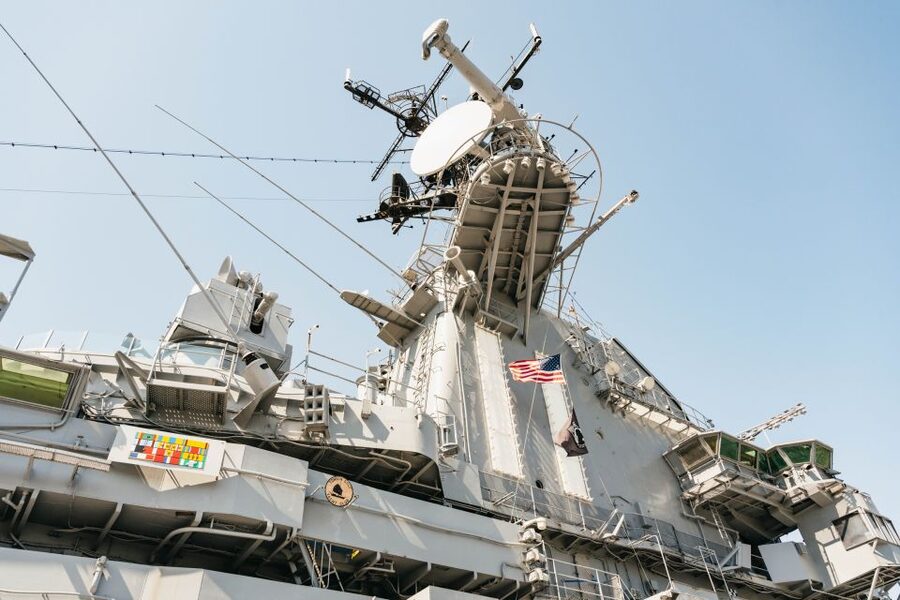
The Restoration Tent offers a look at aircraft preservation rather than just finished displays. It is a useful reminder that these planes need constant care. You may also see Intrepid’s island and bridges from this level, giving you a sense of how the ship’s command structure rose above the flight operations.
For families, the flight deck is usually easier to enjoy than a room packed with labels. Children can see the aircraft from several angles, while older visitors can focus on design, speed, and military use.
Climb into the carrier’s working spaces

The Gallery Deck sits between the flight and hangar decks. This is where the museum moves from large public spaces into the ship’s operating areas.
You can see the combat information center, the squadron ready room, and marine berthing. These sections explain how people prepared for missions and worked together under pressure. The displays are less immediately dramatic than a jet or spacecraft, but they provide the human scale that makes the carrier easier to understand.
The bridge and captain’s areas are another popular stop. Staff in these sections can add practical details about how the ship operated. The museum also has veterans and history experts on site at times, and a conversation with someone who served can make the exhibits feel less distant.
The route is not always perfectly obvious. Some sections are better signposted than others, so take a moment to check the map and follow the marked path rather than assuming you have seen every deck. Stairs and ladders are part of the experience, not just an occasional inconvenience.
A few more museum visits around New York City worth comparing
- 9/11 Memorial, Ground Zero Tour with Optional 9/11 Museum Ticket
★ 5.0 · 6,381 reviews - 9/11 Memorial Museum Admission Ticket
★ 4.5 · 6,376 reviews - NYC: Museum of Ice Cream Entry Ticket
★ 4.3 · 2,619 reviews - NYC: Guggenheim Museum Entry Ticket
★ 4.4 · 2,201 reviews
See how sailors lived on the Third Deck

The Third Deck focuses on daily shipboard life. You can visit the restored galley, enlisted mess, and crew berthing areas.
This is one of the most useful sections for understanding the Intrepid as a working community. The flight deck shows what the ship did from the outside. The mess and berthing spaces show what thousands of people needed day after day: food, sleep, storage, routine, and a little privacy in a crowded steel environment.
Access is more physical here than in a conventional museum. You may need to climb stairs or ladders, and the walking adds up over the course of the visit. If you have limited mobility, check carefully before booking. The museum is described as wheelchair accessible overall, but some areas are not accessible because of stairs and ladders.
Stand beneath Enterprise in the Space Shuttle Pavilion

The Space Shuttle Pavilion is likely to be the most memorable stop for many people. Enterprise was NASA’s prototype orbiter and helped pave the way for the shuttle program.
Seeing the spacecraft in person makes its size and design easier to grasp. The pavilion combines the orbiter with photographs, films, audio, original artifacts, and exhibit zones about the shuttle era. This gives you more than a photo opportunity. You can follow how NASA tested the shuttle concept and how the program developed.
The space shuttle section works well for mixed groups because it is visually strong but also easy to explore at your own pace. A child may focus on the cockpit and spacecraft shape, while an adult can spend time with the engineering and program history.
Apollo: When We Went to the Moon adds another layer to the space exhibits. You can see a recreation of the Apollo 11 command module, along with moon rocks and lunar landing gear. The exhibit covers both the achievements and the difficulties of the Apollo missions, then links that era to plans for future lunar and Mars exploration.
If space history is your main reason for visiting, give this pavilion plenty of time. It is not a quick add-on at the back of the ship.
Make time for the Growler submarine

The Cold War-era USS Growler is one of the most distinctive parts of the visit. Submarine access is included with the museum admission, and you can walk through its tight interior to see how a crew operated below the surface.
The submarine feels very different from the carrier. The Intrepid is broad and open in places, while Growler forces you through narrow passages and compact work areas. That contrast is the point. You get a direct sense of how limited space was aboard a missile submarine.
Growler can develop a long queue, particularly when the museum is busy. I would visit it early rather than leaving it until the end. This is one of the best practical tips for planning the route, especially if you have only two or three hours.
The tight spaces may not suit everyone, and the submarine is not an easy place for anyone who dislikes confined areas. Still, it is one of the museum’s most memorable sections and a strong reason to allow more than a quick visit.
Where Concorde fits into the visit

The museum complex also includes Concorde, and the aircraft is a major draw for many aviation fans. However, access may require an additional fee rather than being included in the standard $38 ticket.
Check the current admission details before you arrive if Concorde is important to you. The main ticket includes the carrier, Enterprise pavilion, and Growler, but the supplied information does not present Concorde as part of the standard inclusions. That distinction can affect the value calculation for your group.
How long should you plan?

The official guidance is to allow two to three hours. I would treat that as the minimum for a focused visit, not a generous schedule.
Two hours can work if you move steadily and concentrate on the carrier, Enterprise, and a few major exhibits. It is not enough if you want to read much of the history, wait for Growler, explore all four decks, and spend time in Apollo.
A late start can cause problems. The museum’s last entry is one hour before closing, and a two-hour visit late in the day may leave you hurrying through the final sections. An early entry time gives you a better chance to see the submarine before the queue grows and leaves room for an unplanned conversation with a veteran or staff member.
For a relaxed visit, I would set aside most of a day, especially if you are visiting with children or anyone who walks slowly. The museum is extensive, and many people find they need more time than expected.
Who will enjoy this museum most?

The Intrepid is a particularly good choice for:
- Families with school-age children and teenagers
- People interested in military or maritime history
- Aviation fans who want to see aircraft at close range
- Anyone fascinated by NASA, Apollo, or the space shuttle program
- Visitors who enjoy museums where the building is part of the exhibit
- Former service members and anyone interested in the experience of military life
It is less suitable if you want a quiet, compact museum visit. The ship requires walking, standing, stairs, and occasional ladder access. Children under 16 must be accompanied by an adult, and unaccompanied minors are not allowed.
The museum is wheelchair accessible in some areas, but not all. Because certain decks and exhibits require stairs or ladders, wheelchair users should not assume the entire route is accessible.
Booking, entry, and useful planning details
Your meeting point is at 1 Intrepid Square, at 12th Avenue and 48th Street. Show the QR-coded ticket at the Priority Access, Timed Ticket or Advance Purchase line at the box office.
Large bags and luggage are not allowed, so do not plan to arrive with airport baggage. Free WiFi is included. Veterans with valid identification receive free admission, which can change the value for a military family.
The ticket is valid for one day, and you can cancel up to 24 hours in advance for a full refund. A reserve now and pay later option is also available, which helps if your New York schedule is still shifting.
Wear comfortable shoes. You will cross broad decks, move between levels, and spend time standing inside crowded exhibits. On hot days, take water breaks and remember that the flight deck may offer less shade than you expect.
Should you book the Intrepid Museum?
I would book it if you want a substantial New York attraction with real aircraft, a historic carrier, a submarine, and major space hardware in one place. The combination is unusual, and the $38 price is fair when you give it at least several hours.
Book early in the day, visit Growler before the queue builds, and save enough time for Enterprise and Apollo. If you have only a short window, choose a different attraction or accept that you will see only the highlights.
This is not a must-see for every New York itinerary. It is, however, an excellent choice for families, engineers, history fans, aviation enthusiasts, and anyone who wants to step into a working piece of American military and space history rather than simply look at it from behind glass.
FAQ
Where is the Intrepid Museum located?
The museum is at 1 Intrepid Square, at 12th Avenue and 48th Street in New York.
How much does admission cost?
The listed price is $38 per person.
How long is the ticket valid?
The ticket is valid for one day.
How much time should I allow?
Allow two to three hours at minimum. A longer visit is better if you want to see every major section without rushing.
What does the ticket include?
Admission includes access to the USS Intrepid aircraft carrier, the Space Shuttle Pavilion, the Story of Intrepid exhibit, Kamikaze: Day of Darkness, Day of Light, Growler submarine access, and free WiFi.
Is Enterprise included?
Yes. The Space Shuttle Pavilion, which showcases Enterprise, is included.
Is the submarine included?
Yes. Access to the Cold War-era Growler submarine is included with museum admission.
Is Concorde included?
The supplied ticket information does not list Concorde among the included attractions. Access may require an additional fee, so check the current conditions before booking.
Can wheelchair users access the whole museum?
No. Some areas require stairs and ladders and are not wheelchair accessible, even though the museum is accessible in other areas.
Can children visit alone?
No. Children under 16 must be accompanied by an adult, and unaccompanied minors are not allowed.
Just added around New York City
- The Met Museum Guided Tour with Skip-the-Line Entry★ 4.4 · 149 reviews
- New York City: The Banksy Museum Entry Ticket★ 4.6 · 51 reviews
- NYC: Entry Ticket To The Banksy Museum★ 4.5 · 89 reviews
- Self-Guided Tour of the Museum at Eldridge Street★ 4.3 · 13 reviews
- New York: Private Tour of The Metropolitan Museum of Art★ 4.9 · 39 reviews
- NYC: Museum of Sex Entry Ticket★ 4.2 · 179 reviews
- NYC: Museum of the Moving Image Flexible Ticket★ 4.6 · 95 reviews
- NYC: Whitney Museum Ticket★ 4.2 · 315 reviews
Museum Tours in New York City, compared.



9/11 Memorial, Ground Zero Tour with Optional 9/11 Museum Ticket
Read our review →

All-Access 9/11: Ground Zero Tour, Memorial and Museum, One World Observatory
Read our review →


American Museum of Natural History Admission Ticket
Read our review →Browse the lists this tour appears in