
Review · NEW YORK CITY
NYC: Museum of Modern Art (MoMA) Entry Ticket
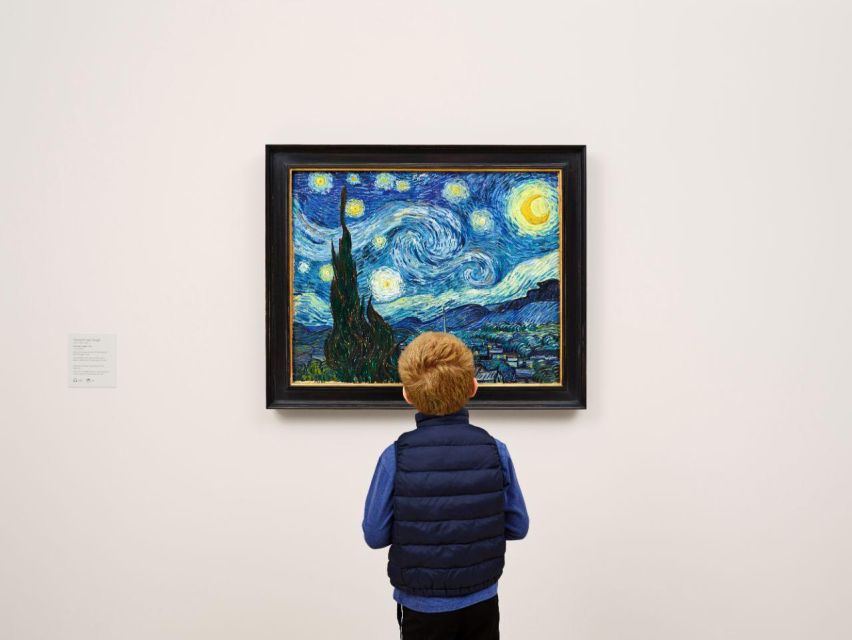
New York’s Museum of Modern Art puts an astonishing number of famous works under one roof. Van Gogh’s The Starry Night, Monet’s Water Lilies, Picasso’s Les Demoiselles d’Avignon, Matisse’s Dance (I), and Warhol’s Campbell’s Soup Cans are only the headline acts. The six-floor collection also moves into film, design, photography, performance, and art made in our own time.
I like the easy entry and the freedom to set your own pace. I also like the free audio guide, which works on your phone in several languages, and the fact that your ticket includes special exhibitions, daily films, and art-making labs. The main drawback is scale: you can spend three or four hours here and still leave plenty unseen, while popular rooms can become crowded.
Key points
- Start on the fifth floor: This is the best place to begin for many of the major early modern paintings, including The Starry Night and celebrated works by Picasso, Monet, and Matisse.
- See more than paintings: MoMA’s displays include sculpture, design, photography, film, and contemporary art across six floors.
- Use your own phone: Download the free audio guide before or during your visit, and bring charged headphones.
- Allow at least two to three hours: Four hours is better if you want special exhibitions, films, the sculpture garden, and a meal.
- Friday evening runs later: The museum is open until 8:30 PM on Fridays, with the last entry one hour before closing.
- Keep the ticket after your visit: Admission also includes entry to MoMA PS1 for up to 14 days.
Why MoMA belongs on your Midtown plan
MoMA is not simply a room full of famous paintings. It tells the story of how artists broke old rules and kept breaking new ones. You can move from late nineteenth-century European painting to Surrealism, Abstract Expressionism, Pop Art, photography, graphic design, film, and current work in a single building.
That range is the museum’s great strength, but it can also make the visit feel like too much. I recommend choosing a few priorities before you arrive. If you try to give equal attention to every work, your eyes and feet will give up first.
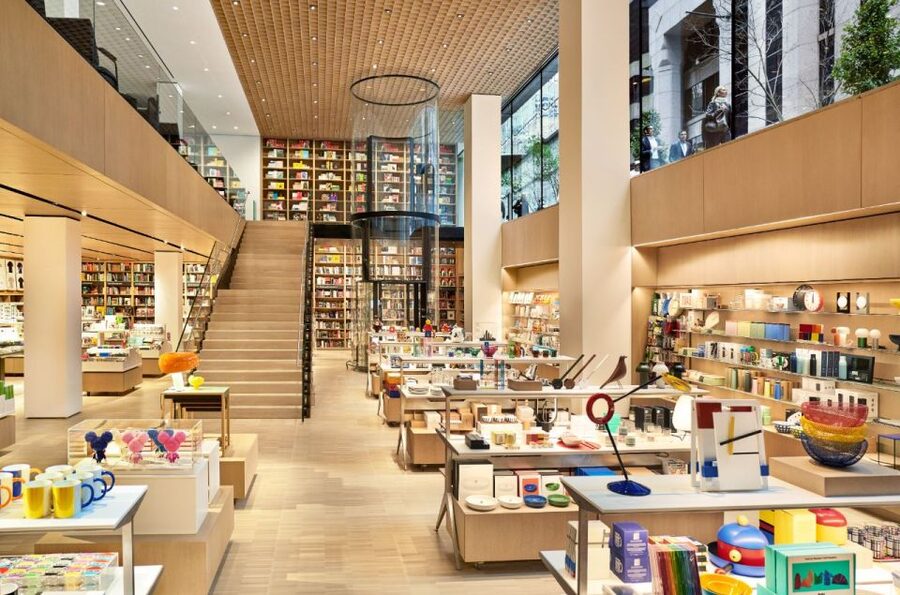
The building itself has a clean, airy feel, with generous gallery spaces and places to pause. A terrace cafe offers a break, while the sculpture garden gives you a quieter outdoor stop. You can also shop at the MoMA Design Store for books, jewelry, furniture, clothing, and design objects. Three restaurants are available, including The Modern, a two-Michelin-Star restaurant, though you do not need a fine-dining meal to enjoy the museum.
More Museum Tours in New York City
- NYC: Empire State Building Tickets – Observatory & Museum
★ 4.7 · 25,757 reviews - New York City: American Museum of Natural History Ticket
★ 4.5 · 15,447 reviews - 9/11 Memorial, Ground Zero Tour with Optional 9/11 Museum Ticket
★ 5.0 · 6,381 reviews
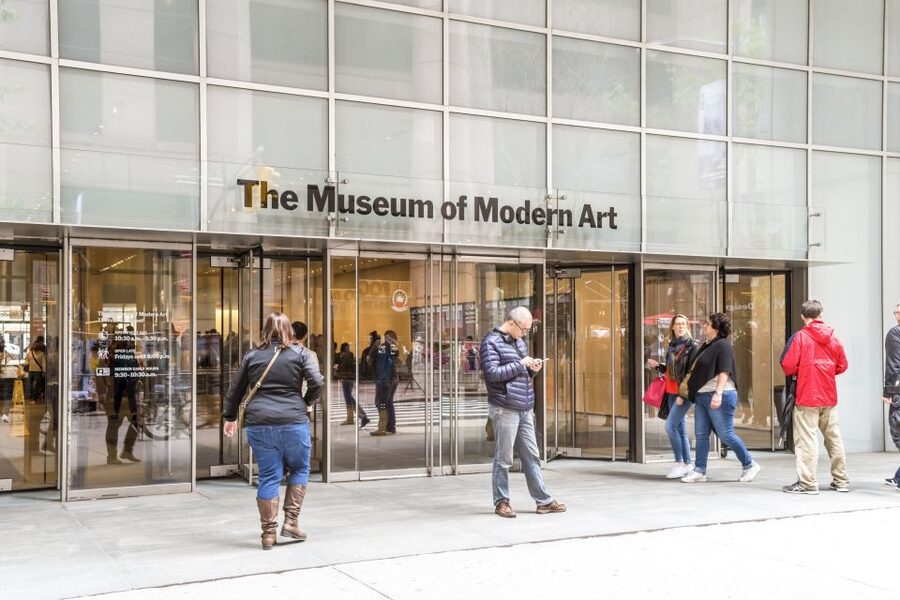
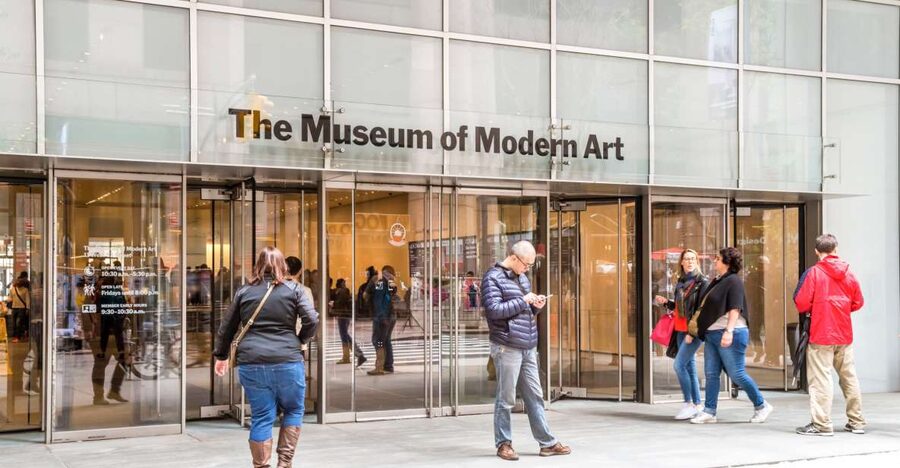
Entering at 11 West 53rd Street
Use the entrance at 11 West 53rd Street. With a barcoded voucher, you can go directly to museum staff at one of the gallery entry points rather than stopping at the ticket desk. That is a small detail, but it matters in Midtown, where every saved minute helps.
The ticket is valid for one day, and admission is timed around the museum’s opening hours. MoMA operates daily from 10:30 AM to 5:30 PM, with Friday hours extending to 8:30 PM. Last entry is one hour before closing, so do not plan to arrive at the last moment and expect to see the whole collection.
The museum is wheelchair accessible. Food and drinks are not allowed in the galleries, and large bags or luggage are not permitted. Bring a charged smartphone and headphones if you want to use the audio guide. Video recording is not allowed.
Start on the fifth floor, then work downward
A useful route is to begin on the fifth floor and continue down. This gives you a broadly chronological path through some of the best-known parts of the collection, and it also keeps your energy focused on the major paintings early in the visit.
The fifth floor is where many people make their most memorable discoveries. Van Gogh’s The Starry Night is an obvious draw, but it is only one part of the experience. Picasso, Monet, Matisse, Gauguin, and other major names appear in this part of the museum, with paintings that shaped the direction of modern art.
Seeing these works in person changes their scale and surface. Reproductions flatten brushwork and often make paintings feel smaller than they are. In the galleries, you can notice the texture, color choices, and physical presence that do not come through on a screen.
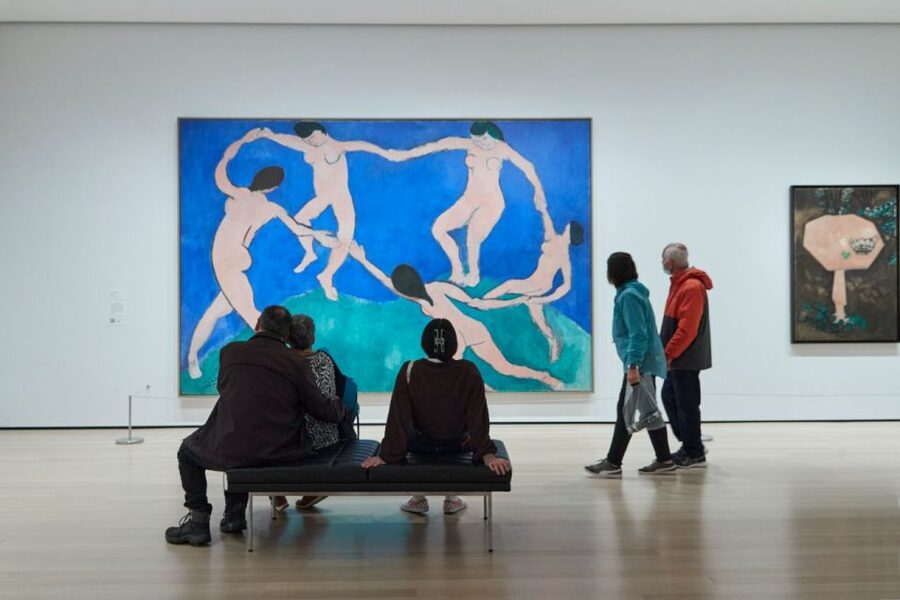
Matisse’s Dance (I) is another major stop. Monet’s Water Lilies offers a different mood, with a softer focus and a quieter pace. I would not rush these rooms. Give yourself time to look first, then read the label or listen to the audio guide.
Picasso, Surrealism, and the art of looking twice
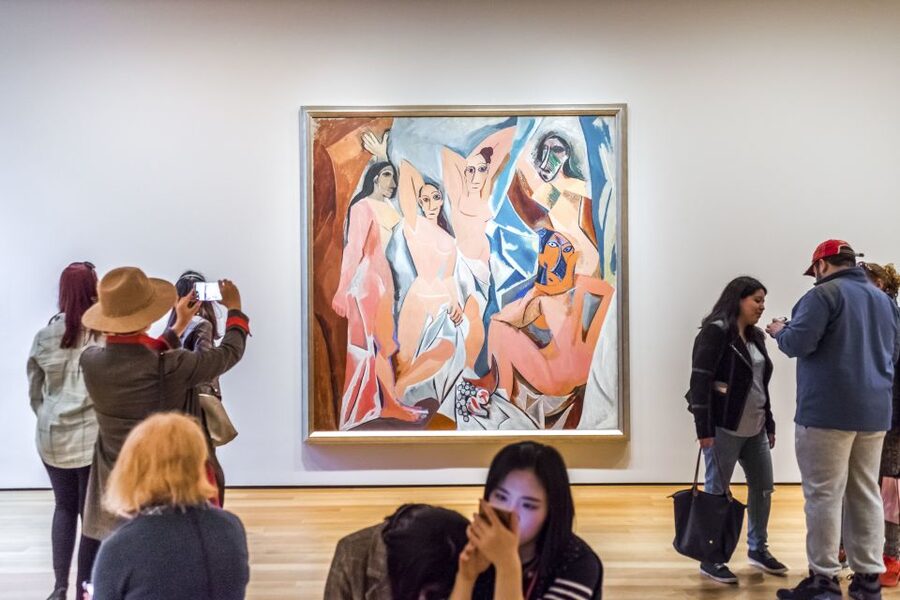
MoMA’s Picasso holdings are a major reason to visit. Les Demoiselles d’Avignon is one of the essential works, and there are other Picasso paintings to find as you move through the collection. You might also encounter works by Dalí, Gauguin, Magritte, and Kahlo, depending on what is on display.
This is where the museum helps you understand modern art as a series of arguments. Artists were not merely trying to make pictures look unusual. They were testing ideas about perspective, dreams, identity, memory, and what a painting could be.
If modern art is not usually your thing, do not feel pressured to like everything. I find it more useful to ask what an artist is changing. Is the work altering the way you see a person, a room, a body, or an everyday object? That question can make difficult pieces more approachable.
The free audio guide helps with context, especially if you want more than a name and date. It is available in Spanish, Chinese, English, French, German, Italian, Japanese, and Portuguese. Download it through the MoMA app or mobile site, and bring headphones. The museum has free WiFi, but it is wise to set up the guide before you are standing in front of a popular masterpiece.
More modern and contemporary art in New York City:
- The Museum of Modern Art Admission Ticket
★ 4.5 · 735 reviews - Moco Museum Barcelona: Modern & Contemporary Art
★ 4.6 · 3,229 reviews - Stedelijk Museum for Modern and Contemporary Art Ticket
★ 4.4 · 1,753 reviews - Official tickets: Moco Modern & Contemporary Art Museum
★ 4.5 · 1,157 reviews
The fourth floor and Warhol’s Campbell’s Soup Cans
Continue to the fourth floor for later twentieth-century work, including Andy Warhol’s Campbell’s Soup Cans. The painting is instantly familiar, yet it is worth seeing in person because the repetition, scale, and presentation work differently than they do in photographs.
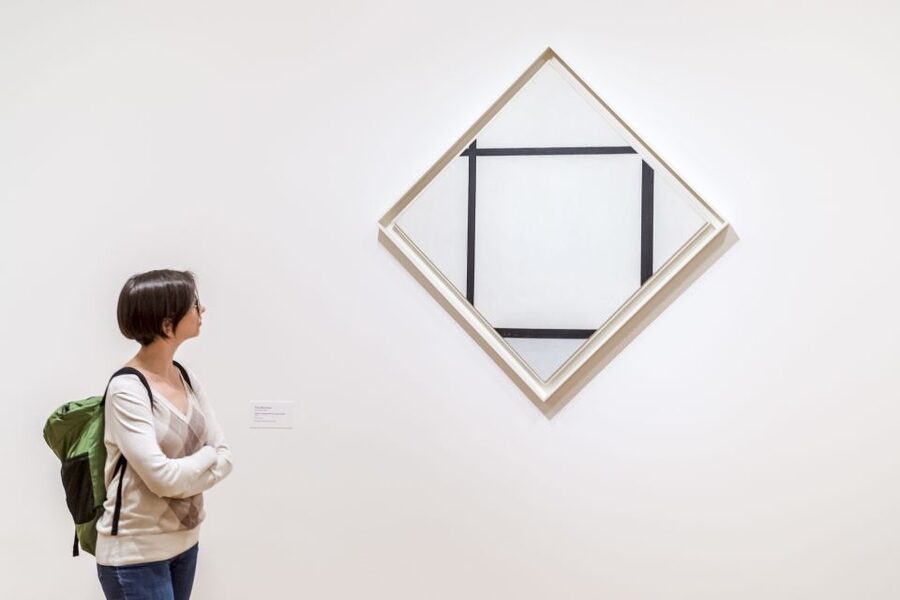
This floor is a good place to compare artists who turned ordinary commercial images into subjects for serious art. You will find the bold, direct language of Pop Art alongside other major developments of the period. Jackson Pollock is another important name to look for.
The museum’s modern art collection is strongest when you compare nearby works rather than treating each one as an isolated attraction. A Picasso may make you question shape and viewpoint. A Warhol may make you question originality and mass production. A Pollock may make you question gesture, movement, and the act of painting itself.
The galleries can get busy around the most famous pieces. If you want a clearer view, visit early in the day or use the Friday evening hours with care. Later hours can be useful, but a popular evening period may mean more people around the major works.
Contemporary galleries and special exhibitions
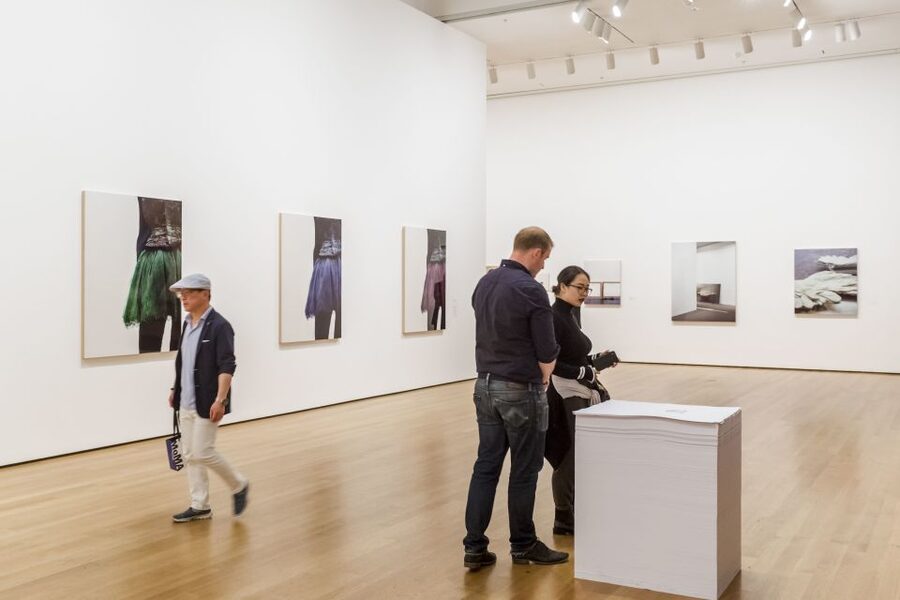
The lower floors bring you closer to contemporary art, where the answers are less familiar and the subjects may change more often. Artists represented in the collection include Elizabeth Murray, Cindy Sherman, and Ai Weiwei, among many others.
This section will not appeal equally to everyone. Some people connect more quickly with the older masterpieces, while others prefer work that addresses current life and new materials. I like leaving time for both. The museum is at its best when you allow the familiar and unfamiliar works to sit side by side.
Special exhibitions are included with admission. Exhibitions listed for this experience include Crafting Modernity: Design in Latin America 1940-1980 and Joan Jonas: Good Night Good Morning, with dates set for particular seasons. Planned exhibitions include Kathe Kollwitz and LaToya Ruby Frazier. Exhibition schedules change, so check the current program before you go if one artist is your main reason for visiting.
Do not assume every work in MoMA’s collection will be on view. Large museums rotate displays, lend works, and change gallery layouts. Plan around the pieces you most want to see, but keep a little room for surprises.
Film, design, and the sculpture garden
MoMA’s film program is easy to overlook if you arrive focused only on paintings. Daily film screenings are included with admission, and art-making labs are also part of the ticket. These extras make the museum more useful for a full day, especially if you are visiting with children or need a break from gallery walking.
The collection also covers design and other media. That broad approach explains why MoMA feels different from a museum devoted only to painting and sculpture. You can see how ideas travel between visual art, objects, photography, film, and performance.
The outdoor sculpture garden is a good place to slow down. One practical route is to finish there after working downward from the upper galleries. It gives you fresh air and a moment to sort through the many images you have just seen.
Families are welcome, and children age 16 and under enter free. The art-making labs and child-friendly explanations can make the visit easier for younger visitors. I would still avoid trying to cover every room with small children. Choose a few works, take breaks, and let the museum feel manageable.
How long should you spend inside?
Two hours can cover the major highlights, but it will feel brisk. Three hours is a sensible target for the fifth and fourth floors, the main collection, and a few contemporary rooms. If you want special exhibitions, a film, the sculpture garden, and food, set aside four hours or more.
The museum’s size is both its gift and its trap. You can easily lose track of time, especially when moving between major names and lesser-known works. I suggest making a short list:
- The Starry Night
- Monet’s Water Lilies
- Matisse’s Dance (I)
- Picasso’s Les Demoiselles d’Avignon
- Warhol’s Campbell’s Soup Cans
- One special exhibition
- The sculpture garden or a film
You do not need to see every floor to have a worthwhile visit. A focused two-hour visit can be better than racing through six levels with no time to look.
Is the $30 ticket good value?
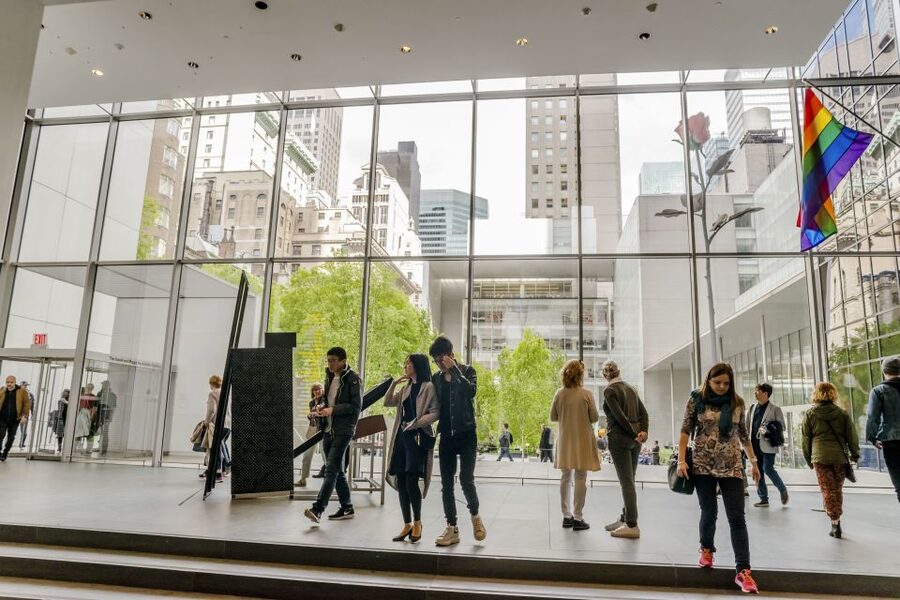
At $30 per person, this is not a casual bargain, but it is strong value if you use the museum for more than a quick photograph of The Starry Night. Your admission covers the permanent collection, special exhibitions, daily films, and art-making labs. It also includes access to MoMA PS1 for up to 14 days after your visit, which adds useful value if you have time for another museum outing.
The skip-the-ticket-desk entry makes the price easier to justify. You can present the barcode at a gallery entrance and get inside without buying a separate ticket on arrival. The flexibility to reserve now and pay later, along with free cancellation up to 24 hours in advance, is useful when your New York schedule is still changing.
If you only have an hour in Midtown, the price may feel high. If you can give MoMA two to four hours, the ticket becomes much more reasonable. The included audio guide, WiFi, films, and special exhibitions also help you get more from the admission than a simple collection-only ticket.
Practical advice for a smoother visit
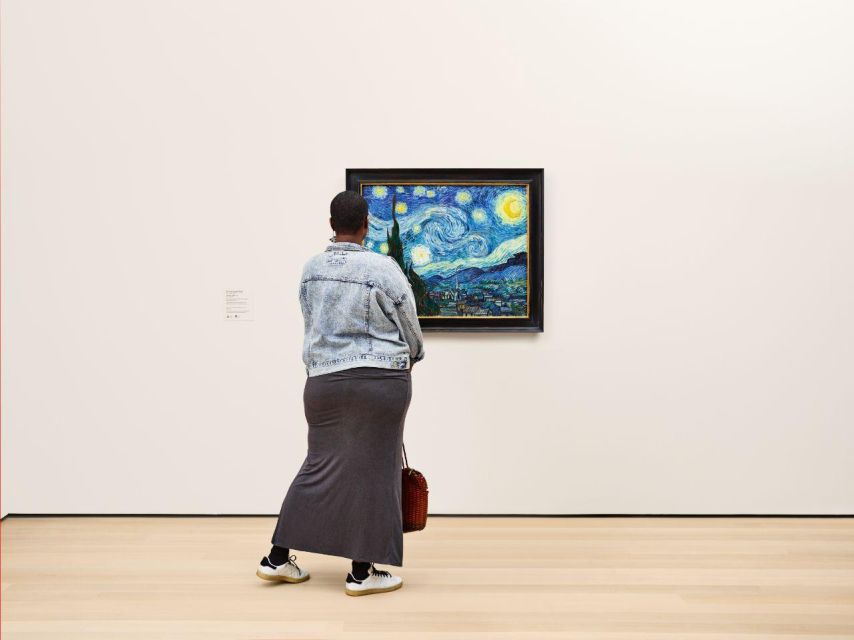
Start high and work down. The fifth-floor route is especially useful if your priorities are Van Gogh, Monet, Matisse, Picasso, and other major early modern artists.
Bring headphones and charge your phone before arrival. The audio guide is free, but phone setup can be awkward. One visitor found the QR codes unreliable, so give yourself time to try the app or mobile site before entering the busiest galleries.
Wear comfortable shoes and leave large bags behind. Food and drinks cannot enter the galleries, and luggage is not allowed. Plan your cafe or restaurant stop around the collection rather than trying to carry refreshments through the museum.
If you want fewer interruptions, avoid the busiest periods around the most famous paintings. Friday hours run later, but an evening visit can be crowded. Families should take advantage of the free admission for children 16 and under and use the art-making labs as a change of pace.
Who should book this MoMA experience?
I recommend it most strongly to first-time New York visitors who want to see major modern art without arranging a guided tour. It also suits design fans, film lovers, families, and anyone who wants a flexible museum day in Midtown.
Art specialists may prefer to check the exhibition schedule before booking, since not every collection highlight is always displayed. If you prefer classical art, some contemporary rooms may not connect with you, but the Van Gogh, Monet, Picasso, Matisse, Warhol, and Pollock works offer plenty of familiar starting points.
The ticket is less suitable if you dislike large museums or have no more than an hour to spare. In that case, you may spend most of your visit finding your way between floors. With enough time and a short plan, though, MoMA delivers an unusually broad look at modern and contemporary art.
Should you book MoMA entry?
Book it if seeing The Starry Night, Water Lilies, Dance (I), Les Demoiselles d’Avignon, or Campbell’s Soup Cans matters to you. The skip-the-desk entry, included special exhibitions, free audio guide, daily films, and MoMA PS1 access make the $30 ticket a sound choice for a planned museum visit.
I would book a morning slot for the clearest route through the famous galleries, then work downward at your own pace. If your schedule allows only a short stop, choose your must-see works in advance. MoMA rewards curiosity, but it does not reward trying to see everything at once.
FAQ
Where do I enter MoMA?
Enter at 11 West 53rd Street in Midtown Manhattan. Present your barcoded voucher to museum staff at one of the gallery entry points.
Do I need to visit the ticket desk?
No. You do not need to check in at the ticket desk. Present your barcode at an entry point inside the museum.
How much does admission cost?
The listed price is $30 per person.
How long is the ticket valid?
The ticket is valid for one day.
What are MoMA’s opening hours?
MoMA is open daily from 10:30 AM to 5:30 PM. On Fridays, it stays open until 8:30 PM. Last entry is one hour before closing.
Is an audio guide included?
Yes. A downloadable audio guide is included through the MoMA app or mobile site.
Which audio guide languages are available?
The audio guide is available in Spanish, Chinese, English, French, German, Italian, Japanese, and Portuguese.
What should I bring?
Bring a charged smartphone and headphones if you want to use the audio guide.
Is MoMA wheelchair accessible?
Yes, the museum is wheelchair accessible.
Does admission include MoMA PS1?
Yes. Your MoMA admission includes entry to MoMA PS1 for up to 14 days after your MoMA visit.
Just added around New York City
- The Met Museum Guided Tour with Skip-the-Line Entry★ 4.4 · 149 reviews
- New York City: The Banksy Museum Entry Ticket★ 4.6 · 51 reviews
- NYC: Entry Ticket To The Banksy Museum★ 4.5 · 89 reviews
- Self-Guided Tour of the Museum at Eldridge Street★ 4.3 · 13 reviews
- New York: Private Tour of The Metropolitan Museum of Art★ 4.9 · 39 reviews
- NYC: Museum of Sex Entry Ticket★ 4.2 · 179 reviews
- NYC: Museum of the Moving Image Flexible Ticket★ 4.6 · 95 reviews
- NYC: Whitney Museum Ticket★ 4.2 · 315 reviews
Museum Tours in New York City, compared.

9/11 Memorial, Ground Zero Tour with Optional 9/11 Museum Ticket
Read our review →

All-Access 9/11: Ground Zero Tour, Memorial and Museum, One World Observatory
Read our review →

American Museum of Natural History Admission Ticket
Read our review →Browse the lists this tour appears in