
Review · LONDON
London: Natural History Museum Guided Tour
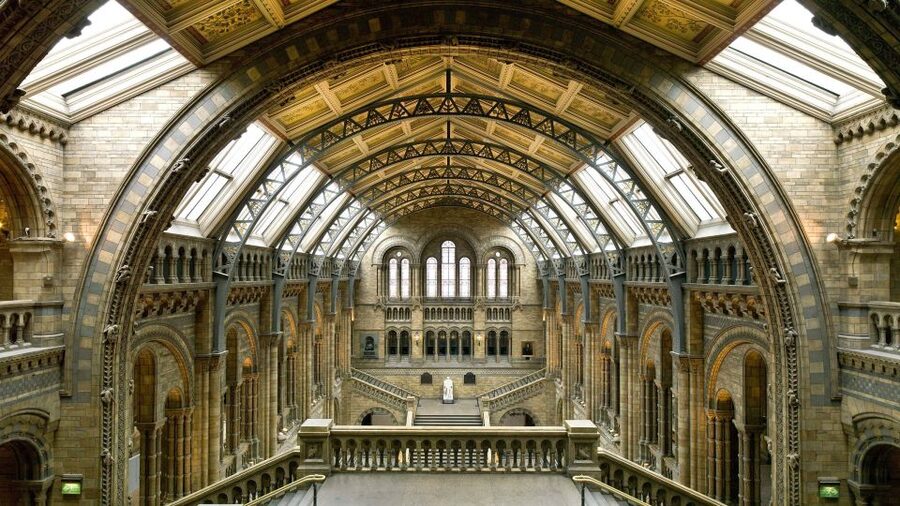
London’s Natural History Museum can feel like several museums packed into one grand building. This 2.5-hour guided tour gives you a clear route through its 80 million specimens, from Iguanodon teeth and a Dodo skeleton to the rare Archaeopteryx and a first edition of Darwin’s On the Origin of Species.
I like the way the tour mixes famous displays with odd, memorable objects such as the Cursed Amethyst and an enormous slice of Giant Sequoia. I also like the small group limit of eight, since guides such as Ivo, Matilda, Sacha, and Luis have been praised for keeping children involved and explaining difficult ideas in plain English.
The main drawback is the price: at $112 per person, this is far more costly than simply visiting the museum on your own. It makes the most sense if you want help finding the key exhibits and someone who can connect them into one story.
Key points to know before booking
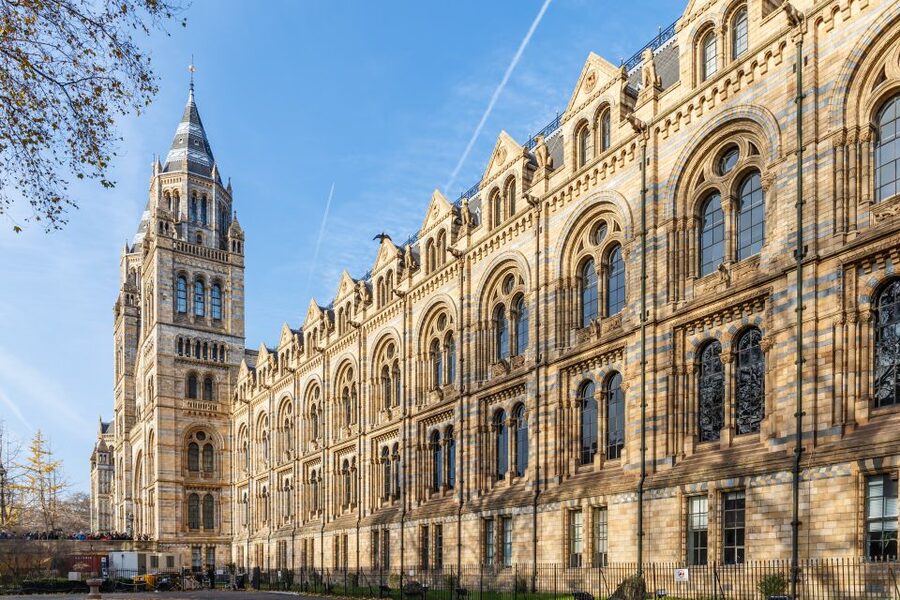
- Iguanodon teeth and dinosaur displays: See fossils and meet Sophie the Stegosaurus while learning how early scientists interpreted prehistoric life.
- A Dodo skeleton and Archaeopteryx: The tour brings you close to two memorable links in the story of extinction and evolution.
- Pompeii casts and human history: The volcanic disaster casts add a stark human side to a museum often associated with animals and fossils.
- Small groups of up to eight: Private and semi-private options allow for a more personal pace and easier questions.
- A guide-led route through 80 million specimens: You will not see everything, but you will spend your time on selected highlights rather than wandering without a plan.
- Practical limits: Large bags are not allowed, the meeting point depends on your booking, and wheelchair tours require a private arrangement in advance.
Why a guide helps inside this enormous museum
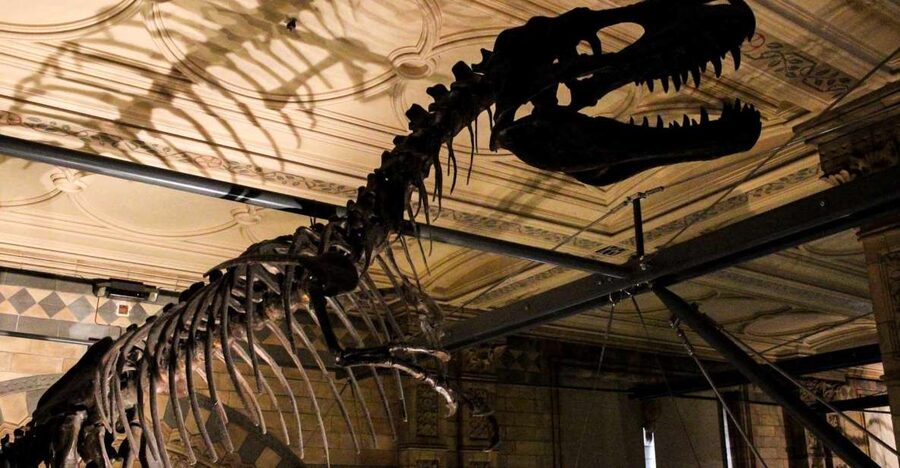
The Natural History Museum is easy to admire and surprisingly hard to use well. Its grand rooms, branching galleries, and huge collection can leave you unsure where to begin. You can spend a long time looking at impressive objects without understanding why they matter.
This tour solves that problem by giving you a route and a story. Rather than treating the museum as a string of isolated displays, the guide traces a broad path from the beginnings of the Earth to the rise of our own species. The exact order may vary, but the purpose is clear: connect geology, dinosaurs, extinct animals, human development, and the forces that shape life.
That structure matters most on a first visit. You are not expected to remember every scientific detail. You are given a set of useful anchors: a tooth, a skeleton, a rare fossil, a volcanic disaster, a tree section, and a book that changed how people understood nature.
The tour is led in English by a professional art historian guide. Guides have included Ivo, Matilda, Sacha, Luis, Guy V., Laurence, Becky, and others. The strongest guide reports point to a common strength: clear explanations combined with a talent for adjusting the pace for different ages.
If you are visiting with children, this is especially useful. Ivo has been praised for involving children aged 11 and 16, while Guy V. was noted for answering children’s questions patiently. Matilda has also been singled out for explaining the displays in a way that worked for both an adult and a 13-year-old.
More Museum Tours in London
- Tower of London and Crown Jewels Exhibition Ticket
★ 4.5 · 6,677 reviews - London: Chelsea Football Club Stadium and Museum Tour
★ 4.8 · 4,576 reviews - Chelsea FC Stadium Tours and Museum
★ 5.0 · 1,908 reviews
Iguanodon teeth and the first steps into prehistory
The tour begins with the kind of object that can make the distant past feel physical: Iguanodon teeth. A tooth is more than a fossil to stare at. It offers a clue about what an animal ate and how scientists build a picture of a creature from fragments.
This is one of the tour’s strengths. Large dinosaur skeletons grab attention, but smaller fossils often tell the better story. A guide can explain why a tooth matters, how evidence is interpreted, and how early discoveries changed ideas about prehistoric animals.
You will also meet Sophie the Stegosaurus. The display provides a memorable introduction to dinosaur anatomy, and it gives younger visitors an easy character to follow through the tour. The guide can use the skeleton to explain form, movement, and survival without turning the experience into a dry classroom lesson.
Do not expect an exhaustive dinosaur course. Two and a half hours is enough to see selected highlights, not every fossil in the museum. That is a fair trade for most first-time visitors. You leave with a stronger sense of how the evidence fits together instead of a blur of names and bones.
The Dodo and the Archaeopteryx
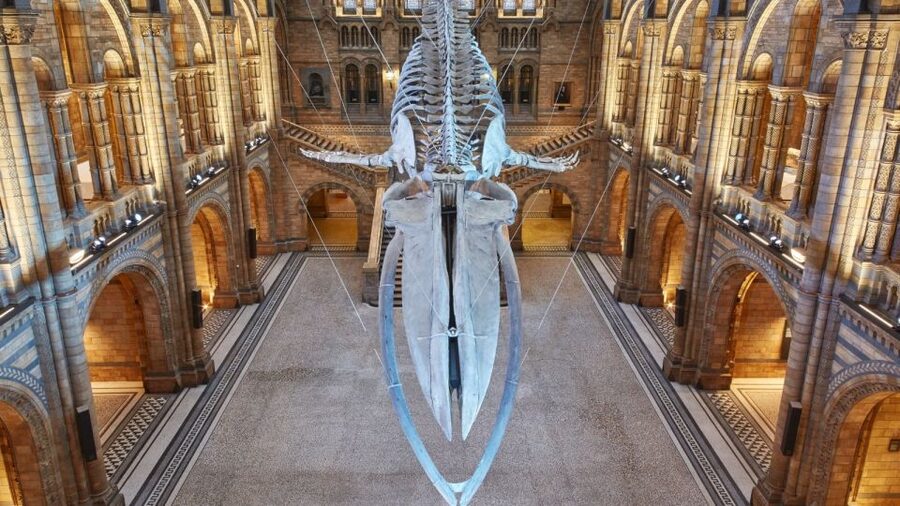
The Dodo skeleton is one of the most approachable stops on the route. Its story is tied to extinction, human activity, and the danger of assuming that an animal is safe simply because it seems unusual or well adapted to its surroundings.
The Dodo also changes the mood of the tour. Dinosaur fossils can feel safely remote, separated from us by vast stretches of time. The Dodo belongs to a more recent past and reminds you that extinction is not only an ancient event. A guide can make that connection without turning the visit into a lecture.
You may also see the rare Archaeopteryx, described here as an alleged missing link between dinosaurs and birds. The wording matters. Scientific history is full of labels that simplify complicated evidence, and a good guide can help you understand why this fossil has mattered so much in the discussion of evolution.
For you, the value is not just seeing a rare specimen. It is learning how one fossil can affect a much bigger argument about feathers, flight, birds, and dinosaurs. This is where the guide’s training and storytelling count. Without context, Archaeopteryx may look like another small fossil. With context, it becomes part of a major scientific question.
Pompeii casts bring human tragedy into the museum
The Pompeii casts are among the most emotionally powerful stops. They show the victims of the volcanic disaster in a direct and unsettling way. The museum’s natural science focus might lead you to expect only fossils, animals, and geological samples, so this section adds a sharp human dimension.
The casts are not simply another ancient display. They show how a disaster can preserve evidence of ordinary lives and sudden death. The subject is difficult, particularly for children, but it also gives the tour weight. Nature is not always beautiful or harmless. Volcanoes, extinction, and geological change have real consequences for living things.
This part may not suit every visitor. If you prefer a lighter museum visit, the casts can feel grim. Still, the guide helps place them within the larger story of the Earth and human civilization, rather than presenting them as a shock display.
You will also hear about civilizations that used human skulls as drinking glasses. It is a strange and disturbing detail, but it fits the tour’s wider interest in the many ways humans have lived, died, and understood the natural world. This is one of the moments when the route moves beyond familiar dinosaur facts.
More natural history museums in London:
- London: Natural History Museum Entry Ticket and Guided Tour
★ 3.8 · 212 reviews - London: Natural History Museum Guided Tour w/ Priority Entry
★ 3.5 · 202 reviews - London: Natural History Museum Express Tour & Audio App
★ 3.6 · 60 reviews - London: Natural History Museum Private Tour & Skip the line
★ 5.0 · 42 reviews
The Cursed Amethyst and the Giant Sequoia slice
The Cursed Amethyst offers a change of pace. It brings mystery and folklore into a museum otherwise built around specimens, research, and scientific classification. The object is memorable partly because of its unusual reputation, and partly because it shows how people have attached stories and fears to natural materials.
The guide can help you separate the object itself from the legend around it. That balance is important. You get the fun of a mysterious exhibit without losing sight of the museum’s wider purpose.
Then comes an enormous slice of a Giant Sequoia tree. Its size alone makes an impression, but its real value is the long record held in its growth rings. A tree can preserve evidence of changing conditions over time, turning a piece of wood into a record of the natural world.
These two displays work well together. One draws you in with mystery. The other encourages you to think about time, growth, and environmental change. Both are more memorable than a list of scientific terms, which is why they are useful stops on a short tour.
Darwin, evolution, and the story behind the specimens
The first edition of Charles Darwin’s On the Origin of Species gives the tour an intellectual center. After seeing fossils, extinct animals, and evidence of life’s changes, you come face to face with the book that helped reshape how many people thought about evolution.
You do not need a background in science to appreciate this stop. The important point is how ideas develop from observation. Fossils and specimens provide evidence, while books and arguments give that evidence a wider meaning.
I like that the tour links the physical collection to the history of scientific thought. You are not only looking at objects from nature. You are also seeing how humans tried to explain them, sometimes incorrectly, then revised their ideas as new evidence appeared.
The first edition is also a useful pause in a tour filled with large objects. A small book can change the way people see the world. That contrast makes it more memorable.
What the 2.5-hour pace feels like
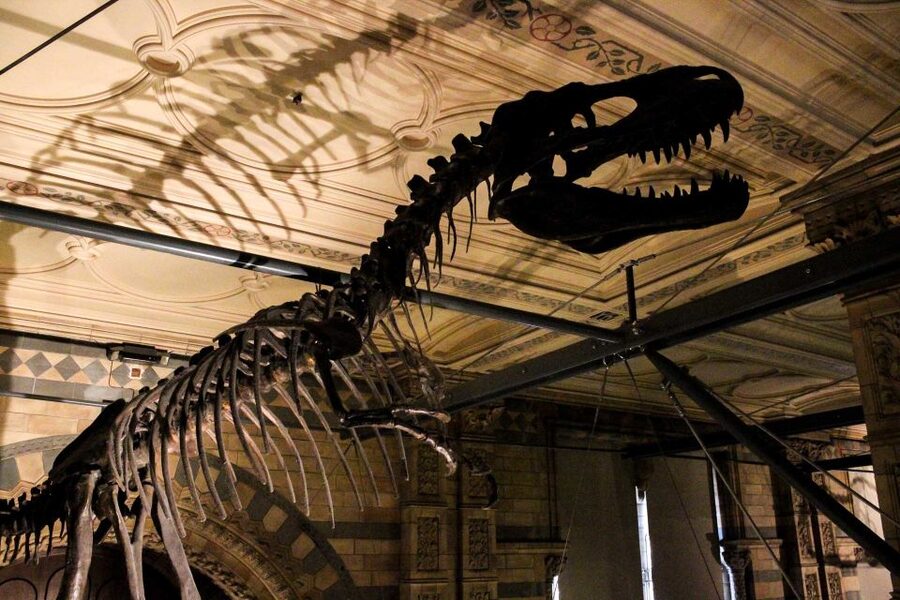
Two and a half hours is a sensible length for this museum. It is long enough to cover major highlights but short enough to avoid the fatigue that can set in during a full day of galleries.
Expect some walking, though the tour is not described as physically demanding. You move through a large building, and the guide will keep the group moving from one section to the next. Wear comfortable clothing and shoes, and do not bring a suitcase or large bag.
The pace depends partly on the group. A private tour can give you more room to ask questions or linger at a display. A small group is limited to eight people, which is still intimate enough for questions without the higher cost of a fully private visit.
For group tours, at least two people must book for the tour to run. If that minimum is not reached, an alternative date or full refund is offered. The meeting point may vary according to the option you choose, so check the booking details carefully rather than assuming every departure begins at the same place.
Is $112 per person good value?
At $112, this is not a bargain museum outing. The museum itself is not being sold as a simple self-guided visit, and food, drinks, hotel transfers, and temporary exhibits are not included.
The price pays for the guide, the planned route, and the time saved. If you are confident finding your way around and enjoy reading display panels at your own pace, you may prefer visiting independently. If you have only one chance to see the museum, the guide can help you avoid spending half your visit in the wrong galleries.
The private option is most appealing for families or couples who want a flexible conversation. The small group option gives you a lower-cost way to get expert help while keeping the group to eight people. The value is strongest when you care about context, have children who ask many questions, or want to focus on the museum’s best-known objects.
The repeated praise for Ivo, Matilda, Sacha, and Luis points to the guide as the main reason to book. I would think of this as a guided interpretation service, not simply an admission ticket with someone walking beside you.
Who should book this museum tour?
This tour suits first-time visitors who want a planned introduction to the Natural History Museum. It is also a strong choice for families. Several guides have been praised for keeping children interested, answering questions, and balancing serious subjects with humor.
It works well if English is not your first language, provided you are comfortable with an English-speaking tour. Luis has been noted for speaking English clearly and also speaking Spanish, but the stated tour language is English.
You should think twice if you prefer a slow, unstructured visit. The route is designed around selected highlights, so you will not have time to study every gallery. You should also reconsider if you are bringing large luggage, since suitcases and large bags are not allowed inside.
Wheelchair access requires special planning. Although private wheelchair tours are available on request, the general information says the tour is not suitable for wheelchair users. Contact the provider before booking rather than relying on the standard group option.
The museum can also close occasionally without advance warning from management. If opening is delayed by more than an hour, an alternative is provided, but a refund is not offered in that situation. That is worth knowing before you build a tightly packed day around the tour.
Should you book it?
Book this tour if you want the museum’s major ideas explained rather than simply displayed. The Dodo, Archaeopteryx, Pompeii casts, Cursed Amethyst, Giant Sequoia slice, and Darwin’s book make a strong route, and a good guide can connect them into a story you will remember.
Skip it if you are happy to wander alone, want to spend many hours on one specialist subject, or are trying to keep museum costs low. At $112, the tour earns its price through expert guidance and time saved, not through access to every corner of the collection.
For most first-time visitors, especially families with curious children, I would choose the small group option. If you want more control over questions, timing, and pace, choose private. Either way, pack light, confirm the meeting point, and arrive ready to look beyond the biggest skeletons.
FAQ
How long does the Natural History Museum guided tour last?
The tour lasts 2.5 hours. Starting times vary, so check availability when booking.
What language is the tour offered in?
The tour is offered in English with a live guide.
What is included in the price?
A professional art historian guide and the guided museum experience are included. Private and semi-private options are available.
Are food, drinks, and hotel transfers included?
No. Hotel pickup and drop-off, food, and drinks are not included. Temporary exhibits are also excluded.
Can I bring a suitcase or large bag?
No. Large bags and luggage are not allowed inside the museum. Only handbags or small, thin backpacks are allowed through security.
Is the tour accessible for wheelchair users?
Wheelchair tours are available only on request and only as private tours. The general group tour is listed as unsuitable for wheelchair users, so contact the provider before booking.
More Historical Tours in London
- London: 2-Hour Guided Tour of the British Museum and History
★ 4.3 · 22 reviews - New York City: American Museum of Natural History Ticket
★ 4.5 · 15,447 reviews - Venice: St. Mark Basilica Ticket, Audioguide+History Gallery
★ 3.9 · 4,780 reviews - Berlin: Natural History Museum Entrance Ticket
★ 4.6 · 3,382 reviews
Just added around London
- Westminster and National Gallery 3.5-Hour Tour in Italian★ 4.9 · 28 reviews
- British Museum & Camden Town – Private Tour in Italian★ 4.8 · 26 reviews
- London: British Museum Highlights Guided Small Group Tour★ 4.9 · 113 reviews
- London: Westminster Abbey & Jubilee Galleries Guided Tour★ 4.9 · 56 reviews
- London: Sherlock Holmes Museum & Westminster Walking Tour★ 4.4 · 13 reviews
- London: Royal Museums Greenwich Day Pass★ 4.5 · 309 reviews
- London: Tickets for Moco Modern & Contemporary Art Museum★ 4.7 · 391 reviews
- London: The Courtauld Gallery at Somerset House Entry Ticket★ 4.6 · 126 reviews
Museum Tours in London, compared.
Tower of London and Crown Jewels Exhibition Ticket
Read our review →
Chelsea Football Club Stadium and Museum Tour
Read our review →


Official tickets: Moco Modern & Contemporary Art Museum
Read our review →
British Museum London Guided Tour Semi-Private 8ppl Max
Read our review →
British Museum Guided Tour with Entrance Tickets
Read our review →Browse the lists this tour appears in