
Review · LONDON
London: Natural History Museum Guided Tour w/ Priority Entry
London’s Natural History Museum makes a dramatic first impression: a blue whale skeleton hangs above Hintze Hall, turning the entrance into a grand lesson about the natural world. A 90-minute guided visit gives you a useful route through this enormous museum, with dinosaurs, early humans, volcanoes, gemstones, and scientific research all packed into one brisk outing.
I like the priority entry, especially when you want to get inside without wasting part of your day in a queue. I also like the guides’ personal touch. Strabo is praised for clear explanations and humor, while Mr. Newman is noted for adding a thoughtful, philosophical angle. The main caution is time: 90 minutes is enough for highlights, not a full museum visit, and one guide may cover only a few sections.
Key points
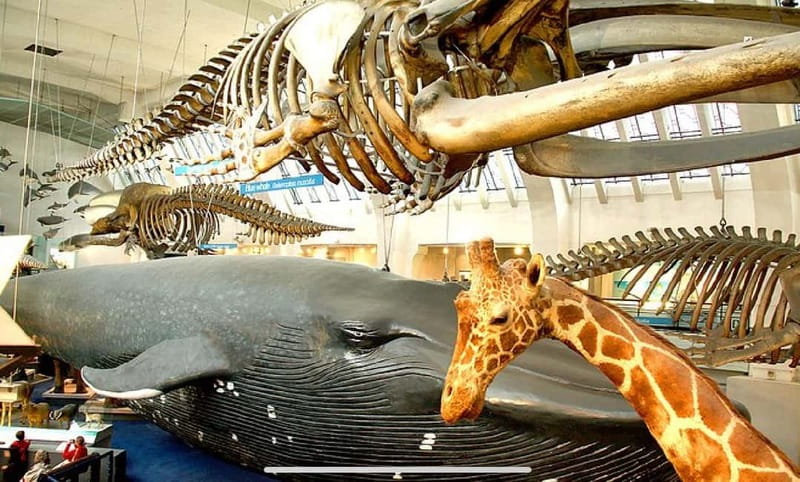
- Blue whale in Hintze Hall: Start beneath the museum’s most memorable centerpiece, a full-size skeleton suspended overhead.
- A fast route through major galleries: See dinosaurs, early humans, geology, volcanoes, gemstones, and evolution without planning your own path.
- Darwin Centre access: Look into scientific research and preserved specimens in one of the museum’s most distinctive areas.
- Hands-on science: Interactive displays and an earthquake simulator make this a strong choice for families.
- Guides with personality: Strabo and Mr. Newman are among the guides associated with especially clear, friendly presentations.
- A short but focused visit: The tour covers highlights, though you will need extra time if you want to explore the museum properly afterward.
Meeting the guide near South Kensington
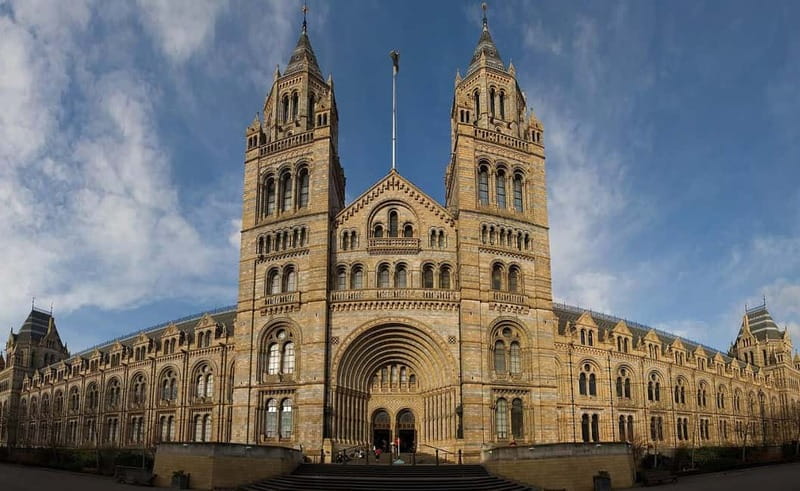
The meeting point is outside the Embassy of Venezuela at 1 Cromwell Road, South Kensington, London SW7 2JB. From there, you walk with the guide toward the Natural History Museum.
This detail matters because the meeting point is not simply described as the museum entrance. Give yourself enough time to find the embassy and your guide. One person had trouble because the map link led to the wrong place and did not clearly identify bus stop L. I recommend checking the address in advance rather than relying only on the booking map.
Once everyone is together, the short walk sets up the visit. You enter with a guide rather than trying to work out the museum’s layout on your own. That is useful here because the building is vast, the galleries are spread over several areas, and a first visit can easily become a parade of random rooms.
The tour is conducted in English. Bring comfortable shoes, since you will be walking and standing, along with water and a camera. Flash photography is not allowed.
More Museum Tours in London
- Tower of London and Crown Jewels Exhibition Ticket
★ 4.5 · 6,677 reviews - London: Chelsea Football Club Stadium and Museum Tour
★ 4.8 · 4,576 reviews - Chelsea FC Stadium Tours and Museum
★ 5.0 · 1,908 reviews
Hintze Hall and the blue whale
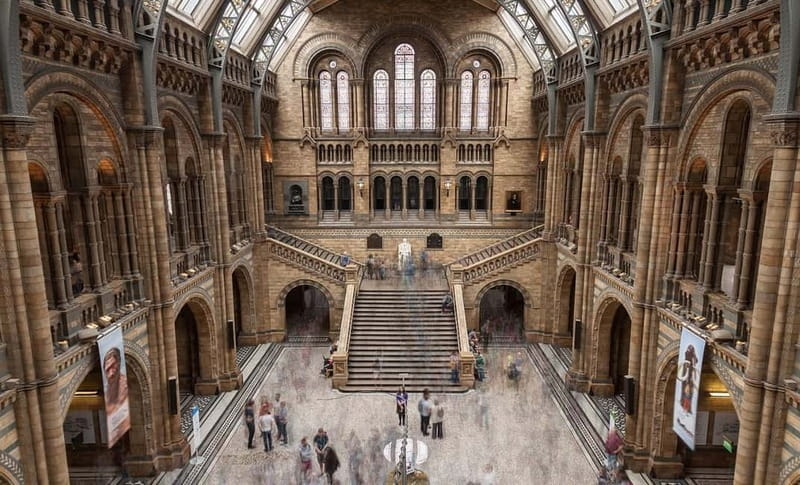
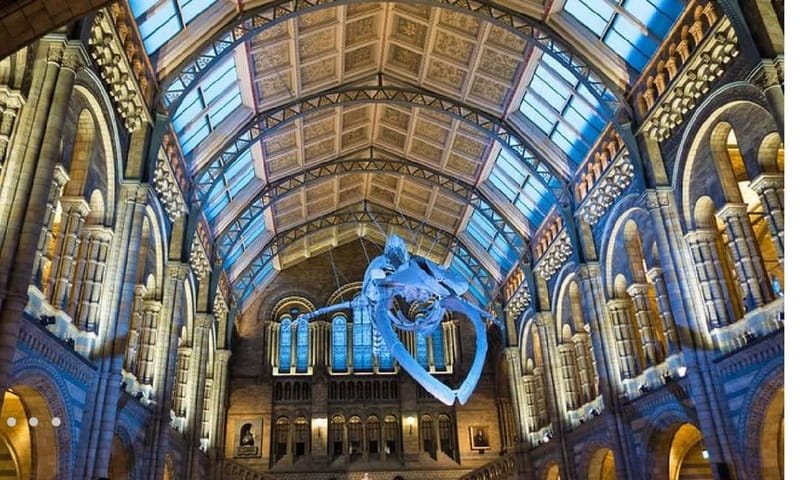
Hintze Hall is the natural opening scene. The blue whale skeleton hangs from the ceiling above you, replacing the museum’s former central display and giving the room a strong sense of scale.
I like starting here because the whale puts the rest of the museum into perspective. You are not just looking at small cases of specimens. You are looking at evidence of life on a planetary scale, from enormous marine mammals to tiny preserved samples used in research.
The Victorian architecture adds another layer. High ceilings, decorative details, and the scale of the hall make the first few minutes feel grand without needing a long explanation. A good guide can use the room to explain how the museum connects animals, geology, climate, and human science.
This is also a practical meeting place inside the museum. If you lose sight of the group later, knowing that Hintze Hall is the starting point gives you a clear mental anchor. Ask your guide where the tour will finish, too, since the 90-minute route may not return you to the same gallery.
Dinosaurs, including the animatronic T. rex
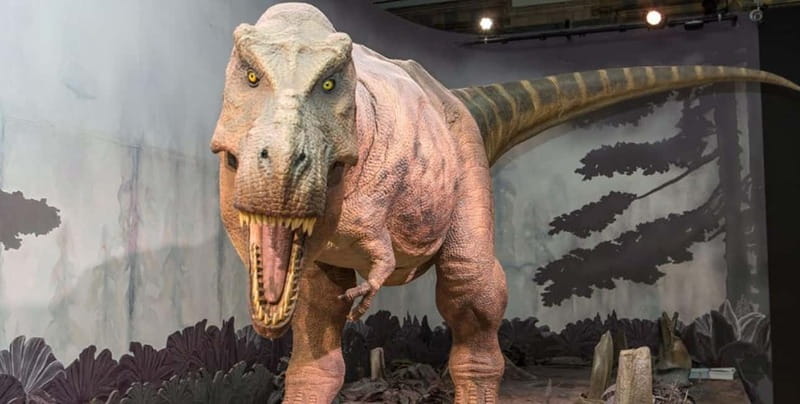
The dinosaur section is likely to be one of the busiest parts of the visit, and it is often the strongest draw for children. You can expect fossils and displays about prehistoric life, along with a life-sized animatronic T. rex.
The moving dinosaur gives the gallery a touch of theater, but the guide’s explanation is what makes the stop more worthwhile for adults. Instead of simply taking a photograph, you can ask how the exhibit relates to fossil evidence, extinction, and the scientific work behind museum displays.
The limitation is time. A 90-minute tour cannot give every dinosaur display the attention it deserves. If dinosaurs are your main reason for coming, note which rooms you want to revisit after the guided portion. The guide can get you oriented, then you can return at your own pace.
Crowds may also affect the experience. One person found the museum noisy, although the guide remained easy to hear. Stay close to the guide in crowded areas and ask for a repeat if a group gathers around the animatronic display.
Earth science, volcanoes, and rare gemstones
The geology galleries shift the mood from large animals to the forces that shape the planet. You will encounter exhibits on Earth’s geology and volcanoes, along with rare gemstones, rocks, and minerals.
This section is valuable because it gives the museum a wider purpose. The dinosaur displays focus on life in the past, while geology explains the ground beneath your feet and the changes that have shaped the planet over immense periods.
The gemstone displays also provide a welcome visual change. Color and sparkle may catch your eye first, but the guide can help connect these specimens to mineral formation and Earth science. If you enjoy natural materials, this may be one of the most rewarding parts of the route.
The earthquake simulator adds a hands-on element. It is especially useful for families, since it turns an abstract geological process into something you can feel. It may also be popular, so you might not spend much time with it during a fixed tour. Treat it as an introduction and return later if the museum allows you enough time.
More natural history museums in London:
- London: Natural History Museum Entry Ticket and Guided Tour
★ 3.8 · 212 reviews - London: Natural History Museum Guided Tour
★ 5.0 · 87 reviews - London: Natural History Museum Express Tour & Audio App
★ 3.6 · 60 reviews - London: Natural History Museum Private Tour & Skip the line
★ 5.0 · 42 reviews
Evolution and early humans
The evolution galleries bring the museum’s subjects together. You will see displays about the evolution of mammals and early humans, with models and objects that help explain how life changed over time.
The Human Evolution Gallery is particularly important because it tells a connected story rather than presenting isolated specimens. You can follow the development of ancient ancestors and consider how scientists use physical evidence to build an account of human origins.
This is a good place to listen closely to the guide. The subject can become confusing when you move quickly between dates, species, and scientific terms. A clear explanation helps you understand what the displays show and what remains uncertain.
Families may find this section more demanding than the dinosaur galleries, but it is also more thought-provoking. Children who enjoy asking how people lived, changed, and adapted will have plenty to discuss. Adults who want more detail should plan to return after the tour, since the guide can only cover the main ideas in a short visit.
The Darwin Centre and scientific research
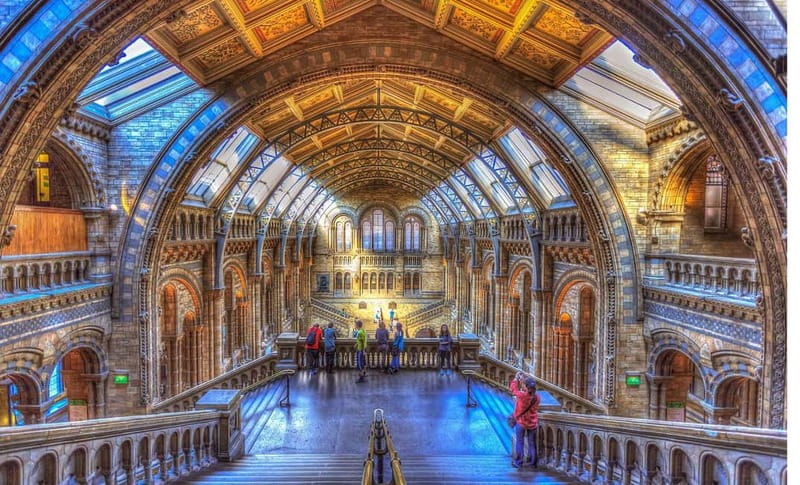
The Darwin Centre offers a look at the museum as a working research institution. Here, you can see preserved specimens and get behind-the-scenes views of scientific research.
That is a useful contrast with the grand public galleries. In Hintze Hall, everything is arranged for drama and immediate impact. In the Darwin Centre, the focus shifts toward the careful work of storing, comparing, and studying specimens.
The visit helps explain why a natural history museum is more than a collection of old objects. Its holdings support ongoing research, and the preserved material can be important for understanding species, evolution, and the changing planet.
The Darwin Centre can also be one of the harder sections to appreciate on your own. A guide gives you a reason to look beyond the glass and understand what the specimens represent. If you are curious about science rather than just famous displays, this may be the most distinctive part of the tour.
What the 90-minute pace feels like
Ninety minutes is a sensible length for a guided introduction, but it creates a clear tradeoff. You get a planned route and a strong selection of highlights, yet you cannot linger in every gallery.
One person felt that only a few parts of the museum were covered. Another thought the tour was good but could have lasted longer and included more subjects while walking through the crowds. That is fair. The museum is too large for a complete visit in 90 minutes.
I would treat this as an orientation tour, not the whole day. The guide helps you identify the rooms worth your time, explains the major displays, and prevents you from spending your first hour simply finding your way around. Afterward, you can return to the galleries that interested you most.
The pace appears to suit people who want structure. It may feel less satisfying if you prefer to stop for long periods, read every panel, or sketch and photograph each exhibit. You should also expect some background noise, especially in the most popular rooms.
The value of priority entry at $33
At $33 per person, the price is reasonable if you value a guided introduction and saving time at the entrance. Admission to the Natural History Museum and permanent exhibitions is included, along with the live guide.
The value depends on how you use the visit. If you plan to spend only a short time at the museum, the guide gives you a focused experience instead of leaving you to choose from a huge collection. If you already know the museum well, or if you want a slow independent visit, the added cost may be harder to justify.
Priority entry is most useful on a crowded day. It does not make the museum quiet, and it does not remove the need to walk through busy galleries, but it can get your visit started more smoothly.
Special exhibitions are not included. If a temporary show interests you, you will need to arrange a separate ticket. The permanent displays provide more than enough for the guided route, but do not assume that every room or exhibition is covered by the tour price.
Guides, clarity, and the human touch
The strongest part of this experience is the guide. Strabo is described as friendly, clear, and good at making facts lively. Several accounts also praise the humor and approachable style, which matters in a museum where technical subjects can quickly become dry.
Mr. Newman is also associated with a thoughtful presentation that adds a philosophical touch. I would not assume you can select a particular guide when booking, but these examples show the kind of experience you can expect: explanations, stories, and room for questions rather than a silent walk between displays.
The quality of the tour will still depend on the individual guide and the crowd on the day. One person felt it was more like walking with a friend than taking a formal guided tour. That could be a positive if you prefer a relaxed style, but less so if you want a tightly scripted lecture with detailed coverage of every gallery.
If you have a question, ask it early. A guide may be able to adjust the emphasis slightly, but the fixed time means there is no guarantee that the group can stop for a long discussion.
Who should book this museum tour
I think this experience suits first-time visitors who want a clear introduction to the museum. It is also a good fit for families, especially those who want dinosaurs, interactive displays, and the earthquake simulator without planning the route themselves.
You may also like it if you have limited time in London. The 90-minute format lets you see major highlights before moving on to another South Kensington attraction.
Independent museum regulars may prefer to enter on their own and set their own pace. The same is true if you want to spend an hour with one subject, such as human evolution or gemstones. The guide’s route gives breadth rather than slow, detailed study.
There is conflicting information about wheelchair access. The activity details describe the tour as wheelchair accessible, but the same information also says it is not suitable for wheelchair users. Confirm this directly before booking, particularly if you need an accessible route or have specific mobility requirements.
Should you book it?
Book this tour if you want priority entry, a friendly English-speaking guide, and a quick route through the museum’s best-known subjects. The blue whale, dinosaurs, early humans, geology, Darwin Centre, and interactive displays make the experience varied enough for both adults and children.
Do not book it expecting to see every gallery. Think of the tour as a well-organized first look, then leave extra time to return to the sections that catch your interest. At $33, it is good value for a first visit or a tight London schedule, but less compelling if you already know the museum and prefer complete independence.
FAQ
Where does the tour meet?
The meeting point is outside the Embassy of Venezuela at 1 Cromwell Road, South Kensington, London SW7 2JB. The group then walks to the Natural History Museum.
How long does the tour last?
The tour lasts 90 minutes.
What language is the tour in?
The live tour guide speaks English.
Is entry to the museum included?
Yes. Entrance to the Natural History Museum and access to its permanent exhibitions are included.
Are special exhibitions included?
No. Tickets for special exhibitions are not included.
Is priority entry included?
Yes. The experience includes priority entry to the museum.
Can I take photographs?
You can bring a camera, but flash photography is not allowed.
What should I bring?
Comfortable shoes, water, and a camera are recommended.
Can I cancel the booking?
You can cancel up to 24 hours in advance for a full refund.
Can I reserve now and pay later?
Yes. The activity allows you to reserve your place and pay later.
Is the tour wheelchair accessible?
The activity information is inconsistent. It describes the tour as wheelchair accessible but also says it is not suitable for wheelchair users. Confirm the current arrangements before booking if you use a wheelchair.
More Historical Tours in London
- London: 2-Hour Guided Tour of the British Museum and History
★ 4.3 · 22 reviews - New York City: American Museum of Natural History Ticket
★ 4.5 · 15,447 reviews - Venice: St. Mark Basilica Ticket, Audioguide+History Gallery
★ 3.9 · 4,780 reviews - Berlin: Natural History Museum Entrance Ticket
★ 4.6 · 3,382 reviews
Just added around London
- Westminster and National Gallery 3.5-Hour Tour in Italian★ 4.9 · 28 reviews
- British Museum & Camden Town – Private Tour in Italian★ 4.8 · 26 reviews
- London: British Museum Highlights Guided Small Group Tour★ 4.9 · 113 reviews
- London: Westminster Abbey & Jubilee Galleries Guided Tour★ 4.9 · 56 reviews
- London: Sherlock Holmes Museum & Westminster Walking Tour★ 4.4 · 13 reviews
- London: Royal Museums Greenwich Day Pass★ 4.5 · 309 reviews
- London: Tickets for Moco Modern & Contemporary Art Museum★ 4.7 · 391 reviews
- London: The Courtauld Gallery at Somerset House Entry Ticket★ 4.6 · 126 reviews
Museum Tours in London, compared.

Tower of London and Crown Jewels Exhibition Ticket
Read our review →
Chelsea Football Club Stadium and Museum Tour
Read our review →

Official tickets: Moco Modern & Contemporary Art Museum
Read our review →
British Museum London Guided Tour Semi-Private 8ppl Max
Read our review →
British Museum Guided Tour with Entrance Tickets
Read our review →Browse the lists this tour appears in