
Review · TRAIN EXPERIENCES
Kyoto Railway Museum Admission Ticket
The Kyoto Railway Museum puts 53 real trains in front of you, not behind tiny glass cases. You can walk through famous carriages, inspect steam engines, see a Shinkansen up close, and watch a working locomotive make its rounds. The star moment is the historic roundhouse, where a turntable rotates engines into position.
I like the mix of hands-on displays and railway history. You are not simply reading dates on walls: you can try train-driving simulators, study detailed railway dioramas, and step inside machines that helped shape modern Japan. I also like the working steam locomotive, which gives the visit a touch of old-fashioned theater.
The main drawback is simple: this is a museum, not a guided railway tour, so you should expect to explore at your own pace. The experience is also non-refundable, and the museum closes every Wednesday, so check the date and opening hours before you buy.
Key points at a glance
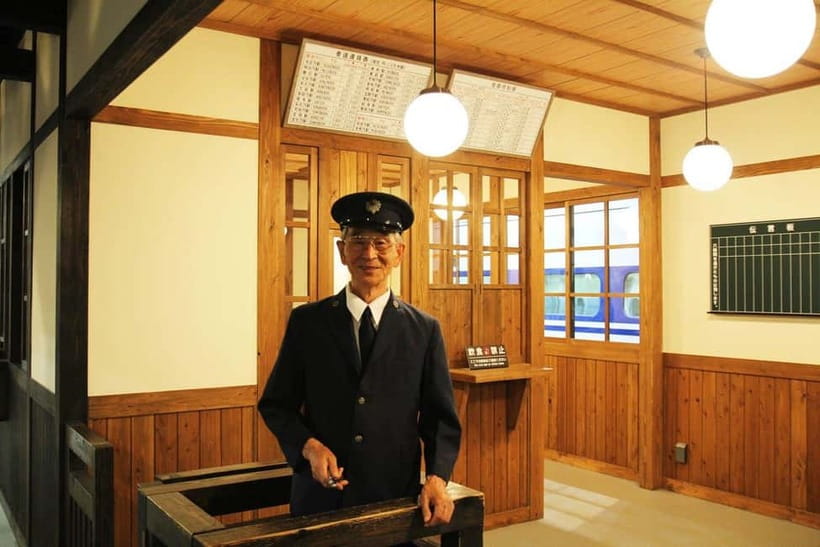
- 53 full-size trains: See steam locomotives, classic railway cars, and Shinkansen trains in one large collection.
- A working steam locomotive: Take a nostalgic ride rather than only looking at historic equipment.
- The roundhouse turntable: Watch a real railway mechanism rotate engines in the historic display area.
- Hands-on railway learning: Try train-driving simulators and explore detailed railway dioramas.
- Sky Terrace views: Pause above the museum for views that add a little breathing room to the indoor exhibits.
- Good family value: Standard admission costs about $9 per person and is valid for one day.
Why the Kyoto Railway Museum feels different

Many railway museums ask you to admire old engines from a distance. Kyoto Railway Museum gives you more ways to take part. You can move between full-size trains, enter selected carriages, operate interactive displays, and see how rail travel works behind the polished exterior.
That matters in Japan, where trains are not just a sightseeing convenience. They are part of daily life, national identity, engineering, and travel culture. The museum gives you a useful look at that story without requiring a specialist background.
I would not save this visit only for serious train fans. The collection has enough scale and variety to keep curious adults interested, while the simulators and walk-through carriages give children something to do with their hands. The combination helps the museum avoid feeling like a row of static machines.
The experience is self-guided. No guide is named or included, and standard admission covers entry to the museum rather than a hosted tour. That gives you freedom, but it also means you should allow time to read signs and work out which activities matter most to you.
A few more museum visits around Japan worth comparing
- Luxembourg: Combi-Ticket City Train & the 7 Museums Pass
★ 4.3 · 56 reviews - Prague: Railway Kingdom Giant Model Railway Museum
★ 4.4 · 54 reviews - Madrid by High-Speed Train with Prado Museum Private Tour
★ 4.0 · 33 reviews
Start with Japan’s railway story
Begin by getting a sense of the broad collection before rushing toward the most famous train. The museum presents Japan’s railway development through actual vehicles and working equipment, so the story is easy to grasp even if you know little about locomotives.
You will see the progression from steam power to modern high-speed rail. That contrast is one of the museum’s strongest teaching tools. A steam engine shows the age of smoke, metal, and mechanical force. A Shinkansen represents speed, clean lines, and precision engineering.
I like this side-by-side approach because it turns a technical subject into something visual. You can see how train design changed, rather than trying to picture it from written explanations alone. The museum also covers the wider railway system through interactive displays and model scenes.
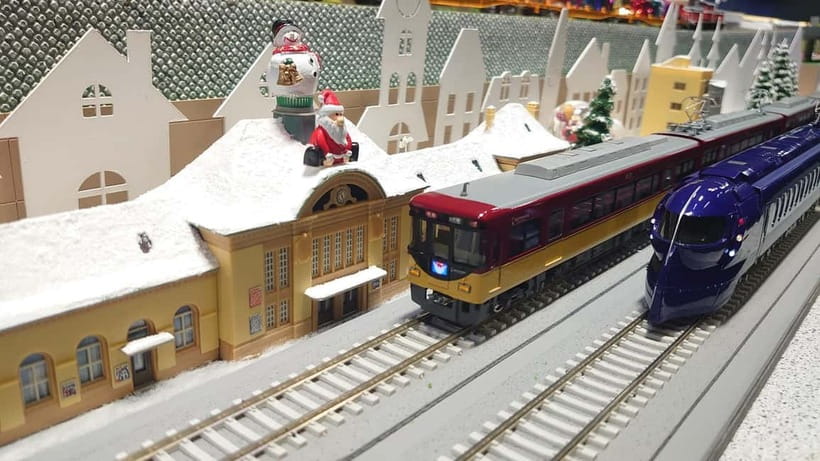
Look for the detailed railway dioramas. These miniature scenes show how tracks, stations, trains, and surrounding activity fit together. They are especially useful if you enjoy systems and practical details, but they also work as a simple visual break between the larger exhibits.
Walking through 53 real trains
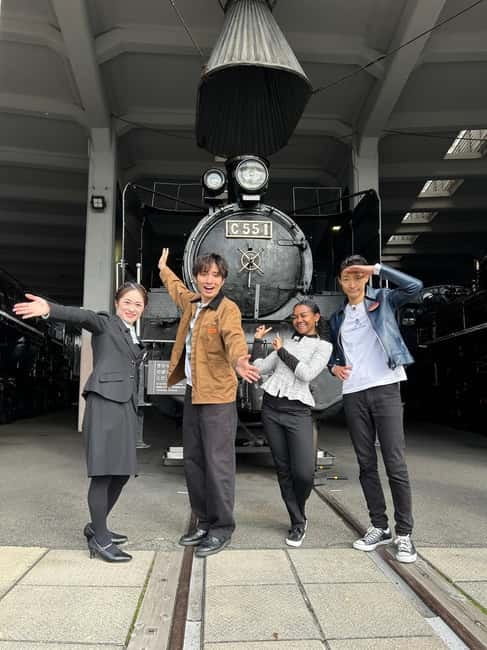
The main collection is the reason to come. With 53 real trains on display, the museum gives you plenty of variety, from historic steam locomotives to famous high-speed trains.
The scale is important. A photograph of a locomotive tells you what it looks like, but standing beside the real machine gives you a better sense of its height and working parts. You can inspect the shape of the engines, compare different train designs, and notice how much railway technology changed over time.
The Shinkansen will likely draw the biggest crowd. For many visitors, seeing the bullet train in person is the museum’s signature moment. You can step inside an iconic train and experience the space from the passenger side, rather than treating it as an object on a platform.
The older trains provide a different kind of appeal. Their design carries a sense of mechanical drama, and the steam collection connects directly with the working locomotive ride later in the visit. I suggest giving yourself time with both the modern and historic sections. It is easy to spend too long at the Shinkansen and miss the variety elsewhere.
Because the trains are full-size, younger children may find the visit more exciting than a standard history museum. They can move through carriages and see controls, seats, and interiors at close range. Parents should still expect a museum visit rather than a playground, with plenty of looking and reading between the interactive sections.
The steam locomotive ride
The working steam locomotive is the museum’s most memorable activity for many people. It adds motion, sound, and a sense of nostalgia to a visit that could otherwise remain entirely visual.
You are not simply looking at a preserved engine. You can ride behind a functioning steam locomotive and connect the museum collection with the experience of railway travel. That short journey helps explain why steam trains still have such strong appeal.
I would treat the ride as a key moment, but not assume it is the entire reason to buy admission. The museum has enough to occupy a full day, and the steam ride works best as one part of the larger visit. Check the current operating details when you arrive, since the supplied information does not specify a fixed departure schedule.
The ride may be especially appealing to families and visitors who want one shared activity rather than several separate exhibits. It gives everyone a clear focal point. Railway fans, meanwhile, will appreciate the chance to see a working example rather than only a restored shell.
Same city, a completely different collection:
- Tokyo: teamLab Planets TOKYO Digital Art Museum Entry Ticket
★ 4.6 · 9,779 reviews - Osaka Castle: Museum and Tower Entry Ticket
★ 4.5 · 2,380 reviews - Tokyo: Samurai Ninja Museum Guided tour and Experience
★ 4.6 · 1,010 reviews - Kyoto: Tea Museum Tickets and Matcha Grinding Experience
★ 4.9 · 739 reviews
The roundhouse and rotating turntable
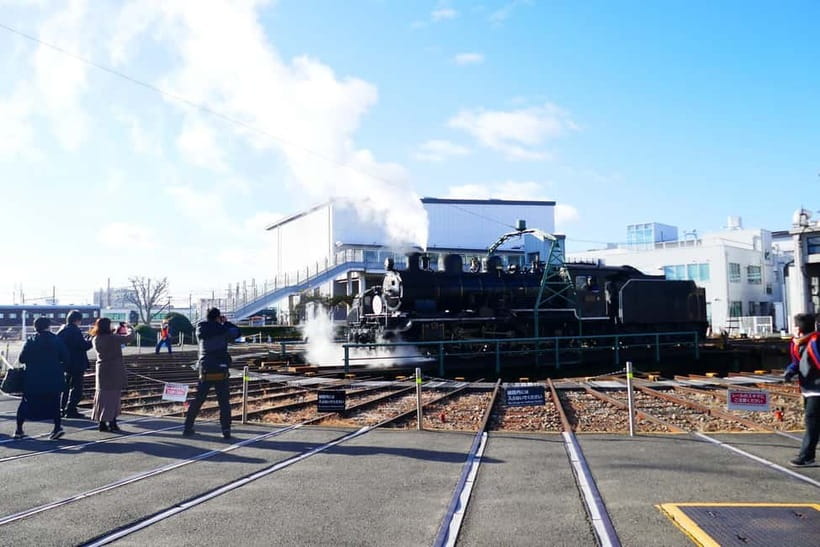
The historic roundhouse offers one of the museum’s best visual moments. Its turntable rotates locomotives, allowing engines to be positioned around the circular building.
This is the kind of railway action that can be hard to understand from a diagram. When the turntable moves, you see how a large engine can be redirected within a limited space. It is practical engineering, but it also makes a fine piece of theater.
Try to watch the rotation if the timing works during your visit. The museum highlights it as a special attraction, and it gives you something active to look for after viewing the static displays. The roundhouse also helps place the trains in their working setting, rather than presenting them as isolated objects.
For photographers and railway enthusiasts, the roundhouse should rank near the top of the list. For families, it is a useful way to keep the visit moving. Instead of only reading about railway operations, you get a visible demonstration of how the machinery handled real trains.
Simulators and hands-on displays
The train-driving simulators add a playful side to the museum. You can try operating a train in a more realistic setting, which gives you a better feel for the attention and control involved in railway work.
These simulators are likely to be popular, so you may need patience if many people want a turn. The available information does not give a separate booking process, number of attempts, or exact waiting time. I would not build your entire schedule around getting a simulator session.
The hands-on displays are still valuable even if you do not use every machine. They help explain railway systems in a way that a long block of text cannot. Children can take part directly, while adults can use the exhibits to understand how trains function and how railway networks are organized.
The museum’s mix of serious equipment and interactive features is one reason it works for different ages. One person can focus on engineering, another on Japanese transport history, and another on the simple pleasure of walking through a train.
Sky Terrace and a sensible visit rhythm
The Sky Terrace gives you a change of pace and views from above the museum. After several indoor galleries and large trains, that open-air pause can help you reset.
I recommend treating the terrace as part of your day rather than rushing through the museum in one continuous circuit. Look at the trains, stop for the steam locomotive experience, return to the exhibits, and use the terrace when you need a quieter moment.
The museum is valid for one day, which makes the admission more useful than a quick one-hour stop. You can take your time with the major trains, return to sections you missed, and fit the interactive displays into your own rhythm.
Re-entry is allowed, but you must show your admission ticket to staff when you come back in. That can help if you want to break up the day, though the supplied details do not specify whether a separate exit stamp or procedure is required. Keep the ticket handy.
Is the $9 admission good value?
At about $9 per person, the price is modest for a full-day museum with 53 real trains, a working steam locomotive, simulators, railway dioramas, and a Sky Terrace.
The value comes from the range of activities, not just the number of engines. If you only want a quick look at one Shinkansen, the ticket may feel less important. If you plan to explore the collection, watch the turntable, try interactive exhibits, and stay for the steam experience, the price is much easier to justify.
Children under three enter free. Children from three to seven can buy tickets on-site for 200 yen, which makes the museum particularly appealing for families with young children. The standard admission information provided here does not list separate add-on costs for the activities, so check current details if a specific simulator or ride matters to your plans.
The ticket is non-refundable. That is the main price-related risk. Check the Wednesday closure and current opening hours before booking, since a cheap ticket is no bargain if the date does not work.
Who will enjoy this museum most?
I would recommend Kyoto Railway Museum to:
- Railway enthusiasts, who will appreciate the number and variety of full-size trains.
- Families with children, thanks to the simulators, walk-through carriages, steam locomotive, and visual displays.
- History fans, who can follow the shift from steam power to Shinkansen technology.
- Engineering-minded visitors, who will enjoy the turntable, railway systems, and working mechanisms.
- Visitors seeking a flexible Kyoto activity, since you can spend the day at your own pace.
It may be less suitable if you want a guided tour with a named expert or a tightly scheduled route. It is also not the best choice for a Wednesday visit, since the museum is closed that day.
The museum is wheelchair accessible, which is useful for visitors who need step-free access. The supplied details do not explain which individual train carriages or simulator stations are accessible, so contact the museum directly if you need specific access information.
Practical tips before you go
Go directly to the Kyoto Railway Museum for ticket redemption. The stated coordinates are 34.9870986, 135.7422732.
Check the official website for current opening hours. The hours may change, and Wednesday is the regular closure day listed for this activity.
If the entrance queue is long, follow the instruction to wait at the entrance marked Early Bird Advance Ticket. That wording may be confusing, so look for staff guidance rather than joining a random line.
Keep your admission ticket after entering. You need to present it if you re-enter the museum.
Since the ticket is valid for one day, plan for a relaxed visit rather than trying to squeeze everything into a short stop. Start with the main train collection, note the steam ride and turntable timing, then return to the interactive displays and terrace.
Should you book the Kyoto Railway Museum?
Book it if you want a museum with real scale, moving machinery, and plenty for children and adults to do. The combination of 53 trains, a working steam locomotive, the rotating turntable, simulators, and a low admission price makes this one of Kyoto’s stronger choices for a flexible indoor day.
Skip it if you are looking only for a short, guided attraction or if your schedule leaves no room for a full museum visit. Also avoid booking until you confirm the date, opening hours, and Wednesday closure.
For most railway fans, families, and visitors curious about Japan’s transport culture, I would book the $9 admission and allow enough time to enjoy the museum properly.
FAQ
Where is the Kyoto Railway Museum?
The museum is in Kyoto, Honshu, Japan. The stated coordinates are 34.9870986, 135.7422732.
How long is the admission valid?
The ticket is valid for one day.
How much does admission cost?
The listed price is $9 per person for standard museum admission.
Is the museum open every day?
No. The museum is closed every Wednesday. Opening hours may change, so check the official website before visiting.
Are young children admitted free?
Children under three years old are free. Children between three and seven years old can buy tickets on-site for 200 yen.
Can I leave and re-enter the museum?
Yes. You must present your admission ticket to staff when you re-enter.
Is the museum wheelchair accessible?
Yes. The activity information states that the museum is wheelchair accessible.
Is the ticket refundable?
No. This activity is non-refundable.
Just added around Japan
- Skip the lines Basic Ticket at SAMURAI NINJA MUSEUM TOKYO★ 5.0 · 470 reviews
- Tokyo: Mt. Fuji, Owakudani, Hakone Shrine, & Open-Air Museum★ 4.7 · 25 reviews
- Private Tour Through the Tokyo National Museum & Ukiyo-e★ 4.7 · 17 reviews
- Samurai Ninja Museum Asakusa: Kid-Friendly Ninja Training★ 4.7 · 67 reviews
- Tokyo National Museum Private Tour★ 4.9 · 28 reviews
- Tokyo: Kichijoji Gourmet Tour with Lunch★ 4.5 · 40 reviews
- Samurai Ninja Museum Asakusa: Samurai Sword Lesson & Tour★ 4.8 · 306 reviews
- Tokyo: Art Aquarium Museum GINZA Entry Ticket★ 4.5 · 278 reviews
Train Experiences, compared.

Luxembourg: Combi-Ticket City Train & the 7 Museums Pass
Read our review →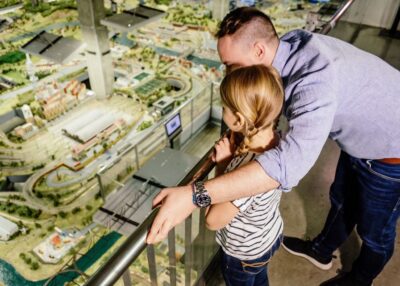

Madrid by High-Speed Train with Prado Museum Private Tour
Read our review →
Bowling Green: Historic RailPark & Train Museum Entry & Tour
Read our review →Browse the lists this tour appears in