
Review · THE UK
Hadrian’s Wall: Chesters Roman Fort and Museum Entry Ticket
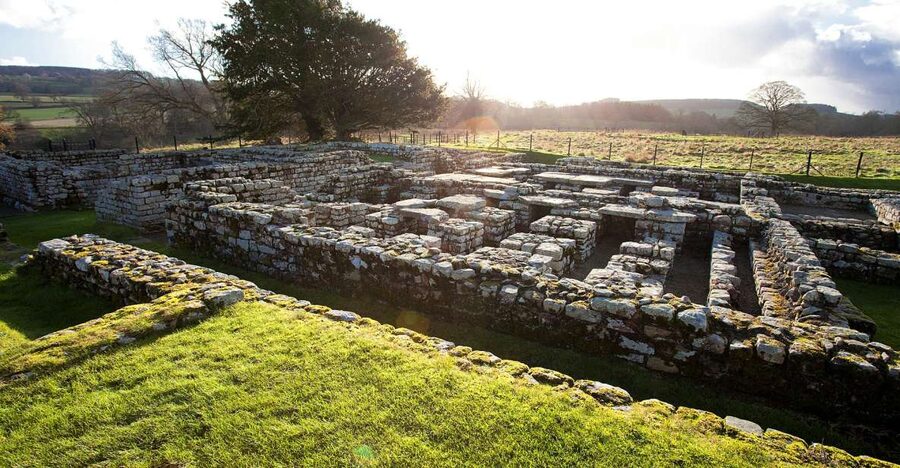
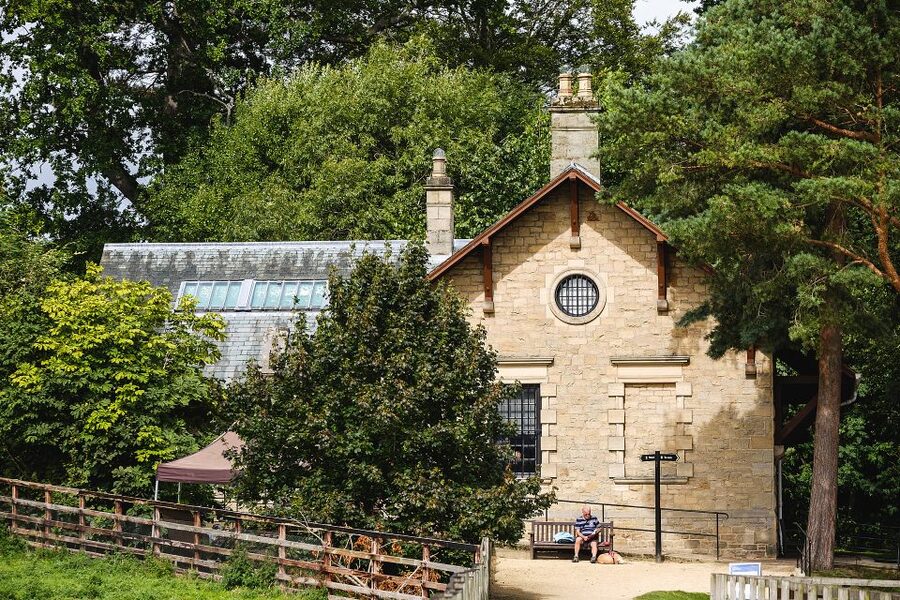
Chesters Roman Fort gives you something rare on Hadrian’s Wall: a clear look at how Roman cavalry lived, worked, and relaxed. The well-preserved bathhouse beside the North Tyne is the star, with rooms for hot, cold, and steam bathing still easy to picture.
I like the Clayton Museum’s e-reader, which puts the facts in your hand as you walk. I also like the fort’s unusually complete layout, from the headquarters and regimental shrine to the cavalrymen’s barracks and the commandant’s comfortable house. The main drawback is scale: if you expect a large, fully rebuilt attraction, you may find the ruins fairly quiet and modest for the admission price.
Key points to know before you go

- Britain’s best-preserved military bathhouse: See the hot, cold, and steam rooms where soldiers from northern Spain once rested.
- A rare cavalry fort: Digital reconstructions show how men and horses shared the barrack block.
- Clayton Museum: Explore Roman objects and inscriptions found at Chesters and elsewhere along Hadrian’s Wall.
- Useful self-guided tools: Pick up an e-reader and a Chesters Fort takeover trail sheet at admission.
- Good base for more Roman sites: Chesters works well as one stop in a wider Hadrian’s Wall day.
- Simple practical planning: Allow a full day of validity, wear comfortable shoes, and check the earlier winter closing time.
Why Chesters Roman Fort feels different from other Wall sites
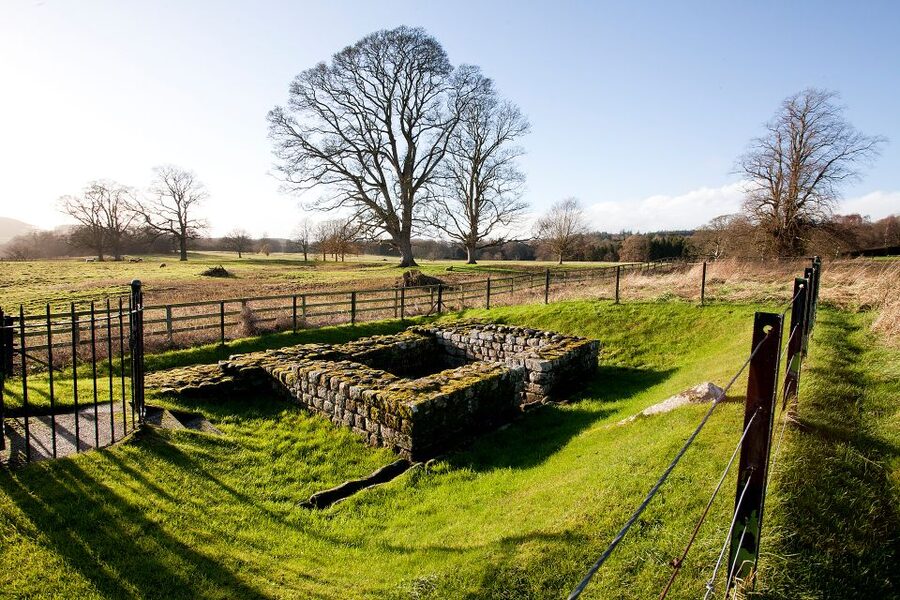
Hadrian’s Wall is often presented as a line of stones, towers, and dramatic viewpoints. Chesters gives that frontier a human scale. Instead of looking only at defensive walls, you can follow the footprint of a working Roman fort and see where soldiers ate, worshipped, commanded, slept, and washed.
The fort was built for cavalry. That matters because cavalry life had different needs from ordinary infantry service. Men and horses occupied the same barrack block, and the fort needed space for mounted troops, officers, administration, and animal care. Digital reconstructions help you picture the rooms that are now only foundations and low walls.
I find this kind of site rewarding because the ruins are not presented as a single grand monument. You move between several parts of a military settlement, and each part answers a different question about daily life. The bathhouse explains leisure. The headquarters explains military control. The commandant’s house explains rank and comfort.
The site is also beside the North Tyne, giving the bathhouse a peaceful setting. That calm can make the place feel far removed from the hard edge of a Roman frontier, which is exactly the point. Soldiers stationed here were not fighting every minute. They needed food, sleep, administration, religion, repairs, and a place to wash.
A few more museum visits around the UK worth comparing
- London: Tower of London and Crown Jewels Exhibition Ticket
★ 4.6 · 28,769 reviews - Tower of London and Crown Jewels Exhibition Ticket
★ 4.5 · 6,677 reviews - London Transport Museum Entrance Ticket
★ 4.5 · 1,323 reviews
Start with the Clayton Museum and its e-reader
Begin at the Clayton Museum rather than rushing straight to the ruins. The museum contains Roman objects and inscriptions found at the fort and along Hadrian’s Wall, giving you useful context before you begin reading the ground outside.
You can pick up an e-reader to keep the facts close while exploring. That is especially helpful at a site where many important buildings survive only as foundations. A short explanation can turn a bare outline into a barrack block, shrine, office, or bathing room.
The museum is also tied to John Clayton, the Victorian lawyer associated with the preservation of Hadrian’s Wall. He is remembered here as the Savior of the Wall, and the museum first opened in 1896 for the Trustees of the Clayton Collection.
The room itself adds another layer. Many of its original Edwardian display cabinets remain in place. They are not flashy, but they suit the age of the collection and give the museum a distinct old-fashioned character.
Do not expect a modern blockbuster museum with rows of dramatic displays. The appeal lies in the objects, inscriptions, and the connection between the collection and the site outside. If you enjoy reading labels and working out how small finds relate to a larger settlement, allow enough time here.
Follow the fort’s main buildings
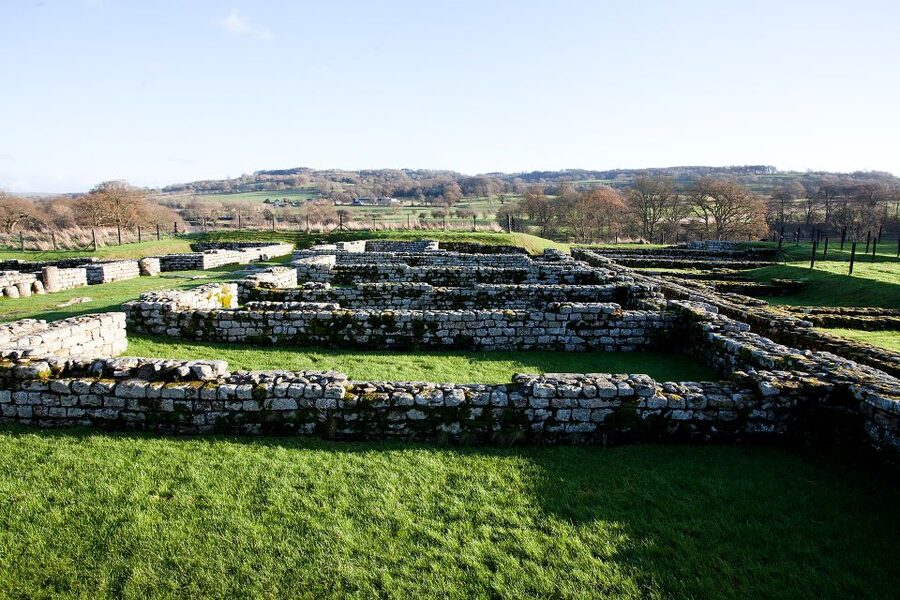
After the museum, use the takeover trail sheet from the admissions team to guide your walk. It gives families and younger visitors a simple way to look for details, though adults can use it as a handy route through the site as well.
The headquarters building is an important stop. Roman forts were not just rows of sleeping quarters. They were organized military communities, and the headquarters was where authority was displayed and managed. Look for the courtyard and the hall, then continue to the regimental shrine.
The shrine offers a reminder that Roman military life included ceremony and religious duty. The army was not simply a machine for fighting. Units carried traditions, honored their standards, and marked their connection to Rome through ritual.
The ruins are best understood slowly. You may need to pause, check the e-reader, and compare the digital reconstruction with the stones under your feet. This is not a site where every room explains itself at a glance, so the extra material makes a real difference.
A pleasant feature of Chesters is that the fort does not require you to imagine only one grand building. You move through a sequence of spaces. The headquarters feels official, the shrine feels ceremonial, and the surrounding structures help you understand how the fort operated as a whole.
Picture cavalrymen and horses in the barracks
The cavalry barrack block is one of the more unusual parts of the visit. Digital reconstructions show rooms shared by cavalrymen and their horses, a practical arrangement that makes the fort feel more like a working base than a set of abstract ruins.
You can use the reconstruction to picture the relationship between people and animals. A cavalry unit depended on healthy, trained horses, so the animals were central to military life. Their presence affected how the barracks were arranged and how soldiers spent their day.
This is also where Chesters can work especially well for families. Children often respond more quickly to the idea of a soldier and his horse sharing a building than to a plan of foundations. The trail sheet gives them another reason to look closely rather than simply walk past.
The digital material is important because the surviving stones do not tell the entire story on their own. You will not see a complete wooden or plaster barrack block. Instead, you get a reconstruction that helps supply the missing walls, rooms, and uses.
If you are mainly interested in dramatic standing ruins, this section may require patience. If you want to understand how a Roman military unit functioned day to day, it is one of the most useful stops at Chesters.
Same city, a completely different collection:
- Liverpool: Liverpool Football Club Museum and Stadium Tour
★ 4.8 · 10,764 reviews - London: Chelsea Football Club Stadium and Museum Tour
★ 4.8 · 4,576 reviews - Chelsea FC Stadium Tours and Museum
★ 5.0 · 1,908 reviews - Manchester: National Football Museum Admission Ticket
★ 4.4 · 1,243 reviews
Spend time at the riverside Roman bathhouse
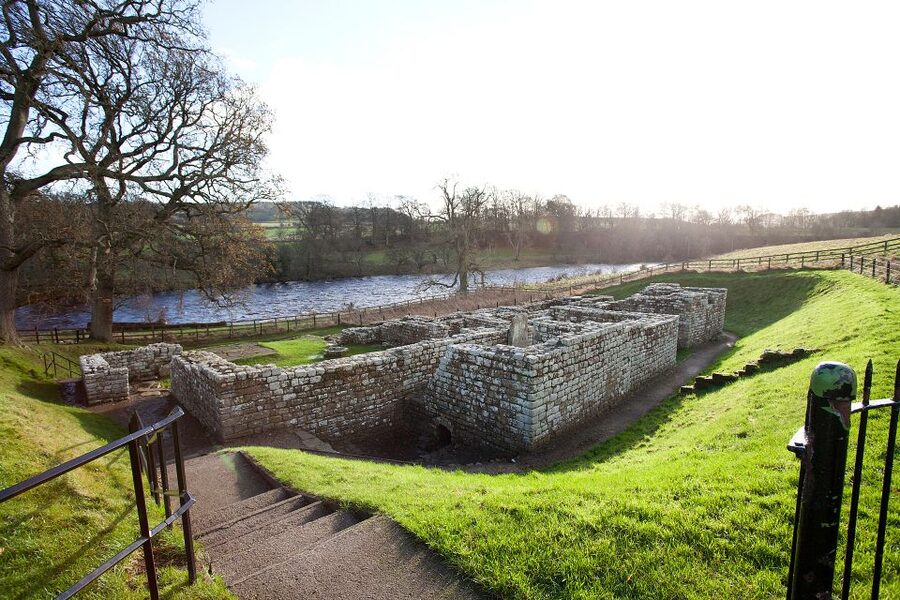
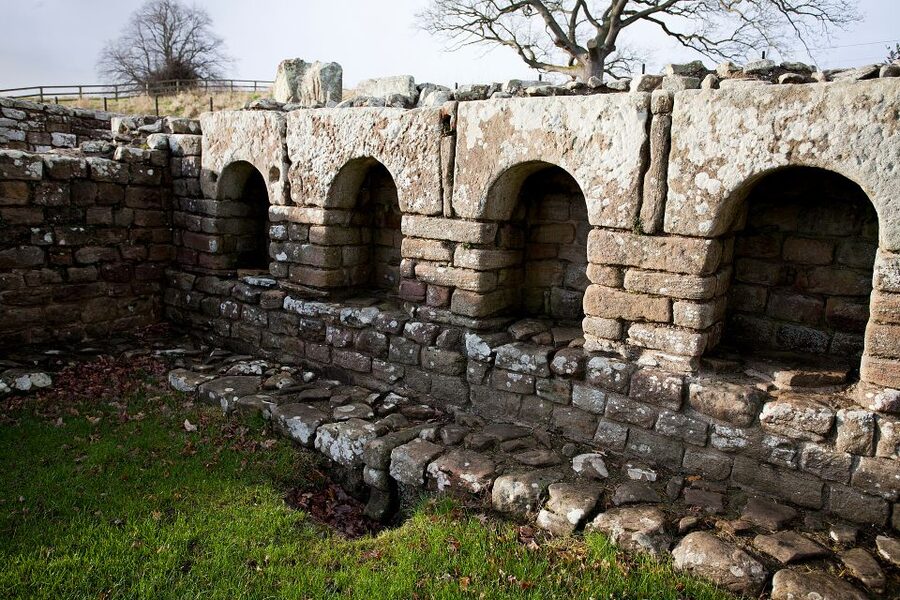
The bathhouse is the clearest reason to visit Chesters. It is described as Britain’s best-preserved military bathhouse, and the surviving layout makes Roman bathing customs unusually easy to understand.
The complex stood beside the North Tyne. Soldiers, originally from northern Spain, could use hot, cold, and steam rooms after work. That detail changes the way you see the fort. These were not isolated troops living only in rough conditions. They carried familiar habits and expectations with them, including the Roman love of communal bathing.
Walk through the different rooms and look for the changing sequence. The bathhouse was not simply one hot room. It was a group of spaces designed for different temperatures and purposes, allowing soldiers to wash, warm up, cool down, and relax.
The setting adds to the experience. The riverside position is quiet, and the building feels removed from the more formal military center of the fort. You can imagine why this part of the settlement would have been a welcome break from drills and frontier duty.
The bathhouse is also easy to explain to someone who has never studied Roman architecture. You do not need to know every Latin term to grasp its purpose. The key idea is simple: the Roman army brought an organized bathing culture to the far north of Britain.
Take your time here. The rooms are the kind of ruins that reward a slower walk and a look at the digital material. A quick photograph will not tell you much. The value comes from connecting the surviving structure with the lives of the men who used it.
See how the officers lived

The officers’ quarters and commandant’s house provide a useful contrast with the barracks. The fort was a military institution, but rank shaped daily life. Senior officers had more private and comfortable surroundings than ordinary cavalrymen.
The commandant’s house was elaborate and luxurious by frontier standards. Its ruins help you see that a posting far from Rome did not mean every member of the army lived in the same way. Senior figures could maintain status, privacy, and comfort while overseeing the fort.
This part of Chesters is valuable because it prevents an overly simple picture of Roman soldiers. The fort was not just a hard camp at the edge of the known world. It had social divisions, formal spaces, domestic areas, and a chain of command.
Use the e-reader here to help separate the various building remains. Without guidance, a large footprint can be hard to read. With it, you can compare the officers’ quarters with the communal barracks and understand the difference in living arrangements.
I would not rush through this section in search of the bathhouse. The commandant’s house gives the site one of its strongest human contrasts: shared military life for the rank and file, and a more private world for the person in charge.
How much time should you allow?
The ticket is valid for one day, and that is useful if you want to explore without hurrying. Chesters is not an escorted tour with a fixed sequence, so you can set your own pace between the museum, fort, bathhouse, and tearoom.
For a quick visit, you could see the key ruins and museum in a shorter stop. I would allow more time if you plan to read the displays, use the e-reader, follow the takeover trail, and study the bathhouse properly.
Chesters also works as a launching point for other Hadrian’s Wall sites. One published booking response specifically described it as a good base for continuing to several nearby Roman locations. That makes the ticket easier to justify if Chesters is part of a full Wall day rather than your only historical stop.
Check the seasonal last-entry time carefully. From April 1 to October 29, last entry is at 4:00 PM. From October 30 to March 31, last entry is at 3:00 PM. Winter light and weather can also make an earlier start sensible, even though the ticket itself is valid for the day.
Is the $13 ticket good value?
At the listed price of $13 per person, Chesters is a reasonable buy for anyone interested in Roman Britain, military history, or Hadrian’s Wall. The value comes from having several connected features in one visit: a museum, a nearly complete cavalry fort, a major bathhouse, and reconstructed views of buildings that no longer survive above ground.
The price may feel less attractive if you only spend a short time at the site or expect a large number of standing walls. One booking response raised a direct concern about the cost for two people, along with a separate £4 parking charge, and felt ready to leave almost immediately. That reaction points to the main value question: Chesters rewards curiosity and time more than a quick look.
You should also judge it as part of your wider day. If you are already driving to several Hadrian’s Wall sites, Chesters adds a different kind of stop. The bathhouse and cavalry layout give it an identity beyond another stretch of wall.
There is no need to book a guided tour to get something from the site. The e-reader and trail sheet provide structure, and the small-group option may suit people who prefer a more limited setting, though the core admission is self-guided.
Food, comfort, and practical preparation

Wear comfortable shoes. You will be walking around uneven historic remains, and good footwear will make it easier to focus on the ruins rather than your feet.
Bring weather-appropriate clothing. Northumberland conditions can change, and much of the fort experience takes place outdoors. A clear day will make the riverside setting pleasant, but you should not plan on warm weather as a certainty.
The Chesters tearoom offers light lunches made with locally sourced ingredients, sweet treats, and hot and cold drinks. You can also try a traditional stottie cake, a Northumbrian bread specialty. That gives the visit a local food touch rather than making it only a Roman history stop.
Wheelchair access is available, though the supplied information does not describe every surface or route in detail. If you need very specific access information, check with English Heritage before setting out.
Free cancellation is available up to 24 hours before the visit, and you can reserve now while paying later. Those terms help if your Hadrian’s Wall plans depend on weather, driving time, or other historic sites.
Who should book Chesters?
I would choose Chesters for anyone who wants more than a wall walk. It suits history fans, families who like hands-on trails, and visitors who enjoy reconstructing buildings from foundations. The bathhouse also makes it a strong choice for people interested in Roman daily life rather than only battles and emperors.
It is particularly good for a wider Hadrian’s Wall route. The fort gives you a substantial stop between other sites, and its cavalry buildings make it different from a simple milecastle or wall viewpoint.
You may be less satisfied if you want a fully restored Roman town, a large museum, or constant entertainment. Chesters asks you to read, imagine, and connect the pieces. The low rating from one booking response shows that the admission can feel expensive when the site does not match those expectations.
Should you book Chesters Roman Fort?
Book it if the bathhouse, cavalry life, and Roman military organization sound interesting to you. The combination of the Clayton Museum, digital reconstructions, fort buildings, and riverside bathing complex gives Chesters a clear identity among Hadrian’s Wall sites.
I would plan at least enough time to use the e-reader and walk beyond the headline ruins. Start with the museum, follow the trail through the headquarters and barracks, then give the bathhouse the attention it deserves.
Skip it only if you are short on time, dislike reading interpretive material, or want a site filled with tall, complete structures. For a visitor willing to slow down, Chesters offers one of the clearest pictures of ordinary military life on Rome’s northern frontier.
FAQ
Where is Chesters Roman Fort?
Chesters Roman Fort is in Northumberland, United Kingdom, on Hadrian’s Wall.
How long is the ticket valid?
The entry ticket is valid for one day.
What is included with admission?
Admission includes entry to Chesters Roman Fort and Museum.
What are the seasonal last-entry times?
From April 1 to October 29, the last entry is at 4:00 PM. From October 30 to March 31, the last entry is at 3:00 PM.
Is Chesters Roman Fort wheelchair accessible?
Yes, the activity information states that the site is wheelchair accessible.
What should I bring?
Bring weather-appropriate clothing and comfortable shoes.
Can I cancel my booking?
Yes. You can cancel up to 24 hours in advance for a full refund. You can also reserve now and pay later.
Just added around the UK
- Westminster and National Gallery 3.5-Hour Tour in Italian★ 4.9 · 28 reviews
- British Museum & Camden Town – Private Tour in Italian★ 4.8 · 26 reviews
- Glasgow: Rangers Football Club Museum★ 4.6 · 103 reviews
- Edinburgh The King’s Gallery Entrance Ticket★ 4.3 · 54 reviews
- The Royal Mint Experience: Ticket, Guided Tour & Exhibition★ 4.6 · 57 reviews
- London: National Gallery of London Masterpieces Guided Tour★ 4.9 · 78 reviews
- London: British Museum Highlights Guided Small Group Tour★ 4.9 · 113 reviews
- Stratford-upon-Avon: Tudor World Museum Entrance Ticket★ 4.4 · 34 reviews
Museum Tours in the UK, compared.
Tower of London and Crown Jewels Exhibition Ticket
Read our review →
Liverpool Football Club Museum and Stadium Tour
Read our review →
Tower of London and Crown Jewels Exhibition Ticket
Read our review →
Chelsea Football Club Stadium and Museum Tour
Read our review →



Browse the lists this tour appears in