
Review · VENICE
Venice: Vivaldi’s Four Seasons Concert & Music Museum Visit
Vivaldi’s Four Seasons feels right at home in Venice, especially when played by Venetian musicians inside an old church. This experience pairs a live Interpreti Veneziani concert with a free visit to the Music Museum, where 200 instruments show how stringed instruments were built and preserved across centuries.
I like the setting and the music equally. San Vidal Church has strong acoustics and an intimate feel, while the museum adds useful context through instruments linked to the Cremona school and Venetian violin maker Matteo Goffriller, who made instruments for Vivaldi. The main consideration is seating: there are no assigned seats, and the church can feel warm, with chairs that some people find noisy or uncomfortable.
Key points
- Hear Vivaldi in a Venetian church: Interpreti Veneziani performs The Four Seasons and other pieces at San Vidal Church, with San Maurizio Church also listed in the meeting information.
- See 200 historic instruments: The Music Museum covers instruments made from 1600 to 1900, including work linked to Amati, Bergonzi, Stradivari’s Cremona school, and Matteo Goffriller.
- Arrive 30 to 45 minutes early: Seating is first come, first served, and early arrival gives you a better chance of sitting near the front.
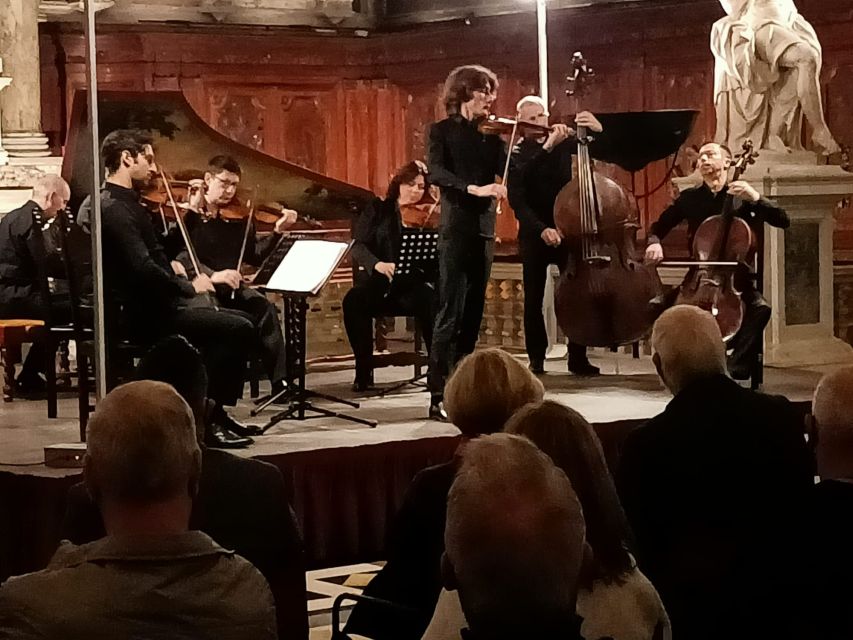
- Expect an intimate performance: The musicians play close to the audience, and some people may even be seated beside or on the stage area.
- Plan the museum visit carefully: Listed opening hours are 10 a.m. to 1 p.m. and 2 p.m. to 7 p.m., but one booking note warns that Wednesday hours may differ.
- Good value at $46: You get a concert in a historic setting plus museum admission, though the value depends on whether you make time for both.
Vivaldi in Venice, with the city as part of the music
Venice is not just the backdrop here. The city is part of the point.
Antonio Vivaldi was born in Venice, and his music has a natural connection to the canals, churches, and narrow lanes outside the venue. Hearing The Four Seasons in an old church gives the familiar work a sense of place that a modern concert hall cannot copy. You are not simply checking off a classical concert. You are matching one of Venice’s best-known composers with an atmospheric historic interior.
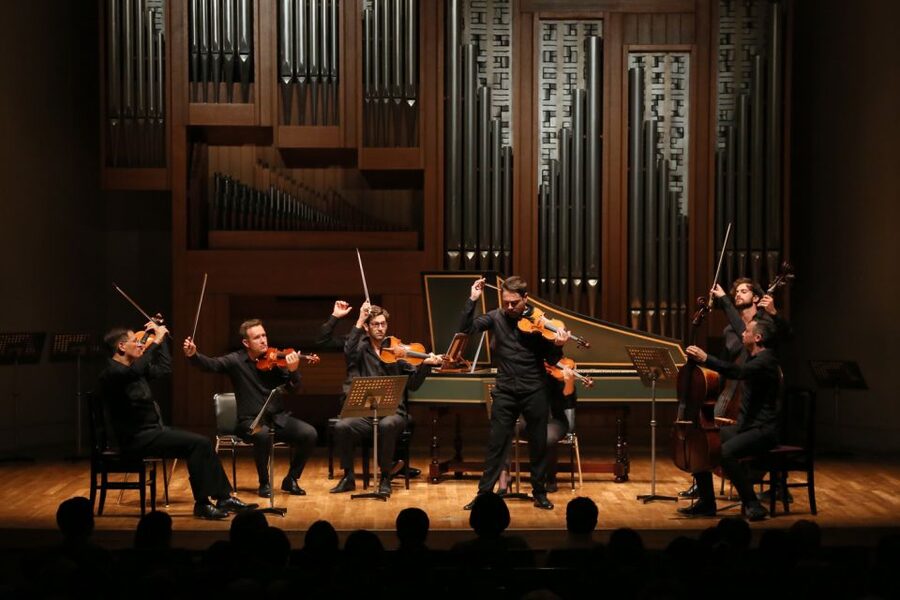
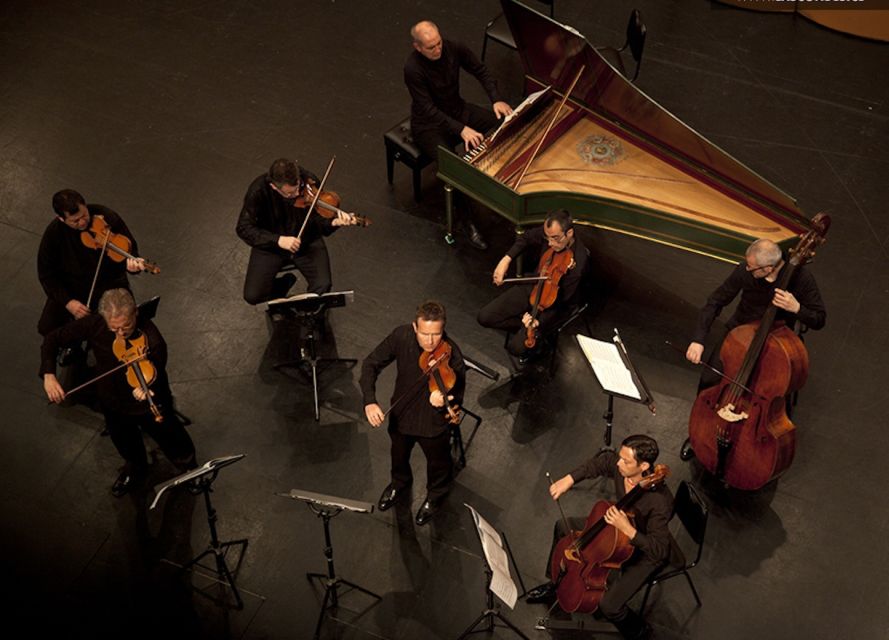
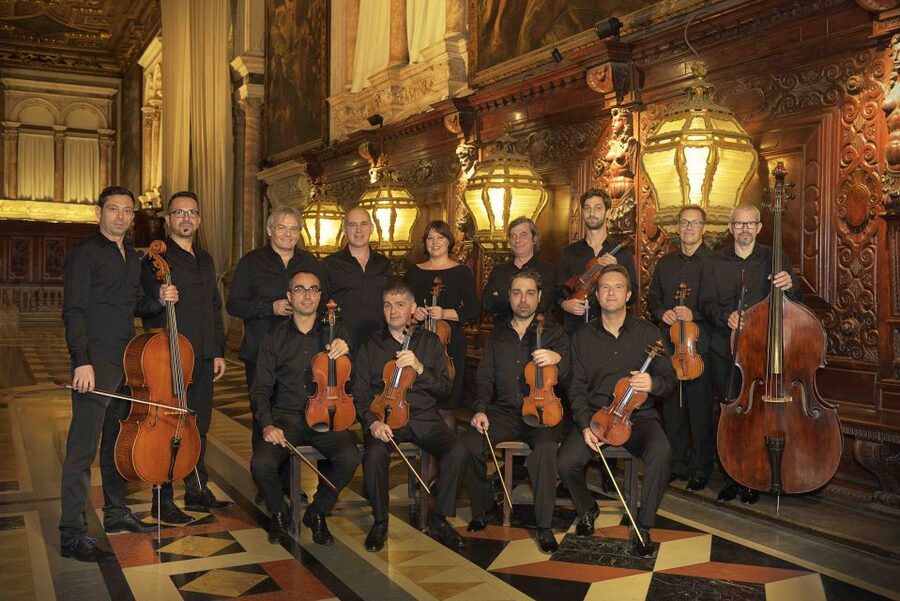
The performing group is Interpreti Veneziani, a Venetian Baroque orchestra with 35 years of history. The program centers on The Four Seasons, though other pieces may be included. The performance is built around strings, with the soloist taking a prominent role. Nicola Granillo was singled out for a stirring interpretation of Autumn, and the ensemble also includes cello and piano performances in some programs.
The musical style is not a museum piece. Expect a clean Baroque sound, strong solo playing, and expressive interpretations. The performance can feel energetic rather than stiff. That makes it a good choice even if you do not usually attend classical concerts. Teenagers and first-time concertgoers have found it accessible, partly because the music is familiar and the setting keeps you close to the performers.
More Museum Tours in Venice
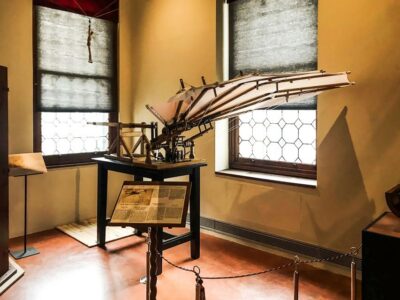
- Venice: Leonardo Da Vinci Museum Entrance Ticket
★ 4.5 · 3,560 reviews - Venice’s Best: Basilica, Doge’s Palace, Gondola & History Gallery
★ 4.5 · 2,478 reviews - Charming Gondola Ride on the Grand Canal & Gondola Gallery™
★ 4.0 · 1,313 reviews
San Vidal Church and the practical concert setup
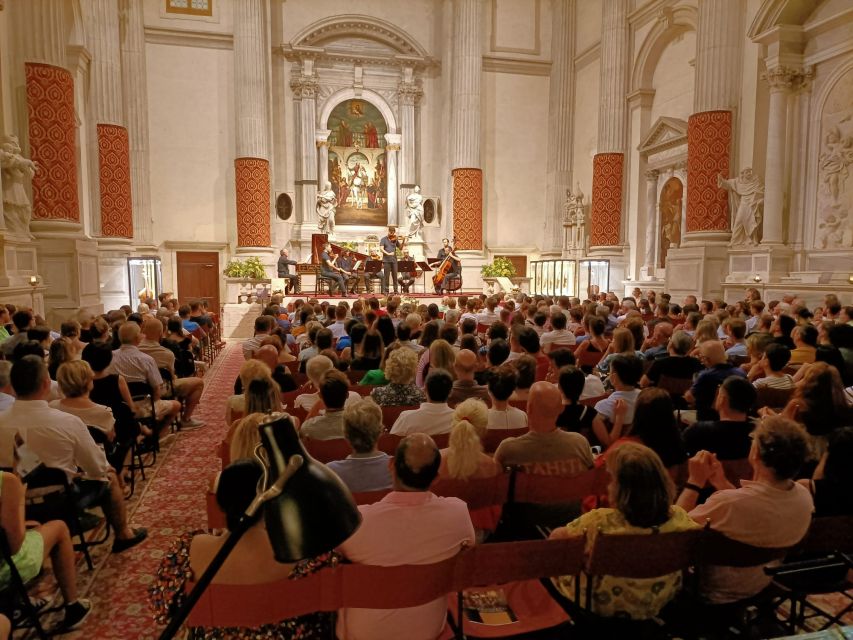
The concert is associated with San Vidal Church, between the Accademia Galleries and St. Mark’s Square. The location is also described as about 10 minutes from Rialto Bridge, though your actual walking time will depend on the route and crowds. San Maurizio Church appears in the meeting information as well, so check the venue printed on your ticket before setting out.
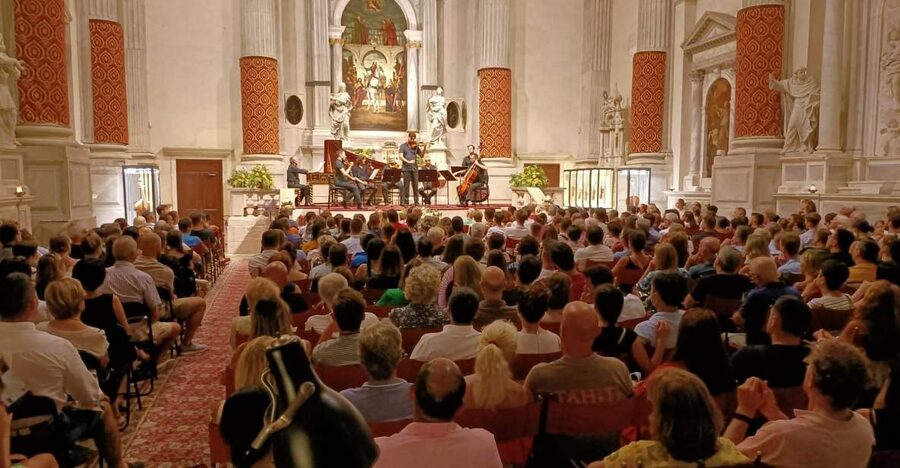
San Vidal is a working historic church setting rather than a purpose-built concert hall. Its acoustics are a major part of the appeal. String instruments carry clearly through the space, and the church gives the performance a calm, solemn frame without making it feel remote.
The seating system is simple: no assigned places. If sitting close to the musicians matters to you, arrive 30 to 45 minutes before the start. At busy times, a queue may already be forming 45 minutes ahead. The church is large enough that late arrivals can still find seats, but the best sightlines naturally go first.
A front seat is not the only good option. One clever choice is a bench along the marble wall, which can feel cooler than the main seating area in warm weather. Some people have also been seated near the stage, creating a close view of the performers. The tradeoff is that the chairs may squeak or scrape, which can distract you during quieter passages.
There are few bathrooms, and the church may become warm when attendance is high. There is no air conditioning noted in the venue details. Venice evenings can be pleasant, but a crowded interior may feel stuffy in summer. Dress comfortably, and use the bathroom before the concert begins.
Photography, video, and audio recording are not allowed during the performance. That rule is enforced, but it works in your favor. You can listen without phones raised in front of you, and the musicians are not competing with camera sounds.
The Four Seasons as a live performance
Most people arrive for The Four Seasons, and it is the clear centerpiece.
The four concertos move through spring, summer, autumn, and winter with quick changes in mood. You will recognize the famous passages, but the live setting lets you hear the work as a conversation between soloist and ensemble. The first movement of Spring can be especially affecting, while Autumn gives the solo violin a chance to carry both warmth and drama.
The orchestra’s strength is its energy. The musicians play with visible commitment, and the soloist remains a focus through much of the performance. That closeness matters. In a large hall, you may admire the sound from a distance. Here, you can watch the bowing, fingerwork, and exchanges between players.
The program may continue with other works after The Four Seasons. One practical point is worth knowing: some people find the second half less gripping than the Vivaldi concertos. The encore, however, can be lively and enjoyable. If you are attending mainly for The Four Seasons, you may prefer the program order that places it first, when available.
Do not expect a narrated lecture or a guided music lesson. The experience is centered on listening. If you want background, read a little about Vivaldi before you go, then let the church and the playing carry the evening.
The Music Museum and its 200 instruments
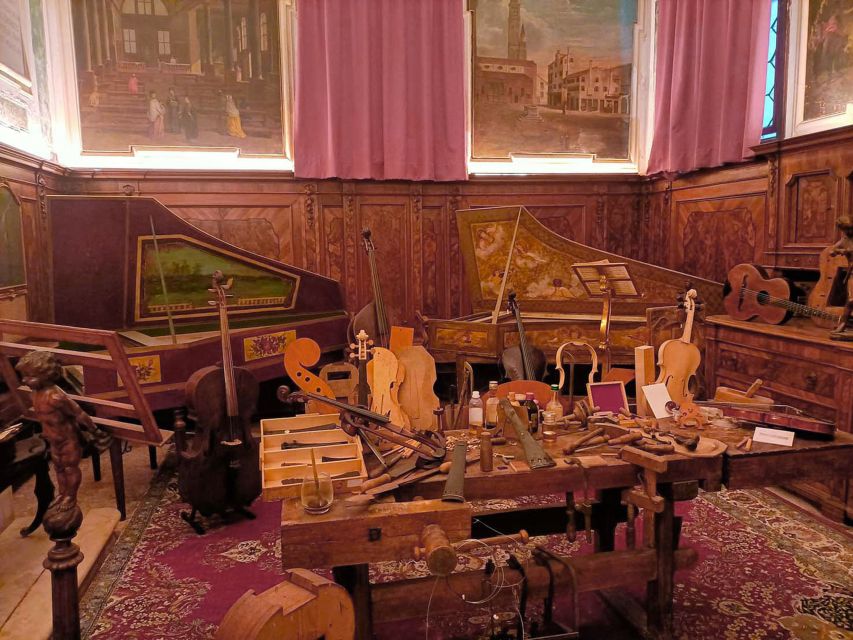
The museum visit is included with the ticket and can take place before or after the concert date, according to the booking details. The museum is at S. Marco 2603, 30124 Venezia. This is a separate stop from the concert venue, so allow time to walk between the two locations.
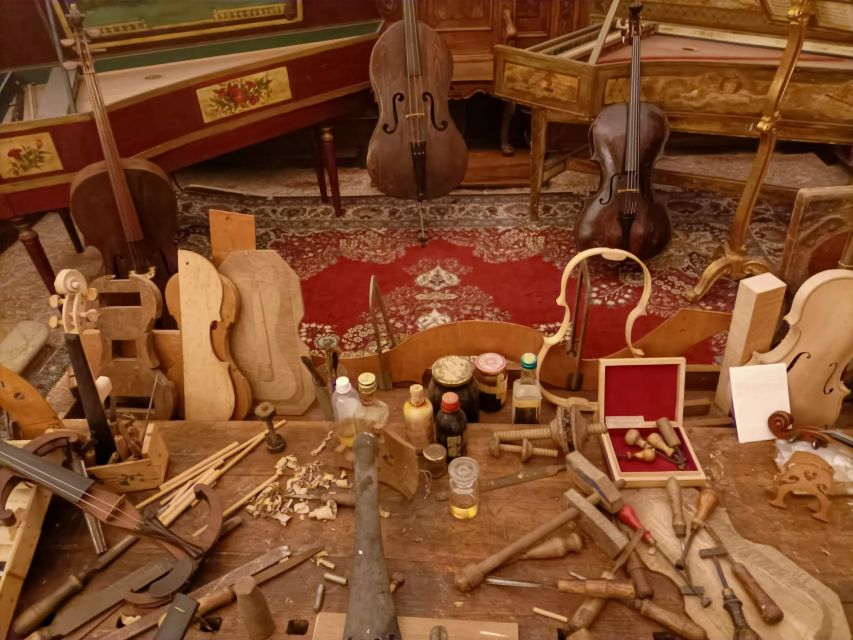
The collection contains about 200 original instruments made from 1600 to 1900. The display gives you a useful look at the tools behind the music you hear later. Rather than seeing a violin only as a polished object, you can study the changing shapes, materials, and construction methods used by makers over several centuries.
The collection includes instruments from the Stradivari school of Cremona, along with double basses associated with Bergonzi and Amati. Venetian instruments are also represented, including a violin by Matteo Goffriller. Goffriller was Vivaldi’s violin maker, so this is one of the most relevant objects for anyone coming specifically for the composer.
One of the museum’s most useful themes is longevity. A well-made violin can continue playing for centuries because of its construction, the quality of its wood, careful maintenance, and the way the instrument responds to tension and vibration. The display cannot replace seeing a maker at work, but it can help you listen differently at the concert. You start to notice the relationship between the player, the bow, and the instrument itself.
The museum is not a substitute for the concert, and the concert is not a substitute for the museum. The two parts answer different questions. The museum shows how the instruments were made and preserved. The performance shows what those instruments and their descendants can do in a live space.
A few more museum visits around Italy worth comparing
- Rome: Capuchin Crypt & Museum Tour with Choral Concert
★ 4.3 · 54 reviews - Funchal: MAMMA Museum & Concert Ticket with 1 Drink
★ 4.8 · 29 reviews - Berlin: Classical concerts at the Bode Museum Berlin
★ 4.3 · 26 reviews - Chopin Tour in Warsaw with Skip-the-line Museum & Concert
★ 4.9 · 18 reviews
How to plan the one-day ticket
The ticket is valid for one day, and the museum may be visited before or after the concert date according to the information provided. The listed museum hours are 10 a.m. to 1 p.m. and 2 p.m. to 7 p.m. Because one booking note warns that the museum may be closed on Wednesday despite the general daily schedule, confirm the hours for your date before walking over.
A sensible plan is to visit the museum in the afternoon, take a break, then arrive at the church 30 to 45 minutes before the concert. The split schedule gives you time to see the collection without rushing and still secure a decent seat.
If your concert is earlier in the day, visit the museum after the performance if its hours allow. Do not assume that an evening arrival will work. One person arrived around 5 p.m. and found the museum closed despite the stated hours, so checking locally is wise.
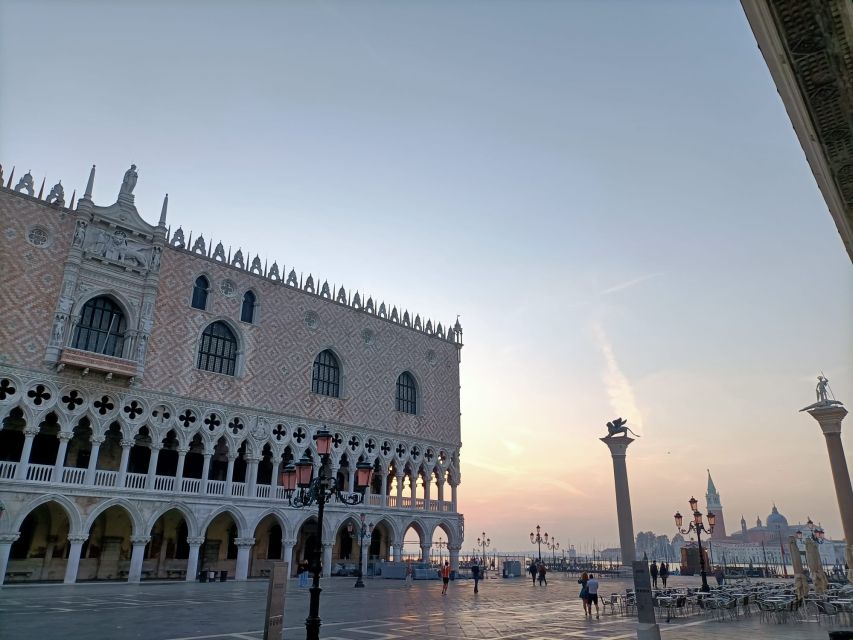
The concert is easy to fit into a Venice itinerary because the church is near the Accademia Galleries, St. Mark’s Square, and Rialto. A vaporetto stop near Zattere has also been useful for reaching the venue, though your best route depends on where you are staying.
Is $46 a fair price?
At $46 per person, the price is reasonable if you use both parts of the ticket.
A standalone classical concert in a historic Venetian church already gives the ticket much of its value. You also get access to a focused museum collection with 200 original instruments. That combination makes more sense than paying for a concert alone, especially if you are interested in how violins and other instruments are made.
The value drops if you skip the museum. Some people attend only the concert, and the performance can still justify the outing, but you are leaving part of the ticket unused. If your schedule is tight, decide before booking whether you have time for the museum’s morning or afternoon opening period.
There is one price comparison worth noting. Some ticket holders have found that buying directly at the church can cost less than booking online. The online option gives you advance planning and reserve-now, pay-later flexibility, while the church may offer a lower on-site price when tickets are available. Direct purchase can also mean a queue or less certainty, so the cheaper option is not automatically the easier one.
Free cancellation up to 24 hours before the activity and payment-later booking make this useful for a changing Venice schedule. The experience is also wheelchair accessible. Large bags, luggage, food, drinks, pets other than assistance dogs, bikes, and smoking are not allowed.
Who will enjoy this most?
I would recommend this to anyone who wants one cultured evening in Venice without committing to a full opera or a long formal concert.
It suits first-time classical listeners because The Four Seasons is familiar, the program is manageable, and the performers are close enough to watch. Families with teenagers can also consider it. The setting and recognizable music make it less demanding than a long, abstract program.
It is a strong choice for couples and families seeking a memorable evening, especially on a first night in Venice. The church setting gives the event a sense of occasion without requiring black-tie clothing or a major time commitment.
Music enthusiasts will appreciate the chance to hear a Venetian ensemble in Venice and then examine historic instruments linked to Italian violin making. You should also book it if the physical details matter to you: a historic church, excellent acoustics, and a close view of the players are central to the experience.
I would hesitate only if you dislike unassigned seating, have trouble sitting on basic chairs, or want a fully guided museum tour. The museum visit is self-directed, and the concert may be warm and crowded at popular times.
My call: book it if you plan the timing
I would book this experience if you want classical music tied closely to Venice itself. The strongest reasons are the San Vidal setting, the passionate playing by Interpreti Veneziani, and the museum’s unusual collection of historic instruments.
Arrive early, verify whether your ticket points to San Vidal or San Maurizio, and confirm the museum hours for your date, especially on Wednesday. If you make time for both the museum and concert, $46 is a solid use of a day in Venice. If you only want the music, compare the online price with the church’s on-site price, then decide how much certainty you need.
FAQ
Where does the Vivaldi concert take place?
The concert is listed at San Vidal Church, with San Maurizio Church also included in the meeting information. Check your ticket for the exact venue before traveling to the performance.
Where is the Music Museum?
The Museo della Musica di Venezia is at S. Marco, 2603, 30124 Venezia VE, Italy.
What music will be performed?
The main work is Vivaldi’s Four Seasons. Other pieces may also be included in the concert program.
Who performs the concert?
The performance is by Interpreti Veneziani, a Venetian Baroque orchestra with 35 years of history.
Are seats assigned?
No. Seating is first come, first served, so arriving 30 to 45 minutes early is useful if you want a preferred seat.
How early should I arrive?
Arrive at least 30 minutes before the start, and consider arriving 40 to 45 minutes early during busy periods.
What does the museum contain?
The museum displays about 200 original musical instruments made from 1600 to 1900. The collection includes instruments linked to Amati, Bergonzi, the Stradivari school of Cremona, and Matteo Goffriller.
When is the museum open?
The listed hours are 10 a.m. to 1 p.m. and 2 p.m. to 7 p.m. One booking note warns that Wednesday access may differ, so confirm the hours for your date.
Can I take photos during the concert?
No. Photography, video, and audio recording are not allowed during the performance.
Is the activity wheelchair accessible?
Yes. The activity is listed as wheelchair accessible.
Just added around Italy
- Oil museum and oil mill in Tuscany: tour and tasting★ 5.0 · 16 reviews
- Enchanted Castle of Sciacca – Museum Tickets★ 3.5 · 63 reviews
- Torino: FIAT Historic Museum and Lingotto District Tour★ 4.9 · 14 reviews
- Torino: The Car Museum Skip-The-Line Tour★ 4.7 · 22 reviews
- Timed Entry Ticket to the Uffizi Gallery★ 4.5 · 498 reviews
- Florence: Accademia Gallery Entry Ticket with Audio Guide★ 4.1 · 88 reviews
- Vatican City: Sistine Chapel, Museums, Basilica Private Tour★ 4.8 · 158 reviews
- Rome: Capitoline Museums and Centrale Montemartini Tickets★ 4.4 · 328 reviews
Museum Tours in Venice, compared.
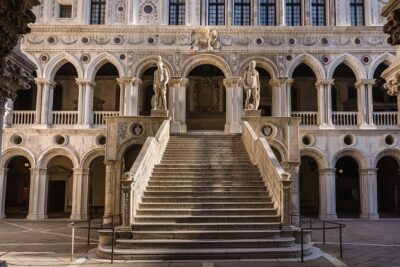
Venice’s Best: Basilica, Doge’s Palace, Gondola & History Gallery
Read our review →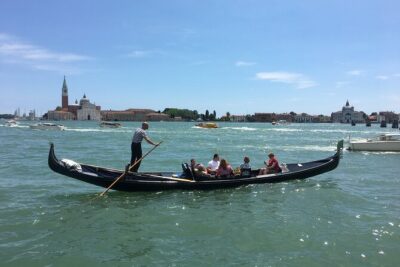
Charming Gondola Ride on the Grand Canal & Gondola Gallery™
Read our review →
City Pass with Museums including Doge’s Palace
Read our review →
Bell Tower & St Mark’s Square History Gallery Ticket
Read our review →
Venice Museum Pass & Doge’s Palace Entrance Ticket
Read our review →
Basilica, Doge’s Palace, History Gallery & Bell Tower Option
Read our review →
Browse the lists this tour appears in