
Review · FLORENCE
Florence: Accademia Gallery Entry Ticket with Audio Guide
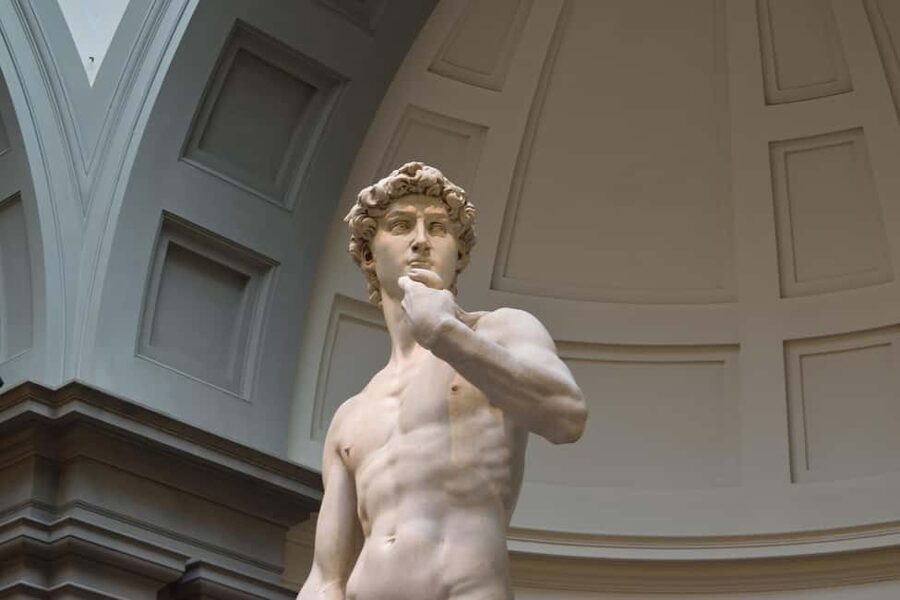
Michelangelo’s David is the main event here, and seeing this 17-foot marble figure in the Accademia is very different from seeing a photograph. I like the fast-track ticket and the chance to choose between a simple museum visit and an optional multilingual audio guide. The catch is the meeting process: you first go to an office on Via dei Pucci, and audio access may require an app, code, and your own earbuds.
I also like that the Accademia offers more than its famous statue. The unfinished Slaves, old Florentine religious paintings, Medici instruments, and medieval-style glass windows give you a fuller picture of Florence’s art. Allow extra patience for check-in, and do not expect a live museum guide included in the price.
Key points to know before booking
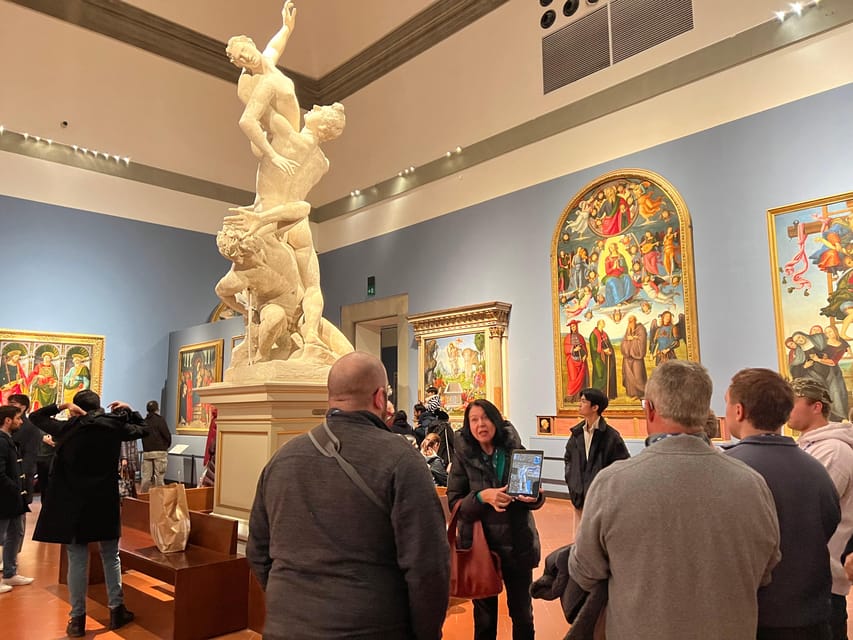
- David is the star: See Michelangelo’s famous marble statue beneath the gallery’s natural skylight.
- The Slaves reveal the process: Unfinished figures show how Michelangelo’s forms appear to emerge from the stone.
- Fast-track entry saves time: You still need to check in at the Italy Pass office before going to the museum.
- The audio guide is optional: Commentary is available in English, Spanish, French, German, and Italian through an app.
- The collection goes beyond sculpture: Expect religious paintings, plaster casts, and instruments linked to the Medici and Lorraine families.
- Bring your own earbuds: Disposable earphones may not fit every device, and audio setup has caused trouble for some visitors.
Why David is worth the trip
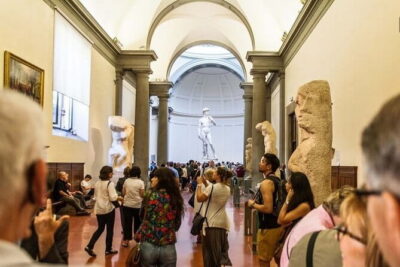
The Accademia Gallery is one of those places where a single artwork can shape your whole visit. David is not tucked into a corner or lost among dozens of equal-sized masterpieces. You walk toward him along the Hall of the Prisoners, and the long approach gives the statue a sense of arrival.
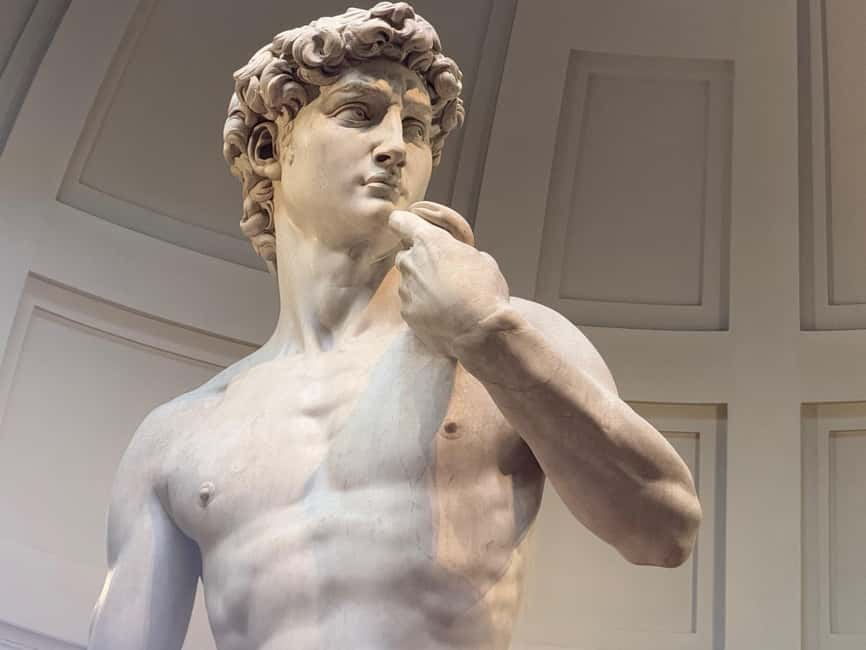
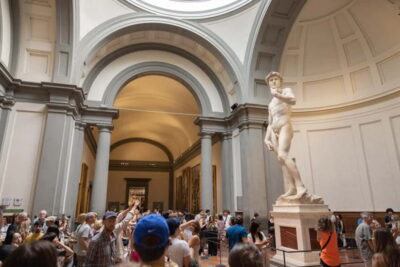
The figure is more than 17 feet tall and carved from white marble. From a distance, you notice the pose and scale. Once you are closer, look at the hands, feet, hair, and face. Small details, including the veins on his hands and the alert expression in his eyes, make the statue feel remarkably alive.
I find the gaze especially striking. David looks watchful rather than relaxed, as if he is preparing for a difficult moment. That tension helps explain why the statue has remained such a powerful symbol of Florence.
The sculpture is displayed beneath a natural skylight in the Tribune. The light helps you see the body from several angles, so do not rush straight past after your first view. Walk around the space as much as the crowd allows and notice how the proportions change from the front, side, and rear.
The ticket price is $42 per person, which is not small for a single museum entry. Still, if David is high on your Florence list, the price can make sense because it combines reserved admission with help from a host and an optional audio guide. The value depends on how much you care about avoiding a ticket queue and having some explanation while you walk.
More Museum Tours in Florence
- Florence: Skip-The-Line Uffizi Gallery Timed Entry Ticket
★ 4.5 · 27,832 reviews - Florence: Leonardo Interactive Museum Entry Ticket
★ 4.5 · 12,957 reviews - Florence Accademia Gallery Tour with Entrance Ticket Included
★ 4.5 · 6,148 reviews
The Hall of the Prisoners and Michelangelo’s unfinished work
Before reaching David, you pass through the Hall of the Prisoners. Its four unfinished marble figures, often called the Slaves or Prisoners, are among the most revealing works in the museum.
The statues seem to push and twist their way out of the stone. That unfinished quality is not a flaw to overlook. It lets you see Michelangelo’s working method and his belief that a figure could be released from the block. You can study the rough marble around the bodies, then compare it with the smooth finish of David.
This is a good place to slow down. David is polished and complete, while the Slaves leave the making process visible. Together, the works show two sides of Michelangelo: the master of perfect finish and the sculptor working through mass, movement, and human anatomy.
The Hall also gives the visit a better rhythm. If you entered only to see David, you might spend a few minutes in the Tribune and leave. The unfinished figures give you a reason to pay attention before the main attraction.
Beyond David: paintings, plaster casts, and instruments
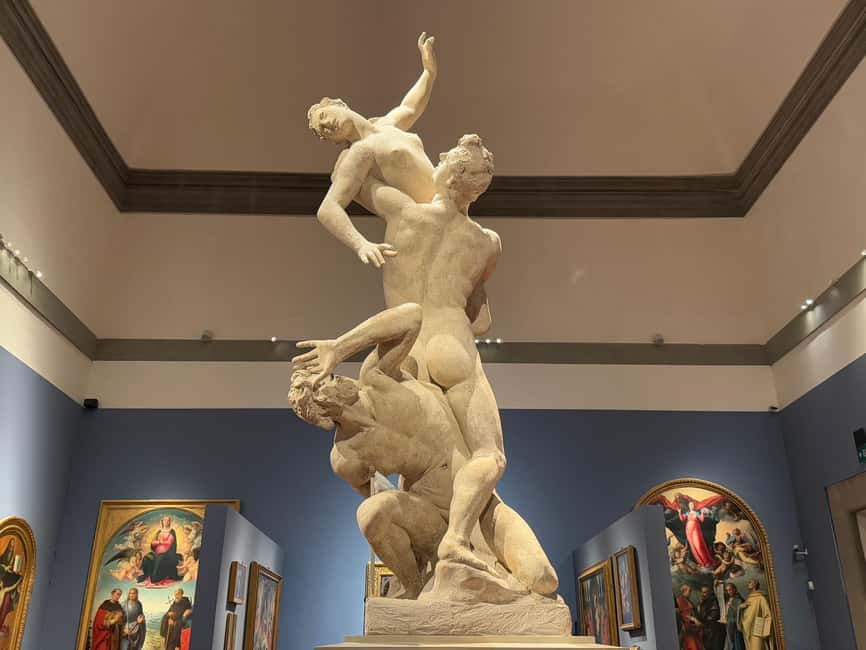
The Accademia is not only a Michelangelo museum. The rest of the collection helps you understand Florence’s long artistic tradition.
Florentine religious paintings
The gallery holds gold-ground paintings by Florentine artists from the 13th through the 16th centuries. These works belong to a period when religious images often used gold backgrounds, formal poses, and carefully arranged sacred figures.
If you are used to later Renaissance painting, these earlier works may look more restrained. Their value is in the details: the repeated patterns, delicate surfaces, and visual rules that shaped Florentine art before the full flowering of Renaissance naturalism.
You do not need to know every artist or date to enjoy this section. Look at how the paintings organize space and how much attention goes into clothing, halos, and decorative surfaces. This collection also provides useful context for Florence beyond the familiar names of Michelangelo, Leonardo, and Botticelli.
More ways to see the David:
- Florence: Accademia Gallery Guided Tour
★ 4.6 · 4,156 reviews - Florence: Accademia Gallery Skip-the-Line Guided Tour
★ 4.8 · 3,044 reviews - Florence: Art Tour, Accademia Gallery and David
★ 4.5 · 2,407 reviews - Florence: Accademia Gallery Guided Tour with Entry Ticket
★ 4.6 · 2,253 reviews
The Hall of Models
The Gipsoteca Bartolini contains 19th-century plaster casts and models. The room can feel quite different from the marble galleries, more like a sculptor’s working collection than a traditional display of finished masterpieces.
I like this section because it widens the story of sculpture. You see studies and casts that help explain how artists planned figures before producing a final work. If David gives you the finished result, the plaster collection offers a glimpse of the preparation behind sculpture.
Do not skip it simply because the casts are less famous. The room gives the museum variety, and it may appeal particularly to anyone interested in technique, anatomy, or the practical side of an artist’s work.
The Museum of Musical Instruments
The musical instrument collection includes objects connected with the Medici and Lorraine families. Among the highlights is a Stradivarius violin.
This is a useful change of pace after the sculpture halls. The instruments remind you that Florence’s court culture was not built around painting and sculpture alone. Music, collecting, craftsmanship, and status all played a part in the city’s cultural life.
The information provided for this experience does not give a precise list of every instrument on display, so I would treat this as a worthwhile extra rather than the main reason to buy the ticket. David and the Slaves remain the core of the visit.
What the fast-track ticket really saves
The fast-track feature is useful, but it does not mean you can simply walk straight into the gallery from the street. You first meet at the Italy Pass store at Via dei Pucci 37/39 red. A host assists with entry, and you then make your way to the Accademia.
That extra step matters. The meeting office is not the museum itself, so you need to allow time to find it, check in, and follow the instructions for your entry. One practical weakness is that the office waiting area may not have enough seating, so do not plan on a relaxed lounge before admission.
The benefit is that your museum ticket is arranged in advance. For a short Florence stay, this can be worth paying for. A wasted morning in a ticket line costs more than money, especially when you have the Duomo, Uffizi, churches, and evening plans competing for your time.
I would book this option if you care about a set entry and do not want to handle the museum ticket process yourself. If you are comfortable arranging admission independently and already have a reliable way to enter, compare prices before committing to the $42 package.
Choosing the audio guide
You can buy entry without the audio guide or choose the ticket with audio commentary. The guide is available in English, Spanish, French, German, and Italian, and it is accessed through an in-app system.
The audio option is best for you if you want background while moving through the rooms but do not want a live tour. It can help explain the Slaves, David, the religious paintings, and the other collections without tying you to a group’s pace.
You need your own earbuds. This is more important than it sounds. Disposable earphones are available, but they may not fit all devices, and the audio setup has not always worked smoothly. A booking code may need to be entered into the app, and at least one reported experience involved a code that did not work at first.
There have also been problems with static, poor sound, and unclear spoken English during an audio-supported visit. I would not make the audio guide the sole reason for booking. Think of it as a useful extra, not a guarantee of a flawless technical experience.
Download what you need before you arrive if the instructions allow it, keep your phone charged, and bring compatible earbuds. If the app or code fails, you can still see the collection with the entry ticket, but you may lose much of the commentary you paid for.
The check-in process and timing
The stated duration is flexible, from four hours to one day, because the ticket is an entry experience rather than a fixed-length guided tour. The actual time inside depends on your pace and how closely you study the collection.
A focused visit can center on the Hall of the Prisoners, David, the plaster casts, the instruments, and the religious paintings. If you like sculpture or art history, you may want several hours. If you only want David, the visit can be much shorter, though rushing would leave much of the museum unseen.
The host or greeter may speak English, French, Italian, or Spanish. This person helps with entry, but a live tour guide is not included. That distinction is important. You receive assistance getting into the museum, not a personal lecture through every room.
The check-in process can feel more complicated than expected because it involves the office, the museum, and, if selected, the audio app. I would arrive with time to spare rather than scheduling another attraction immediately afterward.
Accessibility, restrictions, and what to bring
The experience is listed as wheelchair accessible. You should still confirm the practical details at booking if you have specific mobility needs, since the supplied information does not describe every route or facility.
Bring a passport or ID card for children. Oversize luggage is not allowed, so arrive with a small day bag rather than a large suitcase. Smoking, pets except assistance dogs, selfie sticks, flash photography, alcohol, and drugs are prohibited.
The photography rules matter. You may want a photo of David, but flash photography is not allowed, and selfie sticks are prohibited. Follow staff instructions so the gallery remains comfortable for everyone and the artwork is protected.
Is $42 a fair price?
At $42, this is a convenience purchase, not a budget museum ticket. You are paying for prebooked entry, assistance from a host, and the option of a multilingual audio guide. The fast-track element is the biggest practical reason to consider it.
I see good value here for a first-time Florence visitor with limited time, especially if you want David on a firm schedule. The price is harder to justify if you are staying several days, have plenty of flexibility, or can arrange a comparable ticket at a lower cost.
The audio guide adds value only if it works well for your phone and earbuds. Since technical problems have occurred, I would compare the entry-only and entry-plus-audio prices and select the audio option only if the extra cost is modest and you want commentary.
The free cancellation window and reserve-now, pay-later option add useful flexibility. You can cancel up to 24 hours before the activity for a full refund, and you can reserve without paying immediately. Those terms are helpful when your Florence schedule is still changing.
Who should book this Accademia visit?
I would recommend it to:
- First-time visitors who want a simple route to David.
- People with only a short stay in Florence.
- Art lovers who want more than the famous statue.
- Independent visitors who prefer an app to a live tour.
- Families who need a scheduled entry and do not want to gamble on museum queues.
I would be more cautious if you dislike meeting at a separate office, downloading apps, or troubleshooting access codes. I would also look elsewhere if you want a fully guided experience with a dedicated art historian, since no live tour guide is included.
Should you book it?
Book this experience if David is a priority and saving time matters more to you than finding the lowest possible price. The Slaves, religious paintings, plaster casts, and musical instruments make the visit worthwhile beyond the famous statue, and the optional audio guide can add useful context.
Before paying, note the full routine: meet at Via dei Pucci 37/39 red, collect help with your entry, then continue to the Accademia. Bring earbuds, keep your phone ready, and leave a little extra time for check-in.
My verdict is positive but practical. The art itself is exceptional, and the fast-track ticket can be valuable. The service side is less dependable, especially if your audio code or equipment fails. Choose the entry option that matches your needs, and treat the audio guide as a bonus rather than the foundation of your visit.
FAQ
Where is the meeting point?
The meeting point is the Italy Pass store at Via dei Pucci 37/39 red in Florence.
Is a live tour guide included?
No. The experience includes a host or greeter to assist with entry, but it does not include a live museum guide.
What languages are available for the audio guide?
The optional audio guide is available in English, Spanish, French, German, and Italian.
Should I bring earbuds?
Yes. Your own earbuds are recommended for the best audio quality and device compatibility. Disposable earphones may be available but may not fit every device.
Is the Accademia Gallery wheelchair accessible?
The experience is listed as wheelchair accessible.
Can I cancel the booking?
Yes. You can cancel up to 24 hours in advance for a full refund. You can also reserve now and pay later.
More Audio-Guided Visits in Florence
- Uffizi Gallery Reserved Ticket & Digital Audio Guide App
★ 4.3 · 69 reviews - Florence: Accademia Gallery Skip-the-Line with Audio Guide
★ 4.2 · 18 reviews - Istanbul: Topkapi Palace & Harem Museum Ticket & Audio Guide
★ 4.1 · 3,977 reviews - Paris: Orsay Museum Entry Ticket and Digital Audio Guide App
★ 4.4 · 3,170 reviews
More Self-Guided Tours in Florence
- Florence: Uffizi Gallery Timed Entry Ticket & Audio Guide
★ 4.2 · 2,794 reviews - Florence: Accademia Gallery Reserved Entry & Audio Guide
★ 4.3 · 600 reviews - Florence: Accademia Gallery David Entry & Audio Guide App
★ 4.2 · 406 reviews - Florence: Uffizi Gallery entry ticket + audio guide
★ 3.6 · 74 reviews
Just added around Florence
- Timed Entry Ticket to the Uffizi Gallery★ 4.5 · 498 reviews
- Florence: Skip-the-Line Tour of Uffizi & Accademia Galleries★ 4.4 · 14 reviews
- Florence: Skip-the-Line Accademia Gallery Entry Tickets★ 4.3 · 44 reviews
- Florence: Walking Tour with Skip-the-Line Accademia Gallery★ 4.6 · 148 reviews
- Florence: David’s Accademia Gallery Guided Tour★ 4.2 · 207 reviews
- Florence: Uffizi Gallery Private Tour w/ Skip-the-Line Entry★ 4.9 · 24 reviews
- Florence: 2-Hour Private Guided Visit to the Uffizi Gallery★ 4.8 · 15 reviews
- Palazzo Vecchio: Private Guided Museum Tour & Tower Tickets★ 4.7 · 18 reviews
Museum Tours in Florence, compared.
Skip-The-Line Uffizi Gallery Timed Entry Ticket
Read our review →
Florence Accademia Gallery Tour with Entrance Ticket Included
Read our review →
Uffizi Gallery: Renaissance Masterpieces Guided Tour
Read our review →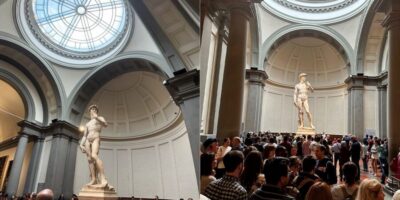
Uffizi Gallery Timed Entry Ticket & Audio Guide
Read our review →
Browse the lists this tour appears in