
Review · AUSTRIA
Vienna: Chocolate Workshop in Chocolate Museum w/ Tasting
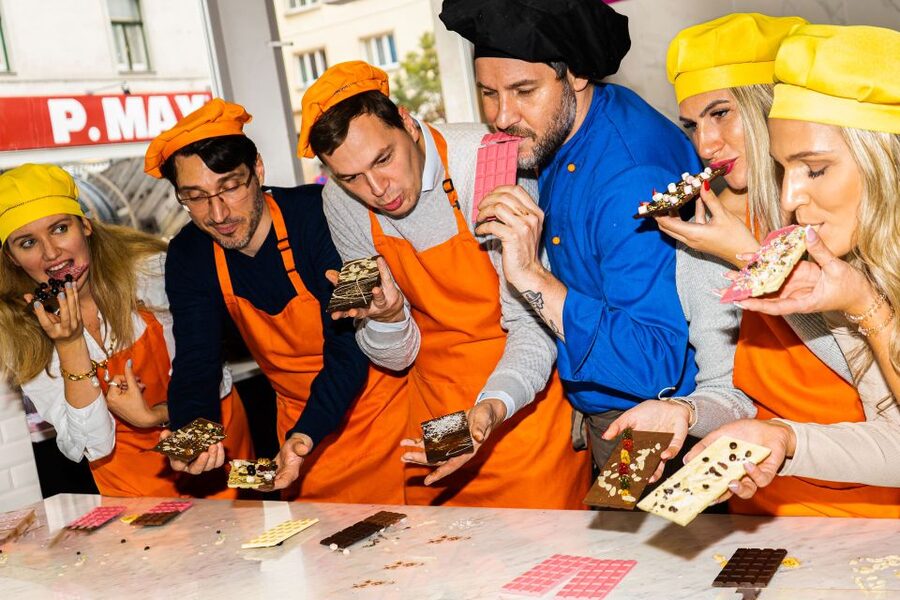
Vienna’s Chocolate Museum workshop turns a familiar sweet into a hands-on project. You use a professional tempering machine, choose toppings for three full-size bars, and make a hot chocolate based on an Aztec recipe. It is part cooking lesson, part tasting, and part edible souvenir stop.
I like the generous amount of chocolate you take home and the warm, patient teaching style reported from instructors such as Janya, Dimi, Deme, Tania, and Selma. I also like that the activity works well for families and adults traveling without children. The main drawback is that the museum itself is small, and the workshop does not show chocolate being made from cacao bean to finished bar.
Key points to know before booking
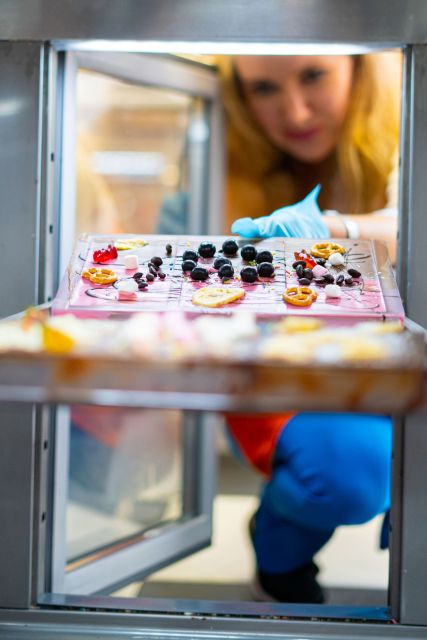
- Three full-size chocolate bars: Choose from chocolate types and a broad selection of toppings, then decorate each bar yourself.
- A real tempering machine: You handle professional equipment, though the class does not teach you how to temper chocolate at home.
- Aztec-style hot chocolate: Prepare and taste a cocoa drink using traditional tools and ingredients.
- A short, interactive museum visit: The museum adds context and playful photo opportunities, but it is not a large, traditional museum.
- Good for families and adults: Children take part, while the chocolate history and tasting make it worthwhile for grown-ups too.
- Easy transport from central Vienna: Pilgramgasse U-Bahn station is about a three-minute walk away.
Making chocolate instead of only looking at it
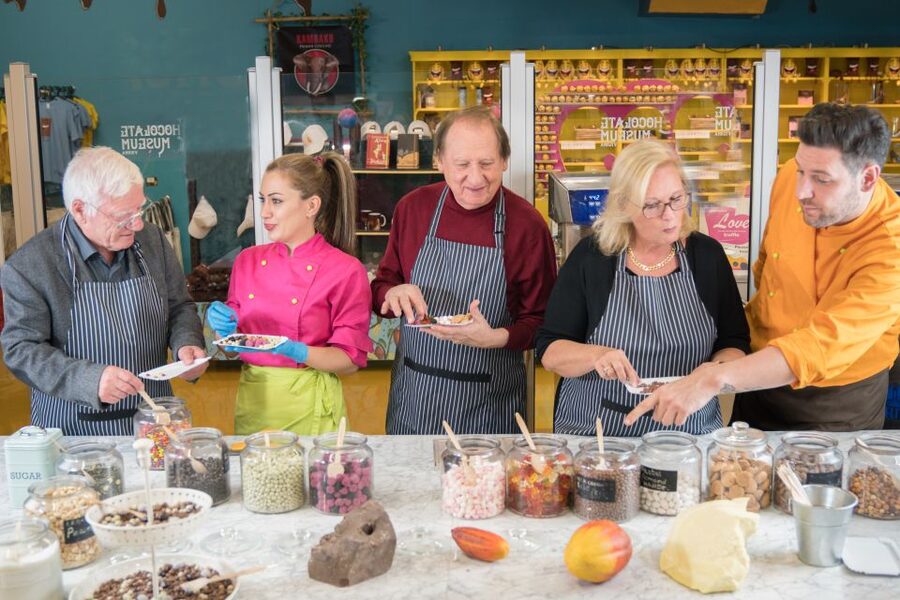
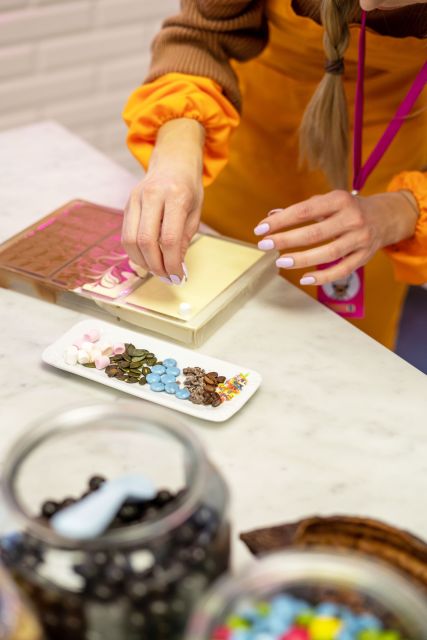
Many chocolate attractions ask you to watch a confectioner work, accept a tiny sample, and move along. This workshop takes a better route for anyone who likes to use their hands. You pour chocolate into molds, spread it into place, select toppings, and create three bars that are yours to keep.
The activity begins with an explanation of the main types of chocolate and a tasting of different varieties. The chocolatier explains how chocolate behaves and introduces the seven steps of chocolate consumption. That phrase may sound a little grand for a snack, but it gives the session a useful structure. You are encouraged to pay attention to appearance, aroma, texture, and taste rather than simply eating the chocolate as fast as possible.
The instructor then demonstrates the basic process. You are not expected to arrive with cooking skills, and the staff provides the ingredients, cookware, molds, and recipes. Several instructors have been praised for keeping children involved while still giving adults enough information to stay interested. Dimi, Janya, Deme, Tania, and Selma have all been singled out for friendly, clear instruction at different sessions.
The teaching style matters here. Melted chocolate can look simple, but getting it into a mold evenly is less effortless than it appears. You may need to spread it carefully, work around the corners, and decide how much topping the chocolate can hold without becoming a heap of unrelated sweets.
More chocolate museums in Austria:
- Lindt Home of Chocolate Museum Entry Ticket
★ 4.7 · 9,329 reviews - Choco-Story Brussels: Chocolate Museum Entrance with Tasting
★ 4.3 · 4,883 reviews - Cologne: Chocolate Museum Entrance Ticket
★ 4.4 · 2,790 reviews
The professional tempering machine and the three bars
Tempering is the step that gives chocolate a smooth finish and a satisfying snap. At this workshop, you use a professional chocolate tempering machine rather than trying to control the process with a saucepan or improvised home method.
That is one of the more unusual parts of the experience. You get a glimpse of the equipment used in a working chocolate setting, but you should keep your expectations in check. The class does not teach you how to temper chocolate at home, and it does not take you from cacao bean to finished chocolate.
Once the chocolate is ready, you fill your molds and choose how to decorate the bars. The available choices have included dark, milk, white, and pink chocolate, along with toppings such as granola and gummy sweets. The exact selection may vary, but you should have enough choices to make each bar different.
The three-bar format gives you room to experiment. You can keep one simple, load another with toppings, and make the third a colorful family creation. For children, the decorating is the main event. For adults, it is an easy way to understand how texture and sweetness change the finished product.
You then place the bars in the fridge for a short time so they can set. The finished chocolate is packed for you to take home. Bring a small amount of care to the journey back to your hotel, especially on a warm day. The practical value of the session is clear: at $55 per person, you are not leaving with a single bite-sized sample, but with three substantial handmade bars plus tastings and a drink.
Choosing the right chocolate and toppings
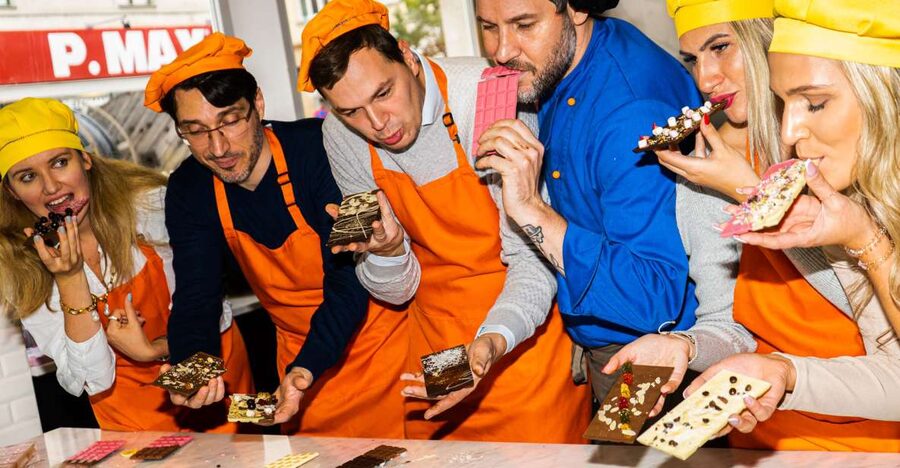
Milk chocolate is the safest choice if you prefer a smooth, sweet bar. Several participants have particularly liked it, and white chocolate has also gone over well. Dark chocolate is more bitter, so it suits you best if you already enjoy a stronger cocoa flavor.
The toppings let you steer the bars toward your own taste. Granola adds crunch, while gummy sweets bring a playful, chewy contrast. You can create something neat and restrained or make a bar that looks like a small chocolate playground.
This part is not a formal pastry course. You will not learn advanced truffle work, molded bonbons, or professional chocolate design. The strength is its accessibility. The instructor shows you what to do, then gives you enough freedom to make the result personal.
I would treat the decorating stage as a social activity rather than a test of skill. Families can compare creations, couples can make matching or competing bars, and solo visitors can enjoy the pleasant oddity of designing their own chocolate in a group setting.
The Aztec hot chocolate is more than a sweet drink
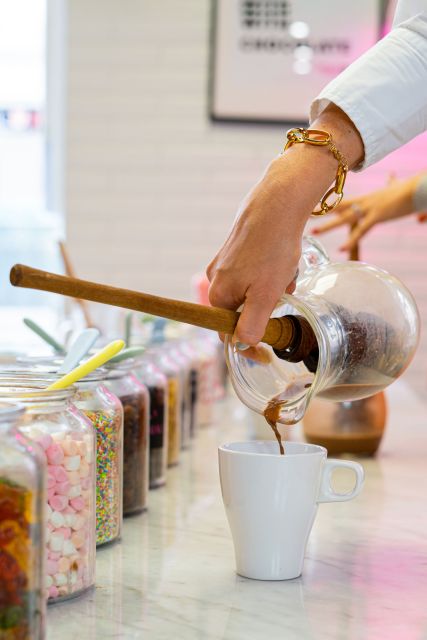
The second hands-on section focuses on hot chocolate. You prepare a drink with cocoa, sugar, and milk powder, using traditional Aztec techniques and ancient-style tools supplied by the museum.
This is not simply a cup poured from behind the counter. You take part in the process and learn how the drink differs from the thick, sweet European hot chocolate often served in Vienna. The result has been described as especially rich, and it gives the workshop a useful historical link between cacao traditions and modern chocolate treats.
The hot chocolate also breaks up the bar-making session. After concentrating on molds and toppings, you get a warm drink that you have helped prepare yourself. It is a small lesson, but it makes the history more memorable than a wall panel alone.
You should not expect an exact reconstruction of an ancient beverage. The activity presents an original hot chocolate recipe based on Aztec methods, adapted for a modern workshop. Its value is in connecting ingredients, tools, and technique rather than claiming to reproduce a drink unchanged across centuries.
A few more museum visits around Austria worth comparing
- NYC: Museum of Ice Cream Entry Ticket
★ 4.3 · 2,619 reviews - Brussels: Chocolate Museum Visit with Workshop
★ 4.6 · 1,474 reviews - Museum of Ice Cream New York City Admission Ticket
★ 4.0 · 1,154 reviews - Paris: Entrance Ticket to the Chocolate Museum
★ 4.1 · 1,105 reviews
What the museum adds, and where it falls short
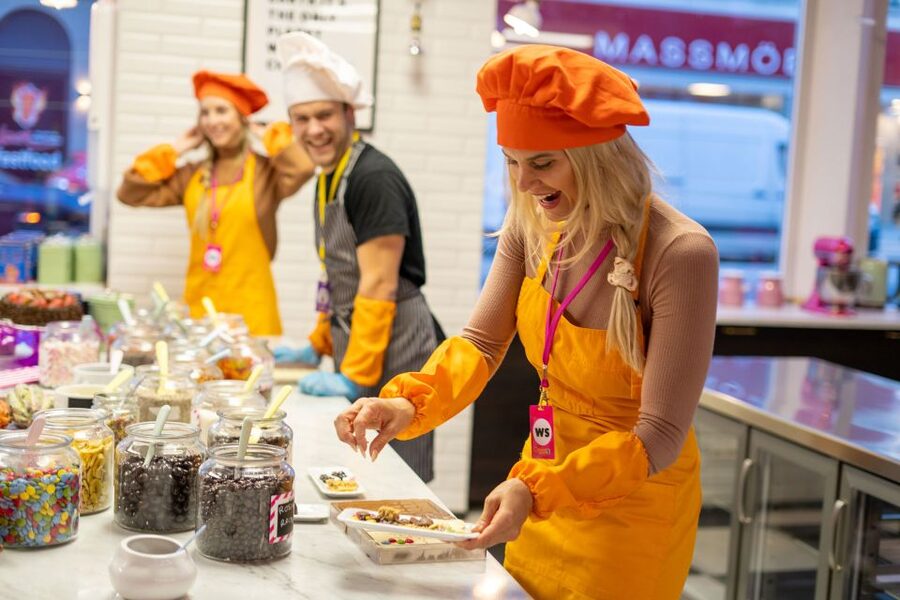
Your workshop ticket includes free admission to the Chocolate Museum Vienna, also known as BO-YO. The museum visit takes about 15 minutes according to the timing information, while the hands-on workshop takes about 60 minutes. The full booking is advertised as 90 minutes, so allow the complete time rather than planning a tight connection afterward.
The museum is interactive and includes photo opportunities. It explains the origins of cacao and provides a little background before or after your practical session. For children, that makes the visit more engaging than a room of glass cases.
Still, this is a small museum. If you are hoping for a major industrial chocolate museum with a full bean-to-bar production line, this is not that experience. You will not watch chocolate being made from cacao beans, and one clear limitation is that the museum content alone would not justify the entire price for many people.
The workshop is what supplies the value. The museum gives the activity context, while the instructor supplies much of the detail and personality. Think of the museum as a compact extra included with a chocolate class, not as the main attraction.
After finishing, you receive a signed Chocolate Museum Vienna BO-YO certificate. It is a lighthearted souvenir rather than a professional qualification, but children tend to enjoy having proof of their chocolate-making achievement.
Timing, meeting point, and getting there
The entrance is on the corner of Schönbrunner Straße and Reinprechtsdorfer Straße. From Pilgramgasse U-Bahn station on the green U4 line, it is about a three-minute walk.
You can also use buses 14A or 12A, which stop directly in front of the museum. That makes this a relatively easy activity to fit into a Vienna day without arranging a separate excursion or spending time crossing the city.
The session is offered in English and German. If you book an English-language time, the instructor should guide you through the process and explain the chocolate background in English. Group size can vary. Some sessions have been small and personal, while others have included larger family groups. The teaching team has handled both formats, though a smaller group naturally allows more individual help.
Arrive with enough time to find the entrance and settle in. You may also want to leave a few minutes before or after the workshop for the counter, where you can buy drinks, hot chocolate, and additional sweets. That is optional, but it makes sense if you are already in a chocolate mood.
Is $55 a fair price?
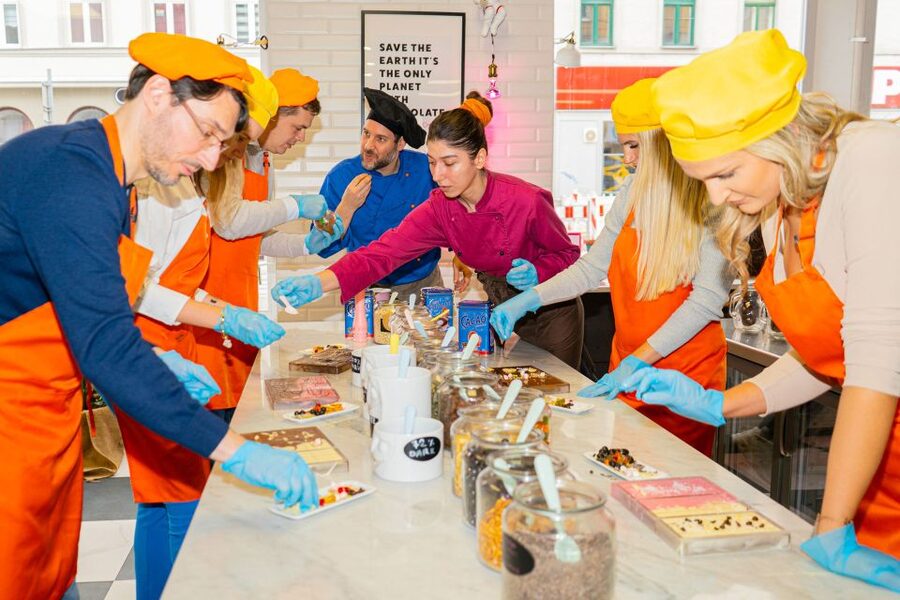
At $55 per person, this is not a cheap museum admission. The price makes more sense when you count the whole package: museum entry, tastings, snacks, instruction, use of the equipment, three handmade chocolate bars, hot chocolate, and a certificate.
The three bars are the strongest value point. They are not just samples made by someone else, and they give you a tangible souvenir from the activity. If you are traveling with children, you are also paying for a structured activity that keeps them occupied and lets them produce something of their own.
For adults who already know a great deal about chocolate, the educational material may feel basic. The museum is small, and the class does not cover home tempering or bean-to-bar production. If your main goal is a serious technical course, $55 may feel high.
For a first chocolate-making experience, the price is easier to defend. You receive food, entertainment, a short cultural lesson, and an activity that suits different ages. It is also useful on a rainy Vienna afternoon, when a hands-on indoor stop can rescue your plans.
Who will enjoy this most?
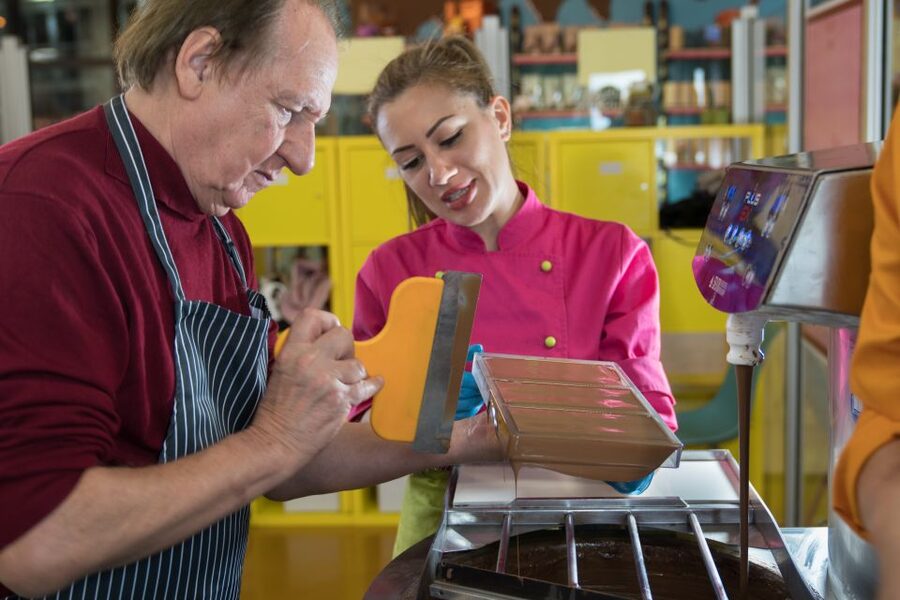
Families with children have the clearest reason to book. The workshop is recommended for children over five, and anyone under ten must attend with an adult who also has a ticket. The instructors have been praised for being patient with children and clear enough for them to follow each stage.
Teenagers are a good match too. They can make independent choices about chocolate and toppings without the session feeling childish. Two teenagers, for example, can create very different bars and still take part in the same activity.
Adults without children should not dismiss it. The tasting, chocolate history, tempering machine, and Aztec drink give the session enough substance for couples and friends. It also works well as a light morning activity before sightseeing.
You may want to choose another experience if you dislike sweet foods, need a long technical class, or want a large museum with extensive exhibits. This is a friendly introduction with a strong practical focus, not a professional certification course.
Practical details that affect your decision
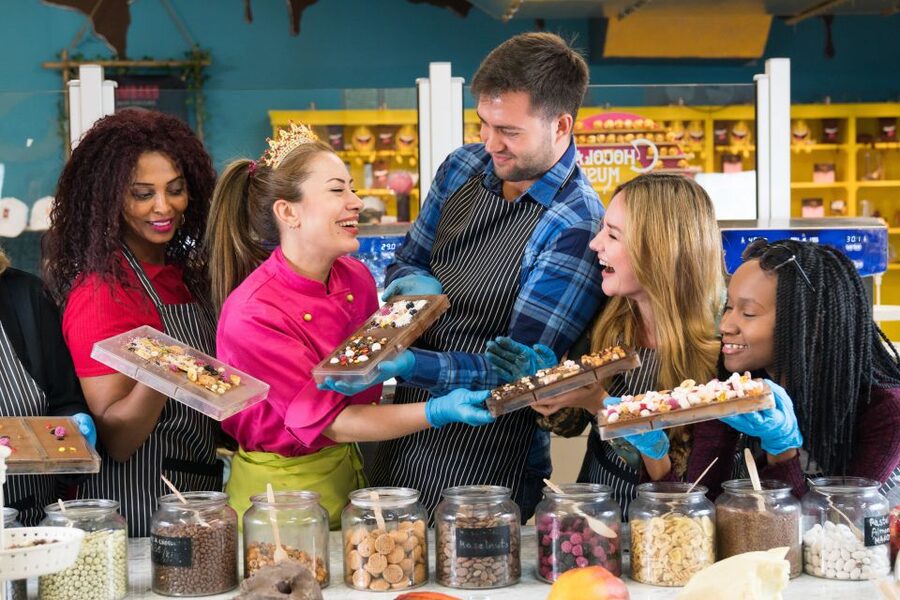
The workshop is described as lasting approximately 60 minutes, followed by a museum visit of about 15 minutes, though the overall activity duration is listed as 90 minutes. Plan for the full 90 minutes so you are not rushing to a reservation afterward.
All cookware, ingredients, molds, and recipes are supplied. You do not need prior cooking experience. The instructors remain available during the process, which is helpful when filling the molds or choosing how to distribute toppings.
Cancellation is free up to 24 hours before the start time, and you can reserve now and pay later. Tickets are otherwise non-refundable. The activity is not recommended for children under five, and children under ten need an accompanying adult with a ticket.
The class is indoors, and the transport connections are straightforward. The most useful packing advice is simple: leave room in your day and handle your chocolate souvenirs with care.
Should you book the Chocolate Museum workshop?
Book it if you want to make something rather than only look at exhibits, especially if you are traveling with children, teenagers, or a friend who enjoys food activities. The three bars, hot chocolate, tastings, and friendly instruction give the session real substance for the price.
Book it as well if the weather is poor or you want a relaxed activity between Vienna’s grand palaces and churches. The museum is small, so do not choose this for a major museum experience. Choose it for the combination of chocolate, practical fun, and a souvenir you designed yourself.
At $55, it is best viewed as a hands-on class with museum entry included. For that purpose, it offers good value and a pleasant change of pace from standard sightseeing.
FAQ
How long does the Vienna Chocolate Museum workshop last?
The activity is listed as 90 minutes. The hands-on workshop takes approximately 60 minutes, and the museum visit takes about 15 minutes.
What do I make during the workshop?
You make three chocolate bars, decorate them with your choice of available toppings, and prepare an original hot chocolate based on traditional Aztec techniques.
Is museum admission included?
Yes. Your workshop ticket includes admission to the Chocolate Museum Vienna, along with tastings, snacks, chocolate decorating, and a certificate.
Do I need cooking experience?
No. The museum supplies the cookware, ingredients, molds, and recipes, and the chocolatier guides you through each stage.
Is the activity suitable for children?
The workshop is designed for children and adults, but it is not recommended for children under five. Children under ten must be accompanied by an adult who also has a ticket.
Where do I meet the group?
The museum entrance is on the corner of Schönbrunner Straße and Reinprechtsdorfer Straße. It is about a three-minute walk from Pilgramgasse U-Bahn station on the U4 line. Buses 14A and 12A stop directly in front of the museum.
More Workshops in Austria
- Bruges: Chocolate Making Workshop and Chocolate Museum Entry
★ 4.6 · 395 reviews - Prague: 1.5-Hour Chocolate Museum Visit with Workshop
★ 4.4 · 387 reviews - Samurai Ninja Museum Asakusa: Samurai Sword Lesson & Tour
★ 4.8 · 306 reviews - Savannah: Cocktail Class at American Prohibition Museum
★ 4.9 · 110 reviews
More Food & Drink in Austria
- Salzburg: Stiegl Brewery Museum Entry Ticket & Beer Tasting
★ 4.0 · 35 reviews - Dubai: Old Town, Creek, Museums, Souks, & Street Food Tour
★ 4.8 · 10,816 reviews - Porto: Cálem Cellar Tour, Interactive Museum & Wine Tasting
★ 4.5 · 4,113 reviews - Dublin Irish Whiskey Museum and Gallery Guided Tour with Tasting
★ 5.0 · 3,078 reviews
Just added around Austria
- Vienna: Jewish Museum Vienna and Museum Judenplatz Tickets★ 4.5 · 170 reviews
- Salzburg: Stiegl Brewery Museum Entry Ticket & Beer Tasting★ 4.0 · 35 reviews
- Belvedere Palace & Museum Tour★ 4.5 · 18 reviews
- Vienna: Tickets for Kunst Haus Wien: Museum Hundertwasser★ 4.6 · 651 reviews
- Combo Ticket: Kunsthistorisches Museum & Imperial Treasury★ 4.7 · 785 reviews
- Vienna: Skip-the-Line Hofburg and Empress Sisi Museum Tour★ 4.8 · 801 reviews
- Vienna: Leopold Museum Skip-the-Line Entry Ticket★ 4.7 · 968 reviews
- Vienna: Museum of Illusions Vienna Admission Ticket★ 4.0 · 1,392 reviews
Museum Tours in Austria, compared.

Skip-the-Line Sisi Museum, Hofburg and Gardens Tour
Read our review →
Vienna Kunsthistorisches Museum Day Admission Ticket
Read our review →
St. Stephen’s Cathedral & Dom Museum Wien Tickets
Read our review →

Browse the lists this tour appears in