
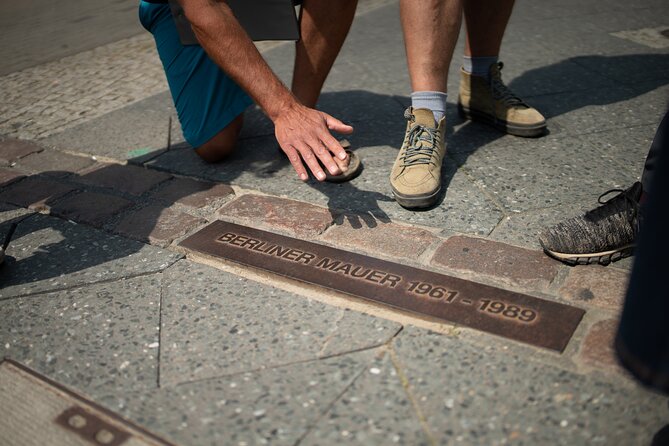
Review · BERLIN
Cold War, Berlin Wall, Spies and the East Side Gallery
Berlin’s Cold War story becomes clearest when you move through the city itself. This three-hour tour links the Palace of Tears, Alexanderplatz, Karl-Marx-Allee, Friedrichshain, and the Berlin Wall, showing how surveillance and escape shaped ordinary lives.
I like the way the route mixes famous places with harder-to-read remnants, especially the old death strip area and the grand socialist boulevard. I also like the guides’ use of personal stories and old photographs. The main drawback is the pace: you cover a lot of ground, and an AB public transport day pass costs extra.
- The Palace of Tears sets the emotional tone: See the former border crossing where farewells between East and West could become permanent.
- Karl-Marx-Allee reveals communist design: Walk beneath monumental apartment blocks built to project order, power, and a socialist ideal.
- Alexanderplatz connects daily life with protest: Learn why this central square mattered both to the East German state and to its critics.
- The Berlin Wall section focuses on escape: Hear about tunnels, rooftops, death strips, informants, and the Stasi.
- The East Side Gallery changes the mood: End beside painted sections of the Wall, now an open-air gallery rather than a barrier.
- Public transport is part of the route: Bring comfortable shoes and buy an AB day pass before or during the tour.
Why this Cold War route works in Berlin
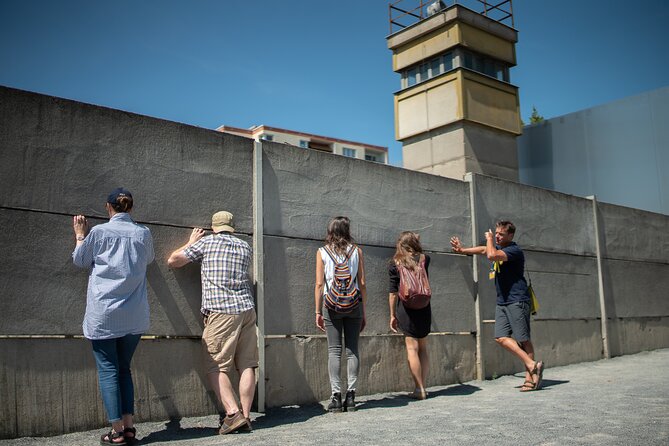
Berlin has plenty of memorials, museums, and surviving wall fragments. The challenge is making sense of how they fit together. This tour helps by moving between different parts of the former East Berlin instead of keeping you in one memorial complex.
You begin near Friedrichstrasse and finish after walking along the East Side Gallery. In between, the route uses short train rides and guided walks. That matters because the Berlin Wall was not one isolated structure. It cut through neighborhoods, stations, streets, families, and workplaces.
I like this format for a first visit because it gives you a framework for later sightseeing. After three hours, Alexanderplatz is no longer just a television tower and shopping square. Karl-Marx-Allee is no longer just a broad road lined with imposing buildings. The East Side Gallery is no longer simply a colorful place for photographs.
The tour also suits people who know little about divided Berlin. Sofia from Sweden arrived with limited background and found the guide’s clear storytelling useful for understanding both the events and the reasons behind them. That is a good sign for beginners. You do not need to arrive with a detailed timeline in your head.
At the same time, people who already know Berlin’s Cold War story may appreciate the human details. Several guides, including Paul, Xavier, Nikolai, Tina, Klaus, and Jim, are praised for adding personal accounts, family stories, old photographs, and lesser-known escape attempts.
Starting at the Palace of Tears
Meet the guide outside Friedrichstrasse train station, on the square beside the Tränenpalast, or Palace of Tears. Look for the yellow name badge and yellow umbrella. That marker is useful at a busy station, so arrive with enough time to find the square without rushing.
The Palace of Tears was a border crossing between East and West Berlin. Its name comes from the tearful farewells that took place there. For many families, a visit across the border ended with a painful separation, because leaving East Berlin was not a simple matter of choosing when to return.
You spend about 20 minutes here. That is enough for an introduction to the border system and the personal cost of division, but not enough for a long museum visit. The stop works best as a starting point because it turns a large political subject into something immediate: people saying goodbye under official control.
If you choose the accommodation pickup option, the arrangements differ. You wait in your hotel lobby five minutes before the scheduled pickup, then finish at the Tourist Information office by Brandenburg Gate, unless your selected option states otherwise. Check the exact option carefully when booking, since the regular meeting point is the Palace of Tears.
More Museum Tours in Berlin
- Berlin: Natural History Museum Entrance Ticket
★ 4.6 · 3,382 reviews - Berlin: Museum Island Multiple Museum Entry Ticket
★ 4.4 · 2,861 reviews - Skip-the-Line: Berlin Wall Museum at Checkpoint Charlie
★ 4.1 · 2,041 reviews
Alexanderplatz and the public face of East Berlin
A short train ride takes you toward Alexanderplatz. The ride itself is practical rather than scenic, but it shows why public transport matters on this tour. The route connects places that are too far apart for a comfortable three-hour walk.
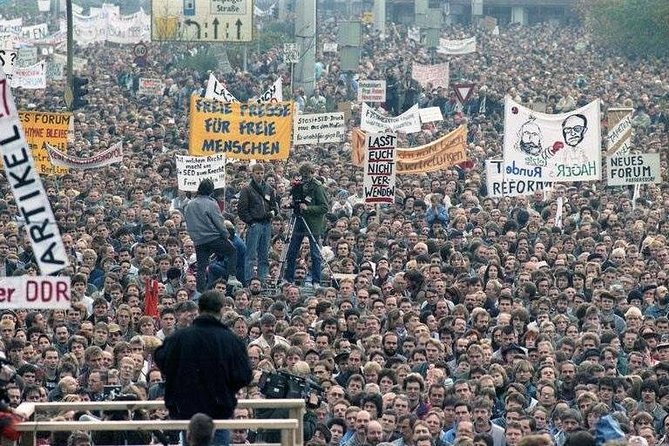
Alexanderplatz was a major center of East Berlin life. Its broad spaces and surrounding GDR-era buildings reflect a city designed around public authority, organized movement, and state display. The famous television tower dominates the view, but this tour concentrates on the square’s Cold War meaning rather than turning it into a general Berlin city tour.
You spend about 20 minutes here with the guide. Expect an explanation of how the square functioned in everyday East German life and why it later became linked with public dissatisfaction. The stop gives you a useful contrast with the Palace of Tears. There, the focus is on separation at the border. Here, the focus shifts to the city’s public center and the people who lived under the system.
The guide may use photographs to show how the area looked at different points in time. That helps when modern buildings and traffic make the earlier city difficult to picture. Paul and Xavier, in particular, received praise for using images and stories to make the past easier to understand.
Walking Karl-Marx-Allee’s socialist boulevard
From Alexanderplatz, the group walks along Karl-Marx-Allee for about 20 minutes. This is one of the most revealing sections because architecture becomes part of the political story.
The boulevard was designed as a grand socialist showcase. Its scale, symmetry, and monumental apartment buildings were meant to express strength, progress, and a modern communist society. It was not simply a residential street. The buildings and the wide avenue carried a message about how the East German state wanted to present itself.
Your guide explains the propaganda built into the architecture and connects the boulevard with the workers’ uprising of 1953. That protest shook the communist government and became an important early challenge to East German authority.
This is a good place to look up, not just ahead. Notice the mass of the buildings and the careful sense of order. The route is especially helpful if you are interested in how governments use streets and buildings to shape public behavior and public opinion.
The drawback is that Karl-Marx-Allee may feel less dramatic than a surviving wall section. It is a functioning city street, not a preserved battlefield. You need the guide’s explanation to see why it matters. With a strong storyteller, the boulevard gains meaning. Several people praised guides such as Tina, Klaus, and Jim for making architectural and political details easy to follow.
Friedrichshain and the Wall’s dangerous edge
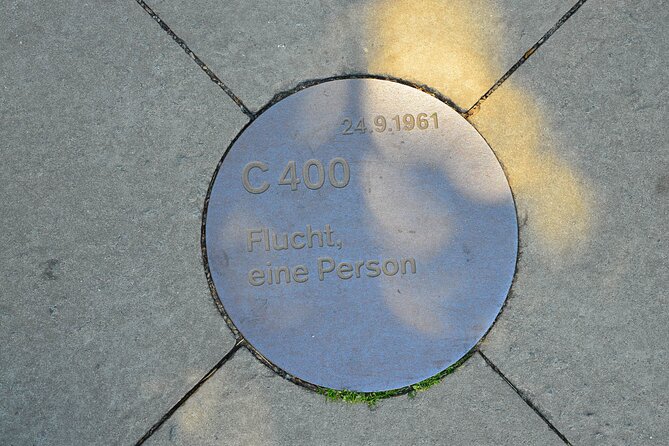
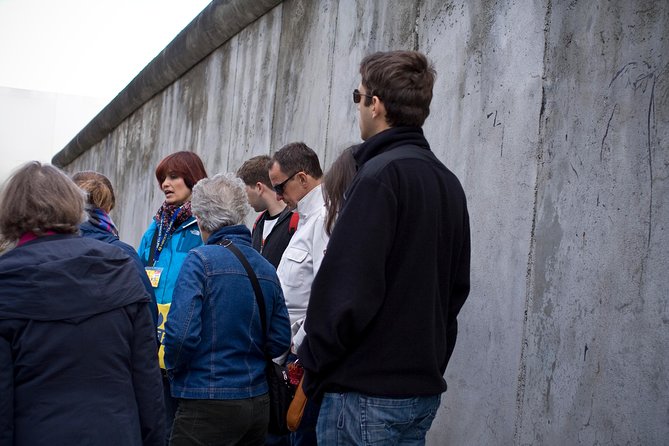
After another short train ride, the tour reaches Friedrichshain. You spend roughly 20 minutes walking and listening before focusing on a surviving Berlin Wall area.
This section brings the Cold War down to street level. The subject is not only generals, presidents, and treaties. It is the person trying to cross a border, the neighbor who might inform the Stasi, and the family forced to live with restricted movement.
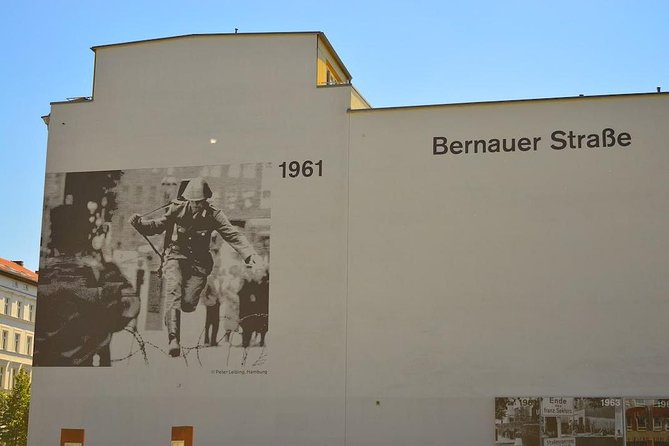
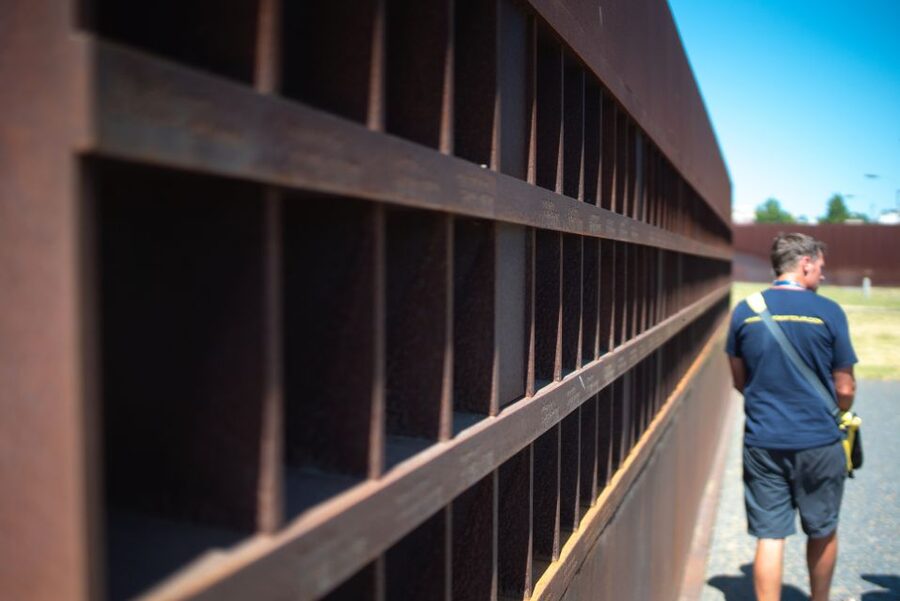
Expect stories of escape attempts through tunnels, over rooftops, and across the death strip. These accounts show why crossing the Wall was so dangerous. The border was not just a concrete barrier. It included controlled spaces, surveillance, guards, and the constant risk of arrest or worse.
The tour’s treatment of spies and informants adds another layer. Surveillance affected people who never attempted escape. Ordinary conversations, friendships, and family connections could carry risk when the secret police watched so closely.
This is one of the strongest reasons to choose a guided tour instead of simply walking to a remaining wall fragment. A piece of concrete can show you where the barrier stood. A guide can explain how the system worked around it and why people made desperate choices.
A few more museum visits around Berlin worth comparing
- Berlin: Interactive DeJa Vu Museum Entrance Ticket
★ 4.1 · 1,338 reviews - Berlin: “Pergamonmuseum. The Panorama” Exhibition Tickets
★ 4.6 · 1,245 reviews - Berlin: East Side Gallery Spree Cruise in a Solar Catamaran
★ 4.1 · 1,086 reviews - Cold War, Berlin Wall, Spies and the East Side Gallery
★ 5.0 · 1,024 reviews
Seeing the original death strip area
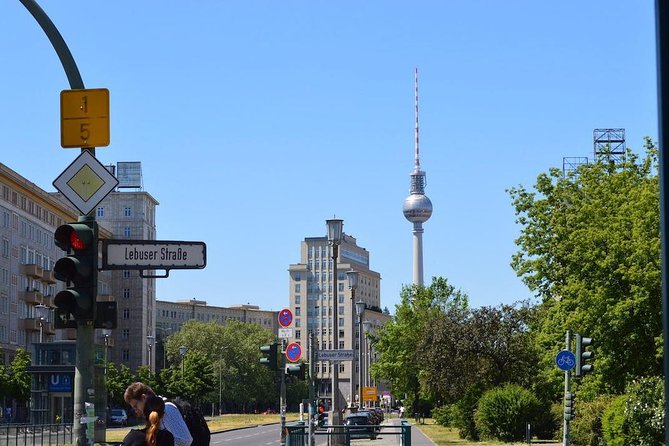
The Berlin Wall stop lasts about 16 minutes, followed by more time at the East Side Gallery. The exact amount of surviving structure and open space depends on the route and selected option, but the purpose is clear: connect the physical remains with the danger of the former border zone.
The term death strip refers to the controlled area between sections of the border system. It was designed to expose escape attempts. Seeing the space in person helps you understand why a short distance could feel impossible to cross.
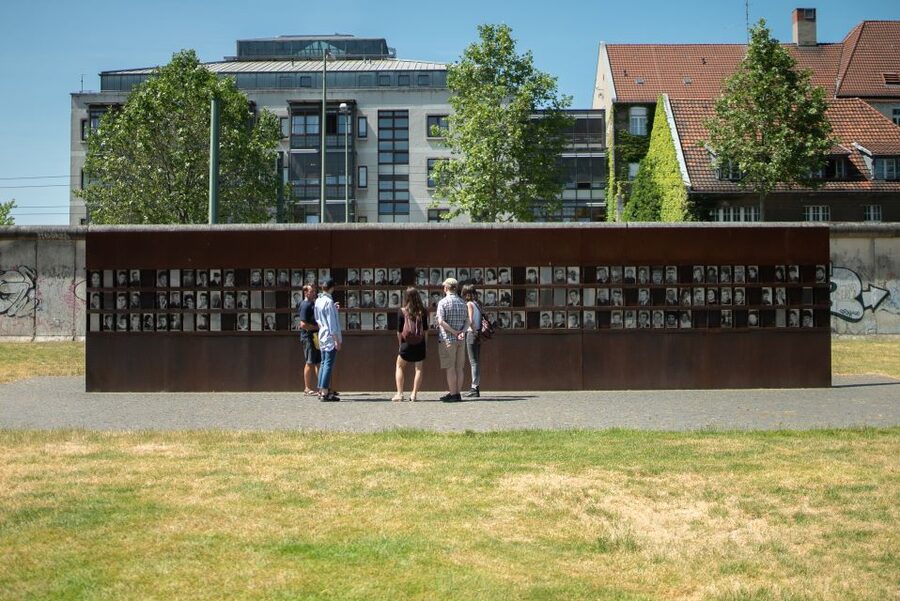
Do not expect a complete stretch of untouched Wall. Berlin has changed greatly, and many sections disappeared after reunification. What remains is often partial, relocated, or integrated into newer surroundings. That is why the guide’s timeline matters. You are not simply looking at a wall. You are reconstructing a border that once divided the city.
The stories are often the emotional center of the tour. Guides have spoken about people who risked everything to leave the East, as well as those who lived close to the border and saw its effects daily. Nikolai and Klaus have been especially praised for sharing personal connections to life in East Germany, while Xavier is often noted for checking on the group and answering questions carefully.
East Side Gallery: from barrier to open-air art
The final major stop is the East Side Gallery, where you walk along a long surviving section of the Wall covered with murals. Plan about 20 minutes here.
The mood changes. Earlier stops focus on control, fear, separation, and failed escapes. The East Side Gallery shows what happened when the Wall became a canvas. Its paintings turned a structure built to divide people into a public place for memory, protest, and art.
You will have time to walk beside the painted panels and take photographs. Keep in mind that this is still a historical site, not only a colorful photo stop. The art works best when you remember what the Wall represented before 1989.
The East Side Gallery is also the most visually obvious part of the tour, so it can draw attention away from the explanations. If you want plenty of time for photographs, you may find the 20-minute stop brief. The tour is designed to tell a connected story, not to provide an extended art visit.
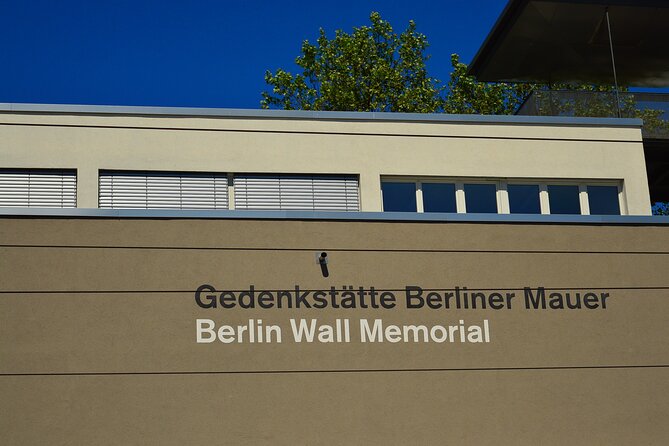
The route ends with drop-off options that can include Bernauer Straße. If you want a longer look at Berlin Wall memorials, Bernauer Straße is a useful place to continue on your own, depending on your selected ending point and remaining time.
Guides make or break this history tour
The strongest praise is reserved for the guides’ storytelling. Paul is described as passionate and clear, with a gift for helping first-time learners understand how and why events unfolded. Xavier is praised for mixing facts, photographs, humor, and attention to the group. Jamie G, Maria, Tina, Klaus, Jim, Eran, and Nikolai are also singled out for lively explanations and thoughtful answers.
The range of guide names suggests that the experience depends partly on who leads your departure. You should expect an English or German-speaking guide, but you may not receive a particular person unless the booking option guarantees one.
The best guides appear to do more than recite dates. They connect the Wall to ordinary life, explain the impact on families, and answer questions without losing the route’s pace. Some also have personal connections to the former GDR, which can add a human perspective.
One practical point: large groups can make it harder to hear, especially outdoors or in poor weather. A past group found that a microphone would have helped when numbers were high. Small-group and private options are available if you want more room for questions and a quieter exchange.
Price, pace, and what to bring
At $18 per person, the tour offers good value if you want a guided introduction to Cold War Berlin. The price covers three hours with a professional English-speaking guide, but not the public transport needed between sites.
An AB day pass is required. You can buy it on the day with help from on-site staff, but I would not leave it until the last second. The public transport rides are short, yet they are essential to the route.
Wear comfortable shoes. You will walk through several urban areas, stand while listening, and change between train and walking sections. Bring weather-appropriate clothing because the tour operates in rain or shine. A camera is useful, especially at the East Side Gallery, though the most valuable part of the tour is what you learn while looking beyond the obvious wall fragments.
The free cancellation period extends to 24 hours before the tour, and the reserve now, pay later option gives you some flexibility. Wheelchair access is available, though the route’s mix of sidewalks, stations, and public transport means you should confirm the exact arrangements for your chosen departure.
Who should book this tour
I would choose this tour if you want Cold War Berlin explained through places rather than presented only in a museum. It suits first-time visitors, families with older children, history fans, and anyone curious about daily life behind the Iron Curtain.
It is also a good companion to a Third Reich tour, since the two subjects shaped much of modern Berlin but require different kinds of attention. This route concentrates on the period from the postwar division through the Wall’s fall, with particular attention to escape, surveillance, protest, and reunification.
You may want something else if your main goal is a long museum visit, a military history lecture, or several hours focused on international politics. One person expected more war and political discussion and less emphasis on the Wall. That is a fair warning. This experience is strongest when it explains the Wall through people and places.
Should you book it?
Book it if you want a fast-moving, story-led introduction to divided Berlin for $18, plus the AB transport pass. The route covers more ground than a single memorial visit and gives meaning to places you might otherwise pass without noticing.
Choose a small group or private option if questions and personal attention matter to you. Arrive ready to walk, listen outdoors, and follow the guide through several parts of the city. For a first look at Berlin’s Cold War story, the combination of the Palace of Tears, Karl-Marx-Allee, the former death strip, and the East Side Gallery makes this a sensible and worthwhile choice.
FAQ
How long does the Cold War Berlin tour last?
The tour lasts three hours.
What places does the tour visit?
The route includes the Palace of Tears, Alexanderplatz, Karl-Marx-Allee, Friedrichshain, a Berlin Wall and former death strip area, and the East Side Gallery.
Is public transportation included?
No. You need an AB public transport day pass to travel between the sites. On-site staff can help you buy one on the day.
Where is the regular meeting point?
Meet outside Friedrichstrasse train station, on the square beside the Palace of Tears. Look for a guide with a yellow name badge and yellow umbrella.
Is hotel pickup available?
Pickup is optional for selected booking options. If included, wait in your accommodation lobby five minutes before the scheduled pickup time.
What languages are available?
The tour is available with a live guide in English or German.
Is the tour wheelchair accessible?
Yes, the activity is listed as wheelchair accessible.
What should I bring?
Bring comfortable shoes, comfortable clothing, weather-appropriate clothing, and a camera. The tour runs in all weather.
Just added around Berlin
- From Berlin: Sachsenhausen Concentration Camp Museum Tour★ 4.8 · 514 reviews
- Bubble Planet Berlin: An Experience Museum for All Your Senses★ 4.1 · 38 reviews
- Berlin Trabi Museum: Day Ticket★ 4.1 · 63 reviews
- Berlin: The Wall Museum East Side Gallery Ticket★ 4.1 · 292 reviews
- Berlin: Tickets to the Computer Games Museum★ 4.5 · 363 reviews
- Berlin: Stasi Museum Private Guided Tour with Entry Ticket★ 4.8 · 13 reviews
- Berlin: Ticket for Photography Exhibitions at C/O Berlin★ 4.5 · 39 reviews
- Berlin: Museum of Communication Entrance Ticket★ 4.5 · 452 reviews
Museum Tours in Berlin, compared.
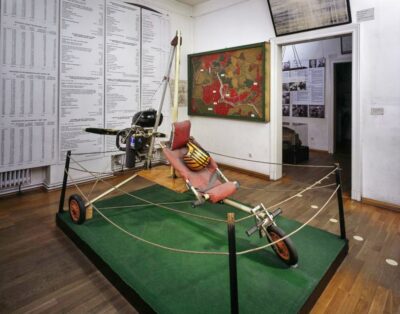
Skip-the-Line: Berlin Wall Museum at Checkpoint Charlie
Read our review →
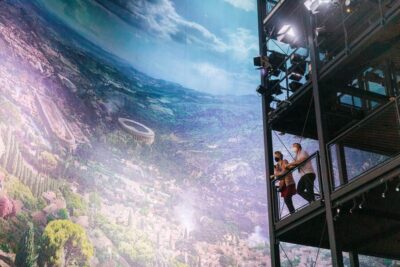
“Pergamonmuseum. The Panorama” Exhibition Tickets
Read our review →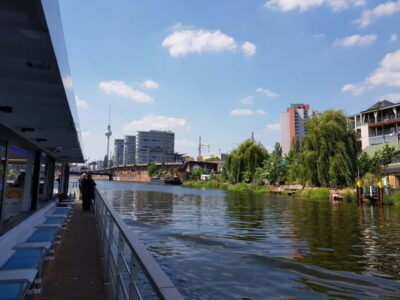
East Side Gallery Spree Cruise in a Solar Catamaran
Read our review →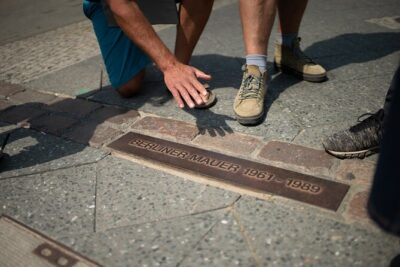
Cold War, Berlin Wall, Spies and the East Side Gallery
Read our review →
Berlin WelcomeCard: Museum Island & Public Transport
Read our review →Browse the lists this tour appears in