
Review · BERLIN
Berlin: Interactive DeJa Vu Museum Entrance Ticket
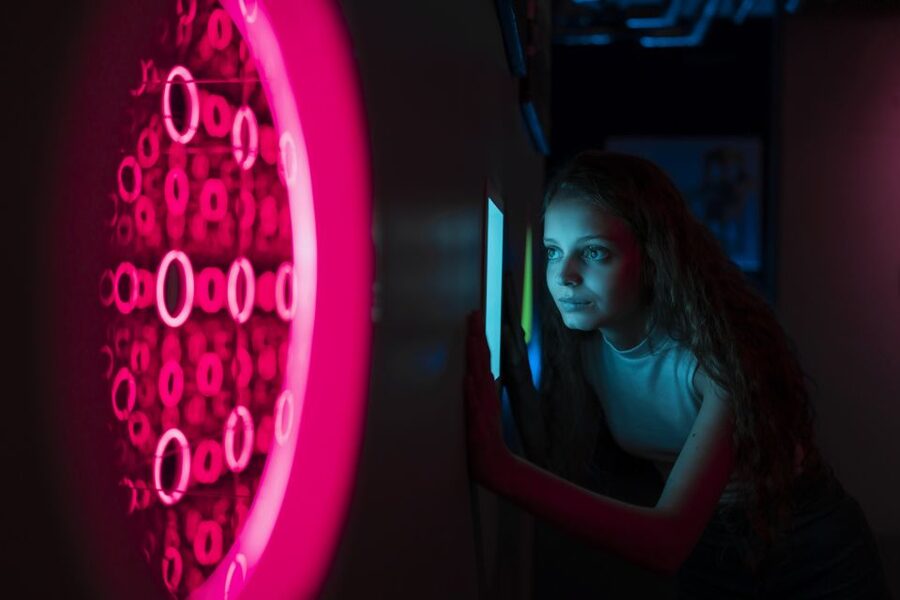
Berlin’s DeJa Vu Museum turns your eyes into unreliable guides. In two floors of optical illusions, mirror rooms, puzzles, and playful art, you become part of the exhibits rather than simply looking at them. I like the hands-on design and the chance to take unusual photos, especially in the Starroom and Abyss.
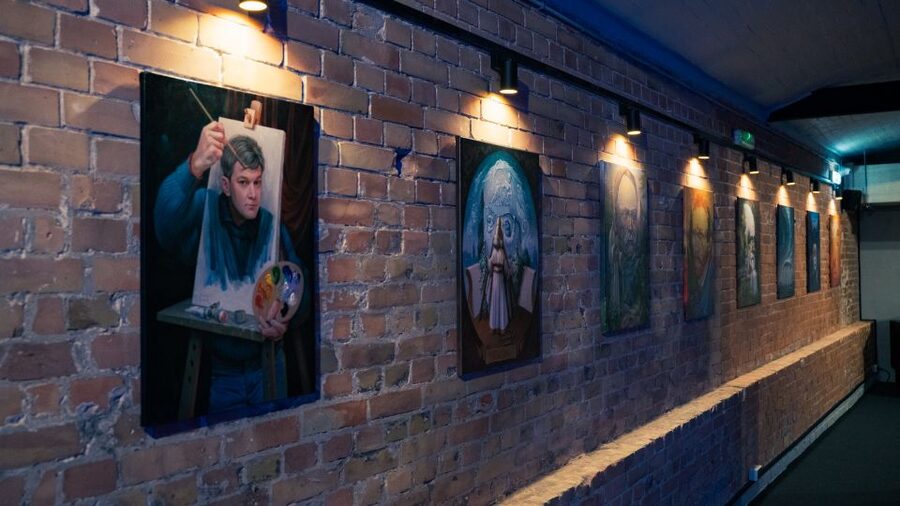
I also like the Oleg Shupliak gallery, where portraits hide second images and invite you to guess what you are seeing. The main drawback is pace: the museum can take 30 minutes if you hurry, while small rooms may create waits when it is busy.
Key points to know before you go

- Alexanderplatz location: The entrance is about 300 meters from the Fernsehturm, making this easy to pair with central Berlin sightseeing.
- Two floors of illusions: Expect interactive rooms, puzzles, projector spaces, mirror rooms, and art rather than a conventional museum tour.
- Oleg Shupliak gallery: His portraits use layered images, giving you a visual puzzle as well as an art display.
- Best for photos and families: Children, teenagers, friends, and anyone who likes playful photo stops will find plenty to do.
- Allow about 1.5 hours: A quick visit may take only 30 minutes, but small rooms can slow you down during busy periods.
- Important limits: The museum is not suitable for people with mobility impairments or epilepsy. Pets, food, drinks, alcohol, and drugs are not allowed.
Starting near Alexanderplatz and the Fernsehturm
The DeJa Vu Museum is right by Alexanderplatz, about 300 meters from Berlin’s Fernsehturm. That central address makes it a practical stop between other sights, especially if you want something indoors and interactive rather than another historical display.
You do not need to set aside a whole day. The stated duration is 1.5 hours, which gives you enough time to try the exhibits, pause for photos, and wait for access to smaller rooms if needed. I would keep a little flexibility around that figure, since the actual visit depends on your pace and the crowd.
A quick-moving adult group may finish in around 30 minutes. That is not necessarily a problem if you want a short activity, but it changes the value calculation. At $17 per person, the museum is best value when you take your time, test the puzzles properly, and use the rooms for photos instead of simply walking from one display to the next.
The host or greeter service is available in English, German, Polish, Spanish, and French. That helps if you want basic guidance while working through the exhibits, though this is not presented as a guided history tour with a named art specialist.
More Museum Tours in Berlin
- Berlin: Natural History Museum Entrance Ticket
★ 4.6 · 3,382 reviews - Berlin: Museum Island Multiple Museum Entry Ticket
★ 4.4 · 2,861 reviews - Skip-the-Line: Berlin Wall Museum at Checkpoint Charlie
★ 4.1 · 2,041 reviews
The first gallery spaces: learning by looking
Your visit begins in the gallery areas, where the museum introduces the basic idea behind the experience: your eyes can misread scale, depth, perspective, and layered images. The point is not to admire objects from behind a barrier. You are expected to look closely, step into the displays, and work out how the illusion affects you.
That hands-on approach is the museum’s strongest feature. Children can test what they see, teenagers can turn the rooms into photo sets, and adults can enjoy the small shock of realizing that a familiar visual cue has fooled them.
The exhibits also give you something to do together. Instead of everyone staring at a screen, you can compare what each person sees and take turns trying the puzzles. That makes the museum more social than a standard art gallery.
Still, the quality of the experience depends on your willingness to play along. If you prefer quiet rooms and long explanations, this may feel light. The museum is built around quick discoveries, visual tricks, and interaction.
Beuchet-Stuhl, Dark Room, and Interactive Sandbox
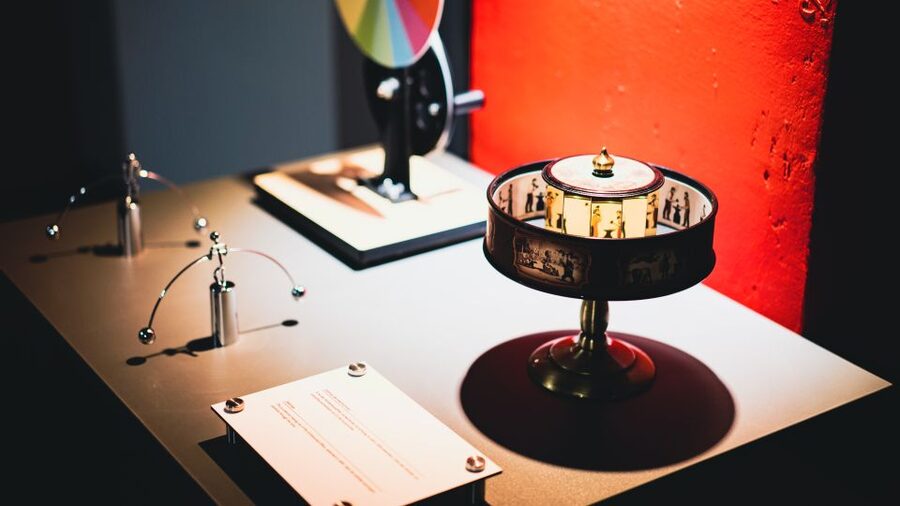
Several named exhibits give the visit more variety. The Beuchet-Stuhl plays with the way a chair and a person appear in relation to one another. It is the kind of display that works best when you stand in the right place and let the visual trick do its job.
The Dark Room changes the mood. Low light can make it harder to judge what you are seeing, so this space adds a simple physical challenge to the visual puzzles. It is also one reason to move carefully and give yourself time rather than rushing through every room.
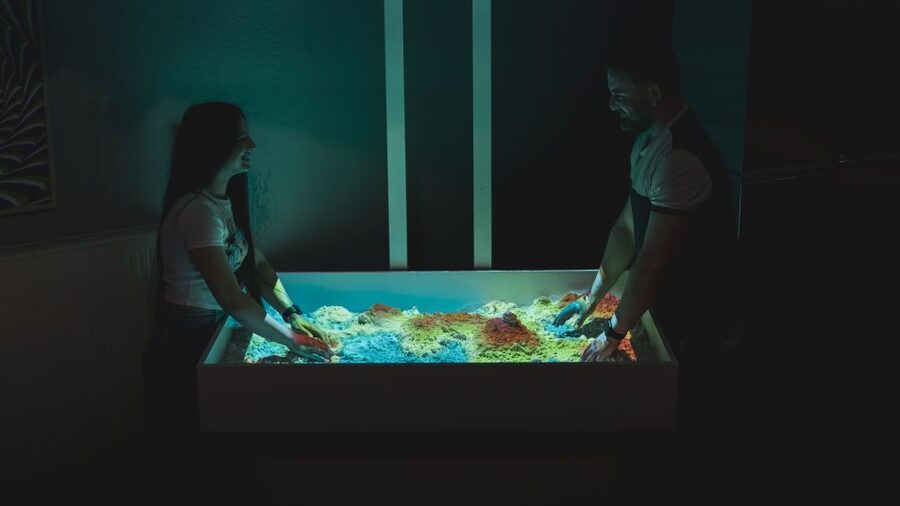
The Interactive Sandbox offers a more direct activity. Instead of only observing an illusion, you manipulate the display and see how your actions affect what appears before you. That sort of exhibit is particularly useful for families because it gives younger children a clear task.
These rooms are not presented as a formal science lesson. You may not leave with a technical explanation for every effect. What you do get is a series of quick demonstrations that show how easily your senses can be guided in the wrong direction.
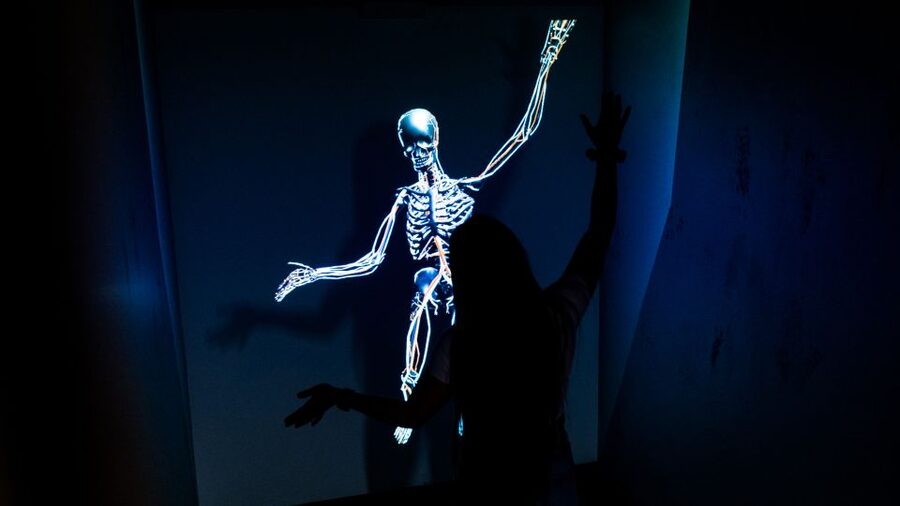
Projector rooms put you inside the artwork
The projector rooms make you the focus of the scene. Your body becomes part of the projected image, so the effect depends on where you stand and how you pose.
This is a good place to slow down. One person can take a photo while another experiments with the illusion, then you can swap roles. The experience works best with a small group that is happy to take turns rather than crowding in at once.
The projector areas also explain why the museum suits friends and families. You are not just looking at an unusual picture. You are helping create the final image, which gives the stop a playful, shared quality.
Crowds can affect this part of the visit. Some of the smaller rooms hold only two people, and a busy weekend can bring waits. If you see a quiet period, use it well and enter the more limited rooms before the line grows.
A few more museum visits around Berlin worth comparing
- Berlin: “Pergamonmuseum. The Panorama” Exhibition Tickets
★ 4.6 · 1,245 reviews - Berlin: German Spy Museum Flexible Entry Ticket
★ 4.4 · 472 reviews - Berlin: Museum of Communication Entrance Ticket
★ 4.5 · 452 reviews - Berlin: Tickets to the Computer Games Museum
★ 4.5 · 363 reviews
Oleg Shupliak’s portraits hide a second picture
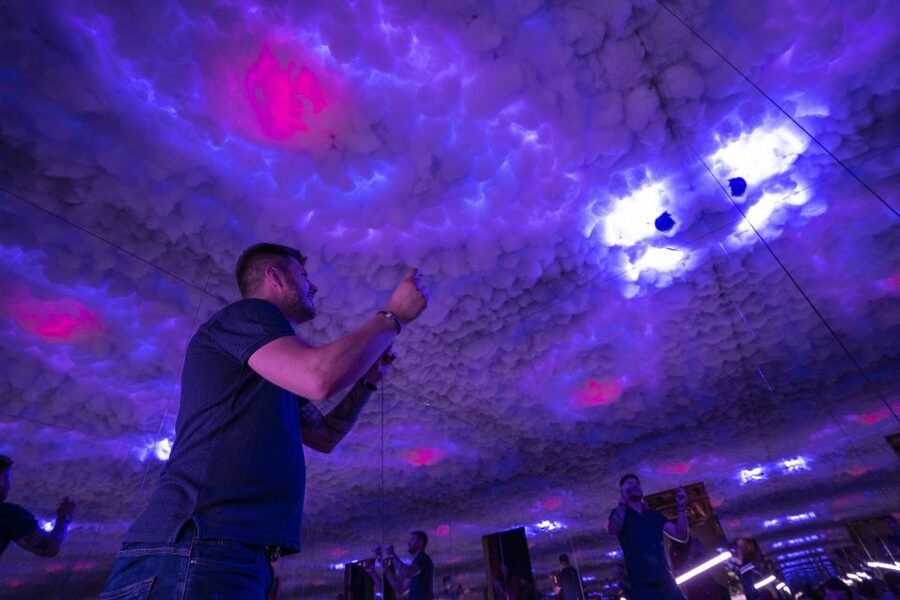
The Oleg Shupliak gallery adds an art-focused pause to the more obvious tricks. Shupliak is known here for portraits that contain another image within the first one. Your task is to work out who or what is portrayed, then look again to find the second layer.
I like this section because it asks for more than a quick photo. The pictures reward patience. At first you may see a face or a figure, then the arrangement of smaller forms begins to make sense. The fun comes from solving the image yourself.
This gallery also gives the museum a useful change of rhythm. After the louder, more physical exhibits, you can stand still and examine the artwork. It is not a large traditional gallery, but it adds visual puzzles that do not depend on mirrors or projections.
If you are visiting with children, ask them to guess what they see before explaining the trick. Older children and teenagers may enjoy trying to spot the hidden portrait faster than everyone else.
Mirror rooms: Starroom, Abyss, and kaleidoscopes
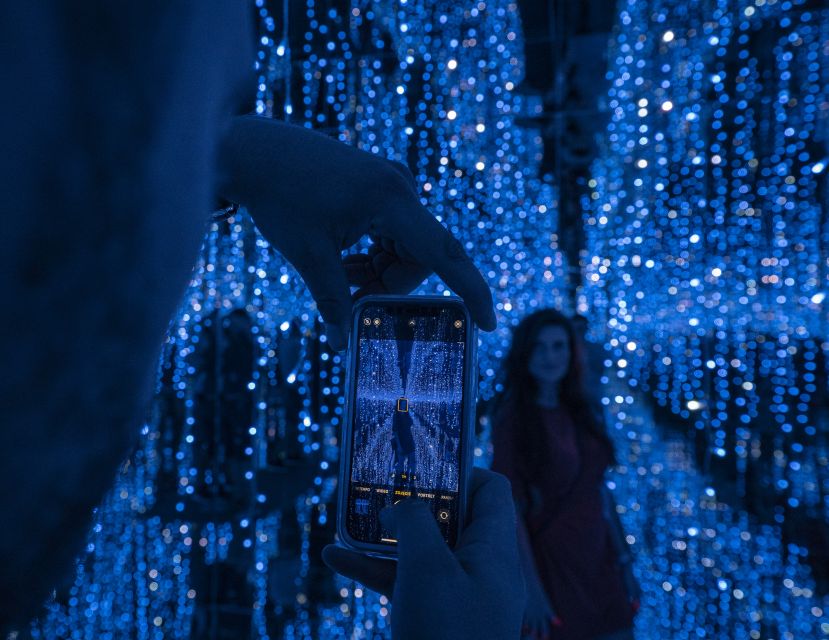
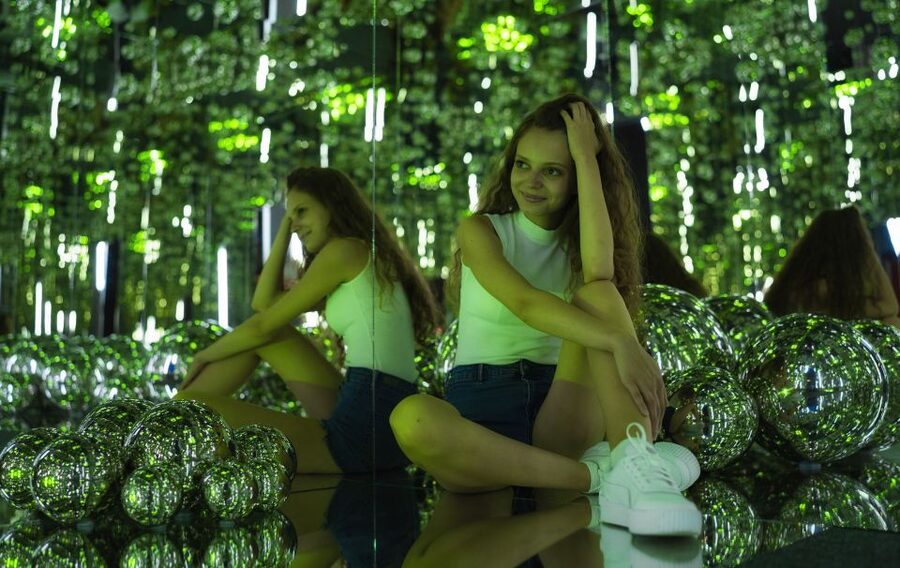
The themed mirror rooms provide the biggest photo appeal. The Starroom and Abyss create different visual moods, using reflections and enclosed space to make the room feel larger, stranger, or less predictable than it really is.
Colorful kaleidoscope displays add another strong photo stop. The patterns change as you look and move, giving you bright images that feel quite different from the portrait gallery or the darker rooms.
You should expect these spaces to be popular. They are compact, highly visual, and easy to understand, so people naturally want a few tries. If the room is occupied, be ready to wait rather than forcing a rushed visit.
The mirror rooms are also a good reminder that the museum is partly an entertainment venue. The photos are a major part of the appeal. If you want an art museum with long wall labels and quiet contemplation, choose another Berlin stop. If you want playful images and a few memorable pictures of your group, these rooms deliver more directly.
Why the museum works for families and teenagers
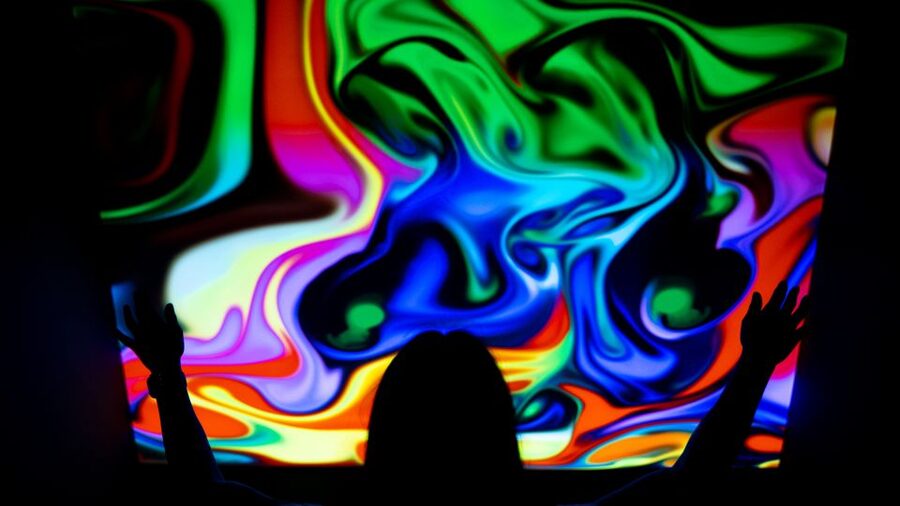
The DeJa Vu Museum is a strong choice for children and teenagers because the exhibits ask them to touch, move, guess, and react. The museum does not depend on long attention spans or specialist art knowledge.
I would especially consider it for a rainy afternoon or for a group that needs a break from Berlin’s more serious sights. One review described a Thursday afternoon as quiet, while weekend visits can bring waits in rooms designed for only two people. That makes timing important.
Friends can enjoy it for much the same reason. The rooms create natural photo opportunities and small challenges, and nobody needs to understand a complicated background story before joining in.
Adults without children can still have a good time, but expectations matter. Some displays are brief, and the overall visit is designed around quick visual surprises. You will get the most from it if you are happy to experiment rather than judge each room as a major artwork.
How long should you allow, and is $17 fair?
The ticket costs $17 per person. For a 1.5-hour visit, that is a reasonable price for a central Berlin indoor activity, especially if you use the puzzles, interactive displays, art gallery, projector rooms, and mirror rooms at a relaxed pace.
The value is less convincing if you race through. One person completed the rooms in about 30 minutes, while another described the activity as suitable for an hour or so. This difference likely comes down to crowd levels, time spent taking photos, and how seriously you tackle each exhibit.
I would treat the advertised 1.5 hours as a useful planning figure, not a promise that you will be occupied every minute. If the museum is quiet, you can move comfortably and repeat some displays. If it is crowded, the visit may take longer because of waits, but the extra time is not always extra content.
The best comparison is with other short central activities. At $17, the ticket is not a bargain basement attraction, yet it can be good value for a family or group that wants a shared activity near Alexanderplatz. For a solo visitor who does not care about photos, the price may feel less attractive.
You can cancel up to 24 hours before the visit for a full refund, and the reserve-now, pay-later option keeps your plans flexible. Check the available starting times before booking.
Practical limits and who should skip it
The museum is not suitable for people with mobility impairments. The information also lists epilepsy as a reason to avoid the experience, which matters because optical effects, dark spaces, projections, and mirror rooms may not be comfortable or safe for everyone.
Pets are not allowed, and neither are food, drinks, alcohol, or drugs. Plan to visit without refreshments inside.
The host or greeter can assist in English, German, Polish, Spanish, or French. That language range is helpful for basic orientation, but you should not expect a long, formal tour in every language.
For the best visit, arrive ready to take turns. Smaller rooms may hold only two people, and the person using the exhibit may need a moment to understand the visual effect. A rushed group can miss the point of the museum.
Who should book the DeJa Vu Museum?
I would book this for families with children, teenagers, couples who enjoy unusual photos, and friends looking for something different near Alexanderplatz. It is also a sensible rainy-day choice because the visit is indoors and does not require a major time commitment.
I would be more cautious if you dislike interactive attractions, need step-free access for a mobility impairment, or have epilepsy. The short visit can also feel expensive if you only glance at each room.
For most suitable visitors, the ticket earns its keep through variety. You get optical illusions, puzzles, Oleg Shupliak’s layered portraits, projector rooms, colorful kaleidoscopes, and mirror spaces in one compact outing. Book it if you want to play with the exhibits and take photos. Skip it if you are searching for a quiet, traditional museum with extensive historical detail.
FAQ
Where is the DeJa Vu Museum in Berlin?
The entrance is near Alexanderplatz, about 300 meters from the Fernsehturm.
How long does the museum visit last?
The stated duration is 1.5 hours. Some people may move through the rooms in about 30 minutes, while waits and photo stops can make the visit longer.
How much does admission cost?
The ticket costs $17 per person.
What can you see inside the museum?
You can see interactive exhibits, optical illusions, puzzles, mirror rooms, projector rooms, kaleidoscope displays, and an art gallery by Oleg Shupliak.
Which mirror rooms are included?
The themed mirror rooms include the Starroom and the Abyss.
Is the museum suitable for children?
Yes. The interactive displays and puzzles are intended to provide fun and learning for people of all ages, and the activity is especially suitable for children and teenagers.
Which languages are available?
The host or greeter service is available in English, German, Polish, Spanish, and French.
Is the museum suitable for people with mobility impairments or epilepsy?
No. The activity is not suitable for people with mobility impairments or epilepsy.
Can I cancel my booking?
Yes. You can cancel up to 24 hours in advance for a full refund. A reserve-now, pay-later option is also available.
Just added around Berlin
- From Berlin: Sachsenhausen Concentration Camp Museum Tour★ 4.8 · 514 reviews
- Cold War, Berlin Wall, Spies and the East Side Gallery★ 4.8 · 254 reviews
- Bubble Planet Berlin: An Experience Museum for All Your Senses★ 4.1 · 38 reviews
- Berlin: The Wall Museum East Side Gallery Ticket★ 4.1 · 292 reviews
- Berlin: Tickets to the Computer Games Museum★ 4.5 · 363 reviews
- Berlin Trabi Museum: Day Ticket★ 4.1 · 63 reviews
- Berlin: Stasi Museum Private Guided Tour with Entry Ticket★ 4.8 · 13 reviews
- Berlin: Ticket for Photography Exhibitions at C/O Berlin★ 4.5 · 39 reviews
Museum Tours in Berlin, compared.
Skip-the-Line: Berlin Wall Museum at Checkpoint Charlie
Read our review →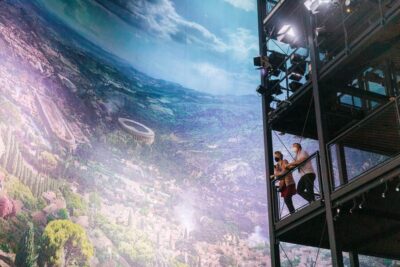
“Pergamonmuseum. The Panorama” Exhibition Tickets
Read our review →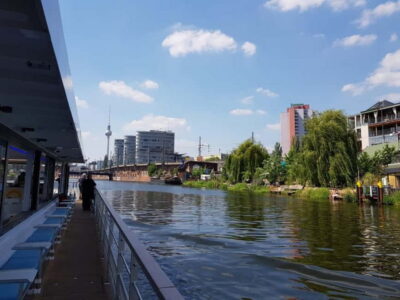
East Side Gallery Spree Cruise in a Solar Catamaran
Read our review →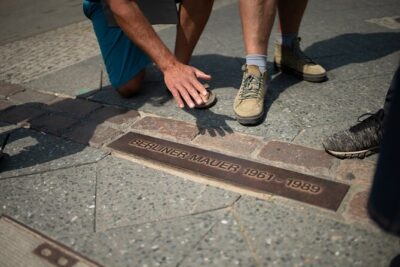
Cold War, Berlin Wall, Spies and the East Side Gallery
Read our review →
Berlin WelcomeCard: Museum Island & Public Transport
Read our review →
Browse the lists this tour appears in