
Review · BERLIN
Berlin: Museum of Communication Entrance Ticket
Berlin’s Museum for Communication turns an ordinary subject into a lively, hands-on visit. You move from a hand axe to the smartphone, with about 2,000 objects covering 40,000 years of human messages, signals, tools, and technology. The star treasure is the Blue Mauritius, one of the world’s rarest stamps.
I like the interactive communication gallery, where you can send news by smoke, light, and sound instead of only reading labels. I also like the freedom to explore with an audio-visual app rather than being tied to a guide or a fixed start time. The main consideration is scope: the museum is listed as a 1.5-hour visit, but the one-day ticket gives you flexibility, and visitors who want a tightly guided narrative may need to provide their own structure.
Key points to know before you go
- See the Blue Mauritius: One of the most famous and rare stamps in the world is a major reason to visit.
- Try communication methods yourself: Interactive terminals let you experiment with smoke, light, and acoustic signals.
- Travel 40,000 years in one museum: The displays connect early tools with modern smartphones.
- Use the audio-visual app: It helps you explore independently and adds direction to a self-guided visit.
- Plan for about 1.5 hours: That is enough for a focused visit, though the ticket remains valid for one day.
- Good for families and curious adults: Hands-on postal and communication displays give children something to do, while the subject has plenty for adults to consider.
From hand axes to smartphones in one Berlin visit
The museum’s central idea is simple: human communication keeps changing, but the need to send information does not. That makes the collection easier to follow than a museum arranged only by dates or technical inventions.
You begin with the basic problem of sending a message beyond the reach of your voice. From there, the displays connect physical objects, postal systems, visual signals, sound, and digital communication. The result is a broad look at how people have tried to cross distance, preserve information, and reach one another.
The 40,000-year span gives the visit useful scale. A hand axe and a smartphone may seem unrelated, yet both reflect human problem-solving. One helps a person act on the physical world. The other sends words, images, and instructions across huge distances in seconds.
I would not expect every object to receive the same amount of attention. A collection of 2,000 pieces is too large for every item to be a major attraction. Instead, think of the museum as a place for connections. You are looking for the larger story, with a few special objects and interactive stations providing the strongest memories.
More Museum Tours in Berlin
- Berlin: Natural History Museum Entrance Ticket
★ 4.6 · 3,382 reviews - Berlin: Museum Island Multiple Museum Entry Ticket
★ 4.4 · 2,861 reviews - Skip-the-Line: Berlin Wall Museum at Checkpoint Charlie
★ 4.1 · 2,041 reviews
The communication gallery puts you to work
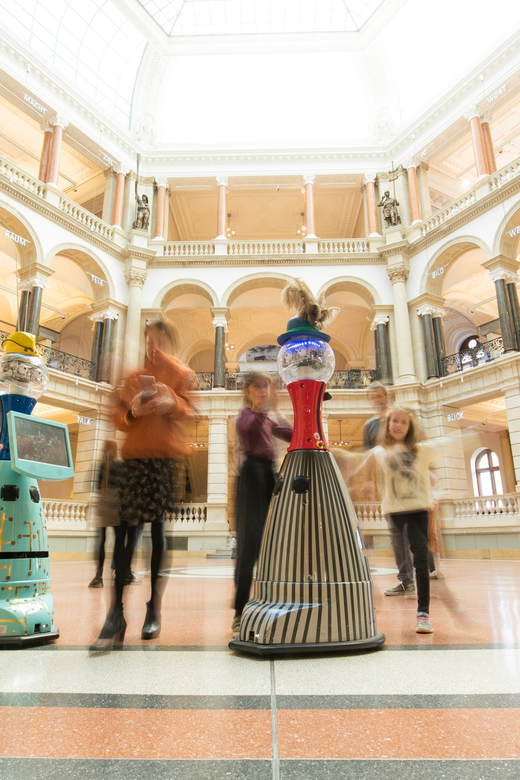
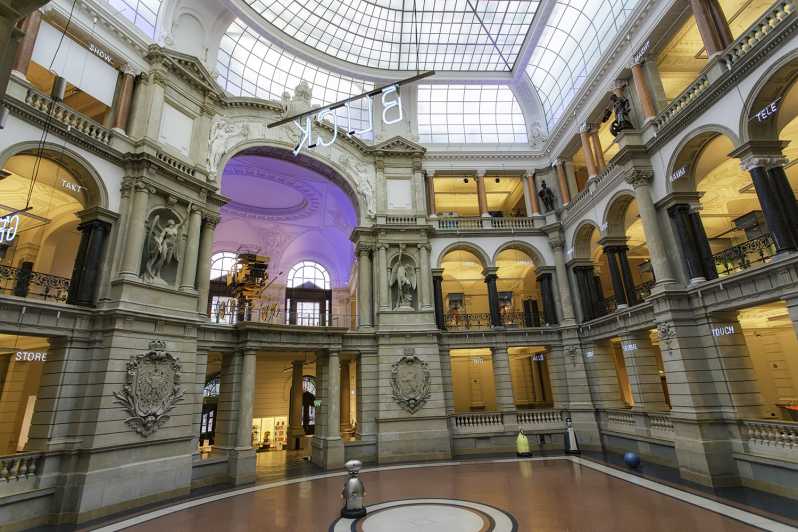
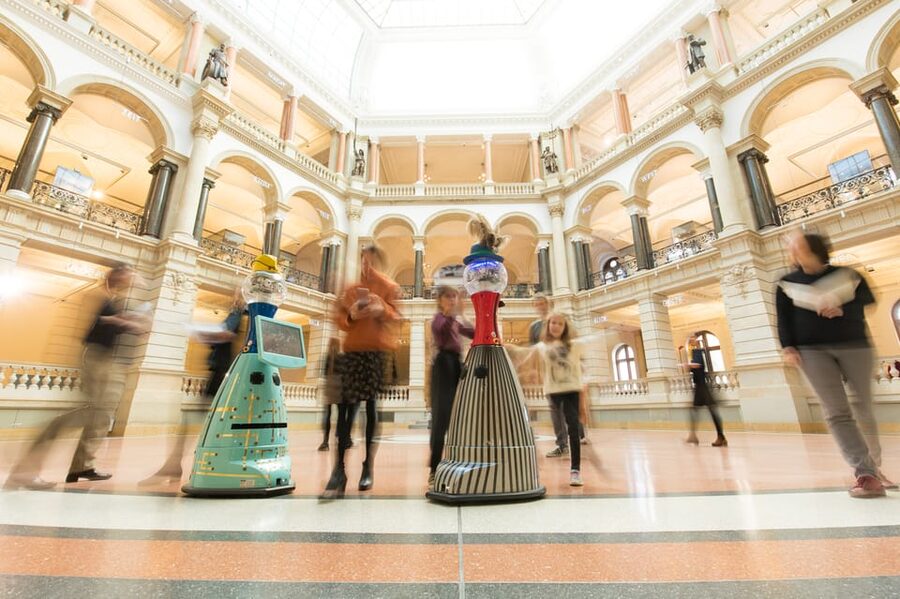
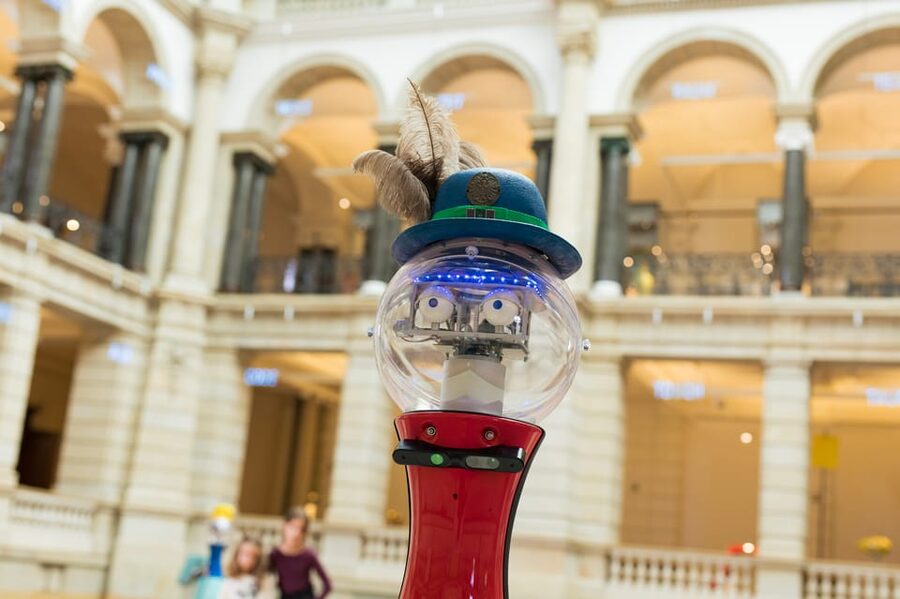
The communication gallery around the atrium is likely to be the most active part of your visit. It contains interactive terminals designed to explain the basics of communication through direct participation.
You can try sending the latest news with smoke, light, or acoustic signals. That small exercise makes a basic point clear: communication depends on a shared code. A flash of light means little unless the receiver knows how to read it. The same is true of a spoken language, a postal address, or a digital message.
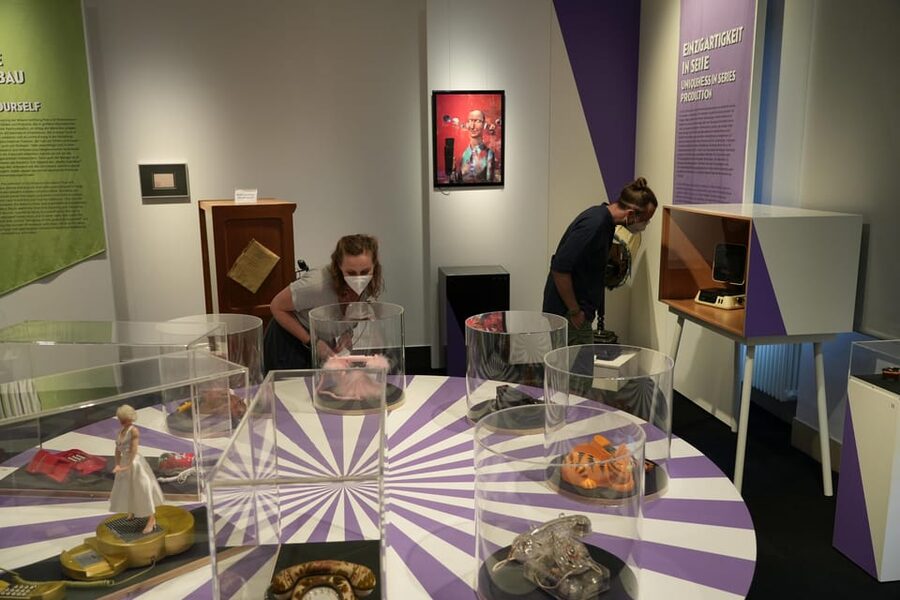
The gallery also includes digital displays and activities connected with greeting people from around the world. This gives the museum a social angle. Communication is not only about machines. It is also about customs, language, tone, and the way people signal respect.
You should allow time to play with these stations instead of walking past them. A quick look may be enough for a visitor focused only on the major objects, but the hands-on sections are what separate this museum from a standard display of old postal equipment.
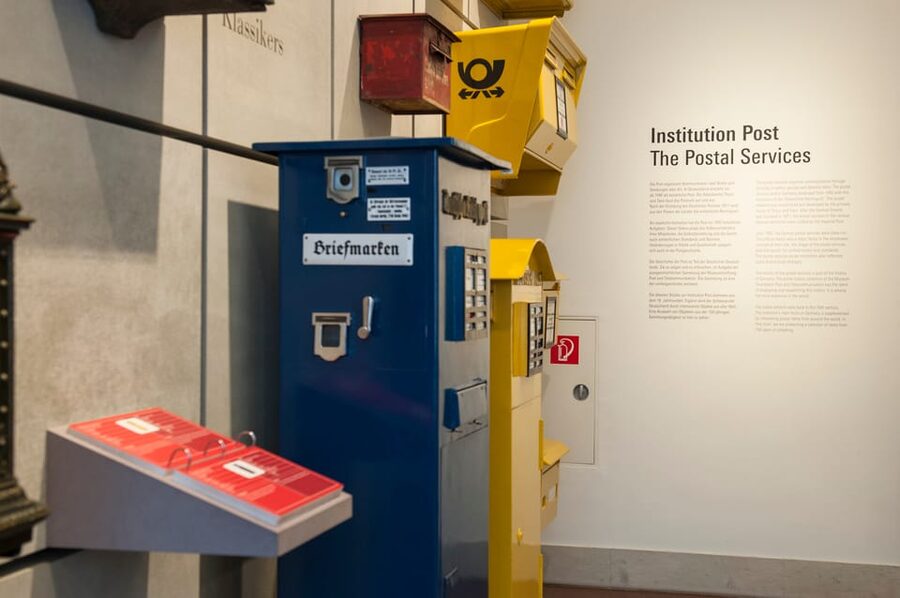
For families, this is especially useful. A child may not spend long reading about communication systems, but sending a signal or trying an interactive screen offers an immediate reason to stop. A Polish-language comment about the museum specifically praised the ability to touch and interact with the postal material, along with its appeal for children.
The Blue Mauritius gives the visit a clear centerpiece

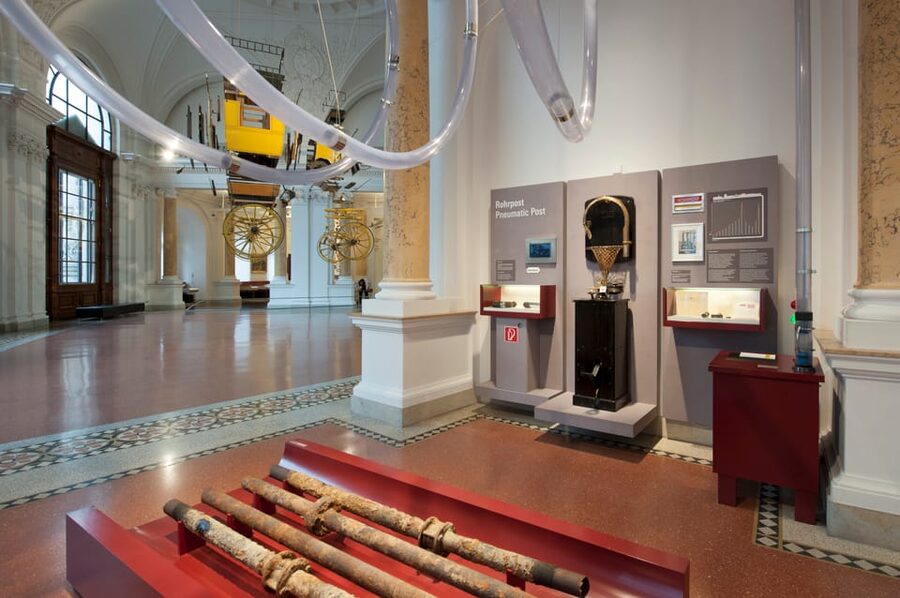
The Blue Mauritius is the object most likely to anchor your visit. It is described as one of the world’s most famous and rarest stamps, so it carries a different weight from the museum’s interactive stations.
A stamp is tiny, but its story points to much larger systems. Postal services depend on rules, routes, payment, trust, and the promise that a message will reach someone far away. The Blue Mauritius lets you see how a small printed object can become a symbol of global communication.
Do not expect the stamp alone to fill an hour. Its value comes from the setting around it and from the larger postal story. Give it a close look, then consider how different it is from the signals in the communication gallery. One object represents a carefully organized postal network. The other asks you to transmit information directly.
That contrast is one of the museum’s strengths. You are not only looking backward at old objects. You are comparing communication systems and asking what each one makes possible.
The audio-visual app keeps a self-guided visit moving
Admission includes an audio-visual app, which is important because this is a self-guided museum visit. You are not assigned a guide, and no guide’s name is provided for the experience.
The app gives you a way to add structure without losing freedom. You can move at your own pace, pause at a display that interests you, and spend less time on sections that do not hold your attention. That matters in a museum covering such a long period.
I would use the app as a companion rather than trying to follow every available element. Start with the main route, then return to interactive displays and objects that catch your attention. The museum invites visitors to consider current debates and new points of view, so the app may be most useful when you want context for the exhibits rather than a simple list of dates.
The absence of a scheduled entry time also helps. You do not need to build your day around a timed slot. You can fit the museum between other Berlin plans, then stay longer if the communication gallery or postal collection takes hold.
A few more museum visits around Berlin worth comparing
- Berlin: Interactive DeJa Vu Museum Entrance Ticket
★ 4.1 · 1,338 reviews - Berlin: “Pergamonmuseum. The Panorama” Exhibition Tickets
★ 4.6 · 1,245 reviews - Berlin: German Spy Museum Flexible Entry Ticket
★ 4.4 · 472 reviews - Berlin: Tickets to the Computer Games Museum
★ 4.5 · 363 reviews
Why the 1.5-hour visit can be good value at $9
At $9 per person, admission is modest for a museum that offers a full day of validity. The practical question is not only the ticket price, but how much time you will give it.
For a focused 1.5-hour visit, the price is easy to justify. You get access to the main collection, the Blue Mauritius, interactive stations, and the audio-visual app without paying separately for a guide or an additional activity. If you have children, the ability to move at your own speed also reduces the pressure to complete every display.
The one-day validity adds flexibility, but it does not automatically mean you should plan to spend the whole day inside. The listed visit length is about 1.5 hours, and the available information does not describe a café, special meal, or other full-day program. Treat the long validity as a useful cushion, not as a promise of an all-day entertainment schedule.
The price is strongest for people who enjoy museums with a mix of objects, technology, and participation. If you want a short, low-cost cultural stop in Berlin, it works well. If your main interest is only rare stamps, the price still gets you the Blue Mauritius, but much of the value comes from the wider collection.
A practical route through the museum
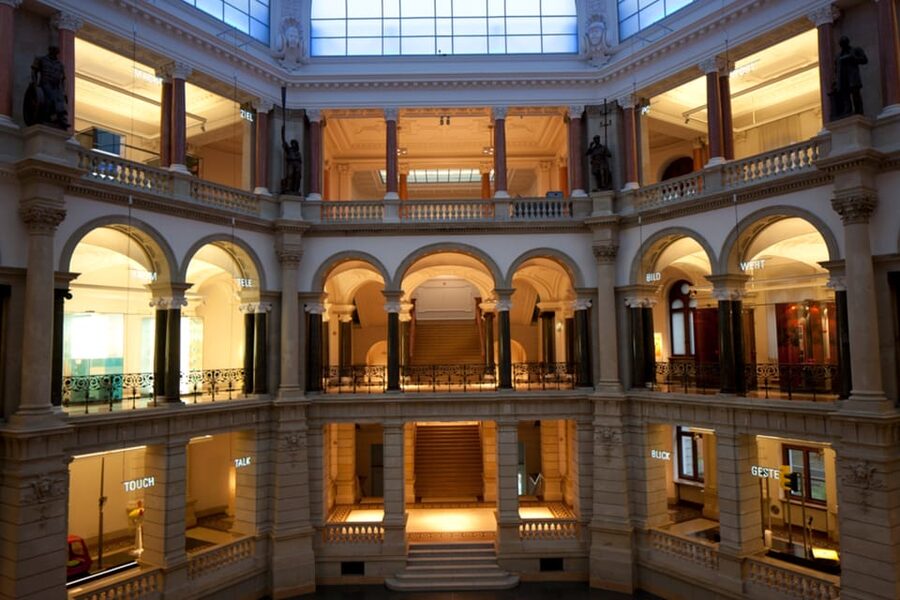
Start by getting your bearings in the atrium and communication gallery. This gives you a quick sense of the museum’s tone and lets you test the interactive equipment before settling into the historical displays.
Next, use the app to follow the story from early communication methods toward postal and modern systems. Do not rush the transition from physical signals to digital technology. The point is to see how each method solves a problem of distance, speed, reliability, or shared meaning.
Set aside a specific moment for the Blue Mauritius. It is easy to spend too much time with the largest displays and then give the famous stamp only a passing glance. A short pause here helps balance the visit between interactive activities and the museum’s more traditional objects.
Finish with the exhibits that connect communication to current debates. The museum presents its displays as an invitation to discover different points of view, become active, and take part in discussion. That makes the final part less about old equipment and more about how communication works now.
The route is self-guided, so you can reverse this order. If you are visiting with children, begin with the hands-on stations. If you are more interested in postal history, head toward the stamp and postal displays first, then use the interactive gallery as a change of pace.
Who will get the most from this experience
I would recommend this museum to families, technology fans, history-minded visitors, and anyone who enjoys learning by doing. The subject is broad enough to interest adults, while the interactive terminals give children a reason to participate.
It is also a good choice if you want an indoor activity that does not demand a full morning. The usual 1.5-hour visit fits neatly into a day of sightseeing. Since the ticket is valid for one day, you have room to adjust your pace.
You may enjoy it less if you want a traditional guided tour with a continuous spoken explanation. The included app supports independent exploration, but the experience is not presented as a live tour. You will need to decide where to linger and how much background you want.
The museum also suits people who like surprising links between subjects. Postal stamps, greetings, acoustic signals, digital screens, and smartphones may sound like separate topics. Here, they form one broad question: how do humans send meaning across space and time?
Opening details, access, and planning
You do not need to reserve a time slot. The museum accepts cash at the counter, and the activity information also describes ticket purchase without cash. For a smooth visit, check the payment options available when you book and carry a backup method if needed.
The museum is wheelchair accessible. It is closed on Mondays, and it is also closed on December 24, December 25, and December 31. On public holidays, opening hours are listed as 10:00 AM to 6:00 PM.
Hotel pickup and drop-off are not included, so you arrange your own way to the Museum for Communication Berlin. The experience begins and ends at the museum, rather than functioning as a wider city tour.
Free cancellation is available up to 24 hours before the visit for a full refund. You can also reserve now and pay later, which is helpful if your Berlin schedule is still changing.
The final call: should you book it?
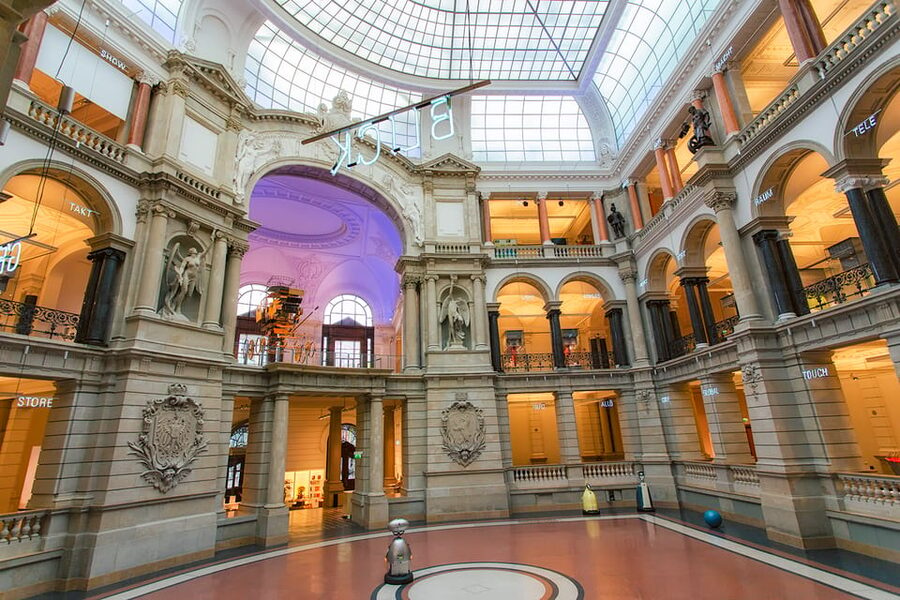
Book this experience if you want an affordable, flexible museum visit with hands-on exhibits and a clear historical theme. The Blue Mauritius gives you a rare object to seek out, while the communication gallery keeps the visit active. The audio-visual app is useful for adding structure without forcing you into a group.
I would be especially comfortable recommending it to families and visitors with about 1.5 hours to spare. At $9, the price is reasonable even for a short stop, and the one-day validity gives you breathing room.
Skip it if you want a guided tour, a narrow focus on Berlin’s postal history, or a museum where every display is a major showpiece. For everyone else, this is a smart way to see how humans moved from simple signals to instant digital messages, with enough buttons, sounds, stamps, and surprises to keep the subject lively.
FAQ
Do I need to reserve a time slot?
No. A time slot is not required for the museum visit.
How long does the visit take?
The visit is listed as lasting about 1.5 hours, although the ticket is valid for one day.
What is included with admission?
The ticket includes admission to the Museum of Communication Berlin and access to an audio-visual app.
Is the museum wheelchair accessible?
Yes, the experience is wheelchair accessible.
When is the museum closed?
The museum is closed on Mondays and on December 24, December 25, and December 31.
Can I cancel for a full refund?
Yes. You can cancel up to 24 hours in advance for a full refund.
Just added around Berlin
- From Berlin: Sachsenhausen Concentration Camp Museum Tour★ 4.8 · 514 reviews
- Cold War, Berlin Wall, Spies and the East Side Gallery★ 4.8 · 254 reviews
- Bubble Planet Berlin: An Experience Museum for All Your Senses★ 4.1 · 38 reviews
- Berlin: The Wall Museum East Side Gallery Ticket★ 4.1 · 292 reviews
- Berlin: Tickets to the Computer Games Museum★ 4.5 · 363 reviews
- Berlin Trabi Museum: Day Ticket★ 4.1 · 63 reviews
- Berlin: Stasi Museum Private Guided Tour with Entry Ticket★ 4.8 · 13 reviews
- Berlin: Ticket for Photography Exhibitions at C/O Berlin★ 4.5 · 39 reviews
Museum Tours in Berlin, compared.


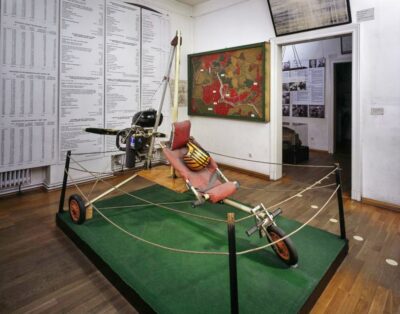
Skip-the-Line: Berlin Wall Museum at Checkpoint Charlie
Read our review →
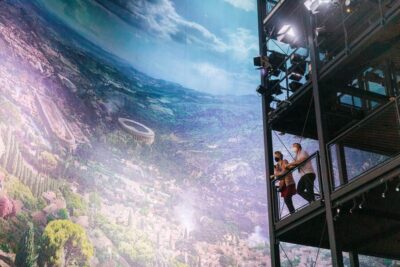
“Pergamonmuseum. The Panorama” Exhibition Tickets
Read our review →
East Side Gallery Spree Cruise in a Solar Catamaran
Read our review →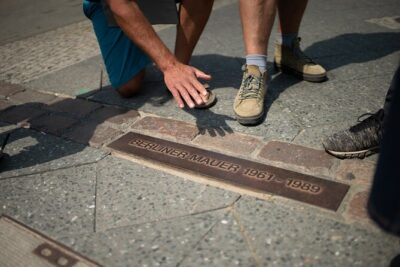
Cold War, Berlin Wall, Spies and the East Side Gallery
Read our review →
Berlin WelcomeCard: Museum Island & Public Transport
Read our review →Browse the lists this tour appears in