
Review · NEW YORK CITY
American Museum of Natural History Admission Ticket
The American Museum of Natural History packs 13 billion years of science into a sprawling Upper West Side complex. You can stand beneath a 94-foot blue whale, face a Tyrannosaurus rex skeleton, and then move into space, geology, human cultures, and living animals without leaving the building.
I like the freedom to set your own pace, and I like the mix of big visual displays with exhibits that give kids something real to learn. The main catch is practical: a voucher may need to be exchanged for an admission ticket, and that extra line can be slow when the museum is busy.
Key points to know before you go

- More than 40 permanent galleries: General admission covers the main exhibition halls, the Rose Center for Earth and Space, and the Richard Gilder Center.
- Plan at least three hours: You can move quickly in three hours, but a relaxed visit may take most of the day.
- Start with a paper map: The museum covers four levels and can be confusing, especially if you are trying to find a certain dinosaur or Night at the Museum location.
- The main ticket has limits: The Hayden Planetarium Space Show, giant-screen film, butterfly vivarium, Invisible Worlds, and other ticketed exhibitions are not included.
- Good for mixed-age families: Young children get animals and dinosaurs, while older children and adults can spend time with astronomy, fossils, gems, and anthropology.
- Entry can take extra time: Bring your voucher to be converted into a museum ticket, and allow more time if you are visiting during a crowded period.
A giant museum with a clear wow factor
The American Museum of Natural History is not a quick stop you squeeze between lunch and Central Park. It is a full museum day in scale, even if your personal visit lasts three or four hours.
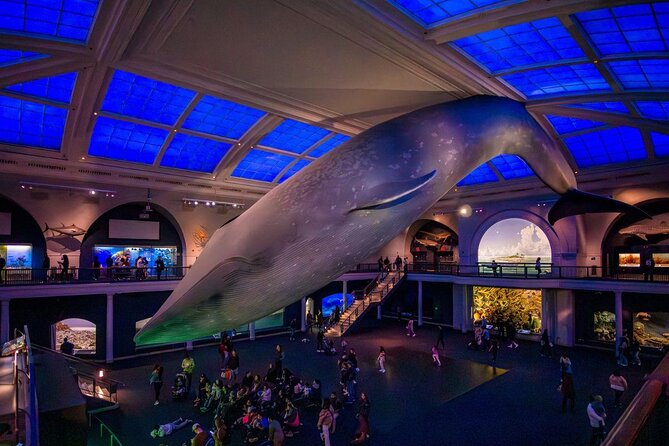
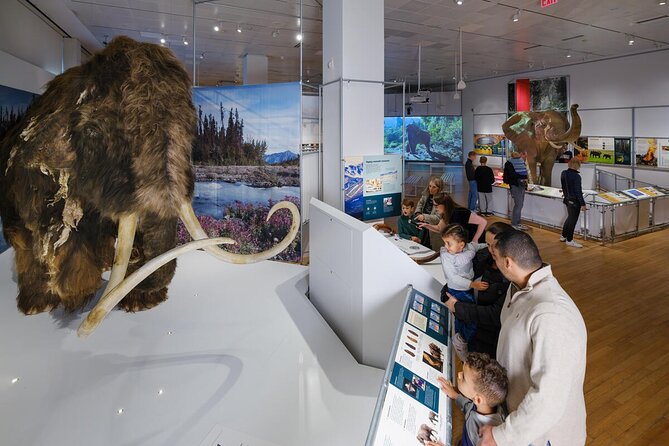
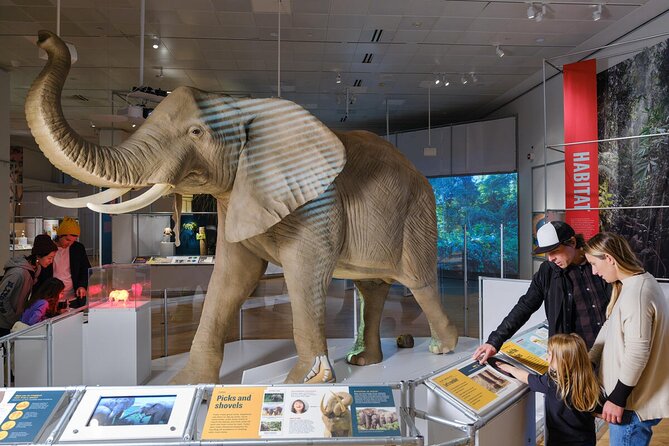
The strongest moments are easy to picture. The 94-foot-long blue whale model fills the Milstein Hall of Ocean Life. The dinosaur halls put enormous skeletons and fossils at the center of the visit. The Akeley Hall of African Mammals presents Asian elephants and other large animals in detailed displays that give younger children an immediate sense of wonder.
I like that the museum works on two levels. You can simply enjoy the size and drama of the exhibits, or you can stop and read about evolution, astronomy, geology, and human cultures. That flexibility matters when you are visiting with children who may not want to read every panel.
The building itself is also part of the experience. With four levels and more than 40 permanent halls, it feels less like a single gallery and more like a small indoor city. That is exciting, but it also means you need a plan.
More Museum Tours in New York City
- NYC: Empire State Building Tickets – Observatory & Museum
★ 4.7 · 25,757 reviews - New York City: American Museum of Natural History Ticket
★ 4.5 · 15,447 reviews - NYC: Museum of Modern Art (MoMA) Entry Ticket
★ 4.6 · 12,540 reviews
What your $37 admission includes
The listed price is $37 per person, which is reasonable if you stay for several hours and use the main halls. It becomes better value when you treat the museum as a major part of your day rather than a one-hour attraction.
General admission includes the permanent exhibition halls, the Rose Center for Earth and Space, and the Richard Gilder Center for Science, Education, and Innovation. You can spend as long as you wish inside during your visit, so you are not forced to rush from one gallery to another.
The ticket does not include several popular add-ons. You need separate admission for the Hayden Planetarium Space Show, the giant-screen film, the butterfly vivarium, Invisible Worlds, and other ticketed exhibitions. This is an important point when budgeting, especially for a family.
A family may see the $37 entry price as only the beginning if everyone wants a film, planetarium show, and special exhibit. If you are content with the permanent halls, the ticket offers a much simpler and more predictable visit.
New York residents have a separate advantage: the amount paid for general admission is up to them. Children under three qualify for waived admission fees.
Getting inside: allow time for the voucher exchange
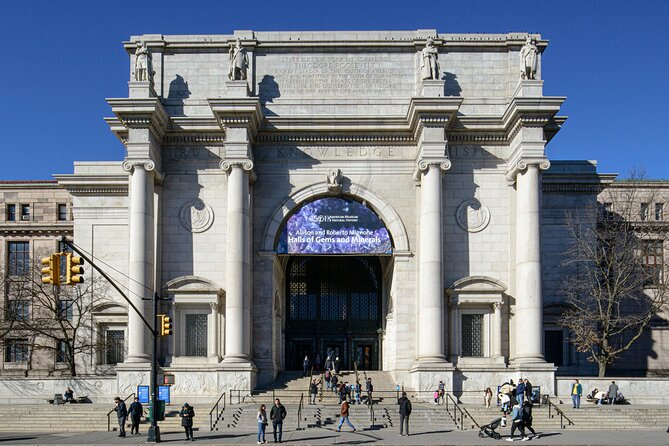
The biggest practical weakness is the difference between a voucher and a museum admission ticket. You may need to take your voucher to the museum and have it converted before entering the galleries.
That process can be quick, but it is not always quick. Reports range from fast entry to waits of 30 minutes, an hour, or even longer during crowded periods. One especially difficult account involved a family with a one-year-old and a three-year-old, so this is not a minor issue if you are carrying tired children or working around a tight schedule.
I would allow extra time at the start of the visit and avoid booking a timed activity immediately afterward. Keep your confirmation easy to access, and if the voucher link does not load, deal with that before you reach the entrance if possible.
Buying directly from the museum may be a better choice if your top priority is the fastest possible entry. The $37 ticket can still work well, but the convenience depends on how smoothly the voucher exchange operates that day.
The dinosaur halls are the natural first stop
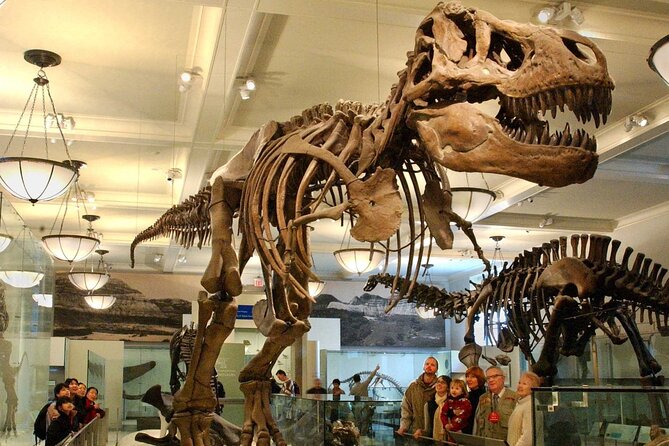
The Hall of Saurischian Dinosaurs is one of the museum’s main draws. The Tyrannosaurus rex skeleton gives the visit an instant centerpiece, and the broader dinosaur displays help explain the scale and variety of prehistoric life.
This section is especially effective with children. It offers the kind of large, memorable objects that make a museum visit feel like an event, while the surrounding information gives older children and adults more to consider.
You might want to begin here because the dinosaur halls are among the most requested areas. Starting early also helps if the museum is already filling up. On busy days, popular rooms can become warm and crowded, and it is easier to appreciate the skeletons before the building reaches its busiest point.
Do not assume that the dinosaur section is the whole museum. It is a strong anchor, but leaving after the fossils would mean missing some of the museum’s most distinctive rooms.
More natural history museums in New York City:
- Berlin: Natural History Museum Entrance Ticket
★ 4.6 · 3,382 reviews - Chicago: Field Museum of Natural History Ticket or VIP Tour
★ 4.7 · 717 reviews - Field Museum of Natural History Admission Tickets
★ 4.5 · 489 reviews - Los Angeles: Natural History Museum of LA Entry Ticket
★ 4.7 · 457 reviews
The blue whale and Akeley Hall bring the animals to life
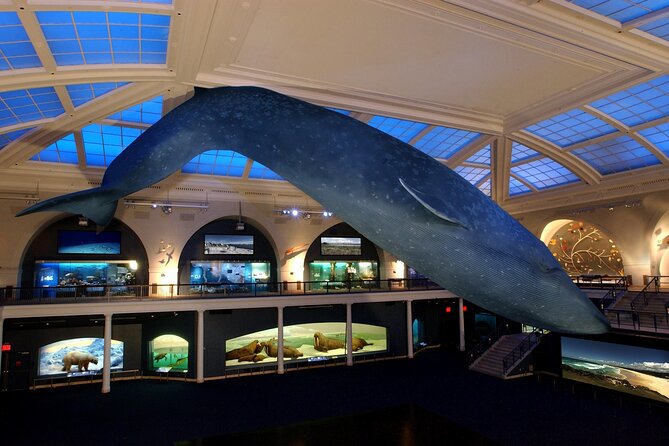
The Milstein Hall of Ocean Life is built around a 94-foot-long blue whale model. Its size makes it easy to understand why this is one of the museum’s most memorable displays. You do not need a long attention span to appreciate it, which makes it a reliable stop with young children.
The Akeley Hall of African Mammals offers a different kind of experience. The Asian elephants are the most obvious draw, while the animal displays give you a chance to compare species and habitats. Families often find this section easier for children than text-heavy science rooms because the animals provide an immediate visual focus.
The museum has many taxidermy displays, along with dinosaurs, cultural objects, and large-scale reconstructions. That range is useful for families with different interests. One child can focus on animals while another spends time with fossils or space.
Space, Earth science, gems, and the Gilder Center
The Rose Center for Earth and Space shifts the focus from animals and fossils to the universe. It is included with general admission, so you can move from ancient life on Earth to the much larger story of planets, stars, and cosmic time without buying another basic ticket.
The museum’s overall story reaches back 13 billion years. That gives the visit a useful structure, even though the exhibits are spread across a large building. You can see the museum as a sequence from the universe to Earth, then to life, animals, and human cultures.
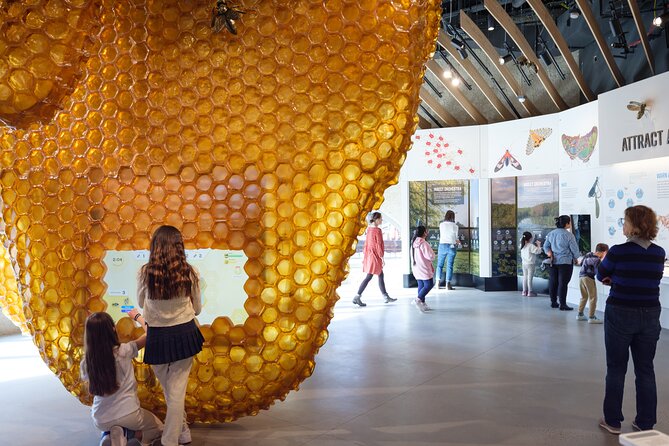
The Richard Gilder Center for Science, Education, and Innovation is also included in general admission. The supplied information does not specify every display there, so I would treat it as an additional science stop rather than plan your entire visit around a particular room.
The gemology exhibits receive strong praise for their size and visual appeal. They are a good choice when you need a change from animals and dinosaurs. Bright stones and unusual minerals give children something to spot, while adults may enjoy the scientific and geological context.
Planning four levels without getting lost
The museum can be confusing. Signage is not always easy to follow, and even the paper map takes a little study. Pick up a map at an entrance, information desk, or membership desk, then mark the few rooms you most want to see.
A sensible route is:
- Begin with the dinosaur halls.
- Visit the blue whale and ocean galleries.
- Continue to the animal halls and Asian elephants.
- Move to the Rose Center and Gilder Center.
- Finish with gems, cultural displays, or any room you missed.
This is not a strict route. The best order depends on your family and the day’s crowd levels. The important thing is to choose priorities before you start wandering.
A three-hour visit should focus on your top rooms. Four hours allows more breathing room, but even that may not be enough for every permanent hall. A full day is possible, especially if you stop for food and take time with the displays.
The floors are hard, and you will do plenty of walking. Comfortable shoes matter. Strollers and ADA access have been described as workable, but the museum’s size still means that moving slowly with small children can take effort.
Crowds, closures, and the best time to visit
The museum can become crowded even early in the day. One practical pattern is that the entrance may feel manageable at opening, then the galleries grow packed within about 30 minutes. Crowds can make some halls hot and humid, particularly when many school-age children and families are inside.
Going early is still sensible if you want the dinosaur halls or blue whale with fewer people around. If you are visiting in a busy season, set aside more time than the minimum and accept that certain rooms may feel crowded.
Exhibits can also close or partly close for refurbishment. That is a frustrating risk because the museum is large enough that one closed hall can affect your plan. Check the current museum information before committing your whole day to one particular exhibit.
The museum remains worthwhile when a room is closed, but the value is lower if the exact display you came to see is unavailable. This is another reason to build a flexible route with several priorities.
Food, breaks, and a Central Park pairing
A museum this large needs a break. The on-site food court has included gluten-free choices such as pizza and brownies, which is useful for families managing dietary needs. The available information does not provide a full menu, so treat those items as examples rather than a guarantee for every visit.
The Upper West Side location also pairs well with Central Park. You can use the museum for a weather-proof morning or afternoon, then continue with outdoor time nearby. That combination works well for children who enjoy the exhibits but need room to move afterward.
Do not make the mistake of scheduling too many other attractions directly after your museum entry. The voucher exchange, crowds, and sheer size of the building can push the visit beyond your planned three hours.
Who will enjoy this most
Families with children are the clearest match. Dinosaurs, elephants, the blue whale, gems, and space provide plenty of visual material, while the museum’s educational side gives adults a reason to stay engaged.
Teenagers can enjoy it too, especially if they choose their own sections rather than being marched through every gallery. Adult couples and solo visitors may prefer a slower visit focused on astronomy, anthropology, fossils, or gems.
This is less suitable if you want a small, quiet museum that you can finish in an hour. It also may not suit anyone with limited walking time unless you select just two or three halls in advance.
The museum’s accessibility and stroller use have been viewed positively, but the building remains large. Plan breaks and do not measure success by seeing every room.
What is not included
The extra-cost attractions are worth noting before you arrive:
- Hayden Planetarium Space Show
- Giant-screen film
- Butterfly vivarium
- Invisible Worlds
- Other ticketed exhibitions
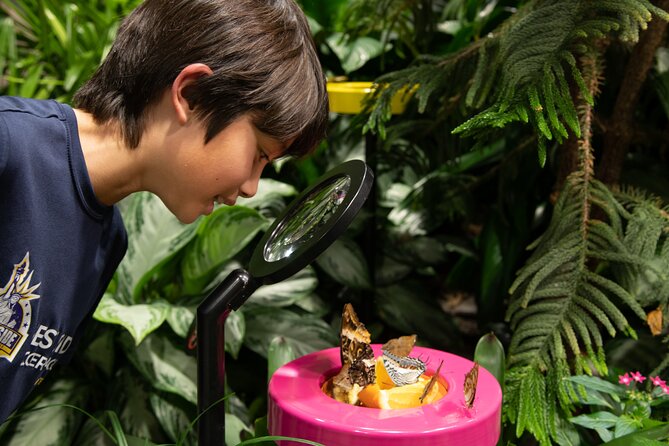
The butterfly vivarium can be a highlight, but it is not part of general admission. If your children have their hearts set on butterflies or a planetarium show, check the ticket options before you arrive so there are no surprises.
The same applies to films and temporary exhibitions. General admission gives you a substantial visit, but it does not provide access to every experience inside the building.
Cancellation and basic practical details
You can cancel for a full refund up to 24 hours before the experience start time. Cancellations made within 24 hours are not refundable, and changes inside that window are not accepted.
Confirmation is provided at booking. The museum is near public transportation, service animals are allowed, and most people can take part. English is the listed language for the experience.
Should you book the $37 museum ticket?
Book it if you want a major New York attraction that can fill three to four hours, or much of a day, with dinosaurs, animals, space, gems, and science. The ticket is a good fit for families and for adults who enjoy choosing their own route instead of joining a fixed tour.
I would be cautious if you need fast entry or have a tightly timed schedule. The voucher-to-ticket exchange has caused long waits for some visitors, and the museum itself can be crowded and confusing. Buying directly from the museum may be the better choice when speed matters most.
For the best visit, arrive early, get a paper map, choose three or four priority rooms, and leave time for the unexpected. At $37, the main admission offers solid value when you use the museum as the day’s central activity, but remember to budget separately for the planetarium, butterfly vivarium, films, and other ticketed exhibits.
FAQ
How much does admission cost?
The listed price is $37 per person. New York residents can pay what they wish for general admission, and children under three are admitted without a fee.
How long should I plan for the museum?
Plan on three to four hours at minimum. You can spend a full day if you want to explore the permanent galleries at a slower pace.
What does general admission include?
General admission includes more than 40 permanent exhibition halls, the Rose Center for Earth and Space, and the Richard Gilder Center for Science, Education, and Innovation.
Are the planetarium and special exhibits included?
No. The Hayden Planetarium Space Show, giant-screen film, butterfly vivarium, Invisible Worlds, and other ticketed exhibitions require separate admission.
Do I enter directly with the voucher?
The voucher may need to be exchanged for an admission ticket at the museum. Allow extra time because the exchange line can be slow during busy periods.
Is the museum suitable for children?
Yes. The dinosaur halls, Asian elephants, blue whale, gems, and space exhibits offer strong choices for children, while adults can spend more time with the scientific displays.
Are children under three charged admission?
No. Children under three qualify for waived admission fees.
Can I cancel the ticket?
Yes. You can receive a full refund if you cancel at least 24 hours before the experience start time. Cancellations within 24 hours are not refundable.
More Historical Tours in New York City
- Venice: St. Mark Basilica Ticket, Audioguide+History Gallery
★ 3.9 · 4,780 reviews - Paris: Louvre Museum Entry with History of Mona Lisa
★ 3.9 · 2,823 reviews - Venice’s Best: Basilica, Doge’s Palace, Gondola & History Gallery
★ 4.5 · 2,478 reviews - Guided African American History Tour with Reserved Museum Entry
★ 4.5 · 1,180 reviews
Just added around New York City
- The Met Museum Guided Tour with Skip-the-Line Entry★ 4.4 · 149 reviews
- New York City: The Banksy Museum Entry Ticket★ 4.6 · 51 reviews
- NYC: Entry Ticket To The Banksy Museum★ 4.5 · 89 reviews
- Self-Guided Tour of the Museum at Eldridge Street★ 4.3 · 13 reviews
- New York: Private Tour of The Metropolitan Museum of Art★ 4.9 · 39 reviews
- NYC: Museum of Sex Entry Ticket★ 4.2 · 179 reviews
- NYC: Museum of the Moving Image Flexible Ticket★ 4.6 · 95 reviews
- NYC: Whitney Museum Ticket★ 4.2 · 315 reviews
Museum Tours in New York City, compared.



9/11 Memorial, Ground Zero Tour with Optional 9/11 Museum Ticket
Read our review →

All-Access 9/11: Ground Zero Tour, Memorial and Museum, One World Observatory
Read our review →

Browse the lists this tour appears in