
Review · GERMANY
Berlin: Jewish Museum Berlin Entrance Ticket
Berlin’s Jewish Museum is not a quiet row of display cases. Daniel Libeskind’s zigzag building makes you feel the subject before you read a single label, with sharp angles, sloping floors, empty spaces, and rooms that can leave you disoriented. Inside, you move from medieval Jewish life and religious customs to modern design, Nazi persecution, and Jewish life today.
I like two things especially: the museum gives Jewish culture more space than the Holocaust alone, and the architecture works as part of the story rather than as decoration. You can learn about kosher food, Shabbat, holidays, family life, art, and business, then enter places such as the Holocaust Tower and Memory Void. The main drawback is that the layout can be confusing, and two hours may feel rushed if you read every panel.
- Libeskind’s building tells a story: Slanting walls, voids, and uneven floors create an unusually physical museum visit.
- Jewish life comes first: Exhibits cover religion, food, customs, business, art, and daily life across many centuries.
- The Holocaust spaces are powerful: The Holocaust Tower and Shalekhet installation are quiet, stark, and emotionally demanding.
- Admission is free: You still need to plan your time, and a donation is a thoughtful way to support the museum.
- Use the JMB app: Audio tours run about 60 minutes or 90 minutes or more, and your own headphones are recommended.
- Pair it with the Berlinische Galerie: Your museum ticket gives you reduced admission there on the same day and the next two days.
The building is part of the museum
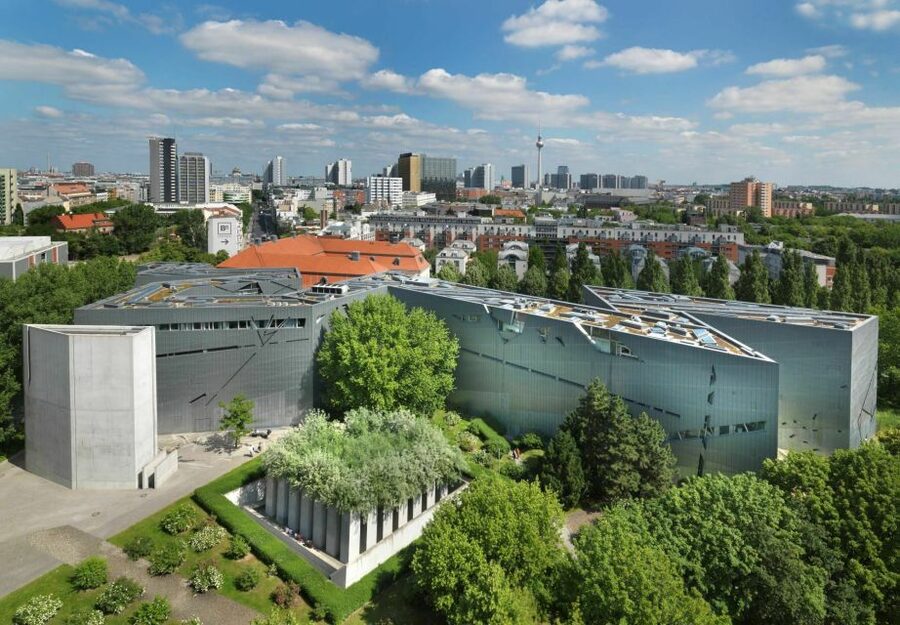
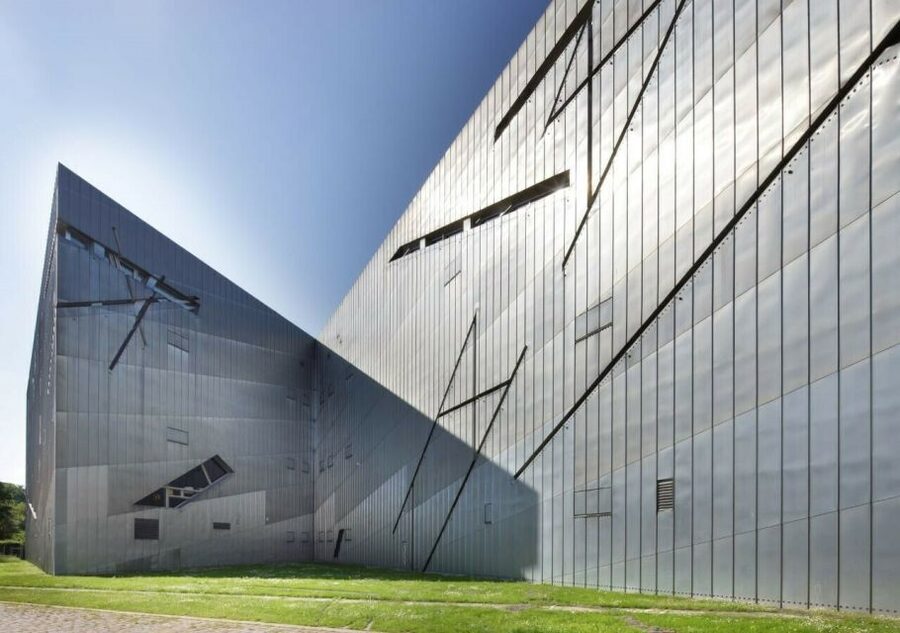
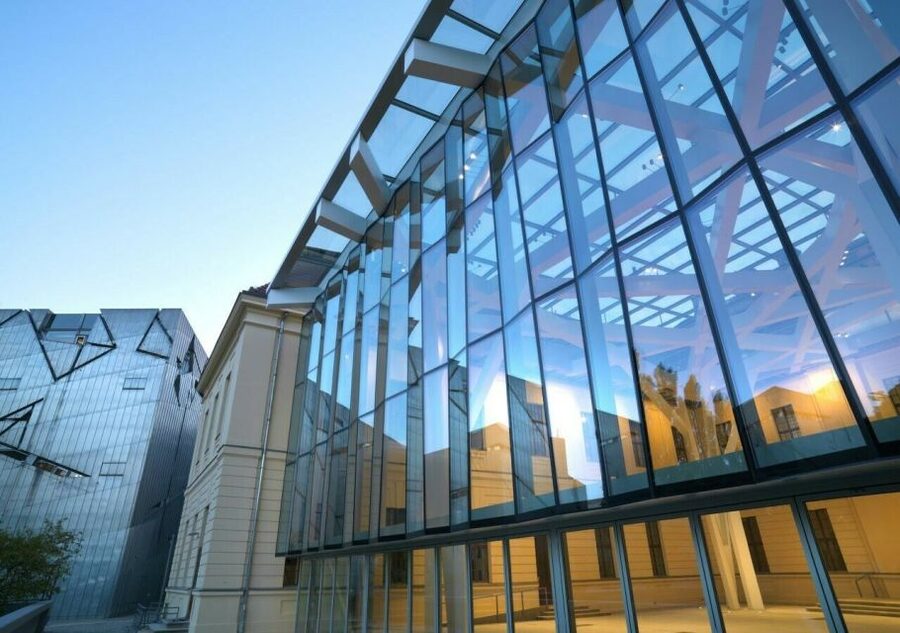
The Jewish Museum Berlin sits in Kreuzberg, within walking distance of Checkpoint Charlie. From outside, the building looks like a sharp metal lightning bolt or a broken line. It was designed by Daniel Libeskind, and its form reflects rupture, absence, and the fractured course of Jewish life in Germany.
You will notice that this is not a building designed to make you feel settled. Corridors may narrow, walls lean, and sightlines end abruptly. The empty vertical voids are especially important. They run through the building as reminders of lives and places that can no longer be restored.
This approach works best if you give yourself time to pause. The architecture is not always easy to navigate, but that is part of its purpose. It asks you to pay attention to space, silence, and what is missing.
The building alone is worth seeing, even if you are less interested in museum displays. Still, the architecture can overshadow the collection if you rush. I recommend treating the building as the opening chapter, not the whole visit.
Start with Jewish life, not only persecution
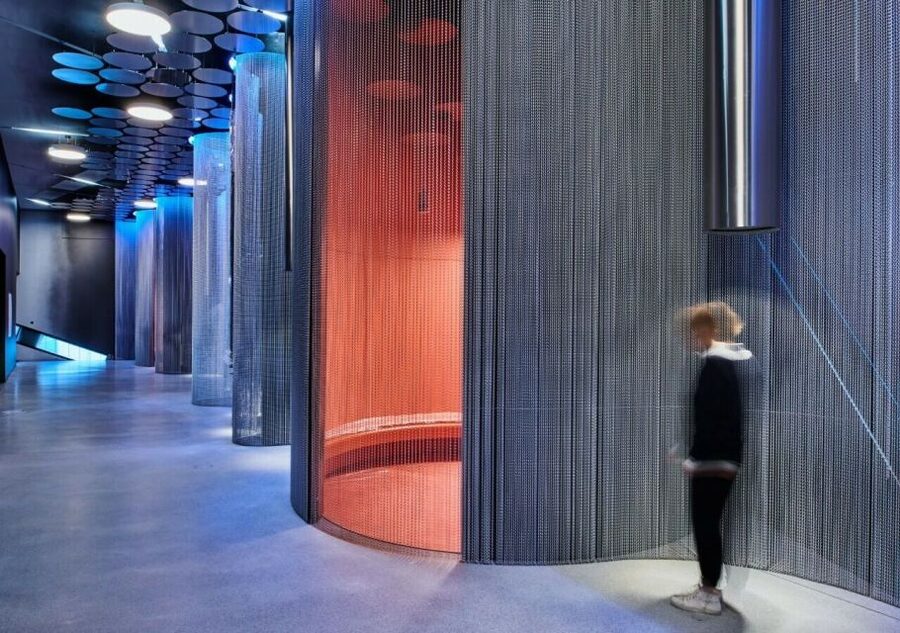
A major strength of the museum is its broad view of Jewish life in Germany. You are not led straight into a single story of destruction. Instead, the exhibits show Jewish communities across centuries, including their customs, religious practices, work, family life, achievements, and changing place in German society.
You can learn how Jewish dietary laws shape food choices, what Shabbat means, and how Jewish holidays are observed. These sections are useful even if you know little about Judaism. Everyday objects and interactive stations make abstract ideas easier to understand.
The displays also show the variety of Jewish culture. Art, books, household items, photographs, film, and audio help you connect religious traditions with ordinary life. That balance matters. It presents Jewish people as communities with humor, ambition, creativity, disagreements, and daily routines, not only as victims of persecution.
You should still expect difficult material. The museum explains antisemitism, exclusion, Nazi rule, and the destruction of Jewish life in Germany. The experience can feel heavy, but the wider context gives the difficult sections more meaning.
A few more museum visits around Germany worth comparing
- Berlin: DDR Museum Tickets
★ 4.3 · 3,443 reviews - Berlin: Natural History Museum Entrance Ticket
★ 4.6 · 3,382 reviews - Berlin: Neues Museum Entry Ticket
★ 4.6 · 3,261 reviews
Following the museum’s long historical route
A typical visit moves through a long sequence of galleries rather than a short loop. The precise order can feel unclear, so take a moment near the start to study the floor plan or choose an audio route through the app.
The museum covers Jewish history from the Middle Ages to the present. That long timeline helps you see change over time. Jewish life in Germany was never one fixed experience. Communities faced restrictions in some periods, gained greater freedom in others, and contributed to German culture, commerce, science, publishing, art, and design.
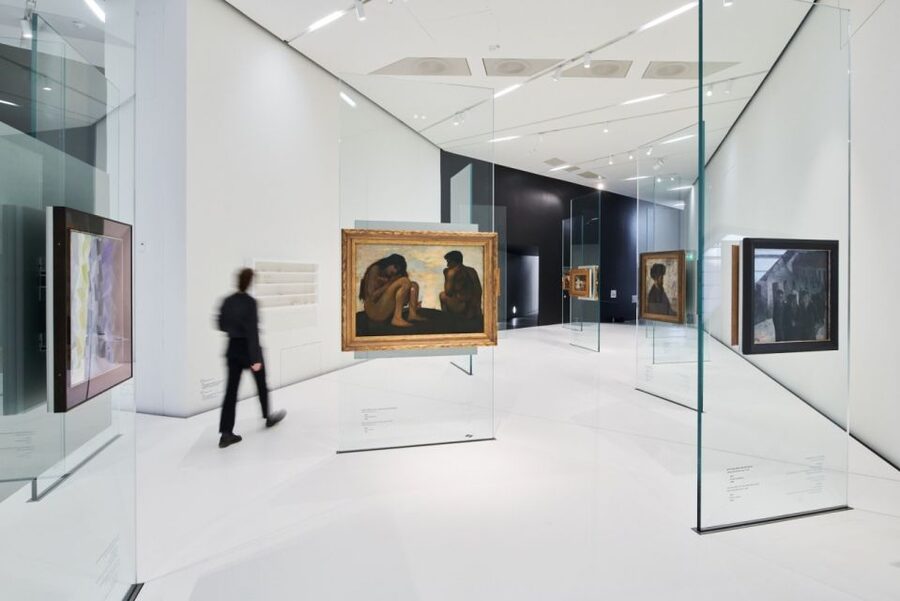
The collection includes both major historical objects and small items from everyday life. I find the ordinary objects especially helpful because they bring history down to human scale. A display about food or family customs can tell you as much about a community as a formal work of art.
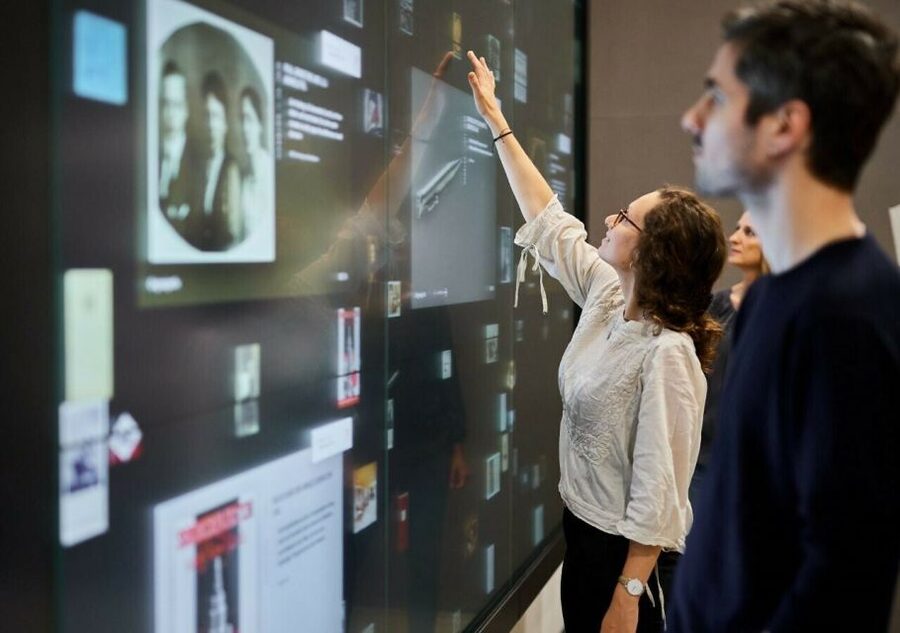
Interactive stations add another layer. Some offer surprising details, while video and audio installations give voices and images to the material. You do not need to use every station. If you stop at everything, you may run out of time before reaching the final rooms.
The Holocaust Tower and the Memory Void
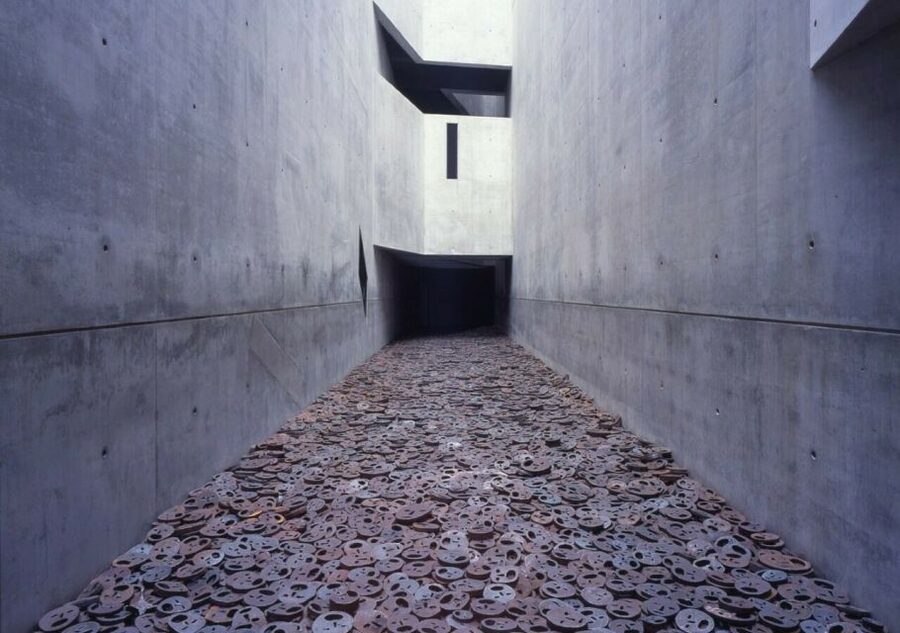
The most emotionally intense parts of the museum are the spaces built around absence and loss. The Holocaust Tower is a tall, bare room with a cold, isolated feeling. It is not a conventional gallery packed with information. Its power comes from the space itself, the light, and the sense of separation.
The Memory Void contains Shalekhet, also called Fallen Leaves, by Menashe Kadishman. Thousands of metal faces cover the floor. You can walk across them, but the sound and movement make the act uncomfortable. The installation asks you to confront the scale of loss without turning the experience into a simple historical statistic.
These rooms can affect people in different ways. Some find them deeply moving, while others may find the lack of conventional explanation frustrating. I suggest visiting slowly and quietly. Do not treat the Memory Void as a quick photo stop.
The museum handles the subject with restraint. It does not try to soften Nazi crimes, but neither does it turn suffering into spectacle. If you have recently visited other Berlin sites connected to Nazi Germany, this museum adds a more personal and cultural view of what was destroyed.
Design, women, and a wider modern story
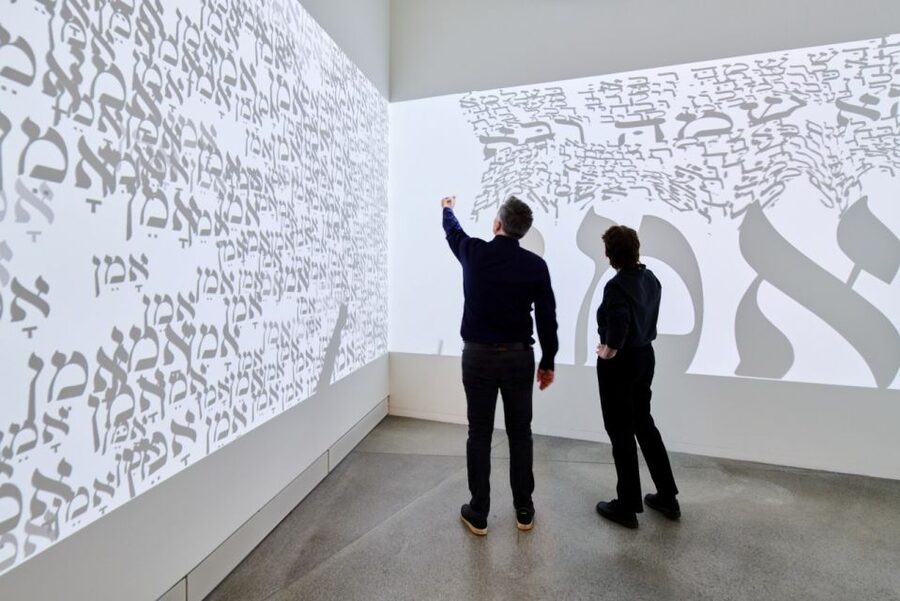
The special exhibition program adds reasons to return. One listed exhibition, Defiance: Jewish Women and Design in the Modern Era, examines the work of more than 60 Jewish women designers in early twentieth-century Germany.
The exhibition covers goldsmithing, textiles, ceramics, wood carving, fashion, and graphic design. Its importance is not just the objects. It restores attention to women who faced barriers as women, Jews, and artists, then saw their careers and lives damaged or destroyed under the Nazi regime.
Some escaped and began again abroad. Many were later left out of standard accounts of German art and design. This exhibition brings their work and biographies back into view.
The museum also lists Inventories: The Legacy of Salman Schocken, created with US author Joshua Cohen. It uses books and objects from the collection to examine Salman Schocken’s work as a publisher and department-store entrepreneur. The exhibition connects publishing, commerce, museums, ownership, and belonging.
The listed dates for these exhibitions are July 11 to November 23, 2025. Special exhibitions change, so check the current program before you visit. Bring headphones if you want to use audio or video material without missing details.
Same city, a completely different collection:
- Berlin: Museum Island Multiple Museum Entry Ticket
★ 4.4 · 2,861 reviews - Cologne: Chocolate Museum Entrance Ticket
★ 4.4 · 2,790 reviews - Dresden: Church of Our Lady Guided Tour of Gallery
★ 4.7 · 2,421 reviews - Skip-the-Line: Berlin Wall Museum at Checkpoint Charlie
★ 4.1 · 2,041 reviews
How long should you allow?
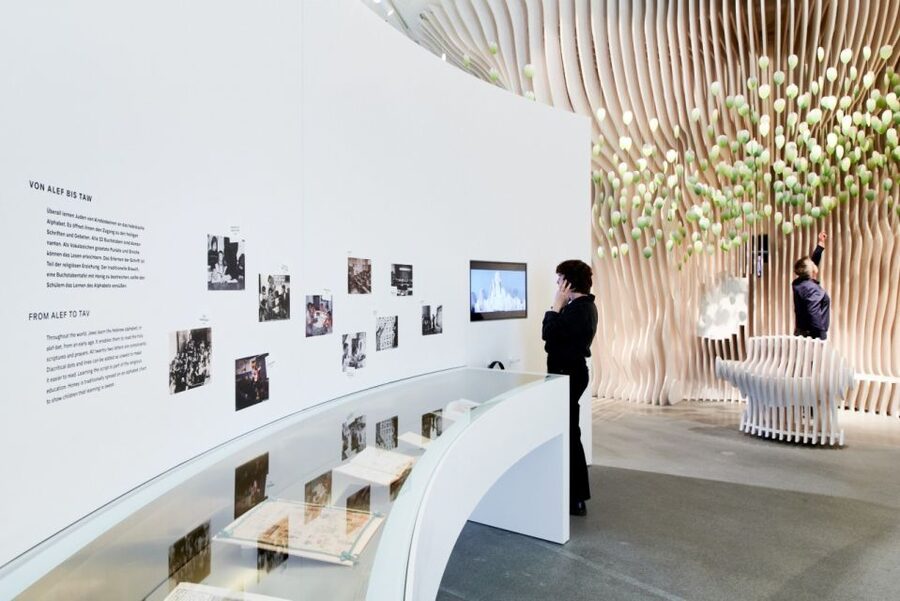
The stated average visit is about two hours, and that is a sensible minimum. Two hours lets you see the main galleries, architecture, and major memorial spaces without reading every label.
I would allow two and a half to three hours if Jewish history or design is a main reason for your Berlin trip. One visitor found two hours barely enough, while another returned on a later day after running out of time. That is easy to understand: the museum is larger and more detailed than its simple entrance ticket suggests.
The JMB app offers free audio content. One route takes about 60 minutes, while another runs for at least 90 minutes. You can also select individual objects or sections. Bring your own headphones. The app gives your visit more structure, which helps with the confusing room sequence.
There is no need to force yourself through every exhibit. Choose a route, take breaks, and accept that you may leave some rooms for another visit. The museum rewards attention more than speed.
Free admission and what that means for value
The entrance ticket is free, which makes this one of Berlin’s best-value cultural stops. You receive access to the museum and can download the JMB app without paying an entrance fee.
Free does not mean a quick or thin experience. You receive a large collection, a major architectural work, interactive stations, memorial spaces, and changing exhibitions. If you find the visit useful, consider making a cash or online donation. That is optional, but it is a practical way to support the institution.
The ticket is non-refundable, so choose your time carefully. The museum is open from 10 a.m. to 6 p.m., and the building closes at 6 p.m. Do not arrive late in the day expecting to cover everything.
Food, drinks, parking, and transportation are not included. The museum is central, and Checkpoint Charlie is within walking distance, but you need to arrange your own route there. A cafe provides a useful place to pause, and the staff are described as friendly.
Large bags may require a locker and a euro coin. Bring some change if you want to avoid a scramble at the entrance. One practical extra: your JMB ticket gives you reduced-rate admission to the nearby Berlinische Galerie on the day of your visit and the following two days. It is about a five-minute walk away, so the pairing works well for an art-focused afternoon.
Who will appreciate this visit most?
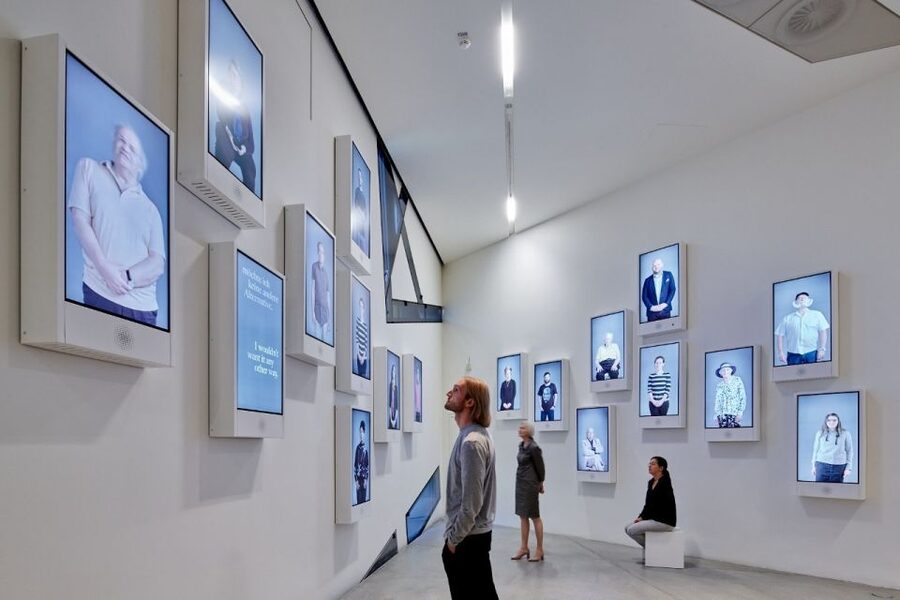
This museum suits anyone interested in Berlin, German history, Judaism, architecture, design, or the Nazi period. It is also useful for visitors who want a fuller picture of Jewish life rather than a museum focused only on the Holocaust.
Families can find plenty to discuss, especially at the interactive stations. Still, some rooms are solemn and may be difficult for younger children. The building has uneven and sloping areas, though the museum is wheelchair accessible.
If you prefer a clear, linear museum with obvious arrows at every turn, you may become frustrated. Signage could be better, and the route is not always immediately clear. The app helps, but it requires your phone and headphones.
If you are short on time, see the main architectural spaces, the Memory Void, the Holocaust Tower, and the sections on Jewish daily life. If you have half a day, follow one of the longer audio routes and spend more time with the modern design exhibitions.
Practical tips for a thoughtful visit
- Book a time slot even though admission is free. It helps you plan your day and avoids arriving without a clear entry time.
- Bring headphones. The app and audio material are much easier to use with your own pair.
- Allow at least two hours. Add another 30 to 60 minutes if you read carefully or want the full audio route.
- Carry a euro coin. You may need it for a locker, and small change can be useful inside.
- Wear comfortable shoes. The building includes sloping areas, stairs, and a lot of walking.
- Do not rush the memorial spaces. The Holocaust Tower and Shalekhet installation are meant to be experienced quietly.
- Check the special exhibitions before arrival. The program changes, and design exhibitions may add a major second focus to your visit.
- Pair it with the Berlinische Galerie. The reduced-price offer gives you a useful nearby option after the museum.
Should you book the Jewish Museum Berlin?
Yes, if you want more than a standard Holocaust memorial visit. The Jewish Museum Berlin gives you Jewish history, religion, design, and everyday culture alongside the story of Nazi persecution. Its free admission and striking architecture make the decision easy for most visitors.
Book it if you can spare two hours, and book it even more readily if you enjoy museums that ask you to think about the building as well as the objects. You may find the layout unclear and the subject matter emotionally demanding. But with the JMB app, headphones, and a little extra time, this is one of Berlin’s most worthwhile museum visits.
FAQ
Is entrance to the Jewish Museum Berlin free?
Yes. Admission to the museum is free, though booking a ticket or time slot is recommended. Donations are optional.
How long does a visit take?
The average visit takes about two hours. Allow two and a half to three hours if you want to follow a longer audio route or read the exhibits carefully.
What are the museum’s opening hours?
The museum is open from 10 a.m. to 6 p.m. It closes at 6 p.m.
Should I bring headphones?
Yes. Bring your own headphones if you want to use the free JMB app, audio content, or audio and video installations.
Is the Jewish Museum Berlin wheelchair accessible?
Yes, the museum is wheelchair accessible.
Can I visit the Berlinische Galerie with the same ticket?
Your Jewish Museum Berlin ticket gives you reduced-rate admission to the neighboring Berlinische Galerie on the same day and during the following two days. The Berlinische Galerie is about a five-minute walk away.
Just added around Germany
- Stuttgart: Stuttgart Wine Museum Wine Tasting★ 4.7 · 55 reviews
- Stuttgart: Museum of Illusions Entry Ticket★ 4.2 · 507 reviews
- Stein: Public guided tour of the “Old Mine” museum★ 4.5 · 18 reviews
- Speyer: Technik Museum Speyer Ticket with an IMAX Dome Film★ 4.7 · 360 reviews
- Berlin: Bode Museum Ticket★ 4.5 · 214 reviews
- Munich Private Walking Tour with BMW Museum & Welt Entry★ 4.2 · 19 reviews
- Munich: Residenz Palace, Museum and Treasury Private Tour★ 4.9 · 15 reviews
- Munich: WOW Museum – Room for Illusions Ticket★ 3.5 · 14 reviews
Museum Tours in Germany, compared.



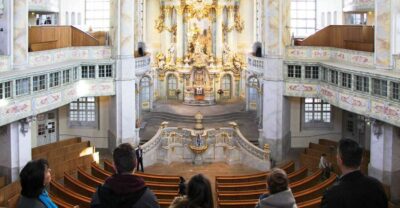
Dresden: Church of Our Lady Guided Tour of Gallery
Read our review →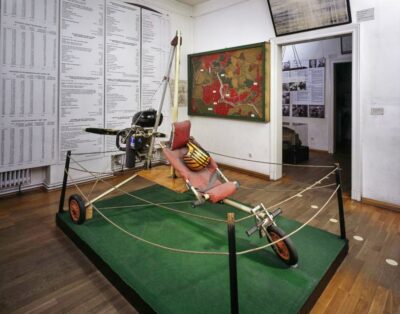
Skip-the-Line: Berlin Wall Museum at Checkpoint Charlie
Read our review →
Browse the lists this tour appears in