
Review · TOKYO
Private Tour Through the Tokyo National Museum & Ukiyo-e
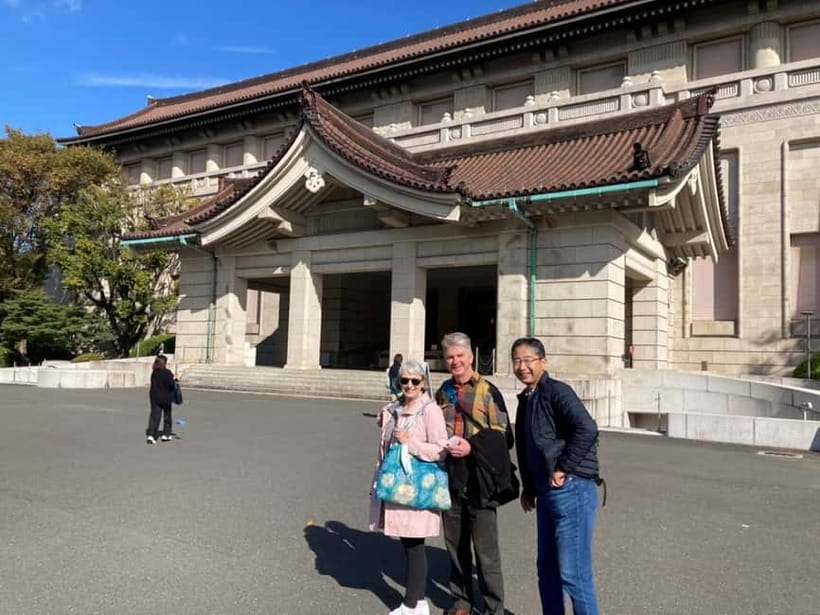
Ueno’s past comes together nicely on this 150-minute private tour. You begin among temple grounds tied to the old Kaneiji complex, pause at Kiyomizu Kannondo for a view over Ueno Park, visit Ueno Toshogu Shrine and its Tokugawa connections, then finish with samurai armor and ukiyo-e at the Tokyo National Museum.
I like the way the tour connects outdoor sites to the museum, rather than treating each place as an isolated stop. I also like the private format, which lets you ask questions and request extra time for a museum area, as one guide did for a family interested in two specific sections. The main drawback is pace: 150 minutes is enough for an introduction, not a full museum visit, and the route is not suitable for wheelchair users or people with mobility impairments.
Key points at a glance
- Kiyomizu Kannondo viewpoint: Pause on the wooden stage for a clear view across Ueno Park.
- Tokugawa connection: Ueno Toshogu Shrine offers a direct link to the shogunate and Japan’s early modern rulers.
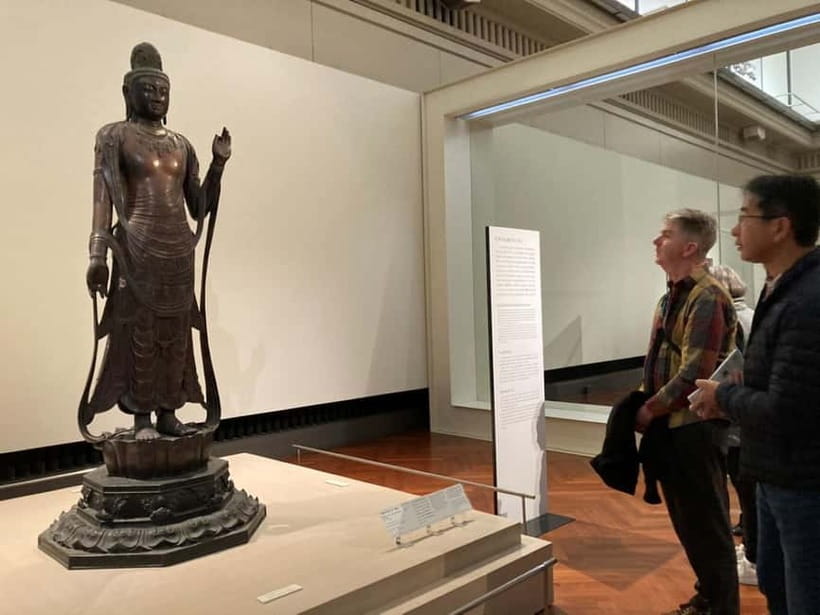
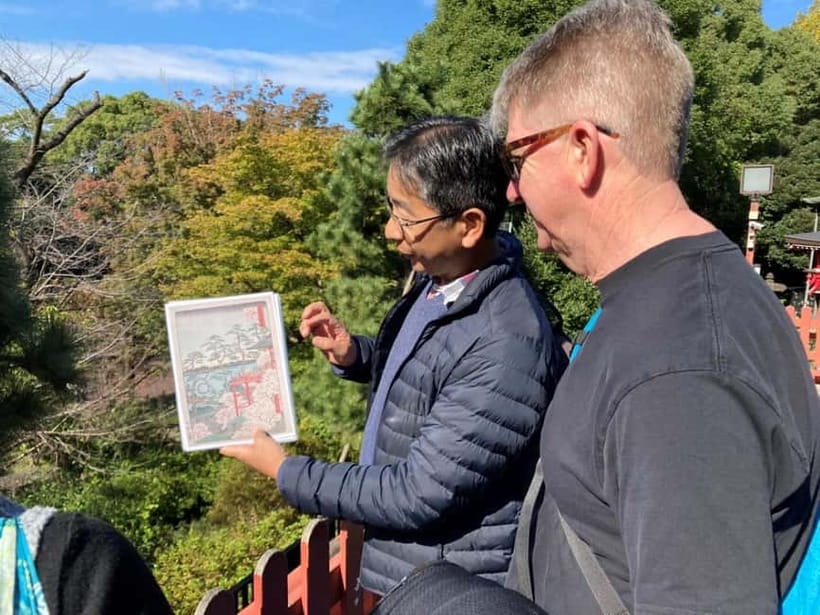
- Museum highlights: Look for samurai armor and colorful ukiyo-e woodblock prints inside the Tokyo National Museum.
- Private English guide: Ask questions freely and request attention to particular objects when time allows.
- Compact two-and-a-half-hour route: The schedule works well as an introduction, but not as a complete museum survey.
- Practical value: The $74 price includes museum admission, access to Kiyomizu Kannondo, and a private guide.
Why Ueno is a smart place to study Tokyo’s past
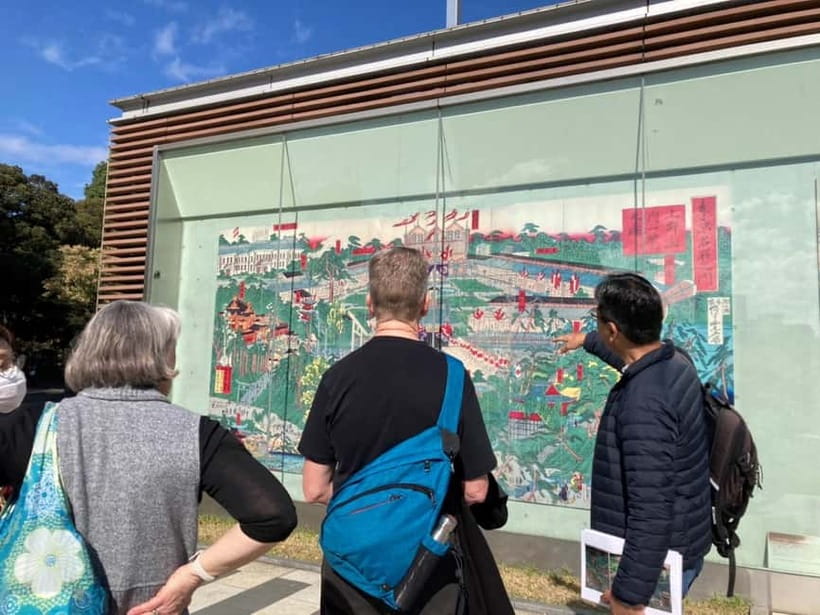
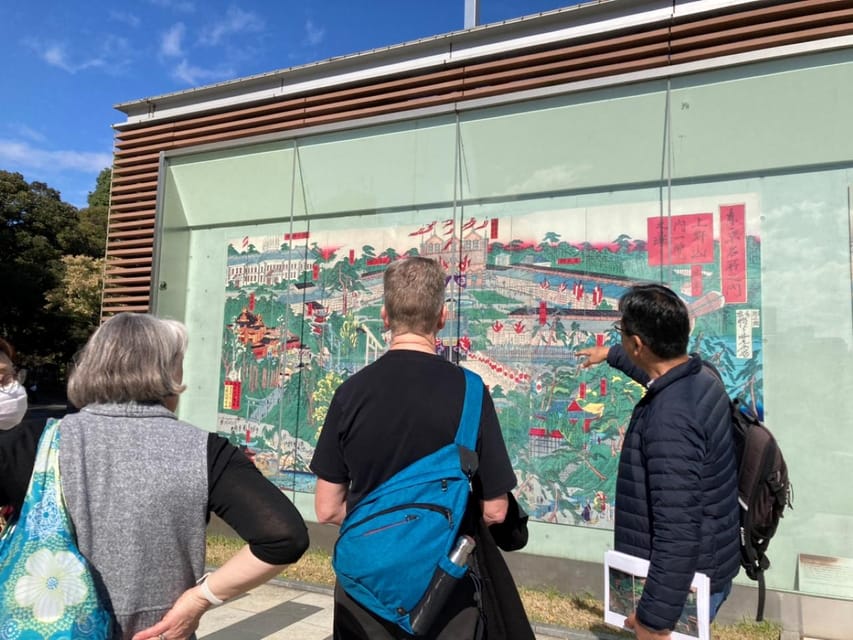
Ueno is more than a convenient park near a major station. Its broad grounds once formed part of Kaneiji Temple, a powerful Buddhist complex during the Edo period. The area later changed sharply during the Meiji Restoration and the Battle of Ueno, leaving a mix of religious sites, open parkland, museums, and reminders of political change.
That makes this tour useful for you if Tokyo’s past feels scattered. A shrine can show you ritual and power. A temple can explain the shape of old Ueno. The museum can then put objects in your hands, at least visually, through armor, prints, and other works.
The route also gives you a break from indoor sightseeing. You move through open areas before entering the museum, so the experience has a natural rhythm: walk, pause, look, ask, and continue. Wear shoes you can walk in comfortably, and bring water, a hat, sunscreen, and a camera. Flash photography is not allowed.
More Museum Tours in Tokyo
- Tokyo: teamLab Planets TOKYO Digital Art Museum Entry Ticket
★ 4.6 · 9,779 reviews - Tokyo: Samurai Ninja Museum Guided tour and Experience
★ 4.6 · 1,010 reviews - Ninja Experience (Family Friendly) at Samurai Ninja Museum TOKYO
★ 5.0 · 441 reviews
Meeting the guide outside Ueno Park
The meeting point is in front of FamilyMart Ueno Park Branch, facing the street. This detail matters because the shop is not inside Ueno Park. If you head into the park first, you may begin on the wrong side of the meeting arrangement.
From there, the guide leads the private group toward the first sightseeing stop. The tour is conducted in English, and the private setup should suit families, couples, or small groups that prefer conversation over a fixed group lecture. You can ask about the political background of the area, religious customs, or the objects you see later in the museum.
The guide quality appears to be one of the strongest parts of the experience. Shigeru has been praised for clear explanations of Japanese history and for suggesting a good lunch spot. Mieko gave a detailed account of Ueno Park from its earlier grounds to the present day. Masahito allowed extra time for two museum sections and answered questions at length. Hattori Yutaka helped with photographs and took care to keep the group comfortable.
Those names do not guarantee who will lead your tour, but they give you a useful picture of the guiding style available. Expect a personal conversation rather than a rushed speech. If you have a particular interest, tell the guide early so the limited museum time can be used well.
Kiyomizu Kannondo and the wooden stage
Kiyomizu Kannondo is the first main stop, and it gives the tour a calm start. This temple has a wooden stage with a view over Ueno Park. It is not simply a photo stop, though you will want your camera ready. The guide can use the site to explain how Ueno functioned as a religious center and a public place during the Edo period.
The setting also provides a useful pause before the museum. You can look out across the park, notice how much open space remains in central Tokyo, and let the guide connect the scenery to the area’s earlier role. In warmer weather, the hat, sunscreen, and water on the suggested packing list will earn their keep.
Do not expect a long temple visit or a private meditation session. The tour includes guided sightseeing and a photo stop, so the focus is on context and orientation. Still, this is one of the best moments for you to slow down. The quiet surroundings make a good contrast with the packed streets elsewhere in Tokyo.
People with limited mobility should think carefully about this route. The tour is specifically not suitable for wheelchair users or people with mobility impairments. The information provided does not give a step-by-step accessibility assessment, so ask before booking if walking or uneven ground may be a concern.
Ueno Toshogu Shrine and the Tokugawa link
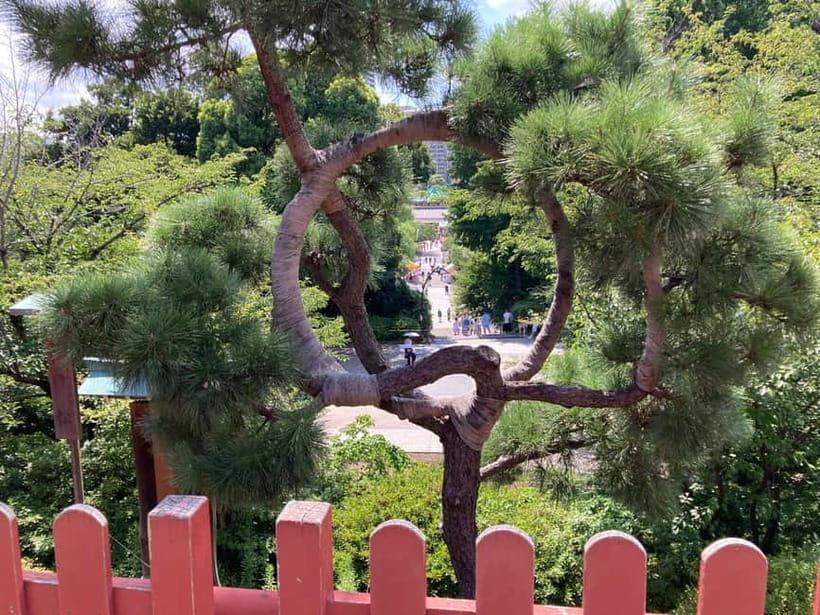
Next comes Ueno Toshogu Shrine, a place tied to the Tokugawa Shogunate. That connection gives you a sharper view of how religion, government, and authority overlapped in early modern Japan.
The shrine is useful in a guided setting because it can be hard to understand its importance from architecture alone. Your guide can explain why a major ruler would be honored here and how Ueno’s religious institutions were connected to the political order of the Edo period. The stop is listed for guided sightseeing and photographs, so you should have time to look closely and ask questions rather than simply walk past.
This section also sets up the later discussion of the Meiji Restoration and the Battle of Ueno. Ueno did not keep one fixed identity. It shifted from a major temple precinct to a public park and cultural district, with traces of earlier power still visible.
I would treat the shrine stop as an introduction, not a specialist architecture tour. The value comes from the story tying this site to the wider Ueno area. If you are mainly interested in detailed shrine design, you may want extra time elsewhere on your own. If you want a clear explanation of who shaped Japan and how that power was displayed, this stop earns its place.
More private museum tours in Japan:
- Tokyo National Museum Private Tour
★ 4.9 · 28 reviews - Private Edo-Tokyo Open Air Architectural Museum Tour
★ 4.8 · 15 reviews - PRIVATE EPHESUS TOUR FOR CRUISERS: On-time Return and Skip-Line
★ 5.0 · 5,807 reviews - Louvre Museum Paris Essential Guided Tour Semi-Private 6ppl Max
★ 5.0 · 3,807 reviews
Entering the Tokyo National Museum
The Tokyo National Museum is the final stop and the main indoor attraction. Admission is included in the $74 price, along with access to Kiyomizu Kannondo. That makes the cost easier to assess: you are paying not only for entry, but also for a private English guide who links the museum to the sites outside.
Inside, you can expect to see objects such as samurai armor and colorful ukiyo-e woodblock prints. These are strong choices for a first visit because they make broad subjects concrete. Armor can open a discussion about warriors, status, and military culture. Ukiyo-e can lead to questions about popular entertainment, printing, urban life, and the way images circulated in Japan.
The title places special attention on ukiyo-e, but you should keep your expectations measured. The tour does not promise a full technical lesson in woodblock printing or an exhaustive survey of every gallery. The museum is large, and 150 minutes must also cover the outdoor route. One person wanted a more targeted explanation of individual objects, which is a fair caution. You may receive a broad introduction unless you clearly ask to spend more time on selected works.
The private format helps here. Tell the guide if you care most about ukiyo-e, samurai armor, religious art, or a particular museum area. Masahito has previously adjusted the time to cover two requested sections, showing how useful that flexibility can be. The more specific your interests, the more focused the museum portion is likely to feel.
Families can also make good use of the format. A French family praised a guide’s patience with children, and a Japanese family with a history-loving son found the explanations clear and enjoyable. That suggests the tour can work for mixed ages, especially when children need short pauses and room for questions.
What 150 minutes really gives you
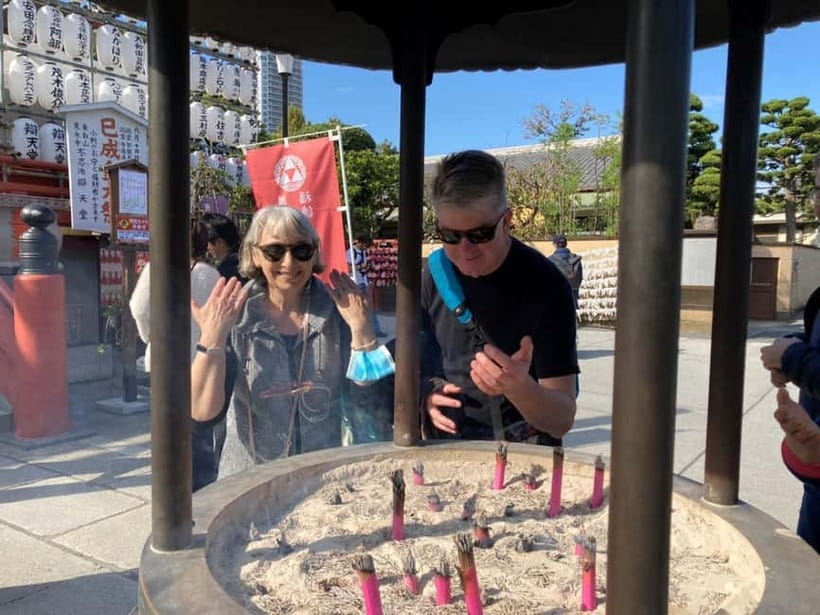
Two and a half hours sounds generous until you count the stops. You have a meeting, two outdoor sites, walks between them, explanations of Ueno’s changing role, and a museum visit. The schedule gives you a well-shaped overview, but it does not leave time for every gallery or a long stop at each shrine.
I would book this as a first look at Ueno, not as your only museum visit in Tokyo. If you have already spent several hours in the Tokyo National Museum, you may prefer a more specialized art tour. If the museum feels intimidating or you want the outdoor sites to make sense, this shorter route has real value.
The private group also changes the pace. You can stop for a question without worrying about a large party. You can ask the guide to take a photograph, request a short rest, or explain a detail you would otherwise miss. One guide included a break during the route, which can make the experience easier for families and older participants.
The possible tradeoff is that a private tour costs more per person than joining a large group. At $74 per person, the price is reasonable if you value an English-speaking guide and included museum admission. It is less compelling if you are happy to read museum labels, walk Ueno alone, and choose your own pace.
The history connects the stops
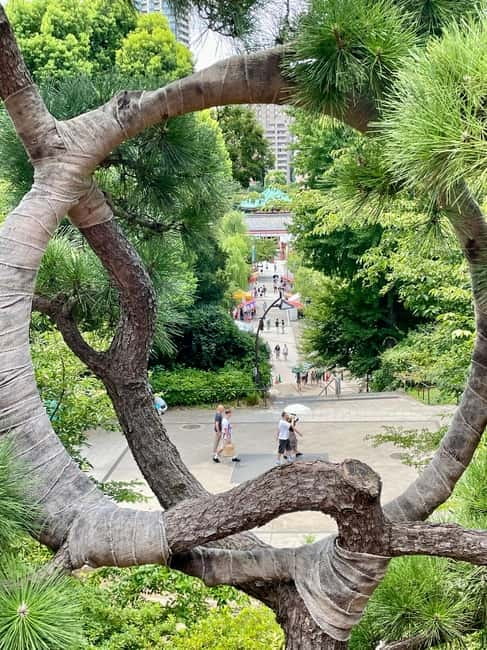
The best feature of this experience is its structure. Kiyomizu Kannondo, Ueno Toshogu Shrine, and the museum are not random sights placed next to one another. Together, they help explain how Ueno changed from temple grounds and an Edo-period public space into a modern cultural district.
The Battle of Ueno and the Meiji Restoration are important parts of that story. The tour presents Ueno as a place shaped by conflict, reform, religion, and public use. That context can make the museum’s objects easier to understand because you are not looking at samurai armor or ukiyo-e in isolation.
I especially like this approach for a first or second day in Tokyo. You get a manageable introduction to Japan’s past without committing to a full day indoors. The outdoor stops also prevent the experience from becoming a gallery march.
Still, the guide’s emphasis may vary. Some guides may spend more time on the park and temples, while others may focus on museum objects. If you want a particular balance, state it at the beginning. The available comments show both strengths: strong explanations of Ueno’s history and a desire from at least one participant for more object-by-object museum guidance.
Who should book this Ueno tour
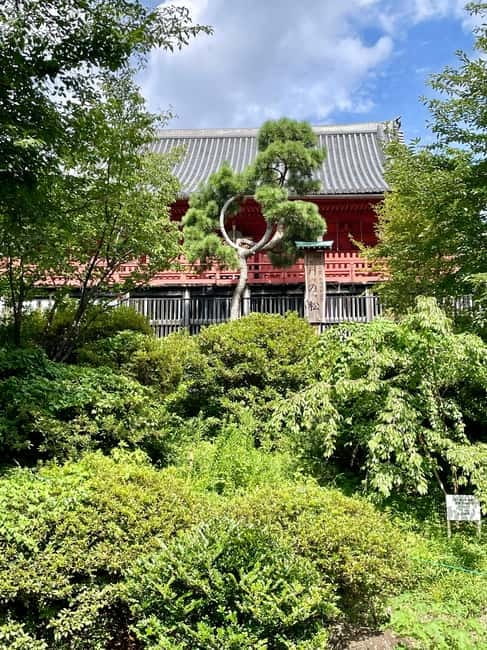
This experience suits you best if:
- You want a private English-speaking guide rather than a large group.
- You are visiting the Tokyo National Museum for the first time.
- You like history explained through real places and objects.
- You are traveling with children or a mixed-age group.
- You want a compact introduction to Ueno before exploring independently.
- You have specific museum interests and are willing to tell the guide in advance.
It is less suitable if you use a wheelchair or have significant mobility limitations. It may also disappoint you if your main goal is a slow, detailed museum study. The route is designed to connect several places in a limited time.
Book with comfortable shoes and a realistic plan. Bring a camera, but remember that flash photography is not allowed. The tour begins outside the park at the FamilyMart meeting point and ends at the Tokyo National Museum, so you finish in a useful place for continuing your own visit, provided you still have time and energy.
Should you book it?
I would book this tour if you want Ueno to make sense, not just a checklist of temple, shrine, and museum. The strongest value comes from the link between the sites and the chance to ask a private guide direct questions. The $74 price is fair when you count admission, access to Kiyomizu Kannondo, and two and a half hours of English guidance.
Skip it if you want an entire day inside the Tokyo National Museum, need step-free access, or prefer exploring without a schedule. For everyone else, this is a friendly, focused way to meet Ueno’s religious sites, Tokugawa connections, and museum treasures in one compact outing.
FAQ
How long does the tour last?
The tour lasts 150 minutes, or two and a half hours.
What language is the tour conducted in?
The live tour guide speaks English.
Is this a private tour?
Yes. The experience is arranged for a private group.
What is included in the price?
Admission to the Tokyo National Museum and access to Kiyomizu Kannondo are included.
Where does the tour begin?
It begins in front of FamilyMart Ueno Park Branch. The shop faces the street and is not inside Ueno Park.
Where does the tour finish?
The tour finishes at the Tokyo National Museum.
Which places are visited?
The route includes Kiyomizu Kannondo, Ueno Toshogu Shrine, and the Tokyo National Museum.
Is Ueno Toshogu Shrine connected to the Tokugawa Shogunate?
Yes. The shrine has connections with the Tokugawa Shogunate.
Is the tour suitable for wheelchair users?
No. The experience is listed as unsuitable for wheelchair users and people with mobility impairments.
What should I bring?
Bring comfortable shoes, a hat, a camera, sunscreen, and water. Flash photography and smoking are not allowed.
Just added around Japan
- Skip the lines Basic Ticket at SAMURAI NINJA MUSEUM TOKYO★ 5.0 · 470 reviews
- Tokyo: Mt. Fuji, Owakudani, Hakone Shrine, & Open-Air Museum★ 4.7 · 25 reviews
- Samurai Ninja Museum Asakusa: Kid-Friendly Ninja Training★ 4.7 · 67 reviews
- Tokyo National Museum Private Tour★ 4.9 · 28 reviews
- Tokyo: Art Aquarium Museum GINZA Entry Ticket★ 4.5 · 278 reviews
- Tokyo: Kichijoji Gourmet Tour with Lunch★ 4.5 · 40 reviews
- Samurai Ninja Museum Asakusa: Samurai Sword Lesson & Tour★ 4.8 · 306 reviews
- (Ticket Included) Explore Osaka Castle & Museum of History★ 4.8 · 21 reviews
Museum Tours in Tokyo, compared.
teamLab Planets TOKYO Digital Art Museum Entry Ticket
Read our review →
Samurai Ninja Museum Guided tour and Experience
Read our review →
Ninja Experience (Family Friendly) at Samurai Ninja Museum TOKYO
Read our review →
Tokyo Studio Ghibli Museum and Ghibli Film Appreciation Tour
Read our review →
Samurai Ninja Museum Asakusa: Samurai Sword Lesson & Tour
Read our review →
Samurai Ninja Museum Asakusa: Kid-Friendly Ninja Training
Read our review →
Browse the lists this tour appears in