
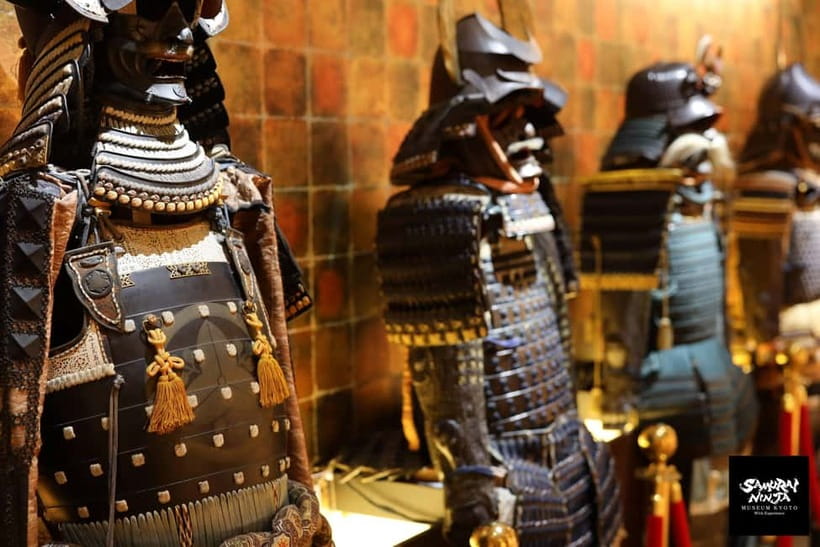
Review · TOKYO
Samurai Ninja Museum Asakusa: Samurai Sword Lesson & Tour
Holding a katana is the hook, but the best part of this Tokyo experience is the mix of hands-on practice and history. You dress in hakama, armor, and a helmet, learn controlled sword movements, then tour displays about samurai and ninja life.
I like the friendly instruction and the strong family appeal. Instructors such as Ryo, Koki, Kenny, and Kai have helped make the class clear and playful for complete beginners, while the photo session gives you a lasting souvenir. The main consideration is time: two hours passes quickly, and some sessions can feel rushed when the group includes several young children.
Key points to know before booking
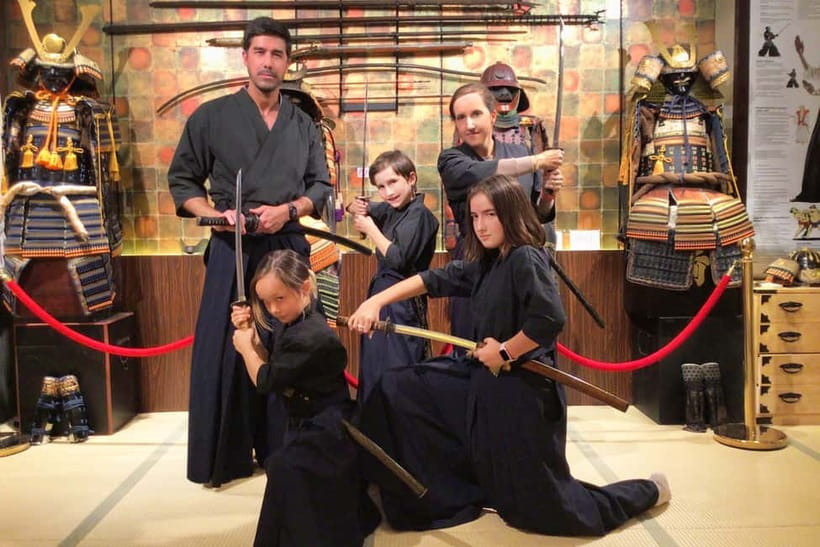
- Learn a short katana routine: You practice basic handling and choreographed movements rather than receiving formal martial arts training.
- Wear the full samurai look: Hakama, armor, and a helmet turn the lesson into a photo-friendly cultural activity.
- Expect more than sword practice: The visit includes a guided museum tour covering samurai and ninja history.
- Try ninja weapons: Shuriken throwing adds a short, playful change of pace.
- Good for families: Children six and older can join, and several activities are designed for mixed ages.
- Small groups help: The maximum group size is 16, with private and smaller options available.
What the two-hour experience is really like
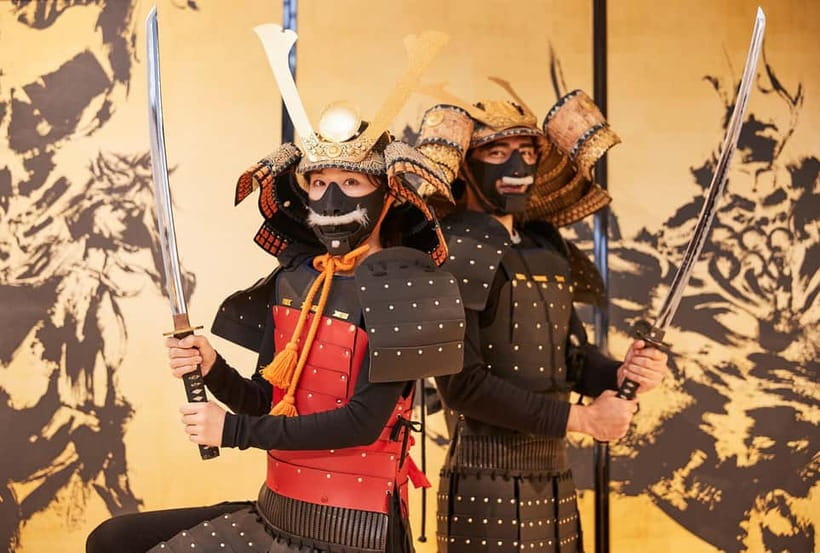
This is a compact cultural activity in Asakusa, built around participation rather than quiet museum viewing. You are not simply looking at swords behind glass. You put on traditional clothing, handle a katana under instruction, pose for photographs, and take part in a supervised activity with foam swords.
The exact order can vary. Some people begin with dressing and photos, then move upstairs for the sword lesson before touring the museum. Others describe the museum portion coming first. Plan for a brisk sequence rather than a slow afternoon visit.
The experience is offered in English, and several instructors have received especially warm praise for their manner. Ryo is frequently singled out for patient teaching and humor. Koki has led sword sessions that included a simple routine, while Kenny has been noted for clear English and an easygoing style. Kai has worked particularly well with children during the ninja lesson. Staff can change, so treat these names as examples rather than a promise of your instructor.
More Museum Tours in Tokyo
- Tokyo: teamLab Planets TOKYO Digital Art Museum Entry Ticket
★ 4.6 · 9,779 reviews - Tokyo: Samurai Ninja Museum Guided tour and Experience
★ 4.6 · 1,010 reviews - Ninja Experience (Family Friendly) at Samurai Ninja Museum TOKYO
★ 5.0 · 441 reviews
Putting on hakama, armor, and a helmet
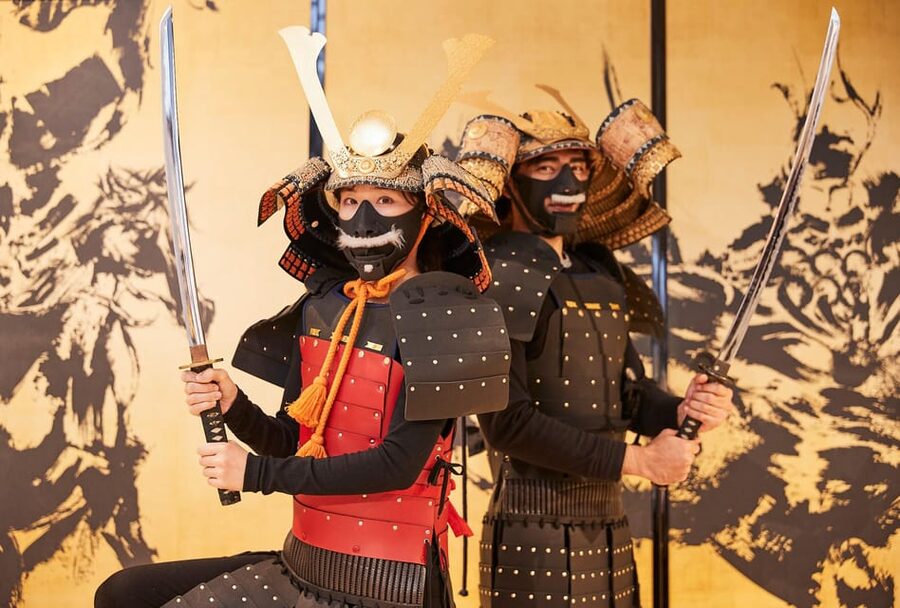
The dressing portion gives the activity its theatrical spark. You use hakama and samurai armor, then add a helmet for photographs. The clothing is part of the lesson, not just a costume corner, because it helps you understand how the warrior image was presented and gives children a clear role to play.
Photo opportunities are arranged against samurai-themed backgrounds. Bring a phone or camera, since this is one of the easiest places in Tokyo to get family pictures that do not look like ordinary sightseeing snapshots. You can pose alone or with your group in armor, and the photographs help break up the more instructional parts of the visit.
There is a practical limit to the dressing stage. With a full group, each person may not get unlimited time to pose. If photographs matter to you, be ready when your turn comes and ask the staff for a few useful shots rather than trying to turn the room into a full photo session.
The katana lesson with a real sensei
The sword class is the heart of the experience. You learn how to hold the katana and follow a short sequence of movements. The emphasis is on posture, control, and remembering the order, not on force or speed.
The lesson suits beginners. You do not need previous martial arts training, and the instructors explain the movements step by step. Ryo has been praised for making novices feel comfortable, while other instructors have used jokes and encouragement to keep the class moving.
Some sessions finish with a choreographed sword dance or routine. This is the satisfying moment when the earlier instructions come together. You may feel clumsy at first, but the sequence is designed to be learned during the class, not mastered beforehand.
A supervised partner activity may also use foam swords. This lets families and friends play at a friendly mock fight without turning the lesson into anything dangerous. It is a fun finish, but it also explains one of the few complaints about the activity: if the room is full of small children, spacing and timing can make the final movements feel shortened.
The phrase sword lesson should be understood correctly. This is an introduction and cultural demonstration, not a long technical course. One person felt that a five-minute family-friendly lesson was too brief, while other participants found the routine satisfying. If you want detailed martial arts instruction, this is not the right booking. If you want a memorable first taste of samurai sword handling, it fits well.
Touring the samurai and ninja museum
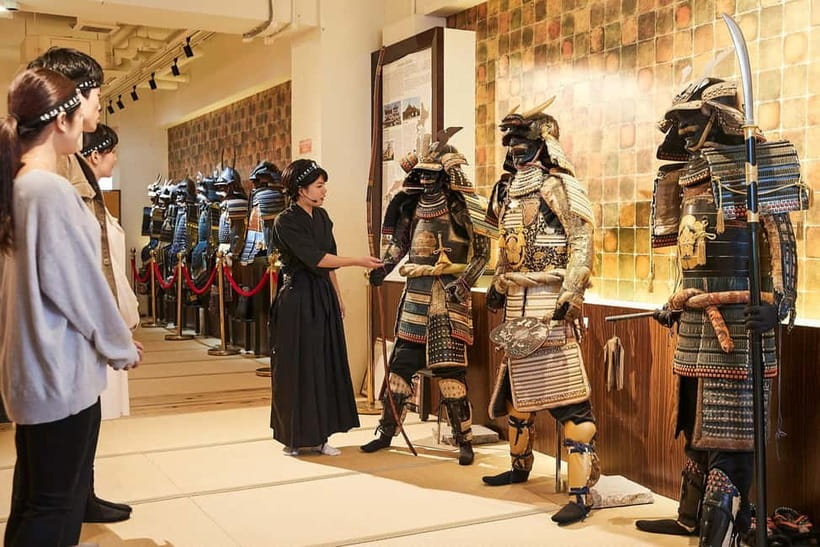
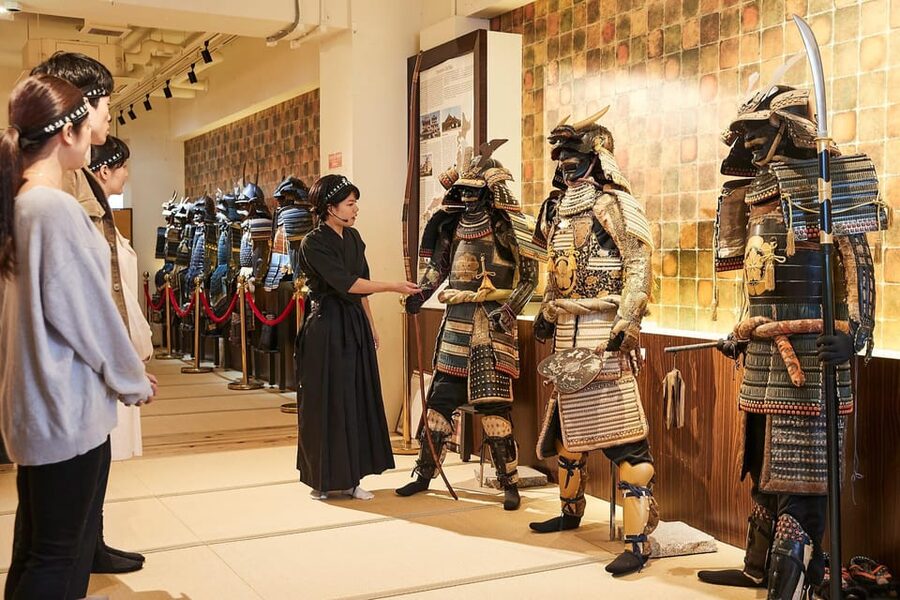
The museum section adds substance to what could otherwise be a costume photo stop. A guide explains samurai and ninja history, from their origins through the end of the samurai era and into modern times. The collection is described as small, with samurai antiques and themed displays rather than a large national museum selection.
That smaller scale works well for families. You receive a focused introduction without spending half a day reading labels. Guides such as Ren and Momo have been praised for lively explanations, and the history is presented in a way that keeps children involved.
You will see displays connected with samurai and ninja culture, and the guide gives context for the weapons and clothing. The value lies in having someone explain what you are seeing. Without that background, a helmet or sword can become a simple prop. With it, the dressing and practice feel tied to a larger story about Japanese society and warrior traditions.
The tradeoff is pace. Some people find the museum tour interesting but quick, especially when the sword lesson and photographs take up part of the two-hour schedule. I would view it as a clear introduction rather than a full museum study visit. If your priority is historical detail, leave time elsewhere in your Tokyo plan for a larger museum.
A few more museum visits around Japan worth comparing
- Itajime Shibori Scarf Class at Kyoto Shibori Museum
★ 4.9 · 24 reviews - Kyoto : Family-Friendly Sword Lesson at Samurai Ninja Museum
★ 4.4 · 14 reviews - Vienna: Chocolate Workshop in Chocolate Museum w/ Tasting
★ 4.5 · 1,802 reviews - Brussels: Chocolate Museum Visit with Workshop
★ 4.6 · 1,474 reviews
The ninja weapons trial
The ninja portion usually includes shuriken throwing, presented as a short activity rather than a full ninja course. You try to send the star-shaped weapon toward a target, and some sessions turn it into a friendly competition.
This is a useful change of rhythm after the more careful katana practice. Children get a direct activity, while adults often find the challenge entertaining too. Several families have singled out the ninja element as a favorite part for school-age children and teenagers.
Keep your expectations sensible. The information provided does not promise a long ninja lesson or a full set of ninja skills. Think of it as a brief trial that rounds out the museum and sword session.
Why families tend to get good value
The activity works for families because it gives different ages something to do. Younger children can enjoy the costumes, photos, and target practice. Older children and adults may prefer the sword routine and the historical explanation.
The minimum age rule matters: children under six cannot enter the venue. For families with older children, the experience can fill a useful place in a Tokyo itinerary because it combines education, movement, and pictures in one booking. Parents do not have to choose between a serious museum and a purely playful attraction.
I would also consider it for grandparents or mixed-age groups. The instruction is adjustable for beginners, and the activity does not depend on athletic skill. Still, anyone with limited mobility should check the specific booking option and venue details despite the activity being listed as wheelchair accessible.
The group maximum is 16 people. That is not a private lesson, and a full session will feel busier than a private booking. The provider also offers private or small-group options, which may be worth considering if you want more practice time, need a calmer pace, or are arranging a special family event.
Is $63 per person a fair price?
At $63 per person, this is not a bargain basement photo stop. The price makes more sense when you count the package: a two-hour English-language activity, hakama use, armor and helmet use, the katana lesson, the museum tour, themed photographs, and the ninja weapons trial.
I see the strongest value in the variety. A short sword class on its own might feel thin, and a small museum visit alone might not hold a child’s attention. Together, they create a structured outing with several high points.
The value drops if you want extended sword practice or a detailed museum study. Some people wish they had longer to repeat the routine, and one person found the museum rushed. You are paying for a broad cultural experience, not specialist training.
The option to reserve now and pay later also helps if your Tokyo schedule is still changing. Cancellation is free up to 24 hours in advance for a full refund. Check the starting time and meeting point carefully, since the meeting location can vary by the option you book.
How the instructors shape the experience
The staff make a major difference here. Sword teachers have been praised for patience, politeness, humor, and clear demonstrations. Ryo is the name that appears most often in connection with the katana lesson, while Koki and Kenny have also led well-received sessions.
The museum guides bring a different skill. Ren, Momo, Nao, and Leon have been mentioned in connection with history and ninja instruction. Nao has taught the ninja section, and Momo has guided family groups through a packed schedule of dressing, sword handling, photos, history, and shuriken throwing.
Do not assume your session will use one particular instructor. Staff assignments can change. The useful point is that the format depends on active teaching, not a recorded presentation, and the English-language option is designed for international visitors.
A few drawbacks worth keeping in mind
The room can feel small, especially when a session is full. A maximum of 16 people is manageable, but it is not the same as having a private dojo. Younger children may also affect the pace of the sword routine, since instructors need to keep movements safe and simple.
The two-hour schedule is full. You may feel that each section ends just as you are getting comfortable. This is most noticeable during the sword practice, where several participants would have liked more time to repeat the routine.
The museum collection is modest. It offers a useful introduction to samurai and ninja history, but it should not replace a major Japanese history museum if you want extensive artifacts or long-form interpretation.
These limits do not ruin the activity. They simply clarify what you are buying: a lively, guided, family-friendly introduction with costume, movement, and a little history.
Who should book this Asakusa activity?
I would recommend it to families with children six and older, first-time visitors who want a cultural activity with plenty of action, and adults who enjoy trying something unusual rather than only looking at monuments. It is also a good choice for a rainy day or for a group that needs a break from temples and shopping.
Teenagers often have enough interest and coordination to enjoy the sword routine and shuriken target practice. Adults should not assume the activity is only for children. Several sessions have included grown-ups in the partner practice, and the humor of trying to remember the movements can be part of the fun.
I would be more cautious if your main goal is serious swordsmanship, a quiet museum visit, or a long historical lecture. You will get a short introduction to each subject, not an advanced course in any one of them.
Should you book the Samurai Ninja Museum experience?
Book it if you want a social, photo-friendly cultural activity that gives you a taste of samurai and ninja traditions in one compact visit. The strongest reasons are the patient instruction, the chance to wear armor, and the way the museum guide adds context to the playful parts.
Before paying, decide how much you value practice time. A private or smaller option may suit you better if your group wants more individual attention. If you can accept a quick pace and a modest museum collection, the $63 price is reasonable for the number of activities included.
For most families and first-time Tokyo visitors, I would make the booking. Just remember that this is a memorable introduction to samurai culture, not a full martial arts course or a major museum tour.
FAQ
How long does the Samurai Ninja Museum experience last?
The activity lasts two hours.
How much does the experience cost?
The listed price is $63 per person.
Is the experience conducted in English?
Yes. The tour has a live English-speaking guide, and English is the listed language.
What is included in the booking?
The booking includes a samurai sword lesson, use of hakama, use of samurai armor and a helmet, themed photo opportunities, and a ninja weapons trial.
Can children join the activity?
Yes, but children under six cannot enter the samurai venue.
Is the experience suitable for families?
Yes. The sword, costume, photo, museum, and ninja activities are suitable for mixed-age family groups, with children six and older allowed to enter.
How many people can join one session?
The maximum group size is 16 people.
Are private or small-group bookings available?
Yes. Private and small-group options are available.
Is the venue wheelchair accessible?
The activity is listed as wheelchair accessible.
Can I cancel for a refund?
Yes. You can cancel up to 24 hours in advance for a full refund.
Can I reserve now and pay later?
Yes. The reserve now and pay later option lets you hold a place without paying immediately.
Does the meeting point always stay the same?
No. The meeting point may vary depending on the option you book.
Just added around Japan
- Skip the lines Basic Ticket at SAMURAI NINJA MUSEUM TOKYO★ 5.0 · 470 reviews
- Tokyo: Mt. Fuji, Owakudani, Hakone Shrine, & Open-Air Museum★ 4.7 · 25 reviews
- Private Tour Through the Tokyo National Museum & Ukiyo-e★ 4.7 · 17 reviews
- Samurai Ninja Museum Asakusa: Kid-Friendly Ninja Training★ 4.7 · 67 reviews
- Tokyo National Museum Private Tour★ 4.9 · 28 reviews
- Tokyo: Art Aquarium Museum GINZA Entry Ticket★ 4.5 · 278 reviews
- Tokyo: Kichijoji Gourmet Tour with Lunch★ 4.5 · 40 reviews
- (Ticket Included) Explore Osaka Castle & Museum of History★ 4.8 · 21 reviews
Museum Tours in Tokyo, compared.

teamLab Planets TOKYO Digital Art Museum Entry Ticket
Read our review →
Samurai Ninja Museum Guided tour and Experience
Read our review →
Ninja Experience (Family Friendly) at Samurai Ninja Museum TOKYO
Read our review →
Tokyo Studio Ghibli Museum and Ghibli Film Appreciation Tour
Read our review →
Samurai Ninja Museum Asakusa: Kid-Friendly Ninja Training
Read our review →
Browse the lists this tour appears in