

Review · THE UK
London: National Gallery of London Masterpieces Guided Tour
The National Gallery can feel like a glorious maze of masterpieces, and this 2.5-hour guided tour gives you a clear route through it. You move from devotional paintings of the 1300s to the bold color and new ideas of the early 20th century, with works by Botticelli, Leonardo da Vinci, Vermeer, Van Gogh, and Seurat along the way.
I like the small group limit of eight, which gives the guide room to answer questions and adjust the pace. I also like the way the tour links paintings across centuries instead of treating each one as an isolated star. The main drawback is the crowded gallery setting, where hearing a guide can sometimes be difficult. One participant specifically wished for Bluetooth headsets.
Key points to know
- A fast-moving history of Western painting: See how art changes from the 1300s through the Renaissance, Baroque period, Impressionism, and early modern art.
- Major works with useful context: Expect Botticelli’s Venus and Mars, Da Vinci’s The Virgin of the Rocks, Van Gogh’s Sunflowers, and Seurat’s Bathers at Asnières.
- Private or small-group choices: Shared tours have no more than eight people, while private tours give you more control over questions and pace.
- Guides who make the paintings approachable: Jake, Stephanie, Matilda, Becky, Alex, and others have been praised for clear explanations, energy, and strong storytelling.
- A compact museum visit: The tour lasts two to two and a half hours, making it a sensible first visit if you do not know where to begin.
- Plan for a little walking and no large luggage: Bring a passport or ID card, and check accessibility needs before booking.
Why this tour helps you make sense of the National Gallery

The National Gallery is full of famous names, but fame alone does not tell you how to look at a painting. You can admire Van Gogh’s color, for example, without seeing how much older painting traditions helped shape his work.
That is where this tour earns its keep. The guide connects one period to the next, so you can follow changing ideas about religious subjects, portraiture, mythology, light, movement, and everyday life. Instead of simply ticking off famous paintings, you get a working outline of how European art developed over hundreds of years.
I especially like this approach for a first visit. Two and a half hours is not enough to cover every room, but it is long enough to give you a useful framework. Afterward, you can return to the paintings that caught your eye and spend more time with them.
The tour is offered in English, with a choice between a private booking and a small shared group of up to eight people. A shared group offers a more economical way to get a guided visit, while a private tour should suit you if you want to ask more questions or keep the focus on your own interests.
A few more museum visits around the UK worth comparing
- London: National Gallery Guided Tour with Art Expert Guide
★ 4.7 · 440 reviews - National Gallery of London Museum Tour Semi-Private 8ppl Max
★ 5.0 · 178 reviews - British Museum & National Gallery of London Semi-Private 8ppl Max
★ 5.0 · 168 reviews
Starting with paintings from the 1300s
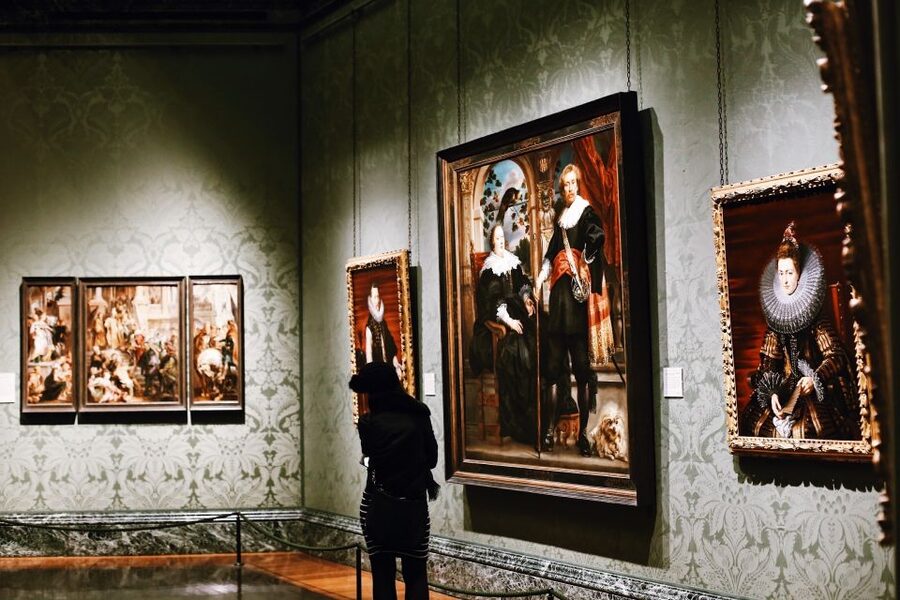
The tour begins with early devotional art and paintings from the 1300s onward. These works can look unfamiliar if your reference point is modern painting, but they are important for seeing how artists built visual meaning before later ideas about realism and natural light took hold.
Your guide explains what you are looking at, why the work was made, and how artists used symbols, gestures, color, and arrangement. This part of the visit gives you the basic vocabulary needed for the rooms that follow.
That context matters. A small detail in an early religious panel may not be decorative at all. It may identify a saint, signal a theological idea, or show the status of the person who commissioned the work. The best part of a live tour is being able to ask when a detail does not make sense.
Raphael’s early devotional paintings also enter the story. They help show the balance between religious purpose and human feeling that became increasingly important during the Renaissance. You are not simply told that the period was a turning point. You see how the treatment of faces, bodies, space, and emotion begins to change.
Botticelli and the move toward myth
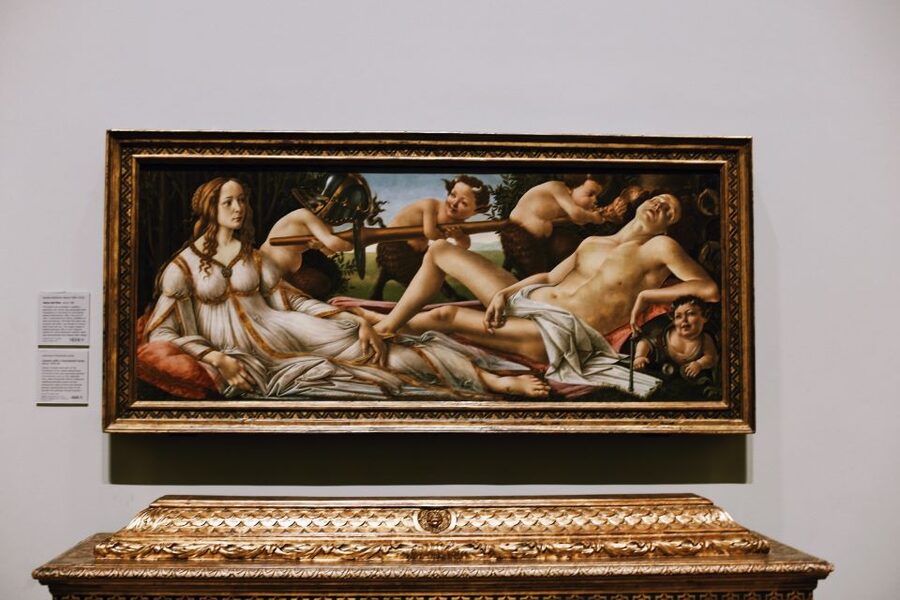
Botticelli’s Venus and Mars offers a very different mood from the early devotional works. Its mythological subject opens a discussion about the renewed interest in classical Greece and Rome, as well as the Renaissance taste for stories that could carry several meanings at once.
The painting is also a good reminder that art is not always a straightforward message. The figures, objects, and playful details invite questions about love, conflict, power, and the relationship between beauty and disorder. Your guide can point out details that are easy to miss when you are looking from several feet away in a busy room.
This stop should appeal to you if you enjoy paintings that leave room for interpretation. It also gives families and teenagers something to discuss, since the story is less formal and more immediately readable than some religious panels.
Da Vinci’s Virgin of the Rocks
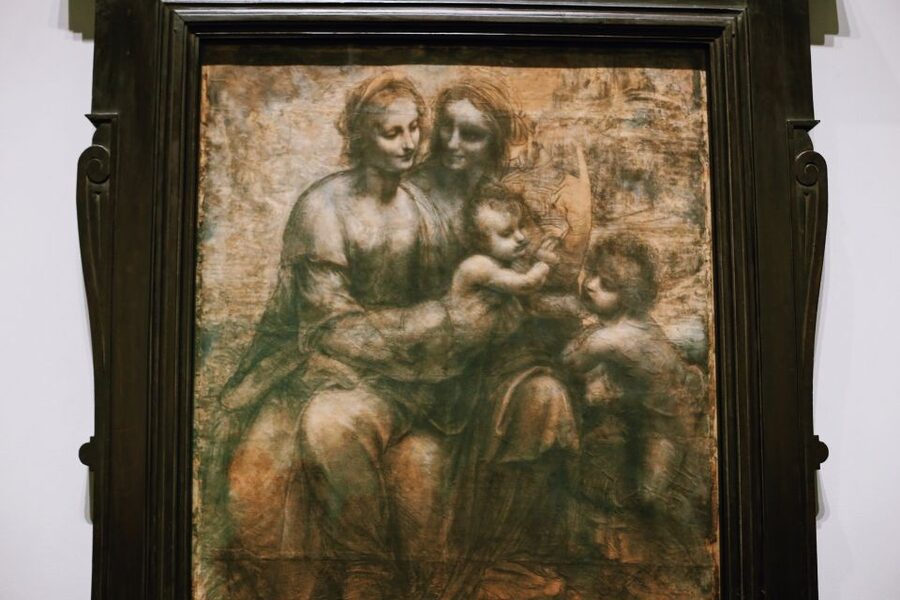
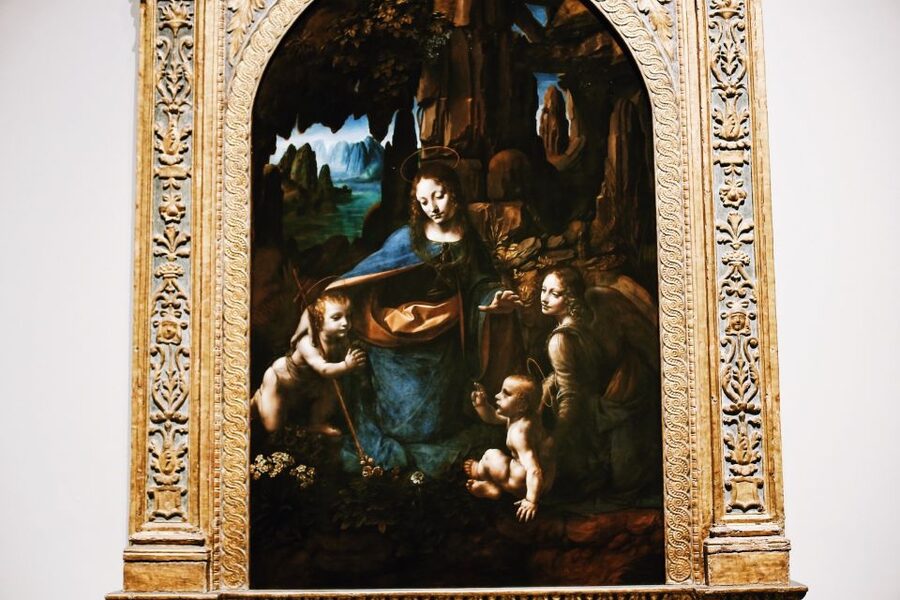
Leonardo da Vinci’s The Virgin of the Rocks is one of the tour’s major stops. Here, the guide can shift your attention from the subject alone to the way Leonardo arranges figures, atmosphere, and light.
The work is a chance to see why Leonardo’s paintings feel so carefully observed. The figures are linked by glances and gestures, while the setting creates a mysterious sense of depth. You might notice how softly the forms fade into shadow, rather than ending in hard outlines.
This is the kind of painting that benefits from a guide who knows where to direct your eyes. In a large gallery, you may first see the famous name and the general composition. A good explanation helps you notice the relationships between the figures and the subtle changes in tone.
The guide’s role here is not to bury the painting under technical terms. It is to show you enough technique and context to make your own looking more rewarding.
Same city, a completely different collection:
- London: Tower of London and Crown Jewels Exhibition Ticket
★ 4.6 · 28,769 reviews - Liverpool: Liverpool Football Club Museum and Stadium Tour
★ 4.8 · 10,764 reviews - Tower of London and Crown Jewels Exhibition Ticket
★ 4.5 · 6,677 reviews - London: Chelsea Football Club Stadium and Museum Tour
★ 4.8 · 4,576 reviews
Velázquez, Rembrandt, and the power of a face
The route includes Velázquez’s Rokeby Venus, a work that brings questions of beauty, privacy, and the viewer’s position into the conversation. Its subject is unusual for its time, and the mirror adds another layer to the way the painting addresses you.
Rembrandt adds a different kind of intensity. His work is useful for understanding how light can direct emotion and make a figure feel psychologically present. The point is not simply that Rembrandt used dramatic shadows. It is how those shadows guide your attention and shape the mood.
These stops help break up the usual march through dates and styles. You move from religious and mythological subjects toward paintings that ask more direct questions about identity, desire, and human character.
Vermeer’s quiet interior world
Vermeer’s Lady Standing at a Virginal gives the tour a pause. The painting is quieter than the boldest works on the route, but that is part of its appeal.
Vermeer’s interiors often reward patience. Light, room arrangement, clothing, and small objects carry much of the meaning. Your guide can explain how the scene works as both a carefully observed domestic moment and a constructed image with possible references to music, courtship, or status.
This is also a useful stop for learning how much can be said with very little action. There is no dramatic battle or crowded religious scene. Instead, attention rests on stillness, light, and the relationship between the woman and her instrument.
If you sometimes feel unsure what to say about quiet paintings, this part of the tour is helpful. You get practical ways to look, not just a list of facts to remember.
Monet and the changing role of light
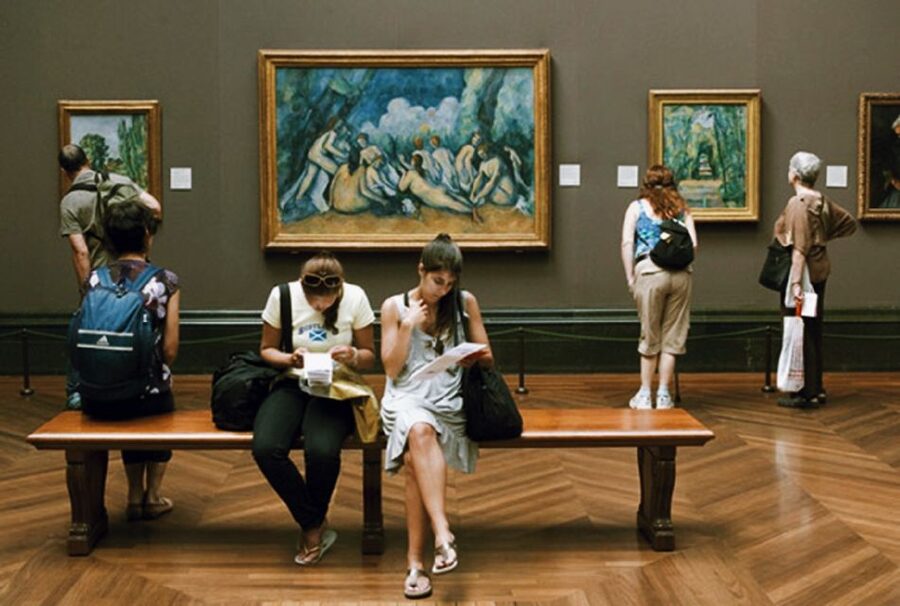
The tour then moves toward the 19th century, where artists began testing older rules about color, outdoor scenes, and the effects of light. Monet helps show why Impressionism felt so different from earlier painting.
The important point is not simply that Monet used loose brushwork. It is that the artist was interested in how a scene appears at a particular moment, under particular conditions. The guide places those choices within the wider changes taking place in art.
This section should be easy to follow even if you have never studied art. You can see the contrast between carefully arranged older compositions and paintings that seem more immediate, fleeting, and open to the air around them.
The tour’s chronological path is valuable here. You have already seen artists who built space through precise arrangements and controlled transitions. By the time you reach Monet, you can compare those methods with a new interest in sensation and changing light.
Van Gogh’s Sunflowers and the force of color
Van Gogh’s Sunflowers is likely to be one of the most anticipated paintings on the route. It is famous, but the guide gives you reasons to look beyond its reputation.
You can consider the painting’s thick paint, intense yellows, and uneven forms as part of a larger artistic choice. The flowers are not presented as a polished botanical display. They feel direct, physical, and full of movement even though they are arranged in a vase.
A guide can also explain how Van Gogh used color to create mood and structure. The yellow field is not just bright. It holds the composition together and makes small changes in tone matter.
This is an excellent stop for teenagers and first-time museum visitors because the painting offers an immediate response. You do not need specialist training to feel its force. The explanation adds another layer without taking away that first reaction.
Seurat’s Bathers at Asnières and a new way to build an image
The final part of the journey reaches Seurat’s Bathers at Asnières, which shows how radically painting had changed by the late 19th century.
Seurat’s method asks you to think about color and form in a more structured way. Instead of relying only on broad blended strokes, he built the image through carefully placed marks and controlled color relationships. From close up, the surface can look very different from the overall scene you see at a distance.
This makes a strong ending because it brings together several ideas introduced earlier: how artists create light, how they organize figures, and how viewers read a picture from near and far. You finish with a clear sense that painting history is not a straight march toward improvement. It is a series of questions, experiments, and reactions.
The route from early religious art to Seurat is ambitious for a short museum visit. You will not get an expert lecture on every artist, but you will see a useful sequence of changes and understand why the selected works matter.
What the guides add to the visit
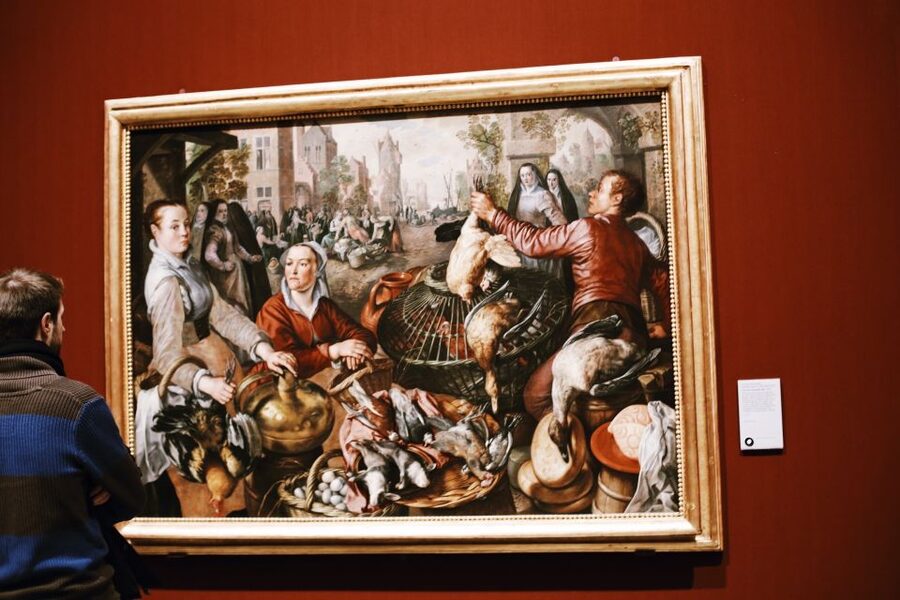
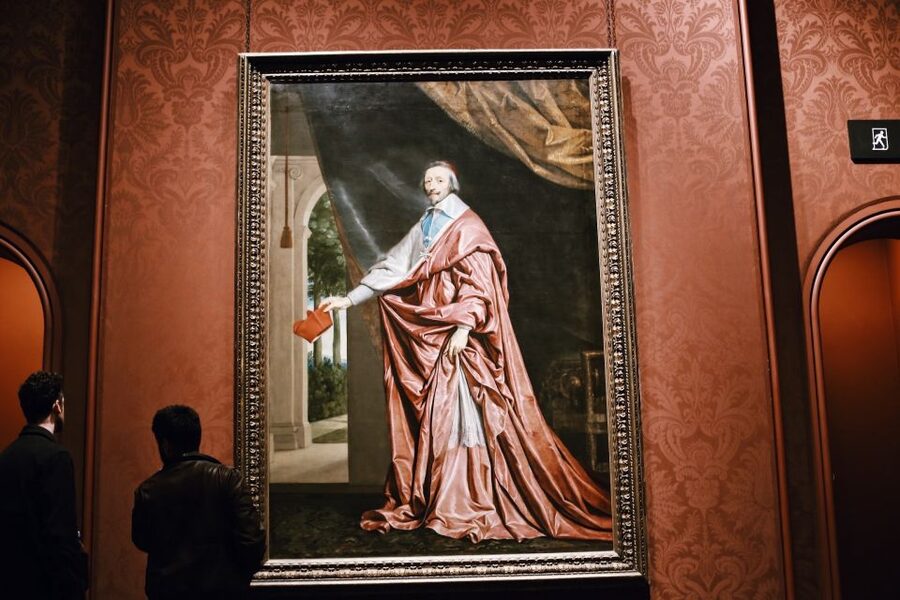
The strongest part of the experience is the guide. Jake has been praised for clear explanations, a well-paced route, and the ability to make art and history accessible to people who do not speak English as their first language.
Stephanie is especially good if you want an interactive visit. Her approach encourages discussion and close observation, and her clear speaking has helped even a participant with hearing aids follow along in a crowded room.
Matilda brings a broader view of how art developed over time. Her route through the collection connects individual paintings to larger changes in style and purpose. Becky has also been praised for keeping the tour engaging while explaining the works in a friendly, direct way.
Those details matter because a museum guide can either make you feel welcome or make you feel behind. Here, the strongest guide reports point to people who invite questions, explain without showing off, and bring energy to paintings that might otherwise seem remote.
Still, conditions inside the gallery can affect the experience. Rooms may be noisy, and the tour does not list Bluetooth headsets as included equipment. If hearing is a concern, choose a quieter position near the guide and ask questions when the group stops.
Group size, price, and overall value
At $112 per person, this is not a casual add-on for every London visitor. The value depends on how much you want help choosing and understanding the art.
I think the price makes the most sense if you are visiting the National Gallery for the first time, have limited time, or want a clear introduction rather than several hours of wandering. The guide saves you from spending your available time searching for major works and trying to understand their place in the collection.
The maximum shared group size of eight is another important part of the calculation. This is far more personal than a large coach-style museum visit, though it is not the same as having the guide exclusively. Shared tours require at least two participants, and if that minimum is not reached, you are offered another date or a full refund.
A private tour should suit couples, families, or small groups with particular interests. It costs more in many cases, though the exact price depends on the booking option. The main advantage is control: you can ask more questions and spend more time on paintings that speak to you.
Food, drinks, hotel pickup, and temporary exhibits are not included. The tour focuses on the National Gallery collection itself, so plan those other parts of your day separately.
Practical details before you book
The tour lasts two and a half hours, though some departures may run closer to two hours. Check the available start time when you book, since the meeting point can change with the option selected.
Bring a passport or ID card. Large bags and luggage are not allowed, so leave heavy items elsewhere before you arrive.
Only a small amount of walking is involved, but you will be on your feet for part of the visit. Standard booking information says the experience is not suitable for wheelchair users, while wheelchair-friendly tours can be arranged on request only. Contact the operator before booking if accessibility is important.
You can cancel up to 24 hours in advance for a full refund, and the reserve-now, pay-later option lets you hold a place without paying immediately. That flexibility is useful when you are arranging a London schedule around changing plans.
Who should book this National Gallery tour?
I would choose this tour if you want the famous paintings, but also want to understand why they belong together. It suits first-time visitors, families with older children, teenagers who need a lively guide, and anyone who finds large museums hard to organize.
It is also a good fit if you want an introduction to art history without committing to a full-day course. The route moves at a sensible pace and gives you enough background to keep exploring on your own.
I would hesitate if you prefer to spend a long time with just one or two paintings. A guided route has a set rhythm, and the gallery’s crowded rooms can make quiet contemplation difficult. Independent visitors may get better value by entering with a short list of works and taking their time.
Should you book it?
Book this tour if you want a focused route through the National Gallery and a guide who can turn famous paintings into a connected story. Jake, Stephanie, Matilda, Becky, and the other guides associated with the experience have been praised for clear speech, strong art knowledge, warmth, and enthusiasm.
The best reason to go is not simply seeing Sunflowers or The Virgin of the Rocks. It is learning how to look at those works alongside Botticelli, Vermeer, Monet, and Seurat. At $112, the tour is worth considering when your time is short and you want more than a quick photo in front of a famous canvas.
FAQ
How long does the National Gallery tour last?
The tour lasts between two and two and a half hours, with the listed duration being 2.5 hours.
Is the tour private or shared?
You can choose a private tour or a small shared group. Shared groups have a maximum of eight people and require at least two participants.
What language is the tour offered in?
The live tour guide speaks English.
Which paintings are included?
The route may include Botticelli’s Venus and Mars, Da Vinci’s The Virgin of the Rocks, Velázquez’s Rokeby Venus, Vermeer’s Lady Standing at a Virginal, Van Gogh’s Sunflowers, and Seurat’s Bathers at Asnières, along with works by Raphael, Rembrandt, and Monet.
Are hotel pickup and food included?
No. Hotel pickup and drop-off are not included, and food and drinks are excluded unless specifically stated.
What should I bring, and can I bring luggage?
Bring a passport or ID card. Luggage and large bags are not allowed. A small amount of walking is involved, and wheelchair-friendly tours are available only upon request.
Just added around the UK
- Westminster and National Gallery 3.5-Hour Tour in Italian★ 4.9 · 28 reviews
- British Museum & Camden Town – Private Tour in Italian★ 4.8 · 26 reviews
- Glasgow: Rangers Football Club Museum★ 4.6 · 103 reviews
- Edinburgh The King’s Gallery Entrance Ticket★ 4.3 · 54 reviews
- The Royal Mint Experience: Ticket, Guided Tour & Exhibition★ 4.6 · 57 reviews
- London: British Museum Highlights Guided Small Group Tour★ 4.9 · 113 reviews
- Stratford-upon-Avon: Tudor World Museum Entrance Ticket★ 4.4 · 34 reviews
- London: Westminster Abbey & Jubilee Galleries Guided Tour★ 4.9 · 56 reviews
Museum Tours in the UK, compared.
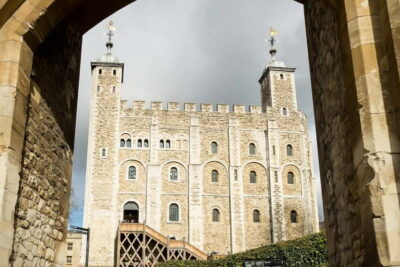
Tower of London and Crown Jewels Exhibition Ticket
Read our review →
Liverpool Football Club Museum and Stadium Tour
Read our review →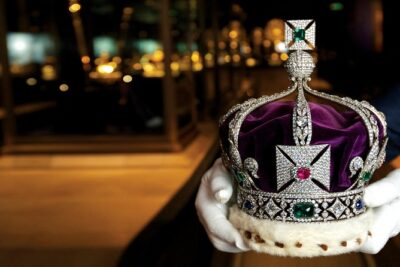
Tower of London and Crown Jewels Exhibition Ticket
Read our review →
Chelsea Football Club Stadium and Museum Tour
Read our review →


Browse the lists this tour appears in