
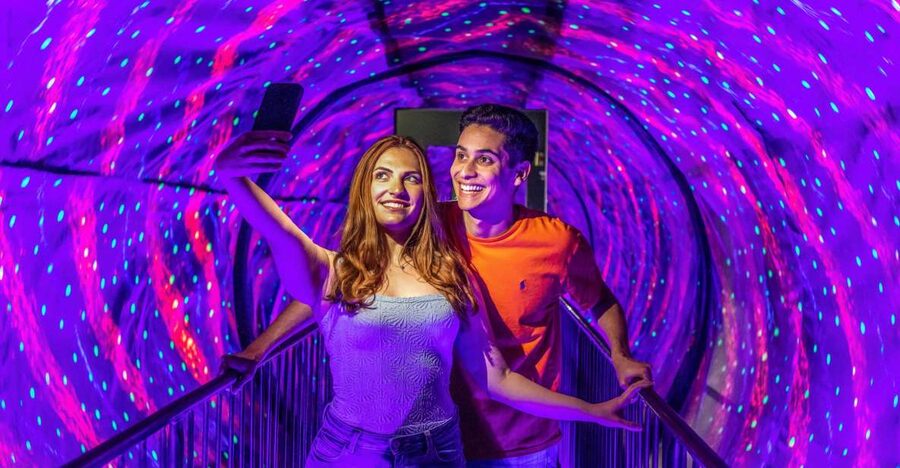
Review · THE USA
Philadelphia: Museum of Illusions Timed Entrance Ticket
The best part of the Museum of Illusions Philadelphia is the way it turns simple visual tricks into hands-on fun. You can appear to shrink in a chair, walk on a ceiling, challenge your memory, and pose for photos that make ordinary perspective look impossible. I like the mix of playful exhibits and short explanations about vision and the brain. I also like that the Smart Playroom gives you something to do beyond taking pictures. The main drawback is size: the museum is smaller than some people expect, and $31 per person can feel steep if you finish in under an hour.
This works especially well for families with school-age children, preteens, and adults who enjoy a good photo gag. Popular displays can become crowded, so take your time, read the signs, and be ready to wait briefly for the best shots. A few exhibits may make you dizzy, but warning signs tell you to pause when needed.
Key points to know before you go

- More than 60 exhibits: See holograms, stereograms, optical illusions, and rooms that play tricks on your senses.
- Best photo stop: The shrinking chair, gravity displays, and perspective rooms create the funniest pictures when you use your phone carefully.
- Smart Playroom included: Test memory, problem-solving, and cognition with hands-on games suitable for friendly competition.
- Short but lively visit: Plan on 45 to 60 minutes, though families who play every game may stay longer.
- Good for mixed ages: Children, preteens, teenagers, and adults can all take part instead of simply looking at displays.
- Book a timed entry: Your ticket is valid only for the date and time selected, so check your booking before setting out.
What the Museum of Illusions in Philadelphia is really like

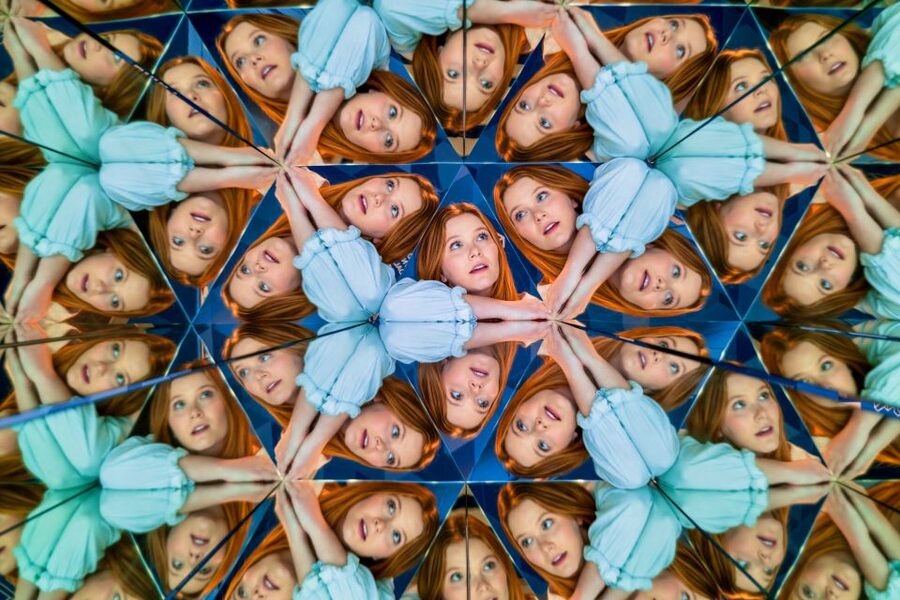
This is not a traditional museum built around paintings, artifacts, or long labels. It is a compact collection of visual puzzles and rooms designed to make your eyes report one thing while your brain slowly works out another.
You will move from one exhibit to the next, trying each trick and reading a short explanation of why it works. The experience is active. You are not simply looking at an illusion behind glass. You may need to stand in a marked spot, look through a special display, sit in a chair, or pose in a room so the camera captures the effect.
That format makes the museum easy to enjoy with children. Younger visitors can focus on the surprise, while older children and adults can read about perception, vision, and cognition. I like that the exhibits offer both a quick laugh and a small lesson.
The museum has more than 60 attractions, including holograms, stereograms, optical illusions, and sensory rooms. You will not need a full day to see them. Most people should plan for 45 to 60 minutes, although a group that takes many photos or spends time with the games can stay longer.
More Museum of Illusions tickets:
- Orlando: Museum of Illusions Admission Ticket
★ 4.4 · 218 reviews - Chicago: Museum of Illusions Timed Entrance Ticket
★ 4.4 · 134 reviews - Scottsdale: Museum of Illusions Ticket at Arizona Boardwalk
★ 4.0 · 61 reviews
The shrinking chair and the best photo opportunities
The shrinking chair is one of the most memorable stops. It uses perspective to make one person appear much smaller than another, creating a picture that looks impossible until you understand how the setup works.
This is a good example of how the museum succeeds. The exhibit is easy to understand once you try it, but the photo still has a strong visual punch. Take a moment to frame the shot instead of rushing through. A friend or family member can help take the picture, and it is worth swapping places so everyone gets a turn.
Other displays let you appear to defy gravity, walk on a ceiling, or enter a room where size and space seem to shift. These exhibits depend on camera angle, body position, and perspective. The effect is strongest when you follow the floor markings and use the suggested viewpoint.
Bring a fully charged phone. Photography is not an extra add-on here; it is part of the fun. You will want proof of the strange poses and impossible scenes, especially if you are visiting with children or preteens.
There is a practical limit, though. A popular photo station can slow your progress when several groups are waiting. If the room is crowded, you have two sensible choices: move on and return later, or watch the group ahead so you can prepare your pose before it is your turn.
Holograms, stereograms, and the science behind the tricks
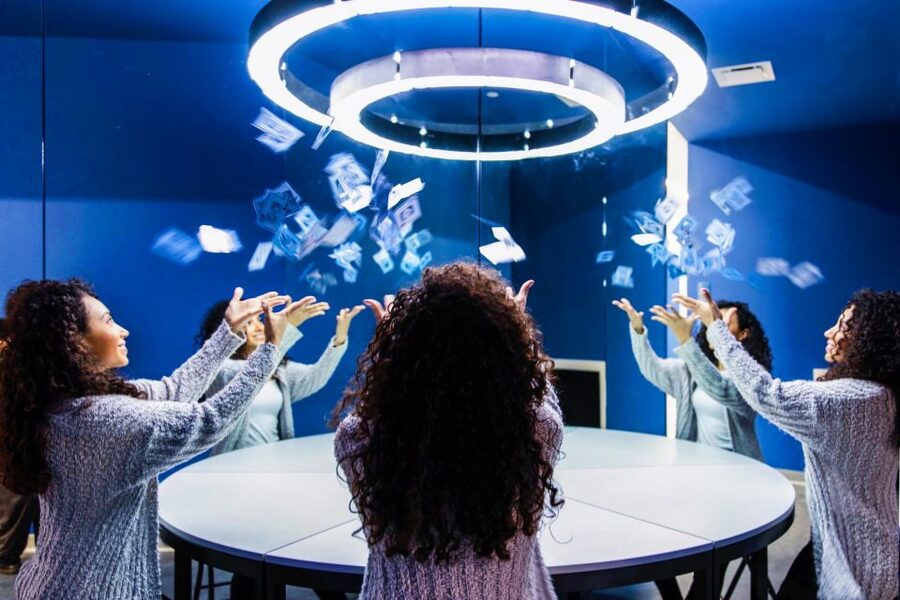
The museum’s visual exhibits are not all made for comic photos. Holograms and stereograms ask you to pay closer attention to how your eyes process images.
A hologram can appear to change or take on depth depending on how you look at it. A stereogram uses repeated visual patterns to produce a three-dimensional effect. These displays reward patience more than speed. If the illusion does not appear right away, adjust your focus and follow the instructions rather than deciding it does not work.
The explanations matter. They connect the trick to vision, perception, and the way the brain interprets information. You do not need a science background to follow them, and children can grasp the basic idea by seeing how a small change in viewpoint changes the image.
I like this educational layer because it keeps the experience from becoming only a series of selfie stations. You will still laugh at the strange pictures, but you also leave with a better sense of how easily the brain fills in gaps and makes assumptions.
Do not expect a long museum lecture. Each lesson is brief and tied to the exhibit in front of you. That is useful for families because children can learn in small pieces without needing to sit through a formal presentation.
Rooms that twist gravity, size, and space

Several rooms create the biggest physical surprises. You may seem to stand on a ceiling, lose your sense of normal balance, or appear to grow and shrink depending on where you stand.
The gravity displays are particularly effective when one person poses and another takes the photo. The result can look like a person is leaning at an impossible angle or ignoring the pull of the floor. Follow the posted instructions carefully. These exhibits work because the room has been built for a specific viewpoint, so wandering away from the suggested position can weaken the effect.
The size rooms are a strong choice for families. Children understand the joke immediately, and adults often want a turn after seeing the picture. This is one reason the museum suits mixed-age groups better than a quiet gallery. Everyone can participate, and no one needs special skill.
Some activities can make you dizzy. The museum places signs near displays that may affect your balance or senses and advises you to take a moment if needed. Pay attention to those warnings, especially if you are visiting with children who want to try every room in quick succession.
The museum’s compact size helps here. You can slow down, sit out one display, and continue without losing a large amount of time. You are not committed to a long route or a timed performance.
A few more museum visits around the USA worth comparing
- NYC: 9/11 Memorial & Museum Timed-Entry Ticket
★ 4.8 · 31,428 reviews - NYC: Empire State Building Tickets – Observatory & Museum
★ 4.7 · 25,757 reviews - New York City: American Museum of Natural History Ticket
★ 4.5 · 15,447 reviews - NYC: Museum of Modern Art (MoMA) Entry Ticket
★ 4.6 · 12,540 reviews
The Smart Playroom is worth your time
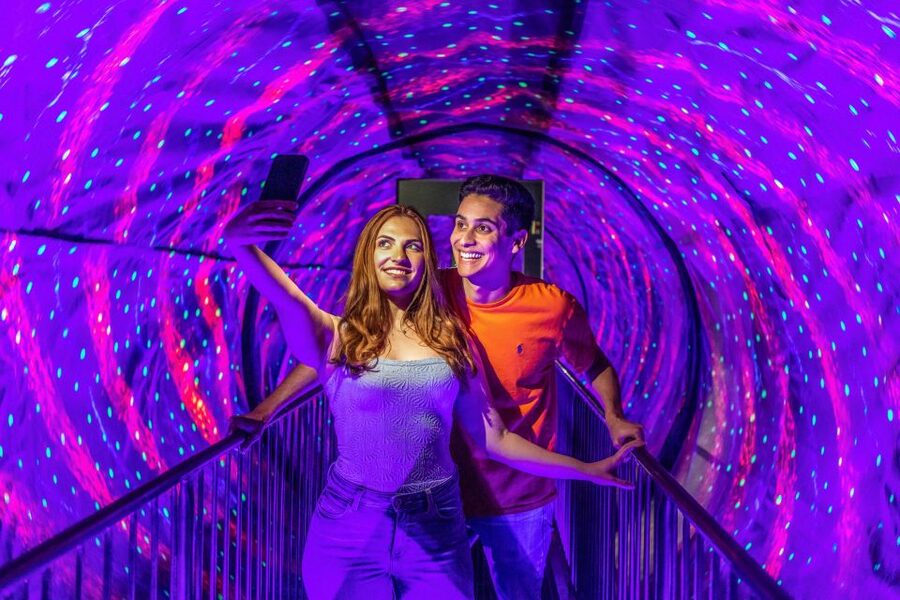
Do not treat the Smart Playroom as an afterthought. It shifts the focus from visual surprise to memory, logic, problem-solving, and friendly competition.
The games give you a reason to work together or challenge one another. A family can compare scores, race to solve a puzzle, or simply try to complete a task that looks easy at first. Adults may find the competition more serious than expected, especially when children quickly spot the pattern.
This room adds value because it gives you a break from posing for photos. If your group includes someone who prefers puzzles to selfies, the Smart Playroom may be their favorite section.
The games also make the visit feel more educational without becoming formal. You are using attention and memory while having fun, rather than reading a long explanation about how the brain works.
The onsite Smart Shop sells many of the same games found in the Smart Playroom, along with other Museum of Illusions merchandise. That can be convenient if a particular puzzle becomes a hit, though remember that purchases are extra and food and drinks are not included with admission.
How long should you allow?
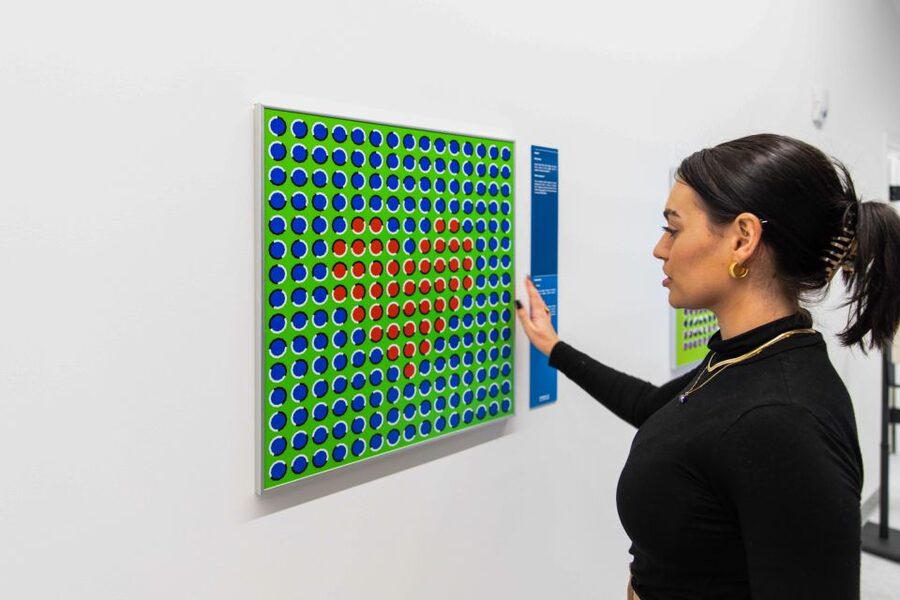
The stated visit time is 45 to 60 minutes, and that is a sensible planning guide. You can move through the displays fairly quickly, but you will need extra time if you want several people to pose at each photo station.
Families may stay longer than couples or adults making a quick stop. One family with preteens reported spending more than an hour and a half, which suggests that the actual time depends on how much you play and how carefully you revisit popular exhibits.
I would not build an entire day around the museum. Instead, place it between other Center City plans. It can fill a short afternoon gap, give children a break from historic sites, or provide an easy indoor activity when you want something light.
Because the ticket is timed and valid only for the chosen date and time, leave enough room in your schedule to arrive without rushing. The front desk handles check-in, and you simply give your booking name.
Is $31 per person good value?
At $31 per person, this is not a bargain attraction. The price makes more sense if you will use the exhibits fully, take photos, try the Smart Playroom, and stay close to an hour or longer.
The value is strongest for families and groups. One admission gives everyone a shared activity, and the exhibits encourage you to take turns rather than splitting up. The entertainment comes from participation, not from a single short show that ends after a few minutes.
For a couple making a quick stop, the price may feel high if you finish in 45 minutes and do not care much about photos or puzzles. One practical way to judge it is to ask how your group usually enjoys attractions. If you like hands-on displays and playful pictures, the ticket is easier to justify. If you prefer historical detail, large collections, or a quiet gallery, Philadelphia offers better matches elsewhere.
The museum also has limited repeat value. Once you understand the main tricks, the surprise may fade on a second visit. It works best as a one-time outing or as a family activity during a first Philadelphia visit.
The overall rating is 4.2 from 244 reviews, which fits the experience well: strong entertainment for the right audience, but not a must-see for every visitor.
Who should book this Philadelphia attraction?

I would recommend it most to:
- Families with children, preteens, and teenagers
- Adults who enjoy playful photo opportunities
- Groups looking for a short indoor activity in Center City
- Anyone curious about perception and the mechanics of optical illusions
- Friends who enjoy puzzles and light competition
It is less suitable if you want a large museum with hours of exhibits or a serious art and history experience. It is also worth thinking twice if anyone in your group is prone to dizziness, although the warning signs and the option to skip a display make the visit manageable.
Children four and under enter free and do not need a ticket. That helps families with toddlers, though the most rewarding exhibits are likely to be those where children can follow instructions, pose, and understand the visual joke.
The museum is wheelchair accessible. Food and drinks are not allowed inside, so plan to eat before or after your timed entry.
Booking advice and a sensible visit plan

Choose a time that gives you room to arrive calmly. Morning, afternoon, and evening entries are usually available, but your ticket applies only to the date and time you selected.
At the front desk, mention the name on your booking. Once inside, start by reading the instructions for each exhibit. The museum is more enjoyable when you understand where to stand and how to take the photo than when you rush from one display to the next.
A good visit rhythm is simple:
- Begin with the visual displays and holograms.
- Take your time with the major photo rooms.
- Pause if a gravity or motion exhibit makes you dizzy.
- Finish with the Smart Playroom if your group enjoys puzzles.
- Visit the Smart Shop only after you have decided whether you really want a take-home game.
If a display is crowded, do not let the line ruin the visit. Move to a nearby exhibit, then return later. This small bit of planning can make the compact museum feel less cramped.
Free cancellation is available up to 24 hours before the booked time, and you can reserve now and pay later. Those options help if your Philadelphia schedule is still changing, but they do not remove the need to check the exact entry time.
Should you book the Museum of Illusions Philadelphia?
Book it if you want a short, hands-on activity where children and adults can play together, take unusual photos, and learn a little about perception. The shrinking chair, gravity rooms, sensory tricks, and Smart Playroom give the visit more variety than a simple photo attraction.
Skip it if $31 feels high for an hour, or if your group prefers substantial museums, historic sites, or outdoor sightseeing. The museum is compact, and its appeal depends heavily on your willingness to pose, experiment, and laugh at the results.
For most families with preteens and for friends looking for a break from Philadelphia’s historic attractions, I think it is a reasonable choice. Go slowly, take your best photos, and treat the museum as a lively one-hour stop rather than an all-day destination.
FAQ
How long does the Museum of Illusions Philadelphia visit take?
Plan for about 45 to 60 minutes inside the museum. Groups that spend extra time taking photos and playing games may stay longer.
What does the $31 ticket include?
The ticket includes entrance to the Museum of Illusions and all exhibitions, along with local taxes and fees.
Are children four and under charged admission?
No. Children four and under enter free and do not need a ticket.
Is the museum wheelchair accessible?
Yes, the Museum of Illusions Philadelphia is wheelchair accessible.
Can I bring food or drinks inside?
No. Food and drinks are not allowed inside the museum.
Does the ticket work at any time on the selected day?
No. The ticket is valid only for the date and time booked.
Can I cancel my reservation?
Yes. You can cancel up to 24 hours in advance for a full refund. Reserve now and pay later is also available.
Just added around the USA
- Museum of Ice Cream Austin★ 3.5 · 85 reviews
- Admission to Richard Nixon Presidential Library and Museum Ticket★ 5.0 · 123 reviews
- Turquoise Museum Visit★ 4.5 · 194 reviews
- The Turquoise Museum Curator’s Tour★ 5.0 · 12 reviews
- Orlando: Titanic Artifact Exhibition Ticket★ 4.5 · 246 reviews
- The St. Augustine Old Jail Museum Guided Tour★ 4.6 · 68 reviews
- San Diego: San Diego Natural History Museum Ticket★ 4.7 · 33 reviews
- The Museum of Fine Arts, Houston Entry Ticket★ 4.6 · 82 reviews
Museum Tours in the USA, compared.




9/11 Memorial, Ground Zero Tour with Optional 9/11 Museum Ticket
Read our review →

All-Access 9/11: Ground Zero Tour, Memorial and Museum, One World Observatory
Read our review →

Browse the lists this tour appears in