
Review · THE USA
Scottsdale: Museum of Illusions Ticket at Arizona Boardwalk
The first thing to know about the Museum of Illusions Scottsdale is that it turns perception into a hands-on game. You can appear to walk on a ceiling, seem to grow or shrink, and pose inside rooms that make your eyes argue with your brain. I like the 60-plus exhibits and the fact that you learn why each trick works, rather than simply snapping a few photos and leaving. I also like the Puzzle Bar, where the visit shifts from visual tricks to memory and problem-solving.
This is best treated as a compact, one-hour attraction rather than a full-day museum. The $31 ticket may feel high if you expect large galleries or a long visit, and the narrow layout can feel crowded when children and families gather around the most popular stations.
Key things to know before you go
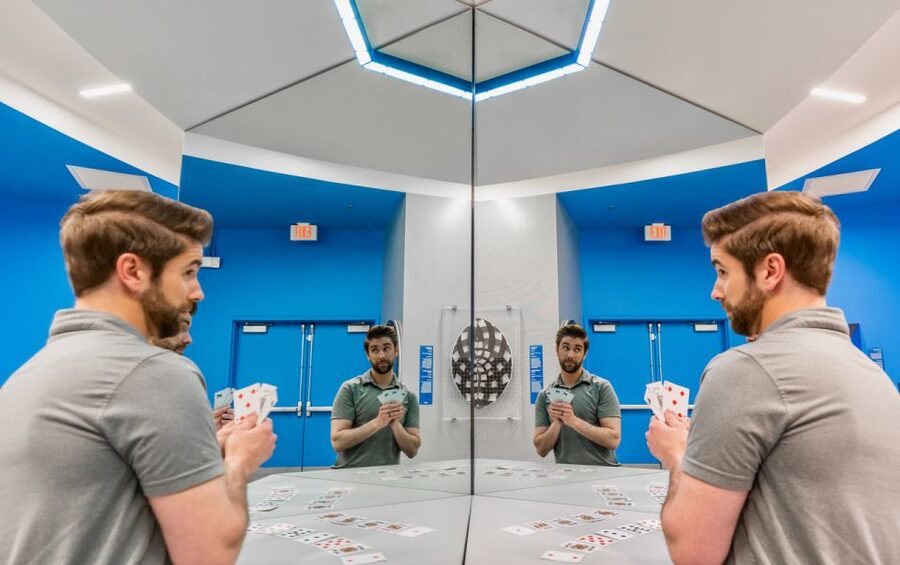
- More than 60 hands-on exhibits: Expect holograms, stereograms, optical illusions, and rooms designed to confuse your sense of space.
- A strong family activity: Children 4 and under enter free, and most exhibits are wheelchair accessible.
- The Puzzle Bar adds a second kind of challenge: You can test memory, reasoning, and problem-solving skills with friends or family.
- Plan on 45 to 60 minutes: The museum is easy to fit into a larger Scottsdale or Arizona Boardwalk day.
- Bring a phone with plenty of battery: Many stations work best when someone takes photos from a specific angle.
- Expect a compact setting: The attraction is made up of narrow halls and small exhibit areas, not giant museum rooms.
What the Museum of Illusions actually offers

At the Museum of Illusions Scottsdale, your eyes receive one message while your brain tries to make sense of another. That simple idea powers the entire visit. Instead of looking at framed art or reading long displays, you interact with rooms, objects, mirrors, images, and puzzles.
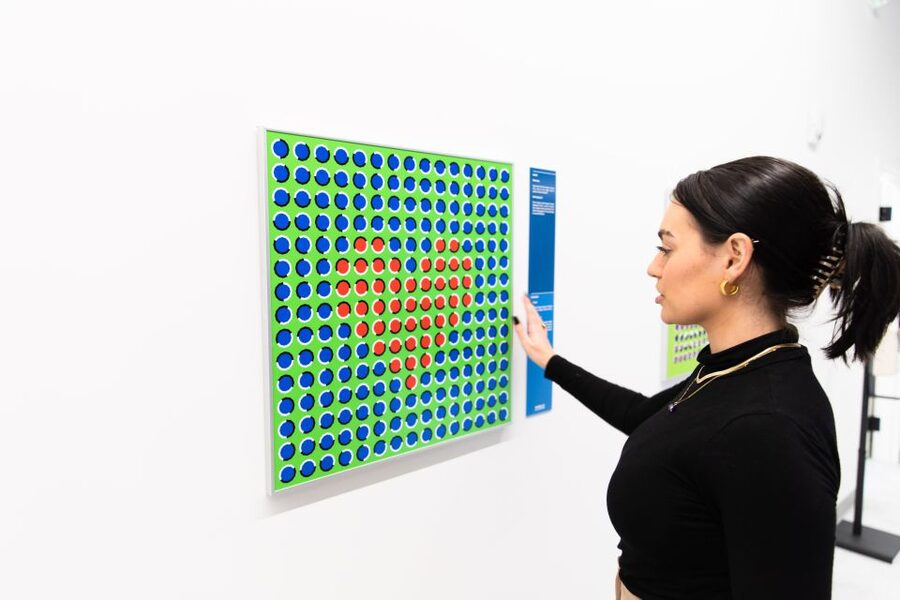
The exhibits cover several types of visual tricks. Holograms can appear to change as you move. Stereograms reward careful viewing and patience. Optical illusions play with scale, angle, color, and movement. The exact effect varies from station to station, but the point is consistent: your first impression may be wrong.
I find the educational side useful, especially if you are visiting with children. The explanations connect each illusion to vision, perception, and the way the human brain interprets information. You do not need a science background. The displays are designed to make the lesson clear through play.
This also makes the attraction more social than a standard museum. You will often need another person to take a photo, stand in a certain spot, or help you compare what each person sees. The visit works best when you go with someone willing to pose, experiment, and laugh at a few failed attempts.
More Museum of Illusions tickets:
- Philadelphia: Museum of Illusions Timed Entrance Ticket
★ 4.2 · 244 reviews - Orlando: Museum of Illusions Admission Ticket
★ 4.4 · 218 reviews - Chicago: Museum of Illusions Timed Entrance Ticket
★ 4.4 · 134 reviews
Entering the Scottsdale attraction at Arizona Boardwalk
The museum is located at Arizona Boardwalk, just north of downtown Scottsdale. You check in at the front desk and give the staff the name on your booking. An English-speaking host or greeter is available to help you get started.
Your ticket is valid only for the date and time selected, so pay attention when booking. The attraction is usually offered in morning, afternoon, and evening time slots. That flexibility helps if you are building a day around other Scottsdale activities, but it also means you should not assume you can arrive whenever you like.
Arizona Boardwalk gives you a convenient setting for combining this visit with other stops. Since the museum itself takes roughly 45 to 60 minutes, it fits neatly between meals, shopping, or another nearby attraction. It is not the sort of ticket that needs an entire day set aside.
The main exhibit route, from gravity tricks to infinite space

The heart of the visit is the route through more than 60 visual and educational displays. Some stations ask you to stand in a particular spot. Others work best when a friend takes the photo from the right angle. Give yourself time to read the short explanations, since they turn a funny picture into a clearer lesson about perception.
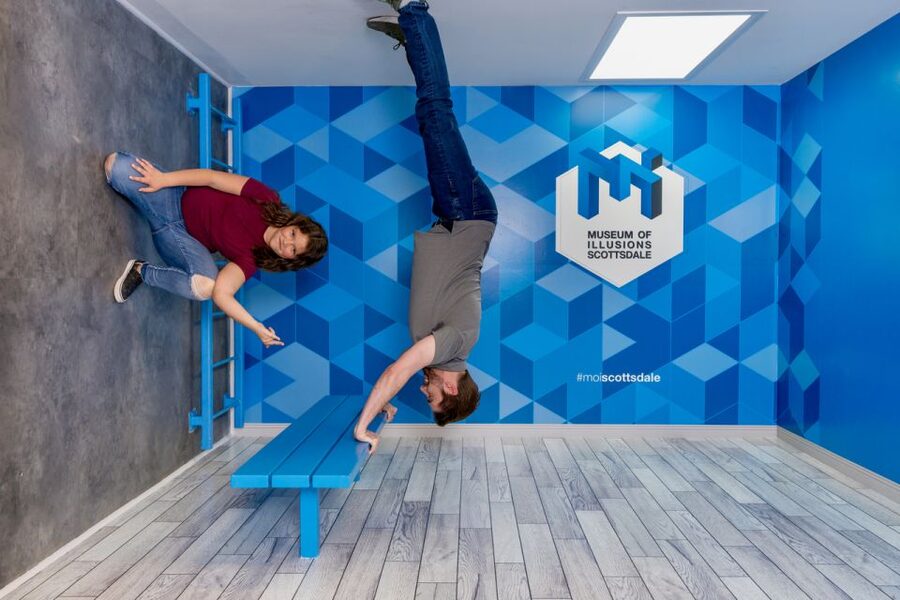
The gravity-themed displays are among the most immediately understandable. You can pose as if you are defying gravity, even though the real trick is the room’s angle and your position within it. These stations are easy for children to grasp and usually make good first photos.
Scale-based exhibits let you look unusually large or unusually small. The effect depends on where you stand and how the room is arranged. You will get the best result when you follow the floor markings or the staff’s directions instead of rushing through.
Walking on a ceiling is another classic photo opportunity. It sounds simple, but the photo depends on the camera angle. If you are visiting with family, take turns as photographer and subject. A quick snapshot from the wrong place can make the illusion look like an ordinary tilted room.
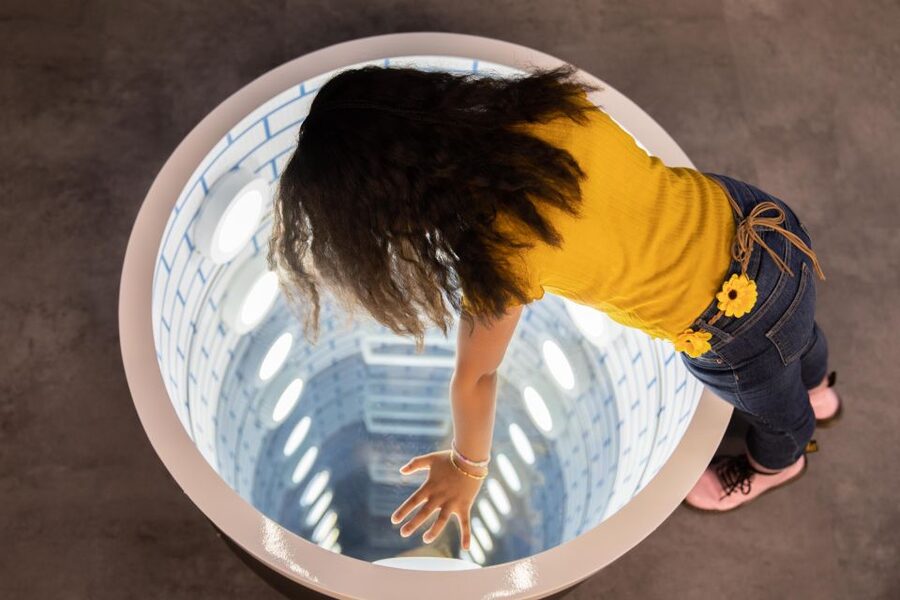
Other areas play with infinite space and reflections. These can be more visually striking than the simple pose stations, though they may also take longer to understand. Look carefully before moving on. The fun comes from spotting the small visual clues that reveal how the effect works.
The exhibits are close together, so the pace is yours, but the setting can feel busy when several groups stop at once. If you want more time with a popular station, a quieter time of day may help. The ticket information does not promise an uncrowded visit, so it is wise to expect some waiting around photo spots.
Why the photo opportunities matter

The photo stations are not just an extra feature. They are the main way many people will remember the visit. A good image lets you show friends at home that you appeared to walk on a wall, changed size, or entered a room that seems to break the rules.
You should arrive with your phone or camera ready. Some effects need a person behind the camera, so solo visitors may need help from another guest or a staff member. Staff assistance is part of the experience, and recent feedback includes praise for help with poses and photos. Service can vary at busy times, so a little patience helps.
Do not judge the museum only by how quickly you can walk through it. The exhibits are built around the photo, the explanation, and the attempt to make the trick work. If you rush from one display to the next, the visit can feel short and slight. If you stop to try several angles and read the explanations, the hour feels more useful.
That said, the attraction is physically compact. You should not expect vast rooms filled with large installations. The route uses skinny halls and small stations, so people who want a full-scale museum day may find the $31 price difficult to justify.
A few more museum visits around the USA worth comparing
- NYC: 9/11 Memorial & Museum Timed-Entry Ticket
★ 4.8 · 31,428 reviews - NYC: Empire State Building Tickets – Observatory & Museum
★ 4.7 · 25,757 reviews - New York City: American Museum of Natural History Ticket
★ 4.5 · 15,447 reviews - NYC: Museum of Modern Art (MoMA) Entry Ticket
★ 4.6 · 12,540 reviews
The Puzzle Bar changes the pace
The Puzzle Bar gives you a break from posing for photos. Here, you work on games meant to test memory, cognition, and problem-solving. It is a good place for friendly competition because you can compare your approach with the people beside you.
This section adds value for families with older children and for adults who enjoy logic games. You are not simply watching an effect happen. You have to study the problem, remember details, and try different solutions.
The name Puzzle Bar does not mean food or drinks are included. Food and beverages are not part of the ticket. Think of it as a puzzle station area, not a cafe stop.
The Smart Shop is onsite, and it sells many of the games found in the Smart Playroom, along with other Museum of Illusions merchandise. This is useful if a particular puzzle becomes a hit during your visit. It is also a reminder that the attraction is designed partly as an interactive family entertainment stop, not only as a traditional museum.
How long the visit really takes
The practical planning estimate is 45 to 60 minutes inside. That is enough time to try many stations, take photos, read the explanations, and spend some time at the Puzzle Bar. Your pace will depend on the crowd and how seriously you approach the puzzles.
Some people may finish much faster. A quick walk through the exhibits can take around 15 minutes, especially if you skip explanations and do not spend much time taking photos. That shorter visit changes the value calculation considerably.
I would plan for an hour, but I would not reserve a full afternoon around the museum. It works best as one stop in a larger day at Arizona Boardwalk or in Scottsdale. You can also use it as an indoor activity when you want a break from outdoor heat, though the ticket details do not promise any particular weather-related benefit.
The attraction is generally available in morning, afternoon, and evening periods. Choosing a time that fits your plans matters more than trying to stretch the visit into a long outing.
Is $31 a fair price?

At $31 per person, this is not a bargain if you measure value by hours spent inside. A 45 to 60-minute visit costs more than many people expect for a small attraction, and children 4 and under are free but older children need paid tickets.
The price makes more sense if you value the experience as a shared activity. You are paying for unusual photo opportunities, interactive displays, simple science lessons, and puzzles that give your group something to do together. A family that enjoys taking pictures and trying every station may find the ticket worthwhile.
It is a weaker choice for adults who prefer quiet museums, serious science exhibits, or large collections. The tone is playful and the displays are built for participation. One recent assessment described the attraction as more appealing to children than adults, which is a fair warning for couples or solo visitors seeking a substantial cultural stop.
The overall rating is 4 out of 5 from 61 ratings, but the spread of opinions matters more than the average. The strongest praise focuses on children enjoying themselves and staff helping with poses and photos. The sharpest criticism focuses on the compact building, short visit, crowds, and price. Those opposing views can both be true because the value depends heavily on your expectations.
Accessibility and practical comfort

Almost all exhibits are wheelchair accessible. A few have slanted floors, but you can bypass those displays. If you use a wheelchair, the attraction remains possible, though you may not be able to use every station.
The museum is indoors and arranged along narrow passageways. That makes the compact layout important for anyone who dislikes tight spaces or crowded photo areas. The available information does not give exact crowd limits or waiting times, so you should allow some flexibility around busy stations.
There is no food or drink included with admission. Plan any refreshments separately at Arizona Boardwalk. The Smart Shop is available onsite for puzzles and merchandise, but it is not part of the admission package.
Cancellation is flexible if your plans change. You can cancel up to 24 hours before the booked time for a full refund, and the reserve-now, pay-later option lets you hold a place without paying immediately. These terms are useful for a changing Scottsdale schedule, but remember that the ticket still applies to the specific date and time you choose.
Who will enjoy this most?
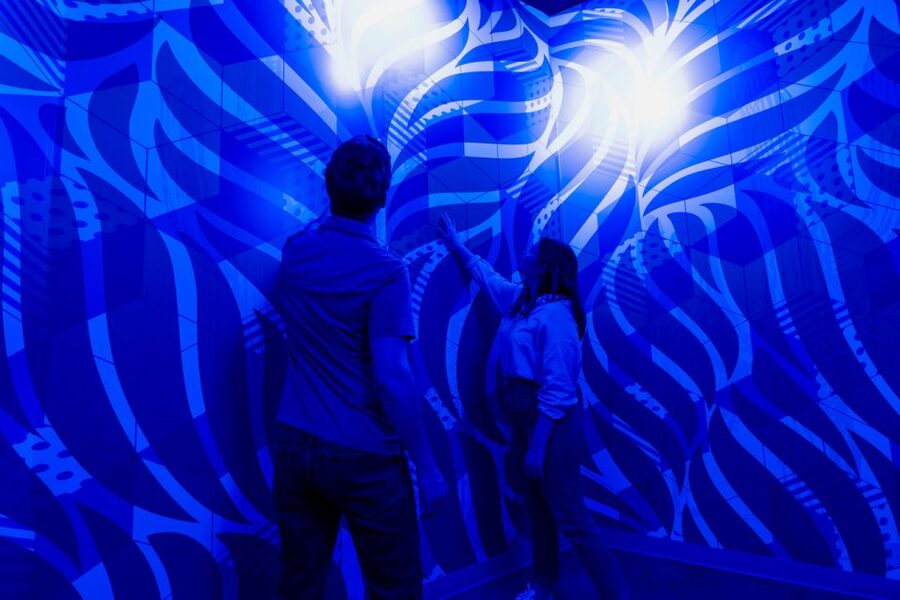
I would recommend the Museum of Illusions Scottsdale to families with school-age children, grandparents visiting with younger relatives, and groups of friends who enjoy playful photographs. It is also a practical pick for anyone who likes puzzles and wants an indoor activity that does not require a long commitment.
The attraction may not suit you if you want a large museum, a quiet educational visit, or several hours of exhibits. Adults without children can still have fun, particularly at the Puzzle Bar and the more unusual rooms, but you should be comfortable with a light, hands-on format.
For a family, the best approach is to make a game of it. Take turns posing, assign one person to photograph, and read the explanation after trying each trick. For adults, focus on the perception mechanics and the puzzles rather than expecting every exhibit to feel spectacular.
Museum of Illusions Scottsdale or another Scottsdale activity?
This ticket is a short, focused stop. That is its strength and its limit. Compared with a zoo, hot-air balloon ride, food walk, indoor skydiving session, or puzzle adventure, the Museum of Illusions asks for less time and less physical commitment.
Choose it when you want a simple activity with no long transport segment and plenty of photo moments. It can fill a gap in your schedule and works well for mixed-age groups.
Choose another experience if you want a full-day attraction, a meal-centered outing, an outdoor adventure, or a more demanding challenge. The Museum of Illusions is not trying to replace those activities. It is a compact stop built around optical tricks, family play, and quick experiments.
Should you book the Museum of Illusions Scottsdale?
Book it if you enjoy taking photos, solving puzzles, and testing simple visual tricks with family or friends. The helpful staff, 60-plus exhibits, and wheelchair access make it easy to use as a flexible Scottsdale stop, especially when you want something indoors.
Skip it if $31 feels too much for about an hour, or if you expect large rooms and a traditional museum collection. The safest expectation is a compact attraction with narrow halls, small stations, and a playful family focus. With that in mind, it can be good value for the right group, but it is not a must-see for every adult visitor.
FAQ
Where is the Museum of Illusions Scottsdale located?
It is located at Arizona Boardwalk, just north of downtown Scottsdale in Arizona.
How long should I plan to spend inside?
Plan for about 45 to 60 minutes inside the museum. Some people may move through faster if they skip explanations and photo attempts.
How much does admission cost?
The listed price is $31 per person.
Are children 4 and under required to have a ticket?
No. Children 4 and under enter free and do not need a ticket.
Is the museum wheelchair accessible?
Almost all exhibits are wheelchair accessible. A few exhibits have slanted floors, and those can be bypassed.
What language is available during the visit?
The host or greeter and the activity information are in English.
Are food and drinks included?
No. Food and drinks are not included with the entrance ticket.
Can I buy puzzles at the museum?
Yes. The onsite Smart Shop sells many games found in the Smart Playroom, along with other Museum of Illusions merchandise.
Can I cancel my booking?
Yes. You can cancel up to 24 hours in advance for a full refund. The ticket is valid only for the date and time you booked.
Just added around the USA
- Museum of Ice Cream Austin★ 3.5 · 85 reviews
- Admission to Richard Nixon Presidential Library and Museum Ticket★ 5.0 · 123 reviews
- The Turquoise Museum Curator’s Tour★ 5.0 · 12 reviews
- Turquoise Museum Visit★ 4.5 · 194 reviews
- Orlando: Titanic Artifact Exhibition Ticket★ 4.5 · 246 reviews
- The St. Augustine Old Jail Museum Guided Tour★ 4.6 · 68 reviews
- San Diego: San Diego Natural History Museum Ticket★ 4.7 · 33 reviews
- The Museum of Fine Arts, Houston Entry Ticket★ 4.6 · 82 reviews
Museum Tours in the USA, compared.



9/11 Memorial, Ground Zero Tour with Optional 9/11 Museum Ticket
Read our review →

All-Access 9/11: Ground Zero Tour, Memorial and Museum, One World Observatory
Read our review →

Browse the lists this tour appears in