
Review · NEW YORK CITY
New York City: Museum at Eldridge Street Docent-Led Tour
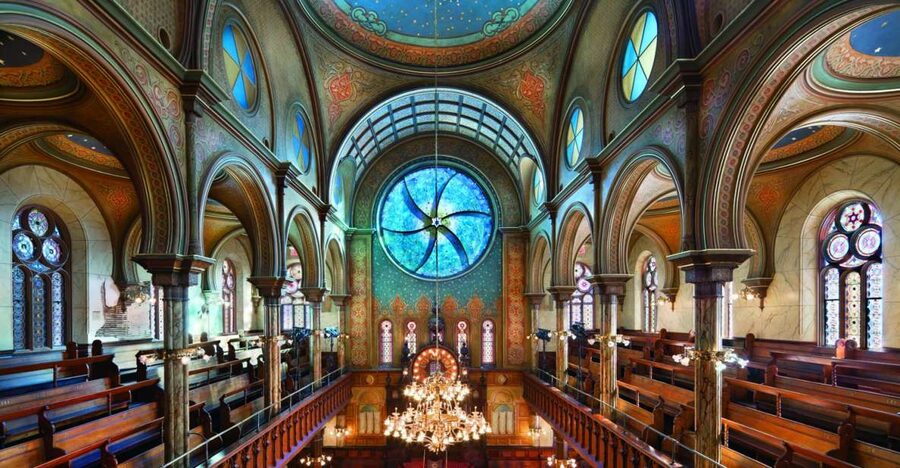
The first thing that catches you here is the building itself. The 1887 Eldridge Street Synagogue was the first grand synagogue in the United States built specifically by Eastern European Jewish immigrants. Its Moorish design, stained glass, and scale tell you that its founders wanted more than a place to pray. They wanted a permanent home in New York.
I like the way the hour connects architecture with immigration, rather than treating the synagogue as a pretty shell. I also like the restoration story, which gives the visit some drama: this landmark nearly slipped into neglect before a 20-year, $20 million project brought it back for public use.
The main consideration is guide quality. Bonnie has been praised for making the geography of Eastern Europe and immigrant life easy to understand, but one recent account described a guide as dull and disrespectful toward religious Jews. That kind of uneven experience makes the docent especially important.
Key points to know before you go
- A grand 1887 synagogue built by immigrants: This was a place of worship, community life, and public confidence on the Lower East Side.
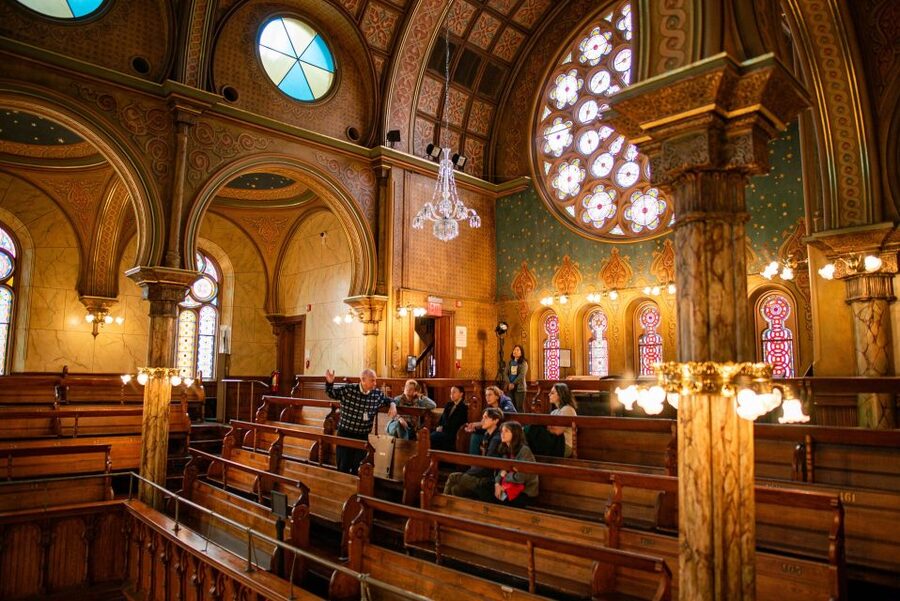
- Sixty historic stained glass windows: Look up often, since the windows are among the building’s most memorable details.
- A modern window by Kiki Smith and Deborah Gans: The synagogue’s story is not frozen in the past.
- A one-hour English tour with a live docent: The guide explains architecture, Jewish immigrant customs, preservation, and the building’s decline.
- Admission includes more than the tour: You can also see the temporary exhibit and permanent collection.
- Good value at $7: For a National Historic Landmark, a guided hour, and museum admission, this is an easy addition to a Lower East Side outing.
Why this synagogue matters on the Lower East Side
The Museum at Eldridge Street occupies the historic Eldridge Street Synagogue, a building created during one of the great migration periods in American history. Around the turn of the 20th century, one third of Europe’s Jewish population crossed the Atlantic. Many came from Eastern Europe and settled in crowded New York neighborhoods, including the Lower East Side.
The synagogue gave those new arrivals a place to worship, but its meaning went beyond religious services. It was also a meeting place and a sign that immigrant families intended to build lasting lives in the city. A grand building among packed tenements made a clear statement: these newcomers were putting down roots.
That context changes how you look at the decoration. The Moorish architecture is not just an attractive style. The scale and ornament reflect ambition. The founders were not building a temporary hall for people passing through. They were creating a serious institution for a community claiming its place in New York.
I like this framing because it keeps the visit grounded. You are not simply admiring old floors, windows, and woodwork. You are looking at the material results of immigration, faith, money, work, and hope.
More Museum Tours in New York City
- NYC: Empire State Building Tickets – Observatory & Museum
★ 4.7 · 25,757 reviews - New York City: American Museum of Natural History Ticket
★ 4.5 · 15,447 reviews - NYC: Museum of Modern Art (MoMA) Entry Ticket
★ 4.6 · 12,540 reviews
Entering through the restored synagogue
Your visit begins by walking down the stairs and entering the Museum. The tour then takes you through the synagogue as the docent explains its rise, decline, and return to public use.
The building was nearly lost after changing immigration patterns and strict immigration quotas in the 1920s weakened the community that had supported it. Years of neglect followed. The eventual restoration took two decades and cost $20 million, a reminder that saving an old building requires more than good intentions.
You will hear how the synagogue changed over time, from a major center for Jewish immigrants to a neglected structure, and then into a museum and public landmark. That arc gives the hour a useful shape. The visit is not only about what the building looked like at its height. It is also about what happens when a community changes and an important place loses its original support.
The restoration story may be especially interesting if you care about historic preservation. You get a practical example of how a religious building can be repaired, interpreted, and returned to public life without erasing the marks of its past.
Looking up at 60 stained glass windows
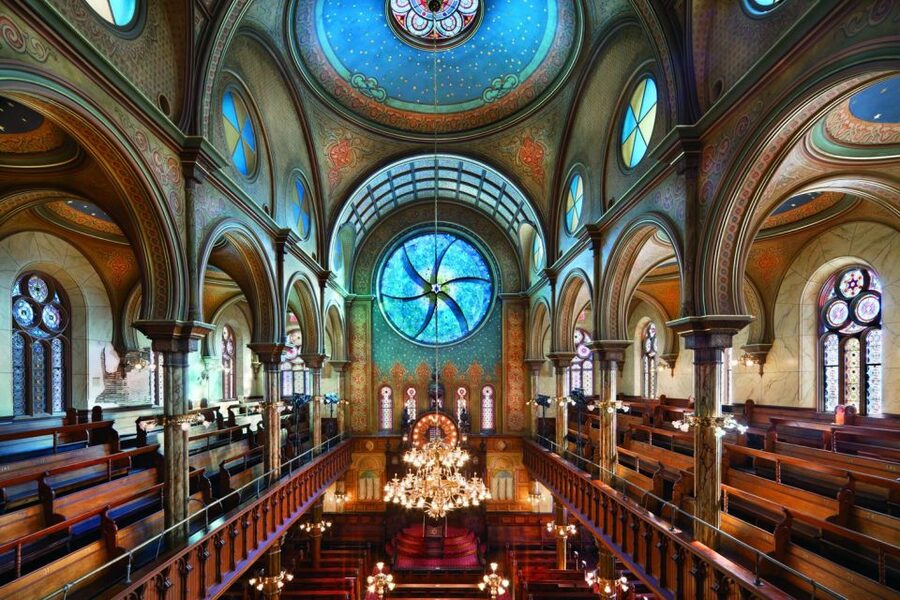
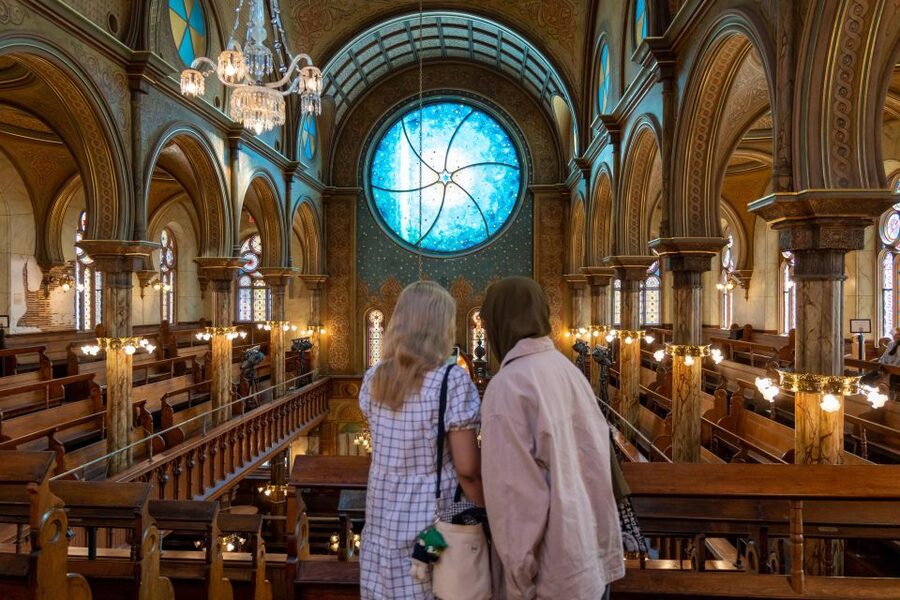
The historic stained glass windows are one of the clearest reasons to book the tour. There are 60 of them, and they help give the interior its distinctive character.
Take your time looking upward. On a self-guided visit, it would be easy to admire the windows quickly and move on. A docent can help connect them to the building’s design and to the people who worshipped here. The windows work best when seen as part of the whole interior, not as isolated decorations.
The same goes for the synagogue’s floors and original furnishings. One recent visitor specifically appreciated the historic glass, flooring, and original furniture. Those details make the space feel more complete. You can picture the synagogue as a working institution rather than an empty architectural display.
Photography is allowed for personal, noncommercial use, but flash photography is not permitted. Professional cameras are also not allowed. Since the interior includes delicate historic features, bring a phone or ordinary camera and be ready to photograph without flash.
A modern window inside an old landmark
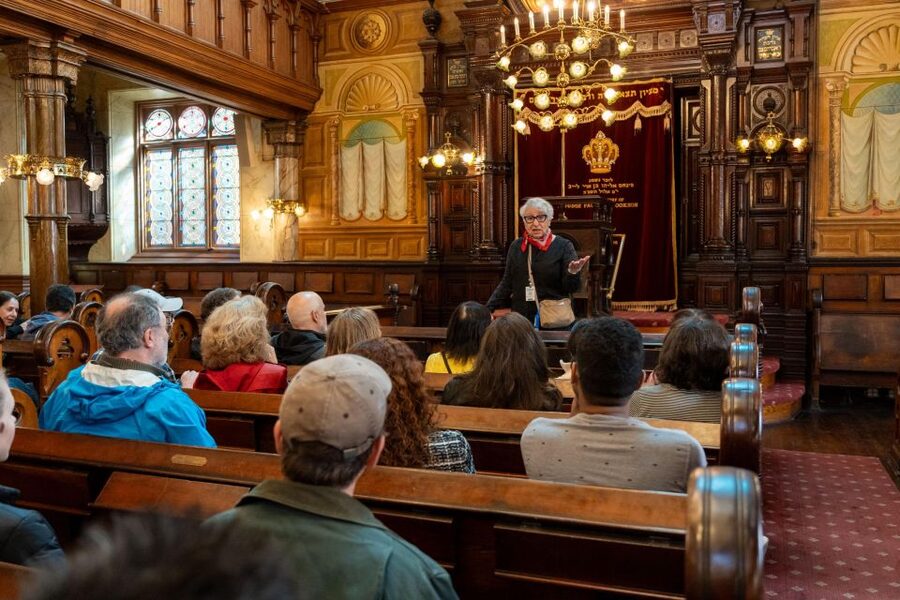
The visit does not stop in the 19th century. You will also see a modern window created by artists Kiki Smith and Deborah Gans.
That addition matters because it shows the museum treating the synagogue as a living place of interpretation. The building carries an older story, but the museum continues to ask how that story should be understood today. The modern window gives you a point of comparison with the historic glass and adds a contemporary voice to the visit.
I find this kind of contrast useful. It prevents the synagogue from feeling like a sealed historical box. You see the original design and the later effort to speak to present-day audiences. The combination can appeal to both architecture fans and visitors interested in how museums handle difficult, layered histories.
The temporary exhibit and permanent collection are included with admission, so leave a little room before or after the guided hour to see more than the main sanctuary. A menorah exhibit has also been a highlight for at least one recent visitor, so check what is on display when you arrive.
A few more museum visits around New York City worth comparing
- Museum of Ice Cream New York City Admission Ticket
★ 4.0 · 1,154 reviews - New York City: Museum of Broadway Entry Ticket
★ 4.6 · 113 reviews - New York City: Museum of Illusions Entry Ticket
★ 3.1 · 56 reviews - New York City: The Banksy Museum Entry Ticket
★ 4.6 · 51 reviews
What the docent adds to the hour
The tour is designed to explain four subjects together: the building, Jewish immigrant life, the synagogue’s decline, and its restoration. That blend is important. A guide can point out a window or architectural feature, then explain why the building mattered to the people who used it.
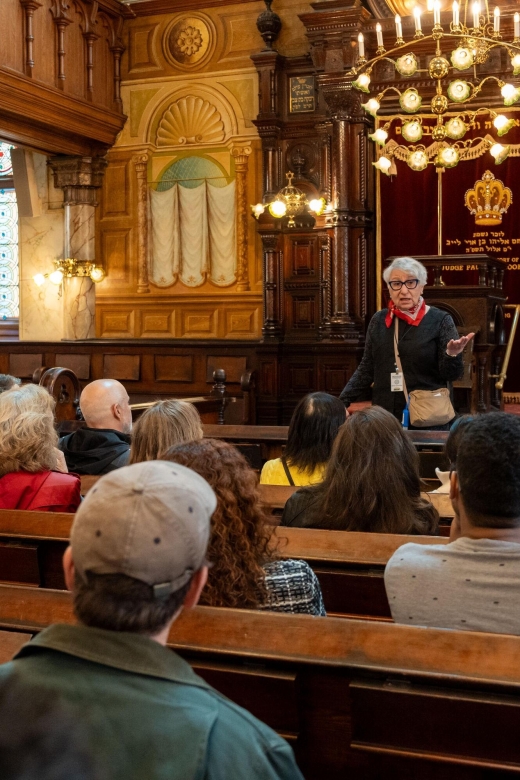
The strongest guide experience appears to be personal and clear. Bonnie, one of the named docents, has been praised for explaining the geography of the Pale of Settlement, the region of Eastern Europe where many Jewish immigrants came from. Her stories reportedly made that geography understandable and connected it to personal experiences.
That is the sort of interpretation you want here. Names and places from Eastern Europe can feel abstract when encountered in a museum label. A good docent gives those places shape and helps you understand the journeys that brought people to New York.
Still, I would keep expectations measured. Guide-led tours depend on the person holding the group’s attention and handling religious subjects with care. One recent account described an unpleasant and boring presentation, including comments the visitor found insulting toward religious Jews. That is a serious concern, especially for a museum dealing with living traditions as well as the past.
The fair takeaway is that the content is strong, but the guide matters. If your tour is led by someone who explains clearly and respectfully, the hour can turn the synagogue into a vivid social story. If not, you may come away with less than the building deserves.
The $7 price and what you receive
At $7 per person, this is one of the easier New York museum choices to justify. The fee includes admission to the Museum at Eldridge Street, the docent-led tour, the temporary exhibit, and the permanent collection.
You are paying less for a long list of attractions than for focused interpretation inside an important building. One hour is enough time to learn the main story without turning the visit into an all-day commitment. That makes it useful between other Lower East Side stops.
The value is strongest if you care about architecture, immigration, Jewish American life, or preservation. You may find the price less compelling if you only want a quick photograph of the interior, since the tour’s purpose is to add context and explanation.
The booking terms also keep the decision low risk. You can cancel up to 24 hours in advance for a full refund, and you can reserve now while paying later. Starting times vary, so check availability before planning the rest of your day.
Practical details for your visit
The tour is in English and lasts one hour. It begins inside the Museum after you walk down the stairs and enter the building.
The museum is wheelchair accessible, with an elevator reaching all four floors. That is useful because the experience is spread through a historic structure, and access to every level can make a real difference.
Food and drinks other than water, strollers, and backpacks are checked on arrival. Bikes and scooters are not allowed. Plan to arrive without bulky items if you want a quicker entry.
Personal, noncommercial photography is welcome. Leave the professional camera at home, and do not use flash. These rules are simple, but knowing them in advance helps you focus on the building instead of sorting out restrictions at the door.
Who will get the most from this tour
I would recommend this to you if you enjoy places where architecture and social history meet. It is also a strong choice if you want to understand the Lower East Side through one specific building rather than through a general neighborhood overview.
Families with older children may find the hour manageable, especially if the guide uses stories to explain immigration and community life. The one-hour format is short enough for a busy New York schedule, though younger children may have limited interest in the preservation details.
It suits visitors who want a quieter museum stop as well. The focus is the synagogue and its collections, not a large collection of unrelated objects. That narrow focus can make the visit feel purposeful.
You should be more cautious if you are highly sensitive to discussions of religion or want complete control over the pace. This is a docent-led experience, so you follow the guide’s presentation rather than moving through every room at your own speed.
Should you book the Eldridge Street tour?
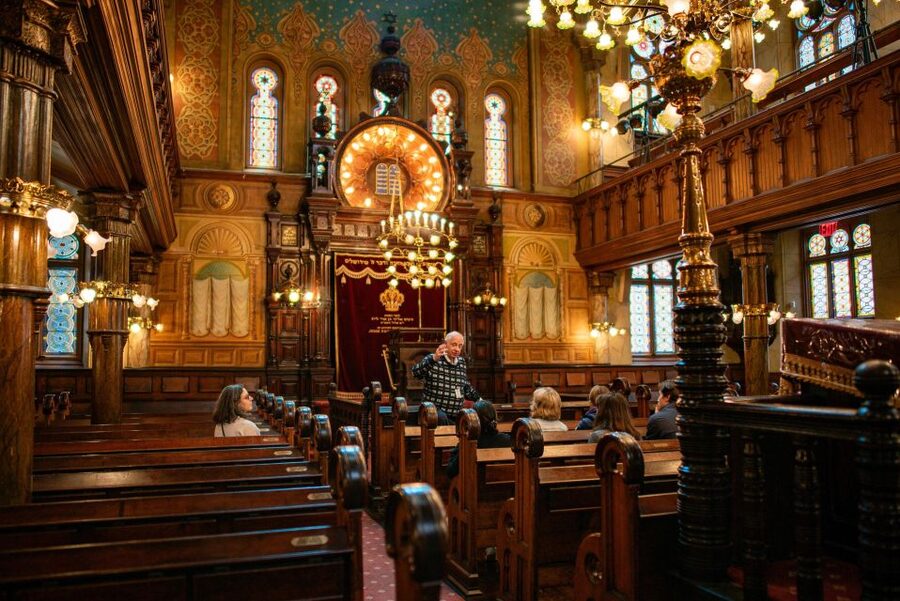
Yes, if you want a concise, affordable look at New York immigration, Jewish community life, and historic architecture. The 60 stained glass windows, Moorish interior, original furnishings, modern Kiki Smith and Deborah Gans window, and restoration story give the hour plenty to examine.
The $7 price makes it an especially good pick for an architecture-focused afternoon on the Lower East Side. I would book it with realistic expectations about the guide. Bonnie’s approach sounds especially strong, but the quality of any docent-led tour can vary, and one reported experience raised real concerns about tone and respect.
If your schedule allows, use the admission to see the temporary exhibit and permanent collection as well. You will get more from the ticket if you treat the guided hour as the center of a small museum visit, not the entire experience. For a modest fee and a manageable time commitment, this is a worthwhile stop for anyone curious about how immigrant communities made a place for themselves in New York.
FAQ
How long does the Museum at Eldridge Street docent-led tour last?
The guided tour lasts one hour.
What language is the tour offered in?
The live tour guide speaks English, and the docent-led tour is available in English.
What does the $7 admission include?
It includes museum admission, the docent-led tour, access to the temporary exhibit, and access to the permanent collection.
Where does the tour begin?
Walk down the stairs and enter the Museum. The tour begins inside.
Is the Museum at Eldridge Street wheelchair accessible?
Yes. The museum is fully accessible, and an elevator reaches all four floors.
Can I take photographs during the visit?
Personal, noncommercial photography is welcome. Flash photography and professional cameras are not allowed.
Can I bring food, drinks, a stroller, or a backpack?
Food and drinks other than water, strollers, and backpacks are checked and searched on arrival. Bikes and scooters are not allowed.
Can I cancel my booking?
Yes. You can cancel up to 24 hours in advance for a full refund. You can also reserve now and pay later.
Just added around New York City
- The Met Museum Guided Tour with Skip-the-Line Entry★ 4.4 · 149 reviews
- New York City: The Banksy Museum Entry Ticket★ 4.6 · 51 reviews
- NYC: Entry Ticket To The Banksy Museum★ 4.5 · 89 reviews
- Self-Guided Tour of the Museum at Eldridge Street★ 4.3 · 13 reviews
- New York: Private Tour of The Metropolitan Museum of Art★ 4.9 · 39 reviews
- NYC: Museum of Sex Entry Ticket★ 4.2 · 179 reviews
- NYC: Museum of the Moving Image Flexible Ticket★ 4.6 · 95 reviews
- NYC: Whitney Museum Ticket★ 4.2 · 315 reviews
Museum Tours in New York City, compared.

9/11 Memorial, Ground Zero Tour with Optional 9/11 Museum Ticket
Read our review →

All-Access 9/11: Ground Zero Tour, Memorial and Museum, One World Observatory
Read our review →

Browse the lists this tour appears in