
Review · SPAIN
Santiago de Compostela: Cathedral & Museum Private Tour
The most unusual part of this tour is the way it links the Cathedral Museum to the living pilgrimage church next door. You move from Romanesque stonework and archaeological remains to the library holding the Codex Calixtinus, then into the cathedral to see the altar and the reputed tomb of Saint James.
I like the private format, since guides such as Tiziano and Lucia have time to explain the story, answer questions, and adjust their pace. I also like the balcony above Plaza do Obradoiro, a quick but memorable view that many self-guided visits miss. The main drawback is that museum admission costs extra, and a two-hour tour can feel tight if your guide spends a long time outside before entering.
Key points at a glance
- See the apostle in three forms: Learn why Santiago appears as a pilgrim, soldier, and saint.
- Visit the Codex Calixtinus library: See the setting connected with the medieval Book of Saint James.
- Start below the cathedral: Archaeological rooms show what occupied this site before the present church.
- Admire Mateo’s stone choir: This finely carved work gives you a close look at medieval sculpture.
- Step onto the balcony: Look down on Plaza do Obradoiro from above.
- Use a separate entrance: After the museum, enter the cathedral without waiting in the regular line.
Why this private cathedral tour is worth your time
Santiago de Compostela is not simply a pretty church at the end of the Camino. It is a pilgrimage center built around the belief that the remains of Saint James lie beneath the cathedral. That story has shaped the city, its art, its rituals, and its visitors for centuries.
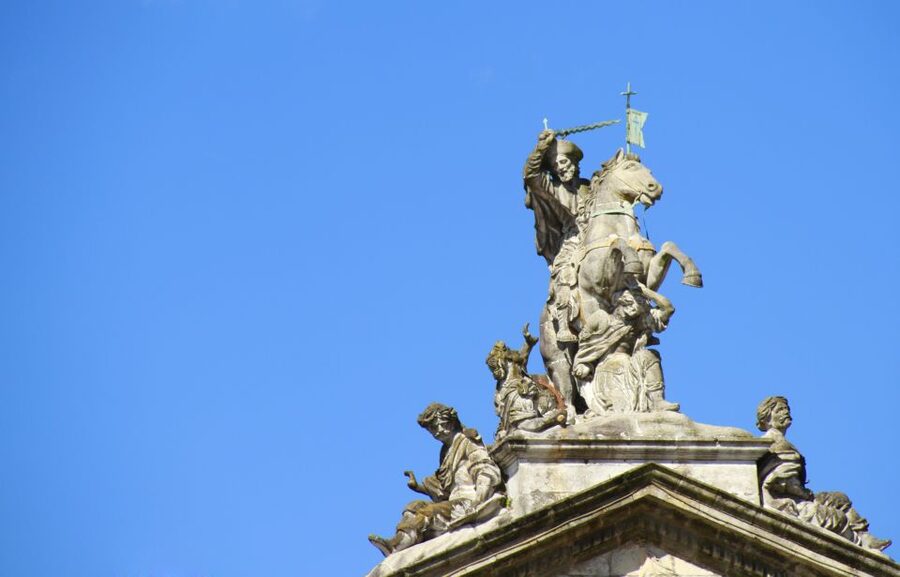
A guide helps you connect those pieces. You will not just see a statue of Santiago. You will learn why the apostle appears in three different roles: as a pilgrim with a staff and shell, as a soldier associated with Spain’s medieval battles, and as a saint tied to Christian tradition.
That context matters because the cathedral contains a lot to look at. Without help, you could walk past a carved figure, a chapel, or a section of the choir without knowing why it matters. The tour gives you a clear thread to follow, from the earliest remains beneath the building to the grand altar above.
The private setting is especially useful if you know little about Saint James or the Camino. One guide, Tiziano, is praised for beginning with the apostle’s story and using maps and photographs to explain the setting before entering. Lucia is also noted for clear explanations and a personal connection to Galician culture.
The tour lasts two hours. That is enough time for a solid introduction, but not enough for a slow study of every room, chapel, and object. I would treat this as a focused orientation, not a full day of art history.
More basilicas and cathedrals in Spain:
- Santiago: Cathedral & Museum Tour + Pórtico of Glory Option
★ 4.7 · 2,116 reviews - Santiago de Compostela Cathedral and Museum Guided Tour
★ 4.6 · 511 reviews - Santiago de Compostela: Cathedral, Museum, and Old Town Tour
★ 4.8 · 382 reviews
Starting beneath the cathedral
Meet your guide in Plaza do Obradoiro, directly in front of the Cathedral Museum door. Look for the blue umbrella. This is a busy square, so arrive with enough time to find the museum entrance and avoid beginning the visit in a rush.
The tour begins on the museum’s ground floor. Four rooms display remains uncovered during archaeological excavations. A map helps you see what occupied the site before the cathedral took its present form.
This opening is valuable because it gives the building a timeline. You begin with the ground beneath your feet, then move through the cathedral’s art and religious purpose. You may see stone fragments, foundations, and other evidence of earlier construction, though the exact display can vary.
There is no elevator inside the museum. You need to use stairs as the tour moves upward, so this experience is not suitable for wheelchair users or people with significant mobility limitations. Wear comfortable shoes, not only for the stairs but also for the hard floors and steady walking involved in a cathedral visit.
Master Mateo’s stone choir and Santiago’s three identities
One of the strongest stops is the stone choir attributed to Master Mateo. Its carved detail rewards close attention, and your guide can point out figures and features that are easy to miss when you are moving through on your own.
The museum also presents religious sculptures, busts, and wooden carvings. This is where the guide’s storytelling becomes more useful than a simple audio recording. You can ask why a figure is shown in a certain pose, how a biblical character fits into the larger story, or how the image connects to Santiago.
Pay special attention to the three versions of Apostle Santiago. As a pilgrim, he reflects the road and the people who have walked it. As a soldier, he represents a different chapter in Spanish religious and military imagery. As a saint, he returns to the central Christian story behind the cathedral.
I like this section because it turns iconography into something readable. You do not need a background in art to follow it. The guide can show you the clues: clothing, symbols, weapons, and posture.
The reviews of guides Tiziano and Lucia point to a useful strength of the private format. Both are described as patient, clear, and willing to answer questions. If your group wants more time on the Camino, medieval sculpture, or local history, you can ask for it. In a large group, that flexibility is harder to get.
The library and the Codex Calixtinus
On the second floor, the route turns toward the library associated with the Codex Calixtinus. This medieval manuscript is often described as the main written source for the Book of Saint James, a work linked to the pilgrimage route and the cult of the apostle.
You may not be able to examine the manuscript like a book in a reading room. The value is in understanding where it is kept and why it matters. The Codex connects the cathedral to the wider Camino tradition, giving historical weight to the pilgrims, routes, customs, and stories that have gathered around Santiago.
For many visitors, this is the point where the visit becomes more than a tour of religious art. The cathedral is not only the destination of a walking route. It is also a place where medieval ideas about pilgrimage were recorded, organized, and preserved.
Ask your guide to explain the Codex in relation to the Camino if that is your main interest. The private format lets you signal what you want to understand instead of accepting a fixed lecture.
More private museum tours in Spain:
- Bilbao: Private & Exclusive Guggenheim Museum Guided Tour
★ 4.8 · 296 reviews - Madrid: Prado Museum 3-Hour Private Tour
★ 5.0 · 129 reviews - Madrid: Private Prado Museum Masterpieces Tour
★ 4.8 · 75 reviews - Guggenheim Museum Private Tour
★ 4.9 · 57 reviews
Flemish work and Goya-era wall hangings
The third floor focuses on large woven wall hangings from the Flemish school and pieces known as the Goya wall hangings, made at the Royal Tapestry Factory of Madrid. These works bring a different look and scale to the visit after the stone sculpture and archaeological rooms.
I would not rush through this floor. The contrast is useful: the museum moves from excavated remains to carved religious art, then to decorative works made for grand interiors. Your guide can help you notice the scenes, figures, and design details rather than treating the room as a quick passage to the balcony.
The precise amount of time spent here may depend on your guide and your group’s interests. One past visitor felt that too much time was used outside the cathedral and not enough remained for the museum and nave. That is a fair warning. If the wall hangings or the museum matter to you, say so early and keep an eye on the clock.
A balcony view over Plaza do Obradoiro
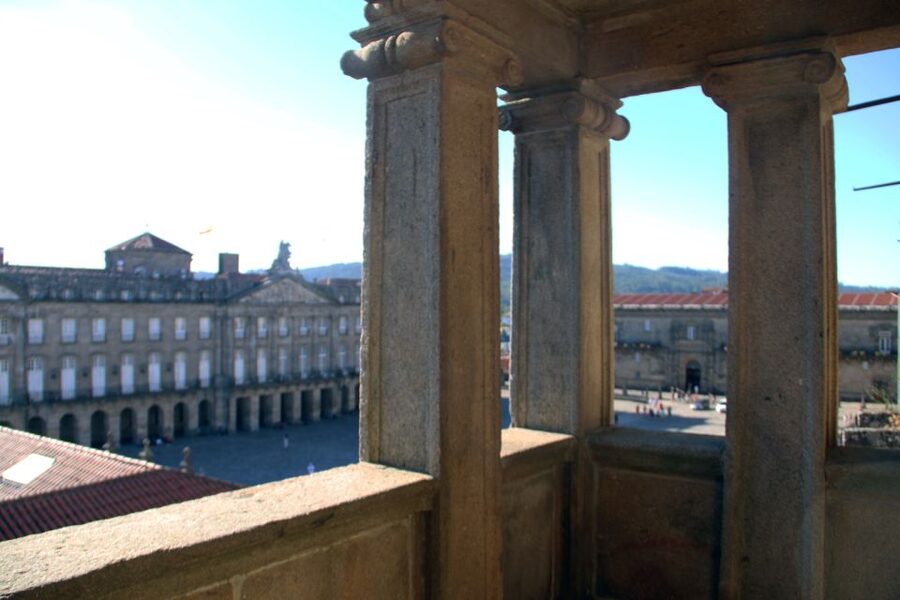
The balcony offers one of the tour’s best short stops. From above, you look down onto Plaza do Obradoiro, the broad square in front of the cathedral.
At ground level, the facade dominates your view. From the balcony, you gain a different sense of the square’s size and layout. It is also a good place for photographs, so have your camera ready before the group moves on.
This is a brief viewpoint, not a long scenic break. Still, it gives your visit a welcome change of pace after the interior rooms. You see the cathedral as part of the city rather than as an isolated building.
Entering the cathedral without the regular wait
After the museum, you return to the second floor and cross through the cloister. From there, the tour enters the cathedral through a separate entrance without waiting in the standard line.
That arrangement matters most during busy periods. It does not mean every part of the cathedral will be empty, and special events can affect access. A royal visit or another major ceremony may prevent entry, so keep your wider schedule flexible.
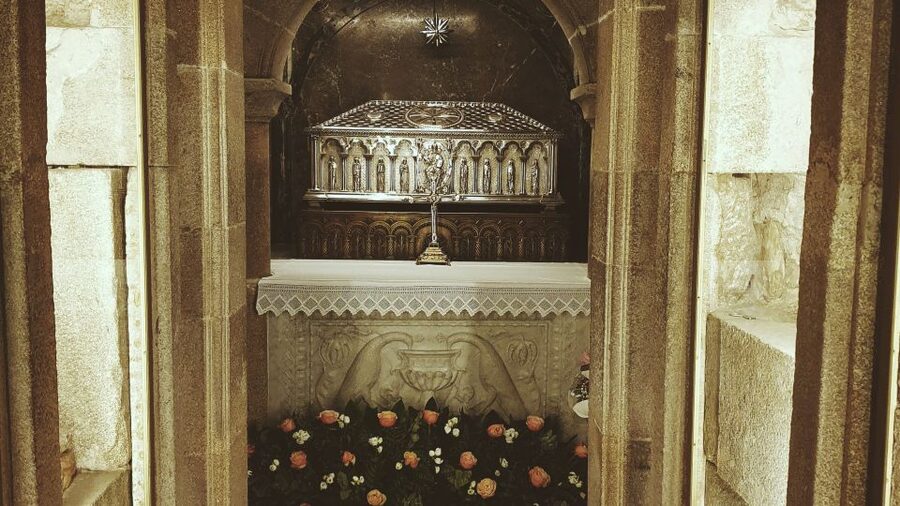
Inside, the guide leads you through the main areas and selected chapels. You will see the main altar, the Holy Door, and the place identified as the tomb of Saint James.
The apostle’s resting place is the emotional center of the tour. The cathedral’s art and architecture are impressive, but the tomb explains why this enormous building exists and why pilgrims have continued coming here. I would make sure there is enough time for this final section.
That point is worth stating clearly because one past visitor ran out of time before seeing the resting place. The tour is scheduled for two hours, and a long introduction outside or a detailed museum visit can reduce the time available in the nave. If the tomb is your priority, tell the guide at the start.
What the $88 price really covers
The listed price is $88 per person for the private two-hour experience. It includes an official guide authorized by the cathedral’s dean and access to the guided visit, but cathedral museum entrance tickets are separate.
The official ticket prices are:
- €6 for most visitors
- €4 for unemployed people, students, pilgrims, and people aged 65 or older
- Free for children under 12
That extra charge is not large, but it changes the real cost. At $88 per person, you are paying mainly for private guiding, access to the route, and the chance to ask questions at your own pace. You are not buying an all-inclusive admission package.
For two or more people who care about the story behind the building, the price can make sense. A private guide can give you far more attention than a large group visit, and the cathedral’s symbols are easier to understand when someone explains them in place.
For a solo visitor on a tight budget, the value is less obvious. You may prefer to pay the admission fee and explore independently. The private format earns its price when you want structure, interpretation, and a direct route through the museum and cathedral.
Groups of six or more receive audio guides. That can help everyone hear the guide clearly, though the experience remains a private group rather than a public tour.
Who should book this experience
I would recommend this tour to first-time visitors who want the main story of Santiago Cathedral in a short visit. It suits people who want to understand Saint James, the Camino, the Codex Calixtinus, and the cathedral’s art without doing their own research beforehand.
It is also a good choice for families with older children, couples, and small groups with mixed interests. You can ask for explanations at the right level, stop for questions, and avoid being locked into the pace of strangers.
Pilgrims may find it particularly useful before or after walking the Camino. The visit explains the destination you have been approaching, and the three versions of Santiago give extra meaning to the symbols you may have seen along the route.
I would hesitate if you have limited mobility. The museum has no elevator, and the tour is specifically not suitable for wheelchair users. Non-folding wheelchairs, mobility scooters, non-folding strollers, electric wheelchairs, and handcarts are not permitted.
Dress also matters. Shorts, short skirts, sleeveless shirts, and indoor smoking are not allowed. Bring comfortable shoes, a camera, and a passport or identity card. A copy of the document is accepted.
The tour is offered in English, Spanish, French, Italian, Portuguese, and Galician. Check your preferred language and starting time before booking, since the activity runs at set times.
Practical timing and booking advice
The tour offers free cancellation up to 24 hours before the start, with a full refund. You can also reserve now and pay later, which helps if your Santiago schedule is still changing.
I would book an early slot if the apostle’s tomb and the cathedral interior are your main goals. That gives you a better chance of keeping the final section intact if the museum takes longer than expected.
When you meet the guide, say what matters most to you. You might want the Camino story, the Codex, the art, the archaeology, or the tomb. A private tour works best when you use that flexibility instead of simply following along silently.
Should you book it?
Book this tour if you want a clear, personal introduction to Santiago Cathedral and its role in the Camino. The strongest parts are the private explanations, the archaeological beginning, the Codex Calixtinus library, Master Mateo’s choir, and the balcony view over Plaza do Obradoiro.
Think twice if you are looking for the cheapest way inside or if stairs are a problem. Also remember that museum tickets cost extra, and ask the guide to protect enough time for the tomb and cathedral interior.
For most first-time visitors with two hours to spare, I would choose the private option. Just arrive ready to walk, dress respectfully, and make the apostle’s tomb your timing priority.
FAQ
How long does the Cathedral and Museum Private Tour last?
The tour lasts two hours.
How much does the tour cost?
The listed price is $88 per person. Museum entrance tickets are not included and cost €6 for most visitors, €4 for unemployed people, students, pilgrims, and people aged 65 or older, and nothing for children under 12.
Where do I meet the guide?
Meet at Plaza do Obradoiro, in front of the Cathedral Museum door. The guide carries a blue umbrella.
Which languages are available?
The tour is offered in French, English, Galician, Spanish, Italian, and Portuguese.
Is the tour private?
Yes. The activity is arranged for a private group.
Can I see the Codex Calixtinus?
The itinerary includes a visit to the library where the Codex Calixtinus is held.
Does the tour include the cathedral museum?
Yes, access to the Cathedral Museum is included as part of the guided experience, but the official museum entrance ticket must be paid separately.
Is the tour accessible for wheelchair users?
No. The museum has no elevator, and the experience is not suitable for wheelchair users or people with mobility impairments. Non-folding wheelchairs, mobility scooters, and electric wheelchairs are not allowed.
What should I wear and bring?
Wear comfortable shoes and respectful clothing. Shorts, short skirts, and sleeveless shirts are not allowed. Bring a camera and a passport or identity card. A copy of the document is accepted.
Just added around Spain
- Girona, Figueres, Dalí Museum and Cadaqués Tour from Barcelona★ 4.5 · 36 reviews
- Football Club Barcelona Museum Immersive Tour Guided Visit★ 3.5 · 52 reviews
- Erotic Museum Admission Ticket with Audioguide★ 5.0 · 527 reviews
- Dali Museum and Costa Brava Small Group Day Trip from Barcelona★ 5.0 · 77 reviews
- Madrid by High-Speed Train with Prado Museum Private Tour★ 4.0 · 33 reviews
- Guitar Legends Hall: Entrance to the Immersive Rock Museum★ 5.0 · 25 reviews
- White Rabbit Museum: The Best Immersive Experience in Catalonia★ 5.0 · 538 reviews
- Private Dali Museum, Besalú & Girona Tour from Barcelona★ 5.0 · 15 reviews
Museum Tours in Spain, compared.
Park Güell and Gaudí House Museum Entry Ticket
Read our review →
Puro Flamenco Show with Optional Museum Ticket
Read our review →
Moco Museum Barcelona: Modern & Contemporary Art
Read our review →
Girona & Dali Museum Small Group Tour with Pick-up from Barcelona
Read our review →
Valencia: Oceanogràfic, Hemisfèric & Science Museum Combo
Read our review →Browse the lists this tour appears in