
Review · BARCELONA
Barcelona: Park Güell and Gaudí House Museum Entry Ticket
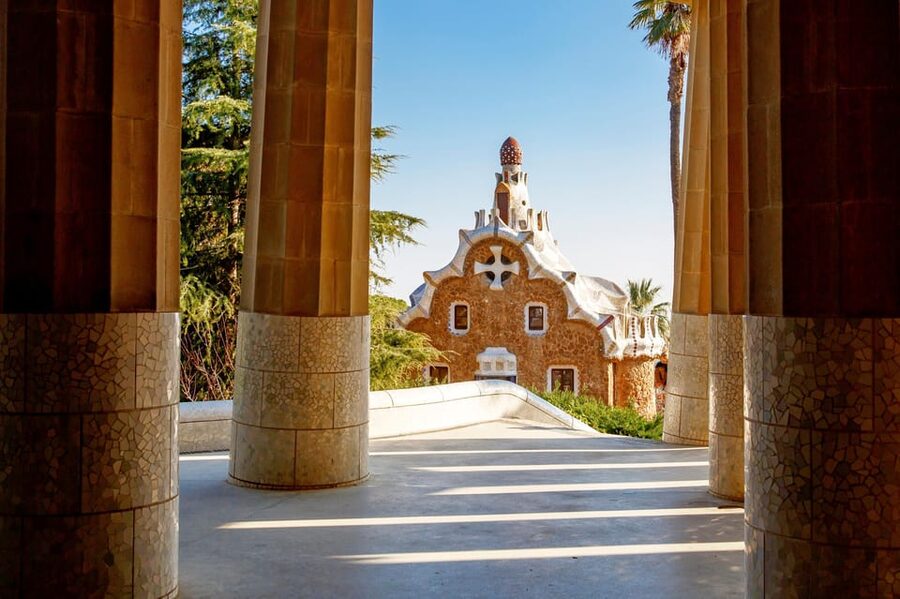
Antoni Gaudí turned a failed housing project into one of Barcelona’s most memorable public spaces. At Park Güell, you’ll find colorful tilework, twisting stone forms, giant columns, fanciful buildings, and broad views over the city. It feels part garden, part sculpture park, and part architectural experiment.
I like the freedom to explore without being tied to a group. I also like that the ticket includes the Gaudí House Museum, a small but useful look at the architect’s personal life and working methods. The main caution is physical: the park is hilly, with rough paths, ramps, stairs, and a long uphill approach from some public transport stops.
Key points to know before booking
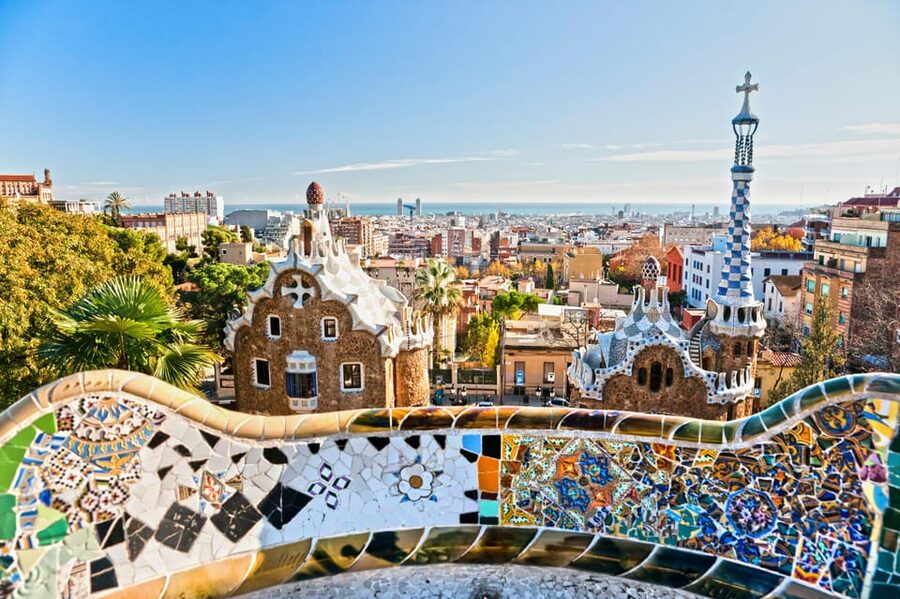
- The mosaic terrace is the visual centerpiece: Gaudí’s colorful tilework and unusual shapes make this the best-known part of the park.
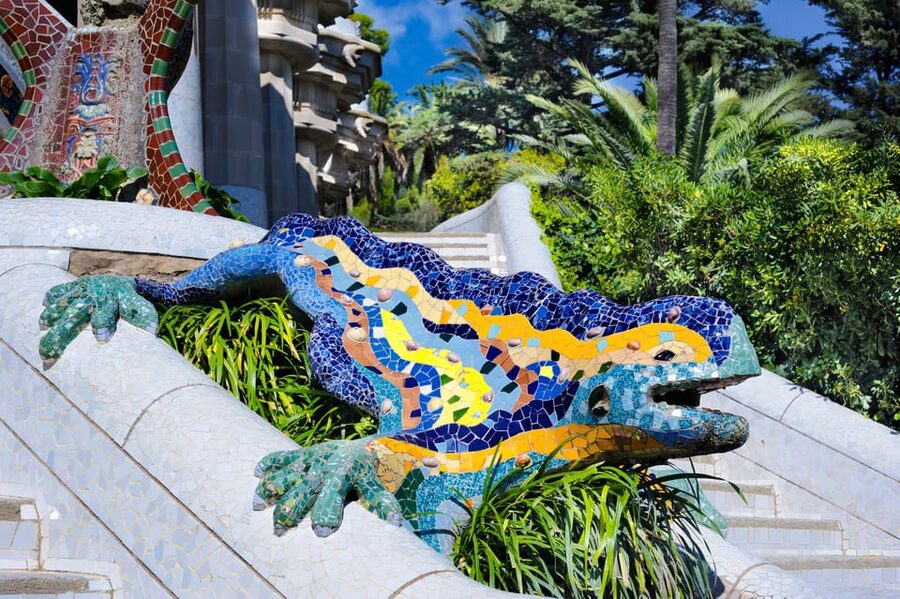
- The salamander is easy to recognize: The famous tiled creature is one of the park’s most photographed features.
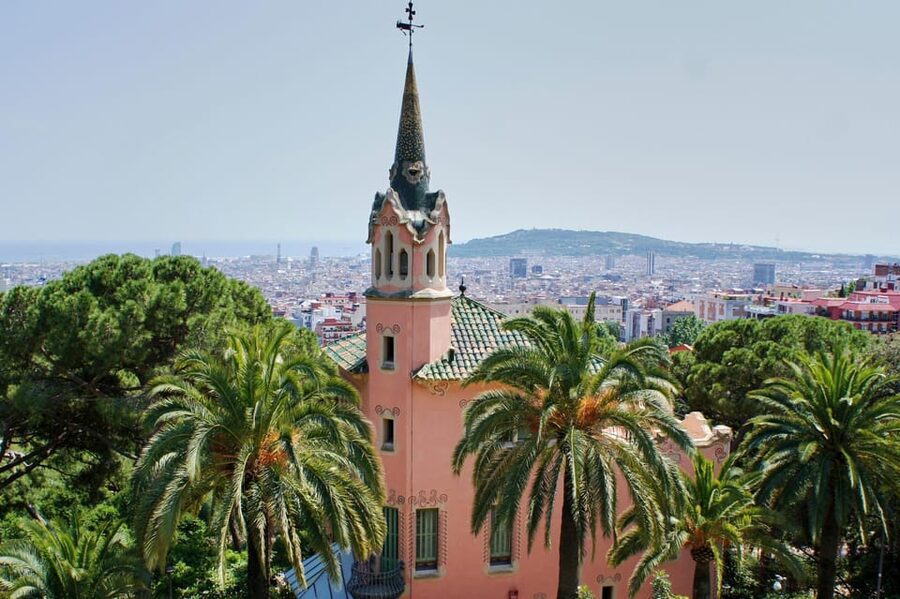
- The Gaudí House Museum adds context: Original furniture, personal objects, models, and displays explain the man behind the buildings.
- You control the pace: There is no live guide, so you can linger, take photographs, or move on when you like.
- Expect real walking: Rough surfaces, steep sections, steps, and ramps are part of the visit.
- Go early for a calmer visit: The park becomes busier around midday, and shade can be limited on hot days.
What the $33 ticket gets you
The ticket costs $33 per person and is valid for one day. It includes entry to the ticketed area of Park Güell, admission to the Gaudí House Museum, and the booking fee. You do not get a live guide, and no audio guide is promised as part of the ticket.
For many people, the value rests on the park itself. Park Güell is one of Barcelona’s signature sights, and the ticket lets you see its most famous architectural features without joining a scheduled tour. The museum is an added bonus, though you should keep your expectations in check. It is small, and some visitors feel its admission cost is high for the amount on display.
The self-guided format works well if you prefer to stop for photographs or take a quiet walk rather than follow a speaker through a fixed route. The tradeoff is that you must supply the interpretation yourself. Signage is present but not always enough to explain every detail, and an audio guide would make the unusual structures easier to understand.
More Museum Tours in Barcelona
- Barcelona: FC Barcelona Museum “Barça Immersive Tour” Ticket
★ 4.4 · 10,944 reviews - Barcelona: Picasso Museum Skip-the-Line Guided Tour
★ 4.5 · 3,355 reviews - Moco Museum Barcelona: Modern & Contemporary Art
★ 4.6 · 3,229 reviews
Reaching Park Güell without a steep surprise
Park Güell covers a large area on the hills above Barcelona. Getting there is part of the planning, not a minor detail.
From Lesseps Station on Metro Line 3, allow about 20 minutes on foot. The recommended approach uses Avinguda del Santuari de Sant Josep de la Muntanya, where an escalator helps with the climb. Follow that advice. The route from the station rises toward the park, and the final section can feel hard in hot weather or after a full day of sightseeing.
Avoid relying on Vallcarca Station on Line 3. The mechanical stairs at Baixada de la Glòria are currently out of service, which makes this approach difficult.
Bus routes H6 and D40 stop near Travessera de Dalt. From there, the walk takes about 10 minutes. You can approach through Avinguda del Santuari de Sant Josep de la Muntanya or Carrer Larrard.
The Bus Turístic and Barcelona City Tour stop on Avinguda de la Mare de Déu de Montserrat. From there, plan on roughly 10 minutes on foot, using the Carretera del Carmel entrance through Av. Pompeu Fabra.
A taxi is the easiest choice if you want to save your legs. Park Güell has taxi stands on Rambla de Mercedes and Carretera del Carmel. One useful tactic is to be dropped at the Carretera del Carmel side, begin near the higher parts, and work downhill through the park.
There are several entrances, so do not assume every gate is equally convenient for your ticket or route. Check your directions before setting out, and keep the entrance name in your phone.
Entering the monumental area
Once inside the ticketed section, Gaudí’s work appears in a concentrated burst. The park was planned as a residential development, but the housing idea never took off. What remains is an imaginative meeting of architecture, public space, plants, stone, and ceramic decoration.
The famous entrance area contains the features most people come to see. You’ll notice organic curves rather than straight, rigid lines. Columns support broad spaces above, and colorful fragments of tile cover walls, benches, and sculptural details.
The design is playful, but it is not merely decorative. Gaudí used shape, structure, drainage, shade, and movement together. Even if you know little about modernist architecture, you can see how the buildings and terraces were made to work with the hillside.
The salamander statue, often called El Drac, is one of the park’s signature sights. It sits near the stairway and is covered in bright mosaic pieces. This area can become crowded, so go early if you want a clear photograph or time to examine the tilework without being pushed along.
The mosaic terrace and Barcelona views
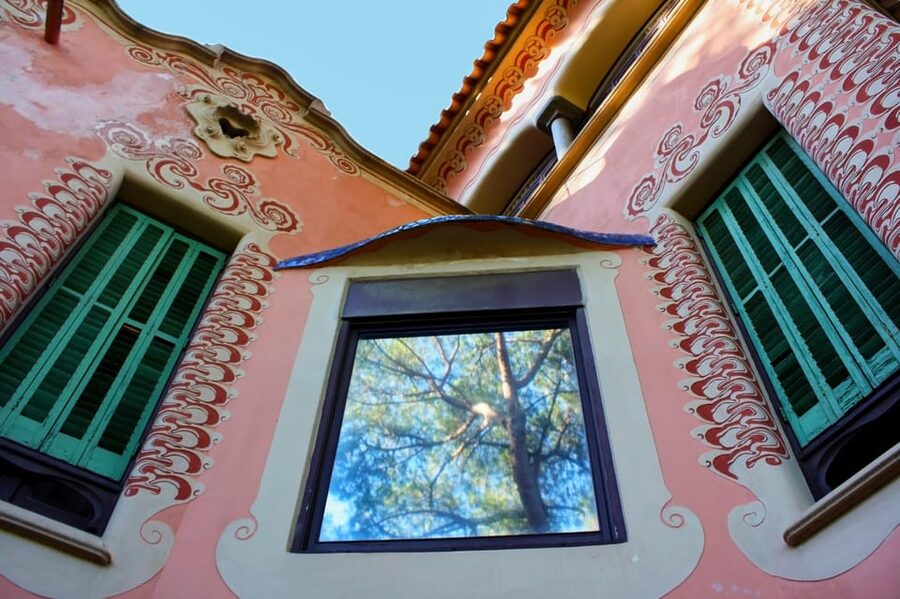
The grand terrace is the park’s best place to understand Gaudí’s sense of public space. Its curving, tiled bench follows the edge of the platform, creating a long seat with changing views across Barcelona.
From here, you can look out over the city on a clear day. The view is one of the strongest reasons to visit, but it depends on weather. Haze, rain, or strong sun can change what you see. Bring water and a hat in warm weather, since some exposed sections offer little shade.
The terrace is also where the park can feel most crowded. If you arrive around midday, expect more people around the salamander, main stairway, and mosaic seating. An early morning visit gives you more room and fresher legs. A late afternoon visit can bring softer light, but the climb may feel tougher after a day in Barcelona.
Do not stop at the terrace and leave. The park’s paths lead to other stone structures, planted areas, columns, and viewpoints. It is easy to miss sections if you follow only the most obvious route. Allow time to wander, but remember that the ground is not always smooth.
A few more museum visits around Barcelona worth comparing
- Camp Nou Immersive Tour F.C.Barcelona Museum: Open Date Ticket
★ 4.0 · 1,307 reviews - Moco Museum Barcelona Admission Ticket
★ 4.5 · 1,302 reviews - Barcelona: Wax Museum Entry Ticket
★ 4.6 · 1,189 reviews - Skip the Line: Erotic Museum of Barcelona Admission Ticket with free souvenir
★ 4.5 · 619 reviews
Walking conditions, shade, and comfort
This is not a flat city park. You will encounter steep ramps, stairs, uneven stone, and long uphill or downhill sections. Several people find the walking easy enough at a steady pace, while others are surprised by how much climbing is involved.
Wear proper walking shoes. Sandals with little grip are a poor choice on rough paths, especially if rain has made surfaces slippery. Take your time on ramps and stairs, and plan breaks near shaded areas.
Bring water before you enter. Refreshment options inside the park have been limited, and the on-site café has not always been open. There is a small gift shop and a picnic area, but you should not count on finding frequent drinks or ice cream stands as you walk.
You can find tapas bars just outside the park, which may be more useful for a proper break. If you plan to spend several hours here, eat beforehand or carry water and a small snack where permitted.
The ticket is described as wheelchair accessible, but the park’s irregular paths and steep ramps can still make movement difficult for people with reduced mobility. Accessibility at the entrance does not turn the whole site into a smooth, level route. If you use a wheelchair or have trouble with hills, check the route and entrance carefully before arrival.
The Gaudí House Museum
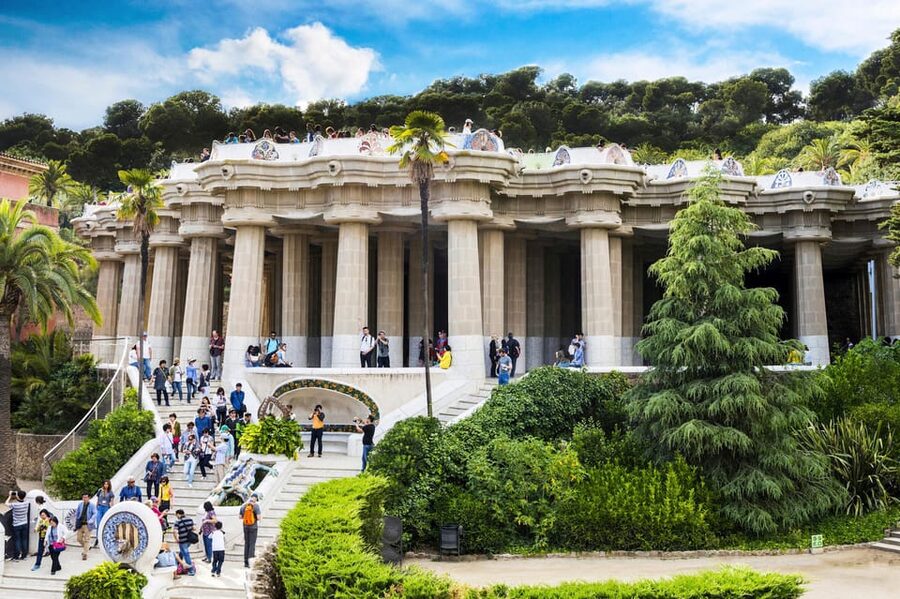
The Gaudí House Museum sits inside Park Güell and occupies the house where Gaudí lived for a period. It is much smaller than the park, but it gives the visit a human scale.
Inside, you’ll see original furniture, personal items, architectural models, and displays about Gaudí’s life and work. The museum helps explain the connection between his furniture, buildings, and larger ideas about form and function.
I find the museum most useful after seeing the park. Once you have looked at the curves, tilework, columns, and built-in seating, the objects inside give those choices more context. You can also use an interactive electronic resource showing locations and photographs of Gaudí’s work around Barcelona.
Do not expect a large museum. The collection is limited, and some of the rooms can be viewed fairly quickly. If you read the information beside each exhibit, you’ll get more from it. If you only want dramatic buildings and city views, the park will matter more to you.
Queues for the house can form even when the park itself feels manageable. Treat the museum as a separate stop rather than assuming you can walk straight in at any moment. Your ticket includes admission, but entry may still involve waiting.
Why the self-guided format works
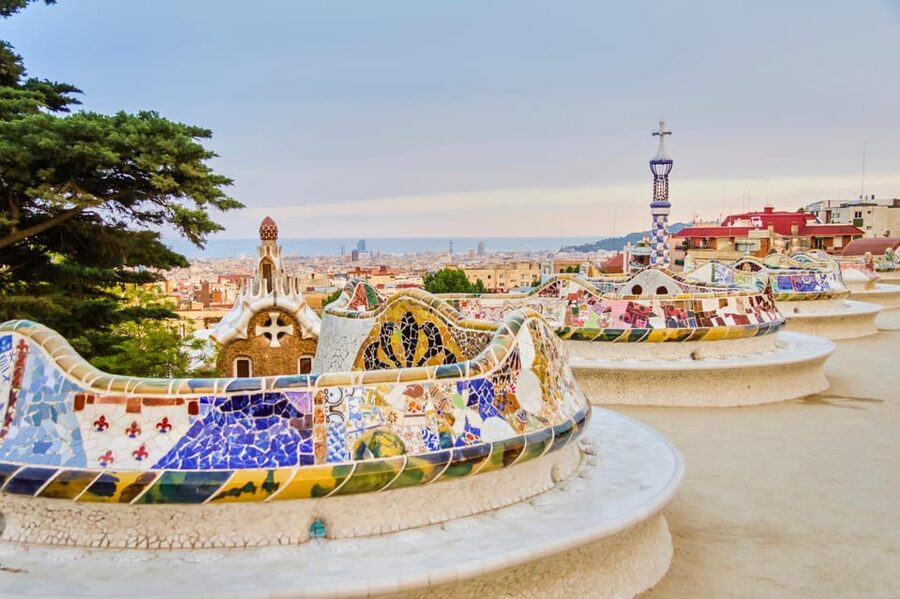
This ticket is a good match for independent sightseeing. You can arrive at your assigned time, enter without a group, and choose how long to stay in each area. You can spend five minutes photographing the salamander or much longer studying the mosaic bench and stonework.
The lack of a guide is both a strength and a weakness. It keeps the visit flexible and avoids the stop-and-start rhythm of a group tour. It also means you may miss the meaning behind details that are not clearly explained.
Some visitors have tried to use audio content through a phone and found that park Wi-Fi was not working. Do not rely on a live connection for all your information. Download anything you need in advance, or bring a guidebook with a clear map.
A better map would help. The park has enough paths and side routes that you can pass near a feature without realizing there is more to see. Before leaving, look at the map and make sure you have covered the main terrace, entrance structures, pathways, viewpoints, and museum.
Choosing the best time of day
Morning is the safest choice for comfort and crowds. You’ll have cooler air, more energy for the climb, and a better chance of seeing the main areas before noon becomes busy.
A visit around 3 p.m. can still work well, especially if you want a relaxed afternoon, but expect more people. An evening visit may be pleasant after the heat fades, though arriving after a full day of walking can make the hills feel steeper.
Weather matters. The park remains attractive in light rain, and the stone and mosaics take on a different look when wet. Heavy rain can make the paths less comfortable and reduce the city views. On a hot, sunny day, stay in the shade when you can and bring water from the city.
Plan at least a couple of hours if you want the major features and the museum. You can stay for much longer if you enjoy gardens, photography, architecture, or slow walks. The ticket is valid for one day, but it is not a guided full-day program.
Who will enjoy this ticket most
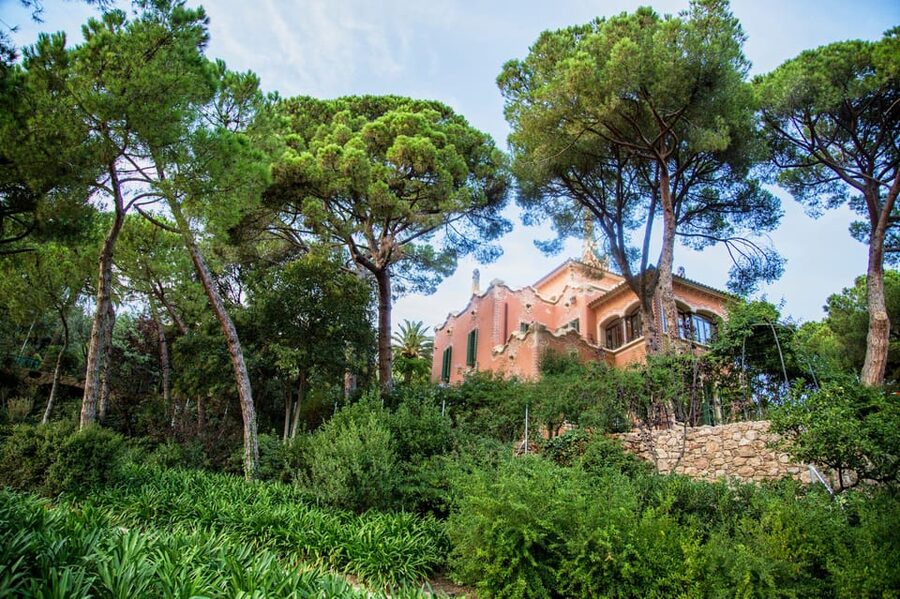
You should consider booking if you like architecture, outdoor sightseeing, photography, or self-paced visits. It is especially useful for people who want to see Gaudí beyond the Sagrada Família and Casa Batlló.
Families can enjoy the bright colors and unusual shapes, though young children may tire on the hills. The wide views and open paths offer plenty to see, but the rough surfaces require attention.
This is less suitable if you want a polished museum visit, a flat walking route, or detailed explanation at every stop. The House Museum is modest, and the park can feel physically demanding. If your mobility is limited, study the access routes carefully rather than assuming the wheelchair-accessible ticket solves every problem.
Is $33 good value?
At $33, the ticket is not cheap for a park visit. Still, Park Güell is not simply a garden with a few statues. The ticketed section contains a dense collection of Gaudí’s architectural ideas, from structural columns to mosaic surfaces and carefully shaped public spaces.
The museum improves the value for anyone curious about Gaudí’s personal life and creative process. It does not transform the ticket into a full museum experience, but it gives you useful context and takes little extra time compared with the park.
I would call the price reasonable for a first visit to Barcelona, especially if you plan to spend several hours exploring. I would be less enthusiastic if you are mainly interested in the museum, since it is small. The park is the main event.
Should you book Park Güell and the Gaudí House Museum?
Book this ticket if you want freedom, famous Gaudí design, panoramic city views, and a chance to explore at your own speed. Arrive early, use the escalator-friendly approach from Lesseps if coming by metro, wear solid shoes, and carry water.
Skip it only if steep paths and rough ground would make the visit unpleasant, or if you want a guided explanation from start to finish. For most first-time Barcelona visitors who enjoy architecture and outdoor sights, the park delivers the stronger experience, while the House Museum adds a worthwhile layer of context.
FAQ
How long is the ticket valid?
The ticket is valid for one day. Check availability for the starting time when booking.
Is a live guide included?
No. This is a self-guided admission ticket and does not include a live tour guide.
Does the ticket include the Gaudí House Museum?
Yes. Admission to both Park Güell and the Gaudí House Museum is included.
How do I reach Park Güell from Lesseps Metro Station?
From Lesseps on Metro Line 3, the walk takes about 20 minutes. The recommended entrance is on Avinguda del Santuari de Sant Josep de la Muntanya, which has an escalator.
Should I use Vallcarca Metro Station?
Vallcarca is not recommended because the mechanical stairs at Baixada de la Glòria are currently out of service.
Is Park Güell wheelchair accessible?
The activity is listed as wheelchair accessible, but steep ramps, irregular paths, and other architectural features can make movement difficult for people with reduced mobility.
Is food or drink available inside the park?
Refreshment options have been limited, and the café has not always been open. Bring water with you, especially in hot weather.
Just added around Barcelona
- Girona, Figueres, Dalí Museum and Cadaqués Tour from Barcelona★ 4.5 · 36 reviews
- Football Club Barcelona Museum Immersive Tour Guided Visit★ 3.5 · 52 reviews
- Erotic Museum Admission Ticket with Audioguide★ 5.0 · 527 reviews
- Dali Museum and Costa Brava Small Group Day Trip from Barcelona★ 5.0 · 77 reviews
- Madrid by High-Speed Train with Prado Museum Private Tour★ 4.0 · 33 reviews
- Guitar Legends Hall: Entrance to the Immersive Rock Museum★ 5.0 · 25 reviews
- White Rabbit Museum: The Best Immersive Experience in Catalonia★ 5.0 · 538 reviews
- Private Dali Museum, Besalú & Girona Tour from Barcelona★ 5.0 · 15 reviews
Museum Tours in Barcelona, compared.
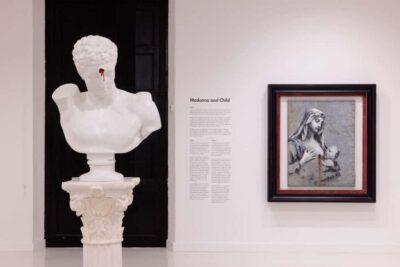
Moco Museum Barcelona: Modern & Contemporary Art
Read our review →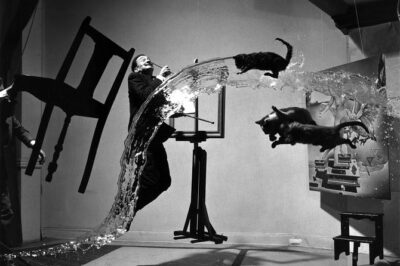
Girona & Dali Museum Small Group Tour with Pick-up from Barcelona
Read our review →
Barcelona Card: 25+ Museums and Free Public Transportation
Read our review →
Dali Museum, House & Cadaques Small Group Tour from Barcelona
Read our review →
Camp Nou Immersive Tour F.C.Barcelona Museum: Open Date Ticket
Read our review →Browse the lists this tour appears in