
Review · SPAIN
Santiago de Compostela Cathedral and Museum Guided Tour
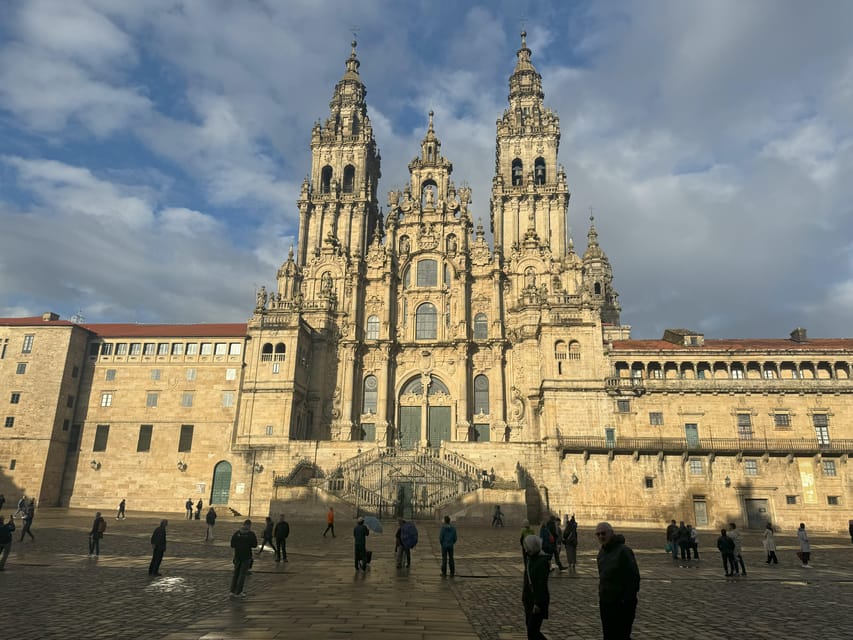
Santiago de Compostela Cathedral is not simply a grand church at the end of a famous pilgrimage route. It is the reason the city exists in its present form, and this tour helps you connect the building, the Apostle Saint James, and the pilgrims who have arrived here for centuries. The visit begins in the Cathedral Museum, then moves into the cathedral itself, including the tomb, crypt, chapels, artworks, and other major spaces.
I like the way the two-hour route joins art with religious meaning, rather than treating the cathedral as a collection of pretty stonework. I also like the practical advantage of a separate entrance, which can save time at a busy monument. The main drawback is that large backpacks are not allowed, and the tour is not suitable for wheelchair users. Your meeting point can also vary with the option you book.
Key points to know before booking
- The museum comes first: You start with the cathedral’s story and major artworks before entering the church.
- Saint James is central: The tour includes the Apostle’s tomb and the crypt beneath the main altar.
- You see more than the nave: Chapels, Treasury, Chapter House, cloister, Botafumeiro, and balcony views are included in the planned visit.
- Guides make the difference: Carmen, Maria, Laura, Miriam, Alberto, and Elena have all been praised for clear explanations, strong language skills, and a personal connection to Santiago.
- Good value at $29: For two hours of guiding plus museum admission, this is a sensible choice if you want context rather than a quick look inside.
- Plan around practical limits: Large backpacks are banned, accessibility is limited, and the meeting point depends on your booking option.
Why the museum is the right place to begin
Starting in the Cathedral Museum gives the visit a useful shape. Instead of walking straight into the church and trying to absorb its size, you first learn what you are looking at and why it matters.
The museum introduces the cathedral’s development, its religious importance, and its principal works of art. You can expect attention to sacred objects, artistic details, and the way Santiago grew around the shrine of Saint James. For you, this matters because many pieces in a church museum can seem remote without an explanation. A guide can point out what to notice, connect an object to a period of construction, and explain its place in worship.
The museum also helps you read the cathedral as more than one building. Santiago’s importance comes from its role as a pilgrimage destination, but the cathedral has been altered and expanded over time. The tour presents that long development before taking you into the main church.
This is especially useful if you have only one day in Santiago. A quick visit can show you the scale of the building, but it may not explain why the city became one of Europe’s great pilgrimage centers. The guide’s context gives the stones a purpose.
Several guides have been singled out for their handling of this material. Alberto, described as a Spanish native and art history student, was praised for explaining both the art and the place of the Church in Spain. Elena was appreciated for her grasp of architecture and her connection to Santiago, including her own experience as a pilgrim. Those details suggest the strongest guides do more than recite dates. They help you see how the cathedral still functions as a living religious destination.
More basilicas and cathedrals in Spain:
- Santiago: Cathedral & Museum Tour + Pórtico of Glory Option
★ 4.7 · 2,116 reviews - Santiago de Compostela: Cathedral, Museum, and Old Town Tour
★ 4.8 · 382 reviews - Girona: Cathedral of Girona + Art Museum + St. Felix Church
★ 4.6 · 158 reviews
Entering the cathedral and reading its grand scale
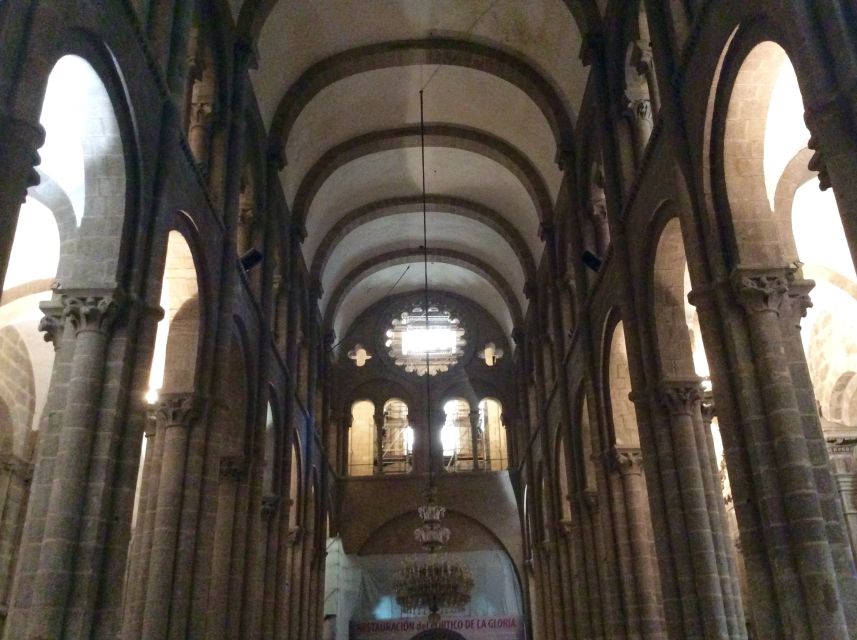
After the museum, the route enters Santiago Cathedral. This change in setting is important. The museum gives you close views and background; the church gives you scale, ceremony, and the visual force of the pilgrimage destination itself.
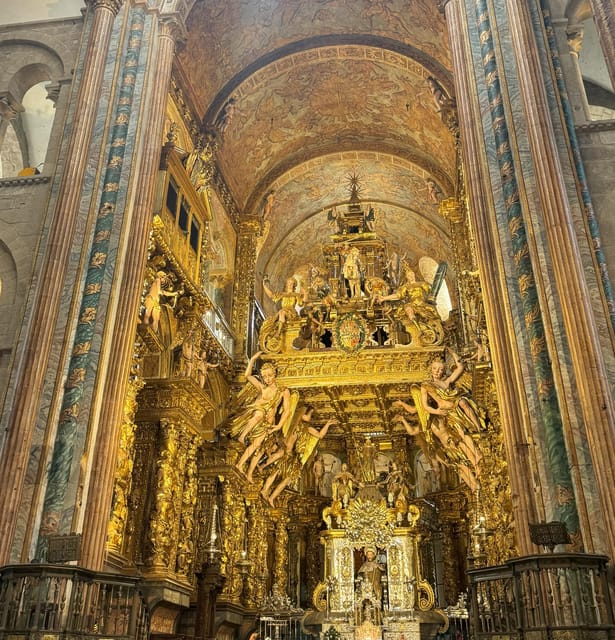
You walk through the naves and look at the chapels arranged around the main altar. Each chapel adds another layer to the building’s religious and artistic story. A guide can help you avoid the common mistake of looking only toward the center. The side chapels, altars, carvings, and devotional details are where much of the cathedral’s character is found.
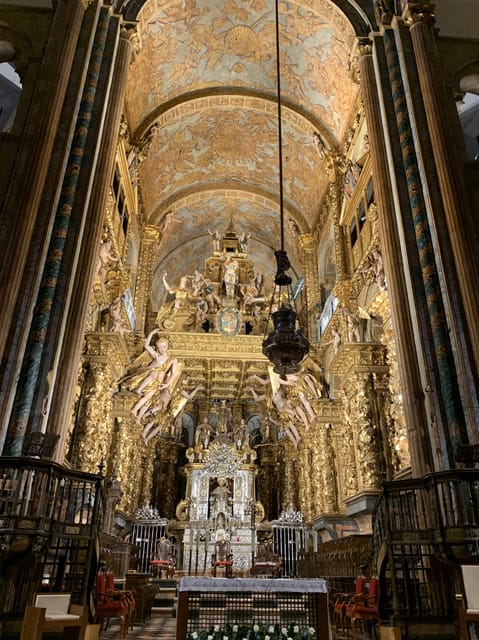
The main altar is the focus of the building, and the tour explains its connection with Saint James. The itinerary includes the chance to approach and honor the Apostle, then visit the crypt below. For people arriving in Santiago after walking part of the Camino, this can be the emotional center of the visit. Even if you have not walked the route, the tomb explains why this particular church has drawn pilgrims for so long.
The cathedral’s recently restored interior is another reason to take a guided visit. Restoration can change what you notice, and a guide can explain the building’s condition and renewal more clearly than a printed label. An earlier visitor noted that restoration once affected the experience, but still found the museum and guide worthwhile. The current description presents the cathedral as recently restored, though particular access arrangements can always depend on the day.
Saint James, the crypt, and the meaning of pilgrimage
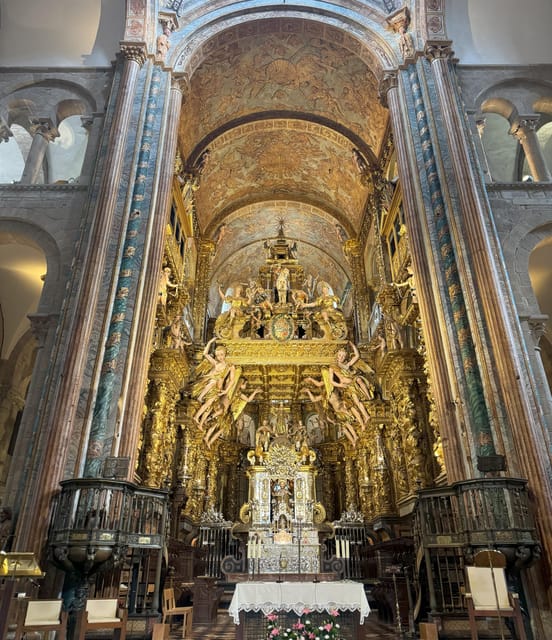
The tomb of Saint James is not an incidental stop. It is the spiritual reason for the cathedral and the key to understanding Santiago.
The tour treats the Apostle’s presence through several connected spaces: the main altar, the tomb, and the crypt. This helps you understand the cathedral from the inside out. The upper church is designed for public worship and ceremony, while the crypt focuses attention on the sacred remains below.
You do not need to be religious to find this part worthwhile. The pilgrimage has shaped the city’s architecture, streets, businesses, and identity. A guide can explain why people have traveled to this corner of Galicia for centuries and why the cathedral remains meaningful to pilgrims today.
The best part of a guided explanation here is its balance. You can appreciate the devotional purpose while also looking at the history, art, and architecture. Guides such as Miriam have been praised for telling stories and adding facts that even repeat visitors had not heard before. That is a useful sign for anyone who has already visited the cathedral once and wonders if a formal tour would add anything.
If you are visiting after completing the Camino, allow yourself time to absorb this section. The two-hour schedule includes many stops, so the guide has to keep the group moving. You will learn more than you would alone, but this is not a long silent meditation at the tomb.
Chapels, sacred art, and the details you might miss
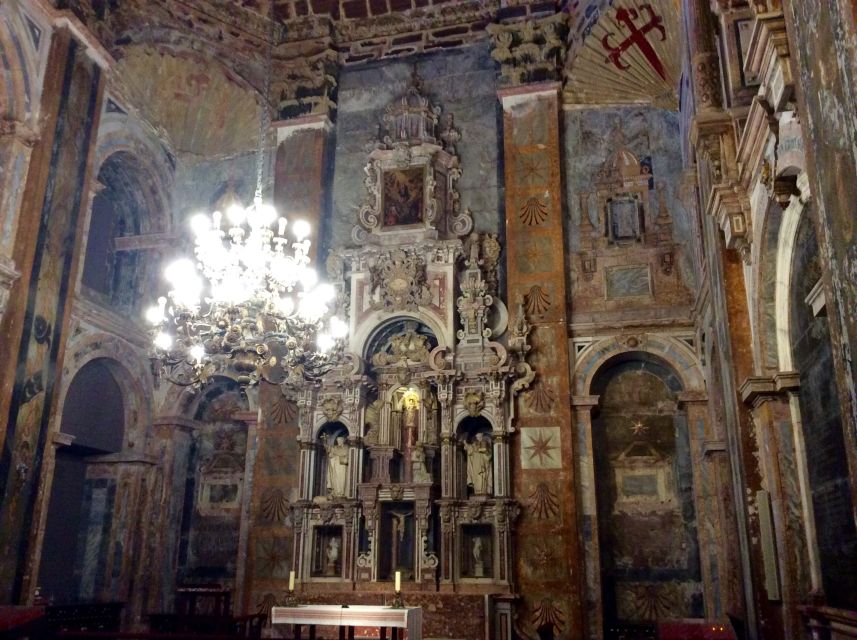
The cathedral’s chapels provide much of the tour’s art focus. The guide points out decorative details, sacred images, and notable works that can be easy to pass without explanation.
This is where the museum visit pays off. You have already received some background on the cathedral’s art, so you can better understand how the objects and spaces work together. Instead of seeing a chapel as one more decorated room, you begin to notice its layout, purpose, and visual program.
I would recommend this tour to anyone who likes art but does not have a specialist background. The guide’s job is to select the important details and explain them in ordinary language. Elena’s background in art and history, and Alberto’s study of art history, are examples of the sort of preparation that can make a complex church easier to read.
The language choice also matters. Tours are offered in English, Spanish, Italian, Portuguese, and French. Maria has been praised for speaking excellent Portuguese, while Carmen has handled information in both English and Spanish. If you are booking in a language other than English, check the available option carefully before paying.
Small-group availability is another plus. The exact group size is not specified, so do not assume you will have a private tour. Still, a small group generally makes it easier to hear the guide, ask questions, and keep up as you move between museum rooms and cathedral spaces.
A few more museum visits around Spain worth comparing
- Barcelona: Picasso Museum Skip-the-Line Guided Tour
★ 4.5 · 3,355 reviews - Madrid: Prado Museum Guided Tour with Skip-the-Line Ticket
★ 4.5 · 2,018 reviews - Madrid: Prado Museum Guided Tour With Fast Access
★ 4.8 · 1,785 reviews - Royal Palace & Prado Museum Skip the Line Guided Tour
★ 4.5 · 1,347 reviews
The Codex Calixtinus and the cathedral’s treasures
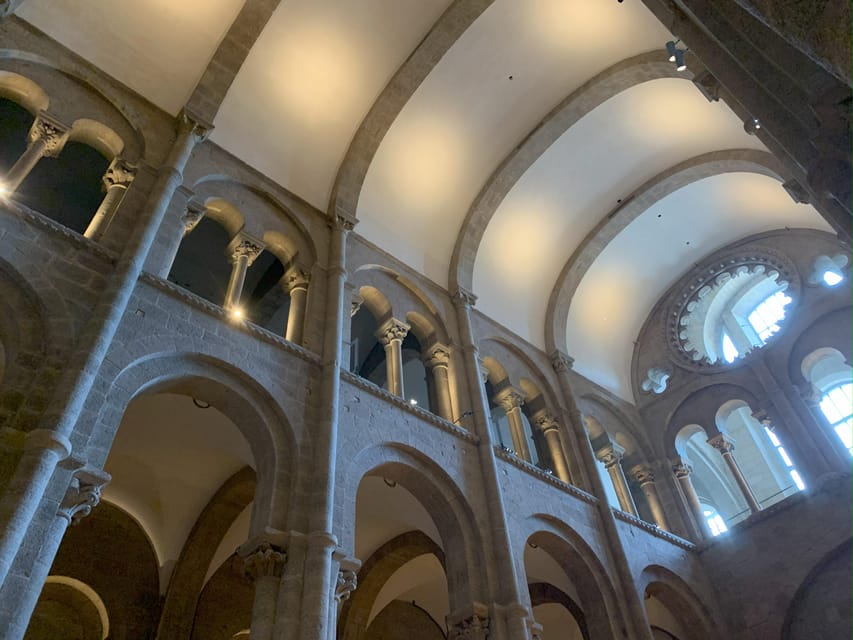
The route is designed to include more than the main worship area. It also takes in the Treasury, Chapter House, and the famous Codex Calixtinus.
The Codex is particularly relevant to the pilgrimage story. Its name is closely tied to the tradition and organization of the Camino, so seeing it in the cathedral museum gives you a link between the modern walking route and the written record of pilgrimage. You will get more from this stop if you ask the guide how the manuscript relates to Santiago’s role as a destination.
The Treasury and Chapter House add a more formal side to the cathedral. These spaces show the wealth, administration, and ceremonial life connected with a major religious institution. They also widen the visit beyond the familiar image of pilgrims entering the nave.
Access to these areas is a strong reason to choose a guided tour rather than simply walking into the cathedral. You may be able to see the main church on your own, but the significance of specialized rooms and objects is much harder to grasp without explanation. The exact order and access can vary, so treat the published route as the intended scope rather than a guarantee that every room will feel equally spacious or open on your date.
Botafumeiro, cloister, and views from above
The Botafumeiro is one of the cathedral’s best-known features. This huge incense burner is tied to the cathedral’s liturgical tradition and is an important part of its visual identity. The tour includes it as one of the things you will see, though the description does not promise a live swinging ceremony during your visit.
That distinction matters. You can expect an explanation and a view of the Botafumeiro, but do not book this tour solely on the hope of seeing it in motion. Its use is connected to particular religious services and occasions, and no schedule is provided here.
The cloister offers a different atmosphere from the busy central church. Its architecture is quieter and more enclosed, giving you a chance to notice proportions, stonework, and the relationship between religious life and the cathedral complex.
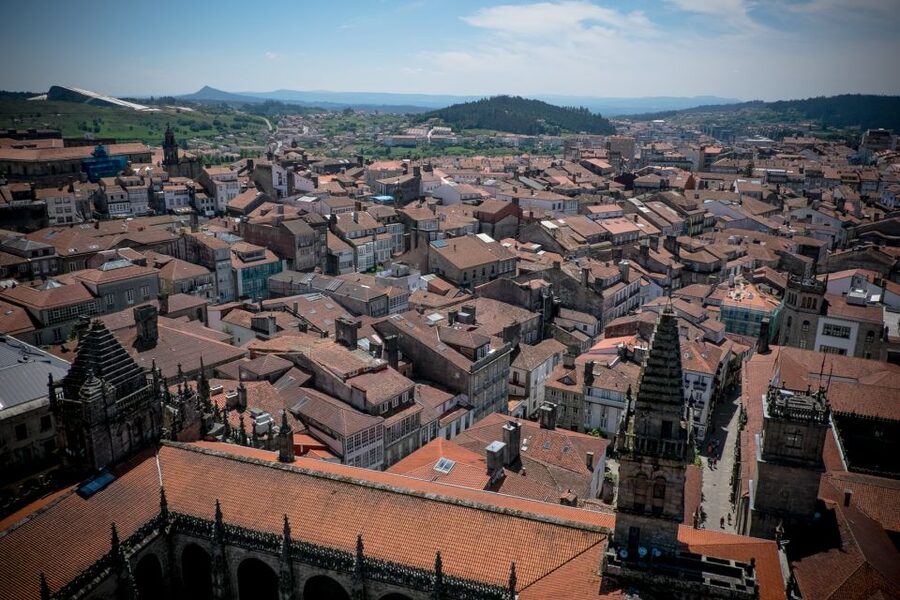
The itinerary also mentions balcony views. These can help you understand the cathedral’s placement in Santiago and give you a different perspective on the building. Since the tour includes several areas in two hours, the time at each stop may be fairly controlled. Martin from Australia appreciated that the guide allowed enough time at each stage, but the experience will still suit you best if you prefer a well-paced overview to lingering for long periods at one object.
How the guides shape the experience
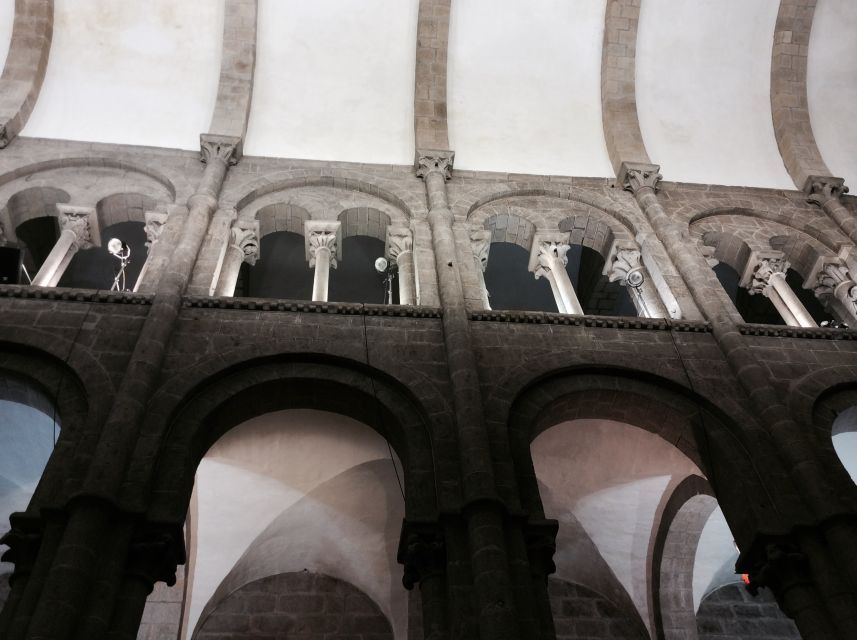
The guide is the most important variable in a tour like this. A cathedral has plenty to see, but its meaning depends on the person helping you connect the parts.
Carmen receives especially strong praise for combining detail, professionalism, humor, and warmth. Several people found that she brought both museum and cathedral to life, while others appreciated that she took her time and made sure the group kept up. Maria has been praised for clear explanations and for guiding in Portuguese. Laura is remembered for making historical information fun and easy to follow.
Miriam’s approach appears well suited to repeat visitors. Her storytelling and small facts added something new for someone who had already visited the cathedral twice. Elena has been valued for her architectural knowledge, love of Santiago, strong English, and personal experience as a pilgrim.
You should not assume that one particular guide will be available unless your booking specifically confirms it. The useful point is that the tour has a record of guides who can handle history, art, religion, and questions in several languages. A guide who can answer questions is especially valuable here because the cathedral combines several subjects at once.
Is $29 a fair price?
At $29 per person, this tour is good value if you want the cathedral explained rather than merely entered. The price includes the guided visit and admission to the Cathedral Museum, with a two-hour route through the museum and church.
The value comes from the range of material covered. You are not paying only for a short look at the nave. The planned visit includes the museum, tomb of Saint James, crypt, chapels, Treasury, Chapter House, Codex Calixtinus, Botafumeiro, cloister, and balcony views.
A self-guided visit may cost less in time and planning, but it will not give you the same running explanation. You might walk past important works without knowing why they matter. The separate entrance can also be useful when queues are long, though it does not mean every part of the visit will be immediate or uncrowded.
This tour is especially worthwhile for first-time visitors, people with a single day in Santiago, art lovers who want guidance, and pilgrims who want to understand the destination they have reached. It is less suitable if you prefer wandering alone, need wheelchair access, or want a slow photographic visit with no fixed pace.
Book with a little practical care. Large backpacks are not allowed, so carry only what you need. The meeting point varies by booking option, and free cancellation is available up to 24 hours before the tour. You can also reserve now and pay later, which helps if your Santiago plans are still moving.
Who should book the Santiago Cathedral and Museum tour?
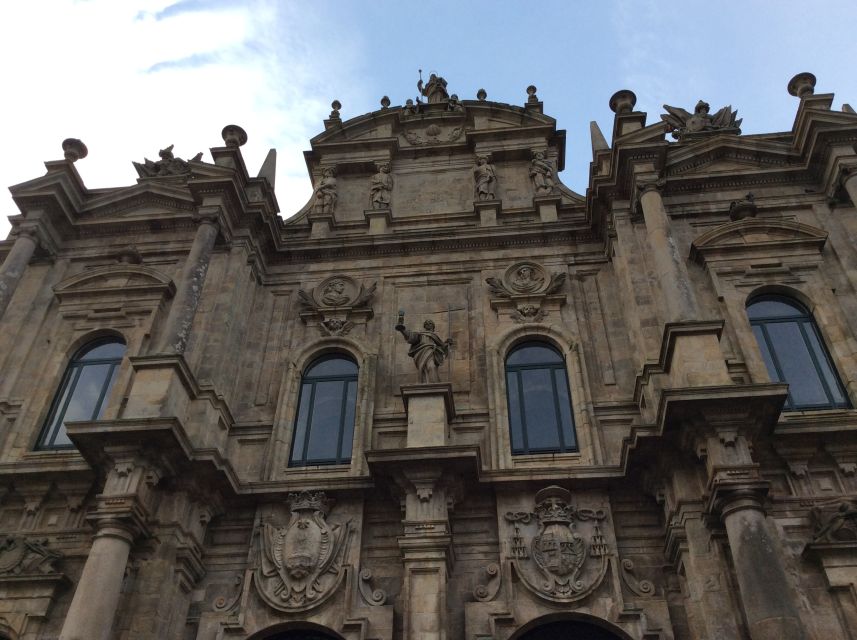
Book it if you want the story behind the stone. The museum gives you preparation, the cathedral gives you scale, and the tomb and crypt explain the city’s purpose.
I would choose this tour over a quick independent visit if Santiago is a major stop on your trip, especially after walking the Camino. I would also choose it for a first visit when time is short, since the guide organizes a large amount of history, art, and religious context into two hours.
Think twice if you use a wheelchair, carry a large backpack, or dislike moving with a group. The route covers many spaces, and the meeting details vary by option. But for most able-bodied visitors who want a clear introduction to Santiago’s defining monument, $29 is a sensible spend.
FAQ
How long is the Santiago Cathedral and Museum Guided Tour?
The tour lasts two hours.
What does the tour include?
It includes a guided tour and admission to the Santiago de Compostela Cathedral Museum.
Does the tour visit Saint James’s tomb?
Yes. The itinerary includes the tomb of Saint James the Great and the crypt.
Which areas of the cathedral are included?
The planned visit includes the naves, chapels around the main altar, Treasury, Chapter House, Botafumeiro, cloister, and balcony views.
Can I see the Codex Calixtinus?
Yes. The tour description includes a visit to the famous Codex Calixtinus.
What languages are available?
Live guided tours are available in English, Spanish, Italian, Portuguese, and French.
Is the tour suitable for wheelchair users?
No. The activity is listed as unsuitable for wheelchair users.
Can I cancel the booking?
Yes. You can cancel up to 24 hours in advance for a full refund. Reserve now and pay later is also available.
Just added around Spain
- Girona, Figueres, Dalí Museum and Cadaqués Tour from Barcelona★ 4.5 · 36 reviews
- Football Club Barcelona Museum Immersive Tour Guided Visit★ 3.5 · 52 reviews
- Erotic Museum Admission Ticket with Audioguide★ 5.0 · 527 reviews
- Dali Museum and Costa Brava Small Group Day Trip from Barcelona★ 5.0 · 77 reviews
- Madrid by High-Speed Train with Prado Museum Private Tour★ 4.0 · 33 reviews
- Guitar Legends Hall: Entrance to the Immersive Rock Museum★ 5.0 · 25 reviews
- White Rabbit Museum: The Best Immersive Experience in Catalonia★ 5.0 · 538 reviews
- Private tour: Dali Museum in Figueres and Púbol Tour with Hotel pick-up★ 5.0 · 12 reviews
Museum Tours in Spain, compared.
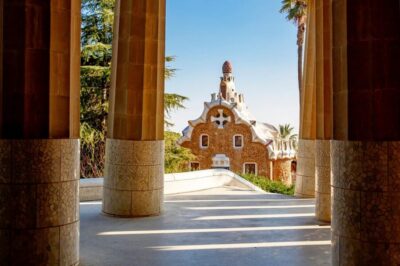
Park Güell and Gaudí House Museum Entry Ticket
Read our review →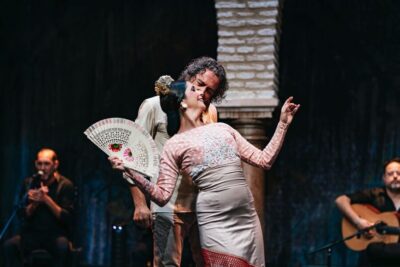
Puro Flamenco Show with Optional Museum Ticket
Read our review →
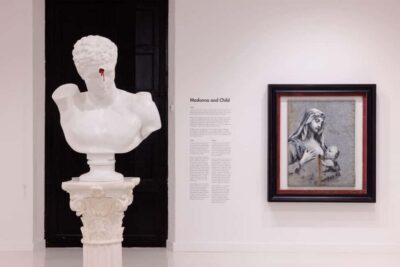
Moco Museum Barcelona: Modern & Contemporary Art
Read our review →
Girona & Dali Museum Small Group Tour with Pick-up from Barcelona
Read our review →
Valencia: Oceanogràfic, Hemisfèric & Science Museum Combo
Read our review →Browse the lists this tour appears in