
Review · PARIS
Paris: Orsay Museum Masterpieces Guided Tour
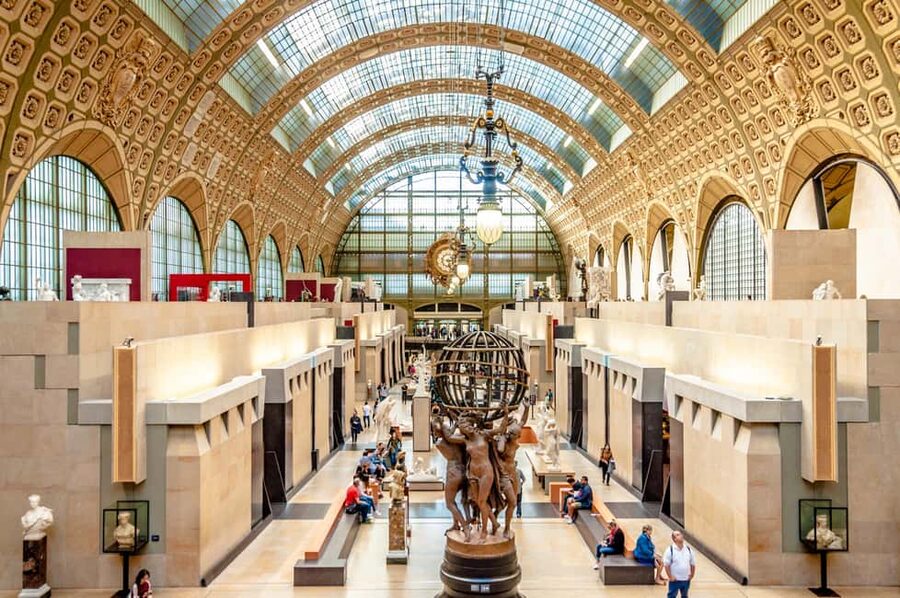
The former railway station that houses the Musée d’Orsay gives this tour an immediate sense of occasion. Inside, you move through one of the world’s largest collections of Impressionist and Post-Impressionist art, from Monet’s shifting light to Van Gogh’s restless skies. I like the reserved museum entry and the way an art historian gives the paintings a human and political setting. I also like the choice between a group of 25 and a semi-private group of six.
The catch is that two hours goes quickly in a museum this large, especially when the galleries are crowded. You will see the major works, but you will not cover every room. The museum also has limited air conditioning, and the tour is not suitable for wheelchair users, strollers, or visitors who need special assistance.
Key points to know
- Meet beneath the elephant statue: The guide waits in the courtyard outside the main entrance at 5 Rue de la Légion d’Honneur.
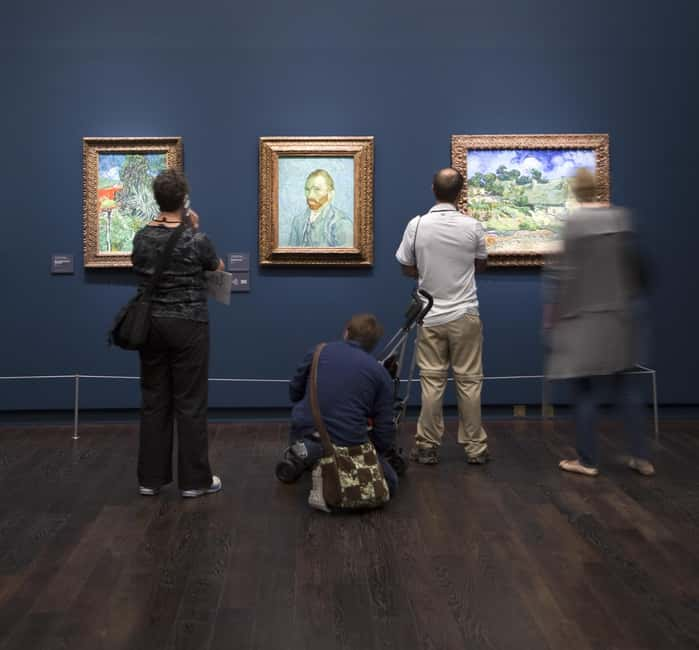
- See the essential masterpieces: The route includes works by Van Gogh, Renoir, Monet, Cézanne, Degas, and Manet.
- Choose your group size: The standard group holds up to 25 people, while the semi-private option is limited to six.
- Expect a real art lesson: Guides explain technique, artistic ideas, politics, personalities, and the period’s difficult reception.
- Plan for plenty of walking: Comfortable shoes matter, and backpacks, large bags, luggage, strollers, and flash photography are not allowed.
- Allow more time afterward: The two-hour route gives you a useful map of the museum, but you may want extra time to return to favorite galleries.
Why the Musée d’Orsay works so well with a guide
The Musée d’Orsay is not just a container for famous paintings. It is a grand former railway station, with a vast central space, a prominent clock, and a building whose original purpose helps explain its scale. You enter through an old transportation hub and then move into a collection that changed how European art was made and viewed.
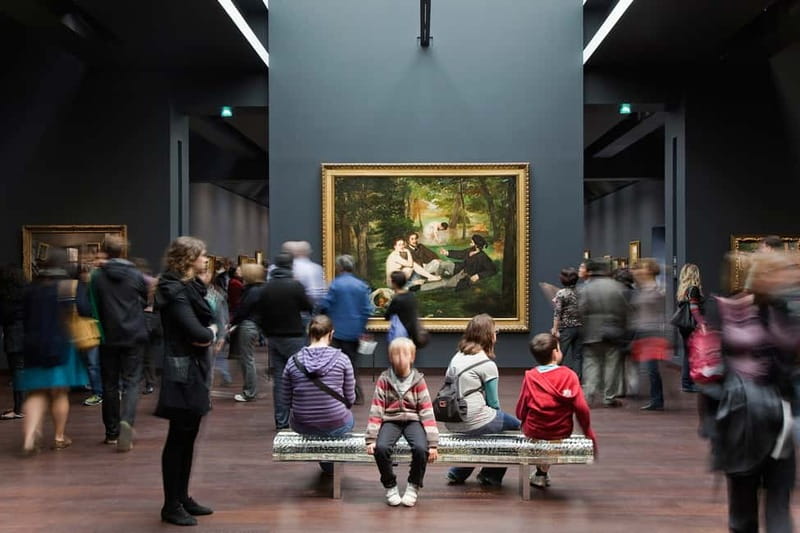
That setting matters. The Impressionists were not working in an artistic vacuum. They were reacting to official taste, new city life, changing technology, photography, and the pressure to paint modern subjects rather than repeat old formulas. A good guide helps you see those links instead of treating each canvas as an isolated pretty picture.
That is the main reason I would consider this tour instead of simply walking in with an audio guide. The paintings are famous enough to recognize, but their importance is easier to grasp when someone explains what made them controversial. The best guides on this experience, including Anais, Blerta, Hamish, Abed, Addy, Erwan, Florence, and others, have been praised for clear explanations, historical context, humor, and an ability to answer questions.
You should still keep your expectations in check. This is a highlights tour, not a full study of the museum. If you want long, quiet periods in front of every painting, a self-guided visit after the tour will suit you better.
More Museum Tours in Paris
- Paris: Louvre Museum Timed-Entrance Ticket
★ 4.6 · 71,977 reviews - Paris: Orsay Museum Entry Ticket
★ 4.7 · 25,647 reviews - Louvre Museum Masterpieces Guided Tour with Access
★ 4.5 · 12,023 reviews
Meeting at the elephant statue
The meeting point is in the courtyard in front of the museum’s main entrance, at 5 Rue de la Légion d’Honneur. Look for the large elephant statue. Your guide waits at its foot with a company sign.
This is a useful detail because the Musée d’Orsay has several recognizable sides, and arriving at the wrong entrance can waste precious time. The river-facing building has two large clocks and sits along Quai Anatole France. The meeting courtyard is between the quay and Rue de la Légion d’Honneur.
The easiest public transport option is usually the RER C station named Musée d’Orsay. You can also take Metro Line 12 to Solferino. From Solferino, leave by exit 2, marked Musée d’Orsay, then turn left and walk up Rue de Bellechasse.
There is no transportation included, so you make your own way to the museum. For a taxi, ask to be dropped at the Musée d’Orsay entrance. Build in a little extra time for finding the courtyard, especially if this is your first morning in Paris.
Inside a former railway station
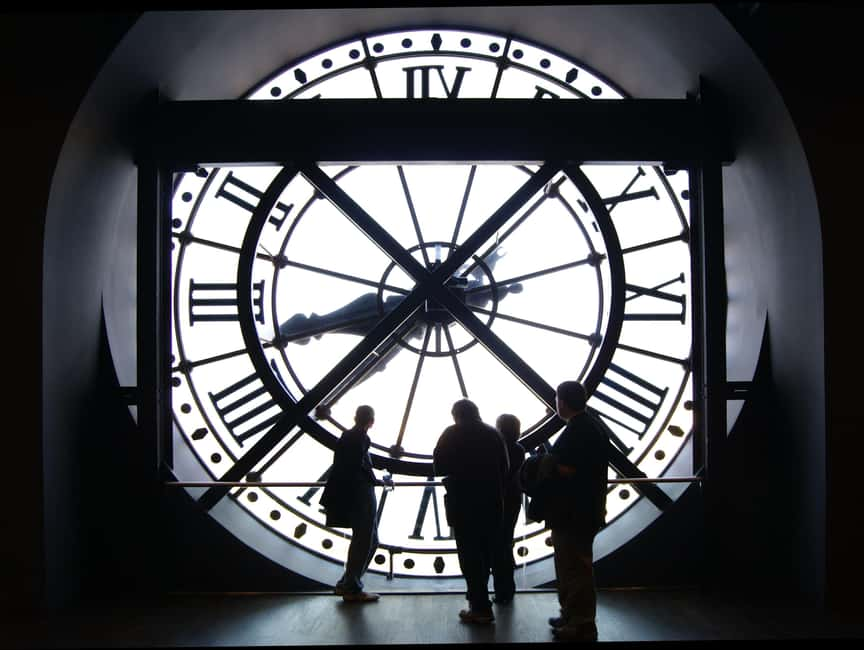
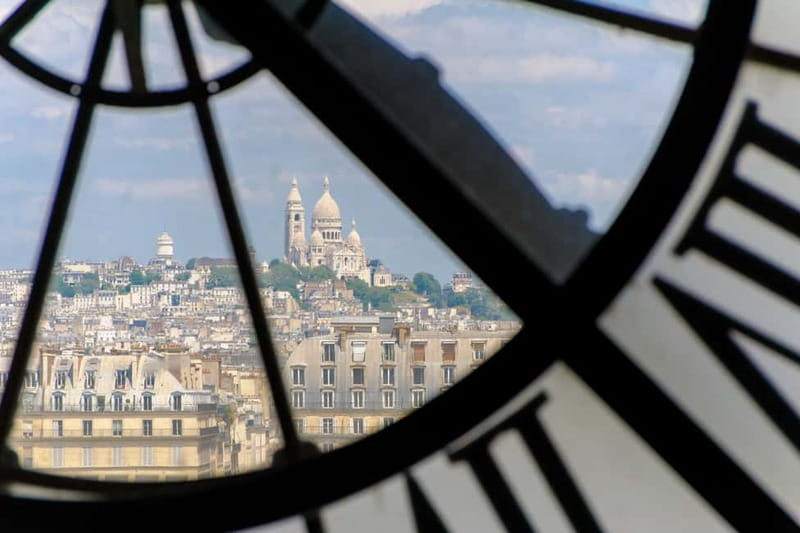
Once the group enters, the building itself becomes part of the tour. The museum’s Beaux Arts design is grand without feeling as overwhelming as the Louvre. The old station gives you a clear central axis, and the large clock windows provide memorable views into the city.
Your guide leads you through the main highlights rather than leaving you to guess which rooms matter most. That is valuable if you have only a short stay in Paris. You will not spend half an hour searching for a particular Van Gogh or wander into a room without knowing why it matters.
The route centers on Impressionist and Post-Impressionist works. Expect attention to Monet, Renoir, Manet, Degas, Cézanne, and Van Gogh. The exact order can change because museum rooms and crowd levels are not always predictable, but the purpose stays the same: connect major artists and show how ideas developed from one painter to the next.
The museum can be busy during standard hours. Reserved entry helps reduce time spent in the ticket line, but it does not make the galleries empty. You may need to stand to one side while the guide speaks, and you might occasionally wait for a clear view of a painting.
The paintings you come to see
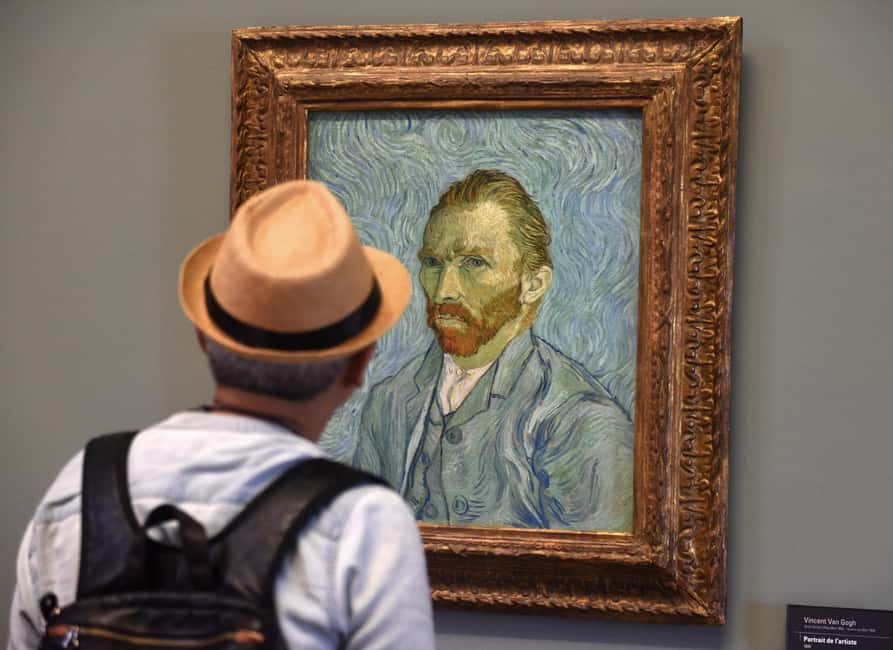
Van Gogh’s Starry Night over the Rhône is one of the major stops. It gives the guide a chance to discuss color, brushwork, night scenes, and the emotional force Van Gogh brought to ordinary subjects. Seeing the actual surface of a Van Gogh painting is different from seeing a small reproduction on a screen, so give yourself a moment to look before listening for every detail.
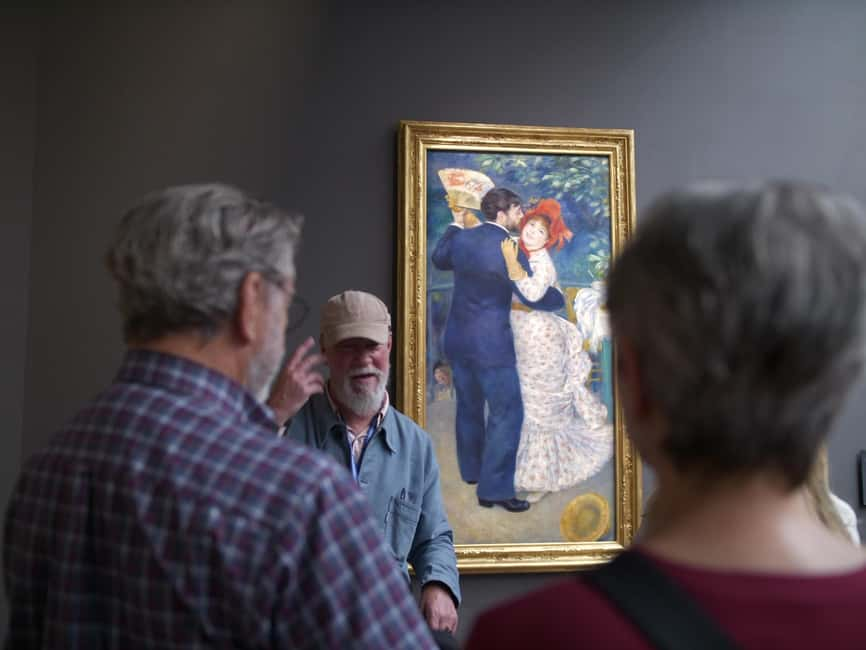
Renoir’s Dance at Le Moulin de la Galette presents another kind of modern life. Its crowded Parisian Sunday scene is full of movement, light, fashionable clothing, and social energy. The guide can help you notice how Renoir handled a group of people without turning the painting into a stiff arrangement of posed figures.
Monet’s work lets you follow the Impressionist interest in changing light and quick visual impressions. The point is not simply that the paintings are colorful. It is that these artists asked you to look at a moment rather than a perfectly polished version of reality.
Cézanne offers a different path. His paintings help explain the move toward more structured, less naturalistic forms. Manet and Degas add still more variety, from modern subjects to sharp observations of Parisian life and performance.
The guide’s role is especially useful here. A painting may look simple until you learn what it rejected, what it borrowed, or why people once objected to it. Several guides on this tour have been praised for explaining technique in plain English and for connecting art to French politics, personalities, and social change.
A few more museum visits around Paris worth comparing
- Paris: Orsay Museum Entry Ticket and Digital Audio Guide App
★ 4.4 · 3,170 reviews - Paris: Musée d’Orsay Skip-the-Line Tour with Expert Guide
★ 4.5 · 1,145 reviews - The Musée d’Orsay Guided Tour Orsay Museum Semi-Private 6ppl Max
★ 5.0 · 904 reviews - Louvre & Musée d’Orsay Guided Museum Tour Semi-Private 6ppl Max
★ 5.0 · 619 reviews
What the two-hour route feels like
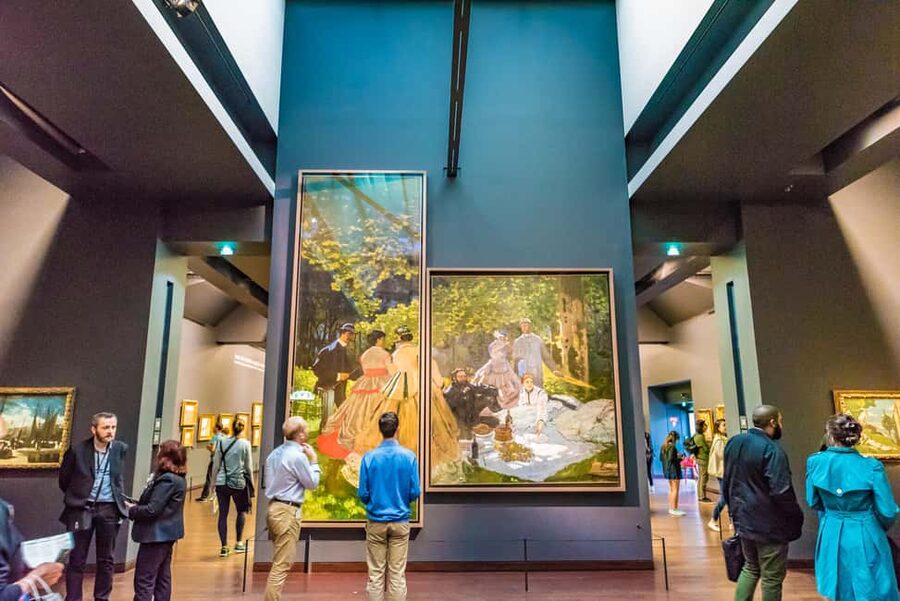
The schedule is compact. You spend two hours walking, listening, stopping at key works, and moving between rooms. This is not a slow sketching session, and it is not designed for sitting in front of one canvas for twenty minutes.
I like that pace for a first visit. The museum can be hard to judge from a map, and a guided route gives you a sensible first look. You come away knowing which artists you want to see again and where to return afterward.
Several guides have earned praise for keeping a good speaking pace and making room for questions. That matters in a museum, where a rushed guide can turn every painting into a stack of dates and names. Anais has been singled out for explaining painting techniques and historical context, while Blerta has been praised for combining art history with practical observations as an artist herself. Hamish handled audio equipment trouble calmly, and Addy was noted for involving children in the discussion.
Those details point to a useful strength of this tour: the experience depends partly on your individual guide. The guide names can vary, so you cannot count on receiving a particular person. Still, the pattern is clear. The successful guides do more than recite labels. They tell stories, explain visual choices, and respond to the group.
Headsets are provided when necessary. They can make a real difference when the galleries are noisy or the group is spread out. Equipment can occasionally cause trouble, so stay close enough to your guide that you can follow along if the sound needs attention.
Group size: 25 people or six
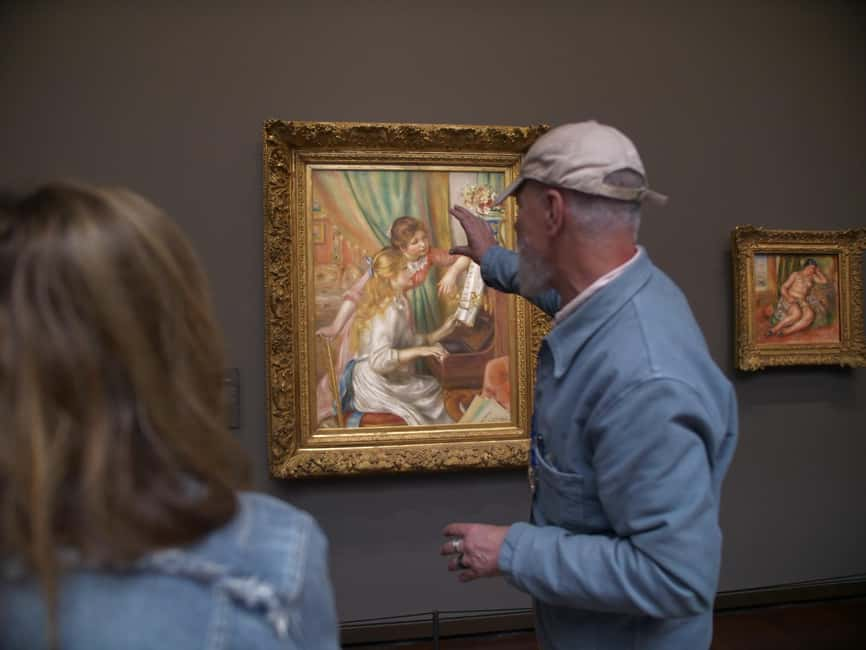
The regular group can include up to 25 people. That is a reasonable size for keeping the price at $60 per person, but it will not feel private. You may need to position yourself near the guide, and late arrivals can find it harder to hear or see.
The semi-private option is limited to six people. I would choose this if you care about asking questions, want a more flexible rhythm, or are visiting with family or close friends. A small group also makes it easier for the guide to point out details without blocking a large patch of gallery space.
The larger group makes more sense if you want the essential route at the lowest available tour price. At $60, you are paying for museum admission, reservation fees, an English-speaking art historian, and a structured two-hour visit. It is not the cheapest way to enter the museum, but it can be good value if you would otherwise lose time in line or feel unsure about what to see.
The value is strongest for a first visit and a short Paris stay. If you already know Impressionist art well, or if you plan to spend half a day studying the collection on your own, the guided portion may feel too brisk.
Practical limits inside the museum
Wear comfortable shoes. You will be on your feet and walking through several sections of the building. The museum does not provide a seated experience from start to finish.
Pack light. Luggage, large bags, backpacks, strollers, and baby carriages are not allowed for this tour. Flash photography is also prohibited. The information specifically says that wheelchair users and people requiring special assistance cannot be accommodated, so this is not the right choice if you need an accessible guided visit.
Many museum areas are not air-conditioned. That is worth remembering during warm weather. The former station’s grand interior can feel warm when crowds gather, so light clothing and water before or after the tour may make the visit more comfortable.
The tour begins and ends at the same courtyard meeting point. That is convenient if you want to continue elsewhere in the city, but it also means you should not assume the guide will escort you to another attraction or arrange a taxi.
How to use the tour as part of your day
Try not to schedule a tightly timed activity immediately afterward. The tour lasts two hours, but busy museum conditions or a delayed opening can affect the rhythm. One guide used a delayed opening to explain the building and prepare the group, then made sure the full museum time was preserved once the doors opened.
After the tour, I would keep a few hours free if the Musée d’Orsay is high on your list. Return to the rooms that interested you most, look again at the works that went by quickly, and spend time with artists your guide only introduced briefly.
This is also a sensible museum choice before a walk along the Seine, since the meeting point is on the river side of central Paris. Transportation is not part of the booking, but the RER C and Metro Line 12 make arrival straightforward.
The cancellation terms are flexible: you can cancel up to 24 hours ahead for a full refund, and you can reserve now while paying later. Those terms are useful when your Paris plans are still moving around.
Who should book this Musée d’Orsay tour?
I would recommend it most strongly to first-time visitors, people with only a few hours for the museum, and anyone who wants art explained without needing specialist training. The guides use history, stories, and visual details to make famous paintings easier to read.
Families can also benefit, especially with a guide who includes children in the discussion. The two-hour length is long enough to feel worthwhile but short enough to avoid turning the museum into an all-day endurance test.
I would think twice if you use a wheelchair, need special assistance, are bringing a stroller, or dislike group tours. I would also skip it if your main goal is total independence and a slow, personal route.
At $60, the tour is a fair purchase when reserved entry and expert guidance save you time and give you a strong first look. Choose the six-person option if conversation matters more than price. Choose the larger group if you mainly want the museum’s essential works and a clear route.
FAQ
How long does the Musée d’Orsay guided tour last?
The guided tour lasts two hours. Starting times vary, so you need to check availability when booking.
What language is the tour conducted in?
The tour is conducted in English by a live English-speaking art historian guide.
Where does the tour meet?
Meet in the courtyard in front of the main entrance to the Musée d’Orsay at 5 Rue de la Légion d’Honneur. The guide waits at the foot of the large elephant statue with a company sign.
How do I reach the meeting point by public transport?
The nearest stop is Musée d’Orsay on RER Line C. You can also take Metro Line 12 to Solferino, leave through exit 2 marked Musée d’Orsay, and walk up Rue de Bellechasse.
What does the tour include?
It includes an English-speaking art historian guide, museum entrance and reservation fees, and a headset when necessary.
Is transportation included?
No. You must make your own way to the museum, and the activity ends back at the meeting point.
How large is the tour group?
The standard group can have up to 25 people. A semi-private option is available for groups of six.
Which artists are featured?
The tour highlights works by Van Gogh, Renoir, Monet, Cézanne, Degas, Manet, and other Impressionist and Post-Impressionist artists.
Can I bring a backpack, luggage, or stroller?
No. Backpacks, luggage, large bags, strollers, and baby carriages are not allowed. Flash photography is also prohibited.
Is the tour suitable for wheelchair users?
No. The activity cannot accommodate wheelchair users or people with impairments requiring special assistance.
What happens if I need to cancel?
You can cancel up to 24 hours before the activity for a full refund. A reserve-now, pay-later option is also available.
Just added around Paris
- Rodin Museum Masterpieces – Guided Tour up to 8 guests★ 4.9 · 13 reviews
- Invalides Museum – WWI & WWII – Guided Tour up to 8 guests★ 5.0 · 32 reviews
- Skip the Line Guided Tour of Louvre Museum Highlights★ 5.0 · 49 reviews
- Paris: Louvre Museum Highlights Small-Group Guided Tour★ 4.8 · 157 reviews
- From Paris: Private Trip to Giverny, Monet’s House & Museum★ 4.5 · 13 reviews
- Paris: Street Art Open-Air Museum Bike Tour★ 4.8 · 51 reviews
- Paris: The Rodin Museum and Seine River Cruise★ 4.6 · 45 reviews
- Paris: Rodin Museum Ticket & Optional Digital AudioGuide App★ 4.7 · 56 reviews
Museum Tours in Paris, compared.
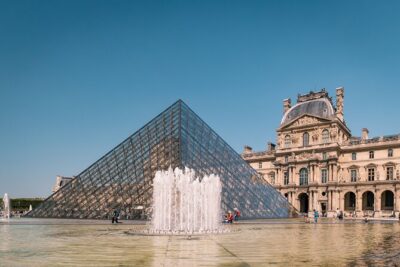
Louvre Museum Masterpieces Guided Tour with Access
Read our review →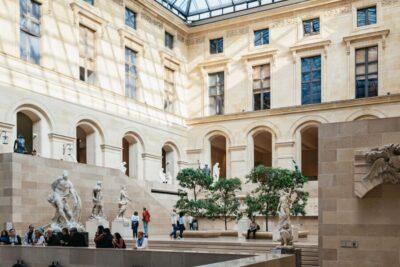
Louvre Museum Entry Ticket With Host and River Cruise
Read our review →
Les Invalides: Napoleon’s Tomb & Army Museum Entry
Read our review →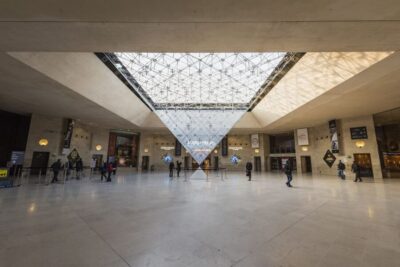
Mona Lisa & Louvre Masterpieces Tour with Reserved Access
Read our review →
Louvre Museum – Exclusive Guided Tour (Entry Included)
Read our review →
Louvre Museum Hosted Entry and Mona Lisa Audioguide
Read our review →Browse the lists this tour appears in