

Review · PARIS
Rodin Museum Masterpieces – Guided Tour up to 8 guests
Rodin’s greatest works make more sense when you see how they grew from smaller studies, rough hands, twisting bodies, and repeated attempts. I like that this tour puts The Gates of Hell and The Thinker into that working process instead of treating them as isolated icons. I also like the small group, capped at eight, which gives your guide room to explain details and adjust the visit to your interests.
The two-hour route combines the indoor galleries with the sculpture garden, and the art historian guide adds useful context about Rodin’s contemporaries, politics, and artistic circle. The main drawback is practical: you will do a moderate amount of walking, and the semi-private tour is not suitable for wheelchair users or people with walking disabilities. Large bags and suitcases are not allowed.
Key points to know before booking
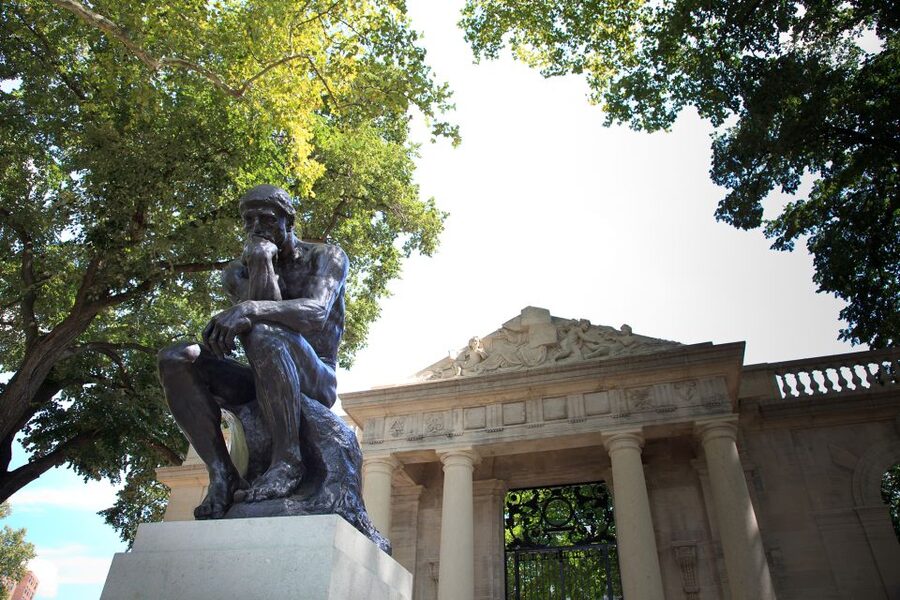
- The Gates of Hell gets proper attention: You learn how this large, crowded composition relates to The Thinker and Rodin’s wider practice.
- Small groups make a difference: With no more than eight people per guide, questions and personal interests can shape the visit.
- The Walking Man is a useful surprise: This life-sized figure shows Rodin’s interest in movement and unfinished-looking form.
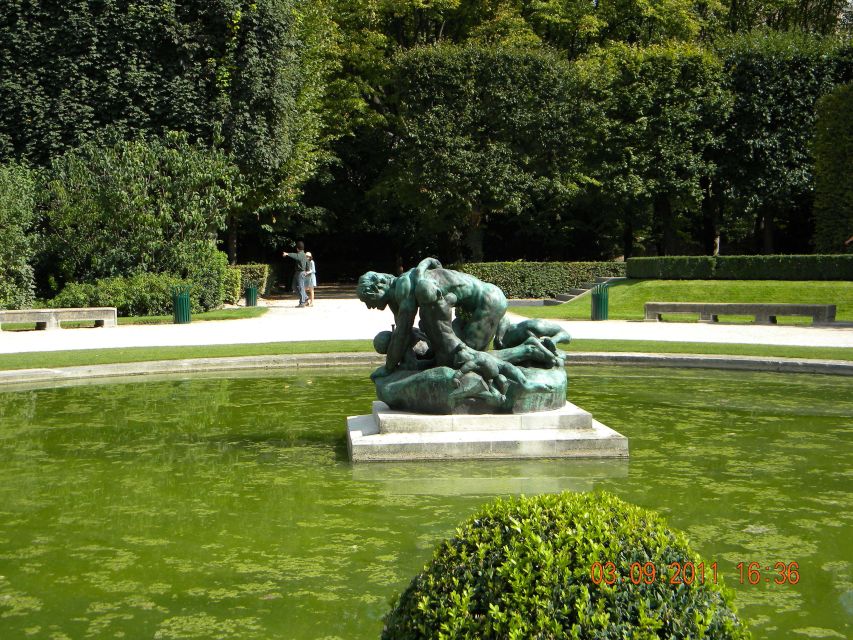
- The garden adds a second setting: After the galleries, you see more sculptures in a carefully maintained outdoor setting.
- Several languages are available: Tours can be offered in English, French, Italian, Russian, Spanish, or German, depending on the option booked.
- Plan for a bag-free visit: The museum does not allow large bags or luggage, and your meeting point can vary by booking option.
Why Rodin makes more sense in a small group

A museum devoted to Auguste Rodin can be easy to misunderstand. You may arrive expecting only The Thinker, The Kiss, and a few familiar bronze figures. Instead, you find a working studio in museum form, with studies of hands, limbs, faces, bodies, and gestures that show how Rodin searched for the final shape.
That is where a private or small-group guide earns the fee. The guide can explain not only what a sculpture represents, but also how Rodin built ideas through repetition. You see that a famous figure was not always born as a finished monument. It could begin as a fragment, a pose, or a study of movement.
The group limit of eight is especially useful in a museum where details matter. A large public group can make it hard to hear or ask questions. Here, you have a better chance to pause over a work, ask about a technique, or request more time with a particular subject.
The strongest praise connected with this experience has focused on the guides. Marcel was described as making the visit feel like watching Rodin work over his shoulder. Sunday was praised for warmth, professionalism, and the ability to adjust the route around personal interests. Lucia brought together art, politics, social issues, and history, while Taylor helped place Rodin in his time and added a sense of humor. Valérie was described as deeply passionate about the subject.
The individual guide is not guaranteed, so do not book expecting one particular person. Still, these comments point to what this tour does best: turning a room full of statues into a story about an artist at work.
More Museum Tours in Paris
- Paris: Louvre Museum Timed-Entrance Ticket
★ 4.6 · 71,977 reviews - Paris: Orsay Museum Entry Ticket
★ 4.7 · 25,647 reviews - Louvre Museum Masterpieces Guided Tour with Access
★ 4.5 · 12,023 reviews
Inside the museum, begin with the artist rather than the icons
The museum rooms contain sculptures along with selections from more than 200 paintings Rodin collected during his life. That mix gives the visit a broader frame. You are not seeing only Rodin’s own output. You are also seeing something about his eye, his interests, and the art that surrounded him.
Your guide can use these paintings and sculptures to explain Rodin’s place in the artistic world of his era. The tour also introduces contemporaries whom Rodin portrayed in clay, including the French writer Balzac. This makes the museum feel less like a hall of disconnected objects and more like a record of relationships and ideas.
I particularly like the attention given to studies of the human form. Rodin’s hands are not minor leftovers. They show his focus on gesture, tension, and expression. A hand can look active, anxious, graceful, or forceful even when separated from the rest of the body.
You will also encounter The Walking Man, a life-sized figure that helps explain Rodin’s interest in motion. The work is useful because it asks you to look at how a body moves rather than simply admire a polished likeness. Your guide can point out why a figure without a fully developed head or conventional finish still feels complete in another way.
This section of the visit is best for people who want more than a checklist of famous sculptures. If you mainly want quick photographs, two hours may feel longer than necessary. If you enjoy seeing the stages behind a major work, the extra attention is worthwhile.
The Gates of Hell and The Thinker
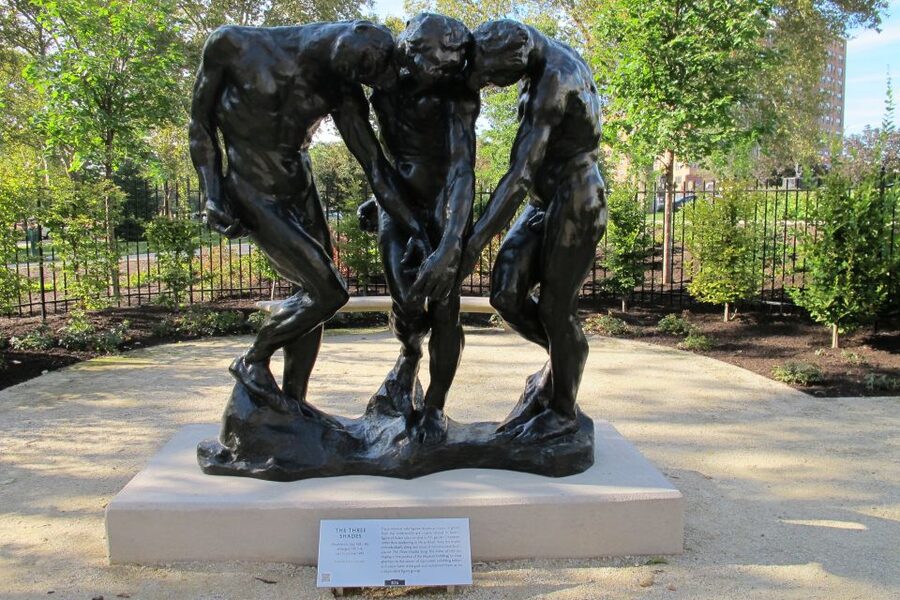
The Gates of Hell is the central stop for many people, and rightly so. The work is crowded with figures, gestures, and emotional states. It can look overwhelming at first. A guide gives you a way to read it piece by piece.
You will learn about the details of the composition and its connection to The Thinker, Rodin’s most recognizable sculpture. Seeing the two together in context helps you understand that The Thinker was not simply a separate figure placed in a museum as a symbol of thought. It belongs to a larger artistic project.
The guide can also help you notice the contrast between the overall design and the individual bodies within it. Some figures twist, fall, reach, or fold into themselves. Others seem to emerge from the surrounding mass. The power of the work comes partly from that tension between order and struggle.
This is one of the places where a small group has real value. You may want to ask why a certain figure appears where it does, how Rodin handled the surface, or how the work connects with his other studies. With only a few people present, the guide has more freedom to respond rather than deliver a fixed speech.
Do not expect every room or collection to look exactly the same year-round. Some collections can change, and certain rooms have rules requiring quiet or limiting conversation. Your guide may need to keep explanations short in those spaces. That is a museum rule, not a flaw in the tour, but it is worth knowing before you arrive.
Balzac, hands, and the value of unfinished form
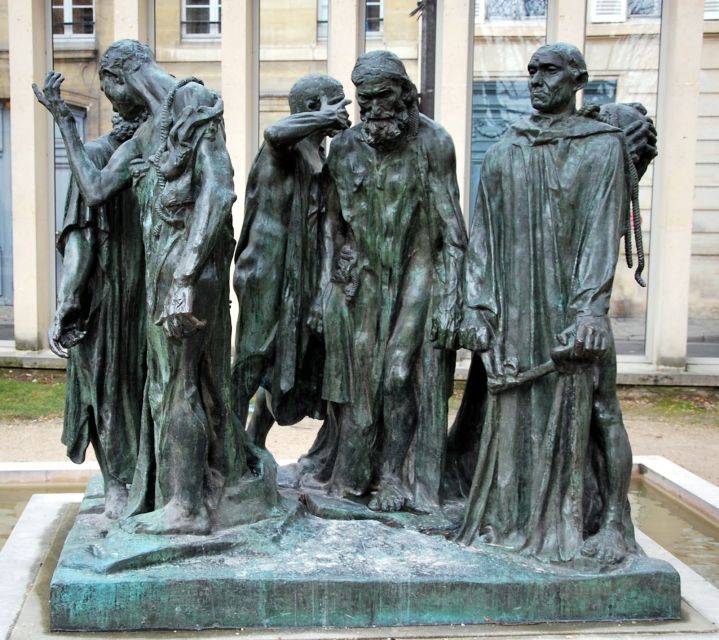
Rodin’s work is often associated with expressive bodies, but his portraits are just as important to the visit. The treatment of Balzac gives you a chance to think about how Rodin approached a living person with a strong public identity.
The guide connects these portraits with Rodin’s contemporaries and the culture around him. That context matters because Rodin was not working in a vacuum. He was responding to writers, public figures, artistic debates, and changing ideas about what sculpture should do.
The studies of hands provide another useful thread. Rodin returned to the same basic subject again and again, varying its shape, position, and energy. You might find that these smaller works explain his method better than a famous monument does. They show an artist testing possibilities rather than waiting for inspiration to arrive fully formed.
The Walking Man then carries the idea into a larger scale. Its force comes from the sense of movement, even though the figure is not presented as a conventional, carefully finished portrait. This is a good point to ask your guide about Rodin’s role in the move toward modern sculpture.
The tour presents Rodin as an artist who helped change expectations. You do not need a background in art to follow this. The guide’s job is to show you what to look for, then let the work make its own impression.
A few more museum visits around Paris worth comparing
- Louvre Museum – Exclusive Guided Tour (Entry Included)
★ 5.0 · 6,296 reviews - Louvre Priority Access with Mona Lisa Escort or Guided Option
★ 4.0 · 4,420 reviews - Louvre Museum: Skip-the-Line Small Group Guided Tour
★ 4.6 · 4,268 reviews - Louvre Museum Paris Essential Guided Tour Semi-Private 6ppl Max
★ 5.0 · 3,807 reviews
The sculpture garden after the indoor galleries
After the museum rooms, the route moves into the garden. This is not just a pleasant ending. It changes how you see the sculptures by giving them space, air, and distance.
Inside, works are placed among rooms and other objects. Outside, a figure can be viewed from several angles and at different distances. You may notice how a sculpture’s silhouette changes as you walk around it. A garden setting also gives you a pause after the concentration of the galleries.
The gardens are described as beautifully manicured, with more sculptures on display. You can expect a stroll rather than a rapid transfer from one room to another. If the weather is poor, the outdoor section may be less comfortable, so dress for the conditions and wear sensible shoes.
The garden also makes the two-hour timing feel well judged. You receive a focused indoor explanation, then have room to look around outside. The schedule is long enough to create a clear picture of Rodin without turning the visit into an all-day art course.
Still, the garden is part of a walking tour. If you have limited mobility, you need to address that before booking. Wheelchair tours may be available only on request, while the semi-private option is specifically not suitable for wheelchair users or people with walking disabilities.
Is $156 per person good value?
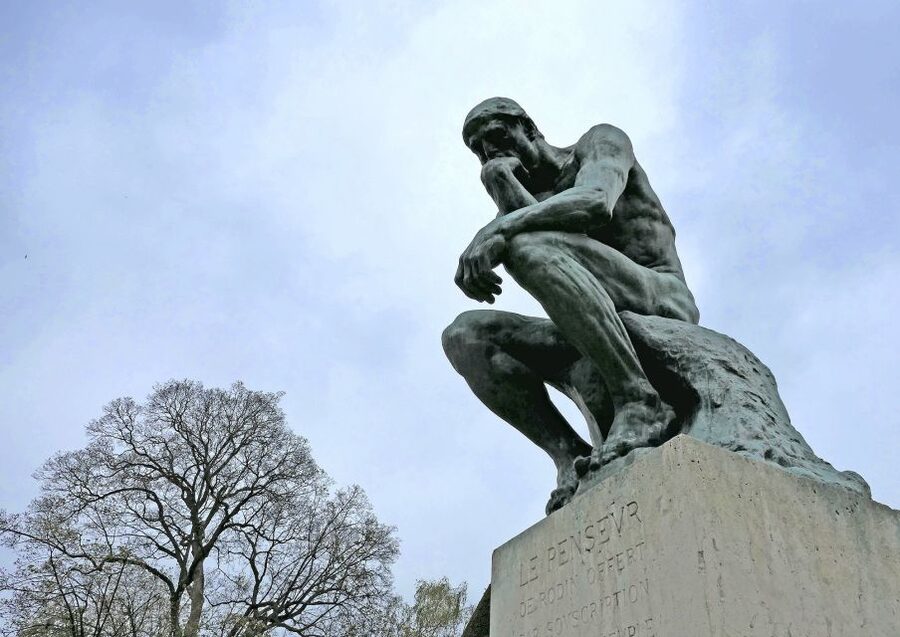
At $156 per person, this is not a casual add-on for a quick museum stop. You are paying for two hours, admission, skip-the-ticket-line access, and an art historian guide in a private or small group setting.
The value depends on how you like to visit museums. If you are content to read labels and follow your own route, the price may be hard to justify. If Rodin is a priority and you want a clear explanation of his methods, influences, and major works, the fee buys more than entry. It buys structure and access to a specialist who can connect details that are easy to miss alone.
The group size helps the calculation. Eight people is still a group, but it is small enough for questions and changes of emphasis. A private option costs more in many tour setups, but it also gives you the most control. The semi-private option offers a middle ground for people who want personal attention without arranging a completely private visit.
Temporary or special exhibitions are not included, so check your expectations. The price covers the main museum experience and the guided route, not every exhibition running that day. Food, drinks, hotel pickup, and hotel drop-off are also outside the price.
The skip-the-line access is useful when your Paris schedule is tight. It does not mean every part of the visit will move at the same pace. You are still spending two hours inside the museum and garden, and museum management can occasionally close areas without advance warning.
Languages, meeting points, and practical planning
Tours are available in English, French, Italian, Russian, Spanish, and German, depending on the option you select. Choose carefully at booking, since the guide language shapes the whole experience.
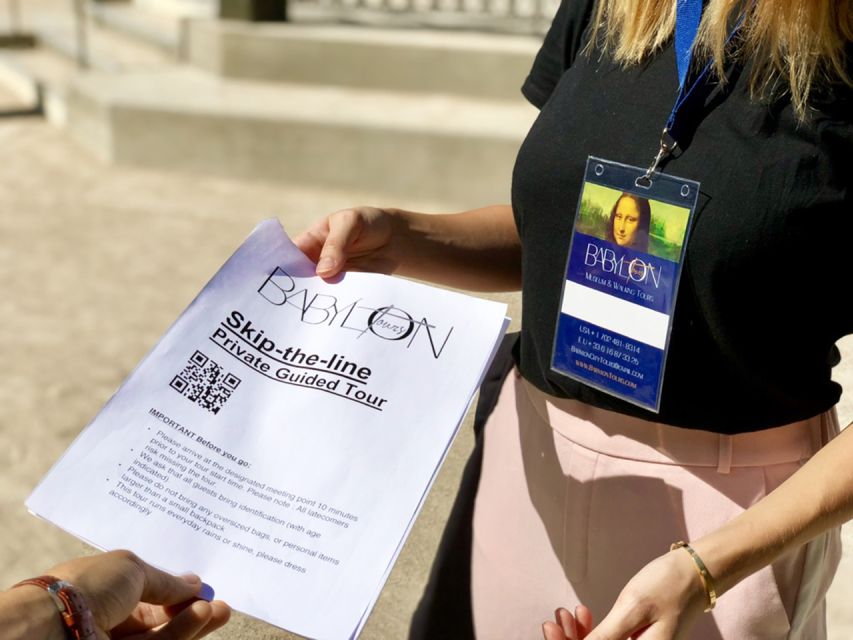
The meeting point can vary by booking option. Read the confirmation closely and provide your full name, mobile number, and an email address that you can reach during your trip. Those details matter if the meeting location or museum arrangements change.
Bring a passport or ID card. Do not bring a suitcase or large bag, since these are not allowed. A small day bag is the safer choice, but the important rule is to avoid arriving with luggage you need to store.
Allow for a moderate amount of walking. Comfortable shoes are sensible, especially because the visit includes the garden and may involve standing while the guide explains a sculpture.
Museum management can occasionally delay opening or close areas without prior warning. If the opening is delayed by more than an hour from the tour start, an appropriate alternative is provided. Refunds or discounts are not provided in that situation, so avoid booking this as the only fixed item in a very tight schedule.
Cancellation is flexible up to 24 hours before the tour for a full refund. You can also reserve now and pay later, which helps if your Paris plans are still shifting.
Who will enjoy this Rodin visit most?
I would choose this for someone who wants to understand Rodin rather than simply photograph The Thinker. It suits first-time museum visitors who want a clear introduction, as well as art lovers who want to connect studies, portraits, monumental works, and the garden.
It is also a good match for visitors who enjoy conversation. The strongest guide experiences here seem to come from people who ask questions and share particular interests. One guide adjusted the visit around what the group wanted to see, which is exactly the sort of flexibility a small group can provide.
Families with older children may find the human-form studies and dramatic figures easier to discuss than a more formal art lecture. The guide can focus on movement, emotion, and recognizable people rather than relying only on technical terms.
I would hesitate if you have very limited time, dislike guided visits, or cannot manage moderate walking. I would also avoid booking if your main aim is to see a temporary exhibition, since that is not included.
Should you book it?
Book this tour if Rodin’s major works are high on your Paris list and you want help making sense of them. The best reasons are the small group, the attention to The Gates of Hell and The Thinker, the useful studies of hands and The Walking Man, and the final walk through the sculpture garden.
At $156 per person, it is a specialist museum experience rather than a bargain ticket. I think it earns consideration when you value a strong guide and have limited time to form a clear picture of Rodin’s art. Skip it if you prefer wandering alone or need a fully accessible route. For everyone else, the combination of expert explanation and a manageable two-hour visit makes this a sound choice.
FAQ
How long does the Rodin Museum tour last?
The tour lasts two hours. It includes the museum interiors and a stroll through the sculpture garden.
What famous works will I see?
The tour includes The Gates of Hell and The Thinker. You will also see The Walking Man, studies of the human form, numerous hands, and portraits such as Rodin’s depiction of Balzac.
How many people can join the tour?
The maximum is eight people per guide. Private and small-group options are available.
Which languages are offered?
The available languages are English, French, Italian, Russian, Spanish, and German. The language depends on the option you book.
Is museum admission included?
Yes. Entrance fees and skip-the-ticket-line access are included. Temporary or special exhibitions are not included.
Can I bring luggage or a large bag?
No. Large bags and suitcases are not allowed. Bring only what is permitted by the museum.
Is the tour suitable for wheelchair users?
The semi-private tour is not suitable for wheelchair users or people with walking disabilities. Wheelchair tours may be available only on request, so you need to ask before booking.
Just added around Paris
- Invalides Museum – WWI & WWII – Guided Tour up to 8 guests★ 5.0 · 32 reviews
- Skip the Line Guided Tour of Louvre Museum Highlights★ 5.0 · 49 reviews
- Paris: Louvre Museum Highlights Small-Group Guided Tour★ 4.8 · 157 reviews
- From Paris: Private Trip to Giverny, Monet’s House & Museum★ 4.5 · 13 reviews
- Paris: Street Art Open-Air Museum Bike Tour★ 4.8 · 51 reviews
- Paris: Rodin Museum Ticket & Optional Digital AudioGuide App★ 4.7 · 56 reviews
- Paris: The Rodin Museum and Seine River Cruise★ 4.6 · 45 reviews
- Paris: Rodin Museum Skip-the-line Entry Ticket with Audio★ 4.0 · 102 reviews
Museum Tours in Paris, compared.

Louvre Museum Masterpieces Guided Tour with Access
Read our review →
Louvre Museum Entry Ticket With Host and River Cruise
Read our review →
Les Invalides: Napoleon’s Tomb & Army Museum Entry
Read our review →
Mona Lisa & Louvre Masterpieces Tour with Reserved Access
Read our review →
Louvre Museum – Exclusive Guided Tour (Entry Included)
Read our review →
Louvre Museum Hosted Entry and Mona Lisa Audioguide
Read our review →Browse the lists this tour appears in