
Review · PARIS
The Musée d’Orsay Guided Tour Orsay Museum Semi-Private 6ppl Max
The best thing about this Musée d’Orsay tour is its small-group format. With a guide leading no more than six people, you can actually ask why Manet caused a scandal, how Monet changed the way painters saw light, or what Van Gogh was doing with those restless brushstrokes. Guides such as Liliya, Eduardo, Christophe, Ivana, and Beatrice have been singled out for clear explanations and lively storytelling.
I like two things right away: reserved museum entry saves you from managing the visit alone, and the chronological route gives the art a useful shape. You begin with artists such as Millet and Manet, then move through Impressionism to Renoir, Degas, Monet, and Van Gogh. The main drawback is price: at $144.21 per person, this is not a bargain museum admission. It makes the most sense if you want guidance, structure, and a short visit that gets the major works right.
Key points to know before booking
- Small group attention: The tour is advertised for a maximum of six people, though the additional booking information also mentions a maximum of eight. Confirm the exact group limit when booking.
- A clear art story: You follow the artistic changes from Realism and academic painting through Impressionism, Neo-Impressionism, and later movements.
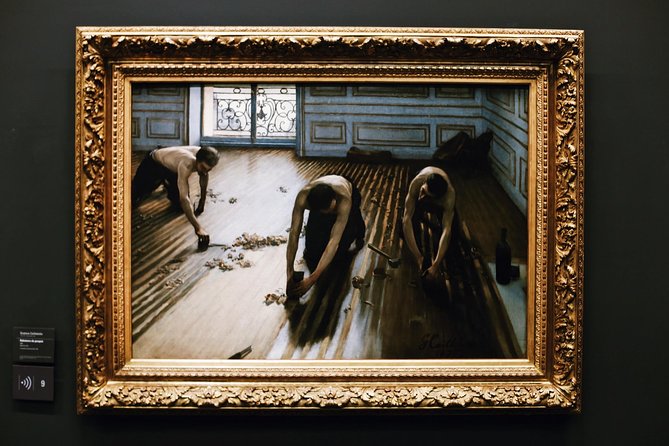
- Major works included: The route generally features Manet’s Luncheon on the Grass, Renoir’s Dance at Le Moulin de la Galette, Monet’s Poppy Field, Van Gogh’s Bedroom in Arles, Degas’s ballerinas, and Millet’s The Gleaners.
- Reserved admission: Entry is included, and priority access can reduce time spent handling the museum on your own, though security lines may still occur.
- Flexible scheduling: Morning, afternoon, and evening departures are available, subject to the selected time.
- Not fully accessible: The tour requires moderate walking and is not available to people using wheelchairs or with walking disabilities.
Why the Musée d’Orsay works so well with a guide
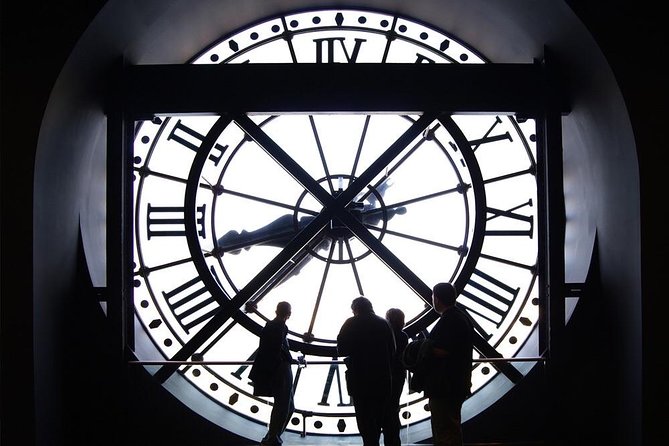
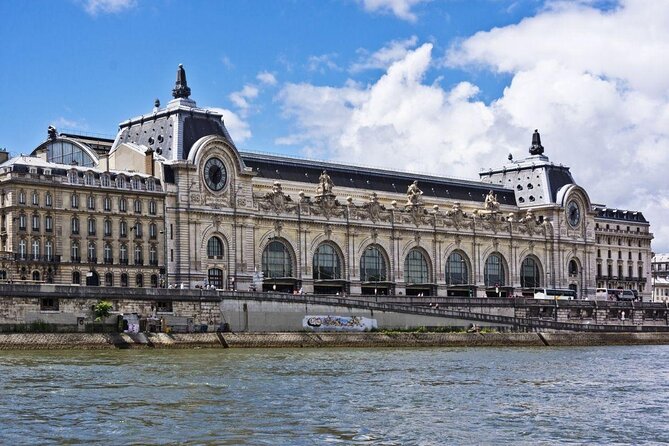
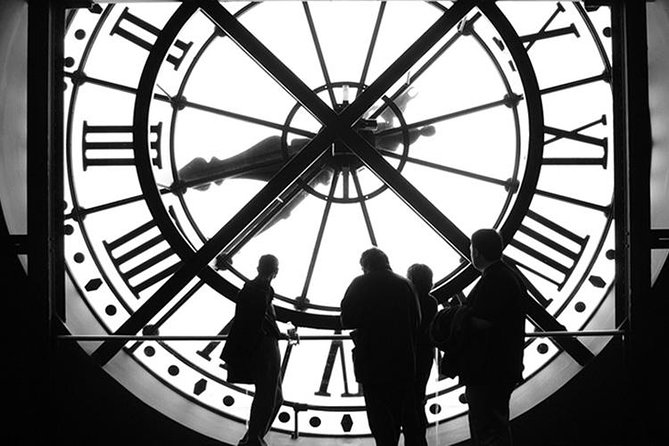
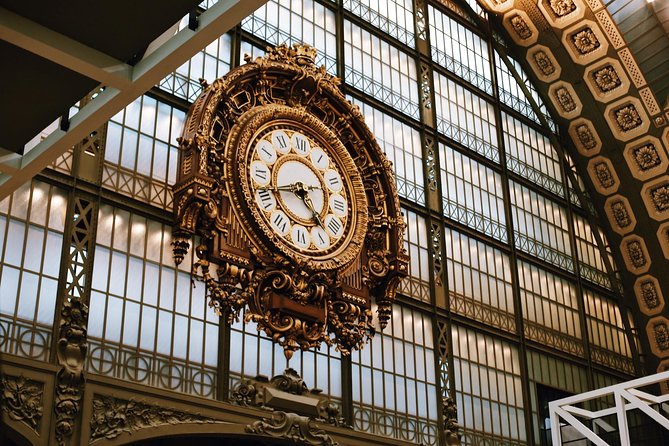
The Musée d’Orsay occupies a former railway station, and the building is part of the visit. Its grand clock, high iron-and-glass interior, and Beaux-Arts design give the museum a strong sense of place before you even reach the paintings.
But the collection can be confusing without a plan. The museum is not arranged as a simple story from one room to the next. You can easily spend too long at one famous painting, miss an important transition, or leave with a pile of attractive images but little sense of why the movement mattered.
This tour solves that problem by treating the museum as a story of changing ideas. You learn how artists moved away from polished academic subjects and studio traditions. You see how they began to paint ordinary people, modern city life, outdoor scenes, and fleeting effects of light.
That approach is especially helpful if you are new to art history. You do not need to arrive knowing the difference between Realism, Impressionism, and Post-Impressionism. A strong guide explains the changes in plain language, then points to the evidence on the canvas.
The best guides also make room for questions. Several guides, including Liliya, Hugo, Ivana, and Kotryna S, have been praised for making the visit funny, personal, and easy to follow. Your experience will depend on the guide assigned to your departure, but the small group gives that guide more opportunity to adjust the pace and answer questions.
More Museum Tours in Paris
- Paris: Louvre Museum Timed-Entrance Ticket
★ 4.6 · 71,977 reviews - Paris: Orsay Museum Entry Ticket
★ 4.7 · 25,647 reviews - Louvre Museum Masterpieces Guided Tour with Access
★ 4.5 · 12,023 reviews
Following the road to Impressionism
The tour generally begins with artists who came before the Impressionists. Millet’s The Gleaners is an important example. It shows working women gathering leftover grain, a subject that sounds simple but had social weight in its time.
Your guide can use this painting to explain how artists began giving serious attention to rural workers and everyday life. Instead of presenting only kings, heroes, or idealized figures, painters increasingly showed the people who lived and worked around them.
Manet’s Luncheon on the Grass then gives the story a jolt. The painting caused trouble because of its subject, its direct gaze, and its refusal to follow accepted rules of finish and presentation. It is one of those works that becomes more interesting once you understand what viewers in Manet’s day found shocking.
This is where a guide earns the fee. You can look at the painting alone and notice the figures, the picnic setting, and the unusual sense of space. A good explanation adds the social and artistic context without turning the visit into a lecture.
You should also expect the guide to point out lesser-known works along the way. The tour is not only a march between famous names. The goal is to show the links between artists, so a less familiar painting may explain a technique or idea better than a celebrated masterpiece.
Renoir, Monet, and the pleasure of looking quickly
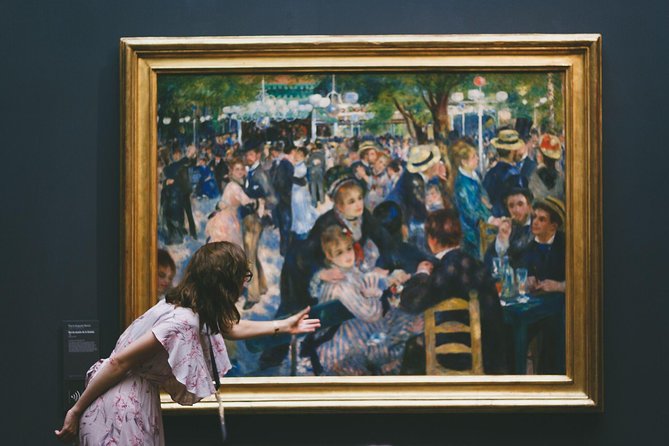
Renoir’s Dance at Le Moulin de la Galette is one of the museum’s big attractions. It captures a lively Parisian gathering with loose brushwork, shifting light, and a sense that the scene is unfolding in front of you.
The painting rewards a little time. From a distance, you see the whole dance hall. Up close, the brushstrokes and patches of light become more obvious. A guide can help you move between those two views and explain why the painting once looked unfinished to critics.
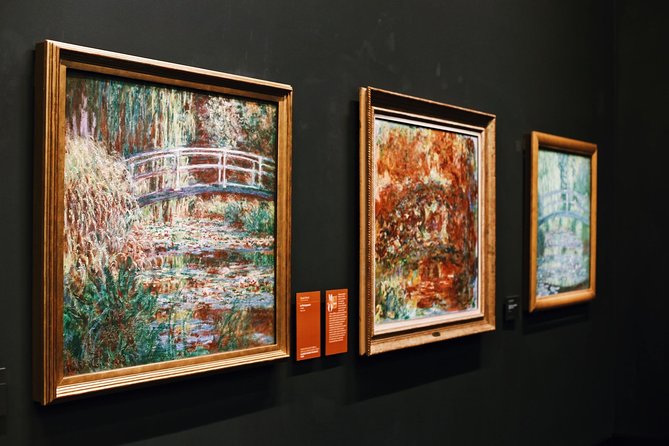
Monet’s Poppy Field gives you another clear lesson in Impressionist technique. You can see how color carries the scene, how the field is suggested rather than carefully outlined, and how the artist asks your eye to complete parts of the picture.
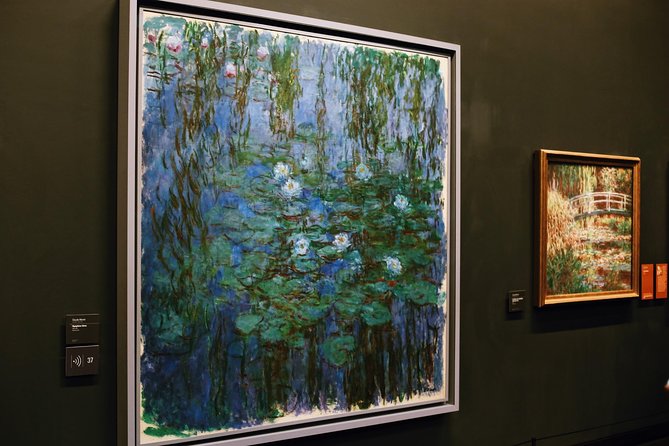
The tour may also include Monet’s Water Lilies, depending on the museum display and collection changes. The supplied information notes that works can be moved, restored, or lent out, so no single painting is guaranteed on every date.
That is worth remembering if one specific masterpiece is your reason for booking. The listed highlights are the usual targets, but museum displays change. The tour remains useful because it covers the movement and its development, not just a fixed checklist of paintings.
Van Gogh, Degas, and what came after
Van Gogh’s Bedroom in Arles is among the most memorable stops. Its simplified furniture, strong colors, and tilted sense of space show how Van Gogh pushed painting beyond a straightforward record of a room.
A guide can help you notice details you might otherwise miss, such as the way the room feels both familiar and strangely unstable. The painting is not simply about a bed, chairs, and walls. It also shows how an artist could use color and distortion to express a personal response to an ordinary place.
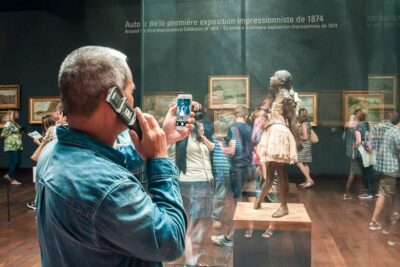
Degas’s ballerinas offer a different lesson. His dancers are often shown in rehearsal or caught at awkward angles rather than posed like stage stars. The cropped compositions can feel almost like snapshots, which helps explain the Impressionists’ interest in modern life and spontaneous views.
The route also reaches beyond strict Impressionism. You may hear about Neo-Impressionism, Cubism, and other later developments, depending on the guide and the pace of the group. Ivana, for example, has been praised for arranging the tour around the progression from academic painting and Realism through Impressionism, Cubism, and Neo-Impressionism.
That structure is valuable because it prevents the common mistake of treating Impressionism as an isolated style. You see it as part of a longer argument about how art should look, what subjects deserve attention, and how much a painting needs to explain.
A few more museum visits around Paris worth comparing
- Paris: Orsay Museum Entry Ticket and Digital Audio Guide App
★ 4.4 · 3,170 reviews - Paris: Musée d’Orsay Skip-the-Line Tour with Expert Guide
★ 4.5 · 1,145 reviews - Louvre & Musée d’Orsay Guided Museum Tour Semi-Private 6ppl Max
★ 5.0 · 619 reviews - Paris: Orsay Museum and Rodin Museum Combo Entry Ticket
★ 4.4 · 470 reviews
What the two-and-a-half-hour pace feels like
The advertised duration is about two to two and a half hours, with the detailed tour information specifying 2.5 hours. That is long enough to cover major works and the movement’s development, but short enough to fit into a busy Paris day.
You will walk and stand for much of the visit. The tour requires a moderate level of physical fitness, so wear comfortable shoes and do not plan it immediately after an exhausting full-day outing if you can avoid it.
The pace appears to be one of the stronger parts of the experience. Several guides are praised for keeping children involved, answering questions, and allowing extra time at paintings that interest the group. Christophe, in particular, has been noted for maintaining a good pace while keeping younger visitors involved.
At the same time, a two-and-a-half-hour tour cannot cover every important room. You are getting a focused introduction, not a complete survey of the museum. If you want to linger over furniture, sculpture, photography, or every corner of the collection, plan to return on your own if your ticket and schedule allow.
Some guides leave time at the end for independent exploration. That can be useful, since you may want to revisit a favorite painting or see a room that was outside the main route. Do not count on a long free period, though. Ask your guide at the start how the time will be divided.
Why six people can be worth $144.21
At $144.21 per person, this tour costs far more than entering the museum alone. You are paying for reserved entry, an English-speaking professional guide, a planned route, and the chance to ask questions without shouting across a large group.
The value is strongest for first-time visitors who feel unsure about where to begin. It is also strong for families. A guide such as Lilly or Alexandra can adjust explanations so children and adults both stay involved, which is difficult when you are trying to read wall text and manage the route yourself.
The price is less attractive if you already know the museum well, prefer to read independently, or want several quiet hours with the collection. One three-star assessment found the small group appealing but felt the tour content did not justify the higher cost compared with a larger group and audio guide. That is a fair warning.
The difference comes down to how much structure you want. A large group or audio guide may cost less, but you give up some conversation and flexibility. This experience is designed for people who want a guide close enough to answer a specific question about a painting, artist, or technique.
There is also an odd detail in the booking information. The tour is repeatedly described as a maximum of six people, while another note says a maximum of eight. Since the small size is a main reason to pay this price, confirm the expected group size before you commit.
Choosing the right departure and preparing for the museum
Morning, afternoon, and evening options make this easy to fit into a Paris schedule. An early departure may suit you if you want to visit another sight afterward. An evening tour can work well if you prefer a slower start to the day, though museum crowds and room availability can vary.
The museum is near public transportation, and the meeting point is at the Musée d’Orsay itself. Hotel pickup and drop-off are not included, so plan to reach the museum by taxi, Uber, or public transit.
Bring your booking confirmation and the mobile phone number supplied at booking, including the country code. The operator says it is imperative to have that number, likely so the guide can contact you if meeting details change.
Pack lightly. Large bags and suitcases are not allowed inside. Only handbags or small, thin backpacks can pass through security. Even with reserved entry, you may encounter a security line, since skip-the-line access does not remove every museum check.
The museum can sometimes close or delay opening without warning. If the opening is delayed by more than an hour, the operator says it will offer an alternative, but it does not promise a refund or discount in that situation. That policy is worth knowing before you build an important day around the tour.
Some rooms require very quiet behavior or restrict speaking. Your guide should explain those rules before you enter. Follow them closely, since the experience depends on respecting the museum and the people looking at the art around you.
Families, art beginners, and repeat Paris visitors
This is a good choice for families if your children can manage two hours of walking and listening. The guides are expected to keep the group involved, and specific guides such as Lilly, Christophe, and Alexandra have been praised for explaining art clearly to children and teenagers.
For a first visit to Paris, the tour gives you a useful introduction to one of the city’s most rewarding museums without asking you to prepare beforehand. You leave with names, styles, and stories that make later museum visits easier.
Art enthusiasts may appreciate the chance to ask detailed questions. Guides such as Achille and Ana have been praised for strong art-history backgrounds, while others bring personal storytelling or an artist’s point of view. The exact style will vary, but the small group makes discussion more practical.
Repeat Paris visitors should book only if they want a focused refresher or a particular angle on the collection. If you already have a favorite route through the Orsay, the guide may take you past rooms you would otherwise choose yourself.
Cancellation, access, and other practical limits
Free cancellation is available until 24 hours before the start time. Changes or cancellations made less than 24 hours before the tour are not refundable.
The experience requires at least two participants to run. If that minimum is not met, you should be offered another date or experience, or a full refund. In some cases, a small booking may become a private-style visit, but that should not be assumed in advance.
The tour is not available for people using wheelchairs or with walking disabilities. Anyone with limited mobility should ask before booking, since the stated requirements include moderate physical fitness and extended walking.
Temporary exhibitions are not included. The route focuses on the museum’s permanent collection, and the works on display can change during the year because of loans, restoration, or room changes.
Should you book the Musée d’Orsay small-group tour?
Book it if you want the museum’s major paintings explained in a clear sequence, value a group of roughly six, and would rather spend two focused hours with a guide than plan the visit yourself. Families, first-time visitors, and people who want context for Impressionism are the best match.
Think twice if $144.21 feels steep for a museum visit, if you prefer quiet independent viewing, or if you need wheelchair access. The tour’s real strength is not simply entry. It is the close conversation, the chronological route, and the chance to understand why these paintings changed art.
FAQ
How long does the Musée d’Orsay guided tour last?
The tour lasts approximately two to two and a half hours. The detailed tour information gives a duration of 2.5 hours.
What is included in the tour price?
The price includes the semi-private museum tour, a professional guide, reserved museum entry, and all entrance fees. Temporary exhibitions are not included.
How many people can join the tour?
The experience is advertised as a maximum-six-person tour. Another booking note states that up to eight people may be allowed, so confirm the group size when booking.
Is the tour offered in English?
Yes. The tour is offered in English.
Can I cancel for a full refund?
Yes, if you cancel at least 24 hours before the experience begins. Cancellations made less than 24 hours before the start time are not refundable.
Is the tour suitable for wheelchair users?
No. The tour is not available for people using wheelchairs or with walking disabilities, and participants should have a moderate level of physical fitness.
Just added around Paris
- Rodin Museum Masterpieces – Guided Tour up to 8 guests★ 4.9 · 13 reviews
- Invalides Museum – WWI & WWII – Guided Tour up to 8 guests★ 5.0 · 32 reviews
- Skip the Line Guided Tour of Louvre Museum Highlights★ 5.0 · 49 reviews
- Paris: Louvre Museum Highlights Small-Group Guided Tour★ 4.8 · 157 reviews
- From Paris: Private Trip to Giverny, Monet’s House & Museum★ 4.5 · 13 reviews
- Paris: Street Art Open-Air Museum Bike Tour★ 4.8 · 51 reviews
- Paris: Rodin Museum Ticket & Optional Digital AudioGuide App★ 4.7 · 56 reviews
- Paris: The Rodin Museum and Seine River Cruise★ 4.6 · 45 reviews
Museum Tours in Paris, compared.

Louvre Museum Masterpieces Guided Tour with Access
Read our review →
Louvre Museum Entry Ticket With Host and River Cruise
Read our review →
Les Invalides: Napoleon’s Tomb & Army Museum Entry
Read our review →
Mona Lisa & Louvre Masterpieces Tour with Reserved Access
Read our review →
Louvre Museum – Exclusive Guided Tour (Entry Included)
Read our review →
Louvre Museum Hosted Entry and Mona Lisa Audioguide
Read our review →Browse the lists this tour appears in