
Review · NEW YORK CITY
Museum of the City of New York Entry Ticket
New York City makes more sense when you meet the people who built it, challenged it, and kept reinventing it. At the Museum of the City of New York, you can move from immigrant stories and political struggles to music, architecture, photography, and the city’s changing identity. I like the New York at Its Core exhibition for its broad view of ordinary New Yorkers alongside tycoons, politicians, dreamers, and master builders. I also like that your ticket includes Timescapes, a 30-minute film narrated by Stanley Tucci, which gives you a quick sense of how a small settlement grew into a world city.
The main drawback is that this is a museum visit rather than a guided tour with a named expert leading you room by room. Also, check the date and starting information carefully before booking. One booking was made for a day when the museum was closed, so a little planning matters.
- New York at Its Core follows the city’s growth through innovation, energy, and struggle.
- Activist New York shows how protest and conflict helped push change in New York and beyond.
- Timescapes, narrated by Stanley Tucci, offers a useful 30-minute introduction to the city’s development.
- The Fifth Avenue location puts you at the top of Museum Mile, across from Central Park’s Conservatory Garden.
- A $23 ticket includes both permanent and temporary exhibitions, making this a useful indoor stop for a full day of sightseeing.
- Accessibility is practical, with a wheelchair and stroller entrance on 104th Street and manual wheelchairs available at no charge, subject to availability.
Why this museum belongs on an Upper Manhattan day

The Museum of the City of New York is not a general art museum with New York references sprinkled around the walls. Its subject is the city itself: how New York grew, who shaped it, who was pushed aside, and how each generation changed what came next.
That focus gives your visit a clear purpose. You are not simply looking at old objects. You are following the arguments, ambitions, inventions, and daily lives that made New York what it is.
The museum sits at 1220 Fifth Avenue, between 103rd and 104th Street, at the upper end of Museum Mile. It occupies a neo-Georgian-style landmark building directly across from Central Park’s Conservatory Garden and El Museo del Barrio. This location makes it easy to pair with a walk in the park or a visit to another museum nearby.
I would allow several hours if you want to read the exhibition texts and see the film without rushing. Your ticket is valid for one day, so you have room to build the museum into a larger Upper East Side or Harlem outing. The ticket does not describe a fixed route or a scheduled guided program, so plan on exploring at your own pace.
Starting with New York at Its Core
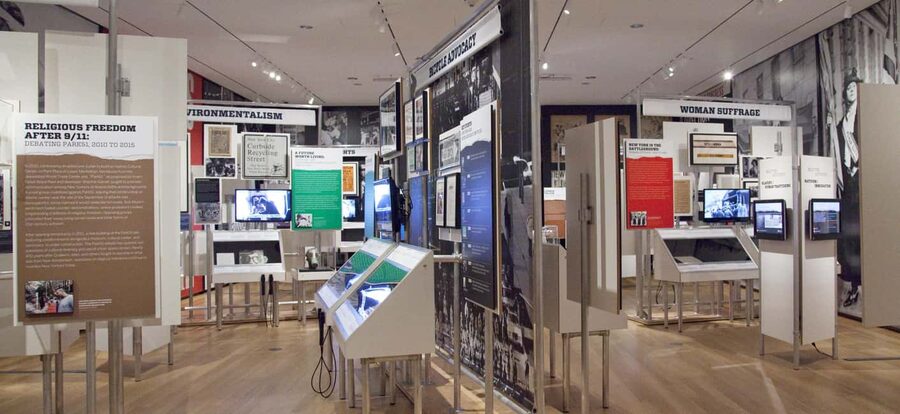
New York at Its Core is the main reason to visit if this is your first time at the museum. It presents the city through stories of innovation, energy, and struggle, rather than through a simple timeline of dates and mayors.
The exhibition brings together generations of immigrants, politicians, tycoons, dreamers, master builders, and ordinary New Yorkers. That mix matters. New York was not created by one group or one kind of person, and the museum’s approach helps you see how public decisions and private lives constantly affect each other.
You might find the exhibition especially useful early in a New York trip. It gives context to the streets, neighborhoods, bridges, parks, and grand buildings you will see elsewhere. After visiting, a walk through Manhattan can feel less like a collection of famous sights and more like a city shaped by competing needs.
The exhibition also avoids presenting growth as an uncomplicated success story. Innovation brought opportunity, but city growth also produced hardship and conflict. That balance is one of the museum’s strengths, particularly if you prefer social history to a parade of famous names.
Give yourself time here. It is easy to skim the galleries and move on, but the value comes from connecting the individual stories to the larger question of what makes New York work, and what makes it difficult.
More Museum Tours in New York City
- NYC: Empire State Building Tickets – Observatory & Museum
★ 4.7 · 25,757 reviews - New York City: American Museum of Natural History Ticket
★ 4.5 · 15,447 reviews - NYC: Museum of Modern Art (MoMA) Entry Ticket
★ 4.6 · 12,540 reviews
Activist New York and the city’s arguments
Activist New York focuses on the passions and conflicts behind the city’s history of agitation. Its central idea is simple but important: change rarely arrives quietly.
This exhibition is a good match for you if you want to understand New York as a place where people organize, protest, argue, and demand a different future. It also places local activism in a wider national setting, showing how struggles in the city helped set the stage for change across the United States.
The subject matter may be more challenging than a standard city-history display. That is part of its value. You are asked to consider not only what New York achieved, but also who had to fight for a voice and how public pressure altered the city.
I would not treat Activist New York as a quick add-on. Its themes help explain why the city looks and feels politically charged. The exhibition gives your visit a human edge, moving beyond buildings and famous events to the people who insisted that public life should change.
Timescapes gives you the quick city overview

Timescapes is a 30-minute documentary about New York City’s development from a settlement of a few hundred Europeans, Africans, and Native Americans into the metropolis you see today. Stanley Tucci narrates the film.
This is a smart first stop if you are short on time or want a basic framework before exploring the galleries. Thirty minutes is long enough to establish a sequence, but short enough to fit into a busy museum visit.
I would watch Timescapes before or near the beginning of your visit. The film can help you place the other exhibitions in order, especially if you are unfamiliar with New York’s early growth and later transformation.
It is also a useful break from reading. Museums about cities can pile up names, dates, and political shifts. A film gives you a change of pace before you return to the displays.
The documentary should not replace the exhibitions. Its job is to sketch the broad story. The galleries let you slow down and examine the human conflicts and creative work behind that story.
Temporary exhibitions keep the visit changing
Your ticket includes access to temporary exhibitions as well as permanent displays. These rotate frequently and cover subjects such as music, dance, photography, and major historical turning points that affected the entire country.
That variety makes the museum more useful for repeat visits than a fixed collection would be. A visitor interested in dance may have a different experience from someone drawn to photography or political history, depending on what is on view.
The tradeoff is simple: the exact temporary exhibitions available on your date are not listed in the supplied information. I would check the current program before buying if one particular subject is important to you.
For a first visit, treat the temporary galleries as an extra layer rather than the sole reason to go. The permanent exhibitions provide the museum’s core, while the rotating displays keep its attention on new questions and different parts of city life.
A few more museum visits around New York City worth comparing
- 9/11 Memorial, Ground Zero Tour with Optional 9/11 Museum Ticket
★ 5.0 · 6,381 reviews - 9/11 Memorial Museum Admission Ticket
★ 4.5 · 6,376 reviews - NYC: Intrepid Museum Entry Ticket
★ 4.7 · 4,687 reviews - NYC: Museum of Ice Cream Entry Ticket
★ 4.3 · 2,619 reviews
A practical Fifth Avenue setting
The building’s address is easy to remember: 1220 Fifth Avenue at 103rd Street. The museum is between 103rd and 104th Street, near the top of Museum Mile.
Its setting across from Central Park’s Conservatory Garden gives you a good option for combining indoor and outdoor sightseeing. You can visit the museum, then cross the avenue for a quieter park stop. El Museo del Barrio is also nearby, so this area can support a full afternoon of culture without crossing Manhattan several times.
The location is farther north than the Metropolitan Museum of Art and other better-known Museum Mile stops. That is a benefit if you want a less crowded section of Fifth Avenue, but it does require planning your route around the 103rd Street area.
The building itself is part of the experience. Its neo-Georgian style gives the museum a formal civic setting, while the exhibitions focus on the changing lives inside the city. The contrast works well: an old-looking building presents a city that is always being remade.
How much time should you allow?
The ticket is valid for one day, and the museum includes permanent exhibitions, temporary galleries, and a 30-minute film. The right visit length depends on how closely you read.
I would allow at least two hours for a useful visit. Add more time if you want to take in Timescapes, read the exhibition texts carefully, and explore every temporary display available that day.
You do not need to rush through the museum simply because the ticket is described as a one-day entry. That wording gives you access for the day, not a required schedule. Check the available starting information when booking, then shape the visit around your larger plans.
The museum also has Chalsty’s Café and a Museum Shop. These are included as available on site, but the ticket details do not specify menus, prices, or opening times. Think of them as convenient extras, not reasons to plan your whole day around them.
Is $23 a fair price?
At $23 per person, the ticket is fairly priced if you plan to see more than one part of the museum. You are not paying only for a single permanent gallery. The ticket includes all temporary and permanent exhibitions, Activist New York, and Timescapes.
The value is strongest for visitors who want context. If you are spending several days in New York and want to understand the city beyond landmark photographs, this museum can make later sightseeing more meaningful.
The value is weaker if you only have a short window and prefer famous paintings, grand interiors, or an interactive attraction. The museum asks you to read, connect ideas, and think about civic life. It is rewarding for a curious visitor, but it is not designed as a quick photo stop.
The average score provided for the experience is 4.4 out of 5 from 37 reviews. Individual reactions range from brief approval to strong disappointment caused by arriving on a closure day. That spread points to the main practical lesson: the museum itself offers solid value, but date checking is essential.
Access, photography, and small practical details
The wheelchair and stroller-accessible entrance is on the 104th Street side of the building. Manual wheelchairs are available free of charge, subject to availability.
Large-print and high-contrast transcripts of exhibition texts are available online. You can also use the free Bloomberg Connects arts and culture app for a digital guide to the museum and other cultural sites.
Flash photography and tripods are not allowed. If you like taking careful architectural or exhibition photographs, leave the tripod at your accommodation and use ordinary, non-flash photography where permitted.
The booking is listed as a small-group activity limited to nine participants, but the visit itself is presented as museum entry rather than a guided tour. Do not expect a named guide or a group lecture unless your booking confirmation says otherwise.
You can cancel up to 24 hours in advance for a full refund, and a reserve-now, pay-later option is available. Those terms are useful if your New York plans are still moving around, but confirm the exact booking conditions before payment.
Who will get the most from this visit?
I would recommend the museum to first-time New York visitors who want a stronger sense of how the city developed. It also suits people who enjoy social history, urban change, photography, music, dance, and political movements.
Families may find the broad subject appealing, though the supplied information does not describe child-specific activities or a family program. If you are visiting with children, plan your time around the shorter film and the exhibits that match their interests.
The museum is also a good choice for repeat visitors. You may already know the big sights, but the city’s social arguments and everyday stories can give familiar neighborhoods new meaning.
I would be more cautious if you want a fully guided experience. There are no guide names or tour commentary details provided, so you should expect an independent museum visit. Bring patience and curiosity, not the expectation of a fast-moving attraction.
Should you book the Museum of the City of New York?
Book it if you want to understand New York through its people, conflicts, inventions, and changing public life. The combination of New York at Its Core, Activist New York, temporary exhibitions, and Timescapes gives you more than a quick look at city memorabilia.
The $23 price makes sense when you plan to spend several hours inside and pair the museum with Central Park’s Conservatory Garden or El Museo del Barrio. Check the date carefully before booking, confirm the current exhibitions, and use the 104th Street entrance if you need wheelchair or stroller access.
Skip it if your schedule allows only a rushed visit or if you want a traditional art museum. For everyone else, this is a thoughtful Upper Manhattan stop that helps you see New York as a work in progress, shaped by people who argued, built, moved, dreamed, and refused to accept the city as finished.
FAQ
Where is the Museum of the City of New York located?
The museum is at 1220 Fifth Avenue, between 103rd and 104th Street, New York, NY 10029.
What does the $23 ticket include?
The ticket includes entry to the Museum of the City of New York, all temporary and permanent exhibitions, Activist New York, Timescapes, Chalsty’s Café, and the Museum Shop.
How long is the Timescapes documentary?
Timescapes is a 30-minute documentary narrated by Stanley Tucci.
Is the museum wheelchair and stroller accessible?
Yes. The wheelchair and stroller-accessible entrance is on the 104th Street side of the building. Manual wheelchairs are available free of charge, subject to availability.
Can I cancel my booking for a refund?
You can cancel up to 24 hours in advance for a full refund.
Are flash photography and tripods allowed?
No. Flash photography and tripods are not allowed.
Just added around New York City
- The Met Museum Guided Tour with Skip-the-Line Entry★ 4.4 · 149 reviews
- New York City: The Banksy Museum Entry Ticket★ 4.6 · 51 reviews
- NYC: Entry Ticket To The Banksy Museum★ 4.5 · 89 reviews
- Self-Guided Tour of the Museum at Eldridge Street★ 4.3 · 13 reviews
- New York: Private Tour of The Metropolitan Museum of Art★ 4.9 · 39 reviews
- NYC: Museum of Sex Entry Ticket★ 4.2 · 179 reviews
- NYC: Museum of the Moving Image Flexible Ticket★ 4.6 · 95 reviews
- NYC: Whitney Museum Ticket★ 4.2 · 315 reviews
Museum Tours in New York City, compared.


9/11 Memorial, Ground Zero Tour with Optional 9/11 Museum Ticket
Read our review →

All-Access 9/11: Ground Zero Tour, Memorial and Museum, One World Observatory
Read our review →

Browse the lists this tour appears in