
Review · GERMANY
Mettmann: Neanderthal Museum Admission Ticket
The Neanderthal Museum turns a serious subject into an easy, hands-on day out. You move from four million years of human development to the famous discovery site in the valley, then climb the Höhlenblick Tower for a virtual Ice Age view at the height of the lost cave.
I especially like the mix of multimedia displays and outdoor activities. The life-size reconstructions, baby mammoth Tinka, 360-degree burial film, and Stone Age Playground give families plenty to do, while the audio guide adds useful detail for adults.
The main drawback is noise and crowding in the permanent exhibition, especially when lively children fill the rooms. If you want to read and listen to every display, visit early or allow extra time. The museum alone can take one to two hours, and the outdoor area can add another two or three.
Key Points
- Four million years of human evolution: Follow the story from the African savannahs to modern life through multimedia displays.
- The actual Neanderthal valley: See the discovery area, Rabenstein rock formation, and the setting linked to the famous find.
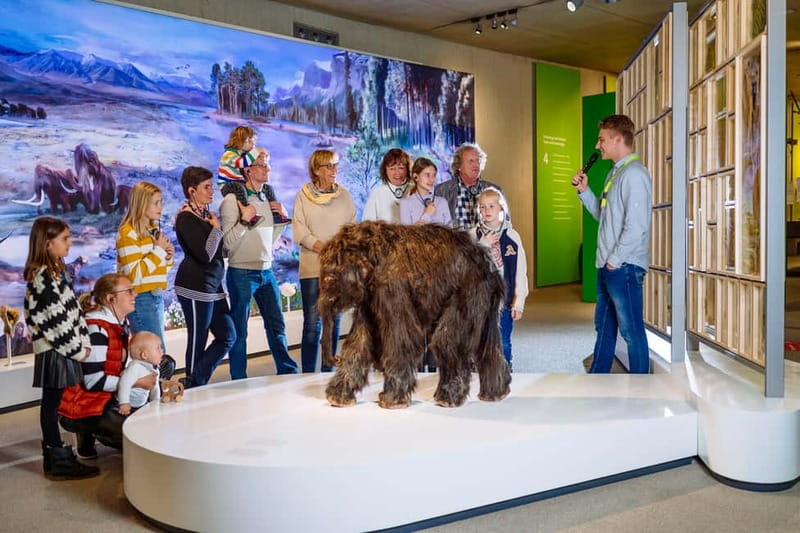
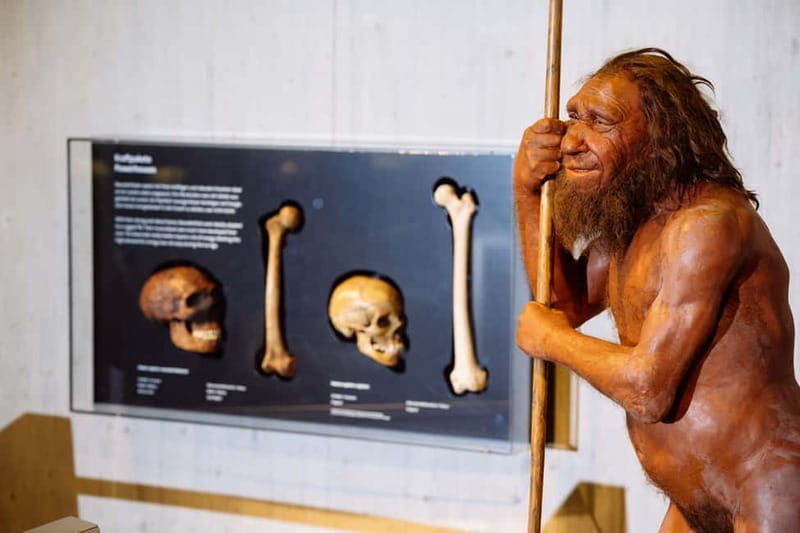
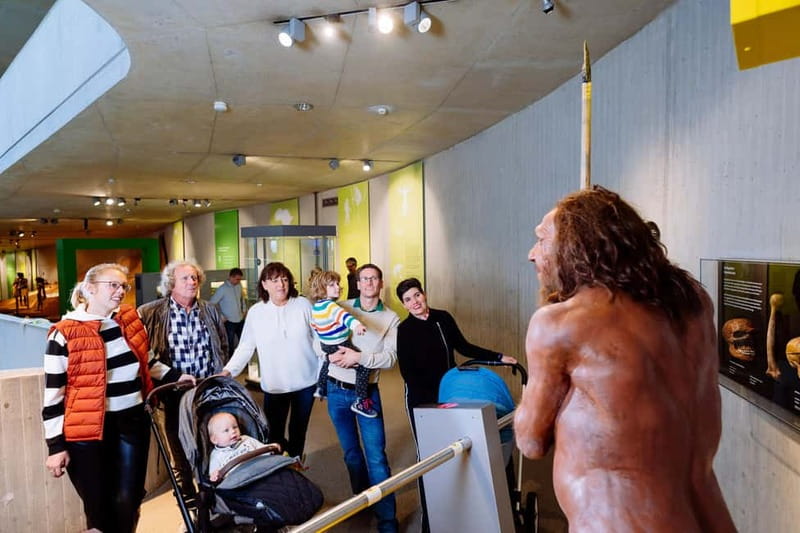
- Life-size reconstructions: Meet reconstructed ancestors, view large Neanderthal bones, and see baby mammoth Tinka.
- A strong family day out: Add Europe’s largest Stone Age Playground, an Ice Age Animal Park, and an outdoor Art Trail.
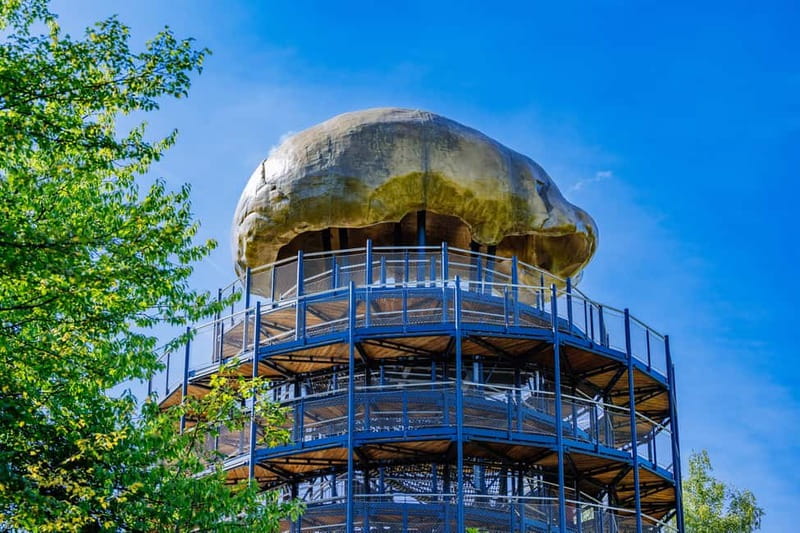
- Höhlenblick Tower: Look into the Ice Age gorge from a tower shaped like a Neanderthal skullcap.
- Useful practical setup: Your ticket is valid for one day, includes an English or German audio guide, and allows access to the special exhibition and outdoor sites.
Four Million Years of Human History in One Museum

The Neanderthal Museum in Mettmann tells a big story in a modern, approachable way. The route begins about four million years ago in the African savannahs and follows human development through the Stone Age and into the present.
That broad time span gives the visit a clear purpose. You are not simply looking at isolated bones or tools. You are following a long chain of change: early ancestors, migration, survival, social life, and the gradual development of modern humans.
The museum uses multimedia installations and hands-on stations rather than relying only on printed panels. That matters because human evolution can become hard to follow when it is presented as a list of dates and species. Here, sound, images, film, and physical displays help turn the subject into something you can grasp at your own pace.
You will also meet life-size reconstructions of human ancestors. These figures help you picture the people behind the archaeological evidence. For children, they make the subject less abstract. For adults, they provide useful visual context before you reach the discovery site outside.
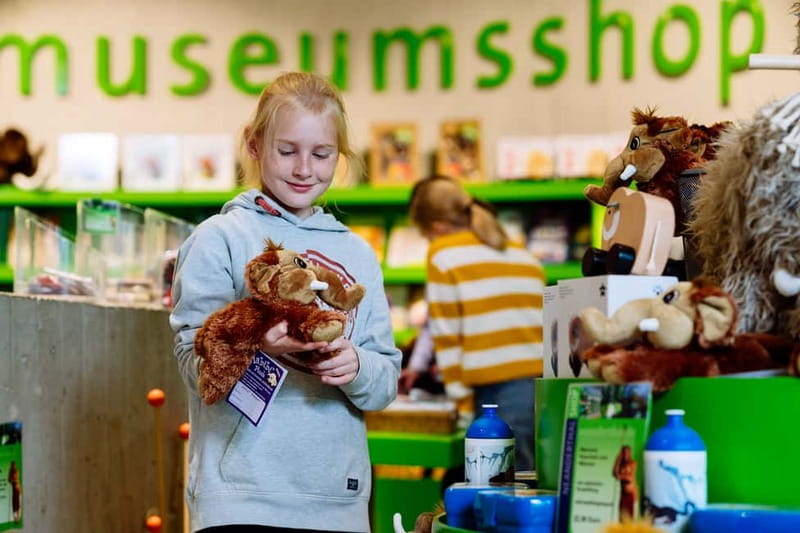
A baby mammoth called Tinka adds a lighter touch. Tinka is one of the details that helps keep the museum from feeling too solemn or academic. Families can move between serious questions about human development and the simple pleasure of seeing a large, friendly-looking prehistoric animal.
A few more museum visits around Germany worth comparing
- Berlin: Jewish Museum Berlin Entrance Ticket
★ 4.5 · 8,393 reviews - Berlin: DDR Museum Tickets
★ 4.3 · 3,443 reviews - Berlin: Natural History Museum Entrance Ticket
★ 4.6 · 3,382 reviews
The Permanent Exhibition: Allow Time to Listen and Read
Give the permanent exhibition at least one to two hours if you want to take in the main material. You can move more quickly, but the displays reward a slower pace, especially if you use the audio guide.
The audio guide is included with admission and is available in English and German. It gives the exhibition more structure, which is useful if you are not already familiar with Neanderthal science. Instead of guessing which displays matter most, you can follow the explanations as you go.
The museum is designed to work for different ages. Children can focus on hands-on stations and visual displays, while adults can spend more time with the explanations. That flexibility is one of the ticket’s strengths.
Still, this is not always a quiet museum visit. The permanent exhibition can become crowded, with lively children making it harder to hear the audio or read every panel. I would not treat that as a flaw in the subject or the displays, but it is a real planning point.
If you want peace and quiet, arrive near opening time if possible. Another good approach is to accept that you will not absorb every word. Choose the sections that interest you most, then use the outdoor sites to round out the visit.
The Neanderthal Discovery Site and Rabenstein
The museum is not placed at a random spot. Mettmann is connected to the discovery of the world-famous Neanderthal more than 160 years ago, and the surrounding valley gives the visit a stronger sense of place.
The route outside leads toward the discovery site. Along the way, you can hear stories from eyewitnesses connected with the valley’s past. These accounts add a human voice to the setting and help you picture how the area changed over time.
At the Rabenstein rock formation, you can see the discovery site. This is not just another outdoor stop to check off. It links the museum’s scientific story with the actual ground where the find became part of world history.
The setting also helps explain why the museum includes so much material about the lost cave. The original discovery cave is no longer there in its former form, so the experience uses reconstruction, sound, images, and virtual scenes to connect you with a place that has changed.
I would plan the outdoor route after the indoor exhibition, when the story is fresh in your mind. The site will mean more once you understand what was found and why it mattered.
Höhlenblick Tower and the Lost Ice Age Cave
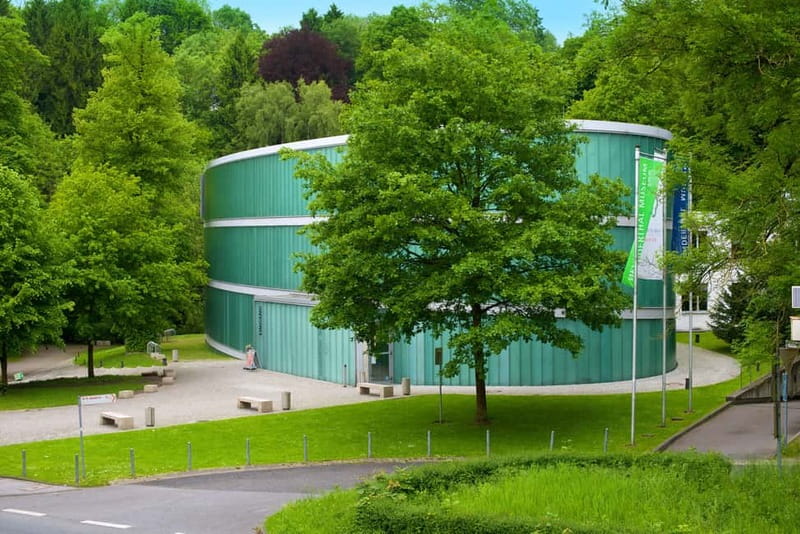
The Höhlenblick Tower is one of the most unusual parts of the visit. It offers a virtual Ice Age world at the same height as the lost discovery cave, giving you a sense of the valley from a position connected to the original find.
The tower’s roof is designed to resemble a Neanderthal skullcap. It is a playful architectural detail, but it also fits the subject without turning the place into a theme park.
From the tower, you can look into the depths of the Ice Age gorge. The outdoor route combines audio, pictures, and videos, so you are not left to interpret the view alone. The material explains what you are seeing and connects the modern valley with its earlier forms.
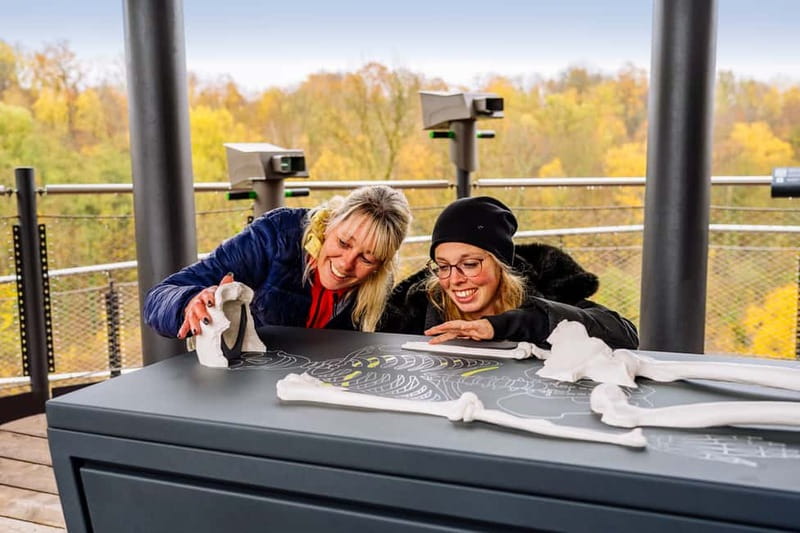
The tower includes life-size Neanderthal bones and a 360-degree video showing a Neanderthal burial. That film gives the visit a more personal dimension. Human evolution is not only about anatomy. Burial suggests social behavior, ritual, and the ways ancient people treated their dead.
There is also a climbing tunnel 20 meters above the ground. It offers a shortcut through the tower, though anyone uneasy with heights should take that detail seriously. The tower can still be worthwhile if you avoid the more challenging element, but the route may feel more comfortable for some people than others.
A useful detail for families is that the tower can be managed with a stroller, according to the practical experience of a recent visit. Even so, allow your group to move at its own pace, especially if children want to stop at the displays or adults want to listen to the full audio material.
Same city, a completely different collection:
- Berlin: Neues Museum Entry Ticket
★ 4.6 · 3,261 reviews - Berlin: Museum Island Multiple Museum Entry Ticket
★ 4.4 · 2,861 reviews - Cologne: Chocolate Museum Entrance Ticket
★ 4.4 · 2,790 reviews - Dresden: Church of Our Lady Guided Tour of Gallery
★ 4.7 · 2,421 reviews
Stone Age Playground, Animal Park, and Art Trail
The museum ticket is more than an indoor admission. The outdoor area can easily turn the visit into a half-day or full-day outing, particularly with children.
Europe’s largest Stone Age Playground gives young visitors room to run after time in the exhibition. That matters because even a well-designed museum asks children to stand, listen, and concentrate. The playground lets them reset without ending the day.
The Stone Age theme continues the museum’s main idea rather than feeling like a separate attraction. Children can connect play with the tools, shelters, and daily life they have just seen inside, even if they do not remember every scientific explanation.
The Ice Age Animal Park adds another reason to go outside. You can encounter bison in an open-air setting, bringing one part of the Ice Age world closer to the present. The animal enclosures are not a substitute for a zoo, and that is part of their appeal. They support the museum story instead of competing with it.
The Art Trail offers a quieter way to explore the grounds. If your group has had enough screens and audio, a walk gives you time to look around and take in the valley. The route also helps spread your visit across the site, which can make a crowded indoor period easier to manage.
In dry weather, plan two or three hours outdoors if you want to include the trail, playground, tower, and animal enclosures. In wet weather, the museum and special exhibition can still provide roughly two hours indoors, though the outdoor experience will be less comfortable.
The Special Exhibition Adds Flexibility
Admission includes the current special exhibition as well as the permanent exhibition. Since the theme can change, you should check what is showing when you plan your visit.
The special exhibition can be a strong part of the day rather than a brief extra room. A recent setup was well suited to both younger and older visitors and could occupy one to two hours. That makes the combined ticket more useful, especially on a rainy day.
I like having a changing exhibition included because it gives repeat visitors a reason to return. The permanent displays tell the core story of human evolution, while the special exhibition can approach the past from a different angle.
Allow enough time for both areas if you are interested in the subject. If you are mainly visiting for the tower and discovery site, you can move more quickly indoors, but rushing through the special exhibition may mean missing some of the best material.
How Long Should You Spend at the Museum?
The ticket is valid for one day, so you do not need to force the entire visit into a short window. That is important because the museum and outdoor attractions work best as separate parts of one visit.
For a quick visit, allow about two hours for the indoor galleries. This gives you time for the main exhibition and at least some of the special exhibition, though you may not hear every audio segment.
For a fuller visit, plan four to five hours. That allows one to two hours indoors, followed by two or three hours outside for the discovery route, Höhlenblick Tower, playground, animal park, and Art Trail.
Families may need longer because the playground can easily extend the day. Adults who want to read and listen carefully may also need more time than children who move from one visual display to the next.
I would avoid setting a strict timetable unless you have other plans in Mettmann. The best rhythm is simple: museum first, outdoor route next, then playground or animal park as your group prefers.
Is the Admission Good Value?

No ticket price is provided here, so I cannot judge the exact cost. I can judge what the admission covers, and the package is broad.
You receive access to the permanent museum, the current special exhibition, the Neanderthal Discovery Site, and Höhlenblick Tower. The English or German audio guide is included, which saves you from paying extra for the main interpretive tool.
The outdoor attractions are what make the ticket particularly useful for families. A museum admission that also gives you a playground, animal park, trail, and tower can support a full day rather than a short indoor stop.
For adults focused only on human evolution, the value depends on how long you spend with the displays. If you listen to the audio guide and take the outdoor route, the ticket offers more substance than a quick museum visit.
Food and drinks are not included. Plan for that before you arrive, especially with children who may need a break after the galleries. The available information does not specify food arrangements on site, so do not assume a meal is part of the ticket.
The booking terms also make planning easier. You can reserve now and pay later, and cancellation is free up to 24 hours in advance for a full refund. That flexibility is useful when you are building a day around changing weather.
Who Will Enjoy This Visit Most?
Families are the clearest match. The combination of life-size ancestors, Tinka the baby mammoth, hands-on stations, the Stone Age Playground, and bison gives children several ways to stay interested.
Adults who like archaeology, anthropology, and local history will find enough detail to make the visit worthwhile. The audio guide helps if you want more context than the visual displays provide.
It also suits mixed-age groups. Older visitors can spend time with the exhibition and burial film, while younger children can move toward the playground and animal enclosures when their attention fades.
The visit may be less suitable if you want a silent, gallery-like museum. The permanent exhibition can be lively and crowded, and children are an important part of the experience. You should also think carefully about the tower if anyone in your group is uncomfortable with heights.
The museum is wheelchair accessible. That is useful for planning a visit that includes different mobility needs, though the outdoor route and tower may still deserve a practical check with the venue if your group has specific requirements.
Practical Tips for a Better Day
Use the audio guide, especially if you are visiting in English. It gives you a clearer path through a subject that can otherwise feel packed with unfamiliar names and dates.
If reading every panel matters to you, arrive early and avoid the busiest period. You can also split your attention, letting children explore the hands-on stations while adults listen to selected sections.
Wear comfortable shoes for the outdoor route. The day may include the discovery site, Rabenstein, the tower, Art Trail, playground, and animal enclosures, so the experience is not limited to museum floors.
Give yourself flexibility around weather. Rain does not ruin the indoor visit, and the special exhibition can help fill a two-hour stay. Dry weather makes the outdoor section much more rewarding, especially if children want time at the playground.
Do not leave the tower until the end if you are short on time. It is one of the most distinctive parts of the site and includes the virtual Ice Age view, bones, burial film, and valley outlook. If the museum is crowded, the tower and outdoor route also provide a welcome change of pace.
Should You Book the Neanderthal Museum?
You should book this admission if you want more than a standard museum visit. The strongest reason is the complete mix: four million years of human evolution indoors, the actual discovery area outside, and family-friendly attractions that can fill the rest of the day.
I would especially recommend it to families, curious adults, and anyone staying in North Rhine-Westphalia who wants a museum with a clear local connection. The audio guide, special exhibition, and multimedia displays give adults substance, while Tinka, the playground, bison, and tower keep the day moving.
Think twice if you want a quiet, highly focused study visit or if heights are a serious concern. Even then, you can enjoy the main museum and much of the outdoor area without treating every tower feature as essential.
For most visitors, the ticket is best viewed as a full-day outing rather than a one-hour museum stop. Plan around four to five hours, bring patience for lively galleries, and leave room for the discovery site and playground. That is when the Neanderthal Museum feels most complete.
FAQ
Where is the Neanderthal Museum?
The museum is in Mettmann, in North Rhine-Westphalia, Germany.
How long is the admission valid?
The ticket is valid for one day.
What does the admission ticket include?
It includes entry to the Neanderthal Museum, the current special exhibition, the Neanderthal Discovery Site, and Höhlenblick Tower.
Is an audio guide included?
Yes. An audio guide is included with admission.
Which languages are available for the audio guide?
The audio guide is available in English and German.
Does the ticket include food or drinks?
No. Food and drinks are not included.
Is the museum wheelchair accessible?
Yes. The activity is listed as wheelchair accessible.
Can I cancel my booking?
Yes. You can cancel up to 24 hours in advance for a full refund.
Can I reserve now and pay later?
Yes. The reserve-now, pay-later option lets you book without paying at the time of reservation.
Just added around Germany
- Stuttgart: Stuttgart Wine Museum Wine Tasting★ 4.7 · 55 reviews
- Stuttgart: Museum of Illusions Entry Ticket★ 4.2 · 507 reviews
- Stein: Public guided tour of the “Old Mine” museum★ 4.5 · 18 reviews
- Speyer: Technik Museum Speyer Ticket with an IMAX Dome Film★ 4.7 · 360 reviews
- Berlin: Bode Museum Ticket★ 4.5 · 214 reviews
- Munich Private Walking Tour with BMW Museum & Welt Entry★ 4.2 · 19 reviews
- Munich: Residenz Palace, Museum and Treasury Private Tour★ 4.9 · 15 reviews
- Munich: WOW Museum – Room for Illusions Ticket★ 3.5 · 14 reviews
Museum Tours in Germany, compared.

Dresden: Church of Our Lady Guided Tour of Gallery
Read our review →
Skip-the-Line: Berlin Wall Museum at Checkpoint Charlie
Read our review →Browse the lists this tour appears in