
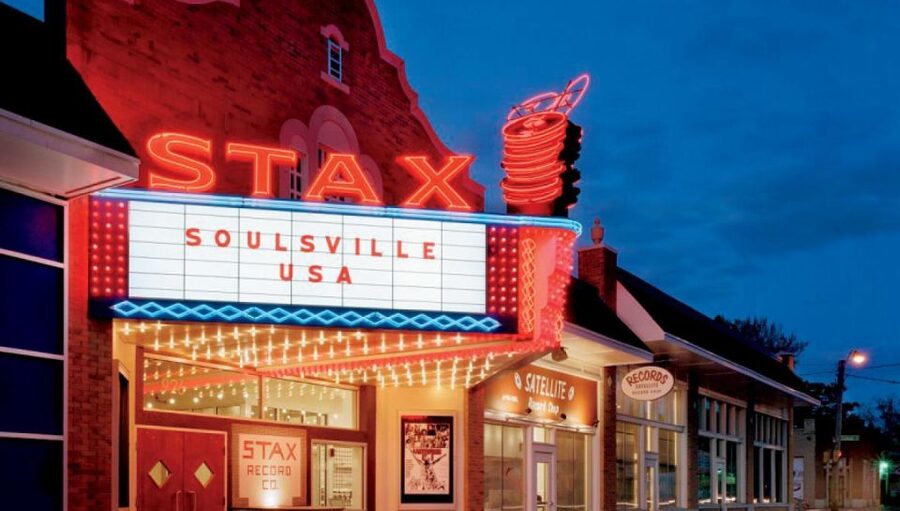
Review · THE USA
Memphis: Stax Museum of American Soul Music
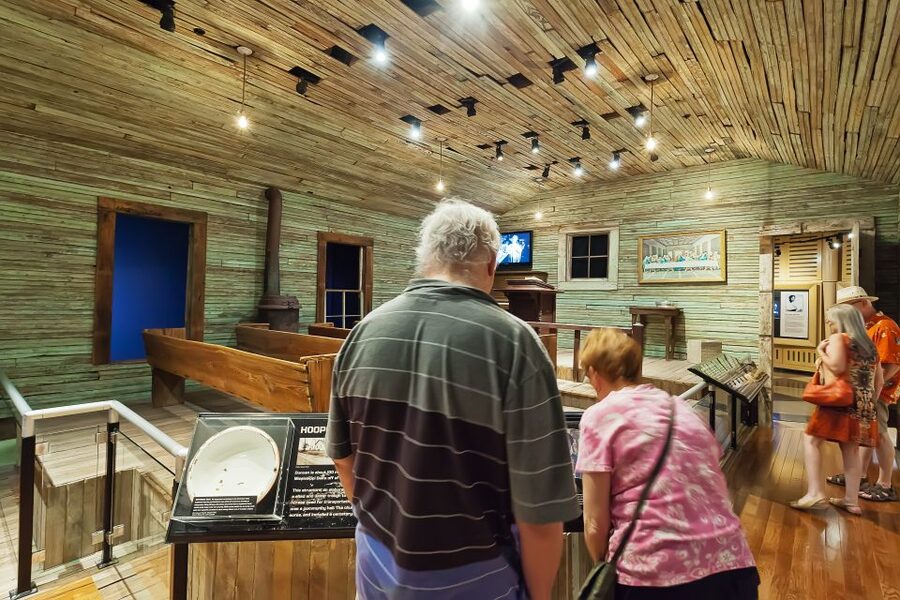
The first surprise at Stax Museum is a real circa-1906 Mississippi Delta church rebuilt inside the museum. It makes the music’s gospel roots plain before you even reach the recording studios. From there, the story moves through artists, instruments, records, and the social changes that shaped Memphis soul.
I like the full-size Studio A replica, including the slanted floor linked to Stax’s famous sound. I also like Isaac Hayes’ outrageous Cadillac, complete with gold trim, white fur carpeting, television, and a refrigerated mini-bar. The main drawback is that a school group or busy crowd can make the exhibit areas noisy, so allow extra time if you want to read everything.
Key points to know before you go
- Start with the 1906 Mississippi Delta church: The museum connects Stax’s sound to Southern gospel in a memorable way.
- See the exact Studio A replica: Period recording equipment and the gently slanted floor show how records were made.
- Find every Stax release from 1957 to 1975: The hall of records displays albums and singles from Stax and its subsidiary labels.
- Inspect Isaac Hayes’ custom Cadillac: Its $26,000 price tag in 1972 bought 24-karat gold exterior trim, white fur carpeting, a television, and a refrigerated mini-bar.
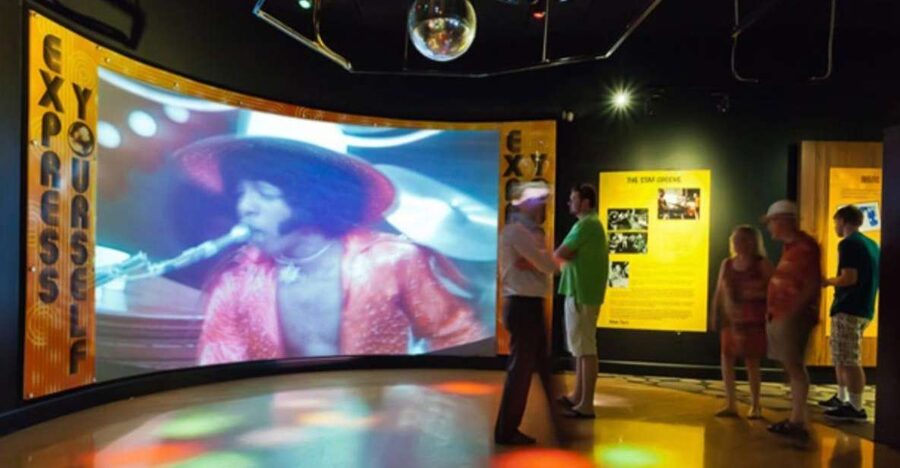
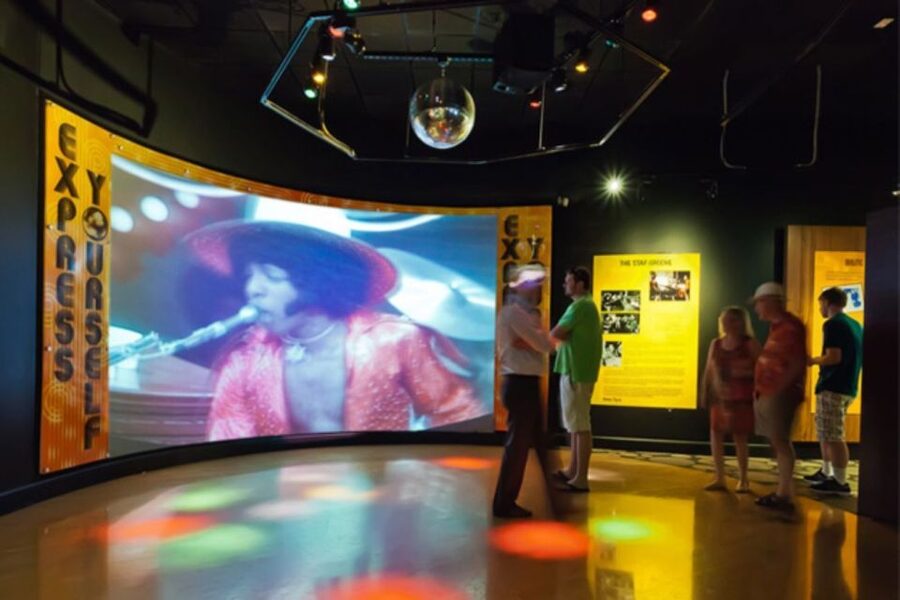
- Use the Express Yourself dance floor: Vintage Soul Train footage gives you a bit of help with the moves.
- Plan on roughly two hours: The $20 admission offers enough material for music fans and history buffs to spend a full morning or afternoon.
Why the church comes first
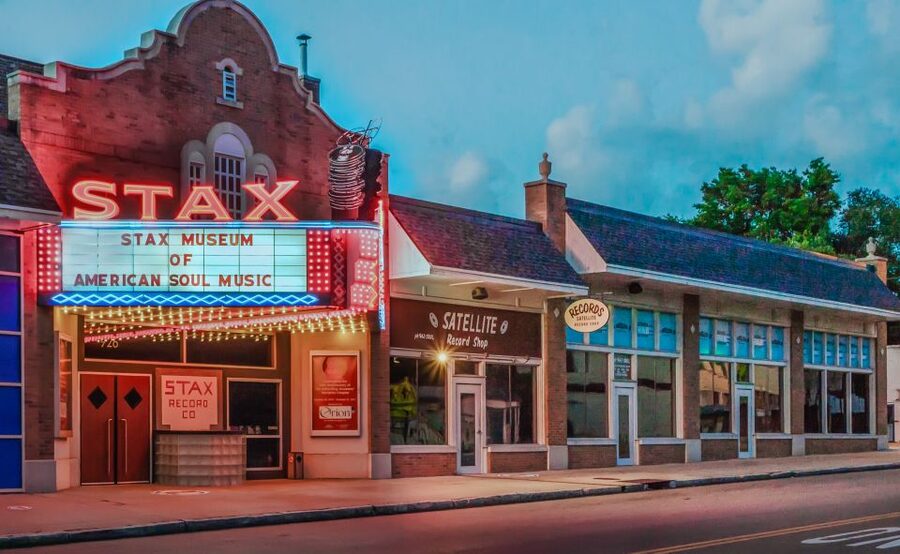
At 926 E McLemore Ave, the Stax Museum begins with a building that looks far removed from a recording studio. Inside, though, a Mississippi Delta church from around 1906 has been carefully taken apart and reassembled. This is not a small decorative reference to gospel music. It is a full setting that gives the opening of the visit a sense of place.
That choice matters because Stax soul did not appear from nowhere. The museum starts with the sound of Southern gospel, then shows how that tradition fed into the music recorded in Memphis. You get an immediate reminder that soul was built from voices, rhythm, faith, and community, not simply from studio technology.
I would take a few minutes here before rushing toward the famous cars and album covers. The church provides the frame for the rest of the museum. It also helps visitors who know the hits but have less background on the music that came before them.
A few more museum visits around the USA worth comparing
- NYC: 9/11 Memorial & Museum Timed-Entry Ticket
★ 4.8 · 31,428 reviews - NYC: Empire State Building Tickets – Observatory & Museum
★ 4.7 · 25,757 reviews - New York City: American Museum of Natural History Ticket
★ 4.5 · 15,447 reviews
From gospel sounds to Stax records
As you move farther into the museum, the focus shifts from musical roots to the people and working methods behind Stax. The exhibits connect recording artists, record producers, musicians, and the business side of the label. The story also reaches beyond individual songs, placing Stax within the social and political changes of its period.
This is one reason the museum works for more than dedicated soul fans. You can come for familiar names and leave with a better grasp of how a record label operated, how artists built careers, and how Memphis fit into a wider American music story. The displays use photographs, videos, memorabilia, and written information, so you are not asked to rely on music alone.
The museum covers Stax releases from 1957 through 1975. That span gives the visit a clear shape. You are not wandering through an endless collection of unrelated objects. Instead, you are following a label through a defined period of recording and cultural change.
A few exhibits may bring back strong memories if you grew up with this music. If you did not, the museum still gives you a useful route into the songs. The presentation explains enough for newcomers while offering plenty of material for people who already know the artists.
Studio A shows how the records were made

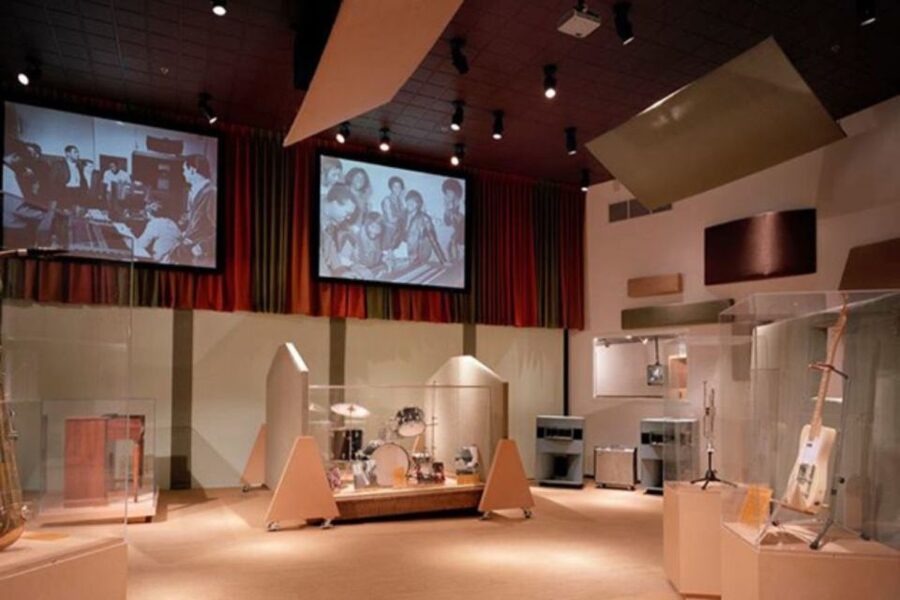
The Studio A exhibit is one of the visit’s strongest stops. It is an exact replica of the legendary converted movie theater where Stax artists recorded. Even the gently slanted floor is reproduced, because that unusual feature contributed to the studio’s sound.
That detail is more useful than a generic display of old microphones. It shows how a physical room can affect the music made inside it. You can also see period recording equipment in the control room, giving you a closer look at the practical side of recording.
I like this part because it shifts the museum from biography to craft. The exhibits do not only tell you who sang a song. They show where musicians worked and what surrounded them while they made the records.
If you are interested in recording, this may be the section where you spend the most time. If you mainly want famous costumes or celebrity objects, it may feel more technical. Still, the room is easy to appreciate because the slanted floor gives you a concrete detail to remember.
The hall of records puts Stax’s scale on view
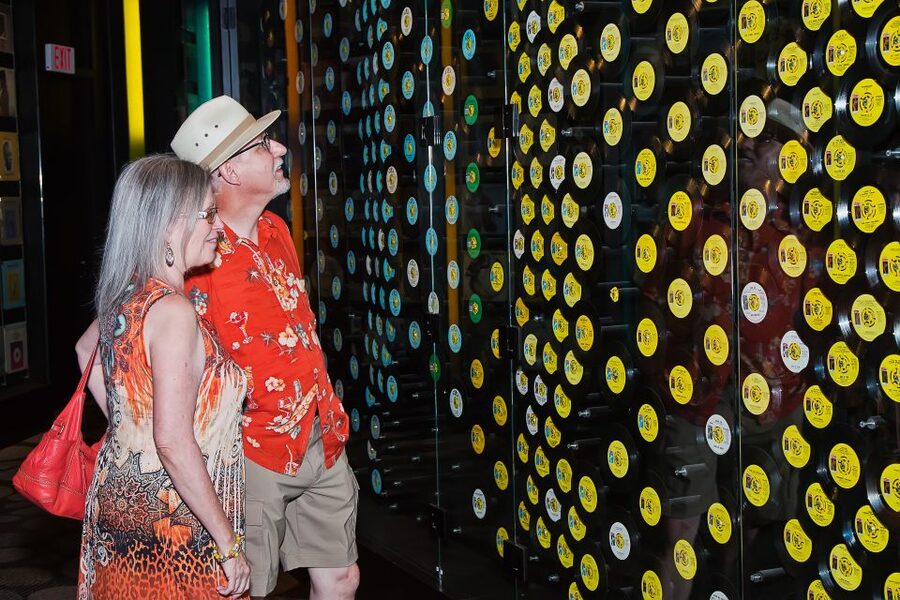
The hall of records is a wall-to-wall record collection covering albums and singles released by Stax and its subsidiary labels between 1957 and 1975. Floor-to-ceiling cases turn the label’s output into a visual timeline.
This is a good place to slow down. You can look at the album art, recognize familiar releases, and notice records you may not know. A listening station lets you hear classic tracks and find new favorites rather than treating the records as silent objects behind glass.
The hall also makes the scale of Stax’s work easier to grasp. A handful of celebrated songs can make a label seem like a short chapter in music history. Rows of albums and singles show a larger operation, with many performers and releases contributing to the sound.
You do not need to read every item to enjoy this room. I would choose a few records that catch your eye, then use the listening station to connect the artwork with the music. That approach keeps the visit moving without reducing the hall to a quick photo stop.
Same city, a completely different collection:
- NYC: Museum of Modern Art (MoMA) Entry Ticket
★ 4.6 · 12,540 reviews - 9/11 Memorial, Ground Zero Tour with Optional 9/11 Museum Ticket
★ 5.0 · 6,381 reviews - 9/11 Memorial Museum Admission Ticket
★ 4.5 · 6,376 reviews - All-Access 9/11: Ground Zero Tour, Memorial and Museum, One World Observatory
★ 5.0 · 4,886 reviews
Isaac Hayes’ Cadillac is gloriously excessive
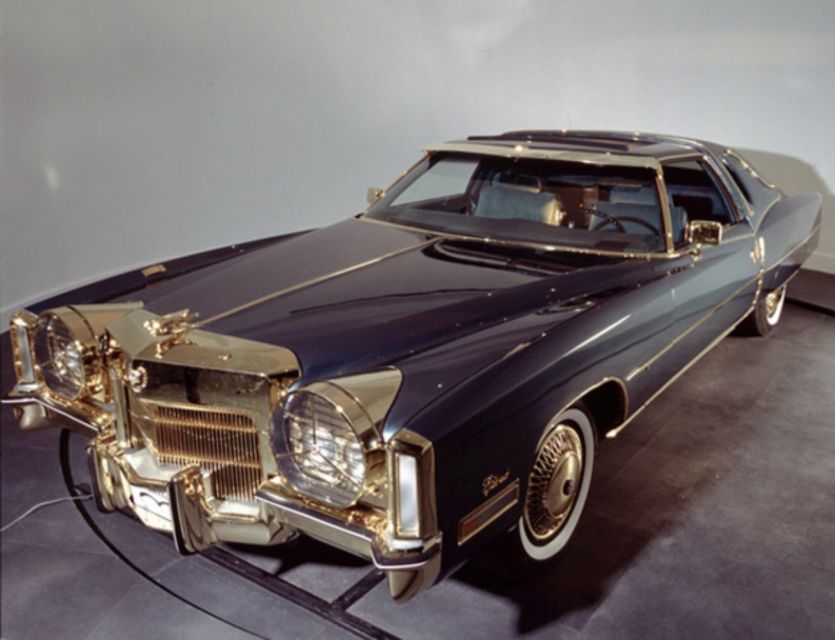
Isaac Hayes’ custom Cadillac Eldorado is the museum’s most playful object. It was purchased in 1972 as part of Hayes’ renegotiated deal with Stax and cost $26,000 at the time. In 2013 dollars, that was about $143,000.
The car comes with the sort of details that make you look twice: 24-karat gold exterior trim, white fur carpeting on the floorboards, a television, and a refrigerated mini-bar. It is a car, a lounge, and a very visible sign of success rolled into one.
This exhibit works because it tells a business story as well as a celebrity story. Hayes’ contract negotiations and the car’s cost show how recording success could translate into material rewards. The vehicle also gives the museum a little humor after the denser sections on music and social change.
Take time to look closely rather than treating it as a quick snapshot. The unusual features are the point. You can also use the car as a marker in your visit: if you have reached Hayes’ Cadillac, you are well into the museum’s collection of memorable objects.
The Express Yourself floor keeps the visit active
Most music museums ask you to stand still and read. Stax gives you a chance to move on the Express Yourself dance floor. Vintage Soul Train episodes play beside it, offering inspiration if your own footwork needs help.
This is more than a novelty. Soul music is physical, and a dance floor gives the museum a way to express that without adding a formal performance. You can watch the old footage, try a few moves, or simply enjoy the change of pace.
I would not skip this section because you think you are not a dancer. The museum clearly allows you to have fun with it, and the point is participation rather than skill. It can also be a useful break for children and for anyone who has spent a long stretch reading display text.
The dance floor may feel less appealing if you prefer a quiet museum visit. It also has the potential to become noisy when the building is busy. Still, it gives Stax more personality than a collection made only of labels, cases, and screens.
How long to allow, and who will enjoy it
The formal validity is one day from first activation, but you do not need a full day to see the museum. A visit of about two hours gives you time for the church, Studio A, the hall of records, the Cadillac, the dance floor, photographs, and written displays. If you read every panel or listen carefully at the station, you could easily use more time.
Music fans are the obvious audience, but I would also recommend the museum to people interested in American history, recording technology, popular culture, and the business of entertainment. Several exhibits connect the music to wider social and political changes, so the visit is not limited to a particular generation or musical taste.
You can also bring someone who is not already a Stax fan. The museum’s route from gospel to studio work to records and performers gives a newcomer enough context. The mix of sound, objects, video, and photographs keeps the experience from depending on prior knowledge.
The museum is wheelchair accessible. The listed host or greeter language is English, and the activity information does not identify a named guide. Treat this as a museum visit with access to the exhibits rather than a tour led by a particular personality.
Is $20 a fair price?
Admission is $20 per person, with access to all exhibits included. I consider that fair value if you plan to spend around two hours inside, especially because the visit combines a reconstructed historic church, a full studio replica, a listening station, video material, instruments, records, and a major display object in the Cadillac.
The value improves for anyone who enjoys more than simply looking at memorabilia. You get context about the label, the musicians, the recording process, and the period around the music. The museum also makes room for personal discovery through the listening station, so you are not limited to the best-known hits.
The price may feel less appealing if you want a short photo stop or have little interest in music and social history. Stax rewards attention. You will get more from it if you are willing to read, listen, and connect the exhibits rather than moving through quickly.
The booking terms also give you some flexibility. You can reserve and pay later, and cancellation is free up to 24 hours before the visit for a full refund. Pets are not allowed, flash photography is not allowed, and video recording is not allowed.
A practical plan for your visit
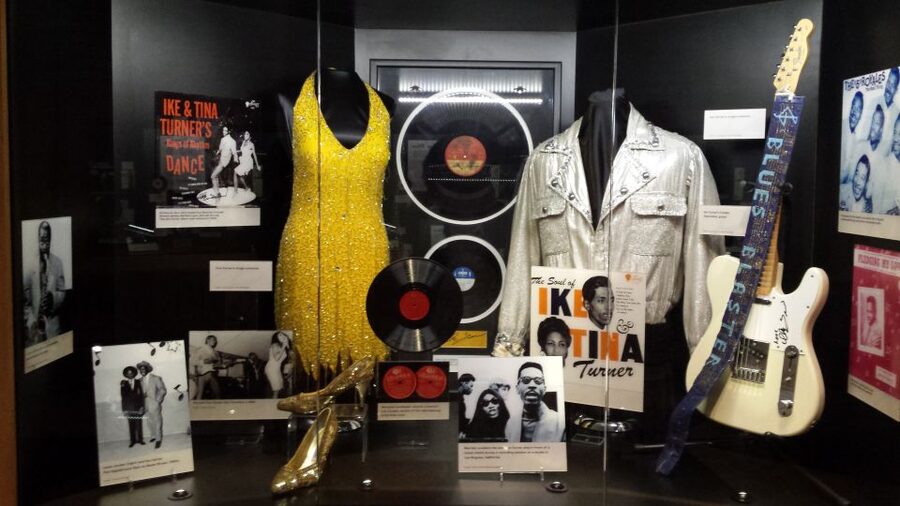
Begin with the church and resist the urge to hurry to the Cadillac. The opening section explains the gospel roots that give the later exhibits their meaning. From there, move through the story of Stax, then spend proper time in Studio A and the control room.
Next, use the hall of records as a listening and browsing stop. Choose a few albums or singles to investigate rather than attempting to take in every case. Finish with the Cadillac and the Express Yourself floor, which provide a lively ending after the more information-heavy displays.
If you arrive during a school visit or another busy period, you may find the reading areas harder to enjoy. One recorded visit became less comfortable when a loud school group arrived, forcing people to rush through. I would give yourself extra time and step back to another exhibit if a crowded room gets in the way.
Flash photography and video recording are not permitted, so plan to experience the displays without documenting every corner. The museum is in Memphis, Tennessee, and the meeting point is the Stax Museum of American Soul Music at 926 E McLemore Ave.
Should you book the Stax Museum?
Book it if you want a clear, well-organized look at how Memphis soul grew from gospel, took shape in a recording studio, and reached a wide audience through Stax releases. The museum’s strongest features are its scale, its physical settings, and its ability to connect music with the people and events around it.
I would give it priority if you enjoy music history, American cultural history, recording equipment, or classic album art. The visit also works well for a mixed group because the church, Cadillac, videos, dance floor, and listening station offer different ways to engage.
Skip it only if your Memphis plans leave no room for a two-hour museum visit or if you have little interest in music-related exhibits. For $20, the Stax Museum gives you far more than a display of famous objects. It shows how a sound was built, recorded, packaged, and remembered.
FAQ
Where is the Stax Museum of American Soul Music?
The museum is at 926 E McLemore Ave, Memphis, Tennessee 38126, USA.
How much does admission cost?
Admission costs $20 per person and includes access to all exhibits.
How long does a visit take?
Plan for about two hours. You can spend longer if you read the displays closely or use the listening station at length.
Is the museum wheelchair accessible?
Yes, the museum is wheelchair accessible.
What language is available?
The listed language is English, and the host or greeter is also English-speaking.
Can I take photographs or record video?
Flash photography and video recording are not allowed. The activity information specifically prohibits both.
Can I cancel my booking?
Yes. You can cancel up to 24 hours in advance for a full refund. You can also reserve now and pay later.
Just added around the USA
- Museum of Ice Cream Austin★ 3.5 · 85 reviews
- Admission to Richard Nixon Presidential Library and Museum Ticket★ 5.0 · 123 reviews
- The Turquoise Museum Curator’s Tour★ 5.0 · 12 reviews
- Turquoise Museum Visit★ 4.5 · 194 reviews
- Orlando: Titanic Artifact Exhibition Ticket★ 4.5 · 246 reviews
- The St. Augustine Old Jail Museum Guided Tour★ 4.6 · 68 reviews
- San Diego: San Diego Natural History Museum Ticket★ 4.7 · 33 reviews
- The Museum of Fine Arts, Houston Entry Ticket★ 4.6 · 82 reviews
Museum Tours in the USA, compared.




9/11 Memorial, Ground Zero Tour with Optional 9/11 Museum Ticket
Read our review →

All-Access 9/11: Ground Zero Tour, Memorial and Museum, One World Observatory
Read our review →

Browse the lists this tour appears in