
Review · THE USA
Houston Museum of Natural Science: Butterfly Center Ticket
The best part of Houston’s Cockrell Butterfly Center is the setting: a three-story glass conservatory wrapped around a 50-foot waterfall. Inside, more than 1,500 live butterflies move through tropical plants, sip nectar, and sometimes land on visitors.
I like the sheer number of butterflies and the mix of live creatures, preserved specimens, models, and hands-on displays. I also like that the center explains why insects matter to people instead of treating them as decoration. The main consideration is time: $15 is fair, but the core visit may take only about 45 minutes.
Key points to know before you go
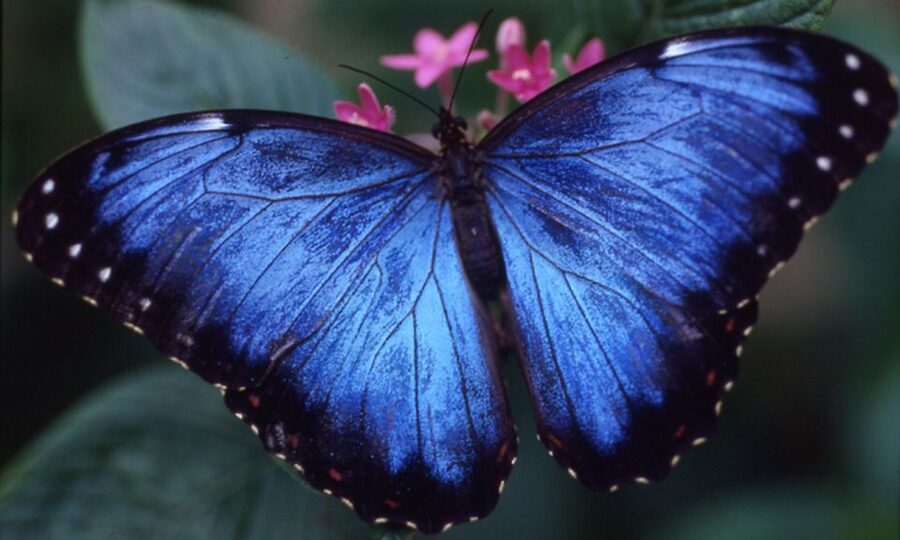
- A 50-foot waterfall forms the center of the rainforest habitat, creating a striking setting for the butterfly walk.
- More than 1,500 butterflies fill the conservatory, with about 50 of the world’s largest and most colorful species represented.
- The visit goes beyond butterflies, with leaf-cutter ants, giant wasp nests, cockroaches, insect models, and preserved specimens.
- Interactive displays make the science practical, including insect camouflage, crime-solving, weather, and the work of entomologists.
- Plan on roughly 45 minutes, though you may stay as long as you like inside the conservatory.
- The $15 ticket covers only the Cockrell Butterfly Center, not transportation, food, or other Houston Museum of Natural Science exhibits.
Entering a three-story rainforest beneath a 50-foot waterfall
The Cockrell Butterfly Center gives you a strong first impression before you even start looking for butterflies. The conservatory is a tall glass structure built around a 50-foot waterfall, so the architecture and water feature become part of the experience.
You walk into a simulated tropical rainforest filled with exotic plants and moving wings. The glass walls let in natural light, while the height of the building gives the habitat a sense of space that a small indoor butterfly room could not match.
I like this arrangement because it makes the visit feel less like a display case and more like a short walk through a living habitat. You are not simply standing in front of labeled specimens. You are watching butterflies move through plants, pause for nectar or fruit juices, and choose their own paths.
The center imports butterflies from butterfly farms around the world. The activity information identifies about 50 of the world’s largest and most colorful species, while the habitat holds more than 1,500 butterflies in total. That means you should expect plenty of movement, though not every species will be equally easy to spot during your visit.
A few more museum visits around the USA worth comparing
- NYC: 9/11 Memorial & Museum Timed-Entry Ticket
★ 4.8 · 31,428 reviews - NYC: Empire State Building Tickets – Observatory & Museum
★ 4.7 · 25,757 reviews - New York City: American Museum of Natural History Ticket
★ 4.5 · 15,447 reviews
Watching butterflies at close range
The main attraction is the live butterfly habitat. You stroll along the paths and look for butterflies resting on leaves, feeding, or passing through the open air around you.
This is a good place to slow down. Butterflies are small and unpredictable, so a quick walk can mean missing much of what makes the center special. Look at the plants as well as the open air. A butterfly may sit quietly for a moment, then disappear into the foliage.
The setting also gives you a chance to see how butterflies behave when they are not pinned behind glass. Some may come close to the path. Some may land on a visitor. There is no promise that one will choose you, but the possibility adds a little fun, especially for children.
Flash photography is not allowed. That rule protects the animals and keeps the habitat calmer, but it also matters if you are hoping to take close-up photographs. Bring a camera if you like, but plan to use it without flash.
The center works well for people who enjoy observation more than speed. You may spend as long as you want in the conservatory, but 45 minutes is a sensible estimate for the main visit. Add more time if you like reading displays, waiting for a butterfly to settle, or exploring the insect exhibits below the waterfall.
The insect exhibits add useful context
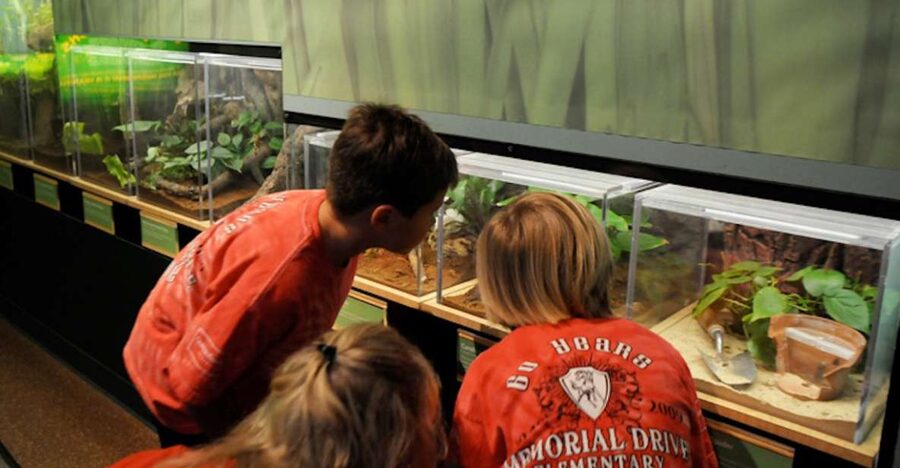
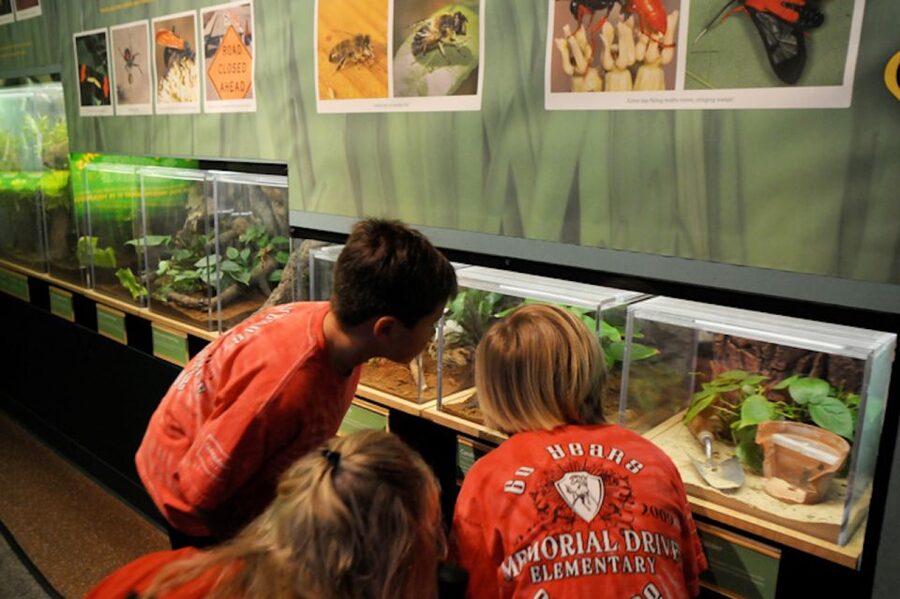
The Cockrell Butterfly Center does not stop with pretty wings. It also presents living insects, mounted specimens, large models, and interactive games and quizzes.
You can search for camouflaged creatures, which turns looking closely into part of the exhibit. A cricket weatherman explains one unusual connection between insects and weather. Another section shows how insects can help solve crimes, giving the science a practical angle that may appeal to older children and adults.
You can also watch leaf-cutter ants at work. Their activity gives you a direct look at insect cooperation and labor. Giant wasp nests and some of Houston’s largest cockroaches provide a less delicate side of the visit. The center includes the strange, useful, and slightly creepy parts of insect life, not just the beautiful ones.
That balance is one of the ticket’s strengths. If you come only for butterflies, you will get them. If you want more substance, the displays explain how insects fit into human life and the wider natural world.
Some of the larger models and specimens are especially useful for seeing details that would be hard to notice on a live insect. The live exhibits show behavior. The mounted specimens show shape and structure. The two formats work well together.
Looking behind the waterfall at insects and human life
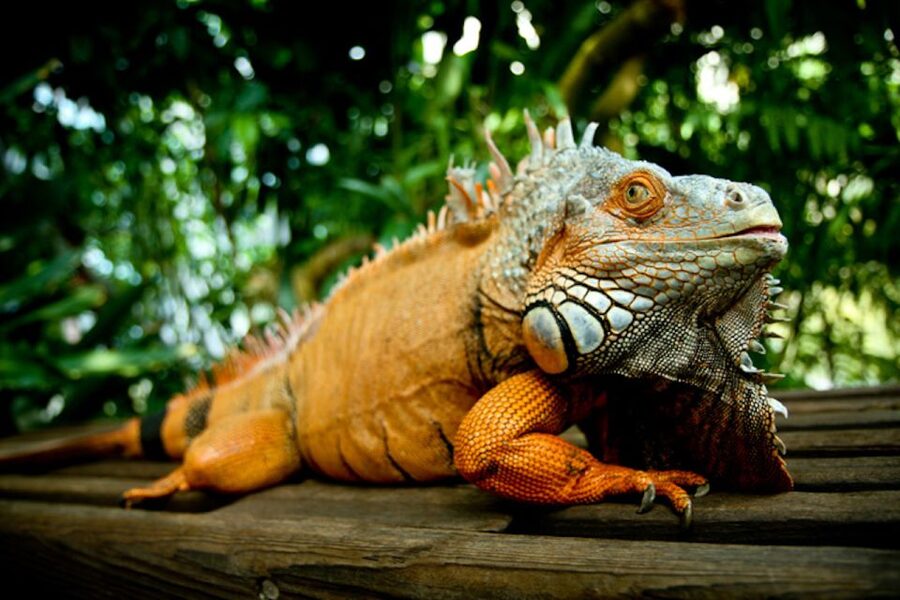
Under the waterfall and behind the cenote pool, the center focuses on the importance of insects to people. This section gives the visit a clearer purpose.
You can listen to interviews with real-life entomologists and look into an entomologist’s lab. The lab display lets you examine insect specimens up close and see how specialists study them.
I appreciate this part because it moves the experience past simple entertainment. Butterflies draw you in, but the lab and interviews explain why insect study matters. The displays connect small creatures with food systems, science, crime investigation, and daily human life without requiring you to already know much about entomology.
The center also makes room for curiosity. You can look at unusual body shapes, compare specimens, and think about camouflage or insect behavior. For families, that variety helps prevent the visit from becoming a single long walk through one type of display.
Same city, a completely different collection:
- NYC: Museum of Modern Art (MoMA) Entry Ticket
★ 4.6 · 12,540 reviews - 9/11 Memorial, Ground Zero Tour with Optional 9/11 Museum Ticket
★ 5.0 · 6,381 reviews - 9/11 Memorial Museum Admission Ticket
★ 4.5 · 6,376 reviews - All-Access 9/11: Ground Zero Tour, Memorial and Museum, One World Observatory
★ 5.0 · 4,886 reviews
How long the visit takes and how to plan it
The ticket is valid for one day, and the conservatory lets you stay as long as you like once inside. Still, the practical planning figure is about 45 minutes.
That makes the center easy to fit into a Houston day. You do not need to reserve a full afternoon for it, though you can spend longer if you read every display and take your time with the habitat. The last entry is at 4:00 p.m., so do not leave this stop until the end of the day without checking the clock.
The ticket is for the Cockrell Butterfly Center only. Transportation, food, drinks, and other museum exhibits cost extra or require separate admission. This matters because the Houston Museum of Natural Science offers more to see, but the $15 price should be judged as the cost of this one center, not the entire museum.
There are no transportation arrangements included. You need to make your own way to the Cockrell Butterfly Center at the Houston Museum of Natural Science.
Is the $15 ticket good value?
At $15 per person, the ticket is a reasonable buy for anyone who likes butterflies, insects, or compact indoor attractions. You get a substantial live habitat, a dramatic waterfall, many butterflies, and a set of science displays for a modest admission price.
The value is strongest when you treat the center as more than a photo stop. If you walk through quickly, take a few pictures, and leave after 15 minutes, the price may feel less convincing. If you spend 45 minutes watching the habitat and exploring the insect exhibits, the ticket makes better sense.
The activity has also received a 4.7 rating from 87 reviews, and one verified booking described the center as beautiful and enjoyable enough for a birthday visit with friends. That fits the experience well: the conservatory has a special-event feel without requiring a full-day commitment.
Still, keep your expectations in check. This is not a guided tour with a named expert leading a group, and no guide is listed for the experience. It is a self-directed visit, which suits you if you prefer to set your own pace. If you want a formal lecture or a scheduled presentation, this ticket does not promise one.
Who will enjoy the Cockrell Butterfly Center most?
Families with children should find plenty to hold their attention. The butterflies provide immediate visual appeal, while the games, camouflage displays, ants, models, and interactive quizzes offer changes of pace.
It also suits couples, adult friends, birthday outings, and anyone looking for a calm indoor activity. The verified birthday visit is a useful clue: the setting feels special enough for a celebration, but the visit remains easy to fit into a larger day.
Nature lovers will appreciate the chance to see live butterflies close up, especially in a setting designed to resemble a rainforest. People interested in science will get more from the entomologist lab, crime-solving displays, and insect behavior sections.
The center may be less satisfying if you want a long, structured tour or a large number of separate attractions under one ticket. The main habitat is the heart of the experience, and 45 minutes is a realistic estimate. You should choose it for quality and atmosphere rather than a full-day schedule.
The center is wheelchair accessible. Flash photography is not allowed, and the conservatory may be warm and humid because of its tropical setting, though the provided information does not specify temperature conditions.
Practical tips for a better visit
Arrive early enough to avoid rushing toward the 4:00 p.m. last entry. A late arrival can work, but it gives you less freedom to linger if you find an active area or want to read the science displays.
Give yourself at least 45 minutes, even if you are visiting as part of a packed Houston itinerary. The waterfall and live habitat deserve more than a fast circuit.
Keep your camera ready but leave the flash off. You may get a close view of a butterfly, but you cannot control where one lands or how long it stays still.
Look in three directions: at eye level for butterflies in flight, into the plants for resting insects, and around the lower exhibits for specimens and interactive displays. The center rewards careful looking.
If you are booking ahead, the activity allows cancellation up to 24 hours before the visit for a full refund. You can also reserve now and pay later, which is useful if your Houston plans are still shifting. Check available starting times when booking, since the ticket is valid for one day rather than an unlimited multi-day visit.
Should you book this butterfly center ticket?
Book it if you want a visually striking indoor stop with live animals, a short time commitment, and more science than the average butterfly exhibit. The combination of a 50-foot waterfall, more than 1,500 butterflies, insect displays, and an entomology lab gives the $15 ticket solid value.
I would especially recommend it for families, first-time visitors to Houston, birthday outings, and anyone who enjoys close observation. You should skip it if you want a long guided tour or if your only goal is to cover every major museum exhibit with one admission.
For most people, the sensible plan is simple: allow about 45 minutes, enter before 4:00 p.m., keep the flash off, and take time to look beyond the butterflies. That is where the Cockrell Butterfly Center earns its ticket price.
FAQ
Where is the Cockrell Butterfly Center?
It is located at the Houston Museum of Natural Science in Houston, Texas.
How much does admission cost?
The listed price is $15 per person.
How long does the visit take?
You may stay as long as you like in the conservatory, but 45 minutes is a reasonable estimate.
What is the last entry time?
The last entry of the day is at 4:00 p.m.
What does the ticket include?
The ticket includes entrance to the Cockrell Butterfly Center.
Are other museum exhibits included?
No. Additional museum exhibits and experiences are not included.
Is transportation included?
No. You need to arrange your own transportation to the Cockrell Butterfly Center.
Can I take photographs?
Photography is allowed, but flash photography is not allowed.
Is the center wheelchair accessible?
Yes, the activity is wheelchair accessible.
Just added around the USA
- Museum of Ice Cream Austin★ 3.5 · 85 reviews
- Admission to Richard Nixon Presidential Library and Museum Ticket★ 5.0 · 123 reviews
- The Turquoise Museum Curator’s Tour★ 5.0 · 12 reviews
- Turquoise Museum Visit★ 4.5 · 194 reviews
- Orlando: Titanic Artifact Exhibition Ticket★ 4.5 · 246 reviews
- The St. Augustine Old Jail Museum Guided Tour★ 4.6 · 68 reviews
- San Diego: San Diego Natural History Museum Ticket★ 4.7 · 33 reviews
- The Museum of Fine Arts, Houston Entry Ticket★ 4.6 · 82 reviews
Museum Tours in the USA, compared.


9/11 Memorial, Ground Zero Tour with Optional 9/11 Museum Ticket
Read our review →

All-Access 9/11: Ground Zero Tour, Memorial and Museum, One World Observatory
Read our review →

Browse the lists this tour appears in