
Review · GERMANY
Dresden: Ticket + Tour Gallery Old Masters
The most unusual part of this Dresden tour is that it looks behind the finished paintings. You will not simply hear names and dates. You will see X-ray images, examine how pictures were built, and handle samples of rare historic pigments while a German-speaking guide explains the choices hidden beneath the surface.
I like the clear focus on five paintings at the start, since it teaches you how to look before asking you to study major works in detail. I also like the link between art history and science, especially when the tour turns to Raphael’s Madonna and the Dresden Sleeping Venus. The main drawback is simple: the tour is in German only, and the featured paintings can change if a work is being restored or loaned elsewhere.
Key points to know before booking
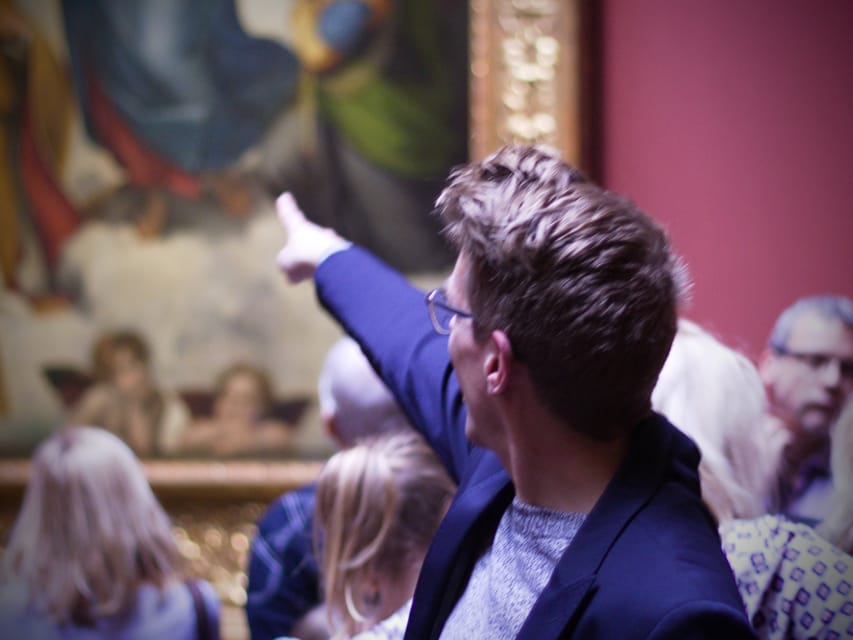
- X-rays reveal the paintings’ hidden changes, giving you a look inside works that seem finished and fixed.
- The two-hour route begins with five short examples, each showing a different kind of art or technique.
- Raphael, Titian, Giorgione, Rembrandt, Vermeer, Botticelli, and Jan van Eyck may feature in the discussion.
- The Dresden Sleeping Venus gets special attention, including its place in the story of the modern nude.
- German is the only tour language, so this suits German speakers or those comfortable following an art talk in German.
- The $44 price includes gallery admission and the guided visit, with skip-the-ticket-line access.
Why this gallery tour feels different
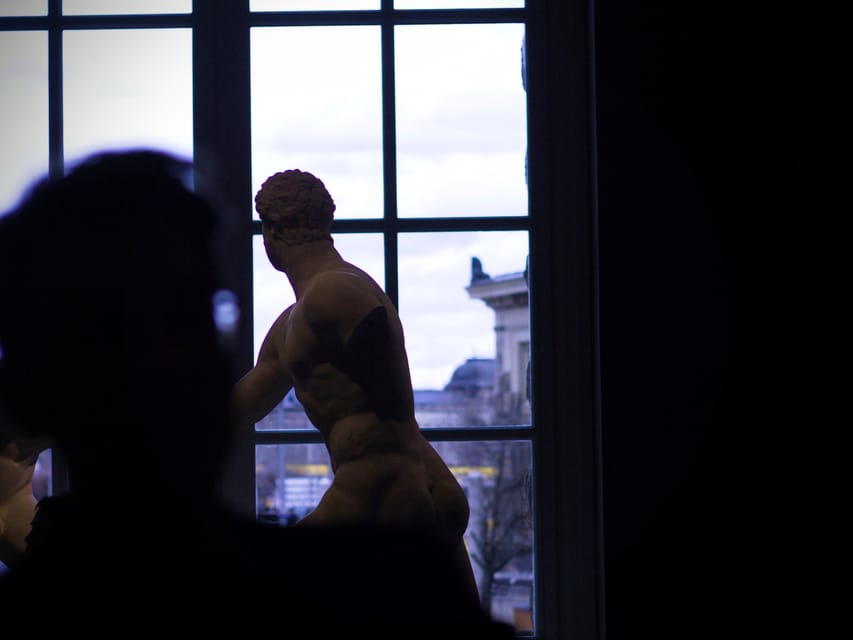
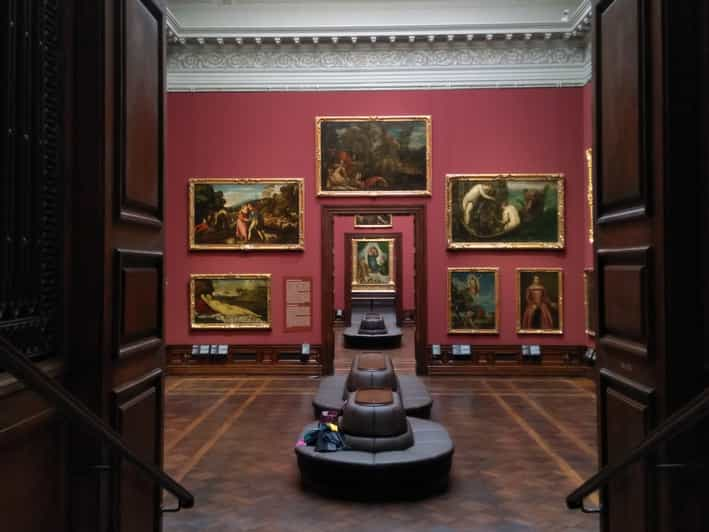
Dresden’s Old Masters Picture Gallery is already worth time for its famous collection. This activity takes a more focused approach than a general museum visit. You spend two hours learning how to see a painting, not just how to recognize its title.
That distinction matters. A picture can show you a Madonna, a sleeping woman, or a religious scene, but it cannot explain why the artist chose a certain pigment, changed a figure, or built the image in layers. Your guide fills in those gaps with technical information, historical context, digital images, and short videos.
I especially like the way the visit is structured for people who may feel unsure in a major art museum. You do not need a degree in art history. The early part gives you a practical method, then the later paintings become easier to read.
The tone is meant to stay lively and understandable. That is useful in a gallery where a long stream of dates and artist names can quickly blur together. The guide is expected to connect painters and pictures, showing how one work helps you understand another.
A guide named Thomas received particular praise for linking different Old Masters and explaining how their ideas relate. He was also described as funny and passionate about the subject. Guides can vary, but the format gives them room to explain rather than rush you from room to room.
A few more museum visits around Germany worth comparing
- Berlin: Jewish Museum Berlin Entrance Ticket
★ 4.5 · 8,393 reviews - Berlin: DDR Museum Tickets
★ 4.3 · 3,443 reviews - Berlin: Natural History Museum Entrance Ticket
★ 4.6 · 3,382 reviews
Starting in the gallery cloakroom
Your meeting point is inside the Old Masters Picture Gallery, in the cloakroom. From the ticket point, go downstairs, take a right through the door, and use the stairs on the right-hand side.
Arrive about 10 minutes early. That small buffer is worth using because the meeting instructions are more specific than simply saying meet at the museum entrance. You will also want time to leave any permitted belongings before the tour begins.
Large bags and luggage are not allowed. Plan to visit without bulky items, since the activity does not offer a convenient way to bring them along. The tour finishes back at the same meeting point, so you do not need to arrange a separate pickup.
Admission to the gallery is included, as are the guide’s licensing fees. You also receive skip-the-ticket-line access, which is useful when you have limited time in Dresden and do not want the visit to begin with a wait at the ticket counter.
The first 20 minutes teach you how to look
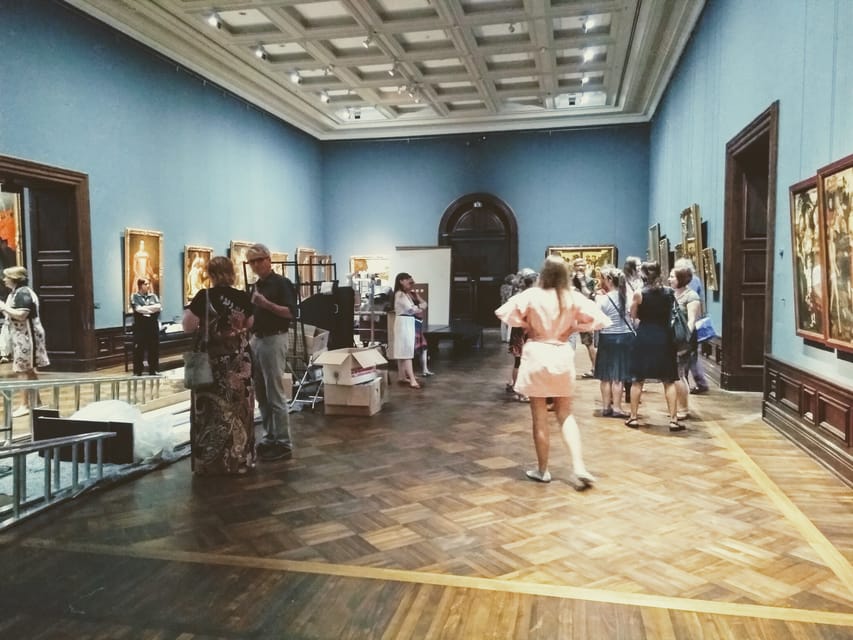
The tour opens with a short orientation to the building and to the gallery’s overall concept. You will also get a basic introduction to classic art, which helps set the terms for the paintings that follow.
Then come five brief stops. Each painting receives only a couple of minutes, and each represents a different category or type of work. This is not the part for extended contemplation. It is a fast visual lesson.
You may see early oil paintings, gold-ground works, and pictures connected with artists such as Botticelli, Raphael, Jan van Eyck, Rembrandt, and Vermeer. The point is not to master every name. It is to notice how materials and methods affect what appears in front of you.
For example, gold in a religious painting is not simply decoration. It can signal a different idea of space, light, or the sacred world. Oil paint brings its own possibilities, allowing artists to build color and detail in ways that differ from earlier methods.
This opening section is a smart use of time. If you go straight to a celebrated Raphael without knowing what to examine, you may admire the surface but miss the choices underneath. The short examples train your eye first.
Religious paintings become easier to read
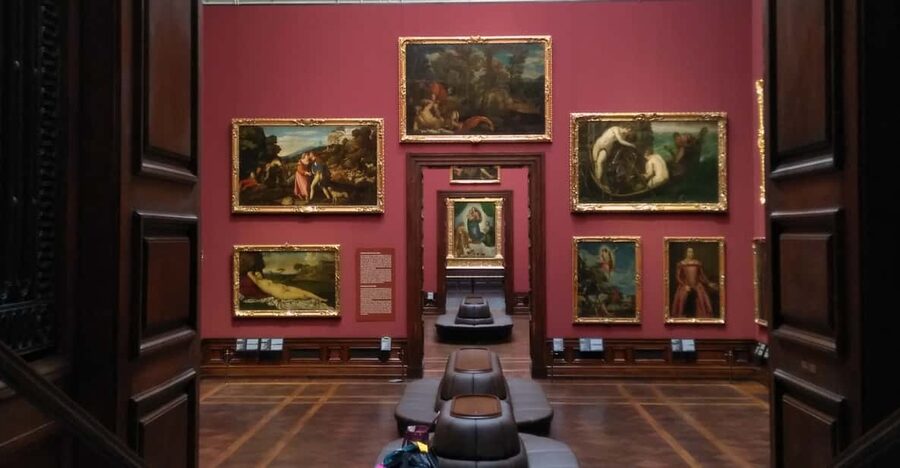
After the opening survey, the guide turns to religious paintings in more detail. You will learn how to spot elements that carry meaning, rather than treating the picture as a simple illustration of a Bible story or saint’s life.
That can change the way you look at Old Masters. Gestures, objects, colors, poses, and small background details often serve a purpose. The tour helps you ask what each part is doing and why the artist placed it there.
I find this section particularly helpful for visitors who usually feel that classic religious art all looks alike. Once you understand the visual clues, the pictures become less remote. You can begin to read the image instead of merely accepting it as an old painting.
The experience also gives you technical basics in plain language. You may learn how artists worked with their surfaces, pigments, and layers, along with the limits and possibilities of the materials available to them. These details make the final image feel like a made object, not a mysterious artifact.
Same city, a completely different collection:
- Berlin: Neues Museum Entry Ticket
★ 4.6 · 3,261 reviews - Berlin: Museum Island Multiple Museum Entry Ticket
★ 4.4 · 2,861 reviews - Cologne: Chocolate Museum Entrance Ticket
★ 4.4 · 2,790 reviews - Dresden: Church of Our Lady Guided Tour of Gallery
★ 4.7 · 2,421 reviews
Raphael’s Madonna receives careful attention
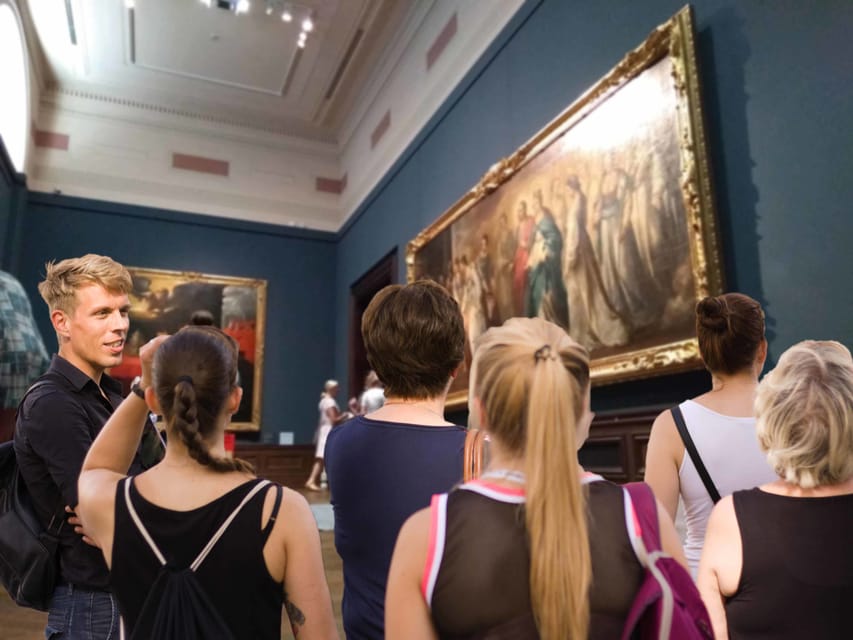
The tour then examines Raphael’s world-famous Madonna. This is one of the visit’s main rewards, especially if you have previously seen the painting but never had a guide explain its construction and purpose.
Rather than offering only praise for Raphael’s beauty or balance, the discussion asks you to look closely. You will consider the work’s religious meaning, the artist’s decisions, and the way the image communicates with the viewer.
The guide may use digital imagery to point out details that are difficult to see from a normal viewing distance. Videos and projected material add another layer to the discussion, allowing you to compare images or see information that cannot be presented by the painting alone.
The exact paintings on display can change. The Saxonian State Art Collection may remove a work for restoration or lend it to another museum. The guide adjusts the program when needed and adds an equivalent or additional work, but no one can promise that every named painting will be available on your date.
That is worth keeping in mind if Raphael is your only reason for booking. You are paying for the gallery visit and the method of looking, not a guaranteed checklist of individual paintings.
Titian, Giorgione, and the Sleeping Venus
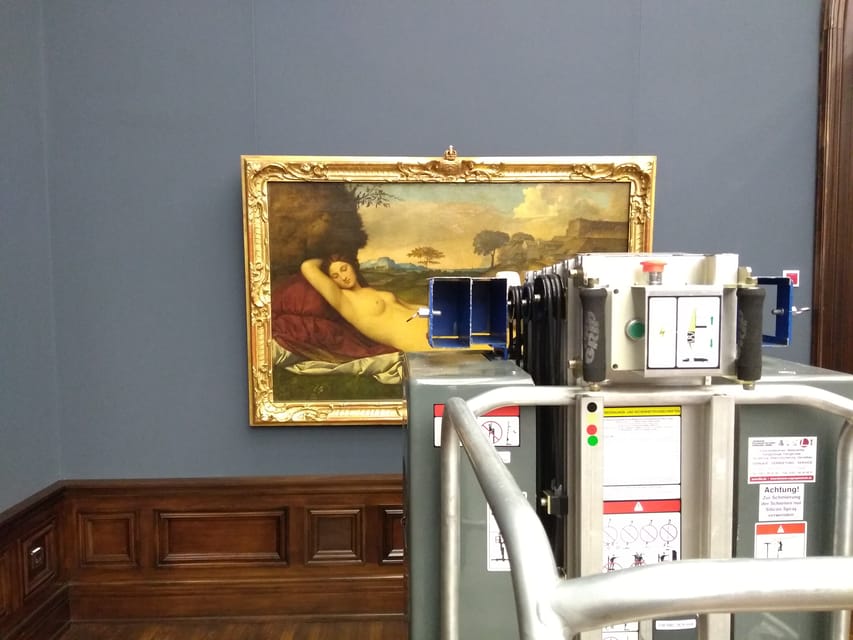
The next major section brings together two Renaissance masters, Titian and Giorgione. Their connection gives the guide a chance to explain how artists can share ideas while developing different approaches to color, composition, and the human figure.
The Dresden Sleeping Venus receives special attention. The tour presents it as the first and finest nude painting of a woman in modern art, a claim that opens an interesting discussion about how the female nude developed and why this picture had such an effect.
You will hear about the background of the work and then see it in a way most ordinary museum visits cannot offer. X-ray images reveal changes inside the painting, giving you a look at revisions and earlier decisions beneath the visible surface.
This is where the tour’s art-and-science approach pays off. You are not just told that artists sometimes changed their minds. You can see evidence of those changes through technical examination.
For many people, this will be the most memorable section. The Sleeping Venus is visually calm, but its history and construction are more complicated than the finished image suggests. The X-rays make that contrast clear.
The work also gives the guide a natural way to discuss artistic influence. The relationship between Giorgione and Titian, and the later importance of the nude figure, becomes easier to grasp when you are looking at an actual painting rather than hearing a list of names.
Pigments, gold, and the physical work of painting
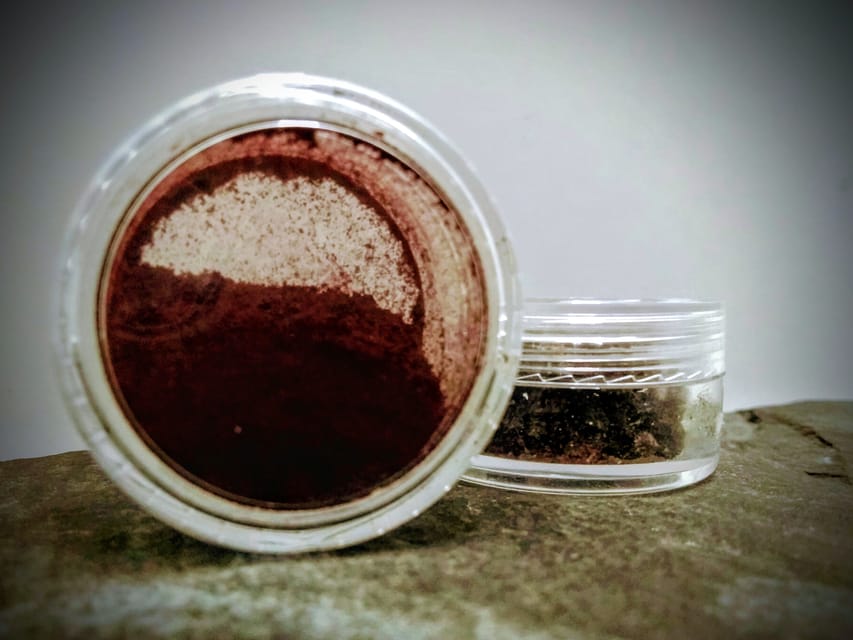
A valuable feature of this tour is the chance to touch samples of rare historic color pigments. That is a small detail, but it changes your sense of the work. Color stops being an abstract quality and becomes a physical material that had to be sourced, prepared, and applied.
You will also see paintings made with gold and examples connected to the early use of oil paint. These works help explain how artists’ materials shaped their results. A bright surface, deep shadow, or fine detail often depended on a technical choice as much as artistic talent.
The scientific material is presented in an accessible way. You do not need to know chemistry or conservation methods in advance. The tour uses images, videos, and direct examples to make the subject easier to follow.
This is one reason I would choose this activity over a standard audio guide if you are curious about how Old Masters actually made pictures. An audio guide can tell you what you are seeing. This tour tries to show you how the image came into being.
Rembrandt, Vermeer, Botticelli, and Jan van Eyck
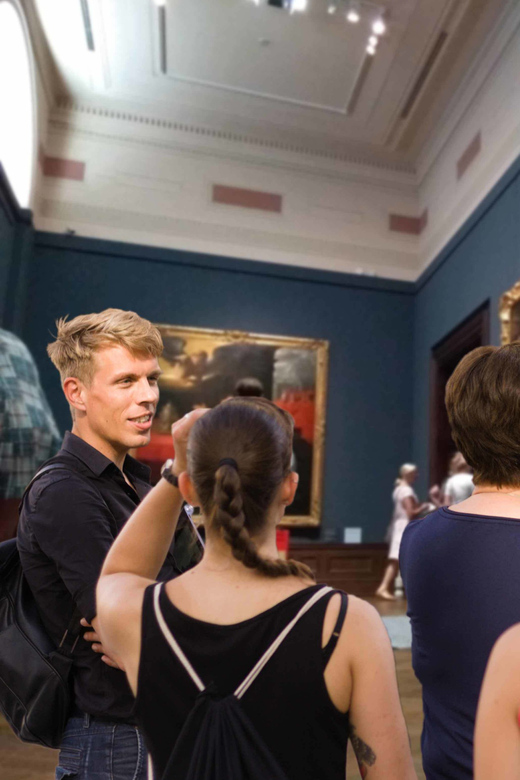
The early selection may include works linked to Rembrandt, Vermeer, Botticelli, and Jan van Eyck. Each name represents a different path through European painting, and the tour uses them to build a broader understanding of technique and subject matter.
You may encounter contrasts between Italian and Dutch approaches, between religious and secular subjects, and between images made for public devotion and those made for private viewing. The guide’s job is to make those differences clear without turning the two hours into a lecture full of disconnected facts.
Rembrandt and Vermeer are especially useful comparisons. Both are famous for their handling of light, but the effect of light in their work can serve very different purposes. Botticelli and Jan van Eyck add another range of examples, helping you see how artistic practice changed across time and place.
The exact selection depends on what is currently on display. The program is designed to substitute comparable works if a named painting is unavailable, so the overall lesson should remain intact even when the gallery’s display changes.
Is two hours enough for the Old Masters Gallery?
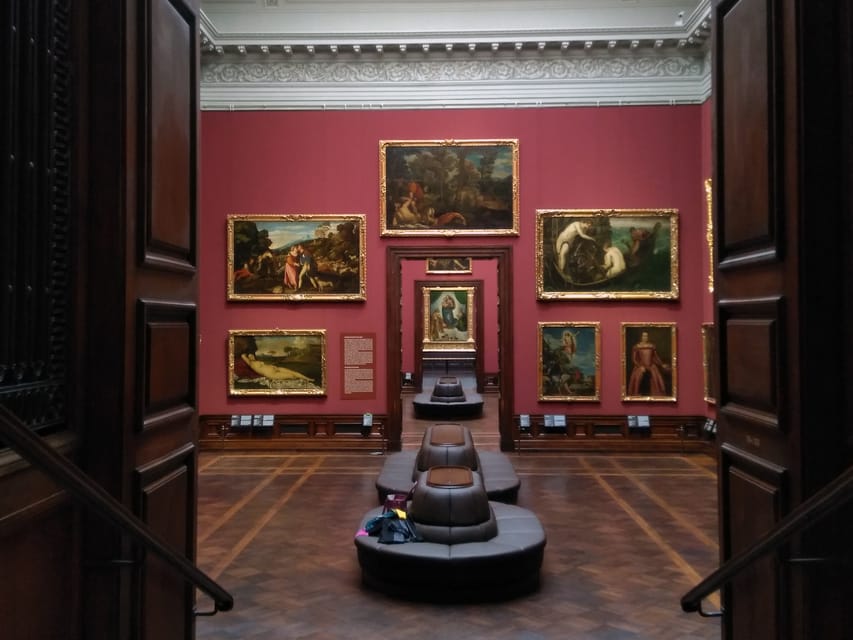
Two hours is enough for a guided introduction, not enough to see every important work in the gallery. That is not a flaw, but you should set your expectations correctly.
The schedule favors depth over coverage. You begin with several quick examples, then spend more time on Raphael, Titian, Giorgione, and the Sleeping Venus. If you want to inspect dozens of paintings at your own pace, visit the gallery separately before or after the tour.
I like the compact format for a first visit to Dresden or for anyone with several museums on the same day. You get a strong framework without giving up an entire morning or afternoon.
Art lovers may want more. One person felt that two additional hours would have been welcome, and that reaction makes sense. The guide’s connections between artists can leave you wanting to continue.
The best plan is to treat the tour as a focused introduction. Afterward, you can return to the paintings that caught your attention and look at them with the methods you have learned.
The German-only format matters
This activity takes place in German only. That is the most important booking consideration.
If you understand German well, the format offers a direct and lively way to engage with the material. If your German is limited, the technical explanations, jokes, and quick connections between artists may be difficult to follow.
The tour is not advertised with an English option, and no translation service is included. I would not book it on the hope that you can simply pick up the meaning from the pictures. The value lies in the guide’s spoken explanations.
The guide’s style also matters. Thomas was singled out for clear, passionate presentation, but another guide may lead your visit. The shared language and the tour’s visual tools give the experience a consistent base, even when the personality changes.
What the $44 price delivers
At $44 per person, the cost is reasonable if you want both admission and a guided art lesson. You are not paying just for entry to the gallery. The price includes the guide, license fees, and skip-the-ticket-line access.
The strongest value comes from the X-rays, pigment samples, and structured explanation. Those features give you information you would not get from simply walking through the rooms on your own.
The price is less attractive if you only want to see famous paintings quickly. You could prefer an independent gallery visit if you dislike fixed pacing or do not understand German.
Free cancellation is available up to 24 hours before the activity for a full refund. You can also reserve now and pay later, which helps if your Dresden schedule is still changing.
The tour is wheelchair accessible. You should still follow the meeting instructions carefully and arrive early, since the starting point is in the cloakroom downstairs rather than at a broad outdoor landmark.
Who should book this Dresden art experience?
I would recommend it to German-speaking visitors who want more than artist names and dates. It is a strong choice if you enjoy seeing how things are made, or if scientific images help you understand art.
It also suits first-time gallery visitors who want a clear way into Old Master painting. The five-picture introduction gives you basic tools, while the later focus on Raphael and the Sleeping Venus supplies the memorable highlights.
Families with older children might find the X-rays and pigment samples more engaging than a standard talk, though the material still requires attention. The tour is not designed as a casual drop-in visit, and children would need to follow a two-hour German presentation.
You may want to skip it if you need English, dislike guided pacing, or have only a short time and want to see as many paintings as possible. You should also avoid booking if seeing one specific painting is essential, since museum loans and restoration can alter the selection.
Should you book the Old Masters Gallery tour?
Book this experience if you want to understand what happens beneath a painting’s surface. The combination of famous pictures, X-rays, pigment samples, and clear technical explanations gives the visit a purpose beyond checking major artists off a list.
The strongest reason to go is the method. You start with five quick examples, learn how to read visual clues, and then apply those ideas to Raphael, Titian, Giorgione, and the Dresden Sleeping Venus.
Skip it if the German-only format will limit your understanding, or if you prefer a slow solo visit. For German speakers, though, the $44 fee buys an efficient and unusually hands-on introduction to one of Dresden’s finest art collections.
FAQ
Where does the tour begin?
The tour begins at the Old Masters Picture Gallery, with the guide waiting in the cloakroom.
How do I reach the meeting point?
Go downstairs from the ticket point, take a right through the door, and then use the stairs on the right-hand side.
How early should I arrive?
You should arrive about 10 minutes before the activity starts.
How long does the tour last?
The guided tour lasts two hours.
What language is the tour in?
The tour takes place in German only, with a live German-speaking guide.
Is gallery admission included?
Yes. Admission to the Old Masters Picture Gallery and all license fees are included.
Does the tour include skip-the-ticket-line access?
Yes, skip-the-ticket-line access is included.
Is the activity wheelchair accessible?
Yes, the activity is wheelchair accessible.
Can I bring luggage or a large bag?
No. Luggage and large bags are not allowed.
Will every named painting be on display?
No. The museum may remove paintings for restoration or loan them to another museum. The guide can adjust the program with equivalent or additional works.
Where does the tour end?
The activity ends back at the Old Masters Picture Gallery meeting point.
Can I cancel for a full refund?
Yes. You can cancel up to 24 hours in advance for a full refund.
Do I have to pay when I book?
No. The reserve-now-and-pay-later option lets you book without paying immediately.
Just added around Germany
- Stuttgart: Stuttgart Wine Museum Wine Tasting★ 4.7 · 55 reviews
- Stuttgart: Museum of Illusions Entry Ticket★ 4.2 · 507 reviews
- Stein: Public guided tour of the “Old Mine” museum★ 4.5 · 18 reviews
- Speyer: Technik Museum Speyer Ticket with an IMAX Dome Film★ 4.7 · 360 reviews
- Berlin: Bode Museum Ticket★ 4.5 · 214 reviews
- Munich Private Walking Tour with BMW Museum & Welt Entry★ 4.2 · 19 reviews
- Munich: Residenz Palace, Museum and Treasury Private Tour★ 4.9 · 15 reviews
- Munich: WOW Museum – Room for Illusions Ticket★ 3.5 · 14 reviews
Museum Tours in Germany, compared.



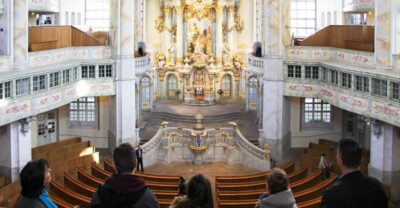
Dresden: Church of Our Lady Guided Tour of Gallery
Read our review →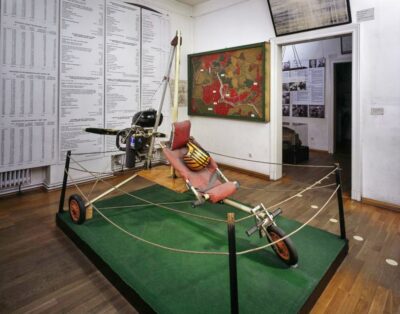
Skip-the-Line: Berlin Wall Museum at Checkpoint Charlie
Read our review →Browse the lists this tour appears in