
Review · GERMANY
Dresden: 2 day ticket for museums of the Dresden State Art Collections
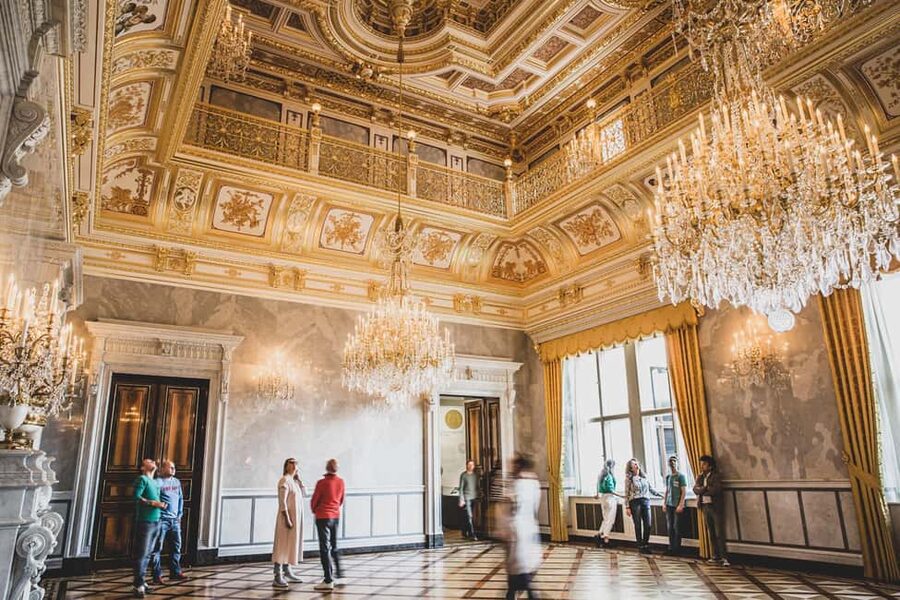
Dresden’s great museum collection is spread across grand buildings, and this two-day ticket gives you time to see far more than a rushed afternoon allows. You can move from Old Masters in the Zwinger to royal treasures in the Residenzschloss, then switch gears with modern art and folk traditions.
I like the freedom to choose your own pace, and I like the breadth: 15 museums and exhibition venues cover painting, porcelain, weapons, coins, prints, folk art, theater, and modern culture. The main catch is that the Historic Green Vault is not included, so you need a separate timed ticket if that famous treasure room is on your must-see list.
Key points to know before you go
- Two consecutive days: Your ticket begins when you first validate it and allows one admission to each included museum.
- A wide range of subjects: See Old Masters, royal collections, porcelain, scientific instruments, coins, folk art, puppets, and modern art.
- Three major museum areas: The Zwinger, Residenzschloss, and Albertinum form the core of your visit.
- Special exhibitions included: The ticket also covers included special exhibitions at the State Art Collections venues.
- Historic Green Vault excluded: You need a separate timed admission for this popular room.
- Useful support on site: Multimedia and audio guides are included when available.
Why two days make sense in Dresden
Dresden’s State Art Collections are not one museum with a neat beginning and end. They are a network of museums in several buildings, each with its own subject and mood. The two-day format matters because it lets you look properly instead of racing from room to room.
At $33 per person, the ticket can offer good value if you plan to visit several museums. One or two stops alone may not justify the price, but a full day in the Zwinger and Residenzschloss, followed by the Albertinum and another venue on day two, makes the cost easier to defend.
You get one admission to each museum during the ticket’s two-day validity. That means you should think of this as a broad museum pass, not a ticket for unlimited reentry. If you leave a museum, plan to continue elsewhere rather than building your schedule around coming back several times.
The ticket starts on the day you first use it and runs for two consecutive days. You do not need to activate it on the first day of your Dresden stay, which gives you some control over timing. Check opening hours for each museum before booking, since the venues do not necessarily follow one identical schedule.
A few more museum visits around Germany worth comparing
- Cairo: 2-Day Pyramid, Museum, Bazaar Private Tour
★ 4.6 · 74 reviews
Starting at the Zwinger
The Zwinger is the natural place to begin because three major museums are gathered in one famous palace complex: the Old Masters Picture Gallery, the Porcelain Collection, and the Mathematical-Physical Salon.
Old Masters Picture Gallery
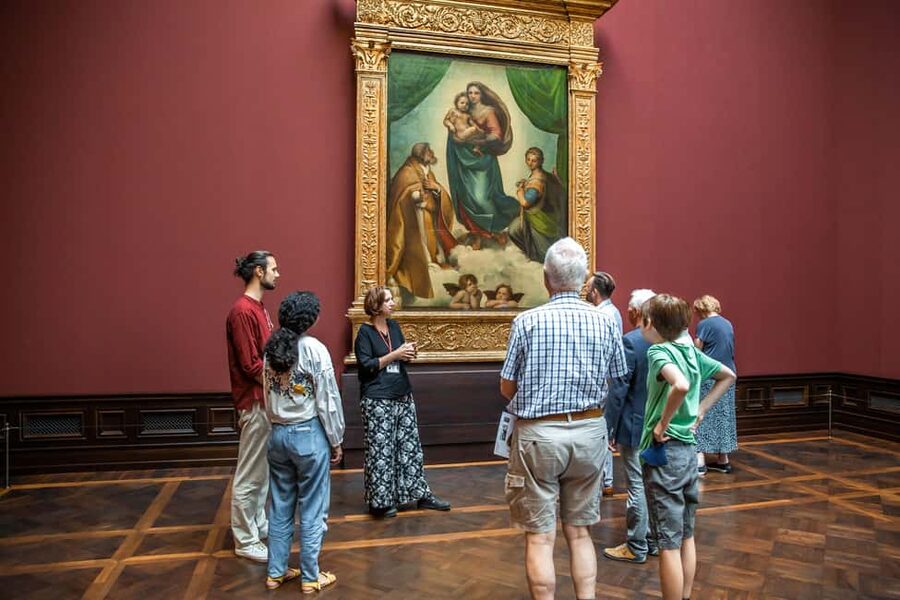
The Old Masters Picture Gallery is the artistic centerpiece of the Zwinger group. This is where you can spend time with the famous European paintings held by the Dresden State Art Collections.
The practical advantage is focus. Instead of mixing paintings with furniture, weapons, or decorative objects, this museum gives you a concentrated look at painting. If you want to study major works at a slower pace, allow plenty of time here.
Do not treat it as a quick box to tick. A large picture gallery can become tiring if you try to see every room with equal attention. I suggest choosing a few works or rooms that interest you, then accepting that you will not absorb every painting in one pass.
Porcelain Collection
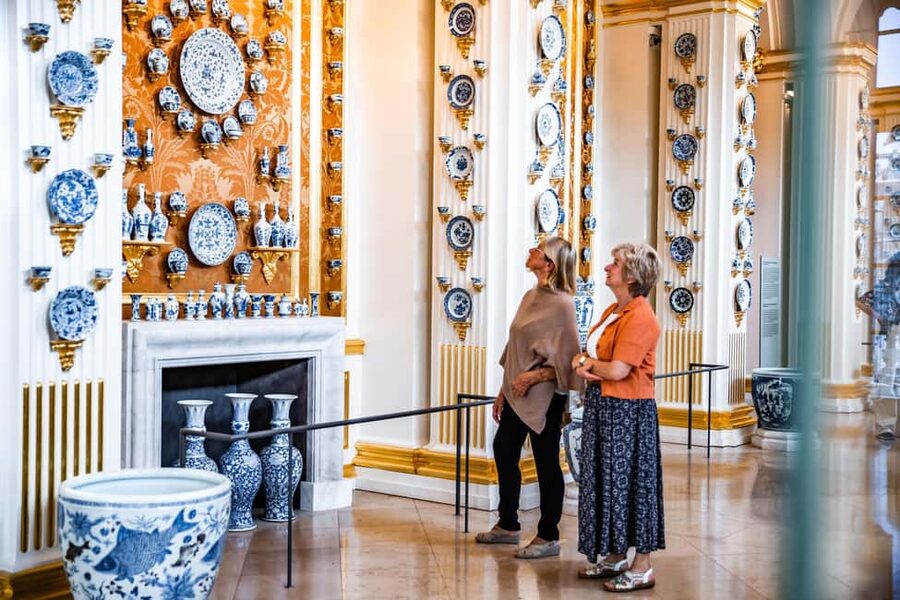
The Porcelain Collection changes the mood completely. Its subject is decorative art, craftsmanship, and the long connection between royal collecting and porcelain.
You will find this especially worthwhile if you enjoy objects that reward close looking. Paintings often make their effect from across a room. Porcelain asks you to notice shape, surface, color, and small details.
It is also a useful reminder that Dresden’s collections are not limited to conventional fine art. The ticket’s value comes partly from this change of pace. After paintings, porcelain gives your eyes a different task.
Same city, a completely different collection:
- Berlin: Jewish Museum Berlin Entrance Ticket
★ 4.5 · 8,393 reviews - Berlin: DDR Museum Tickets
★ 4.3 · 3,443 reviews - Berlin: Natural History Museum Entrance Ticket
★ 4.6 · 3,382 reviews - Berlin: Neues Museum Entry Ticket
★ 4.6 · 3,261 reviews
Mathematical-Physical Salon
The Mathematical-Physical Salon adds scientific instruments and technical objects to the day. This is one of the more unusual stops in the pass, especially if you want something beyond paintings and palace decoration.
You might find this museum appealing if you enjoy the history of measurement, astronomy, mathematics, and precision instruments. It also works well as a shorter visit between larger museums, though the ideal amount of time depends on your interest in the subject.
The Zwinger group is a strong first day opening because you can cover three distinct collections without spending your time crossing the city. Still, do not assume you must finish all three in one sweep. The two-day validity lets you spread them out.
Exploring the Residenzschloss collections
The Residenzschloss, or Dresden Royal Palace, contains another cluster of museums covered by the pass. Here you can visit the New Green Vault, the Armory, the Kupferstich-Kabinett, and the Münzkabinett.
New Green Vault
The New Green Vault presents royal treasures and decorative objects in a museum setting. It is included with the two-day ticket, unlike the Historic Green Vault.
That distinction matters. The names are close, but they are separate experiences. Do not arrive assuming the ticket covers both. If you want to enter the Historic Green Vault, you must arrange a separate timed ticket.
The New Green Vault is a good choice for visitors who enjoy precious objects, courtly display, and fine workmanship. You may want to leave extra attention for the smaller objects, since the appeal is often in the detail rather than the scale.
Armory
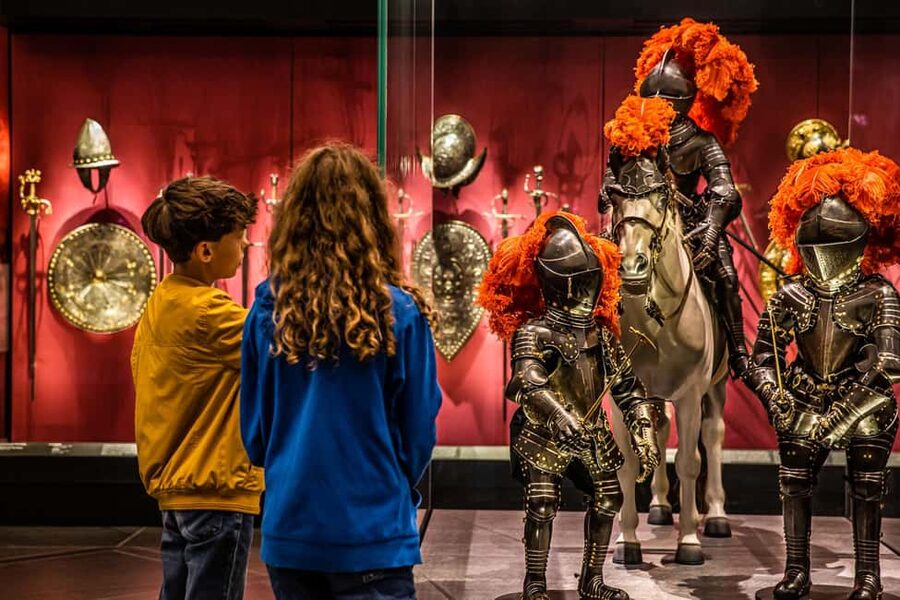
The Armory shifts the focus to weapons, armor, and objects linked to military display and royal power. It provides a strong contrast with the polished luxury of the Green Vault.
This is a useful stop even if you are not an arms specialist. The collection broadens your sense of what a royal museum can contain. You are not simply looking at beautiful things. You are also seeing how rulers presented authority and status.
Kupferstich-Kabinett
The Kupferstich-Kabinett covers prints and drawings. Works on paper require a different kind of attention from large paintings or three-dimensional objects.
I would not rush this museum. Drawings and prints can be quieter than the headline collections, but they offer a closer look at artistic process and technique. If you like sketchbooks, line work, graphic art, or works that feel more personal, this may become one of your favorite stops.
Münzkabinett
The Münzkabinett focuses on coins and medals. It is another specialized collection, and its appeal depends on your interest in objects that carry images, inscriptions, and political messages in very small spaces.
You can treat it as a short visit or spend longer studying the material. The museum adds another useful layer to the overall pass: it shows how art, history, economics, and government can meet in a single object.
Giving the Albertinum its own time
The Albertinum deserves a deliberate visit rather than a quick stop squeezed between other museums. It gives you another major setting for the Dresden State Art Collections and helps balance the older court collections with later artistic work.
The supplied information does not specify the exact contents of every current display, so check what is showing when you plan your visit. The ticket includes the Albertinum and applicable special exhibitions, which makes it a good place to use the pass’s flexibility.
I like placing the Albertinum on the second day. By then, you have seen the Zwinger and Residenzschloss collections and can approach this museum with a broader sense of Dresden’s collecting tradition. If a special exhibition interests you, give it priority rather than trying to force every other venue into the same schedule.
Folk art, puppets, and the Archive of the Avant-Garde
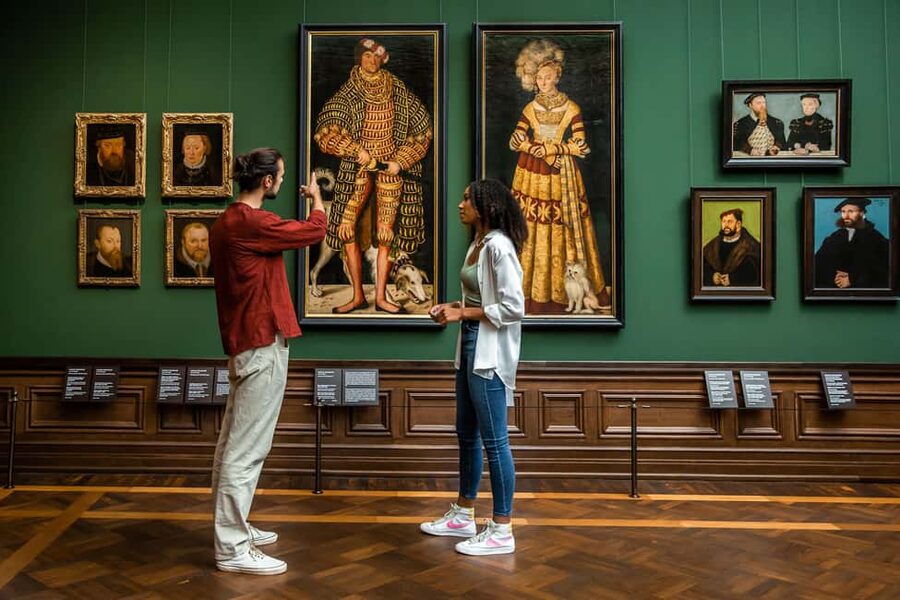
The pass becomes especially useful for visitors who want more than famous paintings and royal treasures. It includes the Museum of Folk Art, the Puppet Theatre Collection, and the Archive of the Avant-Garde.
Museum of Folk Art
The Museum of Folk Art brings everyday traditions, craft, and regional culture into the picture. It can be a welcome change after formal palace collections.
You may find this museum more approachable if you prefer objects with a direct connection to daily life. It also helps prevent your Dresden museum experience from becoming too focused on court culture.
Puppet Theatre Collection
The Puppet Theatre Collection is one of the more distinctive choices in the group. It offers a look at theatrical objects and performance traditions that you would not normally encounter in a standard art museum visit.
This is a smart stop for families and for anyone who likes stage design, storytelling, or unusual collections. Its subject alone makes the two-day pass feel broader than a standard painting-focused museum ticket.
Archive of the Avant-Garde
The Archive of the Avant-Garde takes you in a modern direction. Its material connects with experimental art and the ideas that challenged established artistic forms.
The contrast is valuable. After royal collections and traditional crafts, you can see how artists and institutions moved toward new approaches. If modern art is your main interest, check opening hours and current displays carefully before setting your schedule.
Japanese Palace and Lipsius Building exhibitions
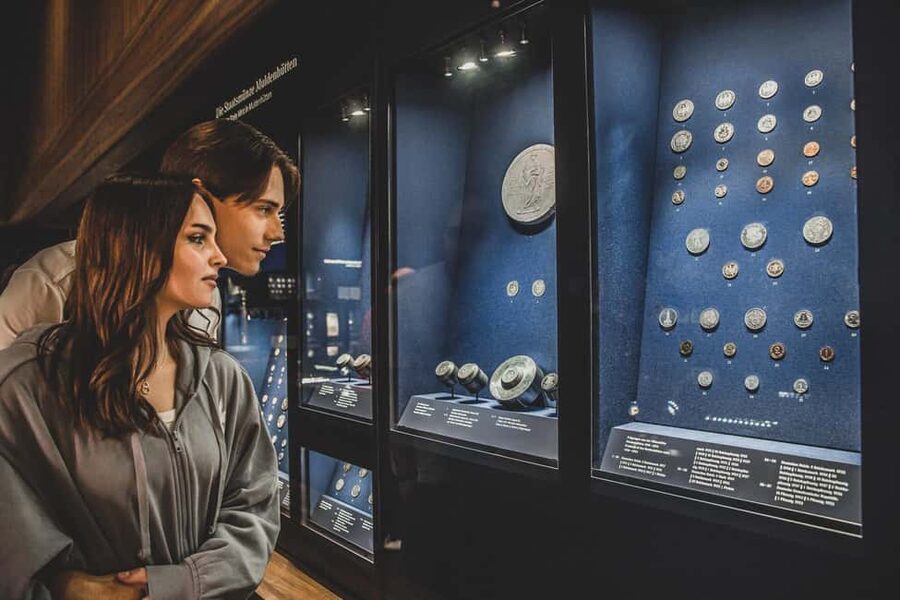
The ticket also includes exhibitions in the Japanese Palace and Lipsius Building. These venues may be especially useful if you enjoy temporary displays or want to see subjects that do not fit neatly into the permanent museum categories.
Because exhibition schedules can change, this is one area where advance checking matters most. Look at the current opening hours and exhibition details before you go, then use your two-day window to fit in anything that has a limited schedule.
The advantage is simple: special exhibitions are included rather than treated as a separate add-on, according to the ticket terms. That can improve the value if one of the current shows interests you.
Planning your two museum days
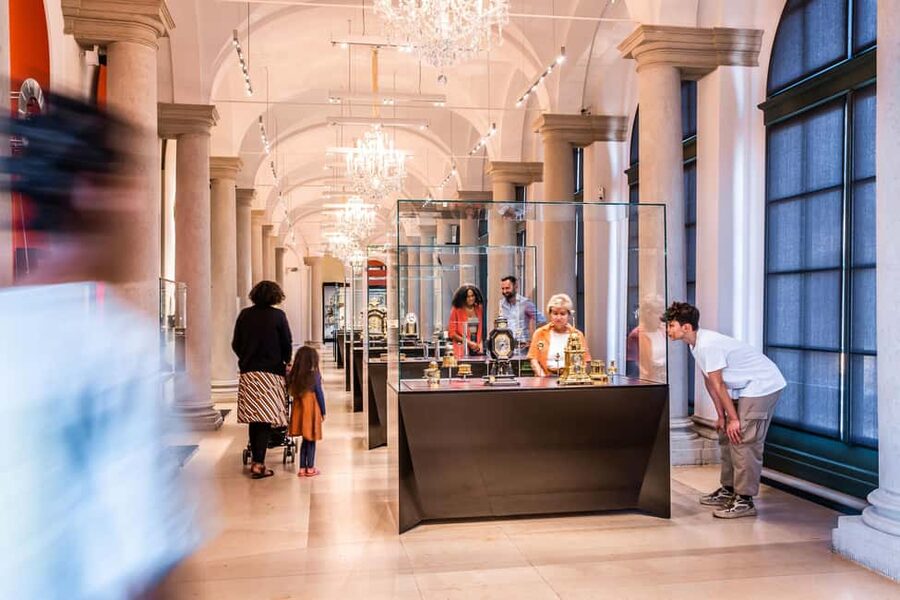
You can use the pass in many ways, but a little planning will keep the experience from turning into a museum marathon.
A sensible first day might center on the Zwinger. Visit the Old Masters Picture Gallery, then choose the Porcelain Collection and Mathematical-Physical Salon according to your energy and interests. If you still have time, continue to the Residenzschloss.
On the second day, return to the Residenzschloss collections if needed, then give the Albertinum proper attention. Add the Museum of Folk Art, Puppet Theatre Collection, Archive of the Avant-Garde, Japanese Palace exhibitions, or Lipsius Building exhibitions according to opening hours and personal interest.
You do not need to see all 15 venues to get value. The point is to use the pass selectively. A visitor who loves paintings may spend most of the time at the Old Masters Picture Gallery, Albertinum, and Kupferstich-Kabinett. Someone interested in decorative arts may favor porcelain, the New Green Vault, and the Armory.
The included multimedia and audio guide, when available, can help you get more from the collections without joining a live tour. No guide’s name is provided because this is not presented as a guided group excursion. You are managing your own route, which is both the main benefit and the main responsibility.
The Historic Green Vault decision
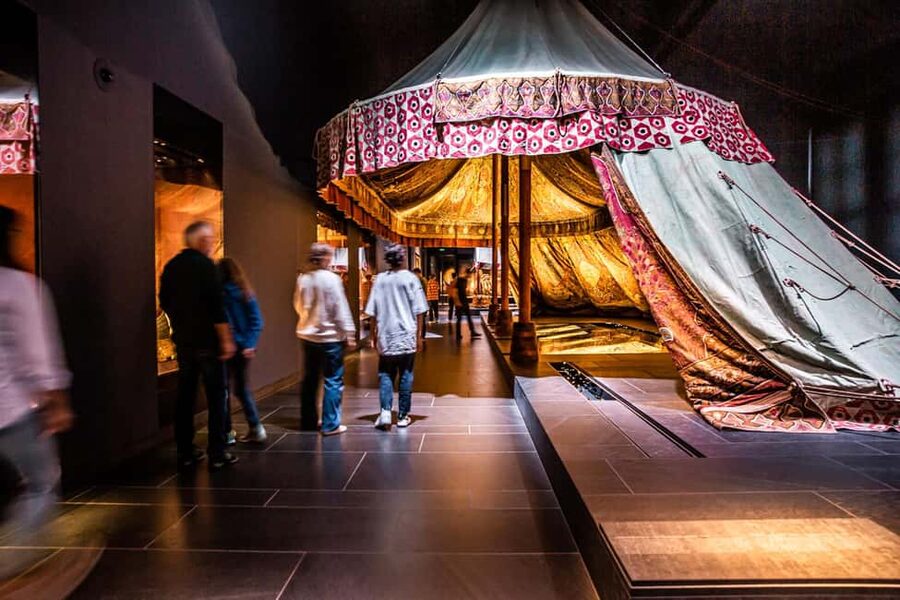
The Historic Green Vault is the key exclusion, and it deserves attention before you buy. Its admission is separate and requires a timed ticket.
If this room is the main reason you want to visit Dresden’s royal collections, secure that separate ticket before building your museum plan. Do not assume the two-day pass will cover it simply because the New Green Vault is included.
If you are happy to see the New Green Vault and the other Residenzschloss collections, the exclusion may not be a problem. But if you want both, add the extra booking and timing to your budget and schedule.
Who gets the best value from this pass
This ticket suits you best if you enjoy choosing your own subjects and can devote two days to museums. It is also a good fit if you want to mix major European paintings with porcelain, arms, coins, folk art, theater, and modern collections.
It may be less useful if you have only a few hours in Dresden or want a single guided experience. The pass covers admission, not a personal guide who builds a route around your interests.
At $33, the value improves with every included museum you visit. The strongest case is a two-day plan with several stops across the Zwinger, Residenzschloss, Albertinum, and at least one of the smaller or exhibition-based venues.
The pass is wheelchair accessible, which is important for planning, though you should still check the individual museum arrangements and opening hours before booking. Free cancellation is available up to 24 hours in advance, and you can reserve now and pay later, giving you some flexibility if your Dresden plans are not final.
Should you book the Dresden museum pass?
Book it if you want a broad, self-guided look at Dresden’s State Art Collections and can use the ticket on two consecutive days. The strongest reasons are the wide subject range, included special exhibitions, and freedom to set your own pace.
Skip it if you only want the Historic Green Vault, since that requires a separate timed ticket, or if your schedule allows only one short museum visit. For most art-focused visitors with two days in Dresden, though, the $33 pass is a practical way to connect the city’s major collections without buying separate admissions one by one.
FAQ
How long is the Dresden museum ticket valid?
It is valid for two consecutive days from the day you first activate or validate it.
How many times can I enter each museum?
The ticket includes one admission to each included museum during its two-day validity.
Is the Historic Green Vault included?
No. The Historic Green Vault requires a separate timed ticket.
Which museums in the Zwinger are included?
The ticket includes the Old Masters Picture Gallery, Porcelain Collection, and Mathematical-Physical Salon.
Which Residenzschloss museums are included?
The included Residenzschloss museums are the New Green Vault, Armory, Kupferstich-Kabinett, and Münzkabinett.
Are audio guides included?
Multimedia and audio guides are included when available.
Can I cancel the booking?
Yes. You can cancel up to 24 hours in advance for a full refund. You can also reserve now and pay later.
Just added around Germany
- Stuttgart: Stuttgart Wine Museum Wine Tasting★ 4.7 · 55 reviews
- Stuttgart: Museum of Illusions Entry Ticket★ 4.2 · 507 reviews
- Stein: Public guided tour of the “Old Mine” museum★ 4.5 · 18 reviews
- Speyer: Technik Museum Speyer Ticket with an IMAX Dome Film★ 4.7 · 360 reviews
- Berlin: Bode Museum Ticket★ 4.5 · 214 reviews
- Munich Private Walking Tour with BMW Museum & Welt Entry★ 4.2 · 19 reviews
- Munich: Residenz Palace, Museum and Treasury Private Tour★ 4.9 · 15 reviews
- Munich: WOW Museum – Room for Illusions Ticket★ 3.5 · 14 reviews
Museum Tours in Germany, compared.




Dresden: Church of Our Lady Guided Tour of Gallery
Read our review →
Skip-the-Line: Berlin Wall Museum at Checkpoint Charlie
Read our review →Browse the lists this tour appears in